

A lot of people arrive here in the same state. They’re exhausted by talk therapy that feels stalled, disappointed by quick-fix wellness promises, and curious about stories of profound inner change. Then they type ayahuasca retreat oregon into a search bar because Oregon seems like the one place in the U.S. where psychedelic work might be more accessible.
That instinct makes sense. Oregon has become a focal point for psychedelic interest, and that has pulled ayahuasca seekers toward the state as well. But curiosity can create a dangerous shortcut. People often assume that if Oregon has legal psilocybin services, then ayahuasca must also sit inside a clear legal system. It doesn’t.
That gap matters. Ayahuasca is not a casual wellness treatment, and choosing a retreat isn’t like choosing a yoga studio or spa weekend. You’re dealing with a powerful psychoactive brew, a complicated legal environment, real medical contraindications, and a facilitator’s ethics and competence that can shape the entire outcome.
The safest starting point isn’t finding the “best” retreat. It’s learning how to make a careful decision.
Introduction Navigating Your Path to Ayahuasca in Oregon
Take a common example. Someone in Portland or Eugene has spent months reading firsthand accounts, listening to podcasts, and wondering whether a guided ceremony could help them process grief, trauma, or a life transition. Oregon keeps appearing in the search results, so it starts to feel like the obvious place to look.
That person is usually balancing two very different feelings. One is hope. The other is uncertainty about legality, safety, and whether they’re even a good candidate for the experience.
Both reactions are appropriate.
Oregon stands out because it has become a major center for psychedelic reform and public discussion. That doesn’t mean every ayahuasca offering in the state is safe, legal, or well run. It means the state attracts more interest, more operators, and more confusion than many other places in the country.
If you’re considering an ayahuasca retreat oregon search seriously, the most useful move is to slow down and ask better questions. What is ayahuasca, exactly? What part of Oregon law applies, and what part doesn’t? What medical or psychological factors could make this a bad fit? How do you tell a responsible facilitator from someone who merely sounds convincing online?
Those are the questions that protect people.
Understanding Ayahuasca and Its Ceremonial Use
Ayahuasca is usually described as a plant brew used in ceremonial settings. That’s accurate, but it leaves out the key point: it’s a combination. The brew traditionally involves Banisteriopsis caapi and Psychotria viridis, and the interaction between them is what makes the experience possible.

The two-plant brew in plain language
A simple way to understand it is to think of one plant as the locksmith and the other as the message.
- Banisteriopsis caapi: This vine contains compounds that make the experience orally active by inhibiting monoamine oxidase.
- Psychotria viridis: This leaf contains DMT, the psychoactive compound commonly associated with ayahuasca.
- Together: One helps open the biochemical pathway, and the other provides the visionary content frequently reported.
That’s why ayahuasca isn’t just “DMT tea.” The brew’s effect comes from the relationship between the plants, the dose, the person’s body, and the ceremonial setting.
Ceremony matters because ayahuasca isn’t usually approached as a standalone substance event. In traditional contexts, songs, ritual structure, preparation, and community all shape the experience. In modern Western retreats, including those marketed in Oregon, the format may blend Indigenous influences, church-based practice, and contemporary support models.
If you’re newer to this broader context, it helps to understand how these experiences relate to the wider field of psychedelic therapy approaches. Ayahuasca ceremonies and regulated therapy models are not the same thing, even when they overlap in language about healing or integration.
Why interest keeps growing
Interest in ayahuasca has expanded far beyond its traditional cultural roots. According to Psychedelic Health’s report on global ayahuasca use, over 4 million consumers across the Americas, Europe, Australia, and New Zealand have used ayahuasca, and 820,000 people drank it in 2019.
That same report also notes an important safety point. Of 58 worldwide ayahuasca-related deaths, zero autopsies linked fatalities to traditional brews. That doesn’t mean ayahuasca is risk-free. It does mean the bigger safety questions often involve screening, preparation, facilitation, medical interactions, and the overall container around the ceremony.
Ayahuasca’s risk profile is less about hype or myth and more about context. Who is serving it, who is taking it, and what safety system surrounds the experience.
Traditional use and Oregon-style retreat culture
The distinction can often confuse readers. A retreat in Oregon may reference Amazonian traditions, use ceremonial music, and describe the process in sacred terms. But it’s still operating in a modern U.S. setting with different legal constraints, different participant expectations, and often a different support structure.
That difference matters because you shouldn’t assume every retreat is rooted in the same lineage, ethics, or competence. Some are serious and careful. Some are loosely organized. Some may borrow the language of tradition without carrying the discipline behind it.
Oregon's Legal Landscape for Ayahuasca in 2026
Many people hear “Oregon” and think the legal question is settled. It isn’t. Oregon is unusually important in the psychedelic space, but ayahuasca does not sit inside a simple, fully legalized commercial framework.
What Oregon changed and what it didn’t
Two ballot measures changed the conversation in Oregon.
First, Measure 109 created a regulated system for psilocybin services. According to New Life Rising’s overview of Oregon ayahuasca law, the measure passed on November 3, 2020 with 55.7% approval and allowed licensed psilocybin services beginning January 1, 2023. That was a landmark change for psychedelic policy in the U.S.
But that framework is for psilocybin, not ayahuasca.
Second, Measure 110 changed the consequences for possession of small amounts of drugs, including DMT. The same overview states that Measure 110 passed with 58% voter support, reclassified possession of small amounts, including DMT, as a civil violation, and set a maximum $100 fine.
Those are not minor details. They explain why Oregon feels more open than many states while still remaining legally ambiguous for ayahuasca ceremonies.
The legal gray area in practical terms
Here’s the key distinction:
| Legal issue | What it means for ayahuasca in Oregon |
|---|---|
| Psilocybin regulation | Oregon has a regulated service model for psilocybin, not ayahuasca |
| DMT decriminalization | Small-amount possession carries reduced penalties under Measure 110 |
| Commercial retreat legality | Decriminalization is not the same as full legalization or state licensing |
| Religious protection | Some groups may operate under religious freedom arguments or exemptions |
That last row is where the conversation often shifts.
Why RFRA matters
In the U.S., the Religious Freedom Restoration Act, often shortened to RFRA, has created a narrow legal path for some religious ayahuasca use. The Oregon ayahuasca overview notes the federal precedent involving a Santo Daime church case won in 2006, which helped establish a pathway for religious ceremonies.
This doesn’t mean any retreat can call itself spiritual and become legal. It means some churches or religious organizations may have a stronger legal basis than a standard wellness business does.
Practical rule: If a retreat speaks vaguely about being “legal because Oregon is open-minded,” that’s not enough. Ask exactly what legal theory or religious structure they rely on.
The same Oregon overview says this environment has helped enable over 30 ayahuasca retreats to operate in the state. That tells you there is real activity. It does not tell you every operation has the same legal footing, standards, or level of transparency.
What this means for a decision-maker
If you’re evaluating an ayahuasca retreat oregon option, don’t treat it like a licensed medical service just because it’s in Oregon. Ask whether the retreat is presenting itself as a religious ceremony, a private gathering, or something else. Ask what they mean by “compliance.” Ask what protections they believe apply.
That may feel awkward. It’s still necessary.
Is an Ayahuasca Retreat Right for You Safety and Contraindications
A retreat can be legal enough to operate and still be the wrong choice for you personally. That’s the harder question, and it deserves more honesty than most marketing pages encourage.
Start with your body
Ayahuasca contains MAOI activity, so medication interactions are not a side note. They are a central safety issue. A retreat that doesn’t ask detailed questions about prescriptions, supplements, and health conditions is showing you a major warning sign before you even arrive.
Readers often focus on whether they feel emotionally ready. That matters, but so does a more basic checklist:
- Current medications: Especially anything that may interact dangerously with MAOI effects, including SSRIs and other psychiatric medications.
- Cardiovascular concerns: If you have a heart-related condition, you need serious medical clarity before considering a ceremony.
- Neurological or seizure history: Don’t assume a facilitator can assess this casually over email.
- Substance use pattern: Recent or ongoing use of other substances can complicate both physical safety and psychological stability.
If you’re not sure how to think about difficult psychedelic reactions in general, this guide on how to reduce the risk of bad trips gives useful context for mindset, setting, and preparation.
Then look at mental health with equal seriousness
Ayahuasca is sometimes described online as if intensity equals healing. That’s not a safe assumption. Some people should approach with extreme caution, and some should not participate at all.
Personal or family history can matter. Conditions involving psychosis, mania, severe dissociation, or unstable mood states deserve professional attention before any retreat is considered. That’s also true if you’re in an acute life crisis and hoping ayahuasca will function like emergency rescue.
If you need ayahuasca to save you immediately, that urgency may be a reason to pause, not proceed.
A responsible retreat won’t flatter your readiness. They’ll screen for instability, ask hard questions, and sometimes tell people no.
A self-check worth doing before you apply
Ask yourself these questions and answer them without romanticizing the experience:
- Am I trying to escape my life, or work with it?
- Can I tolerate emotional intensity without assuming every difficult moment is a breakthrough?
- Have I reviewed my medications and conditions with someone qualified?
- Do I have support at home for the days and weeks after the retreat?
- Would I still respect this process if it brought up confusion instead of clarity?
Some people are excellent candidates for careful, well-supported ceremony. Some aren’t, at least not now. Delaying is often the wiser decision.
How to Choose a Reputable Oregon Ayahuasca Retreat
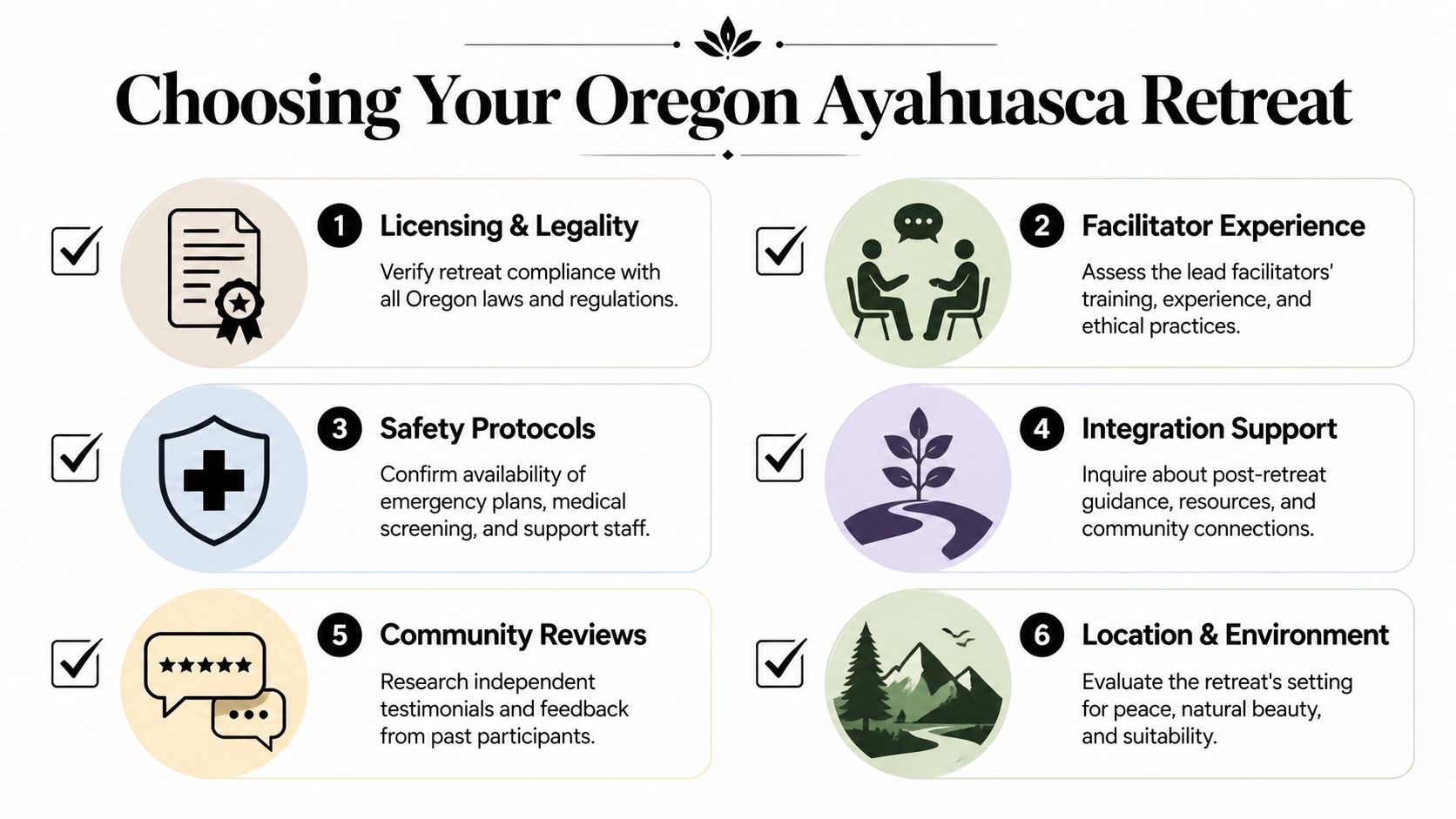
The most important skill here isn’t spotting beautiful websites. It’s learning how to evaluate operators who may use the same language but follow very different practices.
Green flags that usually signal care
A trustworthy retreat tends to make the screening process feel serious, not casual. You should expect forms, follow-up questions, and direct conversations about risk.
Look for signs like these:
- Detailed intake process: They ask about medications, diagnoses, prior psychedelic experiences, trauma history, and current life circumstances.
- Clear facilitator background: They can explain training, lineage, mentorship, or professional experience in concrete terms.
- Defined support roles: You know who leads, who assists, and who handles participant care during difficult moments.
- Integration plan: They offer structured support after the ceremony instead of treating departure day as the end.
- Direct answers on legality: They don’t dodge questions with mystical language or vague branding.
- Respectful limits: They’re willing to decline applicants or postpone participation.
These qualities don’t guarantee safety, but they show the retreat understands risk.
Red flags that deserve immediate caution
Many risky operators reveal themselves quickly if you know what to notice.
| Red flag | Why it matters |
|---|---|
| Promises of a cure | Serious facilitators don’t guarantee healing outcomes |
| Pressure to book fast | Urgency can bypass informed consent |
| Little or no screening | Poor screening is one of the clearest danger signs |
| Grandiose leader persona | Charisma can hide poor ethics and weak safety systems |
| No emergency plan | A retreat should explain what happens if someone becomes medically or psychologically unstable |
| Defensive responses to basic questions | Transparency is part of safety |
Questions worth asking before you commit
You don’t need to sound like a lawyer. You do need to ask specific questions and listen closely to how they answer.
Try questions like these:
- How do you screen for medication interactions and psychiatric contraindications?
- Who reviews applications, and what qualifications do they have?
- What happens if someone has a severe panic reaction or becomes disoriented during ceremony?
- Do you have a written emergency procedure?
- How many facilitators are present, and what does each person do?
- How do you decide someone is not a fit?
- What does integration support look like in the days after the retreat?
- What legal or religious structure are you operating under in Oregon?
A reputable team will answer clearly. A weak one will drift into abstractions about trust, surrender, or “energy.”
Good facilitators don’t ask you to stop thinking. They ask you to prepare well.
Watch how they handle discomfort before you arrive
One of the best tests is simple. Ask a challenging but fair question and observe the response.
If they welcome scrutiny, explain limits, and admit uncertainty where appropriate, that’s encouraging. If they imply that your questions show fear, resistance, or lack of readiness, step back. That dynamic can become much more dangerous once you’re inside the retreat environment.
Independent research still matters
Before you book, look beyond the retreat’s own marketing. Search for interviews, public statements, community discussion, and any pattern in how former participants describe the experience. You’re not looking for perfection. You’re looking for consistency, humility, and evidence that the organization takes responsibility when things get hard.
The Ayahuasca Experience What to Expect Before During and After
It's common to imagine the ceremony itself and neglect the two parts that often matter just as much: preparation and integration. A retreat is better understood as a process with three phases.
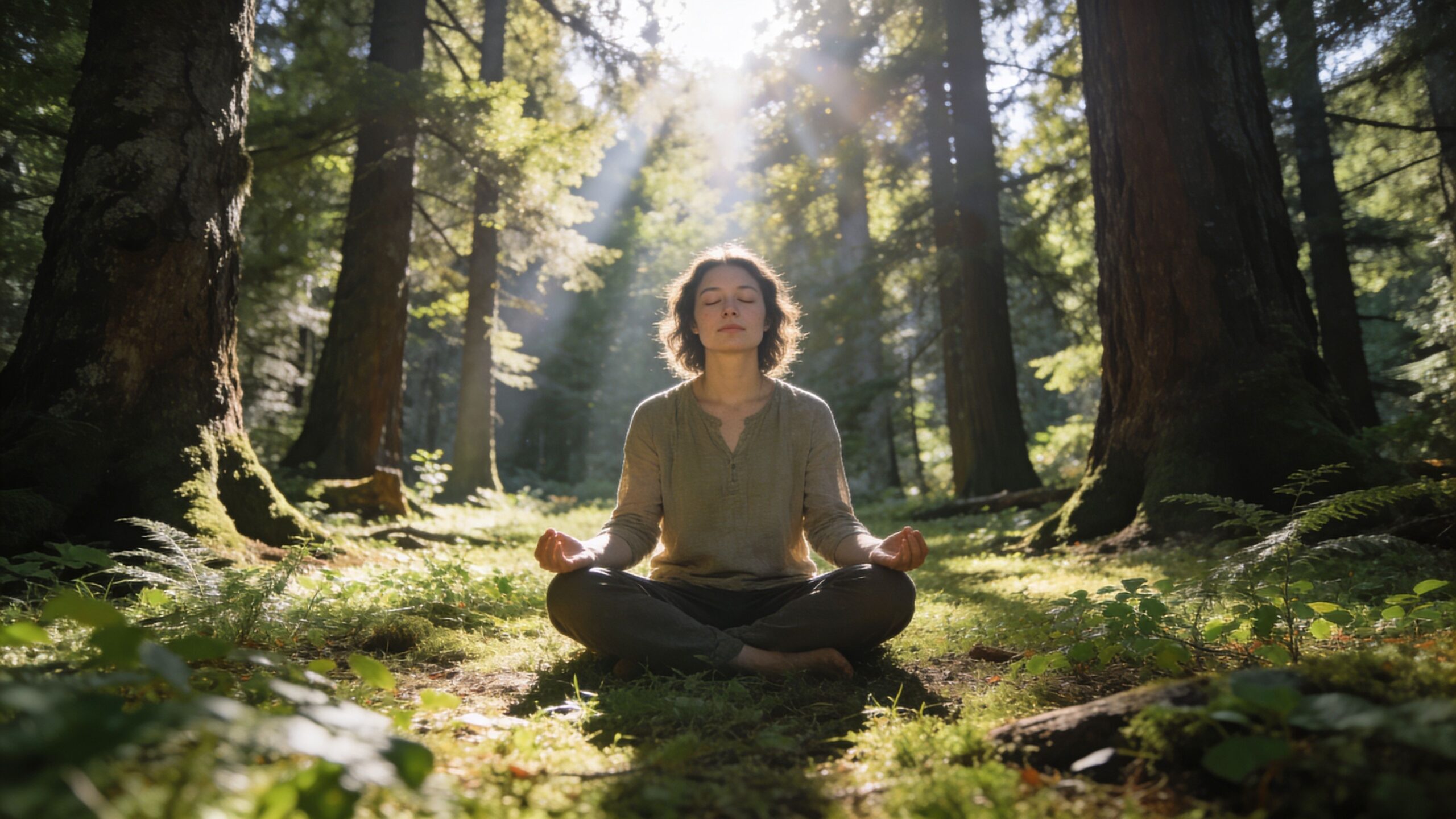
Before the ceremony
Preparation usually includes practical restrictions and mental framing. One commonly discussed element is the dieta, a pre-retreat diet intended to simplify food intake and reduce interference. According to Behold Retreats’ Oregon ayahuasca overview, a pre-retreat dieta can amplify receptor sensitivity by 25-30%.
Whether a retreat explains that in scientific or ceremonial language, the practical point is the same. Preparation is meant to reduce noise and help participants arrive in a more stable state.
People also benefit from setting intentions carefully. A useful intention is specific enough to orient you, but loose enough not to control the outcome. “I want to understand my grief” is often more workable than “I need one ceremony to fix my life.”
For a broader neurological context around psychedelic states, this overview of psilocybin effects on the brain can help frame why preparation and context matter so much.
During the ceremony
Ceremonies vary, but some common features appear repeatedly. The same Behold Retreats overview says ceremonial protocol often includes a dual-dose structure and is guided by icaros, or sacred songs. It also notes that the experience commonly lasts 4-6 hours and that purging occurs in about 80% of participants, where it is often viewed as catharsis.
That doesn’t mean your experience will follow a script. Some people encounter strong visual material. Others feel physical discomfort, emotional release, fear, relief, or long stretches of inward reflection.
The ceremony isn’t a performance test. You don’t need visions for the night to be meaningful, and intensity alone doesn’t measure value.
A grounded explanation of ceremony flow is often more useful than dramatic storytelling, so this video gives a broader frame for what people may encounter:
After the ceremony
Many seekers often underestimate the work. The same source emphasizes that post-ceremony integration is vital for processing the experience. That may mean journaling, therapy, peer support, rest, changes in habits, or giving your nervous system time to settle.
A powerful ceremony can leave you with insight, but insight isn’t the same as change. Integration is the slow part where you decide what to do with what surfaced. Sometimes the most responsible outcome is not a dramatic life overhaul. It’s one honest conversation, one healthier boundary, or one pattern you stop repeating.
Frequently Asked Questions About Oregon Ayahuasca Retreats
What’s the difference between an Oregon psilocybin service center and an ayahuasca retreat
They are not the same category. Oregon has a regulated framework for psilocybin services, while ayahuasca sits in a different and less clear legal position. If a retreat uses language that makes it sound equivalent to a licensed psilocybin center, ask for specifics.
Can you find a legal non-religious ayahuasca retreat in Oregon
That’s the wrong assumption to start with. In the U.S., the strongest legal pathway for ayahuasca use has generally been tied to religious freedom arguments or specific exemptions, not a broad non-religious wellness market. If a retreat presents itself as plainly legal without explaining the basis, treat that as a reason to investigate further.
Are there many ayahuasca retreats in Oregon
Yes, there appears to be a meaningful retreat scene. As noted earlier, one Oregon-focused overview says over 30 retreats operate in the state. That tells you there are options. It does not tell you which ones are competent, ethical, or suitable for your situation.
How much does a retreat usually cost
One Oregon retreat roundup states that retreats can cost $2000-4000 for 4-day programs that include meals and accommodations. Costs vary by format, housing, support level, number of ceremonies, and what kind of preparation or integration is included.
What should a good retreat include besides ceremony
Look for a full process, not just a night of dosing. A strong retreat should include real screening, informed consent, practical preparation guidance, support during ceremony, and some form of integration afterward. If the entire offer is built around mystique, urgency, or transformation promises, that’s not enough.
Is ayahuasca physically safe
The answer depends heavily on the person and the container. Traditional brews were not linked by autopsy to the deaths noted earlier, but that doesn’t remove risk. Medication interactions, poor screening, unsafe settings, and weak facilitation can all turn a serious experience into a dangerous one.
If you’re exploring psychedelics with care and want a grounded source for adult-use mushroom products in Michigan, Metro Mush is worth a look. They serve the Detroit and Ann Arbor metro areas with a curated menu of psilocybin products, including dried mushrooms and approachable edibles, while keeping the shopping process simple for adults who value clarity, consistency, and convenience.