Want to avoid a bad trip? It really comes down to managing three things: your mindset (set), your environment (setting), and your dosage. Getting these right is the single best thing you can do to ensure a safe and positive experience with psilocybin.
Your Game Plan for a Positive Psilocybin Journey
Thinking about a psychedelic journey can be exciting, but the fear of a "bad trip" is real and can stir up a lot of anxiety. Here’s the good news: difficult experiences rarely come out of nowhere. They almost always happen when a few key principles are overlooked.
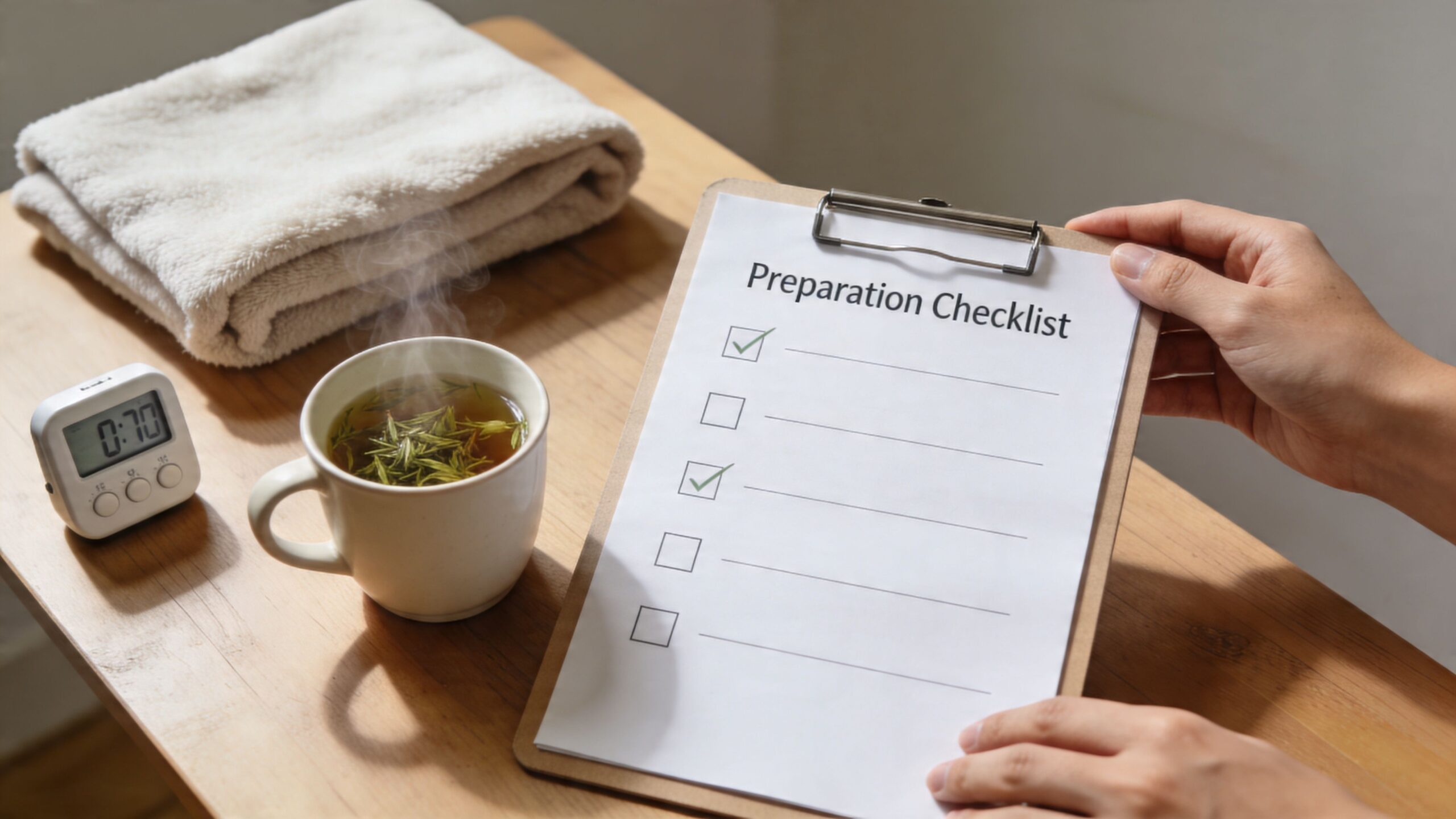
Figuring out how to steer clear of a bad trip is all about laying a solid foundation before you even take anything. This isn’t about some complicated ritual. It’s about practical, common-sense steps that put you in the driver's seat. Think of it as a pre-flight checklist for your consciousness.
The Three Pillars of a Safe Trip
A positive experience is built on three pillars that all support each other. If one is shaky, the whole structure can become unstable, making a challenging time more likely.
Set (Your Mindset): This is all about your internal weather. It’s your mood, your intentions, and what you expect from the trip. If you go in feeling stressed, anxious, or emotionally fragile, you're setting the stage for a rough ride.
Setting (Your Environment): Your physical surroundings are huge. You want a safe, comfortable, and familiar space where you won't be interrupted. A chaotic or unpredictable place, like a loud party or a crowded public park, can easily flip a switch to paranoia and fear.
Dose: This is the one variable you have complete control over. The golden rule here is "start low, go slow." A higher dose doesn't automatically mean a better trip, but it absolutely ramps up the intensity and the odds of feeling overwhelmed.
Key Takeaway: The outcome of your journey isn't just up to chance. When you intentionally manage your mindset, create a safe environment, and choose a sensible dose, you're stacking the deck in your favor for a positive, meaningful experience.
Why You Shouldn't Go It Alone at First
Another crucial piece of this puzzle is having support. If you’re new to psilocybin—or even if you’re an experienced user trying a higher dose—having a sober trip sitter is a game-changer. This is just a trusted friend who hangs back, stays clear-headed, and is there to offer a reassuring word or a glass of water if you need it. Their calm presence can be the anchor you need if things start to feel turbulent.
For a more detailed walkthrough of these concepts, check out our guide on magic mushrooms for beginners.
We'll dive deep into each of these pillars throughout this guide, giving you a complete toolkit to prepare for your journey.
Mastering Your Mindset and Environment
Let's get real about two words you’ve probably heard a thousand times: 'set' and 'setting.' They aren't just psychedelic buzzwords; they are the two most powerful dials you can tune to shape your experience. Getting a handle on them is the core skill for navigating a journey and avoiding a difficult time.
Think of it this way. Your 'set' is your internal landscape—your mood, your thoughts, your intentions for the day. Your 'setting' is everything external—the room you're in, the music playing, the people you're with. Getting one of them wrong is like trying to sail a ship without checking the weather or the condition of your boat. You're just asking for trouble.
Cultivating the Right Headspace
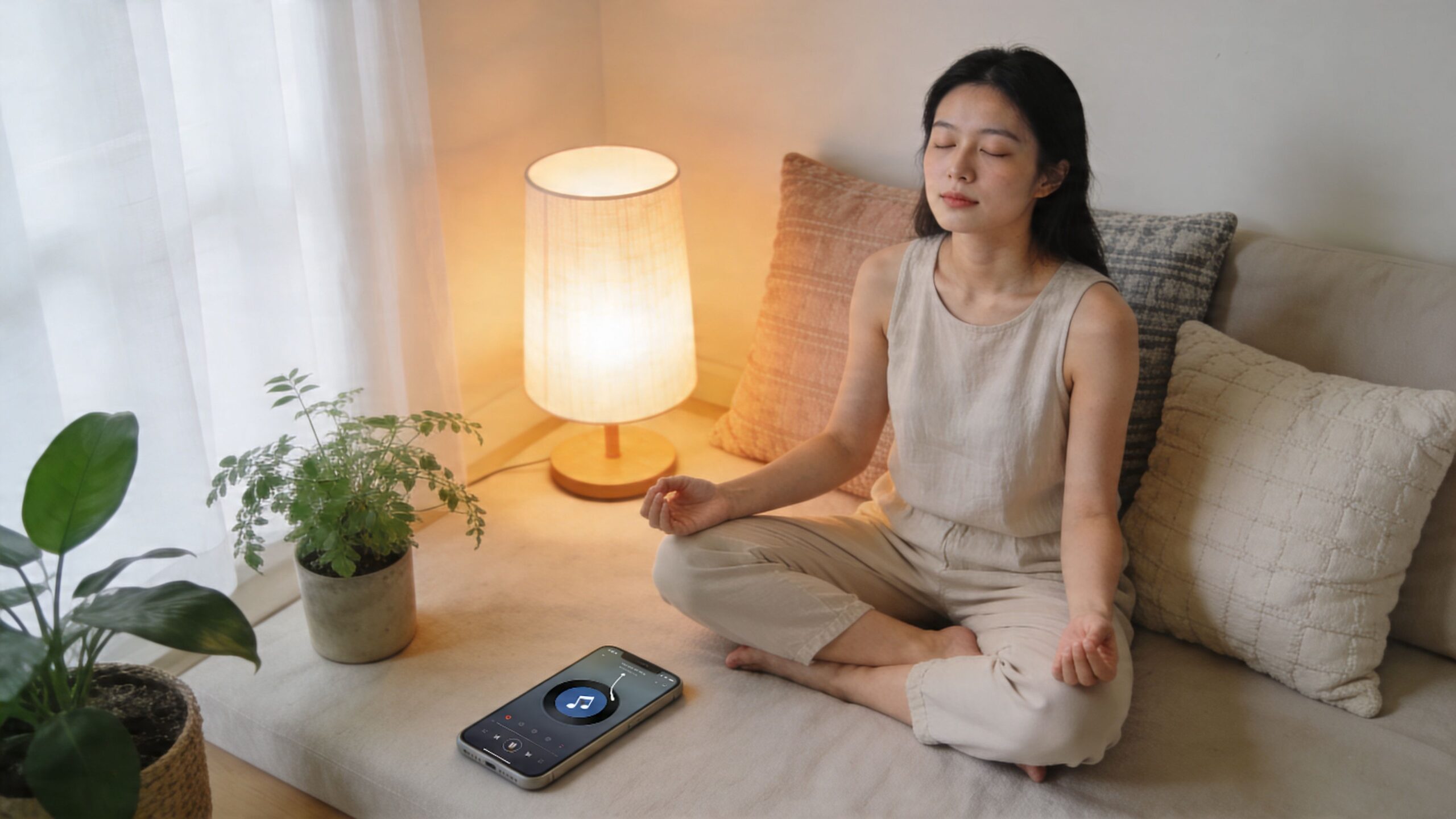
Your state of mind is everything. Seriously. Psilocybin acts as an amplifier for whatever you’re already feeling. If you're feeling open, happy, and curious, it can turn those feelings into profound moments of joy. But if you’re stressed, anxious, or carrying heavy emotions, it can magnify those into a spiral of fear and paranoia.
Before you even think about your dose, do an honest check-in with yourself. How are you really feeling? Are you dealing with a major life crisis, fresh grief, or just a ton of anxiety from work? If the answer is yes, it is always okay to postpone your journey. Pushing through a bad headspace is the number one reason people have a difficult experience.
This isn’t just a hunch; the data backs it up. Your mindset can dictate 60-70% of your trip's outcome. Going in with high anxiety can literally double the risk of a bad trip, while having a positive outlook can cut that risk by 50%. A negative emotional state can spike frightening experiences by as much as 45%.
Setting Your Intention
Having an intention can be a powerful anchor for your trip. This doesn't have to be some grand, spiritual mission. It can be something simple and grounded.
Maybe it's, "I want to feel more connected to my partner," or "I hope to get a new perspective on this creative block I'm facing." It could even be as simple as, "I just want to relax and have a fun, giggly afternoon."
An intention gives your mind a gentle focus. When things get intense or confusing, you can come back to it. It’s a North Star that reminds you why you started the journey in the first place.
A Quick Self-Assessment Before You Begin:
- Emotionally: On a scale of 1-10, how am I feeling today? Am I calm and positive, or am I agitated and worried?
- Mentally: Is my mind racing, or do I feel clear and present?
- Physically: Am I well-rested and hydrated? Feeling sick or run-down can easily turn into mental discomfort during a trip.
If you find yourself constantly dealing with stress, exploring some natural remedies for stress relief can be a huge help, both for daily life and for preparing your mind for a journey.
Designing a Safe and Comfortable Setting
Your environment is the physical container for your entire experience. It needs to feel like a sanctuary—a place where you can completely let go without a single worry about the outside world.
Just think about the difference. Imagine taking mushrooms at a chaotic house party in Detroit with blasting music and a crowd of strangers. Now, picture yourself in a cozy Ann Arbor apartment with a trusted friend, soft lighting, and your favorite chill playlist. The potential for anxiety in that first scenario is sky-high.
Your setting needs to be a place where you feel physically safe and psychologically comfortable. No exceptions.
Your Sanctuary Checklist:
- Tidy Up: A cluttered space often leads to a cluttered mind. Take 15 minutes to clean up and organize. It makes a huge difference.
- Control the Vibe: Make a playlist of calm, ambient, or instrumental music. Avoid anything too aggressive or emotionally loaded.
- Comfort is Key: Grab all the soft blankets and pillows you can find. Wear loose, comfortable clothes you can move in.
- Remove Stressors: Put your phone on silent and maybe even in another room. Let people know you'll be unreachable for a few hours.
- Embrace Nature (Safely): A private backyard, a quiet and familiar park, or even just having houseplants around can be incredibly grounding. If you choose the outdoors, make sure it’s a spot you know well and where you won’t be disturbed.
By carefully preparing your mind and your environment, you aren't just crossing your fingers for a good trip—you are actively creating the conditions for one. Trust me, this prep work is the most important step you can take.
Smart Dosing for a Smooth Experience
Of all the things that shape a psychedelic journey, your dose is the one you have total, precise control over. Getting it right is probably the single most effective way to sidestep a difficult experience.
It’s easy to fall into the trap of thinking a bigger dose equals a bigger, more profound trip. In reality, it often just means a bigger risk of feeling completely overwhelmed.
The one philosophy you need to burn into your brain is "start low and go slow." This isn't just some overly cautious advice; it's a core harm-reduction strategy that works. You can always take more on a future journey, but you can never, ever take less once it's in your system.
Why Less Is Often More
Higher doses of psilocybin don't just amplify the experience—they change its very nature. What might be some gentle visual waviness and deep thoughts on a low dose can become a full-blown dissolution of your ego and reality on a high one. For anyone who isn't ready for that, the shift can be absolutely terrifying.
The goal isn't to push yourself to the breaking point. It's about finding a level that matches your intention and comfort zone.
- For first-timers: Think low. A dose on the lighter side is the perfect way to get your feet wet. You'll get a real feel for the mushroom's character without being thrown into the deep end.
- For experienced folks: Even if you've tripped a dozen times, be smart about a new batch or strain. Potency can swing wildly from one mushroom to the next.
Profound insights can happen at any dose. Don't feel pressured to go for a "heroic" amount to have a meaningful experience.
Deciphering Your Dose
Dosing can feel like a guessing game, especially with raw mushrooms where potency is all over the map. But we can still use some general guidelines to help you make a smart choice. The recommendations below are based on dried Psilocybe cubensis, a common and moderately potent species, to give you a reliable starting point.
Here's a quick guide to understanding what different doses typically feel like and when they might be appropriate.
Recommended Psilocybin Doses for Different Experiences
| Dosage (Dried Mushroom Equivalent) | Experience Level | Typical Effects | When to Use |
|---|---|---|---|
| 0.1g – 0.5g (Microdose) | Beginner to Advanced | Sub-perceptual; may improve mood, creativity, and focus without intoxication. | For therapeutic benefits or to gently explore psilocybin without a "trip." |
| 0.5g – 1.5g (Low Dose) | Beginner | Mild euphoria, enhanced senses, gentle visuals (e.g., "breathing" walls). | A great first-time dose or for a light, manageable social or creative experience. |
| 1.5g – 3.0g (Moderate Dose) | Intermediate | Stronger visuals, deep introspection, significant shifts in perception and thought. | For those with some experience seeking a classic psychedelic journey. |
| 3.0g – 5.0g+ (High/Heroic Dose) | Experienced Users Only with a Sitter | Intense visuals, ego dissolution, mystical experiences, potential for disorientation. | Only for seasoned users in a controlled setting with a sober, experienced sitter. |
Taking a high dose isn't a badge of honor. It’s a serious commitment that demands respect and careful preparation. Jumping into that territory without experience is a common recipe for a very, very difficult time.
A study from Johns Hopkins looking at over 1,000 mushroom trips found a stunning result: users who took low to moderate doses (0.5-2g) reported zero bad trips. That number skyrocketed to 28% for those who took heroic doses over 5g.
The Dangers of Mixing
One of the easiest ways to ruin a good trip is to start mixing in other substances, especially alcohol. It might seem like having a beer will "take the edge off," but it usually backfires. Alcohol messes with your judgment and lowers inhibitions, making you more likely to get stuck in an emotional loop or act impulsively.
This isn't just a friendly warning. Emergency room data from 2015-2020 showed that a massive 62% of psilocybin-related incidents involved mixing drugs, with alcohol being the most common culprit. The data also showed that doses over the 3-gram equivalent increased the risk of a bad trip by 300%, turning what should have been an insightful journey into a frightening one for nearly one in three users in that group.
The takeaway is crystal clear: Stick to psilocybin alone.
Predictability: Why Edibles and Strains Matter
Not all mushrooms are created equal. Far from it. A potent strain like Penis Envy can be 1.5 to 2 times stronger than a more common one like Golden Teacher. If you're working with raw mushrooms, you absolutely have to respect that variability.
This is where precisely dosed products like chocolates and drinks have a massive advantage. When you use products from a reliable source like Metro Mush, you take the guesswork out of the equation. You know exactly how much you're taking, leading to a much more predictable and controllable experience.
For those curious about the art of taking very small, non-intoxicating amounts for other benefits, our guide on how to microdose with magic mushrooms breaks it all down for you.
Ultimately, smart dosing is about being honest with yourself—about your experience, your intentions, and your respect for these powerful fungi. By starting low, keeping it clean, and choosing a dose that aligns with your goals, you're building a powerful foundation for a safe and positive experience.
The Role of a Trip Sitter vs. Going Solo
Deciding whether to fly solo or have a friend along for the ride is one of the biggest choices you'll make, especially when you're just starting out or aiming to go deeper. Having a supportive friend—a trip sitter—is a very different path from journeying on your own. Both have their place, but one is clearly the smarter choice for beginners.
A trip sitter is simply a trusted, sober friend who hangs back and stays present while you have your experience. Their job isn’t to guide or direct your trip. Think of them as a lifeguard for your mind; you hope you won’t need them, but just knowing they’re there brings an incredible sense of security. This alone can be enough to let you relax, let go, and keep any rising anxiety in check.
What Makes a Good Trip Sitter
Just to be clear, not any friend is right for this role. Your ideal sitter is someone you feel completely at ease with—someone who won’t judge you and can stay calm even if you get emotional or a little lost. They need to be supportive without being intrusive, essentially creating a safe container for your experience to unfold on its own terms.
A good sitter can be a total game-changer. Harm reduction experts have known for years that a supportive setting dramatically lowers the odds of a difficult trip. For instance, a chaotic environment like a festival can increase your risk of a bad trip by up to four times compared to a controlled home setting with a sitter.
A landmark Johns Hopkins survey of over 2,000 people found that even among those who had challenging psychedelic experiences, a staggering 84% still reported positive long-term outcomes. The key factor? Most of them had a supportive person present. You can dig into these findings and more on the importance of trip sitting from the Alcohol and Drug Foundation.
The Trip Sitter's Playbook:
- Do: Stay completely sober and present for the entire journey.
- Don't: Bring your own stress or drama into the room. You're there to be a calm anchor.
- Do: Offer simple reassurances if needed, like "You're safe" or "This feeling will pass."
- Don't: Try to interpret their experience for them. That’s their work to do.
- Do: Help manage the environment—gently changing the music, dimming the lights, or offering water.
- Don't: Hover or be overbearing. Give them space to go inward.
The Nuances of a Solo Journey
Going into a psychedelic state alone is a whole different ballgame. It’s an experience that really should only be considered after you’ve gained significant experience and self-awareness with mushrooms. A solo trip creates a unique space for deep, uninterrupted introspection, free from the energy or influence of another person. But it also means you’re 100% responsible for navigating your own state and environment.
If you decide to go solo, your prep work is everything. You absolutely must have a solid grasp of how psilocybin affects you personally, which means you should already have a few successful, manageable trips with a sitter under your belt first.
Before You Go Solo, You Must:
- Stick to a familiar dose. Never, ever try a higher dose for the first time by yourself. Stick to a level you already know you can handle with ease.
- Prep your space completely. Have your playlist ready, water and snacks within arm's reach, and cozy blankets set up. Your space needs to be your sanctuary.
- Have a grounding plan. This could be a pre-written note to yourself reminding you that the experience is temporary and you are safe. It could also be a specific calming song you know will bring you back to center.
- Put a friend on call. Let a trusted friend know what you're doing and ask them to be available by phone. Just knowing someone is a text away can be a huge comfort. Keep your phone on silent unless you truly need it.
At the end of the day, choosing a trip sitter is one of the most effective harm reduction strategies out there. For anyone new to psilocybin or exploring higher doses, it's the wisest and safest path. A solo journey can be incredibly profound, but it’s a practice best saved for when you’ve built the confidence and experience to navigate the waters on your own.
Navigating Difficult Moments and Post-Trip Integration
Even with the most careful preparation, a journey can sometimes take a detour into challenging territory. The intensity might ramp up, unexpected emotions can bubble to the surface, and you could find yourself in a headspace you didn't anticipate. Knowing how to handle these moments is just as crucial as the prep work you did beforehand. Think of this as your in-trip action plan.
The key isn't to fight the experience but to learn how to move with it. A difficult moment doesn't have to become a "bad trip"; more often than not, it’s just a signal that something needs to shift. The goal is to gently guide yourself back to a place where you feel safe and comfortable.
Simple Techniques to Shift the Energy
When you feel that first wave of anxiety or discomfort starting to build, your gut reaction might be to panic. Don’t. Instead, try one of these simple, powerful grounding techniques. They work by changing your focus and breaking the loop of negative thoughts before it can really take hold.
- Change the Scenery: Just getting up and moving from the living room to the bedroom can completely change the vibe. If you have a safe, private backyard, stepping outside for a moment can work wonders. A shift in physical space often creates a mental shift, too.
- Change the Music: Music is an incredibly powerful tool for setting the emotional tone of a trip. If your current playlist suddenly feels too intense or jarring, switch it up. Put on something you know is calming—maybe some soft ambient tracks, gentle instrumental music, or even a guided meditation.
- Focus on Your Breath: This is a classic for a reason. Close your eyes and put all of your attention on the physical sensation of breathing. Feel the air come in through your nose, fill your lungs, and then leave your body. You don’t need to change how you’re breathing, just observe it. It pulls you out of your head and back into your body.
The Power of Surrender
It sounds counterintuitive, but sometimes the best thing you can do in a tough moment is to simply surrender to it. Fighting against difficult feelings or visuals often just gives them more power. It's like trying to hold a beach ball underwater—the more you push down, the more forcefully it's going to pop back up.
Surrendering just means acknowledging the feeling without judging it and allowing it to exist. Try reminding yourself: "I am safe. This is temporary. This feeling is part of the experience, and it will pass."
By leaning into the discomfort instead of resisting it, you often find that the scary monster in the corner was just a shadow. Many people I've talked to say the moments they finally "surrendered" were the ones that led to their most profound personal breakthroughs.
Making Sense of It All After the Journey
The experience doesn’t stop when the visuals fade. The hours and days that come after are a critical time for integration—the process of making sense of your journey and weaving its lessons into your actual life. Skipping this step is like reading a life-changing book and then immediately forgetting everything you learned.
Reflection is what turns a psychedelic experience from just a strange afternoon into a real catalyst for personal growth. It helps you unpack the emotions, thoughts, and insights that came up for you.
This visual breaks down the crucial choice of your support system, which is a key part of both the journey itself and how you integrate it afterward.
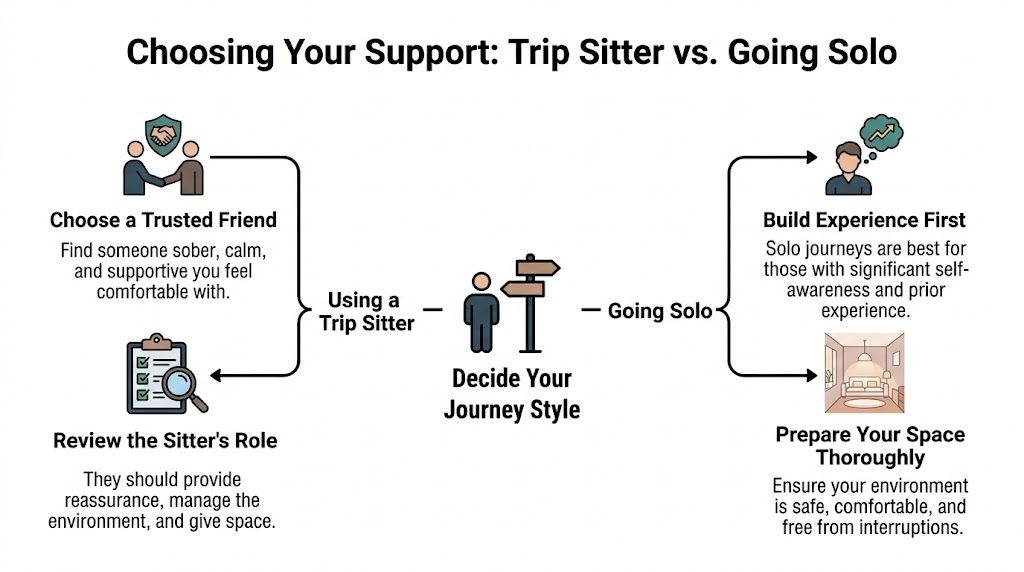
The image drives home that whether you go solo or have a sitter, the foundation for a good outcome is always deliberate preparation, safety, and self-awareness.
Practical Integration Tools
You don’t need a complicated system for integration. A few simple, consistent practices can make all the difference.
Journaling Prompts:
The day after your trip, grab a notebook and just free-write on some of these questions. Don't censor yourself; let whatever comes to mind flow onto the page.
- What were the most memorable moments, good or bad?
- What feelings came up for you? Where did you feel them in your body?
- Did any specific memories, people, or ideas surface? Why do you think that was?
- Is there one small, actionable change I can make in my life this week based on what I learned?
Talk It Out:
Sharing your experience with a trusted friend can be incredibly grounding. If you had a trip sitter, they’re the perfect person to talk to. Just the act of putting your journey into words helps solidify your insights. Make sure you choose someone who will listen without judgment.
Knowing When to Seek Professional Support
Most of the time, you can integrate a challenging trip on your own or with a friend’s support. But if you find yourself feeling persistently anxious, disconnected, or just not like yourself in the days and weeks that follow, it's a good idea to seek professional help. A therapist, especially one who has experience with psychedelic integration, can provide a safe space to process what happened and help you find your footing again.
Frequently Asked Questions About Psilocybin Safety
Even after reading a guide, you're probably still left with a few nagging questions. That's completely normal.
Getting those final doubts cleared up is key to feeling confident going into a journey. We get asked a lot of the same questions by folks here in the Detroit and Ann Arbor communities, so let's tackle the big ones head-on.
Is Psilocybin Physically Dangerous?
Let's get this one out of the way first, because it's a huge source of anxiety for many. The research is overwhelmingly clear: psilocybin itself has an extremely low physical toxicity. You can't fatally overdose on mushrooms alone.
Unlike substances like alcohol or opioids, psilocybin doesn't shut down your body's essential functions, like breathing. The real risks are almost entirely psychological and behavioral, which is exactly why this whole guide is focused on managing your mindset, environment, and dose. That's where you have the power.
Key Insight: The biggest physical risk during a trip comes from bad decisions made while you're disoriented, not from the mushrooms themselves. This is precisely why having a sober sitter and a safe, pre-planned space is non-negotiable. It’s your best defense against accidents.
How Long Does a Bad Trip Last?
When you’re stuck in a challenging experience, time can warp, and it might feel like it will never end. I promise you, it will. A standard psilocybin journey lasts somewhere between four to six hours. A difficult patch within that trip is almost always much, much shorter.
Just knowing that timeline can be a powerful anchor. Repeating to yourself, "This is temporary, this will be over in a few hours," can be the key to letting go and surrendering to the flow instead of fighting it.
Can a Bad Trip Cause Long-Term Problems?
This is a great question, and the answer has some important nuances. For the vast majority of people, even a really tough trip won't cause lasting damage. In fact, many people who've had difficult experiences look back on them as some of the most profound and valuable moments of their lives—especially when they had good support.
However, there's a real, albeit small, risk for anyone with a personal or family history of psychotic disorders like schizophrenia or bipolar disorder. For these individuals, psilocybin can potentially trigger or worsen an underlying condition. This is why an honest self-assessment of your mental health history isn't just a suggestion; it's a critical safety step. If you don't have these predispositions, the risk of long-term issues is incredibly low.
At Metro Mush, we believe that education is just as important as the products themselves. Our goal is to empower you to explore psilocybin safely and responsibly.
Ready to plan your journey with precisely dosed edibles and classic strains? Visit us online at https://metromush.com.