
You're probably here because your interest in psilocybin doesn't feel casual.
Maybe you've already spent time reading about set and setting. Maybe you care about what goes into your body. Maybe you're the kind of person who checks ingredients, prefers local businesses, and wants your choices to line up with your values. Then you hit a wall. Most advice about responsible consumption talks about coffee, groceries, clothing, or electronics. It rarely tells you how to think clearly about mushrooms, mushroom chocolates, or shroom drinks in a local market like Detroit or Ann Arbor.
That confusion makes sense.
Psilocybin sits at the intersection of wellness, risk, ethics, and community. A responsible choice isn't only about what you buy. It's also about why you're using it, how you prepare, how much you take, who made it, what kind of waste it creates, and whether your habits support a healthier local scene or just more impulse use.
Responsible consumption gives you a way to sort all of that out. Not as a moral test. Not as a rigid set of rules. As a practical framework for making better decisions before, during, and after a psychedelic experience.
The Rise of the Mindful Consumer
A familiar scene plays out across Southeast Michigan.
Someone is curious about psilocybin, but they don't want to approach it recklessly. They may have heard friends talk about microdosing, creative breakthroughs, emotional release, or a deeper sense of connection. At the same time, they're cautious. They want to know what they're taking, where it came from, how to avoid a bad experience, and whether the business behind it is acting responsibly.
That mindset matters.
People already bring this kind of care to other parts of life. They buy produce from local markets. They read labels on supplements. They ask whether coffee is fairly sourced. They think about packaging waste, labor practices, and whether a product encourages health or just convenience. It's natural to bring those same questions into psychedelic use.
Why this matters in the local scene
Detroit and Ann Arbor have a strong culture of informed, values-driven consumption. People talk openly about plant medicine, community care, and harm reduction. But for psilocybin, a lot of buyers still get pushed toward vague product descriptions, unclear sourcing, and word-of-mouth guidance that may or may not be accurate.
That creates a strange gap. A person can be thoughtful, educated, and safety-conscious, yet still not have a clear checklist for what responsible consumption looks like in practice.
Responsible use starts before the first dose. It begins with the questions you ask when you decide whether to buy at all.
What mindful use looks like day to day
It often looks simple:
- Pausing before purchase instead of buying because a friend is excited.
- Choosing a format that fits your intention instead of picking the strongest option.
- Making room for recovery and reflection instead of stacking psychedelics into a busy weekend.
- Paying attention to product transparency instead of assuming all mushroom products are made with the same care.
The goal isn't perfection. It's awareness.
If you've ever thought, “I want to approach this, but I want to do it thoughtfully,” you're already close to the heart of what responsible consumption means.
What Responsible Consumption Really Means
At its core, responsible consumption means making choices with the full impact of those choices in mind.
A simple analogy helps. Think about fair-trade coffee. Its selection often extends beyond just flavor. Consumers choose it because they care about the people who produced it, the way it was sourced, and the broader effect of their purchase. The same logic applies to psilocybin. What you consume affects more than your own moment of use.
The basic idea
When people ask, what is responsible consumption, they're usually asking a deeper question: how do I make a choice that's good for me without ignoring the effects on other people and the world around me?
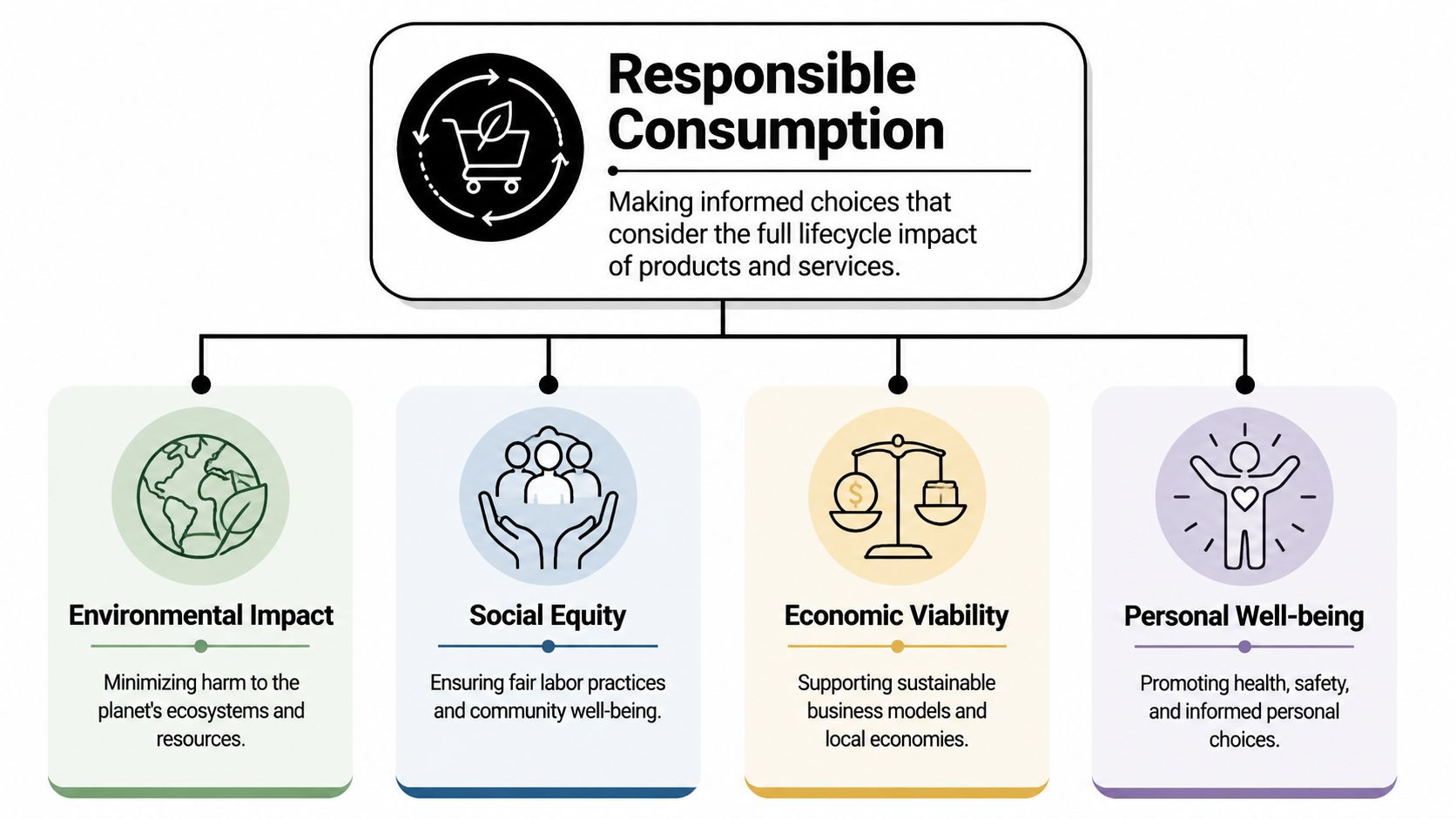
That question has four practical parts.
| Pillar | What it asks |
|---|---|
| Environmental impact | How much waste, energy use, and material use does this product involve? |
| Social equity | Were people treated fairly across the supply chain and in the local community? |
| Economic viability | Does this support a healthier local economy instead of a disposable, extractive one? |
| Personal well-being | Is this choice safe, informed, and aligned with my needs and limits? |
Why this isn't just personal preference
Responsible consumption exists because consumption has real, measurable consequences. The global picture is stark. As of 2023, the material footprint per capita in high-income countries was about 10 times higher than in low-income countries, and high-income economies draw roughly one-third of global material extraction while accounting for a much smaller share of the world's population, according to the United Nations SDG 12 report.
That doesn't mean one mushroom purchase by itself changes the world. It means our habits add up, and wealthy consumers have a bigger responsibility to pay attention.
How this applies to psychedelics
In a psychedelic context, the four pillars sound like this:
- Environmental impact asks whether a product uses excessive packaging or wasteful production methods.
- Social equity asks whether a business is transparent, community-minded, and respectful in how it operates.
- Economic viability asks whether your purchase supports careful, sustainable local commerce rather than shortcuts.
- Personal well-being asks whether your use is informed, safe, and intentional.
Practical rule: If a product or purchase encourages confusion, excess, secrecy, or impulse, it probably isn't aligned with responsible consumption.
That's why responsible consumption is bigger than “buy less.” Sometimes it means buy differently. Sometimes it means wait. Sometimes it means deciding not to consume at all.
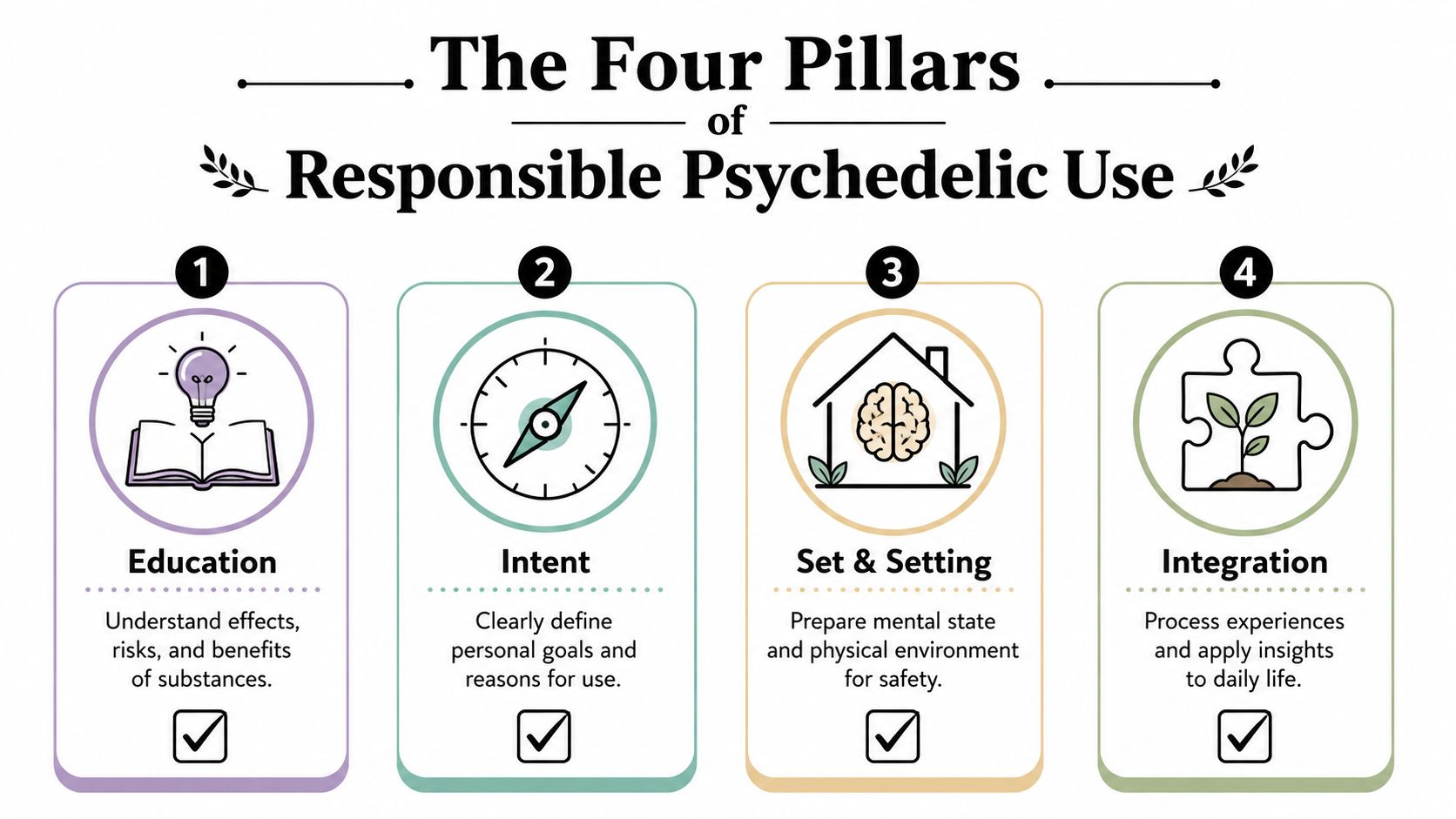
The Four Pillars of Responsible Psychedelic Use
Responsible psychedelic use starts with your own conduct. Before you worry about packaging, sourcing, or community ethics, you need a solid personal foundation.
Safety and harm reduction
Psychedelics aren't casual for everyone. Even a meaningful experience can become overwhelming if you go in uninformed, combine substances carelessly, or use them in a stressful environment.
Responsible use begins with basic harm reduction. Know what you're taking. Avoid mixing without understanding the risks. Don't treat intensity as a badge of honor. If you're worried about difficult experiences, Metro Detroit readers can start with this practical guide on how to avoid bad trips.
A useful mindset is simple: respect the substance enough to prepare for it.
Intentional set and setting
Two people can take the same product and have very different experiences. Your mindset matters. Your environment matters. The people around you matter.
If you're emotionally raw, sleep-deprived, under pressure, or entering the experience with unresolved fear, that can shape the session. If your setting feels unsafe, chaotic, or public, that can do the same.
Here's a quick check before any session:
- Mental state. Are you grounded enough for an altered state?
- Physical space. Is the setting quiet, comfortable, and predictable?
- Company. Are you with people you trust?
- Timing. Do you have enough time before and after to avoid rushing?
Later in this section, it helps to hear this in a different format:
Mindful dosing
Mindful dosing means matching the amount to your experience level, your intention, and the format you're using.
A dried mushroom experience and a chocolate bar experience can feel different in pacing and predictability. A low-dose evening for mood or introspection is not the same as a deeper session intended for major emotional work. Many problems begin when someone treats all product types as interchangeable or jumps too quickly toward intensity.
Start lower than your ego wants. Leave room to learn how your body and mind respond.
Legal and ethical awareness
Psilocybin culture often talks about freedom. Responsible use adds accountability to that conversation.
That means staying informed about your local context, respecting shared spaces, not pressuring hesitant friends, and avoiding behavior that puts other people at risk. It also means being honest with yourself about why you're using. Curiosity is one thing. Escapism without support is another.
A grounded summary
The four pillars are easy to remember:
- Learn before you take
- Set a clear intention
- Prepare your mind and environment
- Reflect afterward instead of chasing the next experience
Used together, they turn psychedelics from a novelty into a practice.
Beyond the Self Sourcing and Sustainability
A lot of people stop at personal safety. That's important, but it's only half the picture. Responsible consumption also asks what kind of system your purchase supports.
Why sourcing is unusually hard in psilocybin
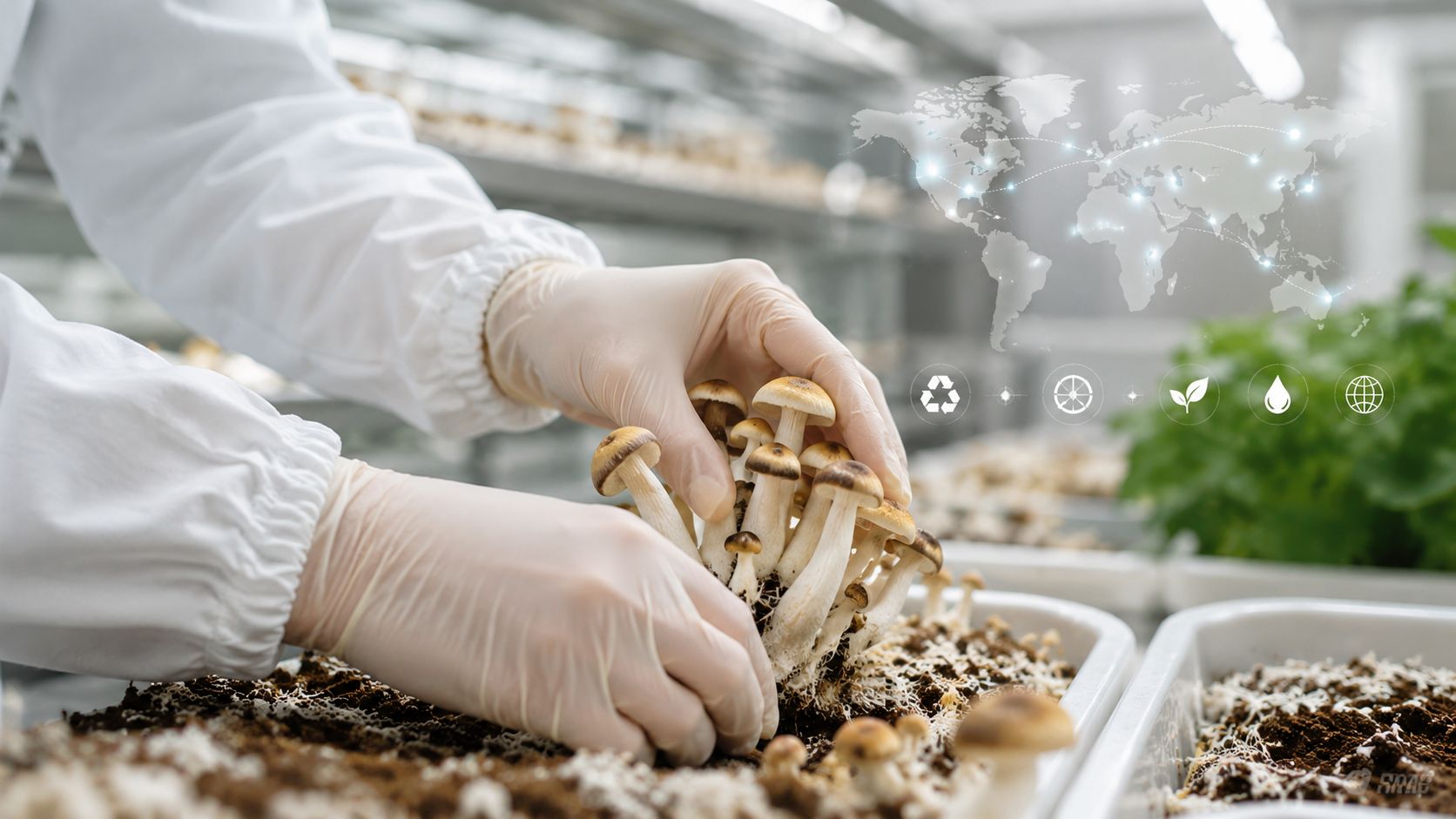
Consumers often get stuck. Existing guidance on responsible consumption rarely addresses how consumers can apply these ideas in niche product categories such as psilocybin, where transparency and sourcing are opaque. There is little to no guidance for consumers on how to assess energy use, water footprint, packaging waste, and labor conditions in psychedelic supply chains, as noted in this discussion of responsible consumption and its limits in niche markets.
That means the buyer has to become more observant.
With groceries, many people know what to look for. With mushroom products, the clues are less familiar. Indoor cultivation may involve significant electricity use. Some products come with layers of packaging that add waste. Labor practices are rarely visible. “Premium” branding can hide a lot.
Questions worth asking before you buy
You don't need a lab report to become a more responsible consumer. You need better questions.
- How transparent is the seller? Can they explain what the product is and how it should be used?
- How much packaging comes with it? Is it minimal, reusable, or excessive?
- Does the business encourage over-purchase? Or does it help people buy according to real need?
- What signals of care are visible? Clear labeling, storage guidance, and educational materials all matter.
- Does the product seem built for thoughtful use? Or for novelty and impulse?
A useful way to evaluate products
A simple comparison can help:
| If you notice this | It may suggest |
|---|---|
| Clear product details and use guidance | A business is trying to support informed decisions |
| Heavy, flashy, unnecessary packaging | More material use without added benefit |
| Pressure to buy more than you need | Consumption-first incentives instead of mindful use |
| Openness about sourcing and handling | Greater accountability |
If you can't tell what you're buying, how it was made, or why the packaging is so elaborate, slow down.
Think like a local investigator
Responsible consumption in psychedelics means asking the same kinds of questions conscious shoppers ask in other categories, then adapting them to this market.
Where did this come from? How much waste does it create? Does the seller educate or just sell? Does this purchase reinforce careful community standards, or does it reward opacity?
Those questions won't give you perfect certainty. They will make you a harder customer to mislead.
Harm Reduction and Building a Responsible Community
Psychedelic responsibility isn't private for long. The way people use, talk about, and share psilocybin shapes the local culture around it.
That's why harm reduction is more than self-protection. It's a community practice.
What responsible community behavior looks like
A healthier scene forms when people share accurate information, respect boundaries, and avoid turning every conversation into hype. New users often learn from friends before they learn from formal educational resources. If those friends are careless, dismissive, or performative, confusion spreads fast.
Responsible community members do a few things differently:
- They speak plainly about risks instead of pretending every trip is healing.
- They normalize slower entry for first-timers.
- They encourage sober support when someone is having a hard time.
- They avoid social pressure around dose, frequency, or intensity.
One of the clearest ways to put this into practice is through a sitter or buddy system. A calm, trusted person can help with reassurance, hydration, orientation, and basic grounding if an experience gets turbulent.
Why equity also belongs in the conversation
A lot of guides frame responsible consumption as a matter of personal choice alone. That misses an important piece. Most resources on responsible consumption focus on individual choices but seldom discuss how regulation, pricing, and distribution can reinforce or reduce social inequities in access to natural wellness products. A more nuanced angle would be to evaluate a brand's community benefits, such as discounts for essential workers or veterans, as part of a broader responsible-consumption calculus, as discussed in this equity-focused look at SDG 12 and access.
That matters in Michigan too.
Access isn't just about whether a product exists. It's about whether education is available, whether pricing excludes many potential customers, whether delivery and information channels serve more than one kind of customer, and whether businesses build actual community care into how they operate.
How to strengthen the local culture
If you want to contribute to a healthier Detroit and Ann Arbor psychedelic scene, start here:
- Share grounded resources instead of rumors.
- Check in on people after experiences instead of only asking how intense it was.
- Recommend harm reduction reading like this overview of what harm reduction means in practice.
- Support businesses that show community accountability through education, clarity, and genuine accessibility.
A responsible community doesn't just make access easier. It makes safer, more thoughtful use more normal.
That's good for newcomers, good for experienced users, and good for the reputation of the local scene as a whole.
Responsible Consumption in Practice with Metro Mush
A Detroit buyer is scrolling late at night, sees a strong strain, a chocolate bar, and a limited drop, and feels the pull to order first and sort it out later. Responsible consumption starts in that exact moment. It turns a quick purchase into a clear decision.
The basic idea is simple. Buy in a way that fits your real intention, your actual level of experience, and your ability to store and use the product well. In the broader SDG 12 conversation, that same principle shows up as buying thoughtfully, avoiding excess, and reducing waste, as outlined in Eurostat's overview of SDG 12 and consumption footprint thinking.
Match the format to the intention
Format works like dosage equipment. It shapes how easy a product is to portion, store, and approach with care.
Someone who wants a gentle, more predictable entry point may prefer a low-dose edible or beverage. Someone with more experience may feel comfortable assessing dried mushroom options with greater care. A product like Moon Bars may suit a person who wants a familiar edible format. Dried options like Penis Envy or Enigma call for more caution, more attention to amount, and more honesty about experience level.
The goal is simple. Choose for the experience you genuinely want to have.
Use a simple pre-purchase checklist
A short pause before ordering can prevent a long, sloppy experience later. Ask yourself:
- What am I hoping for? Reflection, curiosity, creativity, rest, or a social setting all point to different choices.
- Which format makes that easier to handle? Dried mushrooms, chocolates, and drinks each create different practical realities around measuring, timing, and storage.
- Am I choosing because it fits me, or because it sounds intense?
- Can I store this properly and use all of it responsibly? If not, a smaller order may be the better call.
If you want help sorting through those basics, this guide on how to use magic mushrooms safely and practically is a solid starting point.
Reduce waste after the purchase
Responsible consumption continues after checkout.
Store products in a cool, dry place so they remain usable. Label them clearly if you live with other people. Keep higher-potency items separated from everyday snacks. Avoid opening everything at once if your plan is still tentative. A discount only saves money if the product gets used carefully instead of forgotten, degraded, or consumed impulsively.
Make support part of the plan
Psilocybin use is personal, but it should not be careless. A first-time product, a long break, or a stronger format all justify slowing down and adding support.
Tell a trusted friend if you are trying something new. Treat a return to mushrooms the way you would treat getting back on a bike after years away. Your body may remember some of it, but balance still matters. If you spend time in local community chats or brand Discord groups, use them to ask practical questions about format, storage, and pacing, not only to chase the newest drop.
Metro Mush is one local option adult consumers in Detroit and Ann Arbor may come across. Its menu includes dried strains and edible formats, and the site gives people a place to review product types before ordering by text. Used with care, that kind of access can support more deliberate choices and less random experimentation.
The Journey of a Mindful Consumer
Responsible consumption is a habit of attention.
It starts with a simple question. Not “How do I get the strongest product?” but “What choice makes sense for my body, my mind, my values, and my community?” That question changes everything. It slows down impulsive buying. It sharpens your eye for transparency. It reminds you that psychedelics deserve care, not just curiosity.
For psilocybin users in Detroit and Ann Arbor, that mindset is especially useful because the usual consumer playbook doesn't fully apply here. You need personal safety skills, harm reduction habits, sourcing awareness, and a sense of how your choices affect the people around you. You also need humility. Even experienced users benefit from returning to the basics.
A mindful consumer doesn't need to be perfect. You just need to stay honest.
Ask better questions. Choose products that fit your real intention. Prepare well. Buy only what you can use responsibly. Pay attention to waste. Support businesses and communities that value education and care. Keep learning after the experience instead of treating the experience itself as the finish line.
That's what responsible consumption looks like in practice. It isn't restrictive. It's a way to make psychedelic use safer, clearer, and more aligned with the kind of local culture most of us want to build.
If you want a practical place to keep learning, browse the educational resources and product information available through Metro Mush. Use it as a tool for researching formats, comparing options, and making more informed decisions as part of your own mindful psychedelic practice.