
Are you searching for mycology near me and getting a messy mix of mushroom farms, club calendars, wellness chatter, and outdated forum threads? That's a problem in Southeast Michigan. Most local guides treat mushrooms as one category when they're four different worlds: foraging, cultivation, food, and psilocybin.
That matters in Detroit and Ann Arbor because the right resource depends on what you're trying to do. A chef shopping for fresh lion's mane needs a different answer than a beginner who wants to join a safe identification walk. A home grower looking for sterilized grain needs something different from an adult consumer comparing dried mushrooms to chocolates or drinks.
This guide narrows the field fast. It's a practical list of 10 useful local resources across the Detroit and Ann Arbor corridor, with honest notes on where each one shines and where it falls short. You'll find options for wild mushroom education, cultivation supplies, fresh gourmet mushrooms, workshops, and adult-focused psilocybin access.
That broader map is worth having. Mycology is a mature scientific field with formal nomenclature infrastructure through MycoBank's fungal naming database, and mushroom-related production, consumption, facilities, costs, and returns are tracked as a distinct research area in resources like Penn State's mycology statistics guide. In plain terms, fungi aren't a fringe curiosity. They sit at the intersection of science, agriculture, food, and public safety.
1. Metro Mush
Need a local mycology resource geared toward adult-use psilocybin rather than foraging classes or cultivation gear? Metro Mush fills that role in the Detroit and Ann Arbor corridor. It serves a different part of the mushroom world than clubs, farms, or grow-supply shops, and that makes it useful in a guide that covers all four lanes: wild identification, home cultivation, gourmet buying, and decriminalized psilocybin access.
The catalog is selective enough to shop without getting lost. Dried mushrooms include recognizable strains such as Penis Envy and Enigma. The edible side is easier for newer buyers to parse, with products like OuterSpore Milk Chocolate Bars, Mush Love Chocolate Bars, Rocket Fuel shroom drinks, and Moon Bars. Prices are posted clearly across formats, which is still not standard with local sellers.
What works in practice
The main advantage is straightforward ordering. You browse online, then text Detroit Metro at 734-691-6122 or Ann Arbor Metro at 734-280-2868 to place an order, with a $75 minimum. That setup works well for buyers who want clear steps instead of vague social media posts or back-and-forth messages just to confirm stock.
For shoppers still comparing local options, the site also has a useful mushrooms near me page for local shoppers. If you want a separate local education resource after that, Metro Mush also publishes a short overview of the Michigan Mushroom Hunters Club, which is more relevant for field ID and guided forays than product shopping.
Pricing transparency is another strength. The menu shows the product type, format, and price up front. Repeat promotions are also easy to understand, including Mix & Match Saturdays for bars and drinks. That matters because adult-use mushroom buyers often care less about novelty than about knowing what they are ordering, what it costs, and how complicated pickup will be.
A practical note from experience: beginners usually have an easier time comparing chocolates and drinks than dried mushrooms. The format feels more familiar, and the decision does not depend as heavily on strain knowledge.
Trade-offs to know before ordering
Metro Mush is built for local service, which creates both clarity and limits. It is useful in Southeast Michigan, including Detroit, Ann Arbor, and Jackson, but it is not trying to function as a national mail-order catalog. The order minimum also makes it a better fit for planned purchases than a single low-cost trial item.
The other limitation is verification visibility. The storefront explains products, prices, discounts, and ordering steps well, but buyers who want prominent third-party lab results or formal compliance language may find the public-facing information thin. For some customers, clear menu structure is enough. More cautious buyers may want stronger documentation before ordering regularly.
That said, Metro Mush earns its place on this list because it covers a category that many local mycology guides skip. In Southeast Michigan, mushroom interest does not stop at foraging walks or lion's mane at the farmers market. Adult-use psilocybin is part of the local picture, and this is one of the more usable entry points for that specific need.
2. Michigan Mushroom Hunters Club
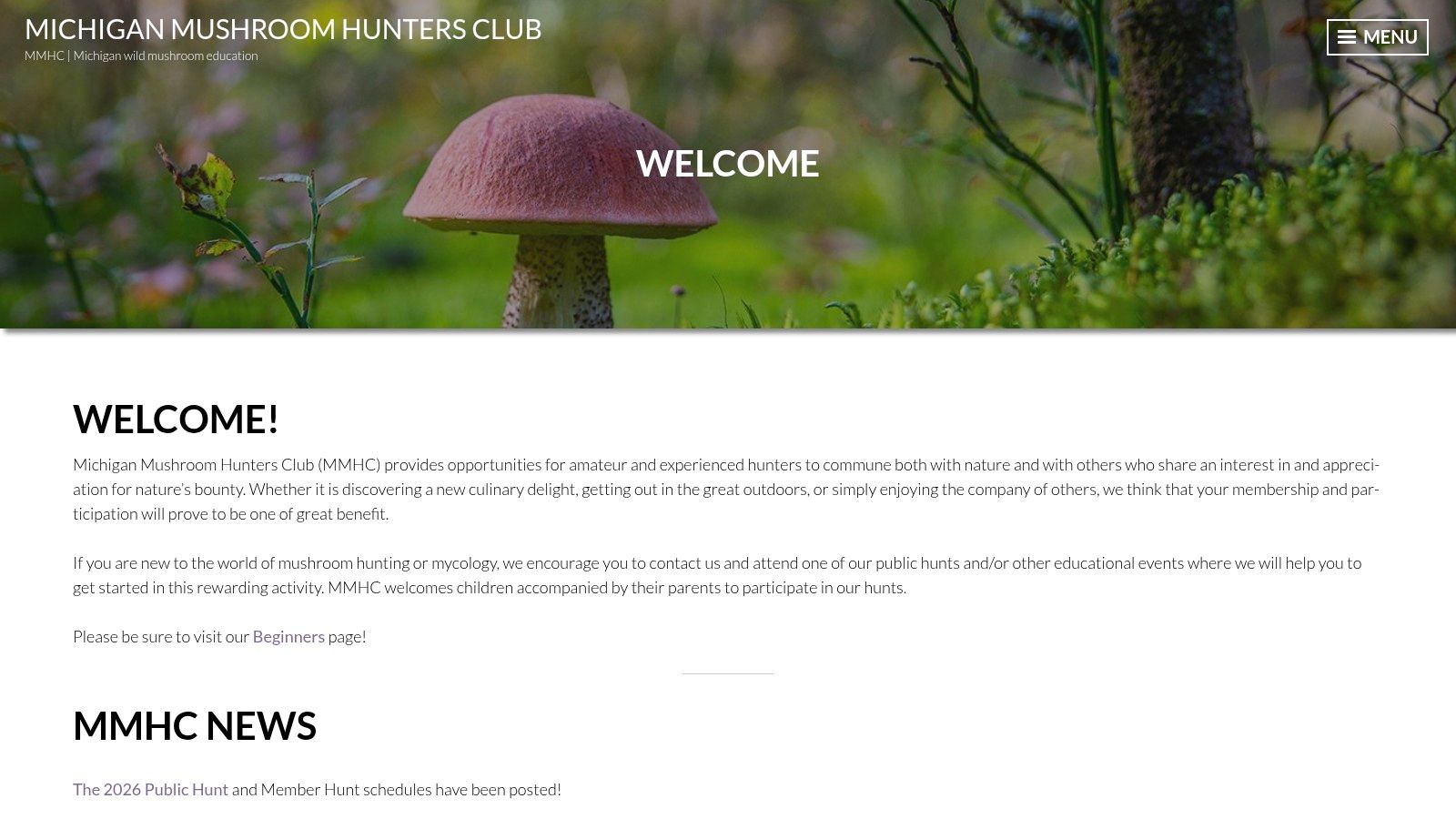
For foraging, the Michigan Mushroom Hunters Club is one of the best answers in the state. It's the kind of resource people often mean when they search mycology near me but don't yet know the right terms. They want guided learning, not random internet identification.
MMHC organizes public and member forays, identification walks, and skill-building events around Michigan, including options relevant to Southeast Michigan. The posted schedule makes this far more useful than clubs that expect you to join first and ask questions later. If you want a broader explainer on the organization, Metro Mush also has a short Michigan Mushroom Hunters Club overview.
Best fit for beginners
The club's biggest strength is culture. Good foraging groups don't just help you find mushrooms. They teach you when not to pick, when not to eat, and when to leave an ID unresolved.
That's especially important because local mushroom demand often includes reassurance and safety, not just adventure. Public-health and community resources around mushroom education often foreground poison-control guidance and careful triage, and that's a signal that safety isn't a side topic. It's central.
- Why join: You get guided exposure to identification basics, seasonal timing, and field habits that are hard to learn from photos alone.
- Where it falls short: You're working on the club's calendar, not yours. Weather, seasonality, and event capacity all shape the experience.
Don't use a club as a shortcut to instant confidence. Use it as a place to build cautious habits.
If you're totally new, this is often a better first move than downloading apps and trying to self-teach from woodland finds.
3. BeShroomed Farms
BeShroomed Farms sits in a useful middle ground that a lot of local mushroom businesses miss. It's not just selling finished products, and it's not only teaching cultivation. It gives Detroit shoppers a place to buy gourmet and functional mushroom products while also picking up supplies to grow at home.
That combination makes it practical. If you're curious about cultivation but don't want to order every item from different vendors, this is a strong local option. The storefront on Harper Avenue gives it an advantage over brands that exist mostly on social feeds.
Why cultivators like it
BeShroomed carries grow kits, sterile blocks, spawn bags, and related supplies along with functional blends and culinary mushrooms. That means a beginner can buy something ready to cook and something to experiment with in the same trip. For people easing into the hobby, that's a better learning curve than jumping straight into a complex online supply catalog.
If you're comparing culture and substrate pathways, Metro Mush has a separate explainer on mushroom liquid culture that helps frame what these supply categories mean.
- Strong point: It's one of the few Detroit-area businesses where cultivation and retail food interest overlap cleanly.
- Watch out for: Not every item has pricing listed online, so some comparison shopping still requires a call or store visit.
The downside is consistency. Selection can vary, and the online experience doesn't always tell you exactly what's on hand in-store. That's normal for a smaller local operation, but it's worth knowing if you're planning a specific cultivation run.
4. Give & Grow Mushrooms
Give & Grow Mushrooms is a smart pick for people who want to eat mushrooms regularly, not just admire the idea of local food. Their presence at Eastern Market and the Ann Arbor Farmers Market makes them especially useful for cooks who shop by routine.
This is one of the more approachable entries on the list because it doesn't require you to join anything, learn sterile technique, or decode a specialty menu. You show up at market, buy fresh mushrooms, and go home with something worth cooking that night.
Best for home cooks and market shoppers
The brand leans into recipes and education, which helps if you're interested in lion's mane, oysters, or other gourmet varieties but aren't sure how to use them. That educational layer matters more than many sellers realize. A lot of “mycology near me” searches are really beginner questions about where to start.
A good market mushroom seller doesn't just move product. They reduce hesitation at the stand.
The trade-off is convenience. Market-based businesses are dependable when you already shop those markets, but less convenient if you want fixed retail hours midweek or guaranteed daily inventory. If your schedule doesn't line up with market days, the best local producer on paper can still be the wrong fit.
Still, for Detroit and Ann Arbor shoppers who value local sourcing and direct producer contact, Give & Grow is one of the easiest ways into the scene.
5. Adamah Farm
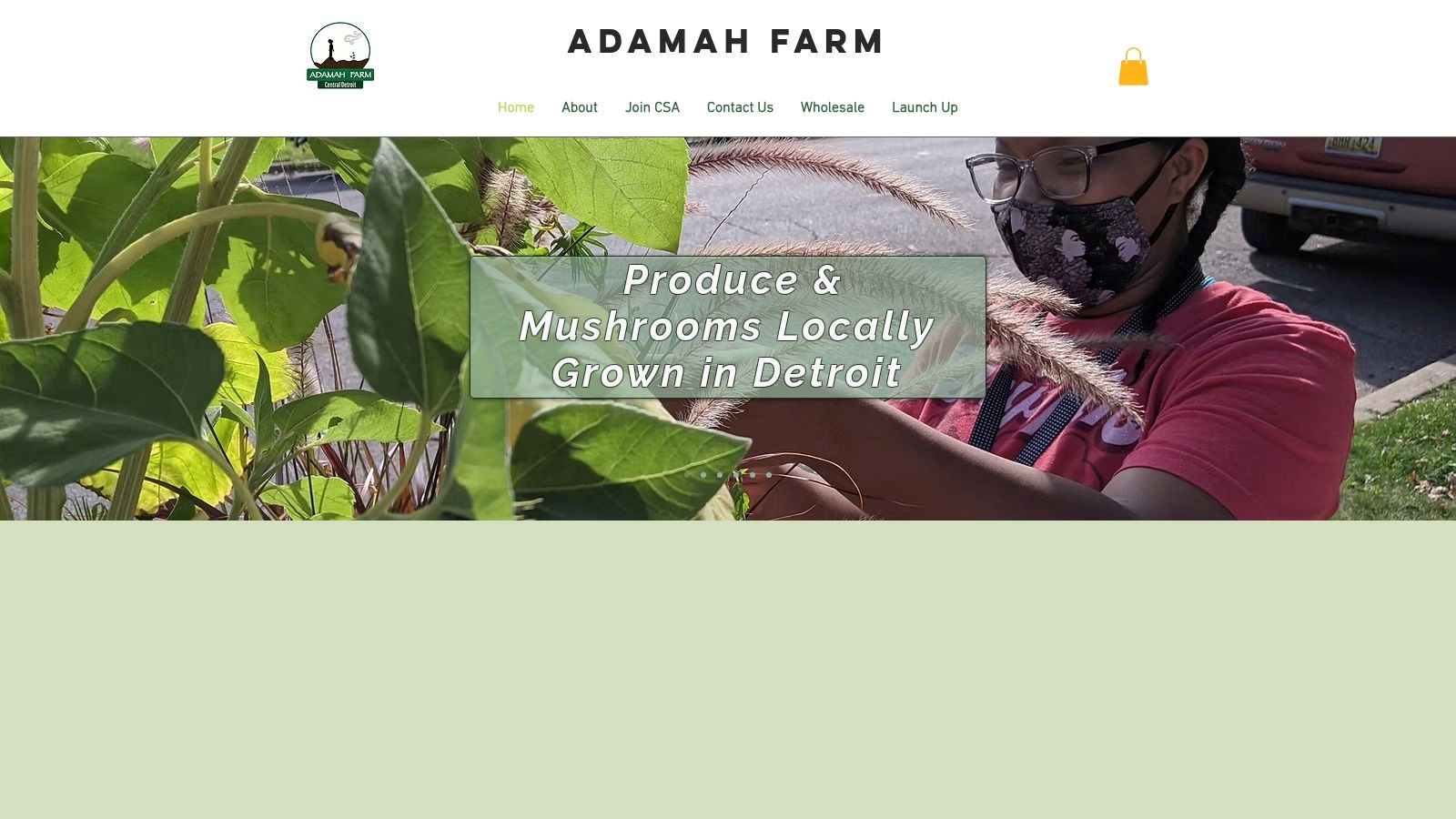
Adamah Farm is worth knowing because it connects mushroom buying to something bigger than retail. It produces mushrooms and other farm goods in Detroit, sells through CSA channels and Eastern Market, and supplies restaurants wholesale. That mix gives it reach across household shoppers and food professionals.
For buyers, the appeal is straightforward. You can access locally grown mushrooms through a familiar market channel, and restaurants can work with a source rooted in the city.
Why it stands out
Adamah's social-impact and workforce-training angle gives it a different identity from purely commercial growers. If you care where your food dollars go, that matters. It's also useful for people who like buying from organizations with visible local community ties rather than anonymous supply chains.
The practical buying channels are clear:
- CSA route: Better for people who want recurring local food access rather than one-off purchases.
- Eastern Market route: Better if you prefer flexible shopping and want to see product before buying.
- Wholesale route: Stronger for chefs and restaurant buyers than for everyday consumers.
The limitation is timing. Market hours are seasonal, and CSA availability depends on the cycle you're entering. This isn't the place for instant, year-round retail convenience. It's a better match for shoppers who already think seasonally and don't mind planning ahead.
6. Featherstone Garden
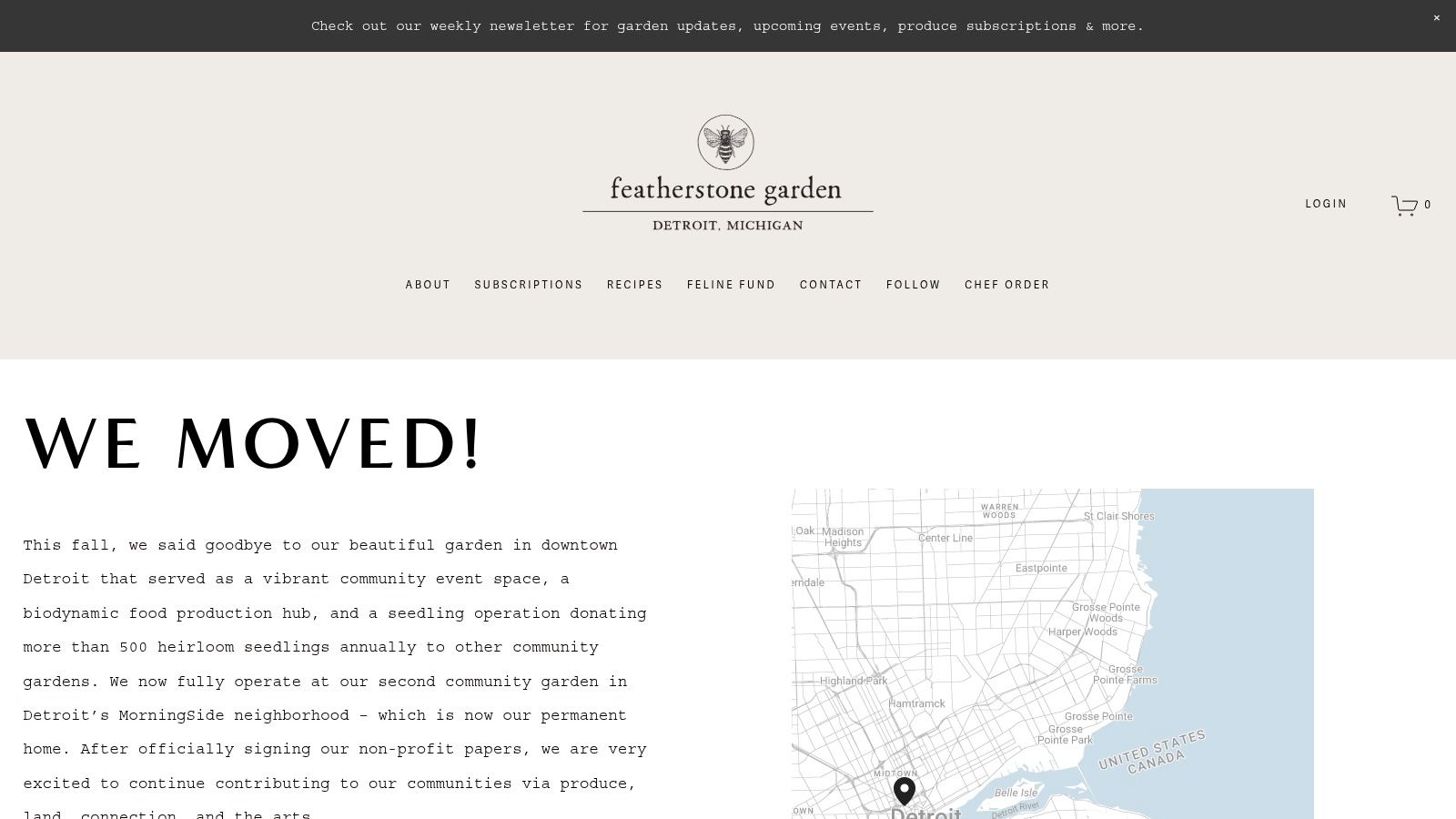
Featherstone Garden works best for buyers who want a repeatable local source, not occasional luck. Its mushroom subscriptions and farmstand model solve a common problem in the Detroit food scene. You find a grower you like, then realize availability shifts week to week.
The subscription angle makes this one different from standard market vendors. If you cook often and want culinary mushrooms to become part of your routine, consistency matters more than novelty.
A strong option for steady supply
Featherstone also serves chefs and restaurants, which is usually a good sign for product handling and reliability. Businesses that sell to kitchens tend to understand that texture, freshness, and timing matter. The farm's broader focus on microgreens and flowers doesn't dilute the mushroom offering. It rounds out the local farm model.
Here's the honest trade-off. Subscription-based access is excellent if your habits are stable. It's less useful if you're a casual buyer who only wants mushrooms every now and then.
- Best use case: Home cooks who want a regular local source.
- Less ideal: Shoppers who prefer broad menu choice on demand.
- What to expect: Seasonal variation and occasional sellouts on popular items.
That's normal for local agriculture. If you want total uniformity, you'll end up in grocery distribution channels instead.
7. Motor City Micro Farm
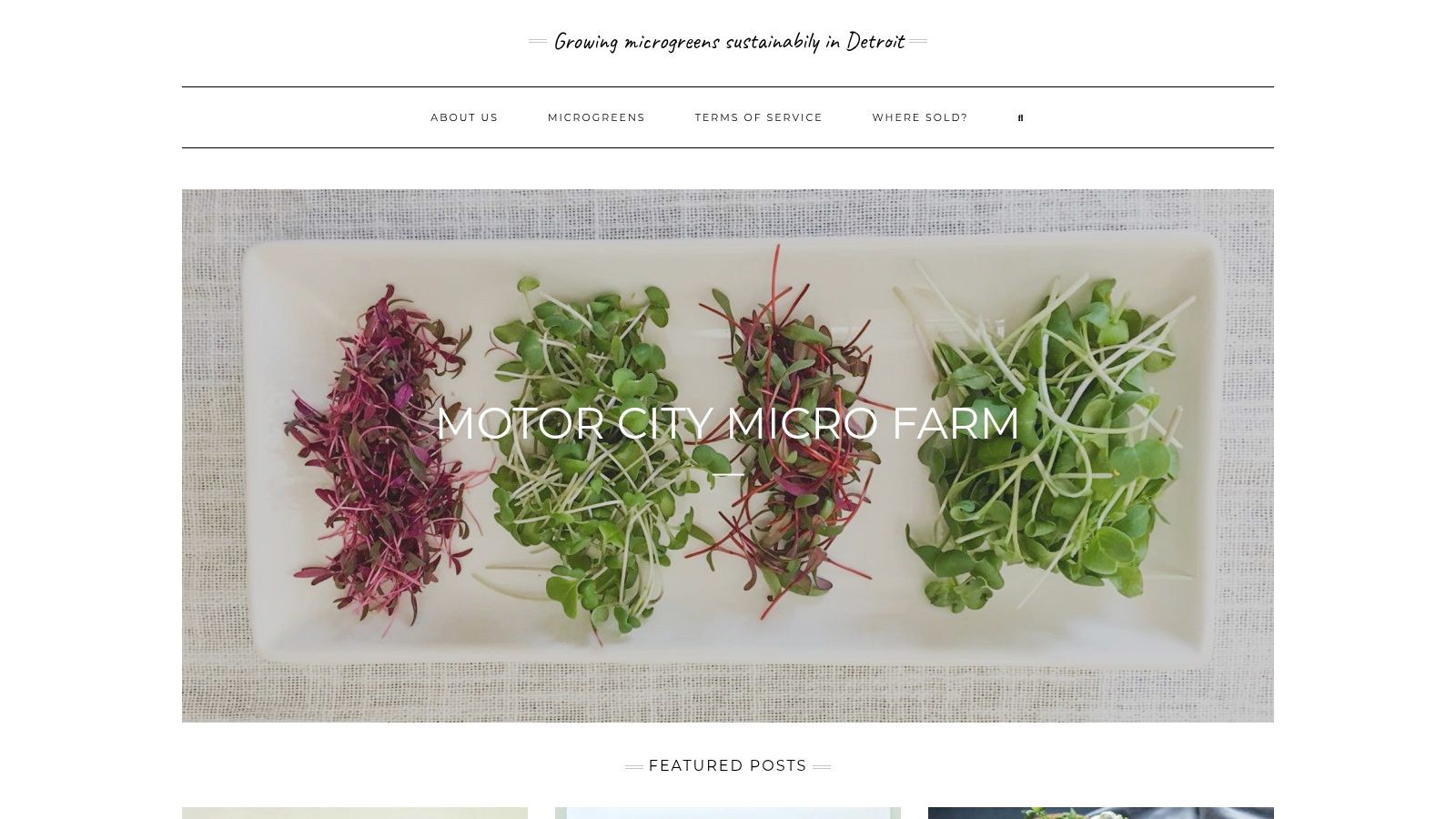
Motor City Micro Farm is easy to overlook if you only associate it with microgreens, but that would be a mistake. The farm also offers gourmet mushrooms and does something many small producers don't do well. It publishes dated updates that make availability easier to judge.
That sounds minor until you've chased local food listings that haven't been updated in months. Freshness businesses live or die on current information, and Motor City Micro Farm gives buyers enough to act on.
Best for direct local coordination
If you want lion's mane, golden, or oyster mushrooms and prefer direct communication, this is a useful source. The published contact information also helps wholesale buyers and restaurants who need real coordination instead of social-media guesswork.
The best local food sellers make it easy to answer one basic question: “What do you have right now?”
The limitation is the usual one with market-dependent producers. Attendance, selection, and emphasis can shift over time. The farm has also leaned toward wholesale reliability, which can be good for restaurant buyers but may mean less predictability for casual drop-in shoppers.
For people who want a nimble local supplier and don't mind checking current updates, it's a strong fit.
8. The Mushroom Conservatory
The Mushroom Conservatory is one of the best choices in the region for people who want to understand cultivation, not just purchase a kit and hope for the best. It was founded in Ann Arbor and now operates in Howell, with a mix of workshops, online courses, supplies, extracts, and giftable beginner products.
Some mushroom businesses sell education as a side note. This one treats teaching as the point. That makes it especially valuable for beginners who learn better from structure than from trial and error.
Better than a passive grow kit
Their kits are designed to teach actual cultivation steps instead of acting like sealed novelty products. That's a meaningful distinction. A set-and-forget box can be fun, but it doesn't always teach you much about substrate, contamination control, or environmental conditions.
This is the place I'd point to if someone says, “I don't just want mushrooms. I want to know how the process works.”
- Good for: First serious cultivation attempts, hands-on learners, and gift buyers who want an educational angle.
- Less convenient for: People who need immediate supplies without waiting for workshop dates or session openings.
Workshop availability varies, and seats can be limited. That's the downside of high-touch education. The upside is that you're more likely to leave with usable understanding instead of a one-time novelty experience.
9. Gourmet Mushrooms, Inc. (Mycopia)
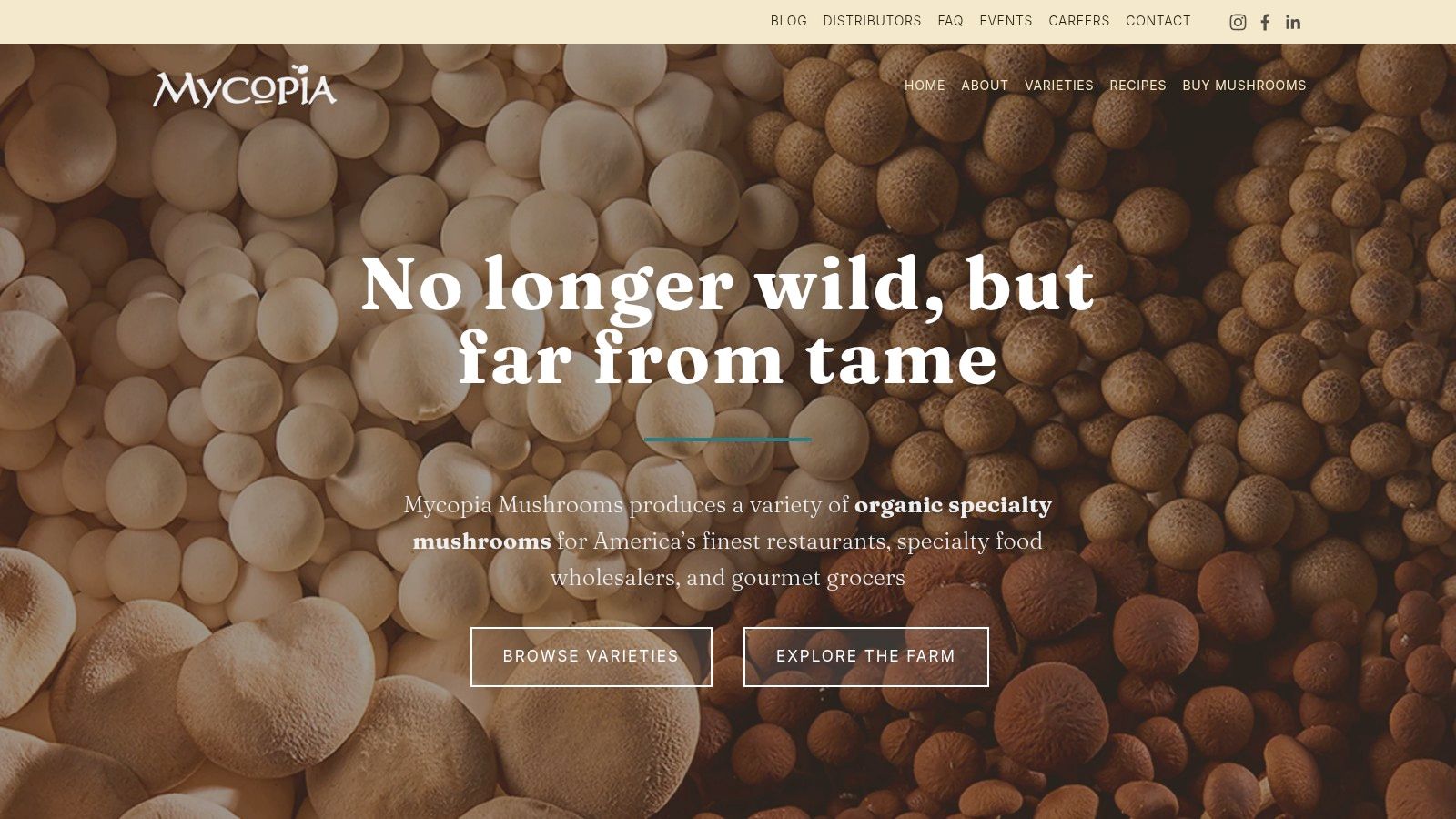
Need a source that shows the industrial side of Michigan mushroom production, not just the small farm and workshop scene? Mycopia, through Gourmet Mushrooms, Inc., fills that role. It is based in Scottville rather than Southeast Michigan, but it still belongs in a Detroit Ann Arbor guide because local chefs, specialty grocers, and serious home cooks often rely on distribution networks that start outside the immediate metro area.
The company has operated since 1977 and focuses on specialty and organic culinary mushrooms. That long run matters. In practice, businesses that stay in this category for decades usually do a few things well: maintain consistent product, handle volume, and supply buyers who cannot afford irregular inventory.
A useful reference point for the food side of mycology
For readers interested in cultivation classes, foraging groups, or psilocybin policy, Mycopia will not be the most hands-on stop in this guide. Its value is different. It shows what mature mushroom production looks like when the goal is dependable retail and wholesale supply rather than direct community education.
That makes it relevant in a regional mycology map. The Detroit Ann Arbor scene is not just hobby growers and weekend foragers. It also includes restaurant buyers, food businesses, and people trying to understand where specialty mushrooms enter the market at scale.
The trade-off is straightforward. Mycopia is stronger on production history, variety, and distribution than on local storefront access or a neighborhood relationship. If you want a conversation at the farmers market, other entries on this list are a better fit. If you want a clear example of Michigan's established gourmet mushroom infrastructure, this is one of the names worth knowing.
One wider industry point helps frame that. Analysts at Zion Market Research valued the mycology immunoassays testing market at $5.23 billion in 2023 and projected $8.47 billion by 2032 at a 5.5% CAGR (Zion Market Research). That figure is about fungal diagnostics, not Mycopia's food business, but it underscores a useful reality: mycology in Michigan now touches multiple worlds at once, from gourmet production to cultivation education to clinical and policy-focused interest.
10. Mountain Mycology
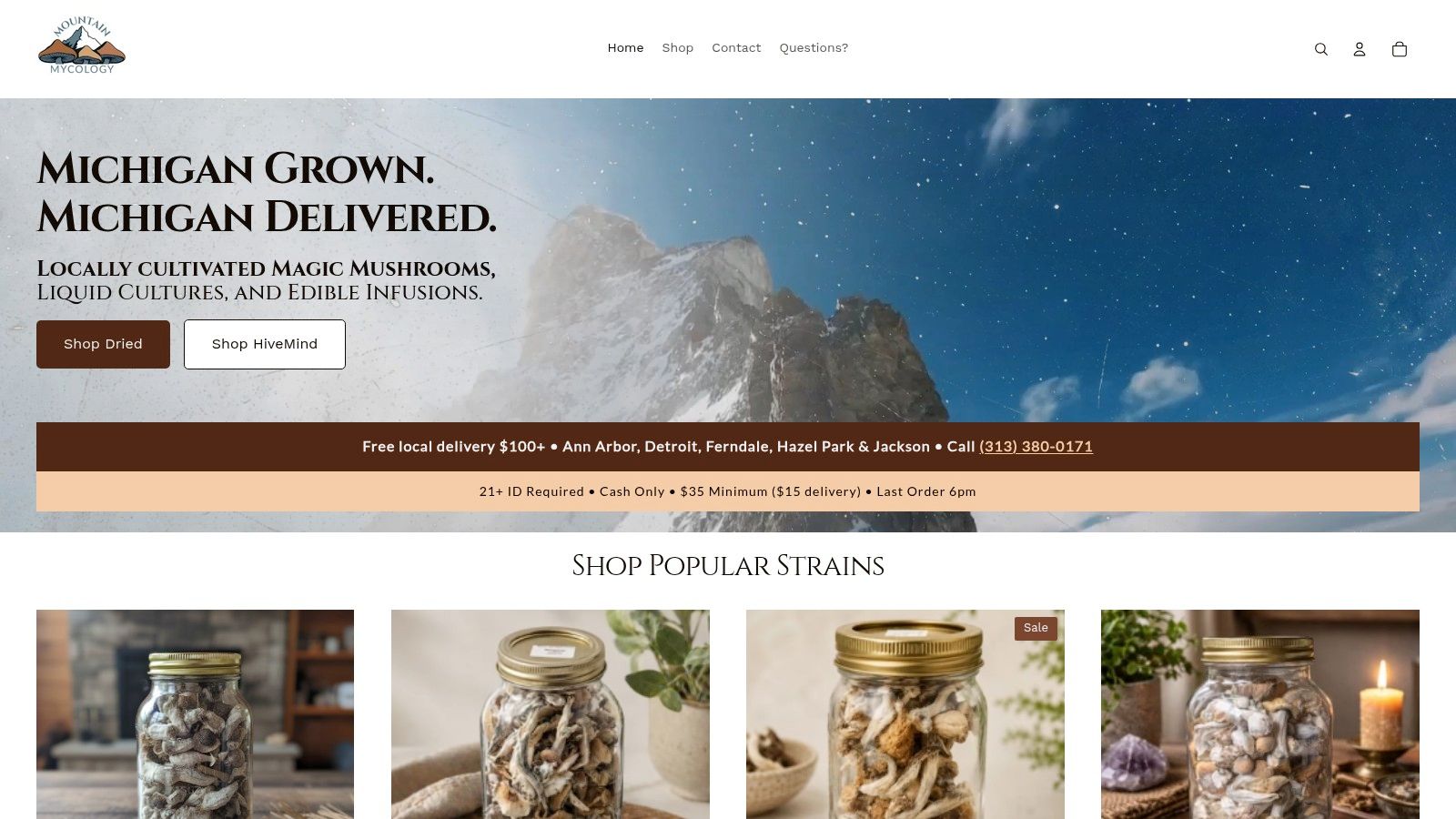
Need grain or substrate this week instead of after a cross-country shipping delay? Mountain Mycology fills that local supply role for growers around Ann Arbor, Detroit, Ferndale, Hazel Park, and Jackson.
Its value is straightforward. It gives Southeast Michigan cultivators a nearby source for liquid cultures, sterilized grain, substrates, spore prints, and basic tools. For newer growers, that matters because the first few runs usually fail on process, timing, or sterile technique. Waiting another week for one missing supply item can throw off the whole cycle.
That local coverage also makes this a useful entry in a Detroit Ann Arbor mycology guide that goes beyond mushroom farms. Foragers need field clubs and ID help. Gourmet buyers need reliable producers. People interested in psilocybin policy and the decriminalized side of the region need different resources entirely. Mountain Mycology serves a narrower lane. It is for people who are already building or refining a home cultivation setup.
The trade-off is selection. A regional supplier will rarely stock the same range as a large national lab store, and inventory can tighten up around popular items. Still, for routine grows, fast access often matters more than endless options. Clear pricing on many products helps too, especially for beginners comparing the actual cost of a first monotub or bag-based setup.
One caution is worth stating plainly. Buying supplies is the easy part. Getting consistent results is harder. Good genetics and clean grain help, but local delivery does not replace sterile workflow, patience, or realistic expectations about contamination rates. That said, if the goal is to keep a grow moving without overcomplicating the supply side, Mountain Mycology is one of the more practical names to know in Southeast Michigan.
10 Local Mycology Resources, Quick Comparison
| Provider | Offerings & Services | 👥 Target | 💰 Price / Value | ★ Quality / Experience | ✨ Unique Selling Points |
|---|---|---|---|---|---|
| Metro Mush 🏆 | Curated dried strains (Penis Envy, Enigma), edibles & drinks, local delivery & text ordering | 👥 Experienced users + newcomers in SE Michigan | 💰 $35–$350 (dried); bars/drinks $40–$45; $75 min; Mix & Match 3/$100; 10%/20% discounts | ★★★★☆ Local curation, transparent pricing | ✨ Text orders, active Discord (20% off), Mix & Match deals, multiple local locations |
| Michigan Mushroom Hunters Club (MMHC) | Forays, ID walks, beginner education, public hunt schedule | 👥 Foragers, families, learners | 💰 Low-cost annual membership | ★★★☆☆ Strong ID/safety focus | ✨ Regular public forays & seasonal schedule |
| BeShroomed Farms (Detroit) | Retail storefront, functional blends, grow kits & spawn | 👥 DIY growers, cooks, local shoppers | 💰 Mixed pricing; some items unlisted online | ★★★☆☆ Consistent retail hours, local sourcing | ✨ In-store cultivation supplies & extended hours |
| Give & Grow Mushrooms | Fresh gourmet mushrooms at markets, recipes & education | 👥 Chefs, home cooks, market shoppers | 💰 Market/seasonal pricing | ★★★★☆ Fresh market quality | ✨ Eastern Market & Ann Arbor market presence, recipe resources |
| Adamah Farm (Central Detroit Christian) | CSA, market sales, wholesale to restaurants, workforce training | 👥 Local consumers, restaurants, social-impact supporters | 💰 CSA/wholesale pricing; seasonal cycles | ★★★★☆ Local production with social mission | ✨ CSA offerings + workforce training programs |
| Featherstone Garden (Detroit) | Culinary mushrooms, microgreens, weekly farmstand, subscriptions | 👥 Chefs, subscribers, local shoppers | 💰 Subscription & market pricing; seasonal | ★★★★☆ Reliable subscription supply | ✨ Seasonal mushroom subscriptions; femme/minority-owned |
| Motor City Micro Farm | Microgreens + seasonal gourmet mushrooms, wholesale coordination | 👥 Chefs, retailers, market buyers | 💰 Market & wholesale; seasonal availability | ★★★☆☆ Transparent, dated updates | ✨ Easy contact for wholesale & pickup |
| The Mushroom Conservatory (Howell) | Workshops, online courses, grow kits, cultivation supplies | 👥 Beginners, hobbyists, educators | 💰 Workshop fees & kit prices (varies by session) | ★★★★☆ Strong teaching & mentorship | ✨ Hands-on workshops & structured courses |
| Gourmet Mushrooms, Inc. (Mycopia) | Broad organic culinary mushroom catalog, national distribution | 👥 Chefs, retailers, foodservice distributors | 💰 Wholesale, year-round supply pricing | ★★★★★ Established, reliable supply since 1977 | ✨ Large-scale organic production & national reach |
| Mountain Mycology (SE MI delivery) | Cultivation supplies (liquid cultures, substrates, spore prints) + local delivery | 👥 Home cultivators & small growers | 💰 Transparent small-item pricing; free delivery $100+ | ★★★★☆ Convenient local fulfillment | ✨ Clear pricing, local delivery across SE Michigan |
Start Your Fungal Journey in Southeast Michigan
The Detroit and Ann Arbor corridor has a more complete mushroom ecosystem than many assume. That's the main takeaway after looking across all 10 resources. If you search mycology near me with only one picture in your head, usually a farm or a foraging walk, you'll miss how specialized the local scene indeed is.
Foraging is best handled through guided community learning. That's where a group like Michigan Mushroom Hunters Club earns its place. It gives beginners a safer first step and gives experienced hobbyists a recurring way to stay sharp in the field. If your interest is edible wild mushrooms, a good club is often more useful than a pile of identification photos.
Culinary buying is a different lane. Give & Grow Mushrooms, Adamah Farm, Featherstone Garden, Motor City Micro Farm, and Mycopia all serve food-focused demand, but not in the same way. Some are strongest at market-direct retail, some at subscriptions, and some at wholesale scale. The right choice depends on whether you want a Saturday market habit, a regular household supply, or a restaurant-ready source.
Cultivation has its own split. BeShroomed Farms is a good option when you want local retail plus supplies under one roof. The Mushroom Conservatory is better if you want education with your gear. Mountain Mycology is the practical local-delivery pick when you already know what you need and want to keep a project moving without depending on distant shipping.
Then there's the psilocybin side, which many local guides either avoid entirely or cover so vaguely that they're not useful. That gap matters because mushroom interest has expanded well beyond clubs and farmstands. Regional mycology content often leaves out the hard beginner questions around responsible use, product formats, and local legal context, even though consumer demand clearly includes those concerns, as reflected in community education gaps highlighted by North Texas Mycology's broader discussion of wellness, legality, and product education. In Southeast Michigan, Metro Mush stands out because it meets adult consumers where they are. It offers a local ordering path, transparent menu pricing, approachable edibles and drinks, and enough product range for both experienced users and cautious newcomers.
That's what makes this area interesting. You don't have to force one definition of mycology onto every search. In Detroit and Ann Arbor, the better move is to pick the lane you're in. Learn in the woods. Buy from local growers. Build a home cultivation setup. Or, if you're an adult exploring psilocybin, start with a source that makes local access clearer and less confusing.
If you're looking for a straightforward local way to explore psilocybin products in the Detroit and Ann Arbor area, Metro Mush is the easiest place to start. You can browse dried mushrooms, chocolates, drinks, and other options online, then place an order by text for local pickup or delivery across Southeast Michigan.