

You're probably looking at a bag of black, irregular chunks and wondering two things at once. First, what is this stuff? Second, how do you use it without wasting your money or ruining whatever makes it valuable?
That reaction makes sense. Dried Chaga mushroom doesn't look like familiar mushrooms. It looks more like burnt wood than food, and the advice online often swings between hype and vagueness. One article calls it a miracle. Another says to boil it forever. A third tells you almost nothing practical.
A better way to approach chaga is to treat it like a tool. The question isn't just whether it's “good for you.” The useful question is what it is, what it may help with, and how proper preparation changes the result.
Used well, chaga can become a steady part of a wellness routine. Used poorly, it can turn into a weak tea, an overheated powder, or an expensive jar that sits unused in the pantry. Preparation matters because this is not a grab-and-go ingredient. It's a dense, slow-grown fungal material that responds best to patient handling.
Your Introduction to Dried Chaga Mushroom
If you've found dried chaga in a health shop, herbal apothecary, or online wellness store, you've probably seen the same pattern. The product page talks about antioxidants, immune support, and tradition. But regarding the practical aspects, many people are left guessing.
That's where most confusion starts.
Chaga has a reputation as a powerful medicinal mushroom, but the value of dried Chaga mushroom isn't just in the ingredient itself. A large part of the benefit comes from how you store it, how you extract it, and how consistently you use it. If you skip those basics, the experience can be disappointing.
Practical rule: With chaga, preparation isn't a side detail. It's part of the remedy.
People also get tripped up because chaga doesn't behave like culinary mushrooms. You don't usually sauté it. You don't toss it into soup at the end. It is typically used as a brewed extract, often as tea, a stronger simmered decoction, or a tincture.
That changes how you should think about it. Chaga is closer to an herbal material than a dinner ingredient. It asks for slower handling, a little patience, and a realistic mindset.
Three ideas will help you get the most from it:
- Know what you're buying: Chaga is not a typical cap-and-stem mushroom.
- Match the method to the goal: A light brew and a long extraction are not the same thing.
- Use it carefully: Natural doesn't automatically mean right for everyone.
If you want a grounded understanding instead of marketing language, start with the biology. Once chaga makes sense as a living material, the preparation methods become much easier to understand.
What Is Chaga Mushroom Actually
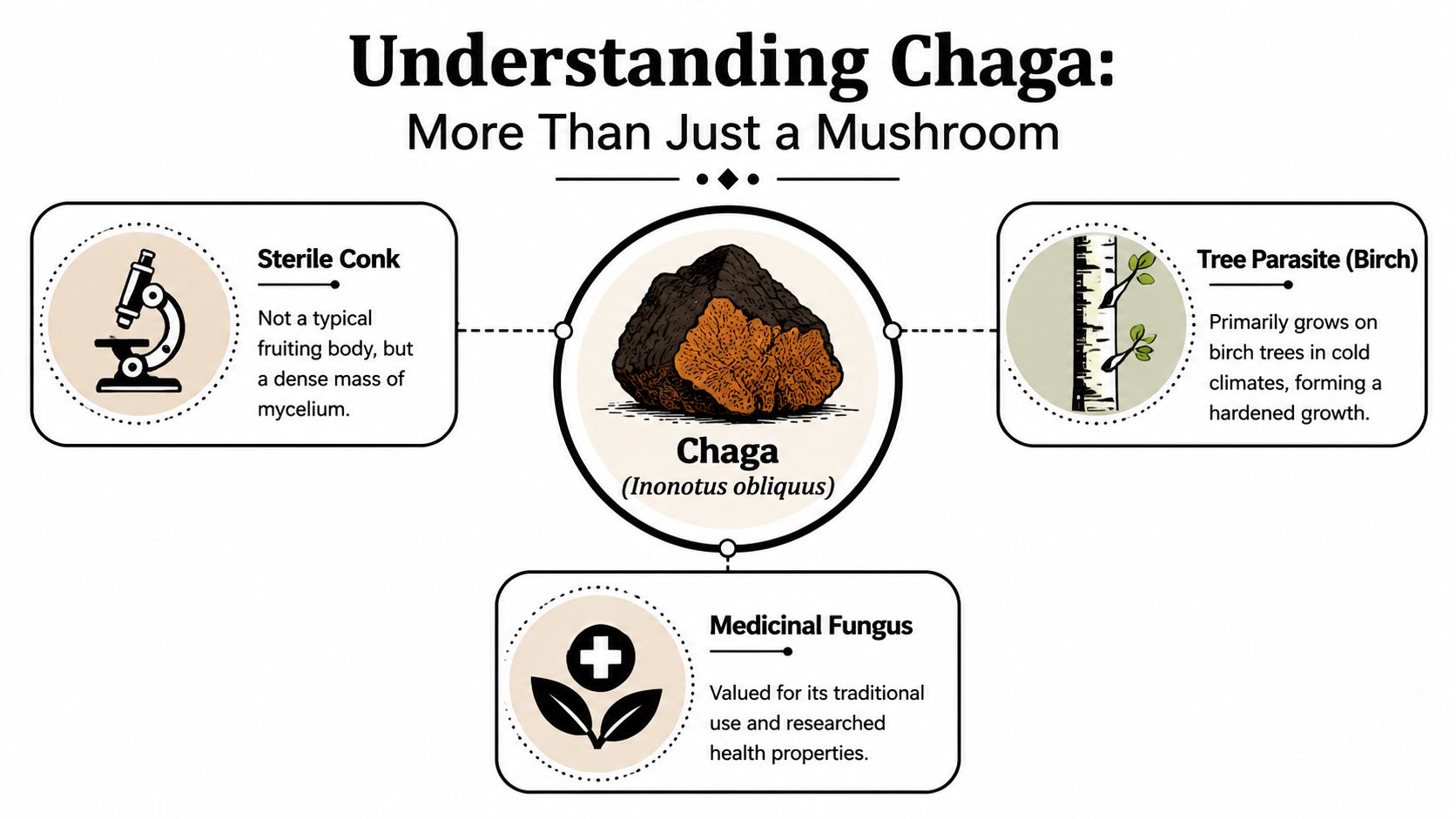
Chaga is often called a mushroom, and that's partly true, but it's not the mushroom commonly imagined. Chaga (Inonotus obliquus) is a sterile conk, not a typical fruiting body. In plain terms, it's a hardened mass made from fungal mycelium and degraded birch wood rather than a soft cap with gills.
Why it looks like burnt charcoal
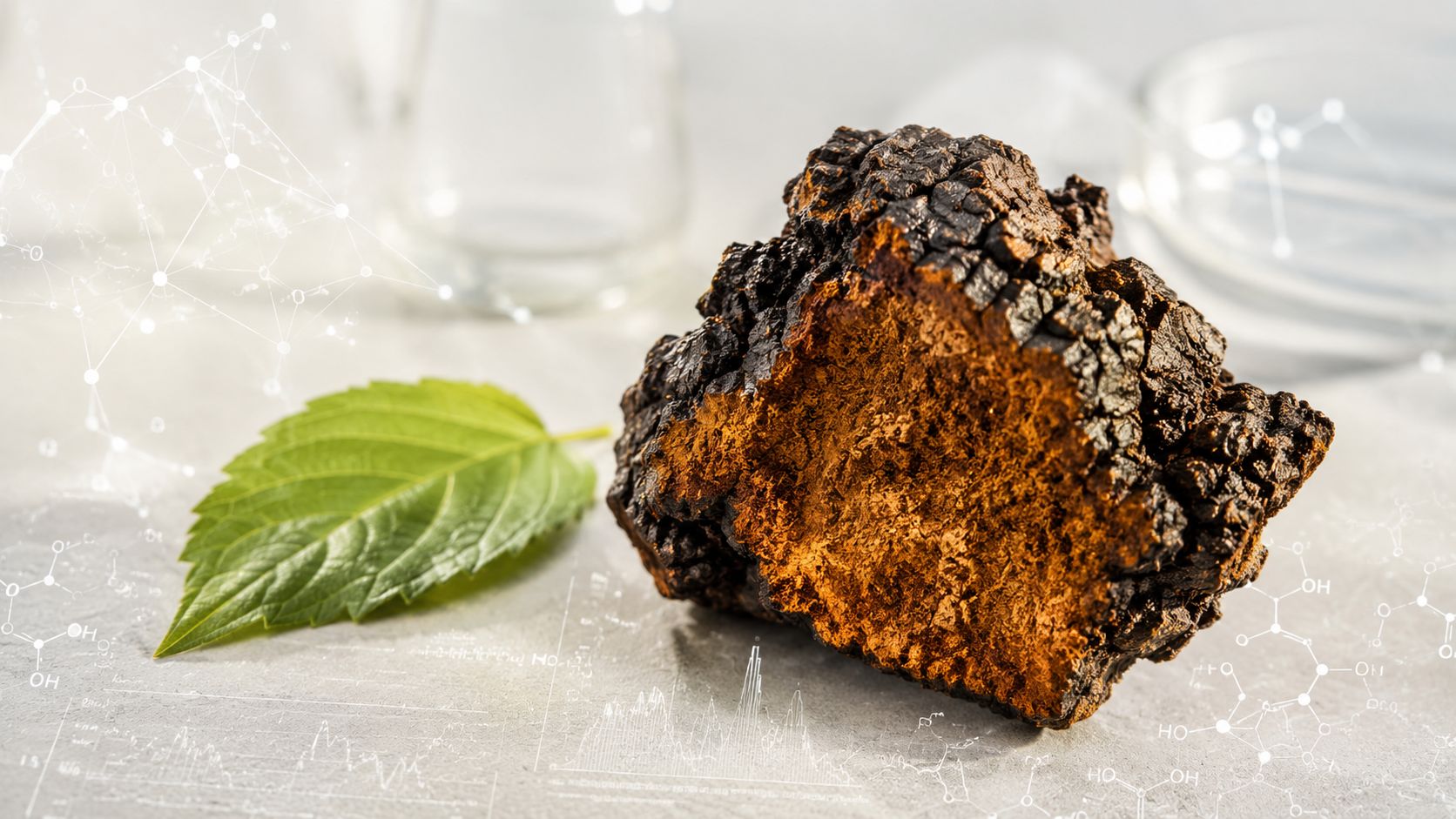
The outside of chaga is dark, cracked, and almost coal-like. That rough black crust makes people think it's dead wood or tree damage. Cut it open, though, and you usually find a warmer brown to rusty interior with a corky texture.
A helpful way to picture it is as a slow-brewing pharmacy on the side of a birch tree. The fungus grows over time inside and through the host tree, forming a dense mass that concentrates compounds from both the fungus and the birch it inhabits.
Chaga's chemistry is part of why people value it. Research describes dried chaga as a sterile conk with potent antioxidant activity driven by compounds including phellxinye A and inonotphenol A, and notes that its melanin-rich matrix contributes to protection against oxidative stress through the Nrf2 pathway in the reviewed laboratory findings from the published chaga analysis on PMC.
What people mean by active compounds
When herbalists talk about chaga's “actives,” they usually mean a few broad groups of compounds rather than one magic ingredient.
- Beta-glucans: These are polysaccharides commonly discussed in medicinal mushroom use.
- Triterpene-related compounds: These are often part of the reason people prefer a longer extraction.
- Melanin: This contributes to chaga's dark color and is part of why it stands apart visually and chemically.
If you've explored broader mushroom benefits and functional mushroom basics, chaga fits into that world, but it still has its own identity. Its structure is denser, its look is unmistakable, and its preparation tends to be slower and more deliberate than many people expect.
Chaga makes more sense when you stop comparing it to button mushrooms and start treating it like a dense medicinal raw material.
Why the birch tree matters
Chaga most often grows on birch in cold climates. The relationship is not harmless to the tree. The fungus lives in and on the birch over time, and the tree becomes the biological setting where that dense conk develops.
That's one reason source quality matters so much. A true dried chaga mushroom product should reflect the nature of the conk itself, not just a dark powder in a generic bag. Once you understand that, labels become easier to judge and preparation advice becomes easier to sort.
Evidence-Backed Benefits and Scientific Limits
People usually come to chaga for one of three reasons. They want antioxidant support, they're interested in general immune wellness, or they've heard it described as an anti-inflammatory natural remedy. Those interests aren't random, but they do need careful framing.
What the research does support
The strongest scientific language around dried chaga in the material provided relates to antioxidant activity. Laboratory analysis has described a profile in which certain compounds in dried chaga help reduce markers of oxidative stress and support antioxidant enzyme activity. In practical terms, that means chaga is being studied for how it may help the body respond to everyday oxidative wear and tear at the cellular level.
That doesn't mean a cup of chaga tea repairs everything. It means chaga is a credible candidate for people who want a plant-and-fungus based wellness practice centered on antioxidant support.
Another reason people stay interested is its long traditional use as a brewed preparation. Tea and decoction are not wellness trends invented last year. They fit the material. Chaga is hard, woody, and dense, so extraction by water makes practical sense.
Where readers should stay cautious
Wellness articles often lose credibility at this stage. They jump from promising lab findings to sweeping health claims.
A more honest view looks like this:
| Area | Grounded takeaway |
|---|---|
| Antioxidant support | Supported by the chemistry and laboratory findings discussed earlier |
| Immune wellness | Commonly discussed, but broad immune claims should be kept modest |
| Inflammation support | Reasonable area of interest, but not something to oversell |
| Medical treatment | Not a substitute for diagnosis, medication, or physician care |
Many readers want a yes-or-no answer. Chaga doesn't really fit that format. It's better understood as a supportive wellness ingredient with interesting biological properties, not a cure-all.
The careful stance is usually the most useful one. Chaga may be worth using, but it isn't a replacement for medical care, and it shouldn't be marketed like one.
What to expect in real life
If you use dried chaga mushroom consistently and prepare it well, the result is usually subtle. People often value it as a daily or several-times-weekly ritual rather than a dramatic intervention.
That's important because subtle doesn't mean useless. It means the right expectation is closer to how people think about good sleep, hydration, or a nourishing herbal tea. You build a pattern over time. You don't wait for fireworks.
The practical takeaway is simple. Chaga is most convincing when you treat it as a researched traditional wellness tool with clear scientific interest and clear scientific limits.
How to Prepare Dried Chaga Correctly
Most mistakes with dried chaga happen before the first sip. People use water that's too aggressive, they try to brew it like a tea bag, or they buy material that was dried poorly in the first place.
The quality of drying matters. Research notes that to preserve bioavailable nutrients and compounds like beta-D-glucans, chaga should be dried to a moisture level between 0% and 10%, and that when dried correctly and stored in an opaque container, it can maintain potency for years, as described in the PMC review on drying and storage of chaga.
A visual comparison helps before you start choosing a method.
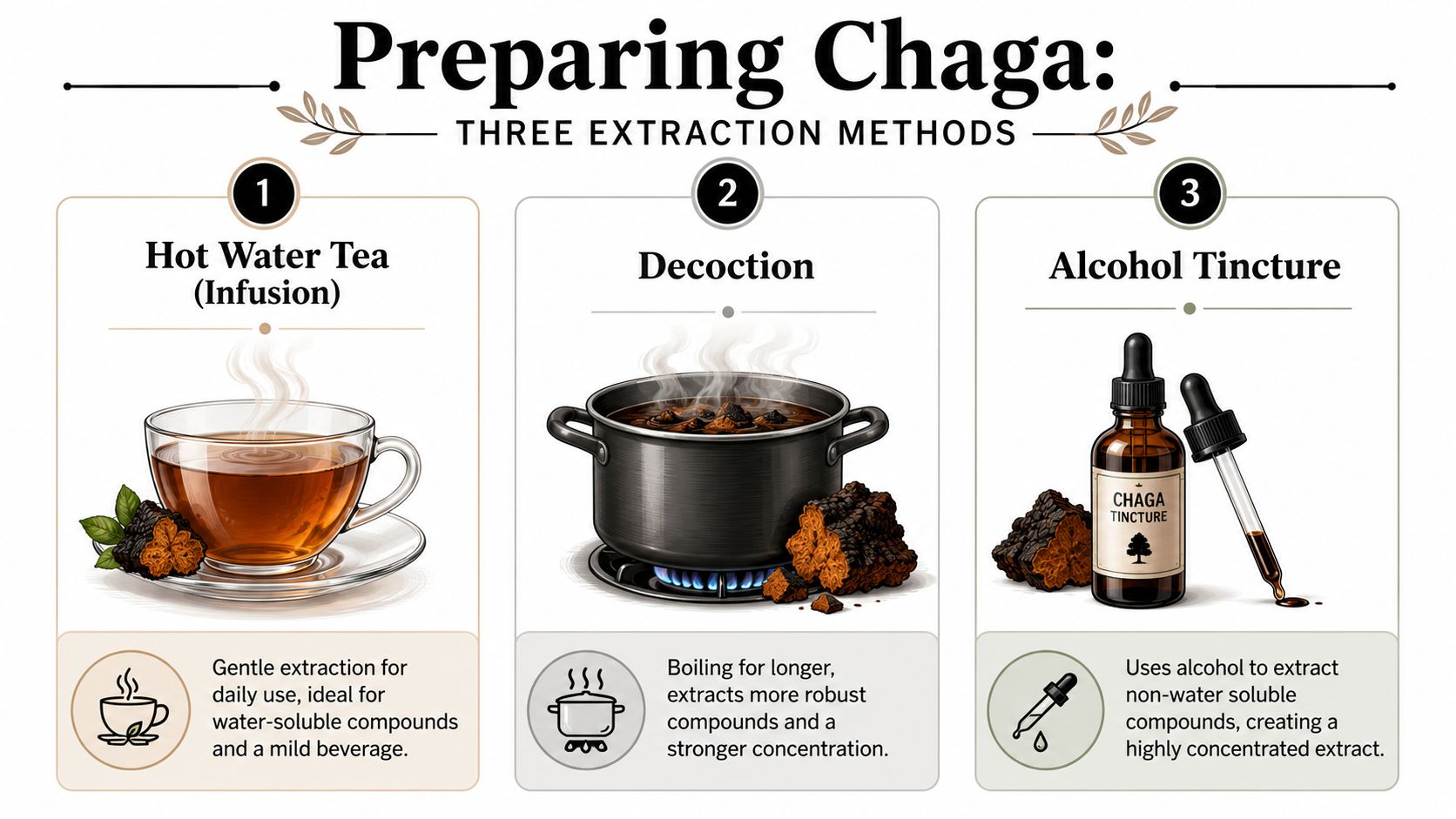
Method one with a gentle tea
A simple tea is the easiest place to begin. This works best with small chunks or coarsely broken pieces.
- Use clean water and a modest amount of chaga. You don't need to pack the pot.
- Heat the water until it's hot but not violently boiling. Gentle heat is easier on the material.
- Steep or lightly simmer until the water turns a deep amber to dark brown.
- Strain and drink plain or with another mild herb if you like the flavor softened.
This method is good for people who want an uncomplicated routine. It's less intense, easier to repeat, and usually the best starting point for someone meeting dried Chaga mushroom for the first time.
Method two with a longer decoction
A decoction is the classic “stronger extraction” method. Instead of treating chaga like a delicate leaf tea, you simmer it as you would a tough root or bark.
This is useful because chaga is dense. It rewards time.
- Start with chunks, not fine powder: Chunks are easier to strain and reuse.
- Keep the heat low: A steady simmer is better than a rolling boil.
- Let time do the work: The liquid should deepen gradually, not scorch.
- Save the pieces: Good chunks can often be reused until they stop giving the water much color.
For a practical walk-through of brewing mushroom beverages, this guide to how to prepare mushroom tea is a useful companion.
Here's a useful demonstration for people who learn best by watching:
A good decoction should look rich and clear, not burnt, muddy, or bitter from excessive heat.
Method three with an alcohol tincture
Some people use alcohol to extract compounds that water alone may not capture as fully. This usually means soaking chaga in alcohol over time, then straining and storing the liquid in a dark bottle.
Tinctures are practical when you want portability. They're easy to measure in drops, easy to carry, and don't require reheating. The tradeoff is that they take more planning and aren't as comforting as a warm cup.
If you're new, start with tea or decoction. Tinctures make more sense once you know you like and tolerate chaga.
Storage that protects the work you did
Once your chaga is properly dried, storage is straightforward:
- Keep it dry: Moisture is the enemy.
- Use opaque containers: Light protection matters.
- Avoid high heat: Don't leave it above a stove or in a hot car.
- Label batches: If you work with multiple herbs, simple labels prevent mix-ups.
Good preparation isn't fussy. It's just respectful of the material.
Choosing Quality and Sustainable Chaga
Buying chaga gets easier when you stop asking whether the label sounds impressive and start asking whether the material looks real.
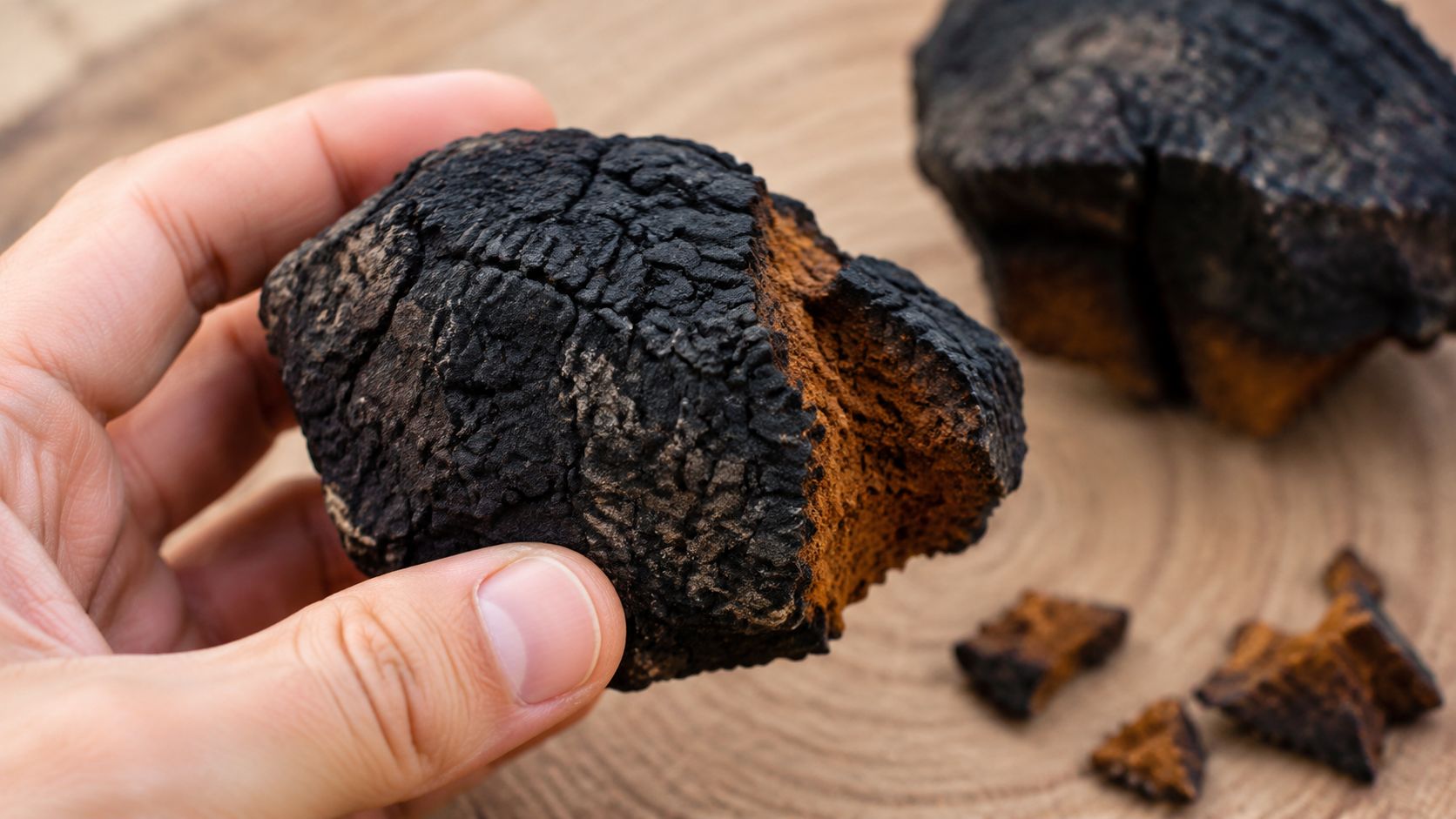
What high-quality chaga usually looks like
A solid dried chaga mushroom product usually gives you visible clues.
| What to check | What you want to see |
|---|---|
| Exterior | Dark, cracked, charcoal-like surface |
| Interior | Warm brown to rusty tone, not uniformly black |
| Texture | Hard, dense, woody or cork-like |
| Form | Chunks or clearly identifiable pieces rather than mystery dust |
Powder isn't automatically bad, but it can be harder for the average buyer to judge. With chunks, you can inspect the material yourself. That alone reduces guesswork.
Why sustainability isn't optional
Chaga grows slowly. A study summarized by North Spore reports an average growth rate of about 1 centimeter per year, and notes that after the exterior is harvested, the mycelium can regenerate the conk over a regrowth cycle of three to ten years, which is why sustainable harvesting practices matter for chaga.
That single fact changes how you should think about sourcing. If a seller treats chaga like a fast commodity, something's off. A slow-growing material should be harvested with restraint.
A practical buying checklist
Use simple buying standards:
- Ask how it was harvested: Responsible suppliers should be able to describe their approach.
- Prefer identifiable chunks: They're easier to inspect for authenticity and quality.
- Look for birch-associated material: Chaga should match its known growth habit.
- Be wary of overprocessed products: Very fine powders can hide age, fillers, or poor raw material.
- Choose sellers who talk about stewardship: Ethical language alone isn't proof, but silence can be revealing.
If a chaga product looks anonymous, dusty, and impossible to identify, pass on it.
Quality and sustainability are connected. Careless harvesting usually leads to poorer long-term supply, and low-grade material leads to disappointing brewing. Buyers who reward thoughtful sourcing help both the forest and their own cup.
Dosing Safety and Potential Side Effects
Chaga has a gentle reputation, but “gentle” doesn't mean universal. The safest approach is to use it conservatively, pay attention to your body, and think in terms of wellness support rather than heavy dosing.
A cautious starting approach
For tea or decoction, start with a modest serving made from a small amount of chaga and see how you feel over several uses. With tincture, begin with a low amount according to the product directions and avoid stacking multiple mushroom products all at once.
That slower approach helps you answer basic questions. Do you enjoy it? Does it sit well with you? Does it fit your routine enough that you'll use it consistently?
Who should be especially careful
Some people should talk with a qualified healthcare professional before using dried Chaga mushroom regularly.
- People on blood-thinning medication: Chaga may not be a casual add-on if you already manage clotting risk.
- People with diabetes or blood sugar concerns: It's wise to use extra caution and get personalized advice.
- People with kidney issues: Chaga is often discussed in relation to oxalates, which can matter for kidney health.
- People preparing for surgery: Any supplement or herbal material with possible blood or metabolic effects deserves review beforehand.
- Pregnant or breastfeeding individuals: Conservative caution is appropriate when evidence is limited.
Oxalates can sound abstract, but the practical idea is simple. Some foods and botanicals contain compounds that may be problematic for certain people, especially those with a history of kidney concerns. That doesn't mean chaga is unsafe for everyone. It means context matters.
Side effects to watch for
Many people tolerate chaga well, but caution is still sensible. Watch for:
- Digestive discomfort: Any new herbal preparation can be irritating if introduced too quickly.
- Unexpected reactions with medications: This is one of the biggest reasons to ask a clinician.
- Overdoing concentrated products: More extract isn't always better.
If you prepare extra tea, proper storage matters. If you're already thinking about long-term ingredient storage, practical guides on whether you can freeze dried mushrooms can help you think through what should stay dry at room temperature versus what belongs in colder storage once prepared.
Start low, go slow, and stop if something feels off. That approach prevents most avoidable mistakes.
A careful user doesn't need to be fearful. They just need to be observant.
Integrating Chaga into Your Wellness Routine
The most useful way to think about chaga is as a practice, not a performance product. It fits best when it becomes part of a rhythm you can keep.
For some people, that means a warm mug of chaga decoction a few times a week. For others, it means keeping a tincture on hand for convenience. The right form is the one you'll prepare correctly and use consistently.
A good routine usually has three qualities:
- It's realistic: You're not doing a complicated extraction every morning before work.
- It's measured: You're paying attention rather than taking large amounts impulsively.
- It's supportive: Chaga sits alongside sleep, food, movement, and medical care, not above them.
That's why dried chaga mushroom attracts people who prefer grounded herbal practices. There's a ritual to it. You break the chunks, warm the water, let time do the work, and make space for a slower kind of wellness habit.
If you're new, start with the basics. Buy good chaga. Brew a basic tea or decoction. Notice the taste, the effect, and whether the routine fits your life. That's enough.
Over time, the mystery fades. What looked like a strange black lump becomes understandable. It's a dense birch-grown fungal material with interesting chemistry, practical preparation needs, and a place in the home apothecary for people who value careful, respectful use.
If you're exploring the broader world of mushrooms and want a trusted local source for curated products, browse Metro Mush. They serve adult customers in the Detroit and Ann Arbor metro areas with a straightforward menu, easy ordering, and a strong focus on approachable mushroom products.