


You're probably here for one of two reasons. You're tired of chewing dried mushrooms and dealing with the taste, or you want a cleaner, more manageable way to dial in the experience.
That's exactly why tea has stuck around. When people ask me how to prepare mushroom tea, they usually aren't asking for a fancy recipe. They want a method that feels smoother, easier on the stomach, and less chaotic than eating whole pieces and waiting around wondering when it will hit.
Good mushroom tea starts with the same priorities every time. Measure carefully. Choose a method that matches your goal. Keep the process simple enough that you can repeat it the same way next time.
Why Mushroom Tea Is a Smarter Choice
Eating dried mushrooms whole is still the default for a lot of people, but it's rarely the most comfortable route. The texture is tough, the flavor lingers, and the onset can feel messy if you aren't paying attention. For cautious users, that combination often leads to two mistakes. Taking too much too casually, or assuming nothing is happening and getting impatient.
Tea solves part of that problem by moving the experience into a format that feels easier to manage. Instead of chewing fungal material, you're working with a liquid preparation that can be mixed, strained, and portioned with more control. That matters if your goal is a smoother ride rather than a rough launch.
Educational coverage of psilocybin tea also points to a real gap. It warns that onset and duration can vary widely, and that mixed preparations can become unexpectedly intense if the dose isn't evenly distributed. It also notes that the most common advice is still broad harm-reduction guidance like go slow, measure carefully, and mix well, while the more useful question remains how to reduce stomach upset, avoid clumping, and create a more consistent onset window across users (discussion of dose dispersion and consistency).
What tea changes in practice
Tea won't make mushrooms perfectly predictable. Nothing will. But it does let you control more variables:
- Particle load: Straining out solids can make the drink easier to tolerate.
- Mixing: A single prepared batch is easier to stir and divide than loose pieces.
- Experience style: Hot brew, cold steep, and acidic prep each feel different in use.
Tea isn't automatically lighter. It's often just easier to handle with intention.
If you're trying to understand why liquid formats can feel different from eating dried material, it helps to start with the basics of how psilocybin affects the brain. That bigger picture makes the prep decisions make more sense.
Three paths, three different trade-offs
Many individuals don't need ten recipes. They need one method that matches their comfort level.
- Hot brew: Reliable, practical, and the easiest place to start.
- Cold steep: Slower to make, often gentler in taste and texture.
- Lemon tek: Fast and more forceful. Better left to experienced users.
Dosing and Safety First A Foundational Guide
A common mistake happens before the water even heats. Someone breaks off a piece that looks modest, tosses it into a mug, and assumes the tea will be easy to judge from there. That shortcut is where inconsistency starts.
The most useful tool here is a digital scale. Dried mushrooms do not give reliable visual cues for strength, and tea does not fix a sloppy starting dose. If the material is not weighed first, the rest of the process is guesswork.
The table people want, and the warning that comes with it
Readers often want a neat chart with fixed ranges for micro, low, moderate, and high doses. I am not going to fake one.
The verified material available for this article does not support a precise dose table by experience level, and potency can vary by batch, species, storage, and individual sensitivity. A simple chart can look reassuring while giving people more confidence than the numbers deserve.
| Experience Level | Dried Mushroom Dose | Typical Effects |
|---|---|---|
| Microdose | Varies by person and product potency | Sub-perceptual or very subtle effects |
| Low | Varies by person and product potency | Mild perceptual and mood changes |
| Moderate | Varies by person and product potency | Clear psychedelic effects |
| High | Varies by person and product potency | Strong and potentially overwhelming effects |
Use the table as a frame, not a formula. The primary goal is a smoother, more predictable experience than chewing up dried material, and that starts with conservative choices.
Prep habits that improve consistency
Small changes in prep can change how the tea feels. That is why method matters.
- Weigh every dose on a digital scale: Visual estimates are unreliable, especially with irregular caps and stems.
- Break the material down evenly: Similar particle size helps the water extract more consistently.
- Keep the batch fixed once you start: Adding extra mushroom midway makes the final strength harder to judge.
- Stir well before dividing servings: One settled cup can be lighter while the next comes out much stronger.
- Record what you did: Weight, method, steep time, and add-ins help you repeat a result or avoid one.
Practical rule: If you cannot repeat the prep, you cannot judge the dose with much confidence.
This is also where the three tea methods start to separate. Hot brew is usually the easiest place to build a repeatable routine. Cold steep tends to feel gentler and slower. Lemon tek can come on faster and hit harder, so the margin for dosing mistakes feels smaller.
Safety is more than the number on the scale
Dose matters, but mindset and setting still shape the experience. Tea can improve comfort and consistency, yet it cannot rescue a poor decision about timing, company, or environment.
Keep the setup simple and intentional:
- Pick a day with no obligations: Work messages, errands, and family demands add pressure you do not need.
- Use a calm space: Easy access to water, a place to sit or lie down, and a bathroom nearby matter more than aesthetics.
- Choose company carefully: A sober, steady person can help. Someone chaotic usually makes things worse.
- Avoid stacking variables: New strain, new method, and higher dose all at once is a poor test.
New users should read a practical guide on how to avoid bad trips before brewing. The safest tea is the one prepared with a clear dose, a clear schedule, and realistic expectations.
The Classic Hot Brew Method
Hot brew is the method I recommend when someone wants the most predictable starting point. It is fast to prepare, easy to repeat, and simpler to adjust than cold steep or lemon tek. For many users, it also feels easier on the stomach than eating dried mushrooms outright.
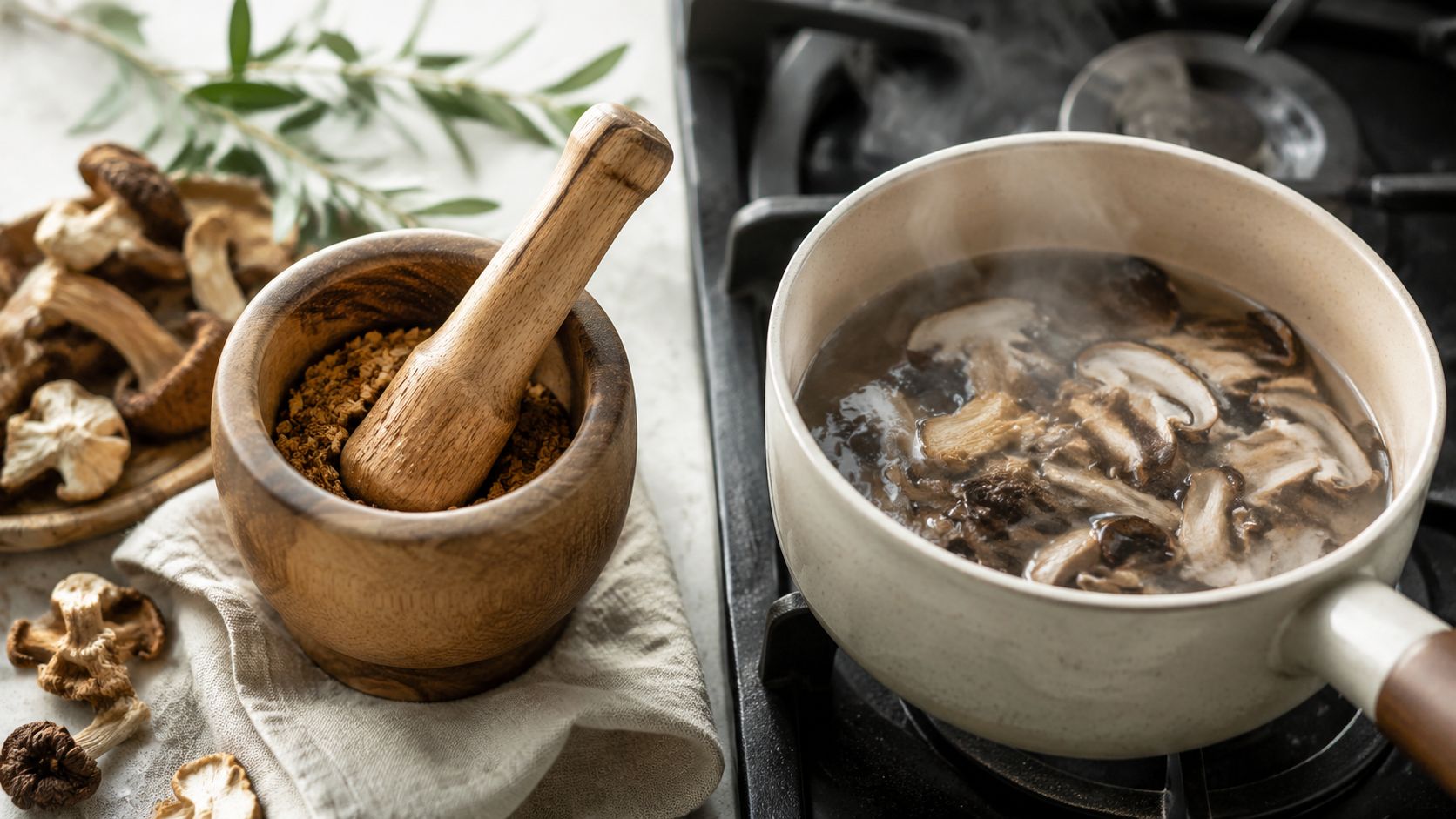
The reason it works well is straightforward. Warm water pulls soluble compounds out of the chopped material, and straining removes much of the fibrous mushroom matter that some people find unpleasant to chew or digest. That does not guarantee a stronger experience. It usually gives a cleaner, more controlled one.
A classic baseline is one measured dose of dried mushrooms brewed in a measured amount of water, using gentle heat instead of a hard boil. The goal is consistency, not aggression.
What you need
- Dried mushrooms: Pre-weighed on a digital scale
- Water: Measured by cup so the batch is repeatable
- Pot or small saucepan: Something easy to control at low heat
- Thermometer if you have one: Helpful, not mandatory
- Strainer or filter: For a smoother final cup
- Optional add-ins: Ginger, honey, peppermint tea, chamomile
How to do it
- Weigh the mushrooms first. Start with the exact amount you intend to take.
- Grind or chop the material. Smaller pieces extract more evenly, but a fine dust can make straining messy.
- Measure your water. Keep that amount consistent each time so your results are easier to compare.
- Heat the water gently. Aim for very hot water or a light simmer, not a rolling boil.
- Add the mushrooms and steep with low heat for about 15 to 20 minutes. Stir once or twice so the material stays saturated.
- Strain thoroughly. A fine mesh strainer, coffee filter, or tea filter will give a smoother cup.
- Add flavor after straining. Ginger, honey, peppermint, or chamomile can soften the earthy taste without changing the method itself.
One practical note. If you are making more than one serving, stir the liquid before dividing it into cups. Material settles, and uneven pouring is one of the easiest ways to turn a shared batch into two very different experiences.
Why gentle heat is the better choice
Hot brew sits in the middle for onset and intensity. It is usually quicker and more direct than a cold steep, but less forceful than lemon tek. That makes it a good fit for newer users, careful testers, and anyone trying to build a repeatable routine.
Gentle heat matters because the point is extraction with control. Boiling hard can reduce water too quickly, make the tea taste harsher, and create more guesswork if you are not paying attention. Low heat gives you a steadier process and a better chance of reproducing the same result next time.
This walkthrough shows the same basic logic in action:
What works and what doesn't
- Works well: Measured doses, measured water, low steady heat, thorough straining
- Often causes problems: Rolling boils, eyeballing the dose, pouring without mixing the batch first
- Worth testing carefully: Ginger for stomach comfort, peppermint for taste, chamomile for a softer flavor profile
For a first attempt, hot brew usually gives the smoothest balance between comfort, predictability, and effort.
The Gentle Cold Steep Method
The cold steep is for people who plan ahead and don't want heat involved at all. It's slower, quieter, and less fussy once you've set it up.
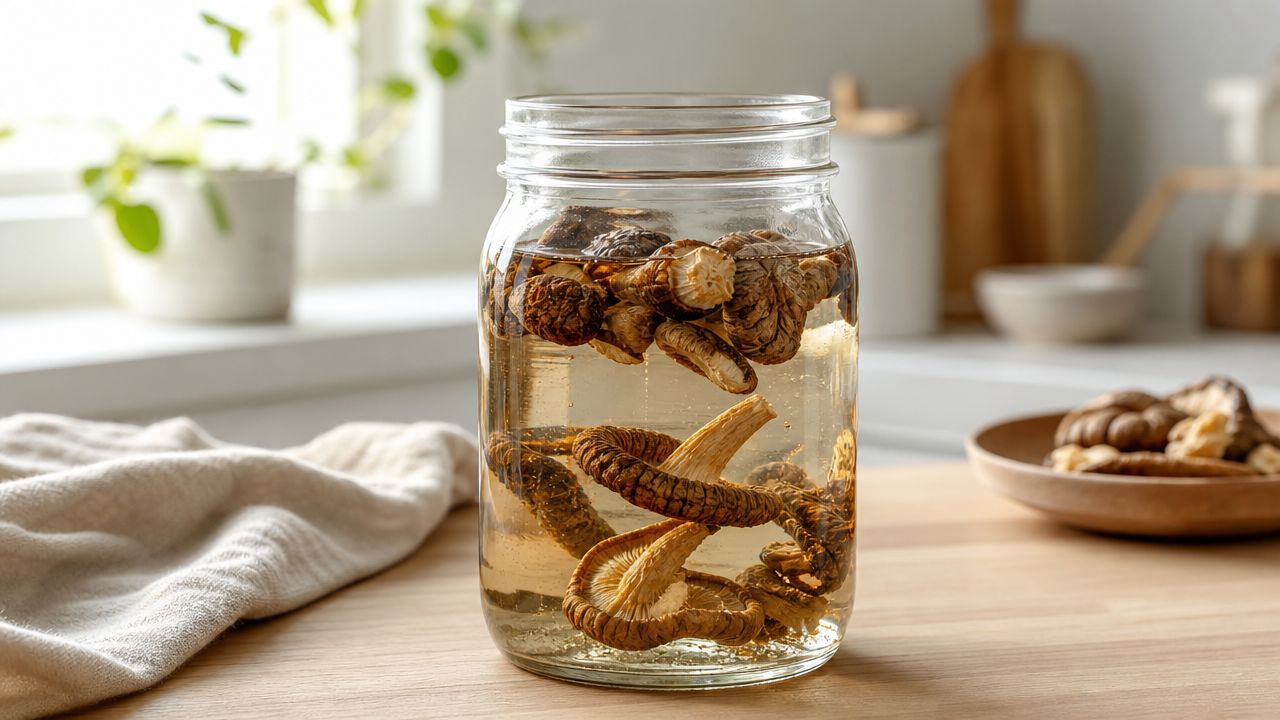
This method appeals to users who dislike the earthy smell of simmering mushrooms or who want a drink that tastes softer. It also removes the stress of temperature management, which is useful because reliable home guidance on heat and chemical stability is still limited in public-facing content.
How it's done
Use weighed, finely ground or very finely chopped mushrooms. Put them in a sealed jar with cold water, then refrigerate the mixture for several hours or overnight. After that, strain well and add flavor if you want it.
You can include an herbal tea bag for taste, or a small amount of citrus for flavor, but the point of the cold steep isn't speed. It's ease and gentleness.
How it compares with hot brew
| Method | Main Advantage | Main Trade-off |
|---|---|---|
| Hot brew | Faster preparation and familiar process | Requires heat control |
| Cold steep | Milder taste and no heat management | Takes much longer |
| Lemon tek | Rapid, forceful onset style | Can feel surprisingly intense |
Who should choose this method
- Sensitive stomach users: Strained cold preparations can feel easier to handle.
- People who hate mushroom flavor: Cold infusion often comes across less bitter.
- Planners: If you know when you want the tea, this method fits well.
Cold steep is not the method for impatient users. If you like to make decisions on the fly, hot brew is more practical. If you're the type who likes everything ready before the session starts, cold steep makes sense.
Some people want the fastest route. Others want the smoothest one. Cold steep usually belongs to the second group.
The Rapid Lemon Tek Method
Lemon tek is not the beginner's method. It's the method people reach for when they want a sharper, faster takeoff and already know how their body responds.
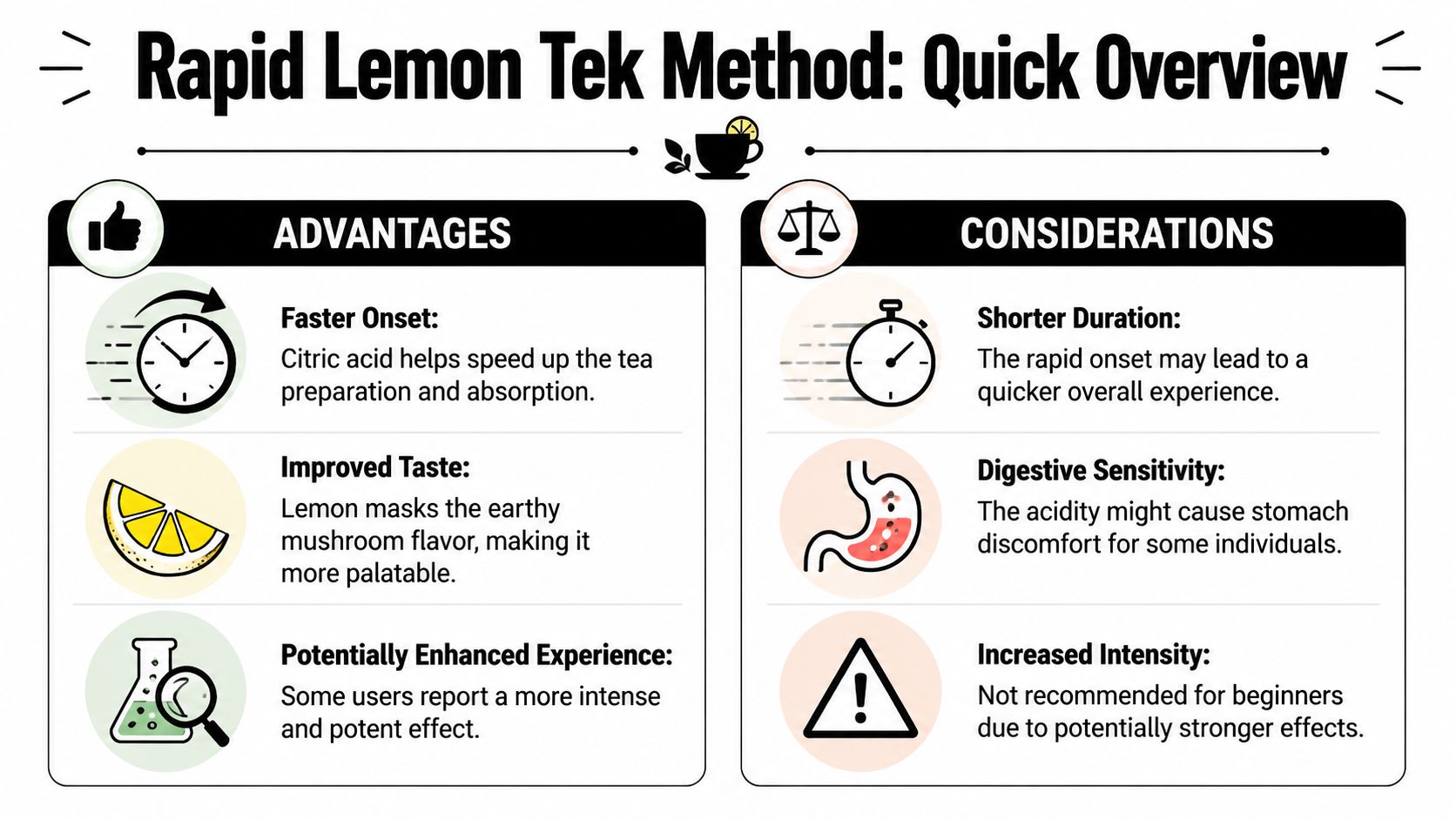
The basic idea is simple. Acidic juice is used on the ground mushrooms before adding water. Neutral educational sources agree that psilocybin is converted to psilocin in the body, and users often treat lemon tek as a way to shift how quickly the experience comes on. One widely cited benchmark for psilocybin mushroom tea is that effects often begin in 20–40 minutes and may last up to 6 hours, which is faster-onset than many solid preparations (onset and duration benchmark).
Basic method
- Weigh and grind the mushrooms.
- Cover them with fresh lemon or lime juice.
- Let the mixture sit for 15–20 minutes.
- Add water and drink, or strain and dilute to taste.
This isn't subtle prep. It's an intentional choice to make the experience feel more immediate.
This method can surprise people who assume “same dose, just different flavor.” It often doesn't feel that way in practice.
Why experienced users choose it
Some people like lemon tek because it cuts the earthy taste and feels more direct. There's less waiting, less second-guessing, and less temptation to think the batch is weak and add more.
That same benefit is also the risk. A rapid onset leaves less room to settle in gradually.
Who should avoid it
If you're new, anxious about control, or still learning your response to psilocybin, skip lemon tek.
That's the cleanest advice. Start with a measured hot brew first. Learn your pace. Learn what your body does. Then decide whether you want something more compressed and intense.
Storage and Flavor Enhancements
Most mushroom tea tastes better with a little help. That isn't a flaw. It's just practical brewing.
Fresh ginger works well if your stomach tends to turn on the earthy side of mushrooms. Honey or agave can round off bitterness. Peppermint and chamomile both pair well because they cover the fungal note without making the drink feel heavy.
Flavor fixes that actually help
- Ginger: Good for warmth and a cleaner finish
- Honey or agave: Softens the edge without needing much
- Peppermint tea: Covers earthy flavors well
- Chamomile: Keeps the cup gentle and familiar
- Lemon: Brightens taste, though many people reserve it for more intentional acidic prep
Storage deserves a conservative approach. Because public guidance around temperature control and chemical stability is still thin, I treat fresh tea as something to use promptly rather than something to age in the fridge for convenience. If you're storing dried material before brewing, use a proper guide to the best way to store shrooms, because good tea starts with well-kept mushrooms.
One practical product option
For people who want less measuring and less prep friction, Metro Mush also offers products such as Rocket Fuel shroom drinks alongside dried mushrooms and edibles. That gives adult consumers another format to compare if they're deciding whether they want to brew at home or choose a ready-made option.
Your Mushroom Tea Questions Answered
A first cup usually answers one question and creates three more. That is normal. Tea gives people more control than eating dried mushrooms, but the method you choose still changes onset, feel, and how predictable the session is.
Can you mix mushroom tea with coffee or caffeinated tea
You can. I usually tell people to treat caffeine as a separate variable, especially early on.
For some users, a little caffeine feels clean and focused. For others, it adds jitters, stomach tension, or racing thoughts that get in the way of why they chose tea in the first place. If your goal is a smoother, easier-to-read experience than chewing dried mushrooms, start without coffee or strong black tea and learn how your body responds to mushroom tea on its own.
Is tea different from chocolates or other edibles
Yes. The main difference is control.
Tea often appeals to people who want a more adjustable option than chocolates or gummies. You can choose a hot brew for a familiar middle ground, a cold steep for a gentler start, or lemon tek if you want a faster and often stronger-feeling onset. Chocolates and other edibles are simpler to use, but they give you less room to shape the experience once the product is made.
If you care most about convenience, an edible may fit better. If you care most about onset, intensity, and how the drink sits in your stomach, tea usually gives you more useful choices.
Can you brew the same mushroom material twice
You can try, but I do not recommend counting on the second brew for anything precise.
The first extraction pulls out an unknown amount, and home prep does not give you a reliable way to measure what is left behind. That makes a second brew inconsistent by default. If consistency matters, use fresh material for each batch and treat reused solids as weak and unpredictable.
Why does the tea sometimes turn blue
Blue tint can happen during grinding, stirring, squeezing, or steeping. By itself, that color change does not mean the tea is bad.
The harder question is potency. Public guidance is still limited on how heat, acidity, steep time, and storage affect stability in a home brew. One source discussing that gap notes that home users still rely on broad advice rather than validated brewing standards (discussion of the stability guidance gap).
What's the safest default if you're unsure
Use the method you can repeat the same way every time.
Weigh the dose carefully. Make one batch. Mix it well before drinking. Give it time before deciding it is weak, because tea can come on faster than eating dried mushrooms, especially with finer grinding or more acidic prep. Predictability matters more than squeezing every last bit of intensity out of the cup.
If you're an adult consumer in Southeast Michigan comparing dried mushrooms, drinks, chocolates, or tea-friendly options, Metro Mush offers psilocybin products and basic format information to help you choose between brewing at home and using a ready-made option.