

Your order just arrived, and the storage clock started the moment you brought it inside.
Maybe you picked up dried mushrooms for later use. Maybe you grabbed a chocolate bar because it feels easier to dose and easier to keep around. Maybe you bought a drink and assumed it can sit on a shelf like any other packaged beverage. That last mistake ruins more products than many realize.
The best way to store shrooms depends on what kind you have. Fresh mushrooms, dried mushrooms, chocolates, drinks, and honey infusions all need different handling. If you use one storage method for all of them, you'll eventually lose potency, texture, safety, or all three.
Good storage does two jobs. First, it protects the active compounds from heat, light, moisture, and air. Second, it protects you from eating something that has spoiled, softened, separated, or picked up contamination because it sat in the wrong place too long.
Protecting Your Investment from Day One
Many storage problems happen in the first hour.
People leave a bag on the counter under kitchen lights. They toss fresh mushrooms into a plastic produce bag. They put chocolate near a stove. They forget that a liquid infusion behaves more like perishable food than a dried botanical. Then they wonder why the product feels weaker, looks off, or stops smelling right.
Start with a simple rule. Match the product to the environment immediately.
The first moves that matter
When you get home, sort what you bought before you do anything else.
- Fresh mushrooms belong in the refrigerator, set up for airflow and moisture control.
- Dried mushrooms belong in an airtight container, then into a cool, dark, dry spot.
- Chocolate edibles do best in a cool place away from heat and sunlight.
- Drinks and liquid infusions usually need refrigeration.
- Honey infusions tolerate long storage better than most formats, but they still need a clean, sealed container.
That sounds basic, but it prevents the two most common failures: trapped moisture and unnecessary heat exposure.
Why this matters so much
Psilocybin products aren't all fragile in the same way. Fresh mushrooms spoil fast because they carry moisture. Dried mushrooms last much longer, but only if they stay dry. Edibles add another layer because fats, sugars, and liquids change how stable the product is over time.
Practical rule: Don’t store based on convenience. Store based on water content.
If you remember that one line, most decisions become easier. Wet products need controlled cold storage. Dry products need sealed, dark storage. Fat-based edibles are more forgiving than drinks, but they still hate heat.
A careful setup on day one saves product, preserves consistency, and makes each later dose more predictable.
The Four Enemies of Psilocybin Potency
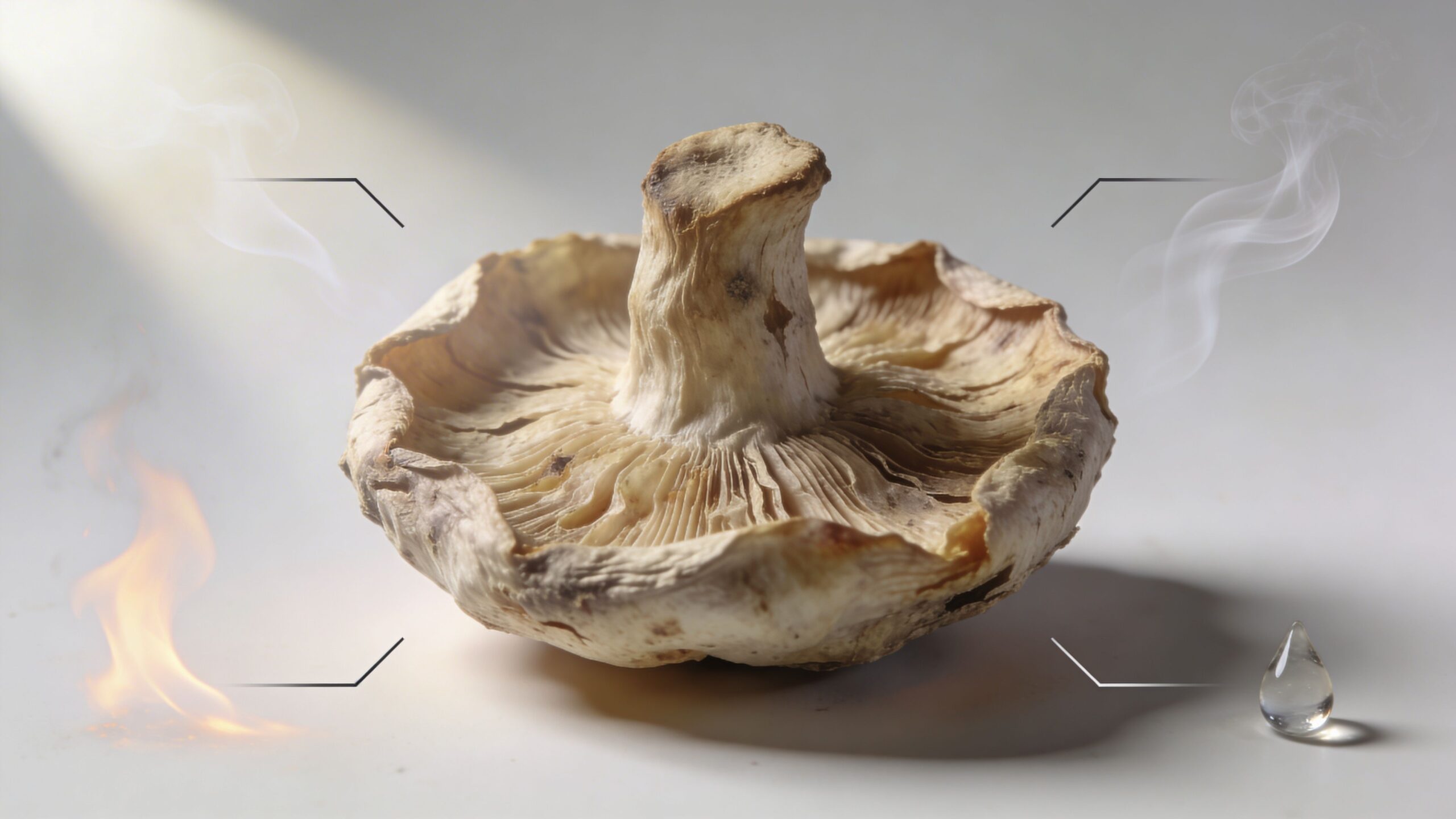
A lot of storage mistakes happen because the product still looks fine. Potency usually drops before spoilage is obvious, especially with dried mushrooms, chocolates, and canned or bottled infusions. The four things that drive that decline are light, heat, moisture, and oxygen.
Each one causes trouble in a different way. In practice, the worst setups expose a product to more than one at the same time, like a warm car, a sunny countertop, or a half-open edible package in a humid kitchen.
Light breaks down sensitive compounds
Light exposure is easy to underestimate because the damage is gradual. A clear jar near a window can look clean and organized while the contents lose strength over time.
This matters for more than whole mushrooms. Psilocybin chocolates, gummies, and infused honey often come in packaging that looks shelf-stable, but once that package sits under bright indoor light or direct sun, quality starts slipping. Opaque containers, closed cupboards, and original light-blocking packaging all work better than display storage.
Heat speeds up potency loss and ruins edibles faster
Heat is where many edible buyers experience issues.
Dried mushrooms weaken faster in warm storage. Chocolate bars soften, separate, or bloom. Drinks and liquid shots can lose quality quickly if they spend hours in a hot car after pickup. In Metro Detroit, that risk is real in both directions. Summer cabins overheat. Winter garages may stay cold, but repeated warm-ups indoors create condensation problems later.
The practical rule is simple. Keep products away from ovens, radiators, dashboard storage, sunny windows, and any room that runs warm through the day.
Moisture creates the fastest safety problem
Moisture causes the most immediate storage failures.
Fresh mushrooms spoil because they already contain a lot of water. Dried mushrooms pull moisture back out of the air and lose their snap. Once they soften, mold risk goes up and shelf life goes down. For edibles, moisture shows up differently. Chocolate can sweat after temperature swings. Powder capsules can clump. Teas, juices, and other infused drinks are the most perishable format because water gives microbes an easy place to grow.
Here is how that plays out in real homes:
- Fresh mushrooms plus trapped humidity lead to sliminess, bruising, and rot.
- Dried mushrooms plus damp air lead to soft texture, mold risk, and weaker dosing consistency.
- Chocolate and gummies plus condensation lead to texture changes, sticking, and shorter hold time after opening.
- Drinks and refrigerated infusions left out too long carry the highest spoilage risk of any psilocybin product category.
If a product contains water, treat it like food, not like a supplement.
Oxygen slowly lowers quality after opening
Oxygen usually works in the background, but it still matters. Every opening of a jar, pouch, or edible wrapper brings in fresh air. Over time, that added exposure contributes to oxidation and a steady drop in quality.
This is one reason bulk purchases need better storage discipline than single-use buys. A large bag of dried mushrooms opened repeatedly will age faster than the same amount split into smaller sealed containers. The same goes for edibles. A chocolate bar broken into several sessions lasts better if the unused portion is wrapped tightly and kept sealed between uses.
Good storage blocks all four problems at once. Keep light off the product, keep temperatures stable, keep moisture under control, and limit air exposure wherever you can. That matters even more with psilocybin edibles, because fats, sugars, and liquids add texture and spoilage issues on top of potency loss.
Storing Fresh Mushrooms for Short-Term Use
Fresh mushrooms are the least forgiving form you can buy. They can be excellent for near-term use, but they're not a stash product. If you don't plan to use them soon, the smart move is to preserve them properly rather than pretending the fridge will rescue them indefinitely.
The workable goal is short-term hold, not long-term storage.
What works in the fridge
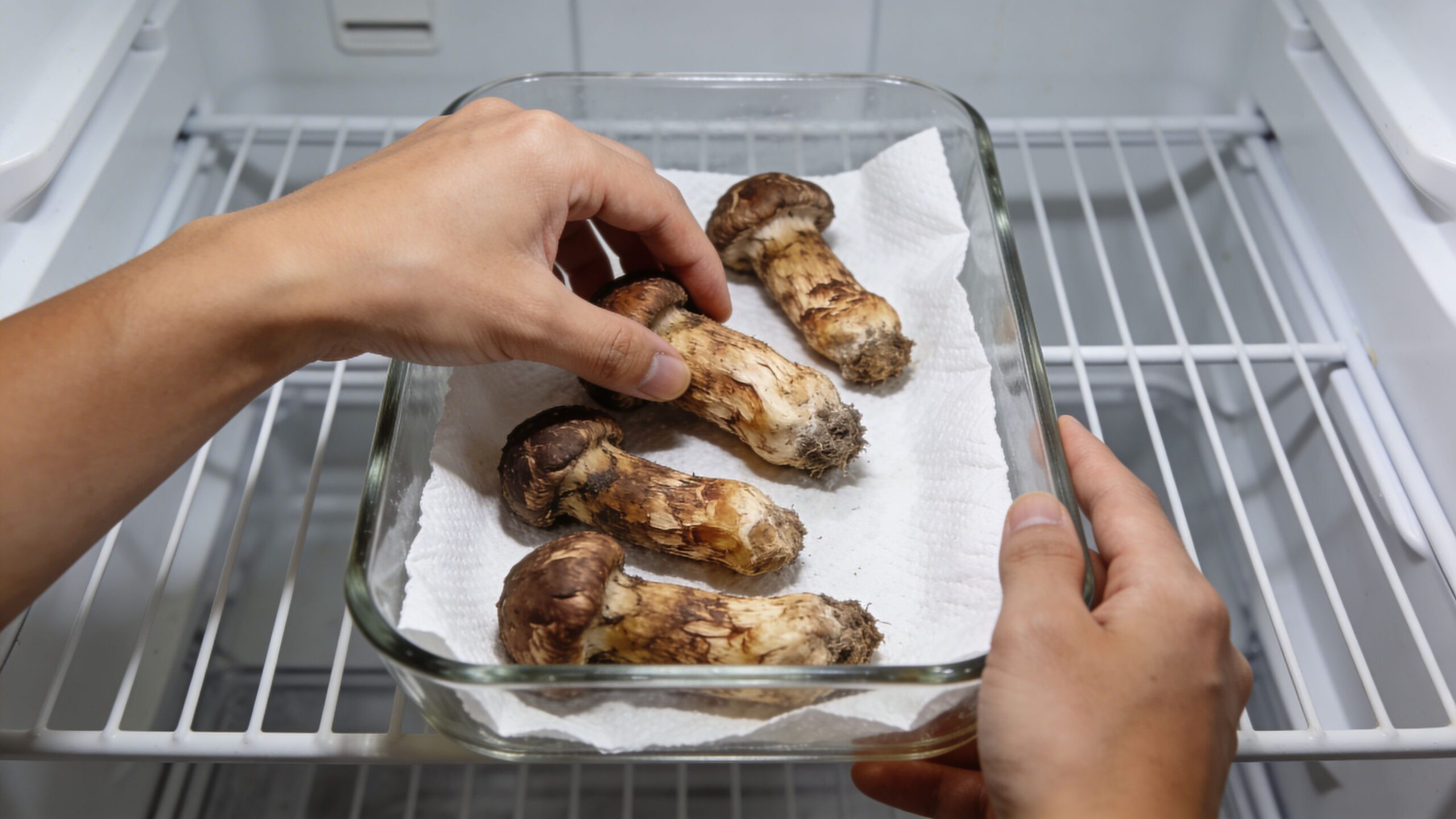
The most reliable method is breathable refrigeration with moisture control.
According to the Oregon Health Authority stability material, fresh psilocybin mushrooms are best stored short term for up to 7 days in the refrigerator at 32–40°F (0–4°C) using a paper bag with paper towels, and freezing is not recommended because it causes ice crystal formation associated with the highest tryptamine degradation in the study’s comparison conditions (Oregon Health Authority stability study).
That recommendation lines up with what mushroom handlers already know. Fresh fungi need to breathe a little, and they need help managing surface moisture.
The paper bag method
Do this as soon as possible after bringing them home.
- Leave them unwashed. Water on the surface shortens the usable window.
- Lay them in a single layer. Crowding speeds up bruising and wet spots.
- Use paper towels above and below if needed. The towel absorbs excess moisture.
- Put them in a paper bag. The bag protects them while still allowing airflow.
- Store the bag in the main body of the refrigerator. Avoid the door and avoid the crisper.
That last point matters. The main compartment stays steadier. Door shelves warm up every time someone opens the fridge.
What to avoid
Fresh mushroom mistakes are predictable.
| Mistake | Why it fails |
|---|---|
| Plastic produce bag | It traps moisture and turns the bag into a humid chamber |
| Airtight tub with no absorbent layer | Condensation builds and texture degrades fast |
| Crisper drawer | It tends to hold more humidity than you want |
| Washing before storage | Added water speeds decay |
| Freezing fresh mushrooms | Ice damages structure and the study above found the worst degradation pattern under freezing conditions |
People freeze fresh mushrooms because it feels like the obvious preservation move. For many foods, it is. For psilocybin mushrooms, it isn't the best answer if potency preservation is the goal.
A more careful setup if you want every day possible
If you're trying to get the full short-term window, handle them gently and check them every day.
- Replace damp paper towels if they start feeling wet.
- Remove any soft specimen before it affects the rest.
- Keep odors away. Mushrooms absorb surrounding smells easily.
- Open the bag briefly only when needed. Extra handling creates extra moisture exchange.
Healthy fresh mushrooms should feel firm, not slick.
There’s also a practical lifestyle point here. In Metro Detroit homes, fridges often run busy. Family traffic, frequent door opening, leftovers stuffed everywhere, and variable shelf temperatures all make fresh mushroom storage less stable than people expect. If your refrigerator is warm, crowded, or damp, don't assume you'll get the full short-term window.
When to switch plans
Fresh storage is a bridge, not a destination.
If you know by the next day that you won’t use them soon, stop trying to stretch the fridge indefinitely. Move to a proper preservation plan while the mushrooms are still in good shape. The best way to store shrooms for any longer horizon is almost always drying first, then controlled dry storage.
Mastering Long-Term Storage for Dried Mushrooms
For long-term preservation, dried mushrooms win by a wide margin. They’re lighter, more stable, easier to portion, and far easier to protect from spoilage than fresh material.
The key is simple. They must stay dry. Everything else is secondary.
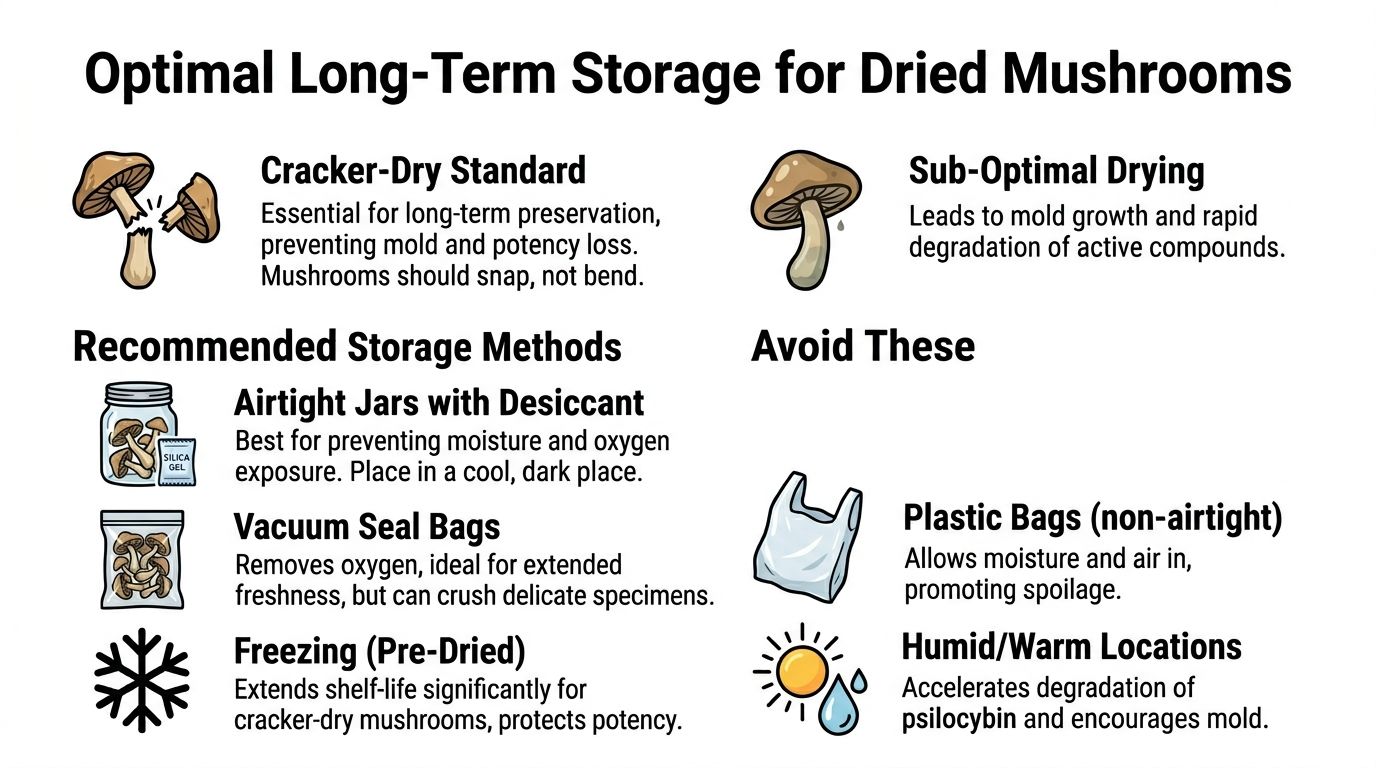
A visual summary helps before getting into the setup details.
Start with the right dryness
If a mushroom bends, feels leathery, or seems springy, it isn't ready for long-term storage.
People call the target cracker-dry for a reason. The mushroom should snap rather than flex. If it goes into a jar while still holding internal moisture, the jar doesn't preserve it. The jar traps the problem.
That’s why drying quality comes before container choice. If you need a practical primer on preparing mushrooms for storage, this guide on drying Psilocybe cubensis is a useful companion read.
The two best container choices
Airtight glass jars or vacuum-sealed bags are often the best container choices.
Airtight glass jars
Glass jars are excellent for routine access.
They’re reusable, easy to inspect, and less likely to crush delicate caps than soft packaging. Add a food-safe desiccant pack, keep the lid sealed, and place the jar in a cool, dark, dry location.
Best use cases:
- Small to medium personal stash
- Frequent access
- People who want to inspect contents easily
Trade-off. Every opening introduces fresh air.
Vacuum sealing
Vacuum sealing removes more air than a standard jar setup, which makes it strong for storage that isn’t being opened often.
It’s especially useful if you divide mushrooms into smaller portions before sealing. That way you only open one pack at a time instead of exposing the full batch over and over.
Best use cases:
- Longer holding periods
- Larger amounts divided into portions
- People who want less air exposure
Trade-off. Vacuum bags can crush fragile mushrooms, and once opened, that package loses its main advantage.
Where to keep the container
Storage location matters as much as the container itself.
Expert guidance states that dried mushrooms can retain potency for up to 12 months when stored below 70°F (21°C) in an airtight container in a cool, dark, dry environment, and it notes that dried mushrooms stored in the dark at room temperature showed the lowest degradation of tryptamines in the Oregon review summarized by Psychedelic Support’s mushroom storage guidance."
In plain terms, good home locations include:
- A dark bedroom closet
- A low cabinet away from the stove
- A shelf in a dry room with stable temperature
Poor locations include windowsills, glove compartments, garage shelves, bathroom cabinets, and any cabinet above a dishwasher or oven.
Desiccants are not optional in humid homes
Southeast Michigan homes can swing between dry winter air and muggy indoor summer conditions. That makes desiccant packs especially useful.
A silica pack doesn't fix mushrooms that were stored damp. It helps capture residual humidity inside the container and lowers the chance that small moisture exposure builds into a real problem.
Use desiccants correctly:
- Use food-safe packs only
- Keep the pack from tearing
- Swap packs if they’re old or compromised
- Don’t let the pack touch anything wet
Storage rule: Seal out humidity before you need to fight it.
A quick comparison of long-term methods
| Method | Strength | Weak point | Best fit |
|---|---|---|---|
| Airtight glass jar with desiccant | Easy access, reusable, solid moisture control | More air exchange over repeated openings | Regular personal use |
| Vacuum-sealed bag | Reduced oxygen exposure | Can crush product, less convenient once opened | Longer storage in portions |
| Non-airtight plastic bag | Convenient only | Poor barrier against air and moisture | Not recommended |
A short demonstration can help if you like seeing storage ideas in action.
What about freezing dried mushrooms
Freezing creates confusion because people mix up fresh and fully dried material.
The core point for everyday users is this: if you already have properly dried mushrooms and a cool, dark, dry room is available, that room-temperature dark storage setup is the cleanest and most practical long-term method. It avoids condensation mistakes, repeated thawing, and handling errors. For most households, that’s the better answer.
The best way to store shrooms over the long run isn't complicated. Dry them fully. Seal them tightly. Add desiccant. Put the container somewhere boring and forgettable.
That's good storage.
A Guide to Storing Shroom Edibles and Infusions
Edibles are where people make the wrong assumptions.
They think all infused products behave like dried mushrooms. They don’t. A chocolate bar, a bottled drink, and a honey infusion are three very different storage problems. If you bought edibles because they feel simpler, that's fine. Just don't store them lazily.
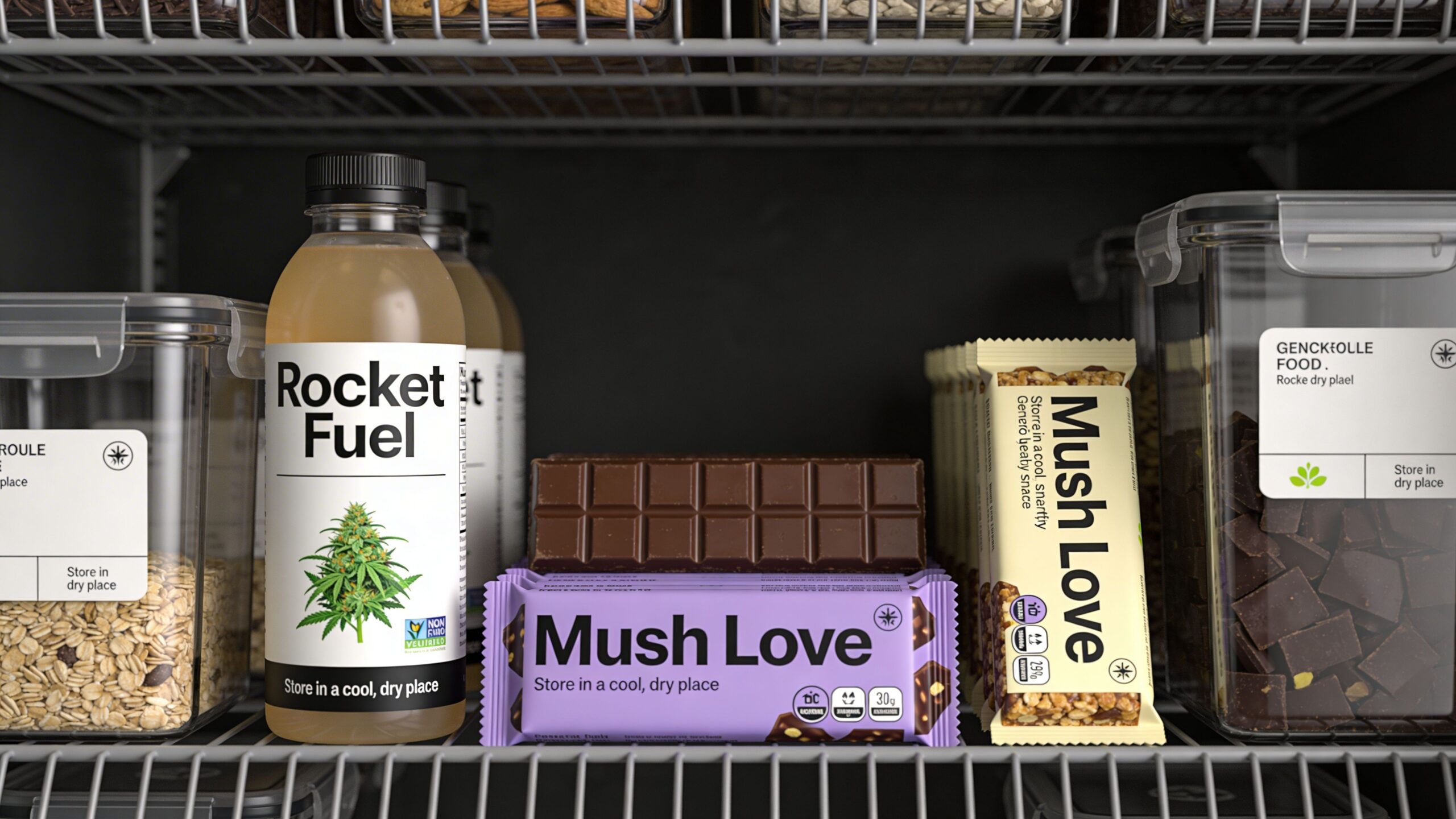
Chocolate is often more stable than anticipated
Fat-based edibles hold up better than liquid products.
Verified guidance notes that psilocybin chocolates can remain stable for 6 to 12 months at room temperature if kept below 70°F, while liquids are more perishable, and honey infusions can preserve potency for far longer because of osmotic pressure, as outlined in South Mill’s mushroom storage discussion.
That makes chocolate one of the more forgiving edible formats, but only if you protect it from heat, light, and humidity.
Good chocolate storage looks like this:
- Keep it sealed
- Store it in a dark cupboard or pantry area that stays cool
- Avoid spots near ovens, sunny counters, and hot cars
- Refrigerate only if your home runs warm and you can protect it from condensation
If you want a product-specific option built for convenience, freeze-dried edibles can also appeal to people who want a shelf-friendlier edible format.
Drinks need cold storage and quicker use
Liquid infusions are less forgiving than chocolate. They’re more prone to quality changes.
The same verified guidance says shroom drinks should be refrigerated and used within 1 to 2 months. That tracks with basic food handling. Liquids can separate, flavor can drift, and spoilage risk is harder to judge than it is with a dry product.
If you buy a drink, treat it like a perishable infused beverage, not like candy.
A few practical habits help:
- Refrigerate promptly
- Keep the cap tightly closed
- Don’t leave it in a bag or vehicle
- Check appearance and smell before use
Honey infusions are the outlier
Honey preserves differently than chocolate or drinks.
Because osmotic pressure works in honey’s favor, verified guidance gives honey infusions a much longer potential preservation window of 2 to 5 years when properly prepared and stored in a sealed container. That doesn’t mean you can ignore basic cleanliness. It means honey is unusually protective compared with other edible formats.
A simple edible decision guide
| Product type | Best storage approach | Main risk |
|---|---|---|
| Chocolate bar | Cool, dark storage below room heat | Melting, bloom, texture change |
| Drink or liquid infusion | Refrigeration | Separation, spoilage |
| Honey infusion | Sealed container in a stable spot | Contamination from poor handling |
Buy edibles for convenience if you want, but store them like food science matters. Because it does.
For people in humid homes, the little details matter more. A pantry next to a stove is worse than a closet shelf. A fridge with heavy condensation is bad for loosely wrapped chocolate. Repeated temperature swings are what ruin texture first, even before potency becomes the question.
Identifying Spoilage and Safe Handling Practices
A good storage setup doesn't remove your responsibility to inspect what you have.
If something looks wrong, smells wrong, feels wet when it shouldn't, or has changed in a way you can't explain, don't talk yourself into using it anyway. That's how people take avoidable risks.
What spoiled fresh mushrooms look like
Fresh mushrooms usually tell on themselves fast.
Watch for these signs:
- Slimy surface instead of a firm, dry feel
- Fuzzy growth that wasn't there before
- Darkened wet patches
- Sour or unpleasant odor instead of a normal earthy smell
If more than one of those shows up, discard them.
What spoiled dried mushrooms look like
Dried mushrooms should stay dry, light, and structurally stable for their type. Warning signs are different from fresh product.
Look for:
- Softness or bendiness after they were previously crisp
- Visible mold or fuzz
- Sticky or damp feel
- A stale, sour, or otherwise off smell
One of the easiest mistakes is mistaking age for safety. Old and dry can still be usable. Old and damp is a different story.
Handling rules that reduce risk
Safe handling is boring. That’s why it works.
- Use clean, dry hands when portioning product
- Open containers briefly instead of leaving them exposed on a table
- Keep products away from kids and pets
- Label your containers clearly so they don't get mixed with non-infused food
- Separate infused products from ordinary snacks, especially with chocolates and honey
For people who travel around the region or carry product between homes, use a sealed container and keep it out of heat. A glove box, trunk on a summer day, or backpack left in direct sun is bad storage even if it’s only for part of the afternoon.
When in doubt, throw it out
This is the rule that saves the most trouble.
If you have to argue with yourself about whether it’s still good, it probably isn’t worth keeping.
That applies whether you're storing a jar at home or bringing product back from a trip across the state line. If you're trying to stay informed about regional mushroom context and legality culture around the Midwest, this overview of mushrooms in Illinois gives useful background.
Potency loss is disappointing. Spoilage is a safety issue. Those aren't the same thing, and you shouldn't treat them the same way.
Frequently Asked Storage Questions
Some storage questions don't need a long explanation. They need a direct answer.
Common Questions About Mushroom Storage
| Question | Answer |
|---|---|
| Should I store fresh mushrooms in plastic? | No. A breathable setup works better than trapped humidity. |
| Can I leave dried mushrooms in the bag they came in? | Only if that packaging is airtight and moisture resistant. If you're unsure, move them to a better container. |
| Is the refrigerator good for dried mushrooms? | Usually not the first choice. Dry, dark room storage in an airtight container is simpler and avoids condensation problems. |
| Should I grind dried mushrooms before storage? | Only if you have a reason to. Whole pieces usually handle storage better because you expose less surface area during routine handling. |
| Can I keep chocolates in the fridge? | You can if your home is too warm, but protect them from moisture and odor pickup. Stable cool storage is the goal. |
| How do I know a drink is no longer worth using? | If the smell, appearance, or container condition seems off, don't use it. Liquids deserve a stricter standard. |
| Is a mason jar enough by itself? | It’s a strong option for dried mushrooms if the lid seals well and the contents are fully dry. A desiccant pack makes the setup better. |
| What’s the best way to store shrooms if I buy different forms at once? | Separate them by type immediately. Fresh in the fridge, dried in airtight dark storage, chocolates cool and dark, drinks refrigerated. |
The best setups are simple and repeatable. Fancy gear doesn't matter if the basics are wrong. Dry things need dryness. Perishable things need refrigeration. Anything infused needs labeling, separation, and common sense.
If you want psilocybin products that fit how you store and use them, browse Metro Mush for dried mushrooms, chocolates, drinks, and other options for adult consumers in the Detroit and Ann Arbor area. Choose the format that matches your routine, then store it properly from day one.