



You know the scene. The snow's gone, the lawn finally dries out, and suddenly there are fresh ridges cutting across the grass like somebody dragged a rake under the surface overnight. In Michigan, that's usually not random damage. It's a mole working the yard the way moles do, deep in the soil, out of sight until the mess shows up on top.
The mistake most homeowners make is chasing every mound they see. That burns time, money, and patience fast. How to get rid of moles in Michigan comes down to two things that generic advice skips, finding the active tunnels and timing the work to Michigan's seasons.
Why Michigan Yards Are a Mole Magnet
A spring thaw in Michigan can expose a week's worth of underground work all at once. One day the lawn looks fine, the next it's striped with raised runs, little soil piles, and soft spots that collapse under a boot. That is what homeowners see on the surface, but the core problem sits below it, where moles keep moving, feeding, and repairing tunnels.
What draws them in
Moles are after insects and worms, not your grass blades. The tunnel damage is the visible sign of a much larger search pattern underground, and Michigan yards give them plenty of reasons to stay busy. Moist soil makes tunneling easier, and lawns with a steady supply of underground food are prime territory.
The state also has different mole species, including eastern moles and star-nosed moles, and Michigan guidance treats them a little differently. That matters because the tunnel system, mound shape, and trap placement can vary enough to make a lazy setup fail. A yard can look full of moles from the surface while only a few narrow runs are currently active.

Practical rule: if you treat the whole lawn instead of the active runs, you're usually doing a lot of work for very little result.
The local ecosystem matters too. Michigan's damp seasons, clay-heavy pockets, and lush turf all create a yard that can feed a mole for a long stretch. For readers who also track seasonal yard activity, the same kind of timing mindset applies in other outdoor pursuits, like the patterns discussed in Michigan mushroom hunting season, where knowing when conditions line up matters more than guesswork.
Finding Active Tunnels Before You Waste Time and Money
A yard can look active from the surface and still waste a trap set. I see this all the time in Michigan clay, where a shallow ridge stays visible long after the mole has moved elsewhere. The fix is simple, and it saves time, bait, and broken equipment, flatten a few sections first, then come back to see which ones get raised again. Michigan State University Extension
The flatten and watch method
Start with several raised runs across the yard, not just the biggest one. Press them flat with your foot or a garden tool, then leave them alone and check back later. The runs that rebuild are the ones worth your attention, because they're still part of the mole's working route network.
Mole control is local. You are not treating the whole lawn, you are looking for the narrow section the animal is using. In practice, that means testing more than one tunnel segment before you find the one or two that are worth trapping.
Michigan guidance also points out a detail many people miss, light in an open tunnel can scare moles away. After you set a trap, cover the opening with soil so it stays dark. In the field, skipping that step is one of the fastest ways to get a trap that looks right and never fires.
Flatten, wait, then place hardware. Anything else is guessing with better equipment.
Star-nosed moles need a different setup
Michigan guidance also separates star-nosed moles from other species. For those, the recommendation is to dig into the tunnel below one of the mounds and set the trap over a refill hole of loose dirt (Michigan State University Extension). That placement is different from forcing equipment into a random ridge, and it matters when the surface pattern does not match the main run.
A clean routine is enough for most yards:
- Flatten several runs.
- Check for fresh push-up after a short wait.
- Trap only the re-raised sections.
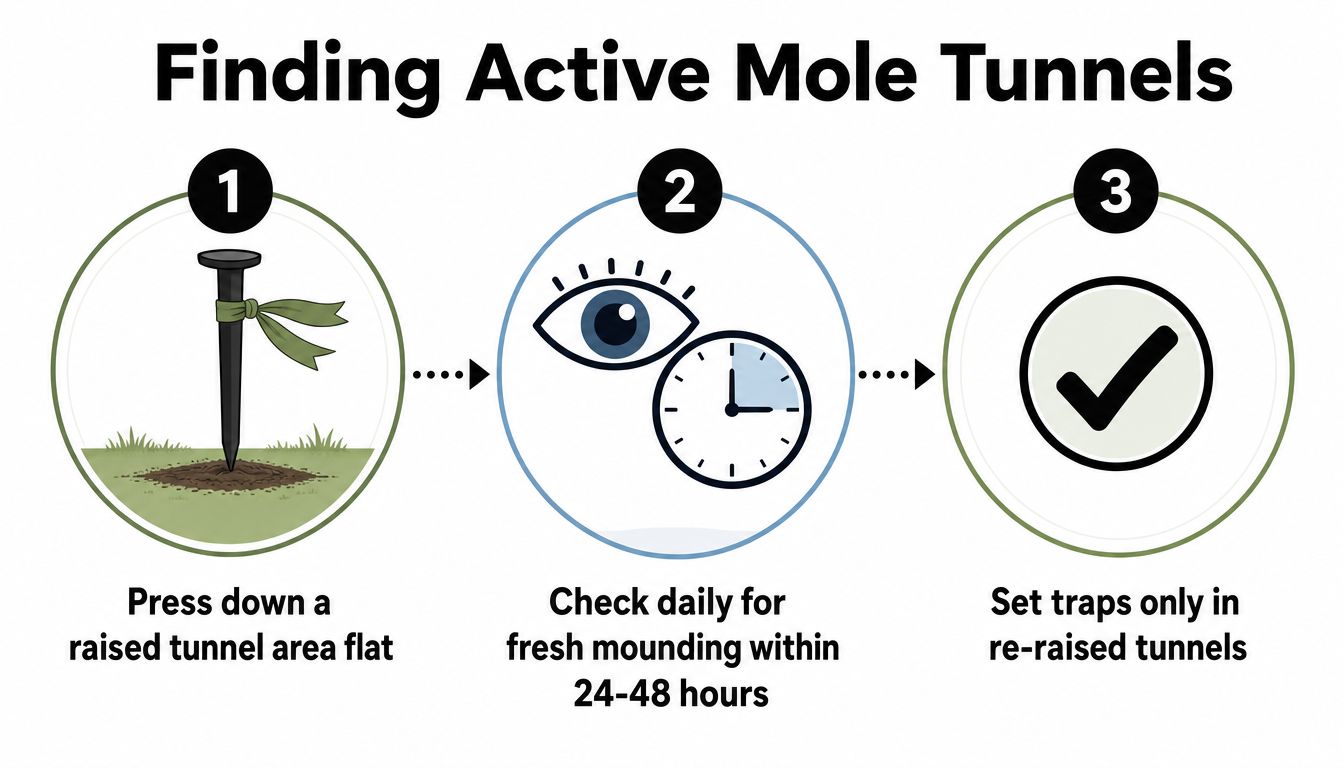
That diagnostic step is the difference between a controlled job and endless frustration. Once you know where the mole is still working, the rest of the process gets a lot more practical.
Comparing Traps, Baits, and Deterrents That Actually Work
Mole control in Michigan works best when you separate the useful tools from the gimmicks. Traps and bait can produce results when they're matched to active tunnels. Sonic stakes, vibration devices, and similar deterrents mostly give people hope, not control.
The real options
Lethal traps are the most direct choice for active runs. Scissor-jaw, choker-loop, and harpoon styles all aim to intercept a mole in the tunnel system, and they make sense when you've already done the tunnel-detection work. They also demand patience, because placement is more important than brand or style.
Live traps sound kinder, and for some homeowners they're the preferred route. The practical problem is that relocation isn't a clean fix, and legal release rules can get complicated fast. If you go that route, the important part is to verify local rules before moving an animal anywhere.
Bait is another path, especially worm-shaped toxic bait products. These can be effective, but they create obvious safety issues around children, pets, and any yard where a loose dog likes to investigate everything. If that describes the property, bait should be treated with caution, not casual enthusiasm.
What's usually a waste of money
Deterrents are where people lose time. Castor oil sprays, ultrasonic stakes, and vibrating devices get marketed as easy answers, but they rarely solve a true tunnel problem. If the food source and active runs are still there, the mole often just keeps working around the disturbance.
| Mole Control Methods Compared | Estimated Cost | Effectiveness | Effort Level | Humane |
|---|---|---|---|---|
| Scissor-jaw, choker-loop, or harpoon traps | Varies by product | Strong in active tunnels | Medium | No |
| Live traps | Varies by product | Mixed | High | Yes, if relocation is legal and done correctly |
| Toxic bait | Varies by product | Strong when used properly | Medium | No |
| Castor oil sprays | Varies | Low | Low | Yes |
| Ultrasonic or vibrating stakes | Varies | Low | Low | Yes |
The bottom line is simple. If you want the fastest path with the least guesswork, traps in active tunnels are the most straightforward. If you prefer a lower-harm approach, live trapping is more complex and still needs legal checking.
Timing Your Mole Control to Michigan Seasons
Michigan mole activity does not stay evenly spread through the year. The best time to act is when moles are using shallow tunnels, not when they have pulled back deeper. The practical test is simple. Flatten the run, then check it again the next day. Active surface tunnels are often rebuilt fast, which makes that check a useful way to avoid wasting time on old, abandoned lines. According to a Michigan mole-control guide, 2026, that tunnel check is one of the clearest ways to separate current activity from dead space.
The two windows that matter
The main windows are spring through early summer, especially April through June, and fall, especially October through November. That fits Michigan conditions. After winter, the ground starts opening up again, and in fall the soil stays workable while moles are still pushing near the surface.
November deserves extra attention because it comes right before the ground freezes and activity starts dropping off. If you want to get ahead of winter damage, that is the month to focus on the runs that are still being rebuilt.
The same guide recommends checking treated tunnels again 7 to 14 days later and only making a second pass if fresh activity keeps showing up. That is the right rhythm for this work. Treat once, wait, then inspect. Rushing into repeat treatments usually just burns time and product on tunnels that were never active in the first place.
A seasonal plan saves effort because it matches the mole's habits instead of fighting them. Outside those windows, the animal may still be somewhere in the yard, but it is less likely to be working the shallow runs where traps and bait are most effective.
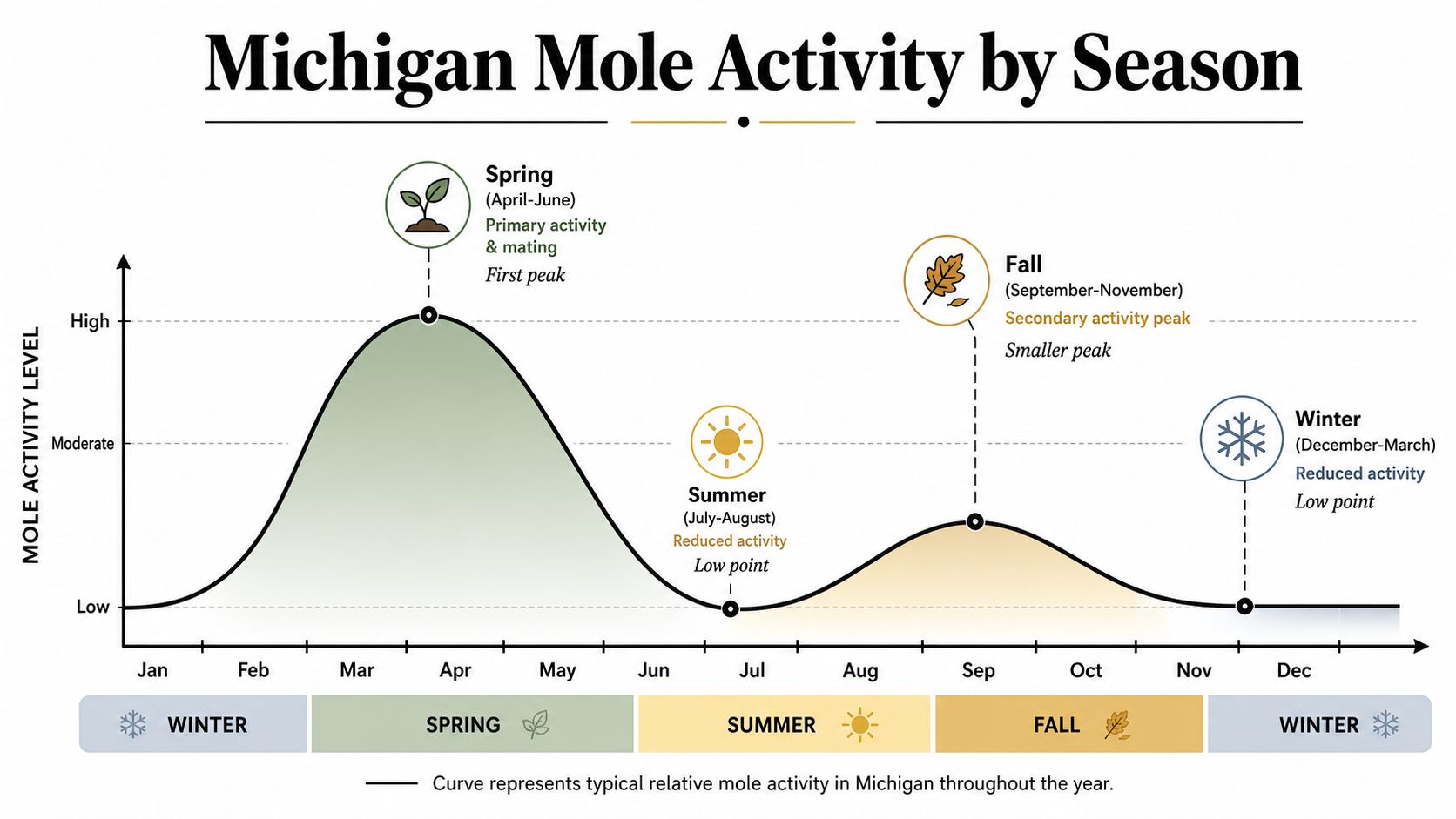
That same weather-sensitive timing shows up in morel season in Michigan, which is another reminder that Michigan yards follow the calendar closely. Work with the season, and you spend less time guessing at where the problem really is.
Lawn and Soil Management to Reduce Mole Attractants
Killing one mole doesn't make a yard mole-proof. If the lawn still offers easy tunneling and plenty of food, another one can move in later. Long-term control means making the yard less attractive, not just removing the current problem.
Reduce the food source
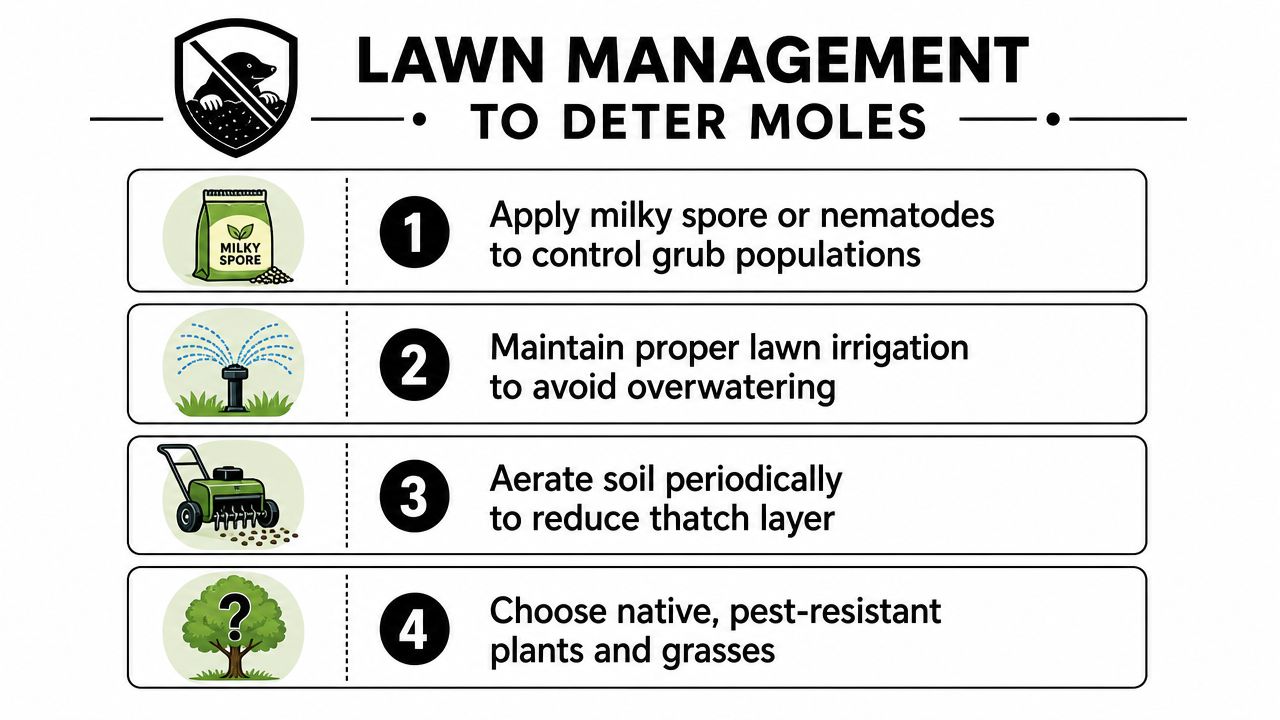
Moles feed on underground insects and worms, so grub management matters more than people sometimes want to admit. Beneficial nematodes and targeted insecticides can help reduce grub populations when they're used at the right time and matched to the actual pest pressure. That doesn't eliminate every food source, but it can make the soil less appealing over time.
The infographic below points to a basic truth, healthy lawn care isn't just about appearance, it changes the underground environment too. Proper irrigation, aeration, and plant selection all affect what lives below the turf.
Make the soil less comfortable
Too much moisture can keep the soil easy to work and can support the insects moles feed on. Adjust irrigation so the lawn isn't staying wet longer than it needs to, and improve drainage in areas that hold water after rain. In clay-heavy Michigan yards, that often matters more than any product on a shelf.
Aeration helps too. It breaks up compaction, reduces thatch buildup, and changes the underground conditions enough that turf stays healthier and less inviting to the pests hiding in it. This is not flashy work, but it's the kind that keeps the next mole from settling in.
The best long-term lawn is not the prettiest one on the block, it's the one that doesn't give underground pests an easy life.
For homeowners who pay attention to yard hazards as well as yard health, Michigan poisonous mushrooms is a reminder that outdoor management is really about reducing risk across the property, not just fixing one visible problem.
Michigan Legal Rules and When to Call a Professional
Live trapping and relocation can get complicated fast, because wildlife rules aren't the same everywhere in Michigan. Before moving an animal, check the local and state rules that apply to trapping, transport, and release. If children or pets use the yard, that check matters even more, because both lethal traps and toxic bait need careful placement and monitoring.
A good rule for DIY work is this, if you've already flattened and rechecked active runs, tried a targeted method in the right season, and still see new push-up after the follow-up window, it's time to bring in a licensed pest control professional. A proper Michigan operator should talk about tunnel mapping, active-run placement, and a treatment plan that includes reassessment, not just a quick bait dump.
For homeowners who want the work done safely, especially around pets, a professional is worth calling sooner rather than later. The right technician should know Michigan conditions, seasonal timing, and species differences, then use that knowledge to keep the job focused instead of broad and messy.
The takeaway is plain. Find the active tunnel, work in the right season, and stop treating abandoned runs like they matter. That one change saves more time than any gimmick on the market.
If your yard is still showing fresh tunnels after you've tested the active runs, get help from a local pro who understands Michigan soil and seasonal mole behavior. Reach out to Metro Mush for a straightforward next step and keep the lawn work focused where it counts.