The most repeated advice about mushrooms is often the least useful. “Assume every wild mushroom is deadly.” “If an animal eats it, it's safe.” “Cook it hard and the toxins disappear.” “Magic mushrooms fry your brain.” Those lines spread because they're simple, not because they're accurate.
If you live in Detroit or Ann Arbor, that matters more than it used to. Curiosity around psilocybin is rising, local policy has changed, and a lot of people are trying to sort out what's folklore, what's fear, and what keeps you safe. The problem is that myths about mushrooms tend to lump together very different topics: wild foraging, toxicology, psychedelic effects, and local law.
A better approach is slower and more practical. Start with one question at a time. Is touching a mushroom dangerous? No, the concern is ingestion. Does cooking make a poisonous mushroom safe? No, some toxins remain dangerous after heating, canning, freezing, or drying. Does psilocybin kill brain cells? No, that claim doesn't match the evidence cited below.
For a cautious adult in Southeast Michigan, the useful mindset isn't blind trust or blanket fear. It's careful distinction. Not every mushroom is edible. Not every mushroom is poisonous. Not every psychedelic story from a friend, a podcast, or social media tells you what will happen in your body, your home, or your city.
Beyond the Folklore An Introduction to Mushroom Myths
Fear has shaped mushroom culture for a long time. Many people grew up hearing that wild mushrooms are basically nature's trap, and that psilocybin mushrooms belong in the same category as reckless drug myths from old anti-drug campaigns. That mix of warnings leaves people confused, especially when they're trying to make sense of what's changing in Southeast Michigan.
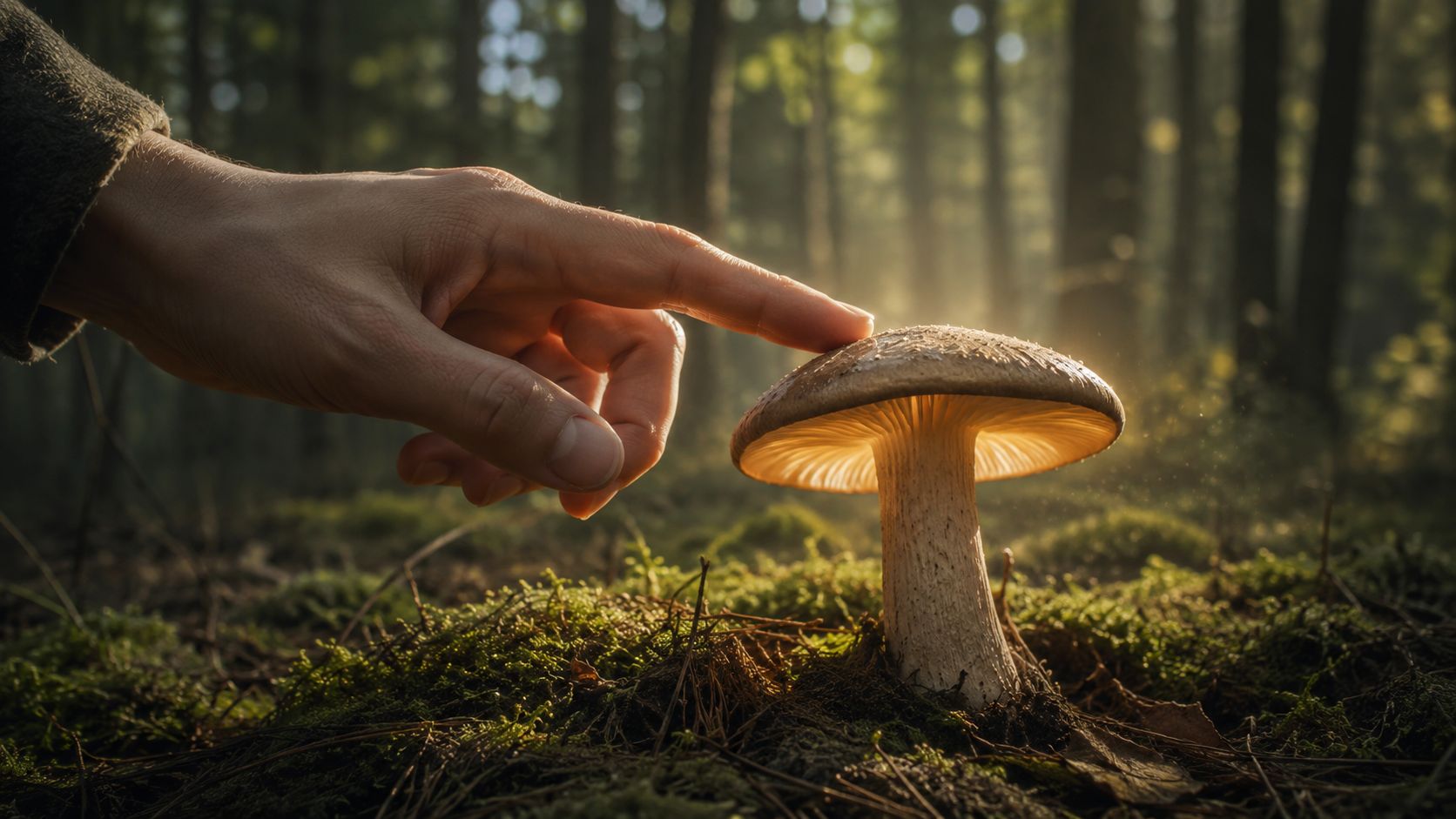
The first myth worth challenging is the broad one: that mushrooms are chaotic, dangerous, and impossible to understand. They aren't. Mushrooms require respect, but they also reward precision. Once you separate wild foraging safety from psilocybin use from legal reality, a lot of the panic falls away.
Why people get mixed up
Part of the confusion comes from using one word, “mushrooms,” for several very different things.
- Wild mushrooms involve identification, habitat, and toxic lookalikes.
- Functional mushrooms such as Lion's Mane or Reishi are typically discussed in a wellness context and are non-hallucinogenic.
- Psilocybin mushrooms affect perception, mood, and cognition, so the key concerns are mindset, dose, environment, and law.
When people blend those categories together, bad advice slips in. A warning meant for a novice forager gets repeated as if it explains psilocybin. A psychedelic headline gets taken as proof that all fungi are hazardous. Then local residents in Detroit or Ann Arbor hear decriminalization news and assume that means “safe,” “legal,” and “simple.” It doesn't.
Local reality: The safest decisions come from being specific about the kind of mushroom, the kind of use, and the kind of risk you're talking about.
That's the lens to keep through the rest of this fact check. Not hype. Not stigma. Just clear distinctions and safer choices.
Debunking Physical Safety and Toxicity Myths
A lot of mushroom fear starts with the body. People hear one poisoning story, then treat every cap in the woods, and every psilocybin conversation, as if they carry the same physical threat. For a Detroit or Ann Arbor resident, that shortcut causes confusion fast, because wild foraging risk and psilocybin use are different questions.
One question is, “Will this species poison me?” The other is, “What are the effects of a known psilocybin mushroom, and how do I reduce harm?” Mixing those together is like using road salt rules to explain freeway driving. Both involve cars, but the safety basics are not the same.
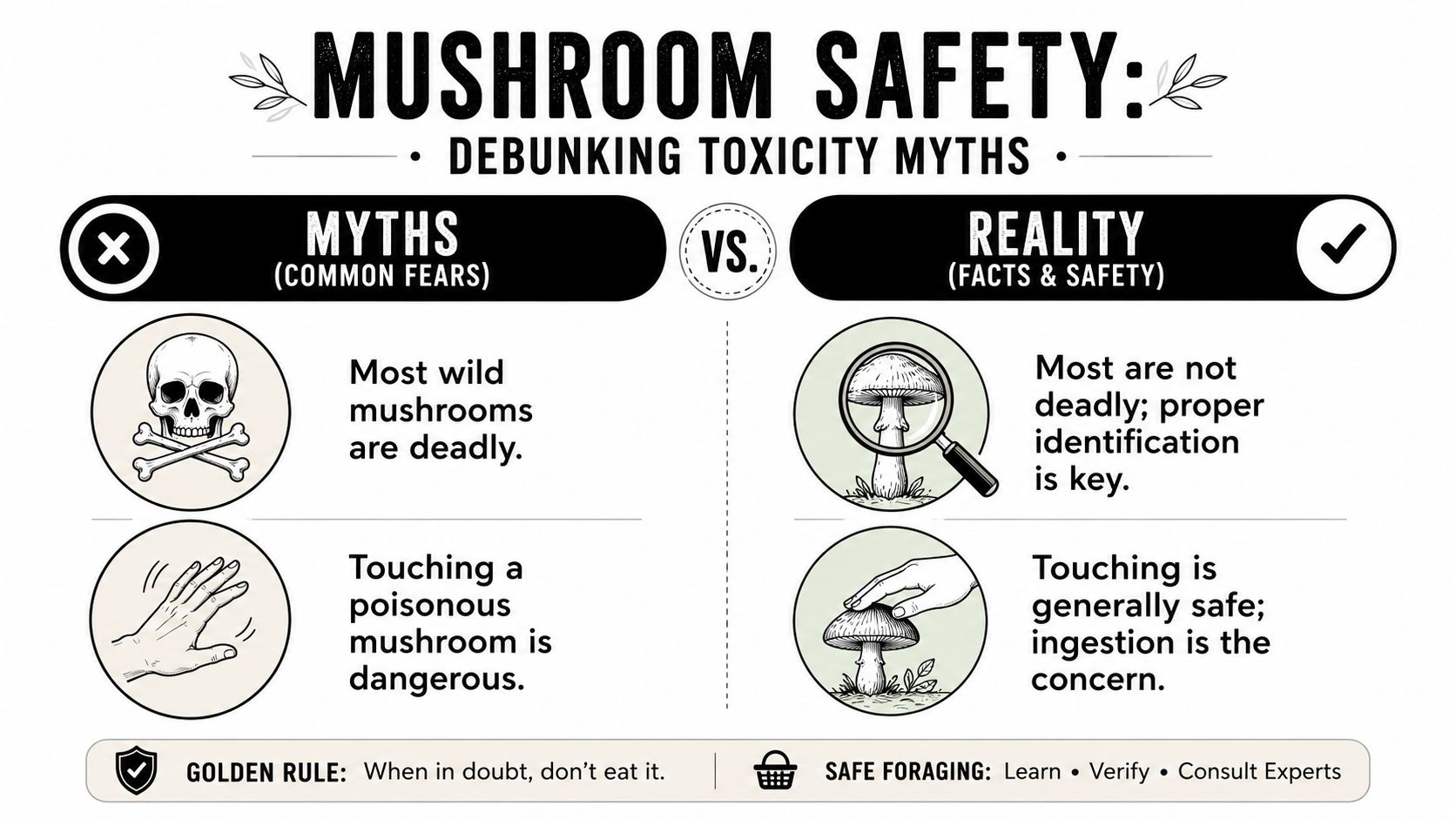
One broad myth says nearly all wild mushrooms are dangerous. The North American Mycological Association is cited in this review of common mushroom myths to show that only a small share of mushroom species are poisonous, and a smaller group are considered dangerously poisonous to humans. The practical lesson is not that foraging is casual or forgiving. The lesson is narrower. Real harm usually starts with misidentification.
Myth versus the real risk
Here are the claims that need the most cleanup.
- “Most wild mushrooms are deadly.” False. Some are toxic, and a smaller number are severely toxic, but the main danger for beginners is guessing wrong about identity.
- “Touching a toxic mushroom is dangerous.” False. The Missouri Poison Center's guidance on poisonous mushrooms explains that touching a poisonous mushroom does not cause poisoning. Poisoning happens when toxins get into the body, most often by ingestion. Wash your hands after handling wild mushrooms, keep them away from children, and avoid rubbing your eyes or mouth during collection.
- “Cooking makes any mushroom safe.” False. Some mushroom toxins survive normal cooking. The University of California Agriculture and Natural Resources guidance on wild mushroom food safety warns that cooking does not make toxic species edible. A dangerous mushroom stays dangerous in a pan, in a soup pot, or dried in a jar.
That distinction matters in Southeast Michigan, where local parks and wooded edges can produce a false sense of familiarity. A mushroom growing near a neighborhood trail in Ann Arbor is not safer because it is close to home. A specimen found after rain in a Detroit green space is not safer because someone online says it “looks right.”
Why folk tests fail
Old folk rules sound practical because they offer certainty without study. That is exactly why they are risky.
The silver spoon test fails because metal discoloration is not a reliable indicator of mushroom toxins. Watching what squirrels, deer, or slugs eat fails for a different reason. Animal tolerance is not human tolerance. Their bodies process compounds differently, so their behavior is a poor guide for your dinner plate.
For anyone tempted to forage locally, the safer starting point is species-level identification, clear photos, spore prints where relevant, and guidance from trained local mushroom groups. If you want a regional reference point, this guide to poisonous mushrooms in Michigan is far more useful than family lore or social media comments.
The safest rule is plain: if you cannot identify a wild mushroom with confidence, do not eat it.
That advice is especially important in decriminalized areas, where people sometimes assume a softer legal posture means lower physical risk across the board. It does not. Decriminalization in Detroit or Ann Arbor does not turn unknown mushrooms into safe mushrooms. It only makes careful distinctions more important.
Myths About Your Mind and Body
A lot of Southeast Michigan adults are less worried about wild mushroom identification than what psilocybin might do to their brain. That concern makes sense. Old anti-drug messaging trained people to treat any strong change in consciousness as proof of brain damage.
The evidence points in a different direction.
A common myth says psilocybin is neurotoxic and kills brain cells. Research and clinical discussion from Johns Hopkins have described psilocybin differently. It acts primarily on serotonin-related receptors, especially 5-HT2A receptors, and current evidence does not support the claim that it kills brain cells.
What that means in plain language
Psilocybin changes signaling in the brain for a period of time. A useful comparison is a radio picking up the same station differently after the dial is adjusted. The equipment is still there. The signal is being received in a new pattern.
That shift can affect perception, mood, attention, and the sense of meaning. It can also feel intense, strange, or emotionally raw. People sometimes mistake that intensity for injury, especially if the experience is confusing or hard to control.
Those are separate issues.
A difficult experience can be psychologically stressful. Temporary disorientation can happen. Risky decisions during the experience can lead to real-world harm. None of those outcomes, by themselves, show brain cell death.
The addiction myth also needs precision. Psilocybin does not fit the usual pattern people associate with highly addictive drugs. The Addiction Center overview of psilocybin describes it as having a low potential for addiction, especially compared with substances that create strong compulsive use and clear physical withdrawal.
Low addiction potential does not mean no risk.
A person can still use psilocybin in unhealthy ways. Someone might keep reaching for intense experiences to avoid grief, anxiety, or daily stress. Someone with a personal or family history of serious mental health conditions might also face a higher chance of destabilization. In other words, the bigger concern is often not classic chemical dependence. It is poor fit, poor timing, poor setting, or poor judgment.
That distinction matters in Detroit and Ann Arbor, where decriminalization can create a false sense of safety. If a neighbor asks, “Will this fry my brain?” the more grounded answer is to ask better questions first. Is your mental health stable right now? Do you know what you are taking? Are you treating a powerful substance like a casual party extra? Those questions protect people better than recycled slogans do.
The Reality of the Psychedelic Experience
Pop culture usually presents psilocybin in one of two ways. Either it's comic chaos with melting walls and loss of control, or it's a single mystical event that permanently fixes your life. Neither version helps a first-time or careful adult make a grounded decision.
A more accurate description is less cinematic. Psilocybin experiences vary. The same person can have a reflective, emotional, subtle experience one time and a disorienting or intense one another time. Dose matters. Mood matters. Setting matters. Expectations matter. So does whether someone is trying to force meaning out of the experience before they're ready to process it.
Not every experience looks dramatic
A common beginner mistake is expecting visual effects to be the whole story. Some people do notice shifts in color, pattern, time sense, or sensory depth. Others describe the experience more in terms of emotion, thought loops, insight, or vulnerability. Many first-timers are surprised that the strongest part isn't “seeing things.” It's often feeling more open, more unsettled, or more aware of what they've been avoiding.
That's one reason casual social use can go sideways. If someone in Ann Arbor takes psilocybin expecting a light party effect but instead gets confronted with buried anxiety, the mismatch itself becomes part of the problem.
The one shot cure myth
The “one-shot enchantment” story is especially attractive because it promises a clean solution. One meaningful trip, one breakthrough, one before-and-after transformation. The verified material for this article says that idea is misleading. Lasting changes often require a supportive, lifelong integration process, and the most effective therapeutic outcomes often come from structured use rather than a single journey dose, as explained in this discussion of mushroom myths and functional use.
That fits what many careful users eventually learn. An experience can open a door. It doesn't automatically reorganize your habits, repair relationships, or resolve long-standing patterns.
A powerful trip can reveal something real. It can't do the follow-up work for you.
For people who learn better by seeing and hearing a concept explained in everyday language, this overview helps frame how expectations can drift away from reality:
Why “strain talk” can confuse beginners
Another source of confusion is strain mythology. People may hear names like Penis Envy or Enigma and assume each one produces a completely different class of experience. In practice, the core psychoactive compound is the point of continuity. What changes more often is potency, user sensitivity, and context.
That means the smart question isn't, “Which strain gives guaranteed enlightenment?” It's, “How strong is this product likely to be, and what kind of setting am I entering?” That question keeps your feet on the ground.
Practical Guidance on Dosing and Harm Reduction
Once the myths are stripped away, the most useful conversation becomes practical. How do you lower risk? How do you avoid turning curiosity into a bad night? In Southeast Michigan, where some adults may feel more comfortable exploring psilocybin because of local policy changes, this part matters as much as the science.
The first rule is simple. Start lower than your ego wants to start. People get into trouble when they treat mushrooms like an ordinary edible, especially with chocolates or drinks that feel familiar.
A cautious framework for first use
If you're new, think in terms of response, not ambition.
- Know the form you're taking. Dried mushrooms, chocolates, and drinks can feel different in timing and predictability.
- Use one product type at a time. Mixing forms makes it harder to understand what your body is responding to.
- Give it time. Redosing too early is one of the most common judgment errors.
- Protect the setting. Your couch, your phone, your roommates, and your playlist matter more than people expect.
Practical rule: If you wouldn't want to handle an emotional surprise in that room, with those people, on that schedule, it's not a good setting.
General Psilocybin Dosing Guidelines
Because the verified material supplied for this article does not include precise gram-based dosing numbers, the safest approach here is qualitative rather than numeric.
| Dose Level | Dried Mushroom (grams) | Expected Effects |
|---|---|---|
| Microdose | Varies by product and person | Sub-perceptual or very subtle changes. Many people aim to stay below obvious intoxication. |
| Low dose | Varies by potency and sensitivity | Noticeable mood, sensory, or thought changes. Often more manageable for cautious users in a calm setting. |
| Moderate dose | Varies by potency and sensitivity | Stronger perceptual and emotional effects. Requires more planning and a stable environment. |
| High dose | Varies significantly | Intense alteration in perception, thought, and sense of self. Not appropriate for casual experimentation. |
Harm reduction is more than “be careful”
A lot of people say “set and setting” without explaining it. Here's what it means in practice.
- Set means your internal state. Your mood, anxiety level, expectations, and mental health all shape the experience.
- Setting means your external environment. The people around you, the noise level, privacy, and whether you feel safe all matter.
- Support means planning before anything starts. Decide who you can call, where you'll stay, and what responsibilities you need to clear.
For a deeper local primer on safer decision-making, this harm reduction guide is worth reading.
What cautious adults in Detroit and Ann Arbor should actually do
A sensible first-time checklist works better than bravado:
- Choose a calm day: Don't experiment before work, family obligations, or crowded events.
- Limit variables: Avoid combining psilocybin with alcohol or other substances.
- Tell one trusted person: Even if they aren't present, someone should know what you're doing.
- Keep the next day clear: Some experiences feel emotionally “unfinished” until after sleep and reflection.
None of this guarantees a positive experience. It does something more realistic. It reduces preventable mistakes.
Navigating the Law in Detroit and Ann Arbor
Local conversations about psilocybin often jump from “it's decriminalized” to “it's legal.” Those are not the same thing; residents in Detroit and Ann Arbor therefore need precise language.
What decriminalized usually means in practice
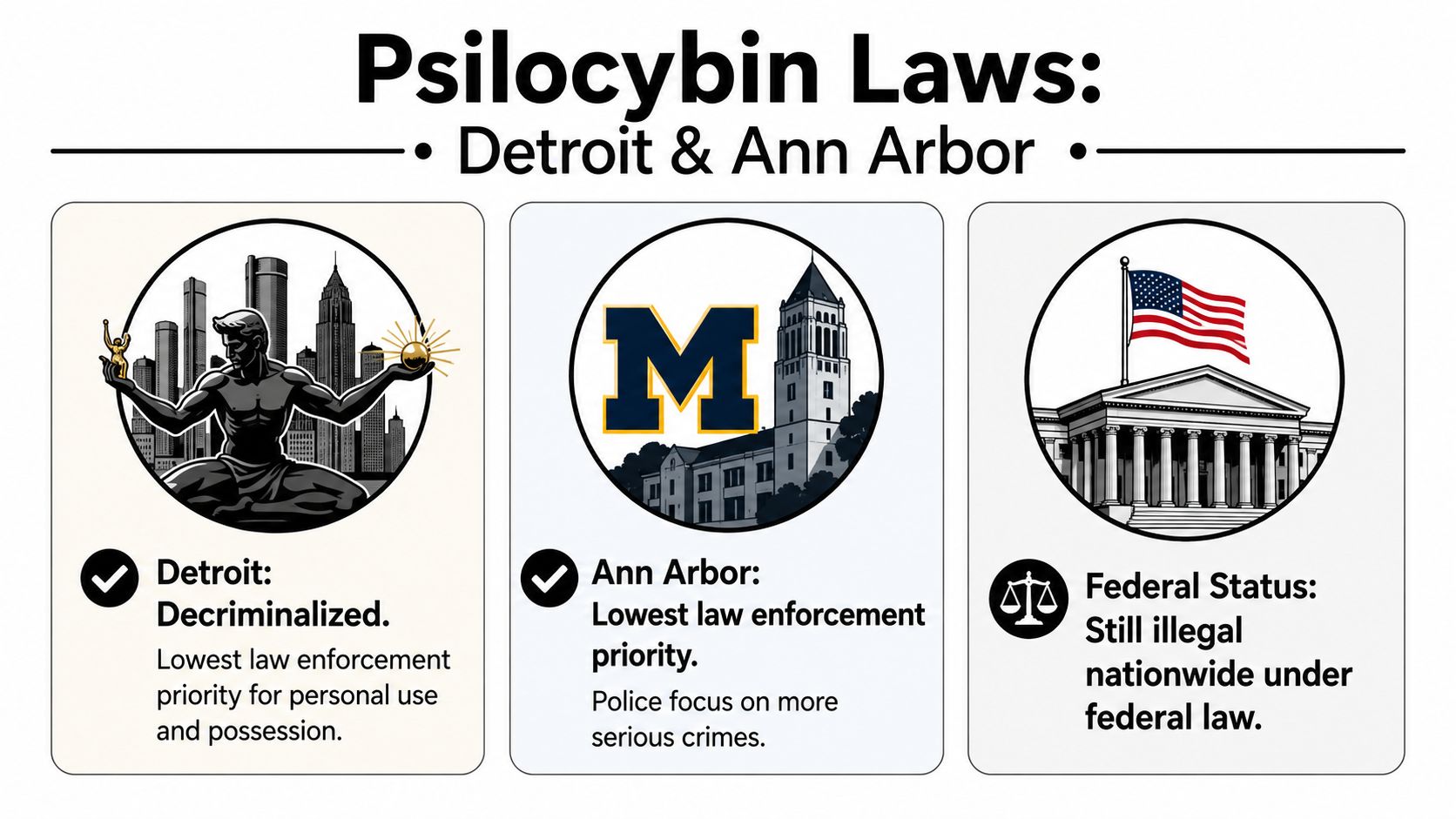
In local use, decriminalization or lowest law enforcement priority generally means city enforcement is directed away from personal use and possession relative to more serious matters. For a resident, that can create a very different practical environment than in places with stricter local enforcement.
But it does not erase risk. It does not automatically authorize commercial activity. It does not override state or federal law.
That distinction matters because people often hear a headline and assume every related activity is now protected. It isn't.
How a Southeast Michigan resident should read the situation
A careful reading looks like this:
- Detroit has decriminalized psilocybin-related activity at the local level.
- Ann Arbor treats enforcement as a low priority.
- Federal law still treats psilocybin as illegal nationwide.
If you want a city-and-state overview written for local readers, this guide to magic mushrooms in Michigan gives useful context.
Local policy can lower enforcement pressure. It doesn't create a blanket permission slip.
For adults in Southeast Michigan, the practical takeaway is restraint. Don't assume local tolerance means zero consequences. Don't assume what happens in one city applies everywhere else in Michigan. And don't assume a relaxed local culture changes the underlying federal status.
This is one of the biggest myths about mushrooms in the region right now. People aren't just confused about the substance. They're confused about the map.
Find Your Community for Safe and Informed Journeys
The most useful thing knowledge does is replace vague fear with sharper judgment. By this point, the big takeaways are clear. Wild mushrooms aren't all deadly. Touching a toxic mushroom isn't the same as ingesting one. Cooking doesn't neutralize every toxin. Psilocybin doesn't fit the old “brain damage and instant addiction” script. And a meaningful experience still needs preparation, context, and follow-through.
That last point matters most. People make better choices when they stay connected to grounded, informed communities instead of relying on rumors, party stories, or social media certainty. A local circle of careful adults can help normalize questions like: How do I pace myself? What should I avoid mixing? What does integration look like after a difficult experience? How should I think about local law without getting reckless?
In Detroit and Ann Arbor, community can also reduce the pressure to perform. You don't need to pretend every trip was profound. You don't need to chase a dramatic breakthrough. You don't need to act like caution means inexperience. Responsible use usually looks quieter than the internet suggests.
If myths about mushrooms lose their power anywhere, it's in honest conversation with people who take safety seriously.
If you want a dependable local starting point, Metro Mush offers psilocybin products for adult consumers in the Detroit and Ann Arbor areas, along with menu access, delivery details, and updates through its community channels. For cautious shoppers, that kind of clear local information can make the difference between guessing and making a more informed choice.