


You're ready to finish your order, but the payment part still feels a little unclear. That's normal. A good payment method should feel simple, predictable, and private, especially when you're buying in a niche Michigan market where the checkout process works a little differently than everyday retail.
The clearest way to think about payment method options is this, the right choice isn't just about convenience. It's about what works in your area, what keeps the transaction reliable, and what lets you complete the order without surprises. In markets like Detroit and Ann Arbor, that often means the payment rail matters as much as the product itself, because local checkout rules and banking realities shape what's available.
Your Guide to Paying at Metro Mush
If you've already browsed a menu, picked your items, and you're waiting to check out, the last thing you want is confusion about payment. That's why the simplest approach is the best one. You want to know what's accepted, how to prepare, and what happens next, so the handoff feels calm instead of rushed.
A useful way to approach it is to think in three parts. First, confirm your order details. Second, confirm the payment method before delivery begins. Third, have your payment ready when the driver arrives, so the exchange is quick and discreet. For location coverage, you can also check the Metro Mush delivery area map.
Practical rule: The best payment method is the one you can complete without delay, confusion, or a last-minute scramble.
That matters because payment isn't only a technical step. It also affects timing, privacy, and whether your order can be completed smoothly from start to finish. In a local delivery context, the most dependable process is usually the one that keeps the transaction direct and easy to verify.
Accepted Payment Methods Explained
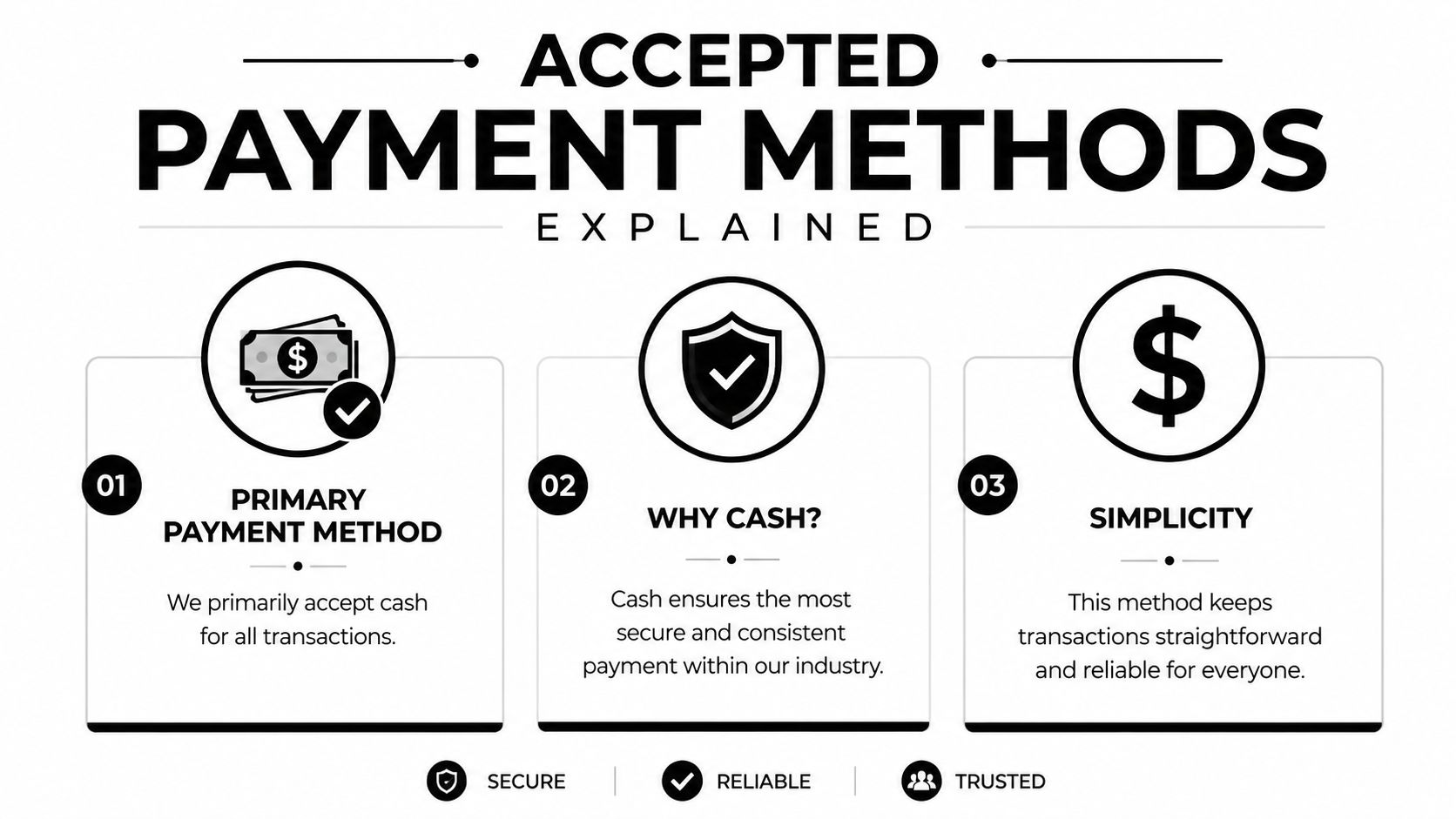
The payment setup is intentionally simple. For most customers, cash is the primary method, because it avoids the uncertainty that can come with card processing and other third-party systems. That approach also aligns with financial inclusion realities, since cash and prepaid cards remain important for people who are unbanked, underbanked, or who prefer not to use traditional banking systems, as highlighted in research on access for unbanked and underbanked consumers (research on cash-compatible options).
What's accepted
- Cash: The most straightforward option for delivery and in-person exchanges.
- Prepaid debit cards: A practical alternative for people who want something cash-like without relying on a traditional bank account.
- Peer-to-peer apps when confirmed in advance: These may be possible in some cases, but they aren't something to assume. Always ask first.
The reason this list stays short is reliability. Mainstream payment methods vary by market, and merchants should match checkout to the local rail that works in that place, rather than assuming card acceptance is enough (payment methods by country overview). That logic becomes even more important in specialized niches, where stable processing can be harder to maintain.
Why cash is the default
Cash keeps the exchange direct. There's no processor delay, no card decline, and no confusion about whether a payment app is supported on a given day. It also gives both sides a clear, immediate transaction that's easy to complete.
Cash is often the most dependable payment path when consistency matters more than novelty.
That's why the method list isn't trying to mimic a big-box retail checkout. It's built around what's practical, what's accessible, and what's least likely to fail at the moment of payment.
Why Our Payment Options Are Specific
A lot of customers expect every business to accept the same cards, wallets, and tap-to-pay tools. That expectation makes sense in mainstream retail, but it does not match every industry. Payment preferences have shifted toward digital convenience, yet that shift does not remove the banking rules and processor limits that affect specialized markets. Payment options in a niche, decriminalized product space are shaped by what processors will reliably support, not by what a typical checkout page can display.
Mainstream trends do not always translate
Digital wallets and card-based tools have become common because they are fast and familiar. Still, a payment method only works if the business category, the processor's risk controls, and the rail behind it all line up. A method that feels universal in ordinary retail can still be unavailable, inconsistent, or short-lived in a more restricted niche.
That is why specific payment options are not a sign of being behind. They reflect the practical limits of processing for this kind of business. If a processor or bank views a merchant as higher risk, the result can be delayed onboarding, interrupted service, or sudden changes that affect checkout. Keeping the method set focused reduces that uncertainty.
Why reliability comes first
Cash and other direct methods keep more of the exchange in plain view. There is no third-party approval layer deciding whether a payment rail stays open tomorrow, and there is less room for a last-minute decline after the order is already set.
For customers, that predictability matters. The checkout process should feel like a clear handoff, not a test of whether a bank app, wallet, or card network happens to cooperate that day. If you want to see the order flow and payment timing in one place, start with our checkout page.
Payment guides often list methods without explaining why a smaller set can build more trust. In specialized industries, reliability is part of the service itself. When payment can be completed the same way every time, the rest of the experience feels more transparent and less stressful.
How to Pay for Your Order Step by Step
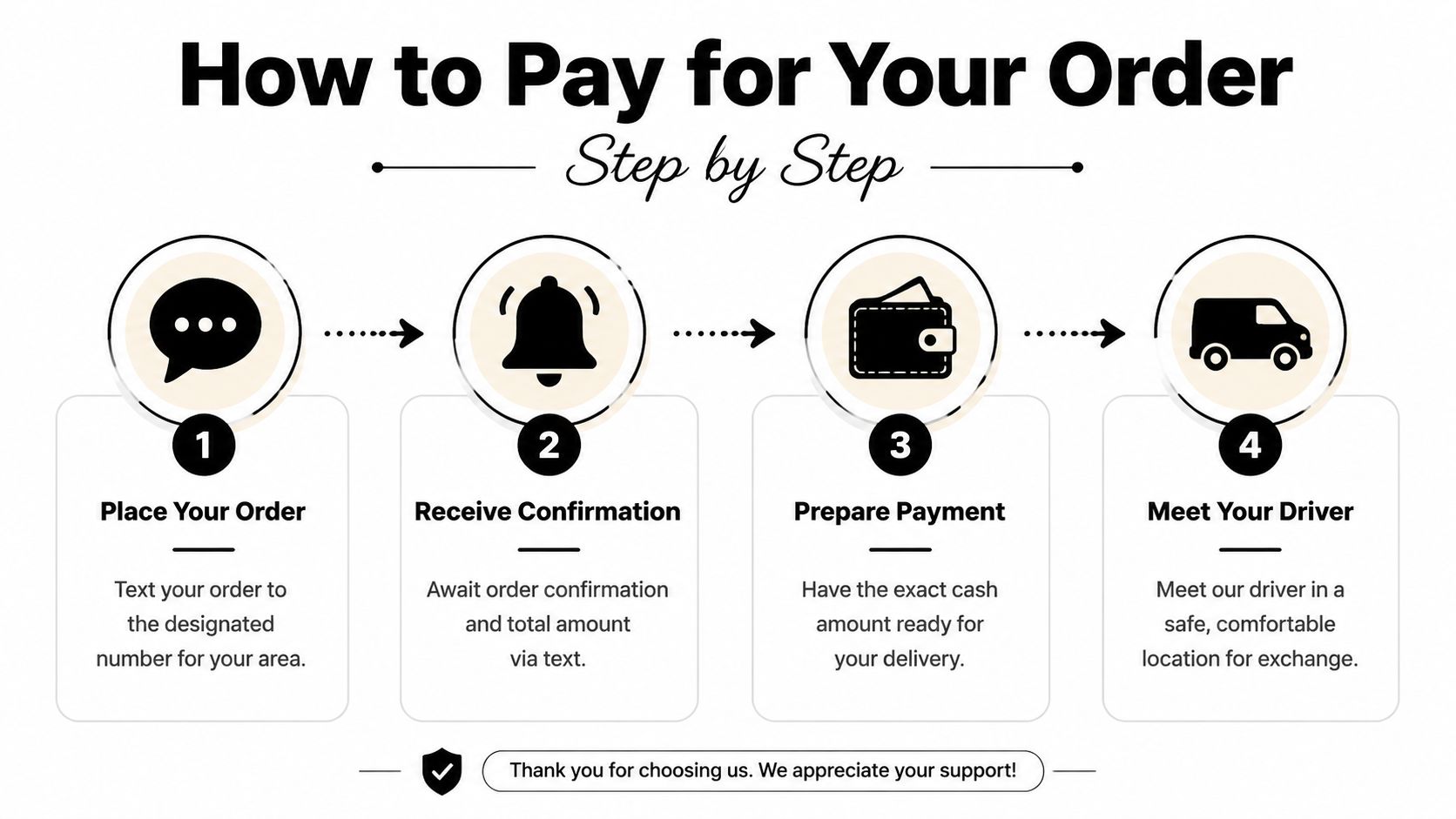
Payment works best when it follows the same path every time. For a local rail, clarity matters at each handoff, so the order should be confirmed before anyone leaves to deliver it.
Step 1, place the order
Text the correct number for your area. For Detroit Metro, use 734-691-6122. For Ann Arbor Metro, use 734-280-2868. Send the items you want and the delivery address so the team can check what is available and where it needs to go.
Step 2, wait for confirmation
Payment starts with confirmation. That confirmation should cover the items, the total, and any discount or adjustment that applies. If anything looks wrong, this is the time to ask, before the order moves any further.
Step 3, prepare payment
Have your cash ready before the driver arrives if that is the method you are using. Exact change helps because it keeps the handoff quick and reduces extra back-and-forth. If you want to use a different method, settle that before the delivery starts, not at the door.
Step 4, meet the driver
When the driver arrives, complete the exchange in a safe, comfortable place. The payment and the sealed package are handled together, which keeps the process clear and discreet.
For a closer look at the order flow, review the Metro Mush checkout page.
In specialized commerce, the payment method has to match the channel and the market. Universal card assumptions do not always fit, especially in a niche, decriminalized product category in Michigan where checkout has to stay tied to the local rail that serves the business and the customer.
Discounts Security and Troubleshooting
Security starts with where and how you complete the exchange. Keep the handoff calm, choose a comfortable spot, and don't rush the transaction. If you're using cash, having the right amount ready helps the driver finish quickly and keeps the interaction straightforward.
How discounts fit into payment
Discounts should be confirmed before the final payment is collected. That includes any order minimums, promotional pricing, or member offers you qualify for. If you're unsure whether a discount applies, ask before the driver leaves, because it's much easier to fix a total before payment than after.
A common point of confusion is stacking offers. If a special promotion already gives the better price, that's usually the one that applies. The important part is knowing your final total before you agree to pay.
What to do if you don't have exact change
If you're paying with a larger bill, let the team know when you order. Drivers may carry limited change, but you shouldn't assume they can break anything large on the spot. Exact cash makes the process smoother for everyone.
If something goes wrong
If a payment issue comes up during delivery, the driver can contact dispatch right away. That gives the team a chance to resolve the problem without making you start over. The goal is to keep the handoff professional and avoid unnecessary friction.
A good payment process should protect privacy, reduce delay, and make the customer feel informed at every step.
For deal-specific details, the Mix & Match page is the best place to check how promotions interact with the final amount.
FAQ for Detroit and Ann Arbor Customers
If you're ordering locally, you probably have a few very practical questions. These are the ones that usually matter most when you're trying to finish payment without stress.
Do drivers carry change
They carry a limited amount, so exact cash is the safest choice. If you need change for a larger bill, mention that when you place the order so the team can try to plan ahead.
Can a discount be combined with a special deal
Usually not. If you qualify for a standard discount and there's also a special promotion running, you'll typically get the better of the two options on the applicable items. That keeps pricing simple and avoids confusion at the door.
Can I avoid cash entirely
Cash is still the primary method, but you can ask about peer-to-peer apps when you text your order. Availability depends on the specific situation, so it should never be treated as automatic.
What if I'm not sure which payment method fits my order
Ask before confirmation. That's the easiest time to sort it out, because the team can tell you what's available and what to expect before the driver is on the way.
Clear payment rules aren't there to make ordering harder. They're there to make the transaction dependable, which is exactly what most customers want once they've decided to buy.
A CTA for Metro Mush. If you're ready to place an order, text the number for your area, confirm your total before the driver leaves, and have your payment ready so the handoff stays fast, private, and simple.