
You're probably here because the old way of finding mushrooms stopped feeling worth it. One week, a friend-of-a-friend has something. The next week, the quality is murky, the form is different, and nobody can answer basic questions about what you're buying, how strong it is, or how it should be stored.
That's exactly why the idea of a mushroom subscription box keeps coming up in local conversations. People don't just want access. They want consistency, discretion, product variety, and some sign that the person on the other end of the transaction has their act together. In a decriminalized local market, that matters more than branding or hype.
A good subscription model can solve real problems. It can reduce random sourcing, make repeat ordering simpler, and give cautious adults a steadier way to explore products without starting from scratch every time. But in this category, convenience only helps if it's paired with trust, clear communication, and responsible use.
The Rise of Curated Mushroom Experiences
A few years ago, many individuals interested in psilocybin products locally were dealing with one-off situations. Someone knew someone. Menus changed without warning. Packaging varied. You might get dried mushrooms one time, chocolate the next, and almost no guidance with either. That setup works for impulsive buying. It doesn't work well for adults who care about predictability.
The subscription model fits this shift because it turns scattered access into a routine. Instead of hunting, comparing, and re-vetting each time, customers can work with one provider and receive a curated selection on a recurring basis. That's a familiar pattern in other categories, and it's spreading because people like convenience when the product requires judgment.
Why recurring delivery feels natural here
In broader commerce, curated recurring delivery has already become a major consumer habit. The global subscription box market was valued at $42.5 billion in 2025 and is projected to reach $124.1 billion by 2034, with a 12.64% CAGR according to subscription box market projections from Swell. That doesn't say anything specific about psilocybin legality, but it does show that people are comfortable paying for recurring, selected deliveries instead of making every purchase from scratch.
That logic maps well to mushrooms for a simple reason. The buyer often wants one or more of these at the same time:
- Consistency: Similar product quality from order to order.
- Discovery: A chance to try new formats without gambling on a random seller.
- Low-friction reordering: Fewer messages, fewer surprises, fewer awkward pickups.
- Guidance: Clearer descriptions around product type and intended experience.
Curated access is often more valuable than unlimited choice, especially in a gray market where too many options can hide weak standards.
Why local markets changed the conversation
In places where enforcement has shifted and local culture is more open, demand tends to become more practical. People stop asking only, “Can I get this?” and start asking, “Who's careful, who's consistent, and who communicates clearly?” That's where a mushroom subscription box starts to make sense. It isn't just about getting products delivered. It's about reducing uncertainty in a category that already carries enough of it.
What Exactly Is a Mushroom Subscription Box
A mushroom subscription box is a recurring delivery service that sends mushroom products on a set schedule. In the psilocybin context, that usually means a curated mix chosen around experience level, preferred format, or desired flexibility. Think of it less like a bulk order and more like a craft club. Someone is narrowing the menu for you, packaging it in a repeatable way, and making reordering easier.
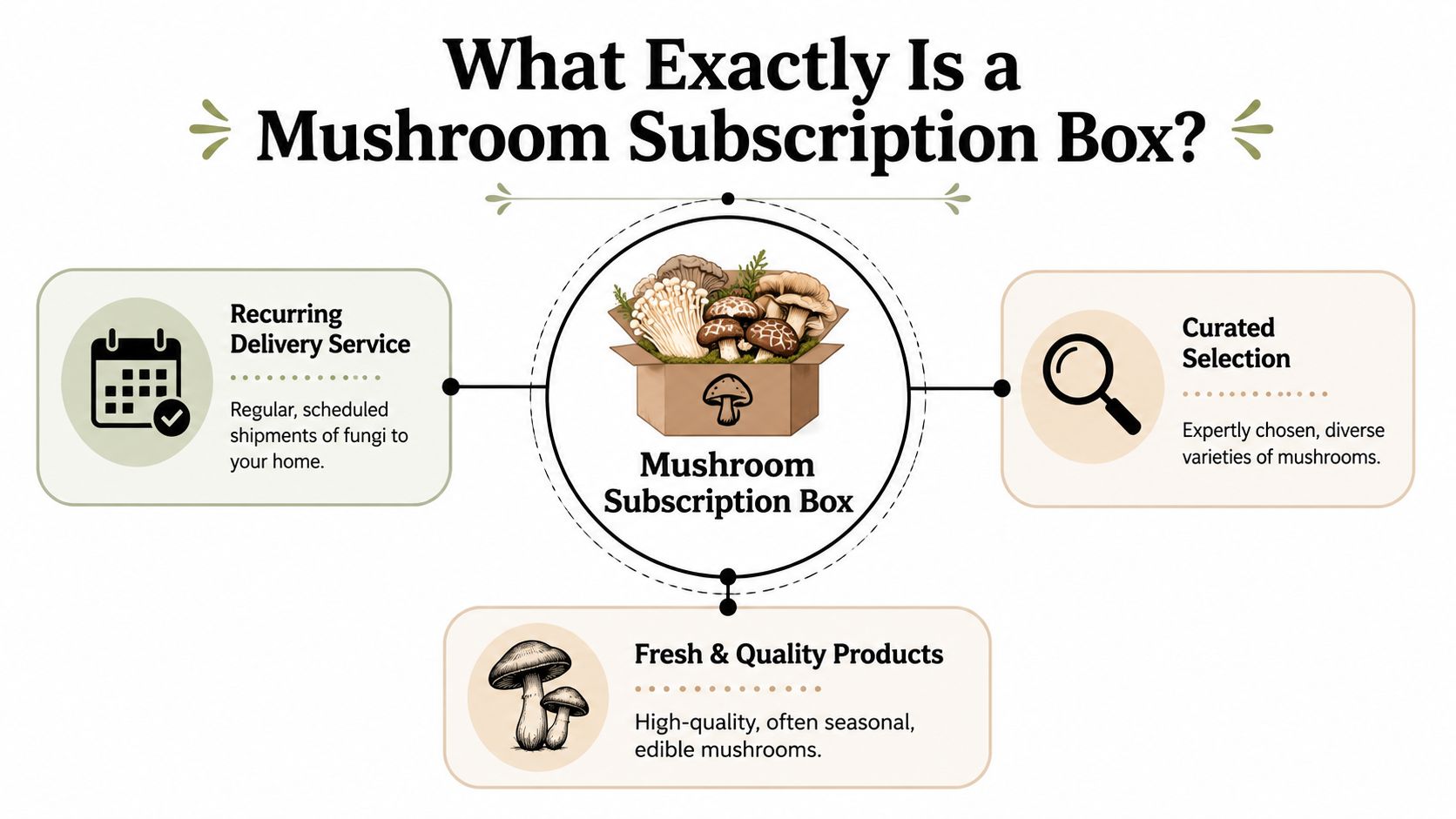
That definition matters because people often mix up three different ideas under one label. They are not the same purchase, and they create very different expectations.
Three categories people confuse
Psilocybin subscription boxes focus on recurring access to finished products. That can include dried mushrooms, chocolates, drinks, or other prepared formats. The core value is curation, convenience, and dealing with one provider instead of constantly starting over.
Culinary mushroom subscriptions are food subscriptions. Those are for cooking, not psychoactive use. They're built around freshness, flavor, and kitchen use.
Grow-kit subscriptions are a separate category again. A useful benchmark is BlocksBox, which ships colonized blocks of strains such as Lion's Mane, Blue Oyster, and Golden Oyster for at-home fruiting, as described on North Spore's BlocksBox page. That model is about cultivation, not receiving pre-harvested products for immediate use.
What makes the subscription format useful
The best comparison is a curated wine or beer club. You're not only paying for the items themselves. You're paying for selection, repeatability, and a simpler decision process.
A good mushroom subscription box usually does a few things well:
- Reduces menu fatigue: You don't have to evaluate every option from zero each time.
- Supports experimentation: You can try different formats without making a huge one-time leap.
- Creates a relationship with one source: That makes it easier to ask follow-up questions.
- Improves routine: Some people prefer a planned cadence over sporadic buying.
Practical rule: If a service calls itself a mushroom subscription box, check whether it's selling finished products, culinary mushrooms, or grow kits before you assume anything else.
The phrase sounds simple, but the category isn't. The details decide whether the box is useful or just confusing.
Navigating Legality and Ensuring Your Safety
The first thing to understand is that decriminalized doesn't mean legal in the same way a regulated retail product is legal. In cities like Detroit or Ann Arbor, people often use “decriminalized” as shorthand for “available,” but that's not the same as a licensed, tightly regulated marketplace with standardized testing, packaging rules, and statewide oversight.
That distinction matters because consumers can get lulled into false confidence. A smoother buying experience doesn't automatically mean a safer one. In a semi-open local market, your personal safety depends less on formal regulation and more on provider behavior, product clarity, and your own caution. If you want a general local overview, Michigan psilocybin access and policy context is a useful starting point.
The real risks in a gray market
The main risks aren't abstract. They're practical.
You may receive a product with unclear potency. You may get vague instructions. You may buy from someone who uses polished branding to hide weak operations. In edible formats especially, a customer can overconsume because the label, guidance, or verbal explanation wasn't good enough.
There's also a product-handling issue. Dried mushrooms, chocolates, and beverages all need different storage habits. If a provider doesn't communicate that clearly, you're left guessing. That's not a small issue. It affects freshness, consistency, and the odds of a bad experience.
Safety checks that actually help
If you're considering any mushroom subscription box in a decriminalized city, use a short checklist before you place a first order:
- Check product descriptions carefully: If the menu is vague, move on. You want format clarity, not mystery.
- Ask direct questions: A reliable provider should answer basic questions about product type, storage, and intended use without getting defensive.
- Start smaller than your ego wants to: New product, new batch, new provider. Treat all three as reasons to be conservative.
- Avoid mixing casually: Alcohol and impulsive stacking with other substances can make a manageable experience much less manageable.
- Pay attention to setting: Don't plan your first order around a crowded event, a chaotic weekend, or emotional turbulence.
- Store products securely: Keep them away from children, pets, and anyone who might mistake an edible for a regular snack.
If a seller acts annoyed by reasonable safety questions, that's useful information. Good operators want fewer bad experiences, not more.
What trust looks like in practice
Trust isn't built by a logo or a strain name. It shows up in small operational details. Clear menus. Reachable support. Stable ordering methods. Honest descriptions. Consistent packaging. A provider doesn't need to sound clinical, but they should sound organized.
That's especially important for first-timers. In this market, the safest purchase is rarely the most exciting one. It's the one attached to the cleanest information and the calmest communication.
What to Expect Inside Your Subscription Box
The contents of a mushroom subscription box depend on who it's for. That sounds obvious, but a lot of bad orders happen because people buy for fantasy instead of fit. The cautious first-timer orders like a heavy user. The experienced user orders a beginner-friendly edible and then complains it wasn't the right tool for the job.
A well-curated box should match the customer's comfort level, preferred format, and reason for buying. Some adults want approachable edibles and clear guidance. Others want dried strains with more range and less processing. The strongest subscription concepts treat those as different tracks, not minor variations.
Typical box styles
One common path is the beginner-friendly box. That usually leans on edible formats because they feel more familiar. Products like chocolate bars or mushroom drinks are easier for some people to integrate into a planned experience than handling raw dried material. If you're curious about that category, psilocybin chocolate bar options show the kind of format many newer buyers prefer.
Another path is the strain-focused box. That's better suited to customers who already know they prefer dried mushrooms and want more control over how they portion and use them. These boxes often appeal to people who care about specific strains and a more direct product form.
Sample Mushroom Subscription Box Tiers
| Tier Level | Typical Contents | Best For |
|---|---|---|
| Beginner | Low-dose leaning edibles, simple written guidance, one or two approachable formats | Adults who want familiarity, discretion, and easier portion planning |
| Intermediate | Mixed box with edibles plus dried mushrooms | People who want variety without going all-in on one format |
| Advanced | Strain-forward dried selections, occasional specialty items, less hand-holding | Experienced users who already understand their preferences |
A stronger box also includes context, not just products. That can mean storage guidance, notes on format differences, or simple use suggestions such as whether something is better saved for a quiet night at home rather than a social setting.
What curation should actually do
Curation isn't just “we picked cool stuff.” It should solve one of three problems:
- Decision overload: Too many similar-looking choices.
- Format mismatch: Buying a product form that doesn't suit your habits.
- Unclear progression: Not knowing what to try next after your first positive experience.
A weak provider ships random inventory. A strong one builds a box that feels coherent.
The best box should make sense when you open it. Not just look interesting.
That's the standard I'd use. If the products feel disconnected, the service probably values movement of stock more than customer fit.
How to Choose a Trustworthy Provider
In a semi-legal market, provider quality matters more than almost anything else. Since there isn't a conventional retail framework doing all the screening for you, you have to screen for yourself. That doesn't require paranoia. It requires a method.
The fastest way to judge a seller is to stop asking whether they look exciting and start asking whether they look stable.
If you're comparing local options, where people buy shrooms in Southeast Michigan gives you a sense of how this market is framed for actual customers rather than outsiders.
The green flags that matter
A trustworthy provider usually shows their quality before you ever order.
- Clear menu structure: You should be able to tell what's dried product, what's edible, and what each item is supposed to be.
- Useful product photos: Not glamour shots only. You want images that help with recognition and expectation.
- Reachable communication: If ordering depends on direct contact, the response style matters. Calm, organized replies beat flashy language.
- Local familiarity: Providers who understand their delivery area and process usually create fewer avoidable mistakes.
- Consistent naming and packaging: Confusion often starts when items are described one way in messages and another way at delivery.
The questions worth asking
Before subscribing, ask a few plain questions and pay attention to the answers.
Ask how deliveries are handled. Ask what a first-time customer should choose if they want something mild and manageable. Ask how products should be stored after arrival. Ask what happens if an item is out of stock. None of these are trick questions.
The answer quality tells you a lot. Good providers respond with specifics. Weak providers dodge, oversell, or push you toward whatever they need to move.
Red flags people ignore too often
Some warning signs are easy to miss because they can look like confidence.
One is pressure. If the seller tries to rush your decision, that's bad news. Another is vagueness dressed up as mystique. You do not need a “secret menu energy” experience when you're buying a product that deserves careful handling. Poor follow-through is another one. If communication drops off before the sale is complete, expect more of the same later.
Reliability is part of safety. A provider who communicates poorly often handles other details poorly too.
The most trustworthy option isn't always the loudest. It's the one that behaves like repeat business depends on clear expectations, because it does.
Understanding Pricing and Delivery Models
A mushroom subscription box only works if the pricing model feels fair and the delivery rhythm fits the product. That balance looks different in psilocybin than it does in fresh food, but the same basic principle applies. The customer wants enough predictability to justify subscribing, and the provider wants enough structure to make fulfillment manageable.
In fresh mushroom subscriptions, pricing often reflects delivery frequency and perishability. One benchmark from a mushroom share seller shows deliveries commonly landing in the $13 to $37 range depending on format and cadence, with prepaid bundles also in use, as shown by Triangle United Growers' mushroom subscription offerings. Psilocybin products don't face the same immediate spoilage pressure, but recurring delivery still depends on matching box size, schedule, and perceived value.
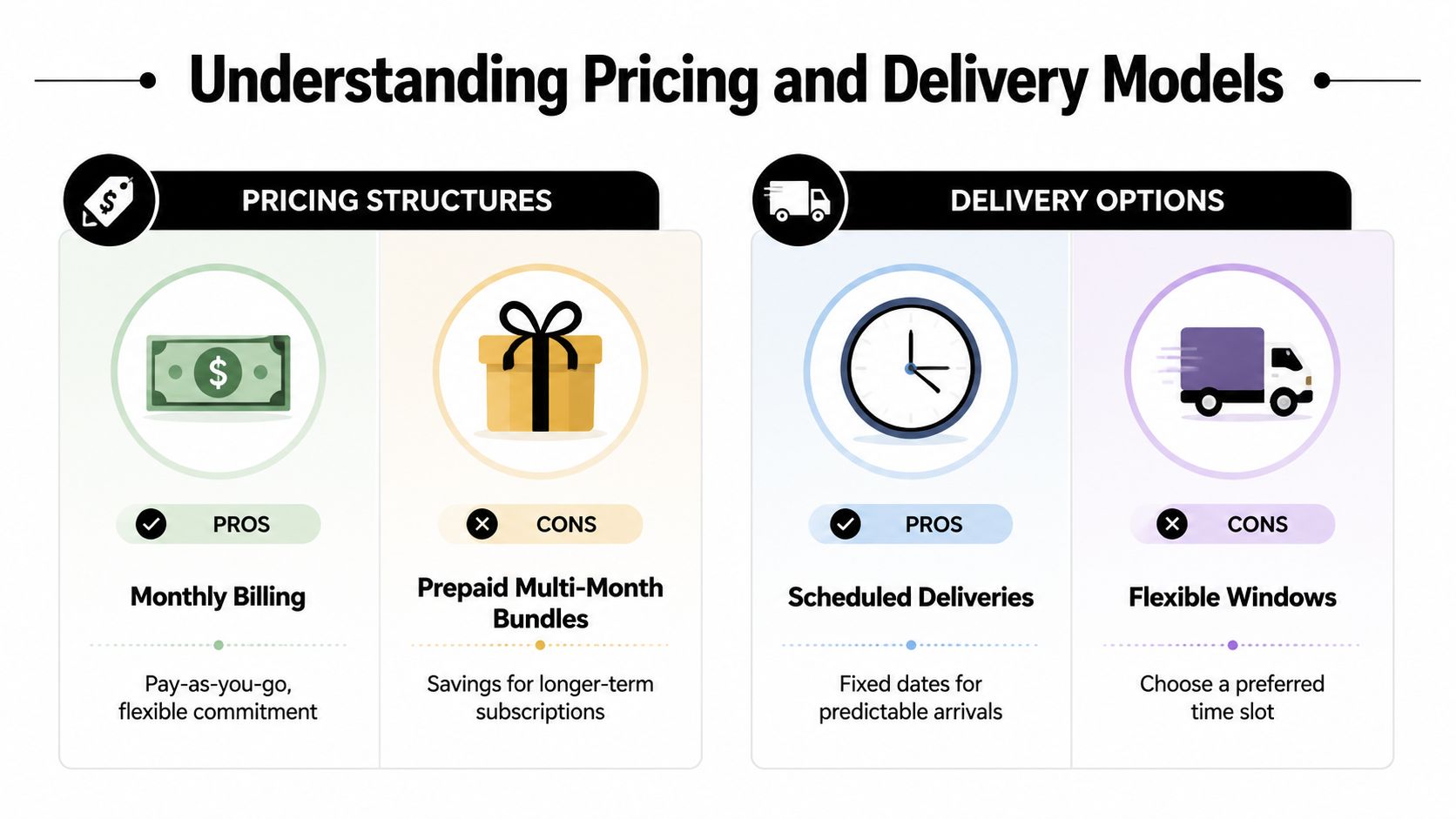
Common ways these subscriptions are structured
You'll usually see one of two models.
Monthly recurring billing works best for people who want flexibility. The box ships on a regular schedule, and the customer can adjust later if their preferences change.
Prepaid bundles fit buyers who already know they want ongoing access. Those bundles often make sense because the seller can plan inventory and delivery routes more efficiently, and the customer gets a more settled routine.
What good value actually looks like
The cheapest box isn't always the best value. In this market, value usually comes from a few practical advantages:
- Better selection fit: You waste less money on products that don't suit you.
- Smoother reordering: Less time chasing availability.
- Predictable delivery windows: Helpful if discretion matters.
- Occasional member perks: These can make recurring ordering feel worthwhile.
A subscription should feel easier than one-off ordering, not more restrictive. If the terms are rigid, the menu is stale, or the cadence pushes more product than you can responsibly use, it's the wrong setup.
Delivery details deserve scrutiny
Delivery isn't a side issue. It is the experience.
Look for clear expectations around timing, communication, and minimums. If the provider can't explain how scheduling works, expect frustration. If they can, the whole model becomes more practical. Good delivery operations reduce missed handoffs, confusion, and unnecessary back-and-forth.
The best pricing model is the one that respects actual use patterns. You want enough structure to make ordering simple, but not so much that product starts piling up faster than you can store and use it responsibly.
Subscription Management and Frequently Asked Questions
Once you subscribe, the important part is managing the relationship well. A mushroom subscription box should be easy to adjust. If it isn't, the convenience disappears fast.
Start by treating your first delivery cycle as a test run. Notice what you used, what sat untouched, and which format felt easiest to handle. That tells you more than your pre-order assumptions ever will.
Smart habits after the first box
- Pause before stockpiling: If you still have plenty left, don't keep accepting the same cadence out of inertia.
- Give useful feedback: Tell the provider what format worked for you and what didn't. Specific feedback helps future curation.
- Store products properly: Keep dried mushrooms cool, dry, and sealed. Keep edibles in conditions that protect texture and freshness.
- Separate from ordinary snacks: This matters most with chocolates and drinks. Avoid any chance of accidental consumption.
- Reassess after each cycle: Your ideal box may change once you learn your preferences.
Frequently asked questions
Can I pause or cancel a subscription easily
You should expect a straightforward process. If pausing or canceling feels hidden, awkward, or delayed, that's a sign the service values lock-in over trust.
Is a bigger box always a better deal
Not necessarily. A larger box only helps if you can store it well and use it at a pace that still feels intentional. Too much product can turn a thoughtful purchase into clutter.
Are edibles better than dried mushrooms for beginners
Sometimes, but not always. Edibles can feel more approachable because the format is familiar. Dried mushrooms can offer simpler control for some experienced users who prefer less processing and more direct portioning.
What if I'm unsure what level to choose
Start lower, not higher. New provider, new product line, and new format are all good reasons to be conservative.
A cautious first order is rarely a mistake. An overconfident first order often is.
How should I judge whether a subscription is worth keeping
Keep it if it saves you time, reduces uncertainty, and consistently delivers products that fit your actual habits. Cancel it if it becomes repetitive, confusing, or harder to manage than ordering only when you need something.
If you want a local option that keeps ordering simple, offers a broad range of dried mushrooms and edibles, and serves the Detroit and Ann Arbor areas with direct ordering and regular specials, take a look at Metro Mush. It's a practical place to start if you value clear menus, local delivery, and a more organized way to shop for psilocybin products.