


You're staring at the same problem a lot of people face late in the day. The work is still there, your brain feels crowded, and you want something that might help with focus, memory, or mental stamina without leaning on hype. That's where Lion's Mane cognitive benefits keep entering the conversation, especially for people who want a natural option but don't want marketing to outrun the evidence.
Lion's mane has a real scientific backstory, but it's not a miracle mushroom. The strongest human data points point in a more specific direction, mostly around older adults and people with mild cognitive impairment, while the claims for healthy young people seeking a quick boost are still much shakier. That distinction matters, because the difference between possible support and proven everyday brain enhancement is where most confusion starts.
The Search for a Natural Mental Edge
A student is dragging through an afternoon lecture. A manager is rereading the same email draft for the third time. A parent is trying to remember whether they already paid a bill, answered a message, or left the stove on. In moments like these, a lot of people start looking for something that feels more natural than a stimulant, and that search often leads straight to lion's mane.
Part of the appeal is simple. Lion's mane sounds like a food, feels familiar, and sits inside the broader world of functional mushrooms, a category people often use for wellness support rather than nutrition alone. It's also become a common nootropic talking point, which is why so many readers come to it hoping for sharper recall, steadier focus, or less brain fog.
Practical rule: If a product promises instant genius, it's already overselling what the current human evidence can support.
The honest version is more useful. Lion's mane is interesting because researchers have tested it in controlled human settings, but the findings aren't broad or uniform. Some studies point toward selective cognitive support, while others show little or no clear effect, especially in healthy adults looking for a fast mental lift.
That's why this topic deserves a careful read, not a sales pitch. The best way to approach lion's mane cognitive benefits is to separate what's biologically plausible from what's been shown in people, then decide whether the evidence matches your goals.
What Is Lion's Mane Mushroom
Lion's mane is the common name for Hericium erinaceus, a distinctive mushroom with long, hanging spines that give it a shaggy, cascading look. It's easy to recognize once you've seen it, and that visual oddness is part of why it stands out from standard cap-and-stem mushrooms. People also cook it, because it has long been used as a food as well as a traditional remedy.
In traditional East Asian medicine, lion's mane has a long history of use, especially for general vitality and support related to digestion and cognition. That history doesn't prove modern benefits on its own, but it does explain why the mushroom has stayed relevant across generations. A substance doesn't remain in traditional use for centuries by accident, even if modern science still has to sort out what it can and can't do.
Lion's mane also sits in a different category from psychedelic mushrooms. It isn't used for hallucinations or altered states, and it's usually described as a functional mushroom or nootropic because people take it for potential support of mental performance. For readers who want a simple overview of that broader category, this explanation of functional mushrooms is a useful companion reference.
What makes it different
The mushroom's structure matters because its active compounds come from different parts of the organism. That's one reason supplements can vary so much in quality and effect. Fruit body products, mycelium products, and extracts are not interchangeable just because they all say lion's mane on the label.
The label matters as much as the mushroom name. Two products can share the same species and still deliver very different amounts of active material.
If you're new to the category, the simplest takeaway is this. Lion's mane is a real edible mushroom with a traditional use history, but the modern cognitive conversation centers on how its compounds might interact with the brain, not on any psychedelic effect or universal memory hack.
How Lion's Mane May Support Brain Health
The most common explanation for lion's mane and cognition starts with nerve growth factor, or NGF. Think of NGF as brain fertilizer. It doesn't make every seed grow instantly, but it can help create a better environment for neurons to survive, maintain connections, and possibly repair themselves more effectively.
Lion's mane contains compounds, including hericenones and erinacines, that researchers believe may help stimulate NGF-related pathways. That's one reason the mushroom keeps showing up in discussions about neuron support, memory, and aging brains. The mechanism sounds promising because it connects directly to how the nervous system maintains itself over time.
NGF is the headline mechanism
The idea is straightforward. If neurons are like a network of living wires, NGF is part of the maintenance system that helps those wires stay healthy. Lion's mane doesn't replace that system, but it may nudge it in the right direction. That's a biochemical theory, though, not proof that someone will instantly think faster after taking a capsule.
A second pathway involves inflammation and oxidative stress. The brain is especially sensitive to a harsh internal environment, and chronic inflammation can interfere with how efficiently neurons communicate. Antioxidant and anti-inflammatory activity may help reduce that background stress, which could make it easier for cognitive processes to run smoothly.
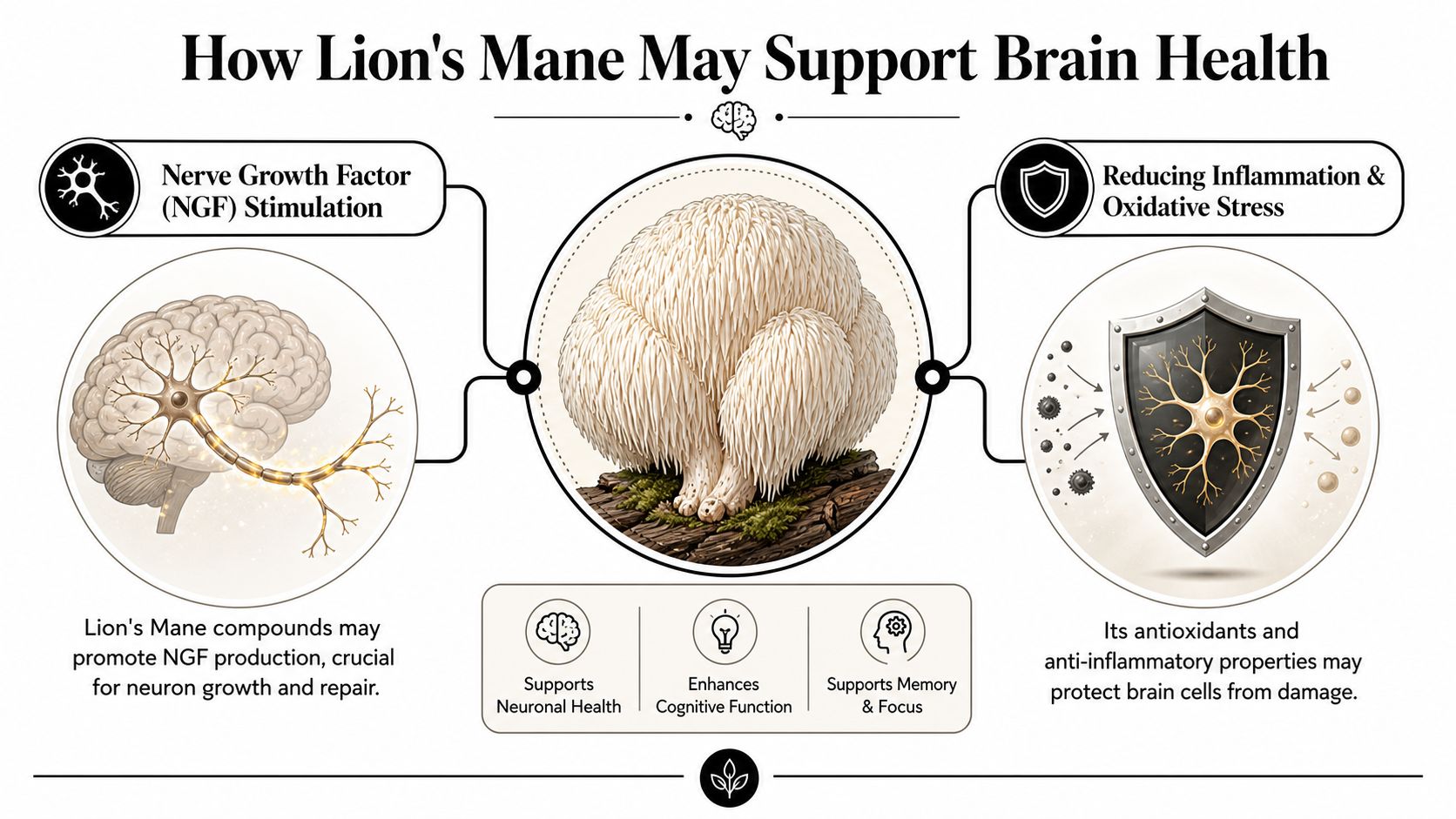
That doesn't mean lion's mane “repairs the brain” in a sweeping way. It means researchers have plausible reasons to study it, especially for aging-related decline and conditions where the brain may benefit from extra support.
Here's the practical way to read the mechanism. NGF support is the most discussed theory, while inflammation and oxidative stress are the broader environment where that support may matter. Together, those ideas explain why lion's mane gets labeled a cognitive mushroom, but they don't guarantee the same result for every person or every use case.
If the mechanism sounds broader than the evidence, that's because it is. Biology can suggest a direction long before human trials confirm the outcome.
For people comparing lion's mane with other options, this overview of mushrooms for focus can help put it in context without implying it's the only natural choice.
Reviewing the Scientific Evidence
A person reading the lion's mane research for the first time may expect a clean yes-or-no answer. The evidence does not work that way. Human studies are encouraging, but they are still limited, and the clearest signals show up in older adults, especially those with mild cognitive impairment. Evidence in healthy younger adults is much less consistent, so the pertinent question is who might benefit, and under what conditions.
What the human studies actually suggest
A double-blind, randomized, placebo-controlled study in healthy adults over age 50 used 3.2 g daily for 12 weeks and found an improvement in cognitive function on the MMSE, while two other tests in the study did not show the same result (Alzheimer's Disease Discovery Foundation review). That kind of mixed pattern matters. It points to a real signal, but not to a broad, all-purpose effect.
Another human study pattern looked at adults aged 50 to 80 with mild cognitive impairment and found that 3 g/day of Hericium erinaceus was associated with better scores over a 16-week period. The same research summary also describes an acute study in healthy young adults, where performance on the Stroop task improved 60 minutes after a single dose, and subjective stress showed a trend toward lower levels after 28 days of use (NIH-indexed literature summary). The simplest reading is that lion's mane may act differently depending on the group, the task, and the length of use.
Why the population matters
Healthy young adults remain the least convincing group so far. A 2025 acute trial found no significant improvement in overall cognition or mood after a single dose, and the authors suggested that any benefit may be narrow and task-specific rather than broad (Frontiers in Nutrition). That makes the popular “quick brain boost” claim look much weaker than the marketing often suggests.
Longer use appears to matter more than one isolated serving. Review literature on H. erinaceus reports that benefits were seen over sustained supplementation and were reduced after stopping, which fits a maintenance pattern rather than a one-time effect (systematic review summary). For readers trying to judge practical use, that is an important distinction. A supplement that seems to help in a trial may still need regular use to matter at all.
| Evidence pattern | What it suggests |
|---|---|
| Older adults, mild cognitive impairment | More promising cognitive signal |
| Healthy younger adults | Mixed, often task-specific or unresolved |
| Stopping supplementation | Benefits may fade rather than persist |
The most balanced view is straightforward. Lion's mane has human data behind it, but the stronger evidence is in select older adults, not in healthy young people looking for a dramatic edge. That fits the broader biology too, since NGF support works more like brain fertilizer for maintenance and repair support than an instant switch for sharper thinking. For readers also comparing cost, this lion's mane mushroom price guide can help set expectations before buying.
A Practical Guide to Using Lion's Mane
You may see lion's mane on the shelf as capsules, powders, or liquid extracts. Capsules are the simplest option if you want a steady routine. Powders give you more freedom, since they can be stirred into coffee, tea, or smoothies. Liquid extracts are convenient too, but the extraction process matters more than the format on the front of the bottle.
The label deserves a closer look than many buyers give it. Check whether the product comes from the fruiting body or the mycelium, because those are not the same material. It also helps to see whether the company explains how the extract was made, since an extract can be more concentrated than raw powder and may contain more of the compounds people are looking for.
What to look for before buying
A few practical checks can make the choice easier:
- Fruiting body source: This usually points to a more direct mushroom extract than a grain-heavy mycelium product.
- Extraction details: Look for plain wording about how the product was made, since extraction changes what ends up in the bottle.
- Third-party testing: Independent testing helps separate real quality from vague claims.
- Clear serving instructions: A trustworthy product tells you how it should be used without making the label hard to interpret.
Human trials have usually used 3 g/day and 3.2 g/day over 12 to 16 weeks, so that gives a useful reference point for what has been studied. Those trial designs suggest that very tiny doses and one-time use are less consistent with the research than a steady daily pattern. In other words, lion's mane looks more like something you use regularly than something you reach for once and expect to feel right away.
Practical rule: If you try lion's mane, treat it like a routine, not a rescue mission. The research pattern points to consistency, not urgency.
A careful look at the price of lion's mane mushrooms can also help you judge value with less hype. Price alone does not tell you whether a product is good, but it can make inflated marketing easier to spot.
Safety usually comes up too. Lion's mane is generally treated as well tolerated in the human literature, but anyone with a mushroom allergy or a question about medication use should talk with a clinician before starting. That matters even more if the supplement is being used alongside other herbs or medications that also affect the nervous system.
Final Thoughts and Future Research
A reader who wants a quick answer may be tempted to ask whether lion's mane is a proven brain booster. The more careful answer is narrower. Lion's mane is interesting because it has a plausible mechanism, a long traditional use history, and human trials that justify more study. The evidence so far suggests that any benefit is more likely to show up in older adults, especially people with mild cognitive impairment, than in healthy young adults looking for a fast cognitive lift.
That difference matters. Healthy adults are still in the speculative zone, where the idea sounds promising but the results are not yet strong enough to support broad claims. As noted earlier, a 2025 acute trial did not find a clear overall cognition or mood benefit after a single dose, and the wider review picture remains mixed, with small studies and task-specific signals rather than one consistent effect. Frontiers in Nutrition helps frame the current evidence, but it does not turn lion's mane into a guaranteed shortcut for mental performance.
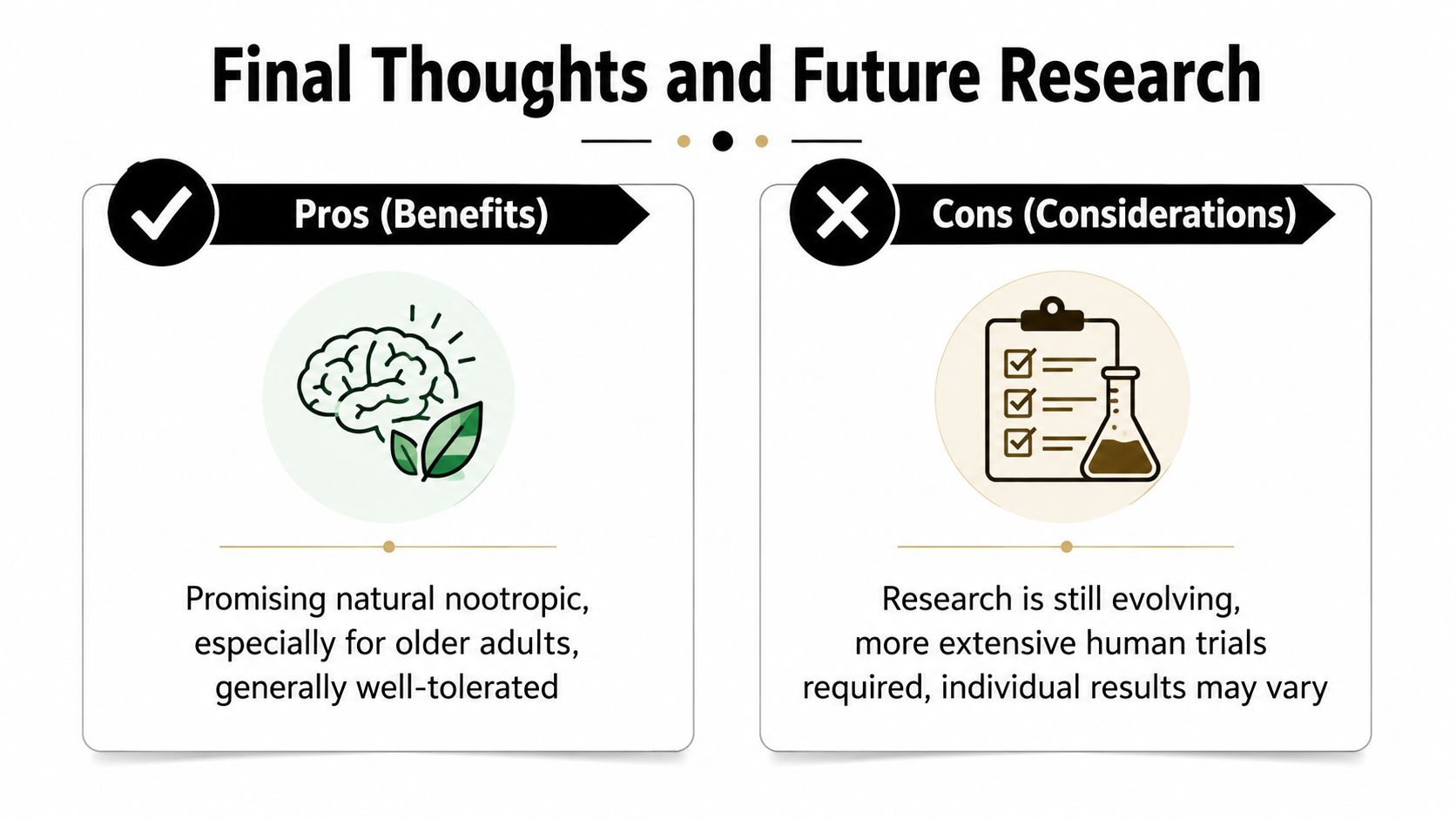
A useful way to think about the research is through the role of NGF, the nerve growth factor often described as brain fertilizer. That idea helps explain why lion's mane keeps drawing attention, but it is still only part of the picture. Biological plausibility is not the same as a strong human result, and it does not replace well-designed trials in the people most likely to use the supplement.
The most realistic takeaway is that lion's mane may fit better as one part of a broader brain-health routine than as a standalone fix. Sleep, movement, nutrition, and stress management still carry more weight than any single mushroom. Future trials may show clearer benefits in the groups that already look most promising, especially older adults with measurable cognitive decline. For now, the evidence supports curiosity with restraint, and a careful match between the supplement and the actual goal.