


Forget the padlock lesson. A clean site, a friendly message thread, and a working checkout don't prove you're dealing with a real business, and treating them as proof is how countless buyers lose money. If you want to know how to order safely online in 2026, verify the seller and the channel you're ordering through, not the design of the page. That's the order that truly protects you.
Why the Checkout Padlock Is Not Enough in 2026
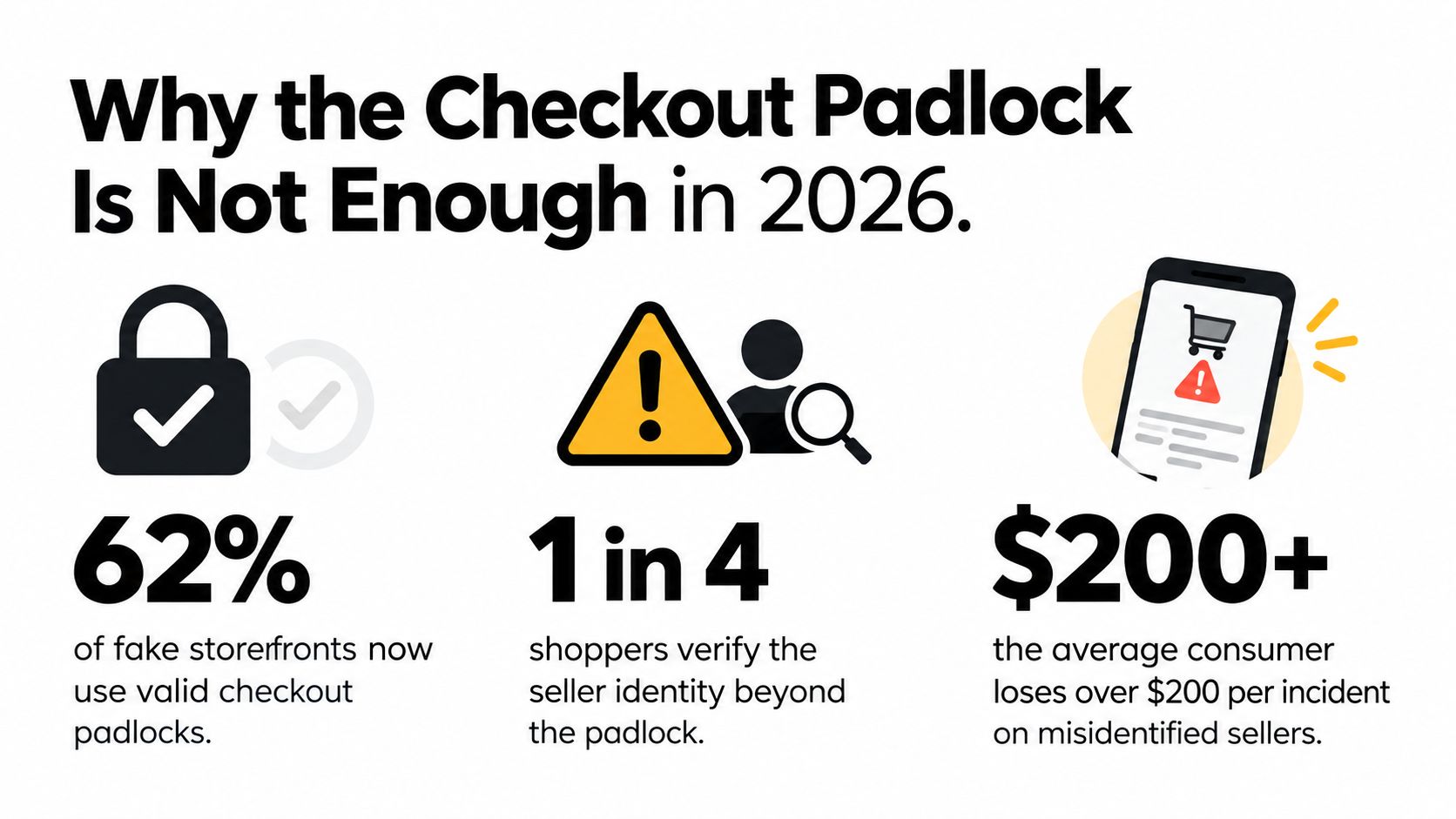
The padlock tells you a connection is encrypted. It doesn't tell you who is on the other end, whether they'll ship anything, or whether their refund policy means anything. Scammers know shoppers look for that icon, so a polished storefront with a valid padlock and weak accountability should make you more suspicious, not less.
Consumers filed more than 387,000 online-shopping fraud reports in 2024, with approximately $434.4 million in reported losses and a median loss of $130 per victim, while nearly 30% of people who lost money to scams in 2025 said the scam started on social media. Those figures cover reported incidents only, and many victims never report. The pattern matters more than the total. The problem often starts before checkout, on a platform built for trust signals you can't verify.
The risk moved to the handoff
You see an ad. You click a profile. A polite account sends you to a text thread, a payment link, or a storefront you've never visited before. At each jump, you're trusting the previous step without checking it. Comments, follower counts, branded photos, and steep discounts don't authenticate anyone.
Post-checkout is a separate risk surface, too. Once you've paid, you're expecting delivery updates, which makes fake alerts and payment-change requests easier to believe. A guide that stops at the padlock leaves you exposed at the two moments where people get caught. The handoff and the follow up.
Practical rule: Treat every change of channel as a new transaction that needs fresh verification.
So work in the right order. First, verify the seller as a real business. Then read the checkout. Then verify the delivery or text channel. Finally, protect the order after you've paid. Skip a step and you're guessing.
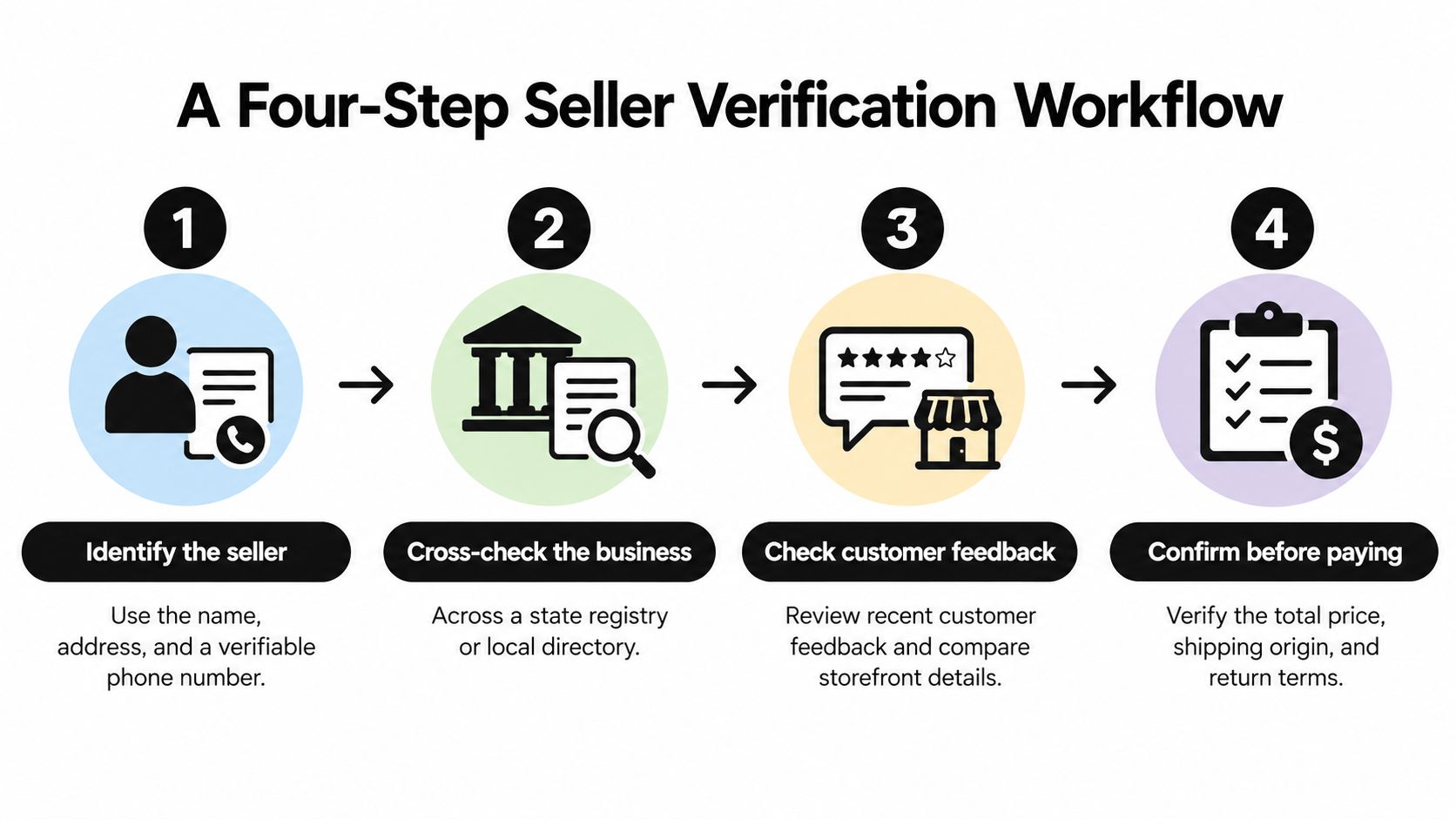
A Four-Step Seller Verification Workflow
Don't browse reviews and call it research. Run this workflow before you pay anyone you haven't ordered from before. It takes a few minutes, it works for supplements and ingestible products as well as ordinary retail, and it gives you evidence if a dispute follows.
Identify, then independently confirm
Step 1 is identity. Capture the seller's legal business name, physical address, contact method, and jurisdiction. If you can't find a physical address or a working contact outside a contact form, stop. That isn't a minor omission. It's a business telling you it can't be held to account.
Step 2 is independent confirmation. Check registration or licensing through the relevant government or professional regulator yourself. Don't trust a badge, seal, or screenshot displayed on the seller's own site, because anyone can copy an image. If the regulator's record doesn't match the name and address on the storefront, walk away.
Compare the product, then inspect what arrives
Step 3 is comparison. Match the product name, stated contents, dosage or serving information, packaging, and delivery terms against the seller's published documentation. Read guidance on how to spot fake products before you order ingestibles, because mismatched labels and vague contents are common early warnings. Save the listing, the full price including taxes and fees, and the refund terms.
Step 4 happens at your door. The World Health Organization recommends checking whether a website is authorized, confirming the item received matches what was ordered, verifying dosage, examining packaging and information leaflets, and confirming security seals are intact. If the label, seal, appearance, or contents differ from the listing, don't consume it. Photograph the package exactly as it arrived.
Pressure to pay immediately, unverifiable claims, unusually low prices, and unclear refund policies are deal breakers, not quirks. The same goes for a seller who refuses to provide batch or product details. A professional looking storefront proves nothing about identity, potency, contamination controls, or lawful authority. If something is wrong, contact the seller through a number or address you obtained independently, not only through a message tucked inside the shipment.
Reading the Checkout Page Like a Pro
Payment security isn't one invention. It's a standard that keeps getting revised because attackers keep changing methods, and that history tells you what a normal checkout should look like today.
Visa introduced payment-security requirements in 2001, PCI DSS 1.0 was released in December 2004, the major card networks formed the PCI Security Standards Council in September 2006, and PCI DSS 4.0 was published in March 2022. In plain terms, decades of tightening rules are why legitimate checkouts rely on encrypted connections, established processors, and safeguards such as multi-factor authentication or one-time verification codes. A seller asking you to bypass that infrastructure is asking you to give up protections built for your benefit.
What to check in the final seconds
Read the domain before you type anything. An unfamiliar address, a browser warning, or a checkout that arrived through an unsolicited link or message is a reason to close the tab. Never send card details through plain text, email, or a chat thread. Legitimate processors don't work that way.
- Recognizable processor: Prefer a checkout hosted by an established payment provider over a hand built form on an unknown site.
- Dispute protection: Use a credit card or a payment service with a dispute process for higher risk orders, and review payment method options and their protections before you choose.
- Avoid irreversible routes: Don't use wire transfers, gift cards, or cryptocurrency with an unfamiliar seller, because you generally can't recover the money.
A secure payment page still doesn't prove the seller is legitimate. It only reduces one category of risk. What you're looking for is consistency. The business name on the checkout should match the business you verified, the total should match the listing, and the seller should explain how transactions and personal information are handled.
Don't save your card details on a first order with a new seller. It costs you thirty seconds next time and removes one more thing a breach or a fake site can reuse. Small friction at checkout is cheap insurance.
Delivery, Pickup, and Text-Order Channels
How the order reaches you changes what can go wrong. Scheduled delivery, in-store or curbside pickup, and text ordering each have legitimate uses, so judge the channel on whether it's verifiable, not whether it feels convenient.
Text ordering deserves the closest look. Browsing a menu online, then confirming by SMS is discreet and fast, which is exactly why impersonators like it. More than 40% of people who lost money to social-media shopping scams in 2025 said they ordered something promoted in a social-media advertisement. An ad is not a source. Neither is a repost, a comment, or an unsolicited message.
Verify the number before you text it
Get the number from an independently verified source. The seller's official website, a verified business listing, or printed material you already trust are reasonable starting points. A properly run text message ordering system publishes its numbers openly and confirms your order back through the same thread, so the conversation itself becomes your receipt.
The ordering channel itself is not proof of safety. A text thread is safe only if you verified where the number came from.
For local and age restricted orders, expect clear terms before you commit. Look for a stated service area, any minimum order threshold, identification checks at handoff for adults only products, and discreet outer packaging that protects your privacy without hiding what's inside. You should receive written confirmation covering items, total, delivery window or pickup location, and who to contact if something changes.
Pickup removes some delivery risk, but it isn't automatically safer. Confirm the address independently, meet during stated business hours, and inspect the order before you leave. If a seller keeps moving the meeting point, won't confirm a total in writing, or asks for payment through a different channel than the one advertised, cancel. Inconvenience beats a loss you can't reverse.
Your Post-Order Safety Protocol
Most advice ends when you click pay. That's backwards. You're most vulnerable after checkout because you're waiting for messages, and scammers time their contact to that window.
A 2025 e-commerce payments report found that 22% of surveyed shoppers had received phishing attempts involving fake links and 15% had received scam calls, while only 9% used VPNs and 8% used single-use payment methods. You don't need every advanced tool. You do need a routine for the four traps that show up repeatedly.
Four traps and the response to each
Fake delivery alerts. A text claims your package is held, delayed, or needs an address correction, then sends you to a lookalike page. Don't use that link. Open the seller's site or contact them through the number you verified before ordering, and check the status there.
Payment change requests. A message says your payment failed or an extra delivery fee is due, and it pushes a new payment link. Treat any mid-transaction change of payment instructions as fraud until the seller confirms it through the original channel. You already paid once. Don't pay again to rescue an order.
Missing or wrong orders. Your confirmation, screenshots, and photos of the package are your evidence. Without them, a dispute becomes your word against the seller's. Save the original confirmation email or thread before you do anything else, and keep all follow up communication in writing.
Identification over sharing. Age restricted orders may require identification at handoff, but that doesn't justify sending unnecessary personal data to whoever asks by text. Ask what is legally required, who will see it, and whether showing it in person is an option. Send less than you're asked for when you can.
Run that routine every time and post-order scams lose their main advantage, which is your expectation that the next message must be legitimate.
What a Verifiable Local Seller Looks Like
Abstract checklists are easier to apply once you've seen the finished picture. Consider how a local adult seller in the Detroit and Ann Arbor area presents itself when the checkpoints above are satisfied.
Metro Mush publishes a clear business identity, a Southeast Michigan service area, and two dedicated numbers, 734-691-6122 for Detroit Metro and 734-280-2868 for Ann Arbor Metro, so you can confirm which region you're ordering from. It states a $75 minimum order up front instead of revealing it at checkout. Its menu names specific products, including Penis Envy and Enigma dried strains, OuterSpore Milk Chocolate Bars, and Rocket Fuel drinks, with pricing you can compare against your confirmation.
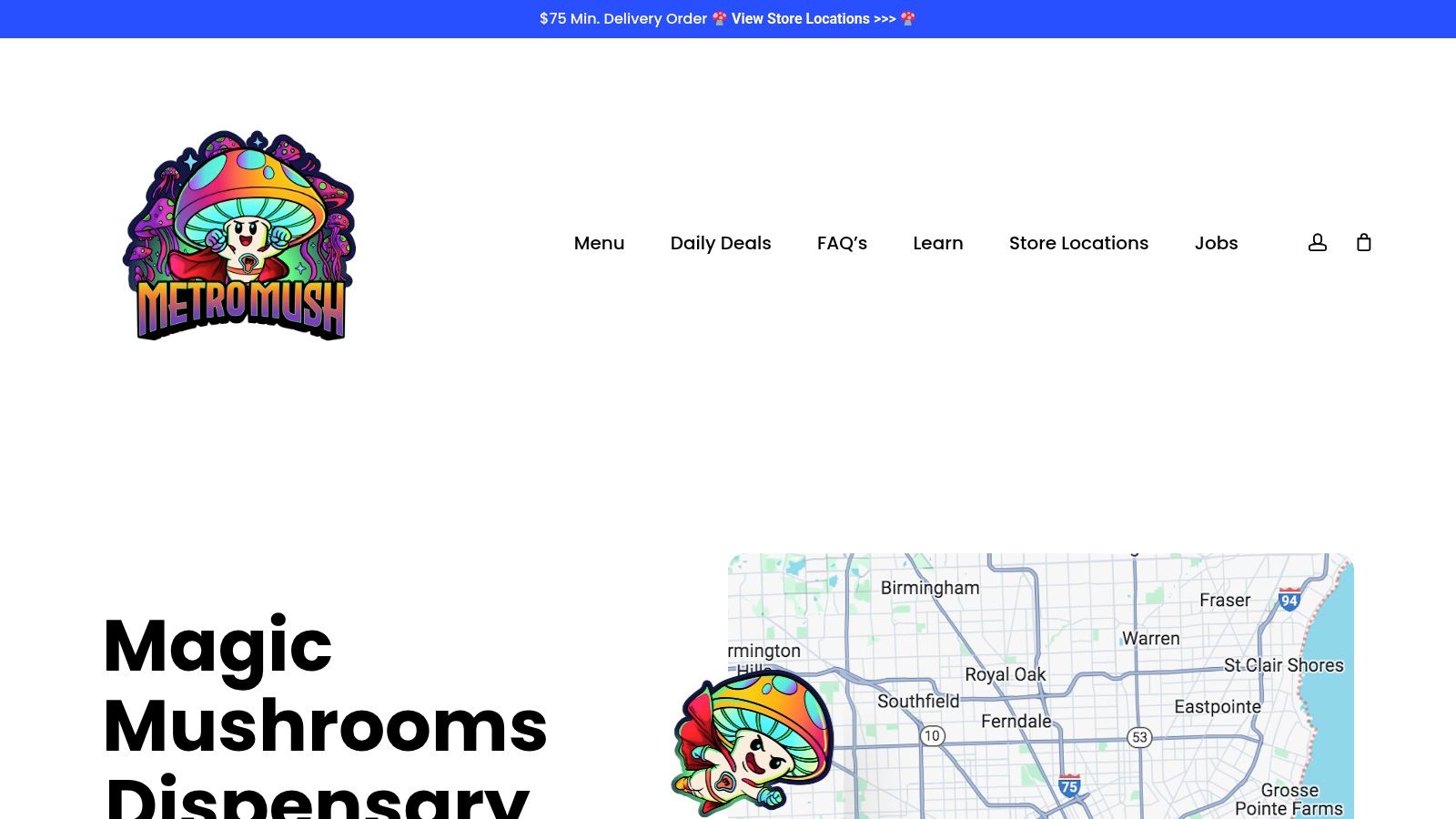
Published offers are stated in the open, too. Mix & Match Saturdays covers any three chocolate bars or drinks for $100, saving up to $40, alongside 10% off for fire, police, and veterans and a 20% Discord discount. Compare that with a social profile promising a vague discount in a direct message. One can be checked before you pay. The other can't.
Legal context belongs in that picture, and an honest seller won't hide it. Psilocybin remains illegal under federal and Michigan state law. Ann Arbor made enforcement its lowest policing priority in September 2020, and Detroit voters approved Proposal E in November 2021. A seller operating locally should communicate compliance expectations clearly. It shouldn't promise you immunity it can't deliver.
That's the reference point to carry into any market. Named business, published numbers, stated minimums, specific products, written offers, and no inflated legal claims.
A Quick Checklist Before You Click Pay
You don't need to reread a whole guide at checkout. Run this short routine, in order, and stop the moment an answer doesn't check out.
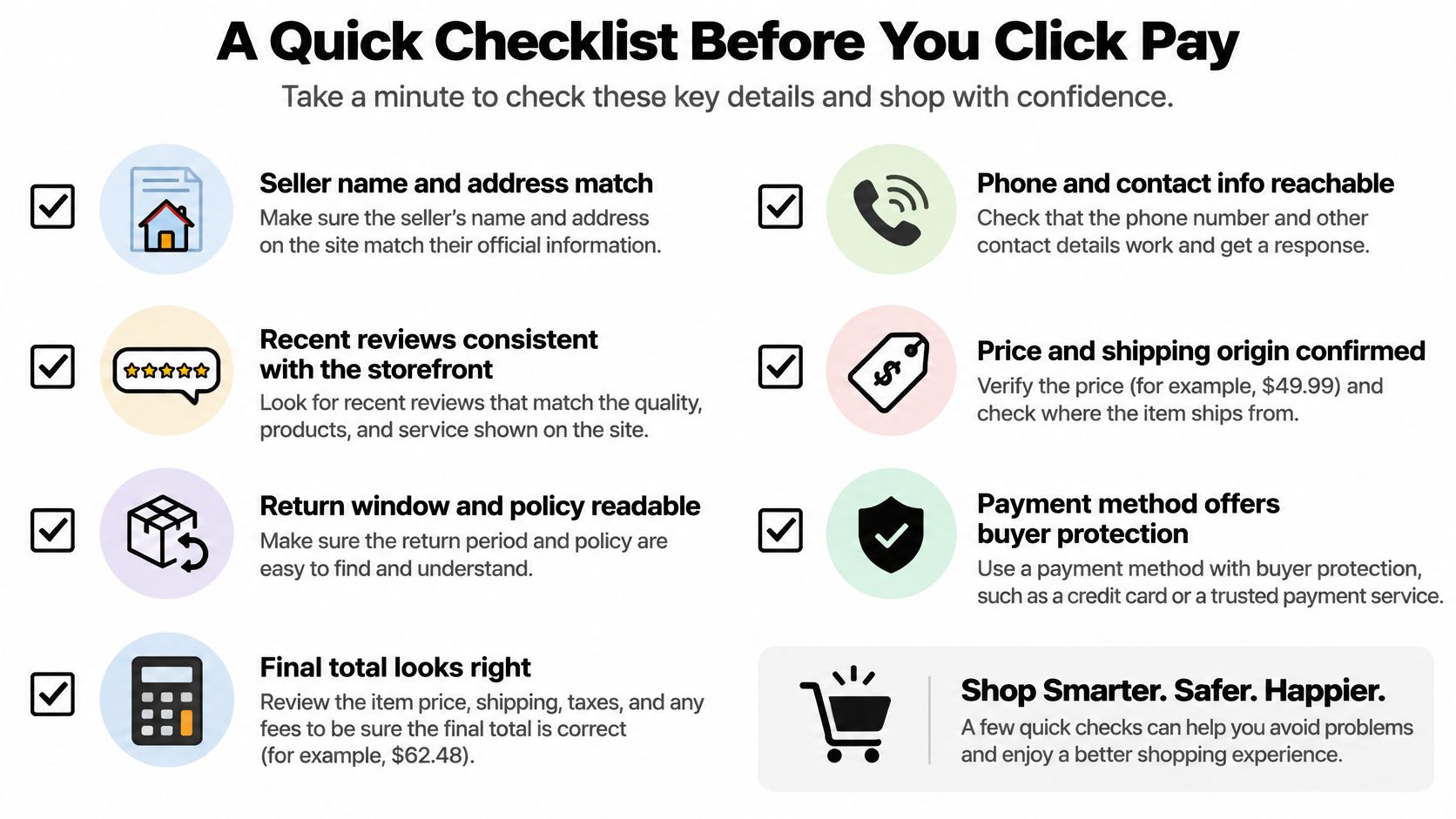
| Stage | Check | Why it matters |
|---|---|---|
| Seller | Legal name, physical address, and service area confirmed independently | Proves someone accountable exists |
| Contact | Phone or text number matched to a second source | Blocks impersonator accounts and copied numbers |
| Product | Contents, dosage or serving details, and packaging match the documentation | Catches fake or substituted items early |
| Terms | Full total, delivery or pickup terms, and refund policy read in full | Prevents undisclosed costs and disputes |
| Payment | Method offers dispute protection, and the domain is familiar | Gives you a way back if the order fails |
| After paying | Confirmation saved, and updates checked only through known channels | Defeats fake delivery and fee messages |
Add three habits that don't fit neatly in a table. Never pay an updated fee through a new link. Photograph the package before you open it. Contact the seller through details you found yourself if anything looks wrong.
If something feels off, don't negotiate with your own discomfort. Pause the order, return to the seller verification workflow, and use the post-order protocol if you've already paid. Applying how to order safely online as a repeatable routine takes under two minutes once it's habit. That's a fair price for not funding someone else's scam, whether you're ordering from a local dispensary, a supplement seller, or an unfamiliar retailer.
If you're ordering in the Detroit or Ann Arbor area, apply this checklist to a seller that publishes its numbers, minimums, and menu in the open, then browse the current strains, chocolates, and drinks at Metro Mush before you text your order. Verify the regional number on the site first, confirm your total in writing, and you'll be ordering the way this guide recommends.