
You're standing in front of a mushroom bar that looks polished, trendy, and weirdly familiar. The wrapper is glossy. The flavor sounds harmless. There's a QR code on the back, a few buzzwords on the front, and maybe a promise of a “legal trip” or “mushroom blend.” If you're trying to figure out whether it's real, safe, or completely made up, your uncertainty is justified.
In the unregulated mushroom edible market, the package often looks more professional than the product inside. That's the trap. A lot of people still assume fake products are easy to spot because they look sloppy or homemade. In practice, the risky ones often look retail-ready.
That matters because the downside isn't just disappointment. As of October 31, 2024, the CDC reported 180 total illnesses across 34 U.S. states linked to Diamond Shruumz™ products falsely marketed as containing psilocybin, with severe effects including seizures, loss of consciousness, and respiratory failure, according to the CDC outbreak investigation on Diamond Shruumz products.
A safe buying process starts before you ever eat anything. You need to know how to spot fake products from the outside, how to read the digital proof, how to judge the seller, and what sensory checks still matter once the item is in your hand. Most bad advice stops at “check the label.” That's not enough anymore.
The Wild West of Mushroom Products
A few years ago, most buyers worried about dried mushrooms from unknown growers. Now the bigger confusion often comes from polished edibles: bars, gummies, drinks, cones, and “blend” products sold in places that look casual enough to feel safe.
That's where people get burned. A chocolate bar with sleek branding can still contain something completely different from what the front panel suggests. In this category, packaging design isn't proof of authenticity. It's often just marketing.
Why buyers get misled
The unregulated market rewards products that look easy to trust. Bright wrappers, premium fonts, familiar flavor names, and wellness language can make a weak or adulterated product feel legitimate. Buyers often rely on the same cues they'd use for snacks, supplements, or cannabis edibles. That's a mistake.
The harder truth is that many fake mushroom edibles don't fail the “looks real” test. They pass it.
A fake mushroom product usually doesn't announce itself as fake. It announces itself as convenient.
The danger isn't limited to mislabeled potency. Some products marketed as “magic mushroom” edibles have been tied to severe medical outcomes, which is why a careful verification process matters before visual appeal, before price, and definitely before taste.
What a practical screening mindset looks like
If you want to know how to spot fake products, start with one rule. Treat every unverified edible as untrusted until the packaging, digital records, and seller all line up.
That doesn't mean panic. It means discipline.
Use a simple filter:
- First: Eliminate products with obvious packaging red flags.
- Next: Check whether the QR code and Certificate of Analysis verify anything.
- Then: Judge the seller's accountability, not just the product's appearance.
- Finally: Use your senses and dosage judgment before consuming.
That process won't catch everything, but it cuts out a lot of avoidable risk.
First Glance Forensics Packaging and Labeling Clues
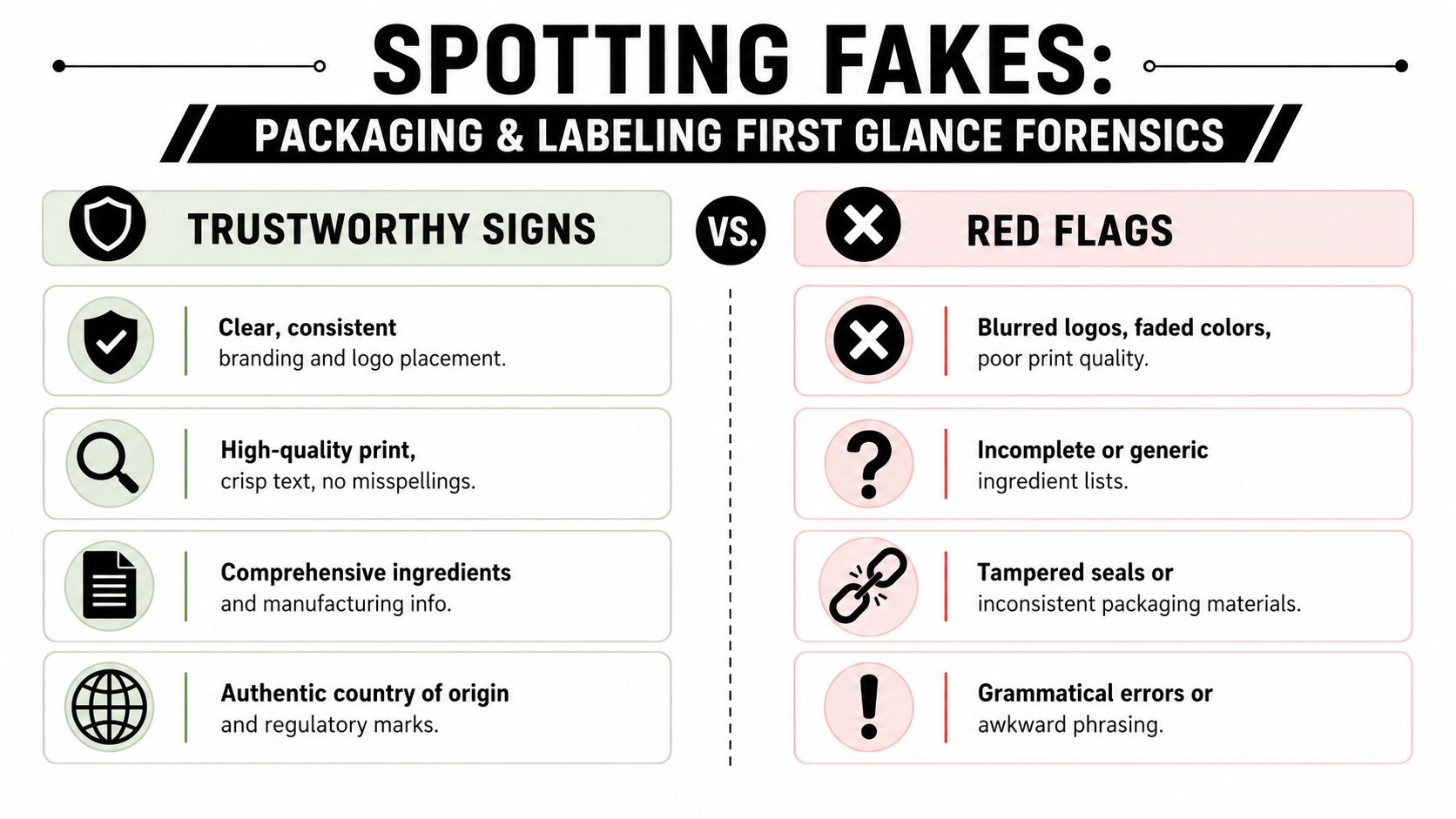
The fastest way to reject a suspicious product is still the package. Packaging won't confirm that a mushroom edible is real, but it can absolutely tell you when to walk away.
What I tell people is simple: don't ask whether the wrapper looks cool. Ask whether it behaves like compliant packaging.
Branding that sells candy instead of clarity
One major warning sign is candy-style branding. Industry experts note that cartoon characters, glossy packaging, and phrases like “legal trip” or “hemp-enhanced” are red flags for synthetic blends lacking real psilocybin, as noted in the Tennessee forensic chemistry drug manual.
That doesn't mean every colorful package is fake. It means the product has to work harder to prove itself if it looks like it was designed to attract impulse buyers instead of informed adults.
A serious label should answer basic questions clearly:
- What is the active ingredient?
- How much is in the package?
- What batch or lot produced it?
- Who made it?
- How do you verify it?
If the package dodges those questions with branding language, assume the branding is doing the work that documentation should be doing.
What to check in under a minute
When I inspect a mushroom edible package, I'm looking for omissions before I'm looking for style. Missing information is often more revealing than bad design.
Use this quick packaging screen:
- Declared actives: If the package doesn't clearly identify what's supposed to be psychoactive, that's a problem.
- Specific dosage language: Real products should give a concrete dose format, not dreamy phrases like “special blend” or “mystic formula.”
- Lot or batch identification: Without a batch number, there's nothing meaningful to match against lab paperwork later.
- Manufacturer traceability: A brand name alone isn't traceability. You want enough detail to connect the item to a real operation.
- Tamper evidence: Torn seams, odd seals, relabeled edges, or mismatched sticker stock are all reasons to stop.
Practical rule: If the front of the package makes big promises and the back avoids specifics, don't buy it.
Small print tells on fake products
Counterfeit and low-integrity products often reveal themselves in the details. Print quality matters. So does language. So does consistency.
Here's a useful side-by-side view to consider:
| Packaging element | Better sign | Red flag |
|---|---|---|
| Product identity | Names the product consistently front to back | Uses different product names or blend terms |
| Ingredient language | Specific and readable | Generic, evasive, or incomplete |
| Typography | Clean, crisp, intentional | Blurry text, odd spacing, spelling issues |
| Physical build | Consistent material and seals | Mixed materials, loose edges, over-stickered panels |
One familiar example is the flood of copycat bars that borrow the visual language of known products without proving what's inside. If you've seen discussions around Polka Dot style mushroom candy products, you've already seen how easy it is for branding to outpace verification.
Packaging can disqualify, not authenticate
This is the key trade-off. Packaging can help you reject a product quickly, but it can't prove authenticity on its own. A good fake can still have neat print, a scannable code, and sharp color.
Use packaging as your first filter, not your final decision.
Decoding the Digital Proof QR Codes and COAs
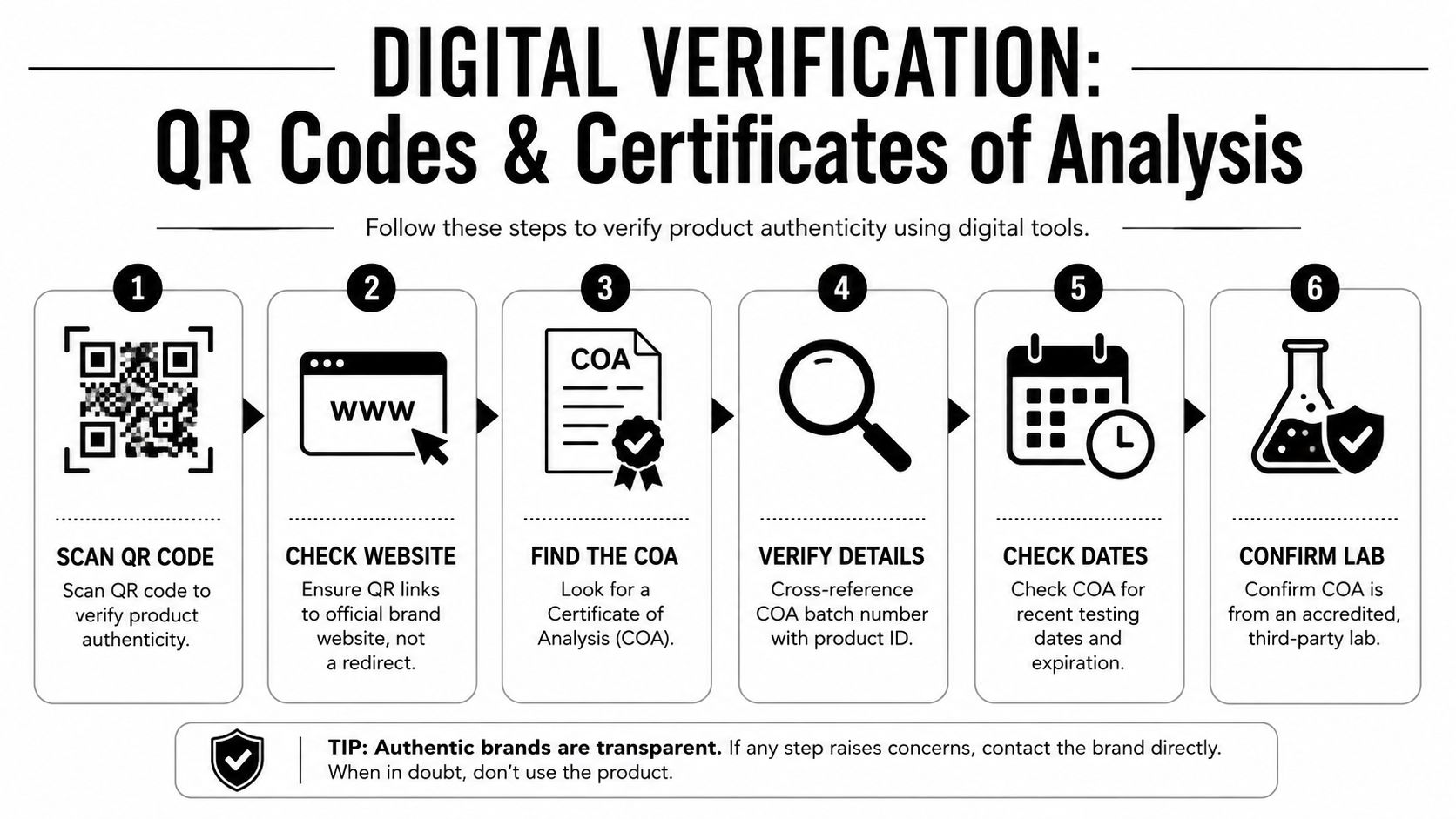
A QR code isn't proof. It's just a doorway. What matters is where it takes you and whether the paperwork behind it confirms the product.
A lot of buyers stop too early. They scan, see a document, and assume they're done. That's exactly how fake products slip through. The question isn't “does it have a COA?” The question is “does this COA verify this exact product with the right method?”
What should happen after you scan
A legitimate verification flow should feel boring. That's a good sign. You scan the code, land on a brand-controlled page or a direct lab record, and see a Certificate of Analysis tied to the exact item in your hand.
If the QR code sends you to a generic homepage, an image file with no product match, a dead landing page, or a social profile, treat that as failed verification.
Check these points in order:
Destination check
The code should lead somewhere specific and relevant, not a vague marketing page.Product match
The COA should match the product type you're holding. A gummy shouldn't be backed by a dried mushroom report.Lot match
The lot or batch number on the package should match the lot or batch number on the COA.Testing scope
The report should identify what was tested, not just say “passed” or “high purity.”Method check
The method matters as much as the result.
The method line matters more than buyers think
To distinguish real psilocybin from legal but non-psychedelic mushrooms like Amanita muscaria or from dangerous synthetics, consumers need COAs that use specific analytical methods like HPLC or UHPLC-MS, not vague purity claims, as explained in this psilocybin product verification guide discussing HPLC and UHPLC-MS.
That single line on a COA tells you whether the lab used a method capable of meaningfully identifying psilocybin. If the report relies on broad language and never tells you the analytical method, you don't have enough to trust the claim.
A lot of buyers miss this because the document looks official. Official-looking isn't the same as informative.
If a COA tells you a product is “clean” or “pure” but never tells you how psilocybin was identified, the paper is doing marketing, not verification.
What a usable COA should let you confirm
You don't need to be a chemist. You do need to be stubborn about a few fields.
Look for:
- Matching identifiers: The package lot number and the report lot number should line up exactly.
- Named analytes: The report should identify what was measured, not hide behind “mushroom blend” language.
- Method disclosure: HPLC or UHPLC-MS is the kind of specificity you want to see when psilocybin identity is the claim.
- Third-party origin: The lab should appear independent from the seller's marketing page.
- Readable format: A blurry screenshot is not reliable proof.
Red flags that buyers ignore
A surprising number of fake or weak verifications use the same tricks. Once you've seen them, they're easier to spot.
| QR or COA issue | Why it matters |
|---|---|
| Generic homepage after scan | Doesn't verify the specific product |
| Static image with no lot number | Easy to reuse across unrelated batches |
| “Proprietary blend” on report | Hides what's actually present |
| No method listed | You can't judge whether identity testing was meaningful |
| Product and report mismatch | Suggests recycled or borrowed paperwork |
Community verification has real value
There's one more layer people overlook. Sometimes the best warning comes from other buyers who already scanned the same code, compared batches, or noticed repeat packaging with different internals.
That's why community spaces can help. A good local Discord or buyer community can flag QR pages that changed, lot numbers that don't match, or products that keep circulating with suspicious paperwork. Community review isn't a substitute for a lab method. It is useful as an early-warning system when the market is messy.
Use that information the way you'd use any buyer intelligence. Helpful, but always secondary to the actual package and actual COA.
The Source Matters Vetting Your Vendor
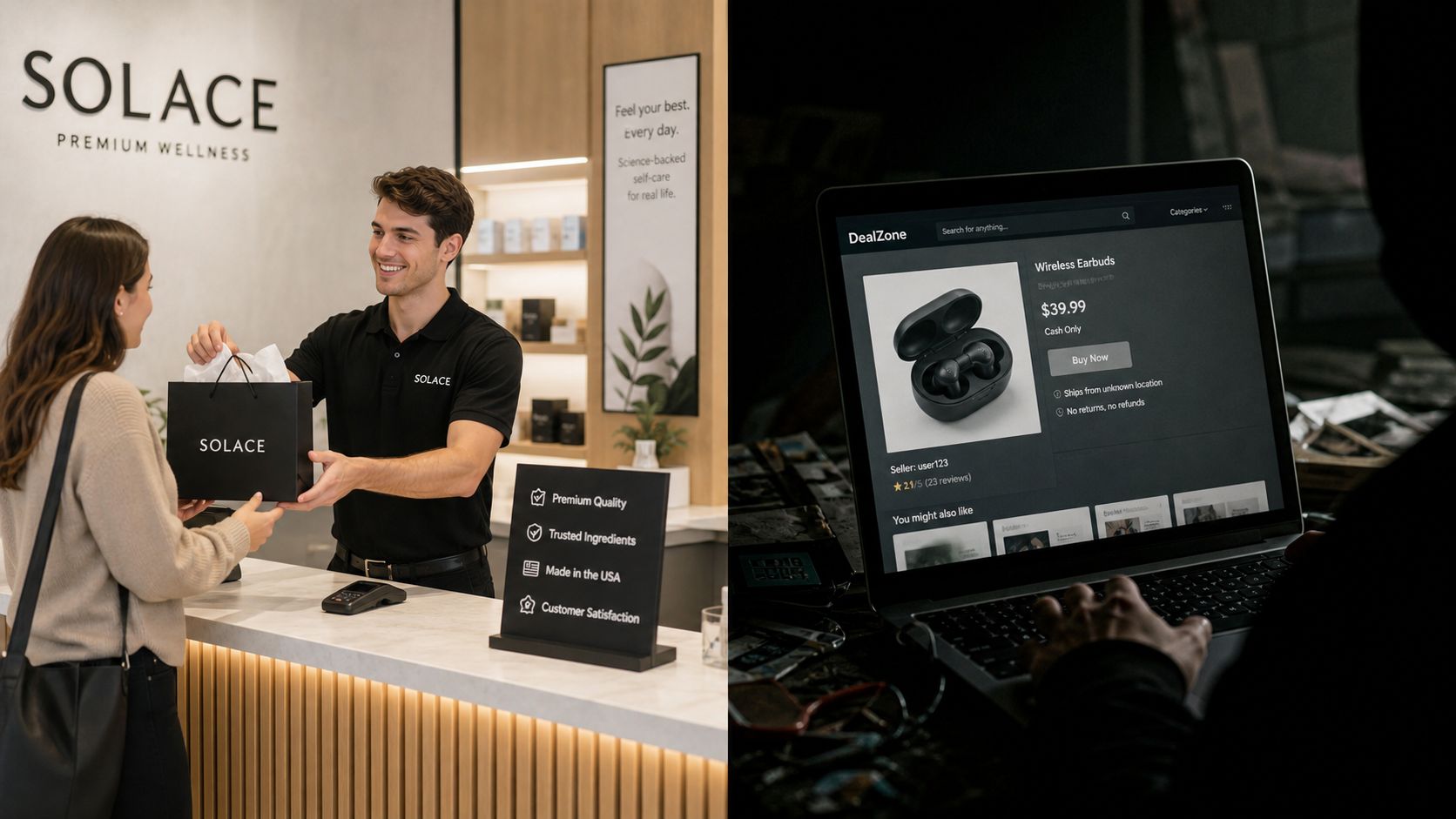
A product can look clean and still come from a source that nobody can hold accountable. In mushroom edibles, that's one of the clearest dividing lines between manageable risk and reckless risk.
If a seller disappears after the transaction, the rest of your verification process gets weaker. If a seller knows the inventory, can answer product questions directly, and has a reputation to protect, your odds improve.
Where bad products tend to show up
The biggest risk channels are the ones built around convenience without accountability. Think gas stations, smoke shops moving trend products, pop-up sellers, random message-based deals, and anonymous online listings.
Legitimate vendors actively reject products with proprietary blends or undisclosed additives, while fake brands use terms like “psychoactive mushroom blend” to evade oversight, a pattern described in this analysis of fake mushroom bars in smoke shops and gas stations.
That should reshape how you think about a “deal.” In this market, easy access often means weak sourcing.
Questions a real vendor should handle easily
A reliable seller doesn't need to be flashy. They need to be coherent. Ask direct questions and pay attention to whether the answers sound operational or evasive.
A stronger vendor can usually explain:
- What the product is supposed to contain
- Whether batch-specific documentation exists
- How the item differs from lookalike products
- Why they do or don't carry certain branded bars
- What they refuse to stock and why
A weaker seller usually falls back on hype. “People love it.” “It hits hard.” “It's premium.” None of that tells you what you're buying.
Sellers who know their products talk in specifics. Sellers who don't usually talk in vibes.
Local accountability beats anonymous convenience
There's a practical reason local, reputation-based operations are safer than anonymous channels. Buyers can compare notes. Staff can be questioned. Product issues can be traced back. Repeat business depends on consistency.
That's also why educational resources from established local operators can be useful even before you buy. A practical example is this buyer's guide to high-quality mushroom products, which reflects the kind of product literacy buyers should expect from any serious vendor.
If a seller can't explain what they carry, can't show documentation logic, and can't answer basic sourcing questions, move on.
Sensory Checks and Dosage Red Flags
Once the package and paperwork pass your first screen, you still have one more job. You need to inspect the actual product.
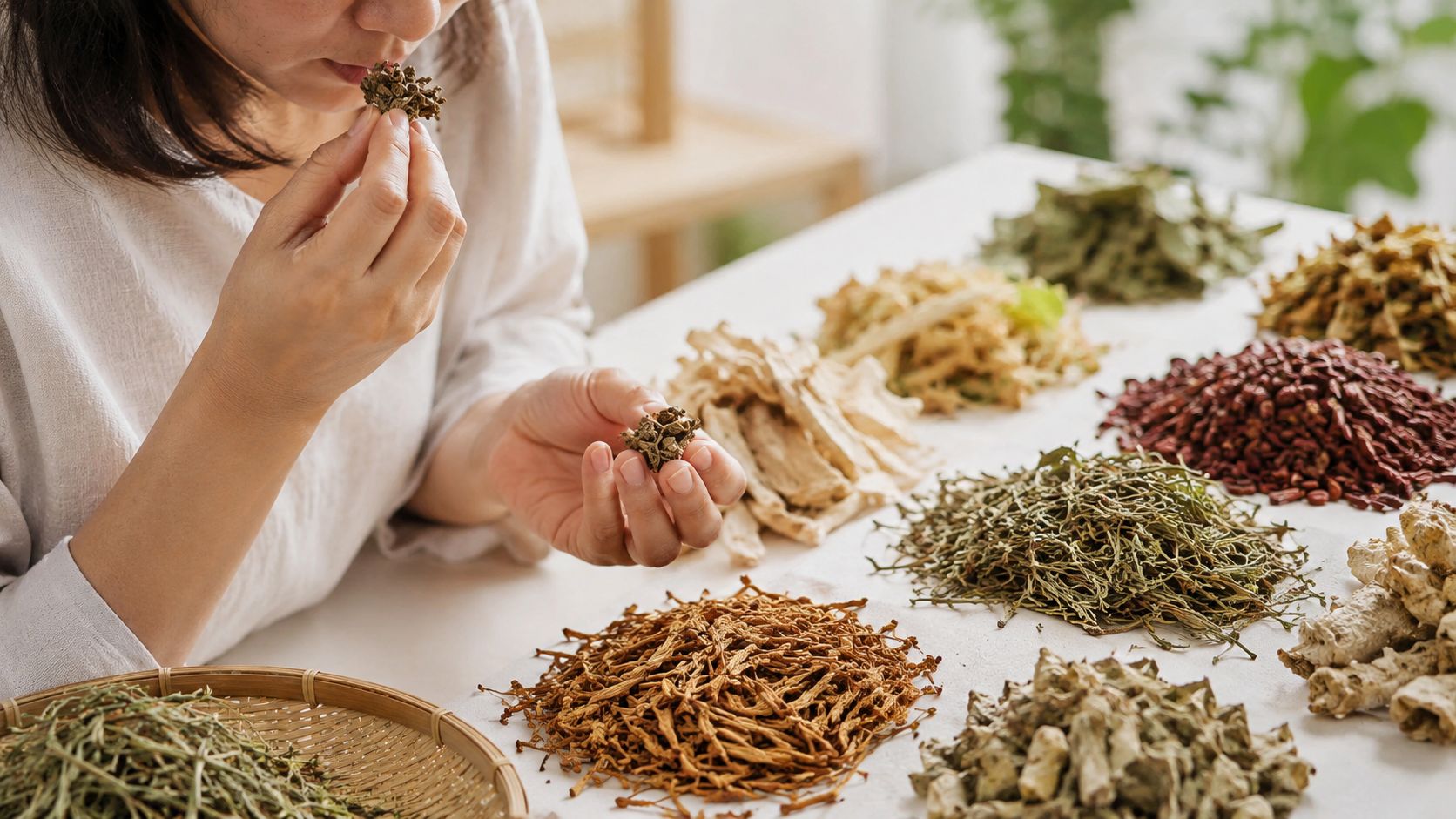
This isn't old-school folklore. It's basic harm reduction. Sensory checks won't prove authenticity, but they can reveal obvious problems that paperwork missed or that fake paperwork tried to hide.
What to notice in dried mushrooms and edibles
For dried mushrooms, look at structure before color obsession. Authentic specimens typically have recognizable mushroom anatomy: stem, cap, and dark gills. If what you've bought is powdered, over-processed, or impossible to visually identify, your trust has to come from documentation and source quality instead.
For edibles, your senses matter differently. You're watching for signs that the product was built to disguise rather than disclose.
Check for:
- Chemical or oddly sharp smell: A mushroom chocolate shouldn't smell like perfume, solvent, or artificial harshness.
- Strange bitterness: Chocolate can cover a lot, but a harsh chemical bitterness is worth taking seriously.
- Uneven texture or fill: A bar with visible inconsistency can signal poor manufacturing control.
- Wildly artificial color in gummies or fillings: Bright color alone isn't proof of a fake, but unnatural presentation paired with weak labeling is a bad combination.
Dosage language tells you a lot
The most suspicious edible labels often sound precise until you read them closely. You'll see “enhanced,” “proprietary,” “blend,” or “legal mushroom” instead of a clear active ingredient statement. That's not a harmless branding choice. It's often how sellers avoid saying what's really inside.
If a product can't tell you what the psychoactive component is supposed to be, dosage becomes guesswork. Guesswork is where people get into trouble.
A more useful standard is this: the product should let you understand what each piece, square, or serving is intended to contain. If the label makes serving logic impossible to follow, don't treat it like a controlled edible.
When the experience feels wrong
The psychological effects of fake shrooms with synthetic tryptamines can include psychosis, severe anxiety, and disturbing hallucinations that differ dangerously from a natural psilocybin experience due to overstimulation of serotonin receptors, according to this peer-reviewed review of fake mushroom products and synthetic adulterants.
That matters after the fact, too. If someone consumes a product and the effects feel unusually chaotic, panicky, disorienting, or otherwise unlike the expected profile, don't explain it away as “just a strong trip.” Treat the product itself as suspect.
A bad reaction doesn't always mean high potency. Sometimes it means the label didn't describe the chemistry.
A practical rule for edible buyers
If you buy bars, gummies, or other prepared products, stay with formats that make dose portions easy to understand and easy to inspect. Buyers who want a simpler product format often prefer options discussed in guides to freeze-dried mushroom edibles because the form itself can reduce some of the mystery that highly branded novelty products create.
Whatever form you choose, don't reward opacity. The more a product asks you to trust branding over clarity, the less it deserves your money.
Found a Fake How to Report and Protect the Community
If you think you found a fake, stop there. Don't keep testing it on yourself or pass it to a friend for a second opinion. Preserve the evidence first.
A lot of people treat fake products as a private inconvenience. That's understandable, but it leaves the next buyer exposed. In a market with weak formal guardrails, community reporting matters.
What to document right away
Take clean photos before you throw anything out. Include the front, back, lot number, QR code, interior product, and anything unusual about the seal or texture.
Write down:
- Where you bought it
- When you bought it
- What the seller claimed it was
- What happened when you scanned the QR code
- Any mismatch between package and paperwork
- Any effects or concerns without exaggerating details
Keep the packaging. If there's a receipt, screenshot, order message, or delivery thread, save that too.
Who to tell
Start with the seller if there's a real point of contact. A reputable operation should want to know if a product slipped into circulation under its watch. If the seller gets defensive, vague, or disappears, that tells you something too.
After that, share your findings in trusted buyer communities. Discord and similar spaces can help. Not gossip channels. Not random comment sections. A moderated local community where people compare lot numbers, screenshots, packaging photos, and QR destinations can stop the same product from moving through the area unchecked.
How to report without creating noise
Keep your report factual. Don't make medical claims you can't support. Don't guess at chemistry if you don't know. Show the package, show the code path, show the mismatch, and describe what you observed.
That kind of reporting is useful. It helps other adults learn how to spot fake products in everyday life instead of relying on generic warnings.
The goal isn't drama. It's traceability.
If you want a safer buying experience in Southeast Michigan, Metro Mush gives adult shoppers in Detroit and Ann Arbor a more accountable way to browse mushroom products, ask direct questions, and stay current through a local community instead of gambling on anonymous listings and smoke shop mystery bars.