Anxiety often narrows life in quiet ways. You may still go to work, answer texts, and look fine from the outside, but your mind keeps circling the same worries. Sleep gets lighter. Decisions feel heavier. Treatments that help other people might not have helped you enough, or they helped but came with tradeoffs you don't want to ignore.
That's why so many people have become curious about psilocybin for anxiety. The interest isn't just cultural. It comes from a growing body of clinical research, plus a lot of public conversation that can be helpful in some places and dangerously incomplete in others.
The biggest gap in most online discussions is simple. Many articles talk about promise, but skip over limits. They mention therapy, but blur it together with self-experimentation. They praise microdosing as gentle and approachable, even though public health guidance warns that it can sometimes make anxiety worse. If you're trying to make a careful decision, those missing details matter.
An Introduction to Psilocybin and Anxiety
Psilocybin is the psychoactive compound found in certain mushrooms. In the body, it converts to psilocin, which affects serotonin signaling in the brain. That basic fact has been known for a long time. What's newer is the renewed clinical interest in how psilocybin might help people with severe emotional distress, including some forms of anxiety.
That renewed interest doesn't mean psilocybin is a simple fix. It isn't like taking a standard daily medication and waiting for a gradual effect. In research settings, psilocybin is usually paired with psychotherapy, preparation, supervision, and follow-up integration. The treatment model matters as much as the compound itself.
For many readers, the confusion starts here. They hear one sentence like “psilocybin helps anxiety” and assume all forms of use are roughly the same. They're not. A guided therapeutic session is very different from taking a small amount alone at home, and both are different from buying an edible and hoping for a calm evening.
Psilocybin sits at the intersection of neuroscience, psychology, and environment. That's why the same substance can feel helpful in one context and destabilizing in another.
Anxiety itself also isn't one thing. Some people live with generalized worry. Others have panic, health anxiety, trauma-related distress, or existential anxiety linked to serious illness. The research is strongest in some of these groups and thinner in others, so broad claims can be misleading.
A responsible starting point is this: psilocybin may have meaningful therapeutic potential for anxiety, but the evidence depends on who is being treated, how the treatment is delivered, and what kind of anxiety is being discussed.
How Psilocybin Affects the Anxious Brain
One useful way to understand anxiety is to think of the brain as getting stuck in deep grooves. The same fear loops run over and over. The same predictions keep firing. Even when you know a thought isn't helpful, your mind returns to it like a car sliding back into familiar ruts on a road.
Psilocybin appears to temporarily loosen some of that rigidity. Researchers often discuss changes in large-scale brain networks and altered serotonin signaling, especially activity involving the 5-HT2A receptor. In plain language, psilocybin seems to interrupt ordinary patterns of thinking and feeling long enough for a person to experience emotions, memories, and beliefs in a less fixed way.
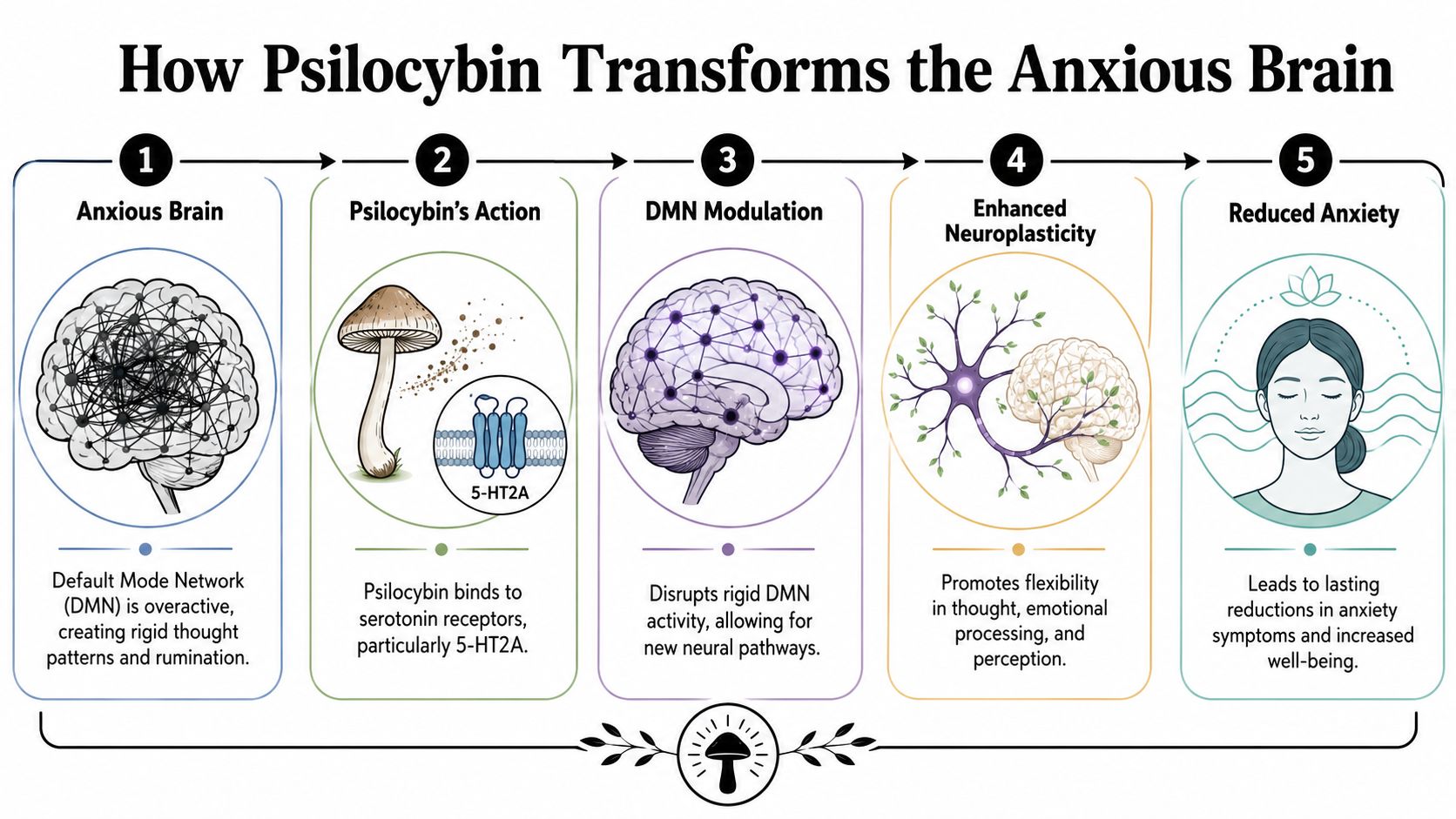
A simple way to picture it
Think of the anxious brain as a city where traffic keeps getting forced onto the same crowded highway. Worry, rumination, dread, and self-criticism all use the same route. Psilocybin may temporarily reduce the dominance of that route and allow traffic to move through side streets that aren't usually available.
That doesn't mean the brain is “fixed” in a single session. It means the person may gain a window of flexibility. During that window, fear can feel less absolute, and thoughts that used to seem fused with identity can feel more like mental events that can be observed, questioned, and reworked.
If you want a more detailed walkthrough of these brain-level effects, this guide on psilocybin effects on the brain gives useful background.
Why that may matter for anxiety
People with anxiety often describe two painful features. First, they can't stop anticipating threat. Second, they can't get enough distance from their own thoughts. Psilocybin may help with both by increasing psychological flexibility.
That flexibility can show up in several ways:
- Less rumination: Thoughts may feel less sticky and repetitive.
- More emotional access: A person may face fear, grief, or conflict instead of avoiding it.
- Changed perspective: Longstanding worries can seem less all-encompassing.
- Greater openness: Some people report feeling more connected to relationships, meaning, or values.
Practical rule: Psilocybin doesn't erase anxiety by brute force. It may work more like a temporary loosening of mental knots, which is why support and context matter so much.
This is also why therapeutic support is so often part of the research model. A brain in a more flexible state can move toward insight, but it can also move toward confusion or overwhelm if the setting is poor.
The Clinical Evidence for Psilocybin Therapy
Clinical interest in psilocybin for anxiety is based on more than anecdotes. Several controlled trials and reviews suggest that psilocybin-assisted psychotherapy can reduce anxiety symptoms in some groups, sometimes with effects that last well beyond the dosing day.
What the strongest early study showed
A landmark study published in JAMA Psychiatry followed people with life-threatening cancer who were experiencing significant psychological distress. In that trial, 51 patients received psilocybin with psychotherapy, and 60% had clinically significant decreases in anxiety symptoms at the 6-month follow-up. At that same mark, approximately 80% continued to show clinically significant decreases in both depressed mood and anxiety, and over 80% reported moderately or greater increased well-being and life satisfaction, according to the 2016 trial report.
That study matters because it showed two things at once. The reduction in anxiety was not just rapid, it also appeared durable over months. Just as important, the treatment occurred in a structured therapeutic setting rather than casual self-use.
What newer research adds
More recent data expands the picture beyond cancer-related distress. A 2024 phase 2b randomized controlled trial found that psilocybin-assisted psychotherapy led to a 12.59-point reduction in STAI-State anxiety scores compared with placebo at 6 to 7 weeks, with benefits sustained at 26 weeks. In a separate phase 2 trial for generalized anxiety disorder, treatment with PSX-001 produced an average 7.4-point reduction on the GAD-7, compared with 3.5 points for placebo, with p < 0.0004. A systematic review included five studies and found psilocybin superior to placebo for state anxiety at 1 day and 2 weeks, and for trait anxiety up to 6 months after a single session, with no serious adverse events reported across enrolled studies. Those findings are summarized in this PubMed-indexed review of randomized trials.
A short overview can help if you want to hear the topic discussed in a more conversational format:
What the evidence does and doesn't prove
The evidence is encouraging, but it isn't a blank check. The best-supported results come from carefully screened participants, structured therapy, and controlled doses. That's not the same as proving that any mushroom product, any dose, or any self-directed routine will help an anxious person.
It also matters that different anxiety populations aren't interchangeable. End-of-life anxiety, generalized anxiety, and mixed depression-anxiety states may respond differently. The safest reading of the literature is cautious optimism, not hype.
Therapeutic Approaches Microdosing vs Guided Sessions
The public conversation often treats all psilocybin use as one category. In practice, two very different models get grouped together: microdosing and guided macrodose sessions. They differ in purpose, intensity, evidence, and risk profile.
A guided session is the model most clinical trials study. It usually involves preparation before dosing, supervision during the acute experience, and integration afterward. The goal isn't to “take the edge off” in a subtle way. It's to create conditions for a significant psychological experience that can be processed with support.
Microdosing is almost the opposite in intention. People usually take a very small amount, often hoping to stay functional and avoid a noticeable psychedelic effect. The idea is appealing because it sounds low-risk and easier to fit into daily life. But appealing doesn't automatically mean evidence-based.
Why dose matters
One of the clearest findings from the clinical literature is that psilocybin seems to have a dose-response relationship. A systematic review found that in clinical trials, a 25 mg dose significantly reduced anxiety, while a 10 mg dose did not show superiority over placebo, suggesting a therapeutic threshold rather than a simple “any amount helps” model, as described in this systematic review on psilocybin dosing and outcomes.
That finding helps explain why some people misunderstand the science. They hear that psilocybin showed promise in therapy, then assume a tiny amount should produce a smaller but similar version of the same benefit. The evidence doesn't support that leap.
For a plain-language breakdown of how these approaches differ, see this comparison of microdosing vs macrodosing.
Psilocybin Approaches for Anxiety A Comparison
| Aspect | Microdosing | Guided Macrodose Session |
|---|---|---|
| Primary goal | Subtle mood or focus effects during ordinary life | Deep therapeutic experience with psychological support |
| Subjective intensity | Usually intended to be barely perceptible | Clearly perceptible and often emotionally significant |
| Clinical resemblance | Often differs from research protocols | More closely matches the model used in trials |
| Support structure | Frequently self-directed | Usually includes preparation, monitoring, and integration |
| Evidence for anxiety | Limited and mixed, with specific cautions | Stronger support in controlled therapeutic settings |
| Risk pattern | Can be underestimated because the dose is small | More intense experience, but usually approached with greater structure |
A practical distinction readers often miss
A guided session treats psilocybin less like a wellness supplement and more like a serious psychological intervention. Microdosing is often marketed or discussed as if it were the gentler, safer choice by default.
That assumption can lead people astray. Lower intensity doesn't always mean lower psychological risk, especially when someone is self-treating an already anxious mind without screening, preparation, or professional support.
The key difference isn't just the amount taken. It's the entire treatment model around the dose.
Potential Benefits and Serious Risks
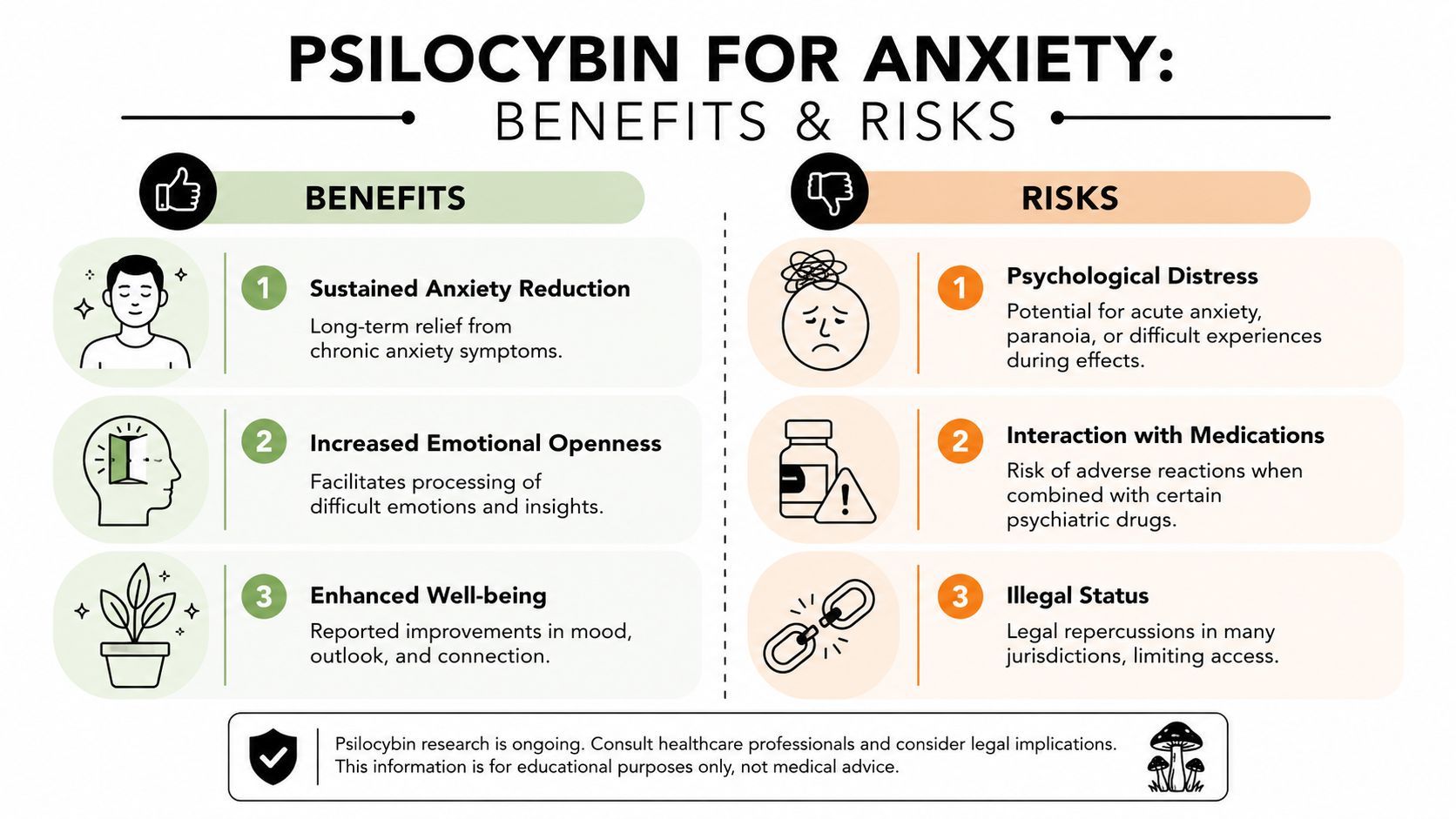
Psilocybin for anxiety attracts attention because the potential upside is real. Some participants in clinical studies report meaningful relief, a greater sense of peace, and improved emotional processing. In the strongest research settings, people also report changes in outlook, relationships, and life satisfaction.
But balance matters here. A lot of wellness content treats risk as a side note. For anxiety, that's a mistake. An anxious person isn't just seeking novelty. They're often trying to calm an already over-alert nervous system, and psilocybin can move that system in either direction depending on the person, the dose, and the circumstances.
Where the benefits appear strongest
The most convincing benefits show up when psilocybin is paired with psychotherapy in structured settings. In those conditions, some people seem able to interrupt rigid fear loops and process difficult emotions in a way that ordinary anxious thinking doesn't allow.
Potential benefits discussed in the literature include:
- Reduced anxiety symptoms: Especially in supervised therapeutic models.
- Improved well-being: Some participants report a broader improvement in life satisfaction and meaning.
- Greater emotional openness: Difficult feelings may become more approachable instead of more threatening.
- Quality of life changes: Reviews have described improved health-related quality of life after treatment.
The microdosing risk many people never hear about
One of the most overlooked points in public discussion is that microdosing can backfire. The National Center for Complementary and Integrative Health warns that microdosing psilocybin can cause “increased anxiety and depression,” along with poor mood and impaired focus, according to the NCCIH guidance on psilocybin for mental health and addiction.
That warning matters because microdosing is often framed as the cautious person's entry point. For someone with anxiety, it may instead create an uncomfortable middle ground. The dose may be enough to unsettle mood or concentration, but not enough to produce the kind of structured therapeutic process studied in trials.
The uncertainty people deserve to hear
Another under-discussed issue is durability in people who don't fit the cancer-distress model. A review of the field notes an evidence gap around how long anxiety benefits last for more general anxiety populations beyond the early follow-up window, and it also notes that a 2021 study found psilocybin-assisted psychotherapy did not reduce depression symptoms better than standard antidepressants in non-cancer patients, as discussed in this Cambridge review on psilocybin evidence and real-world challenges.
That doesn't erase the promise. It sharpens it. The honest message is that psilocybin may help some people a great deal, but the long-term picture for everyday anxiety outside tightly defined clinical groups is still incomplete.
Safety and Responsible Use Guidelines
Psilocybin isn't something to approach casually if anxiety is already disrupting your life. The safest frame is to treat it like a powerful mental health intervention, not a mood product. That means screening, planning, and restraint.
Who should be especially cautious
Some people should avoid self-experimentation altogether. If you have a personal or family history of psychosis, mania, or conditions that involve losing contact with reality, the risk can be higher. The same goes for people who are already in a fragile, agitated, or unstable mental state.
Medication questions also matter. Some psychiatric medications may change how psilocybin feels or complicate risk in ways that internet advice can't sort out responsibly. That's a conversation for a qualified clinician, not a comment thread.
Why set and setting matter
People often hear the phrase set and setting without understanding why it matters. “Set” means your mindset: your current stress level, expectations, fears, and emotional readiness. “Setting” means the environment: who is present, how safe the space feels, and whether you can surrender to the experience without needing to manage outside demands.
If either part is poor, anxiety can escalate fast. A chaotic room, unresolved panic, relationship conflict, or pressure to “have a good trip” can all push the experience in the wrong direction.
A harm-reduction checklist helps:
- Screen thoroughly: If your mental health feels unstable, don't treat psilocybin as a rescue button.
- Avoid isolation for intense use: Higher-intensity experiences should not happen without a trusted, sober support person.
- Choose the environment carefully: Quiet, private, low-pressure spaces reduce avoidable stress.
- Plan the aftercare: People often focus on the dose and forget the following day, when insight can fade or confusion can linger.
- Don't combine guesswork with distress: If you're already highly anxious, improvising with dose and setting is a poor strategy.
Respect the preparation as much as the substance. A rushed or emotionally loaded session can turn fear into the central event.
What responsible use really means
Responsible use isn't about sounding careful while doing whatever you planned anyway. It means being willing to pause, ask harder questions, and decide that now may not be the right time.
That may feel disappointing, but it's often the most grounded choice available.
Legal Status and Access in Michigan
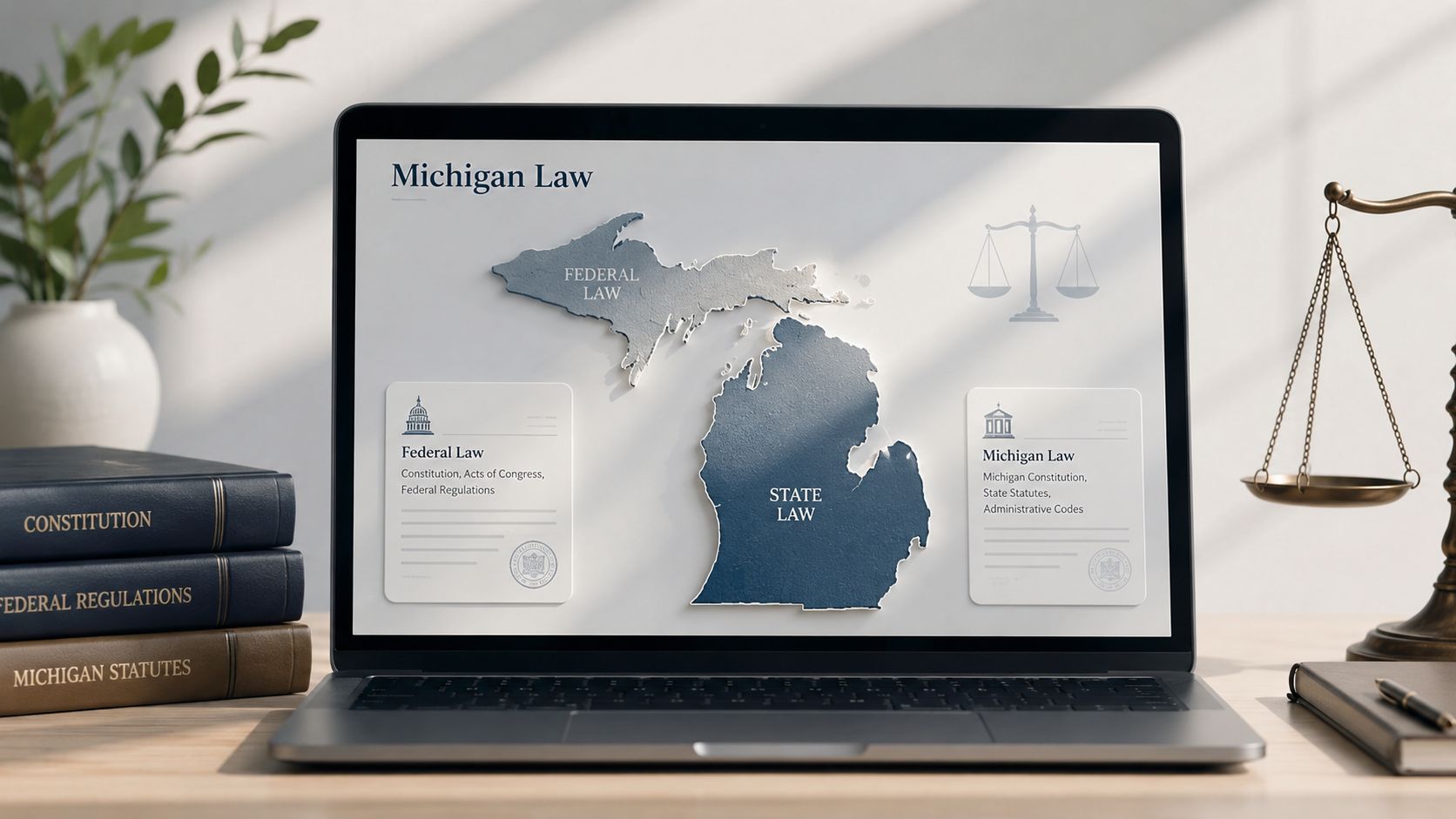
Michigan's legal picture is nuanced, and that nuance matters. Local decriminalization does not mean broad legality. Many people hear that mushrooms are “decriminalized” in a city and assume that means fully legal purchase and use. That's not what the policy means.
What changed in Detroit and Ann Arbor
In November 2021, Detroit voters approved Proposal E, which decriminalizes the personal possession and therapeutic use of entheogenic plants and makes enforcement the city's lowest law enforcement priority. Ann Arbor took a similar step earlier, with a unanimous City Council vote in September 2020, as explained in this overview of Detroit magic mushrooms and what to know before you purchase.
That shift is significant for local residents, but it has limits. Decriminalization usually changes enforcement priority. It does not automatically create a fully regulated retail system comparable to state-legal cannabis.
What decriminalized doesn't mean
It doesn't mean there is no legal risk. It doesn't mean every activity involving psilocybin is clearly authorized. It also doesn't mean state and federal law have disappeared.
If you live in Southeast Michigan, the most practical step is to learn the difference between local policy, state law, and federal law before making assumptions. This guide to magic mushrooms in Michigan is a useful starting point for understanding that context.
A direct approach is to consider:
- Local decriminalization: Enforcement is treated as a low priority in certain cities.
- State and federal context: Psilocybin still exists in a broader legal gray area.
- Real-world implication: Access may exist, but certainty is limited, and consumers need to stay informed.
Conclusion Making an Informed Decision
Psilocybin for anxiety deserves neither panic nor hype. The research suggests real therapeutic potential, especially in structured settings with preparation, psychotherapy, and careful follow-up. At the same time, the details matter enough that broad wellness messaging can become misleading.
The biggest takeaway is simple. Clinical psilocybin therapy is not the same thing as self-treatment. That distinction matters for benefits, risks, and expectations. It matters even more for people drawn to microdosing, since public health guidance warns that it can sometimes increase anxiety instead of easing it.
If you're considering this path, move slowly. Ask what kind of anxiety you're trying to treat, what evidence applies to that type of anxiety, whether your mental health history raises risk, and whether you're seeking treatment or just relief in the moment. Those are not the same goal.
A careful decision is better than a fast one. With a topic this powerful, caution isn't fear. It's good judgment.
If you're in Southeast Michigan and want to learn more about products, local access, and practical education around psilocybin, Metro Mush offers a starting point for adult consumers in the Detroit and Ann Arbor area.