


Most edible mushroom chocolate bars from a quality dispensary cost between $25 and $45. But that price tag alone doesn't tell you much, because a key question is how much you're paying per intended dose, how consistent the bar is, and what it contains.
If you're staring at a menu and wondering why one chocolate bar is $25 and another is $40, you're asking the right question. On the surface, both products may look similar. They're both bars. They're both chocolate. They're both sold as an edible experience. But one may be designed for tiny, repeatable servings, while another may focus on richer ingredients, cleaner formulation, or tighter quality control.
That's where people get tripped up. They shop by sticker price only, then end up with a bar that felt cheaper at checkout but gave them less control, less consistency, or less value over time.
A smarter way to compare an edible chocolate bar price is to shop the way you'd shop for coffee beans or a family-size pizza. You don't just ask what the whole thing costs. You ask what each serving costs, whether the quality matches the price, and whether you'll use it the way it's intended.
Your Guide to Understanding Edible Chocolate Bar Prices
A customer opens a dispensary menu on their phone. One bar is listed at $25. Another is $40. Another is $45. The labels mention chocolate, servings, potency, and ingredients, but none of that instantly answers the immediate question: why is there such a gap if they all seem like the same kind of product?
That confusion is normal. Edibles are harder to compare than flower because the value isn't obvious from the package. With flower, people usually look at strain and weight. With chocolate bars, a lot more is packed into one item: multiple servings, flavor quality, production standards, and how predictable each piece feels from one session to the next.
Why the sticker price can mislead
If you only compare shelf price, the cheapest bar often looks like the best deal. Sometimes it is. Often it isn't.
A bar can cost more because it's divided into cleaner, easier-to-manage servings. It can cost more because the chocolate itself is better. It can also cost more because the maker spends more on testing, packaging, or formulation. None of those things show up clearly if you only look at the number next to the product name.
Practical rule: Don't ask “Which bar is cheapest?” Ask “Which bar gives me the most usable, reliable servings for my money?”
What most shoppers actually want to know
Consumers shopping for mushroom chocolate aren't trying to win a potency contest. They want one of three things:
- A low-pressure first try where they can take a small piece and wait
- A repeatable routine where each session feels similar
- A stronger value buy where the cost makes sense over several experiences
Those are different goals. The right edible chocolate bar price depends on which one fits you.
Here's the useful shift in thinking. A $40 bar that gives you several well-portioned experiences may be a better buy than a $25 bar that's harder to divide or harder to trust for consistency. Once you start shopping by dose, not just by bar, pricing makes a lot more sense.
Typical Price Ranges and Cost Per Dose
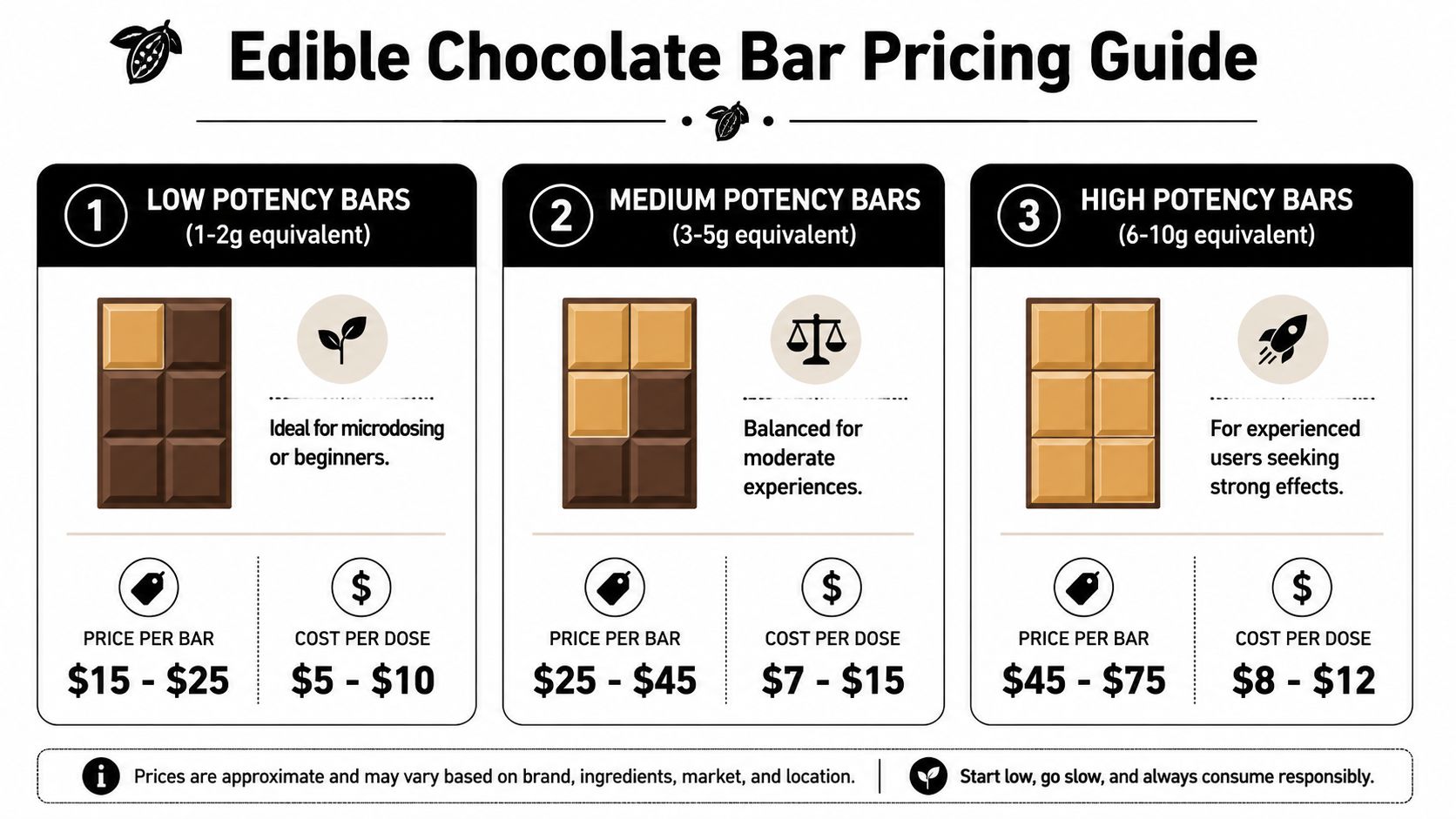
The easiest way to understand edible pricing is to separate price per bar from cost per dose. Those aren't the same thing.
A whole pizza might cost more than a sandwich, but if it gives you four meals, it may be the better value. Chocolate bars work the same way. The menu price tells you what you pay today. The cost per dose tells you what each experience costs.
What the broader edible market tells us
In the U.S. market, average edible prices declined from $15.72 on January 1, 2021 to $13.86 on September 1, 2022, a drop of about 8.7%, and Michigan stood out as one of the most cost-competitive markets, with price per milligram reported at 26% below the benchmark level according to The Hemp Doctor's summary of Headset market data.
That matters because it gives shoppers context. If you live in Southeast Michigan, you're shopping in a market where value comparisons are especially important. Lower average market pricing doesn't automatically mean every product is cheap. It means you have room to compare products more carefully and expect clearer value.
Here's a visual way to think about bar pricing.
How to judge cost per dose
Use this simple checklist when you compare two bars:
- Count the intended servings. If a bar is segmented clearly, you can estimate how many sessions you'll get out of it.
- Match servings to your real use. A beginner may only want one square. A more experienced customer may use more than that.
- Compare the experience cost. If one bar lasts longer in practical use, its higher shelf price may still be the better value.
A quick comparison helps:
| What you compare | What it tells you |
|---|---|
| Price per bar | What you pay at checkout |
| Number of servings | How many times you can realistically use it |
| Cost per intended dose | What each session costs you |
| Portion design | How easy it is to repeat the same experience |
Where shoppers get confused
People often assume a lower-priced bar is “budget” and a higher-priced bar is “premium,” but that shortcut misses the point. A better question is whether the product is built for your style of use.
A bar that breaks cleanly into small portions is often worth more to a cautious buyer than a cheaper bar with less predictable serving control.
That's why edible chocolate bar price should always be read alongside serving design. Price is the first number you see. Dose value is the number you feel over time.
What Drives the Price of a Shroom Chocolate Bar
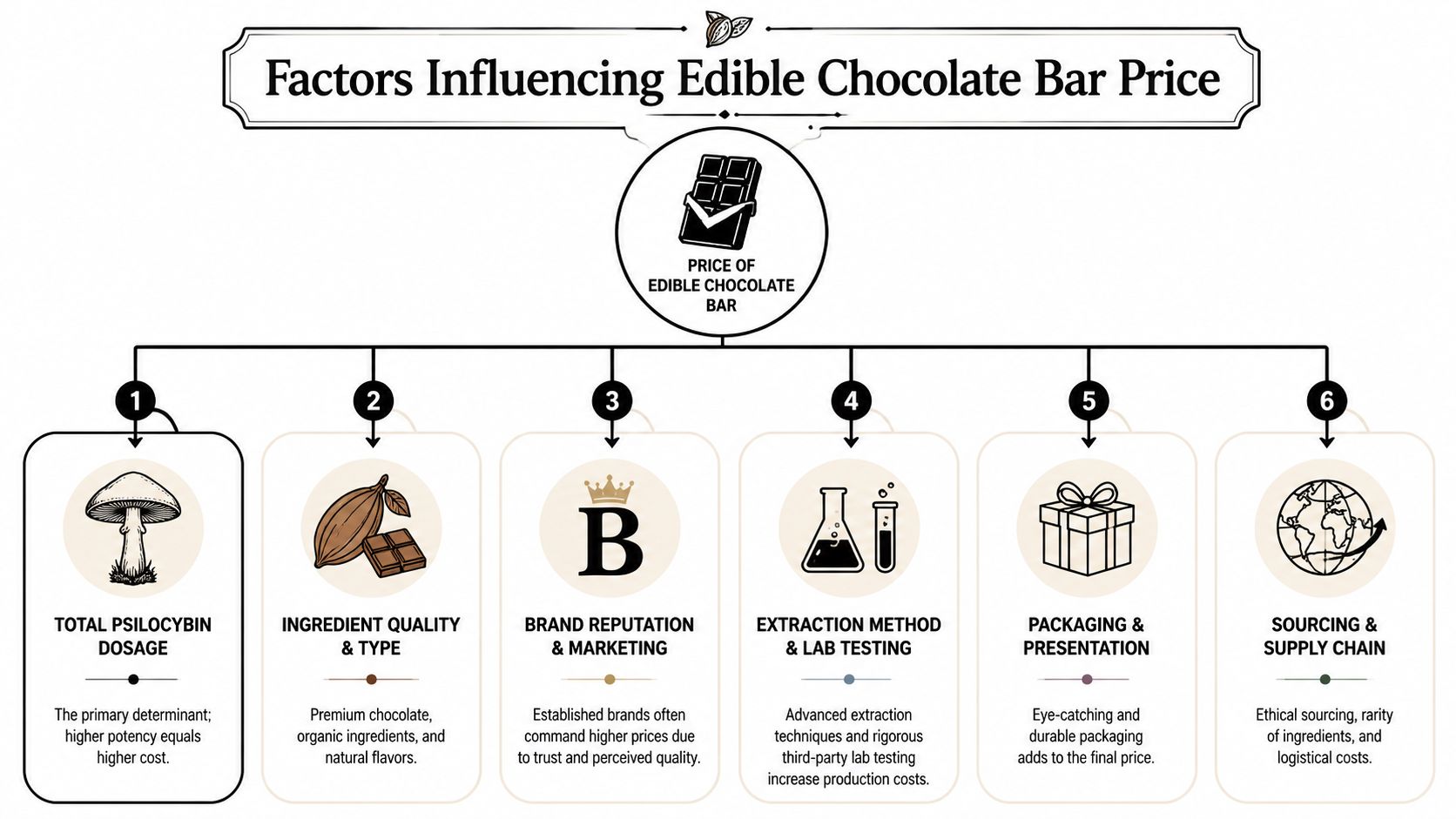
The sticker price on a chocolate bar usually comes from several stacked costs, not one single factor. Some are obvious, like total active content. Others are hidden in the background, like ingredient sourcing and production standards.
Chocolate cost is part of the story
For cannabis products, multi-dose chocolate edibles are commonly priced in the $15 to $30 range for 100 mg THC bars, and cocoa volatility has pushed pricing pressure upstream. One example cited by Vesper Tool shows a 200-gram Côte d'Or bar rising by almost €0.50, equal to a 12% increase, while chocolate and confectionery manufacturing remains tracked as a distinct price category through April 2026 in the U.S. according to Vesper Tool's breakdown of chocolate bar costs.
Even if you're not buying a cannabis bar, the same ingredient reality matters. Better chocolate costs more to make. When cocoa prices swing, makers either absorb that cost or pass part of it along.
The biggest factors shoppers should look at
Some pricing drivers matter more than others.
- Total active content: More total active material usually raises the final price.
- Serving layout: A scored bar with clear sections is easier to use consistently than a solid slab.
- Chocolate quality: Higher-grade chocolate, cleaner flavoring, and better texture all add cost.
- Testing and consistency: Products with clearer quality control usually cost more to produce.
- Packaging: Protective, labeled packaging often costs more than basic wrapping.
- Brand positioning: Some brands charge more because they invest more in presentation and trust-building.
Why ingredient quality changes value
Two bars with similar shelf prices can feel very different. One may use basic sweet chocolate that mainly hides flavor. Another may use better cocoa and better texture so the product is easier to portion, store, and enjoy.
For a lot of shoppers, that matters because edibles aren't only functional. They're also food products. If you're dividing a bar over several sessions, taste and texture affect whether you'll want to use the rest.
Paying more for a bar isn't always paying more for “strength.” Sometimes you're paying for cleaner ingredients, better portioning, and less guesswork.
Why testing matters
Lab testing is one of the least flashy parts of pricing, but it's one of the most useful. A bar with more attention paid to consistency is easier to shop for rationally because you're not relying only on branding or packaging.
That doesn't mean the highest-priced option is always the smartest purchase. It means a product should earn its price. If a brand gives you better serving clarity, clearer labeling, and a more consistent experience, the higher cost may be justified.
Some shoppers also compare formats before they decide. If you're weighing bars against other edibles, it can help to look at products like freeze-dried edibles from Metro Mush to think about how form factor changes convenience, portioning, and storage.
Finding the Best Value at Metro Mush
A lot of pricing guides stop too early. They tell you what a bar costs, then leave you to guess whether that number is fair. That's not how buyers shop. They're comparing products on a menu, checking current specials, and deciding what gives them the most useful value for the money they already plan to spend.
One reason this matters now is that chocolate remains a major edible format. The global market for cannabis-infused edible products is projected to grow from US$14.0 billion in 2026 to US$33.0 billion by 2033, and chocolate is identified as a key growth format in that category according to Persistence Market Research's edible products forecast. As more shoppers compare bars, simple shelf price becomes less useful than a cost-benefit view.
Here's the product view many local shoppers start with.
Use listed prices as a starting point, not the finish line
Metro Mush lists several chocolate bars with visible menu pricing. The Mush Love Chocolate Bar is listed at $40.00, the OuterSpore Milk Chocolate Bar is listed at $40.00, and the Moon Bar is listed at $45.00.
Those numbers help, but they're only part of the buying decision. A shopper still needs to ask:
- How many sessions do I want from this bar
- Do I want small, manageable portions
- Am I buying one bar or building an order around a deal
- Do I care more about lowest upfront cost or lowest repeat-use cost
If you're curious about one of those options, you can see the listed product page for the Moon chocolate bar 250 mg.
Promotions can change the real value
Practical shopping at Metro Mush offers more than just menu scrolling. It also runs a Mix & Match Saturdays offer where shoppers can combine any three chocolate bars or drinks for $100, with savings of up to $40 based on the publisher's provided details. There's also an ongoing 10% discount for veterans, fire, and police, plus a 20% discount for Discord members.
Those offers matter because the “real” edible chocolate bar price can change depending on how you buy.
Here's a simple value view:
| Shopping approach | What changes |
|---|---|
| Single-bar purchase | You judge value mostly by your intended servings |
| Three-item bundle | The effective per-item cost may drop |
| Community or service discount | The final checkout price changes even if the listed bar price doesn't |
A smarter local buying approach
If your order needs to meet a $75 minimum, buying one bar may not be the most efficient path anyway. A shopper already close to that threshold often gets more practical value by combining products in a way that fits how they consume them over time.
That's especially true for someone who wants options. Instead of putting the whole budget into one format, some people prefer a mix of bars or bars plus drinks so they can choose based on setting, timing, and desired intensity.
The strongest move isn't “buy the cheapest bar.” It's “buy the set of products that gives you the most usable servings under the pricing rules and promotions available to you.”
Smart Shopping Tips and Safety Notes
The right bar for a curious first-timer isn't always the right bar for someone with more experience. Value depends on your goal, your comfort with serving size, and how much predictability you want.
The edible cannabis market is projected to grow from USD 12.56 billion in 2024 to USD 36.83 billion by 2030, with growth tied in part to interest in micro-dosed products and premium ingredients according to Next MSC's edible cannabis market forecast. That trend matters because it changes what “worth the price” means. A product can cost more and still be the better fit if it offers tighter serving control.
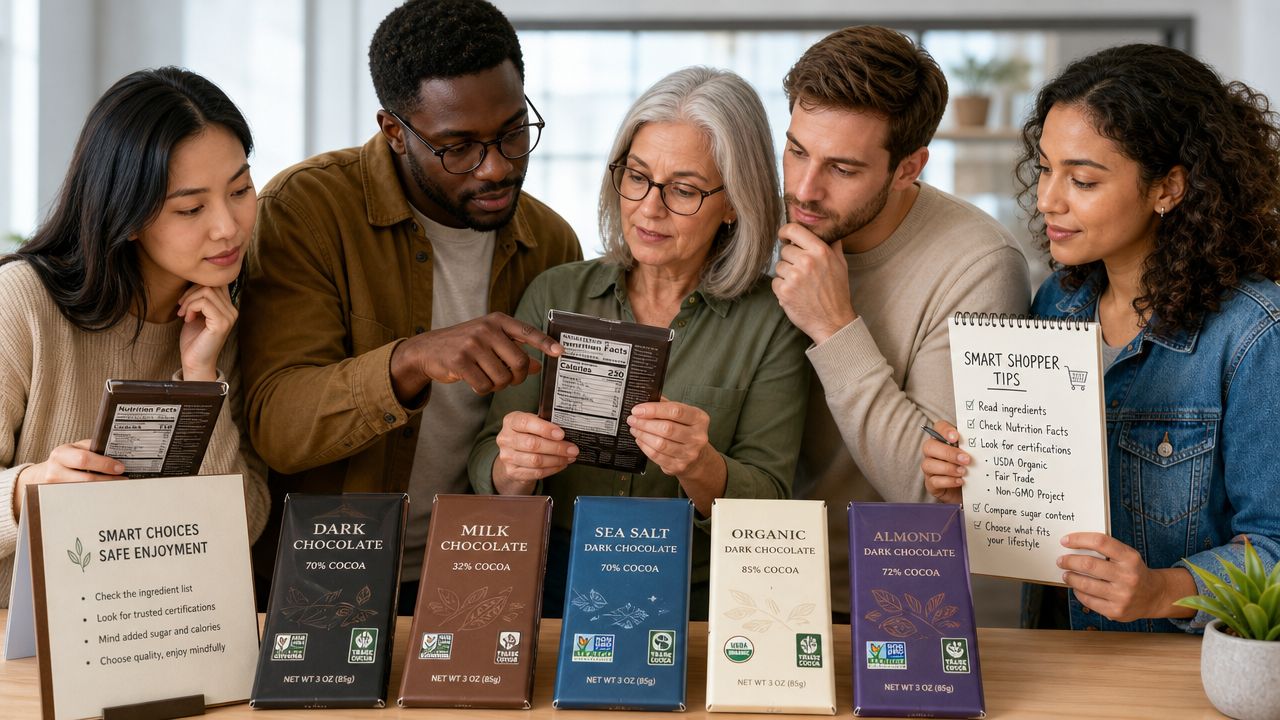
If you're new to chocolate edibles
Start with control, not bravado. The cheapest path for a beginner is rarely the lowest shelf price. It's the product that lets you take a small amount, wait, and learn how your body responds.
A beginner-friendly buying mindset looks like this:
- Choose easy-to-divide bars: Clear segments make small starting amounts simpler.
- Shop for repeatability: Consistency matters more than chasing the strongest option.
- Think in sessions: If one bar gives you several cautious tries, the value may be better than it first appears.
- Read product details carefully: Look for serving guidance, ingredient clarity, and storage notes.
Small, intentional servings usually create a better first experience than buying the strongest product on the menu.
For shoppers comparing formats, the broader magic mushroom chocolate bars collection is one way to see how different bars present serving and flavor options.
If you've got more experience
More experienced users often focus on overall strength first. That's understandable, but it's still worth checking whether the product fits how you use it. If you want a stronger session, a more premium bar may still be the right buy if it's easier to divide, store, and return to later.
Look at value from a practical angle:
- Does the bar match your preferred serving style
- Would a bundle deal lower your average cost
- Are you paying extra for quality features you care about
- Will you finish the bar while it still tastes and stores well
Legal and safety reminders
In Southeast Michigan, people should pay attention to local rules and how enforcement differs by place. Decriminalized does not mean broadly legal in every sense, and shoppers should stay informed about current local conditions before ordering or carrying products.
A few basics go a long way:
- Store securely: Keep bars away from kids and pets.
- Label your own portions: If you break a bar apart, don't leave loose pieces unmarked.
- Wait before taking more: Edibles can take time.
- Don't combine casually: Mixing with alcohol or other substances can make the experience harder to predict.
Frequently Asked Questions About Edible Prices
How many doses are in a typical chocolate bar
There isn't one universal answer. It depends on how the bar is made, how clearly it's segmented, and how you personally define a dose. For a beginner, one square may be a session. For a more experienced user, that same square may feel like only part of one intended experience.
The useful question isn't “How many pieces are in the bar?” It's “How many sessions will I realistically get from it?”
Is a more expensive bar automatically higher quality
No. Price alone doesn't prove quality.
A higher-priced bar may reflect better chocolate, cleaner packaging, more attention to consistency, or more controlled portion design. But it can also reflect branding. The price has to be supported by things you can practically use, like serving clarity, ingredient quality, and trust in the product details.
The smartest buyer treats price as a clue, not a verdict.
Why do some bars with similar size cost different amounts
Because “size” doesn't tell you everything. Two bars can look similar while differing in active content, chocolate quality, formulation, testing standards, and serving design. One bar may be built for easier microdosing. Another may be built for fewer, heavier sessions.
That's why edible chocolate bar price should always be compared with intended use.
What should I check first on a menu
Start with three things:
- The listed price
- How the bar is portioned
- Whether the product details help you predict how you'll use it
After that, look at ingredients, current promotions, and whether the order makes sense with any minimums or discounts.
Are bundle deals worth it
They can be, especially if you already know you want multiple products or need to meet a minimum order. The key is buying formats you'll use, not adding items just because the discount looks good at checkout.
Is chocolate a good format for cautious buyers
Often, yes. Chocolate bars are easy to portion when they're clearly segmented, and many shoppers find them approachable because the format is familiar. A familiar format doesn't remove the need for caution, but it does make portion-based buying easier to understand.
If you want to compare current chocolate bar options, product formats, and local ordering details, browse the menu at Metro Mush. It's a practical way to apply the price-per-dose mindset and compare bars based on how you plan to use them.