


You're probably here because you've seen them before without realizing it. A fold of gold under oak leaves. A flash of orange-yellow at the edge of a trail. Or maybe you've heard someone talk about chanterelles like they're a summer secret that Michigan woods hand out only to people who know how to slow down and look.
That's close to the truth.
Chanterelle mushrooms in Michigan are one of the great rewards of summer foraging. They're beautiful, excellent in the pan, and exciting to find because they don't usually announce themselves from far away. You earn them by learning the woods, watching the weather, and getting serious about identification. The thrill is real. So is the risk of getting careless.
The Golden Treasure of Michigan Forests
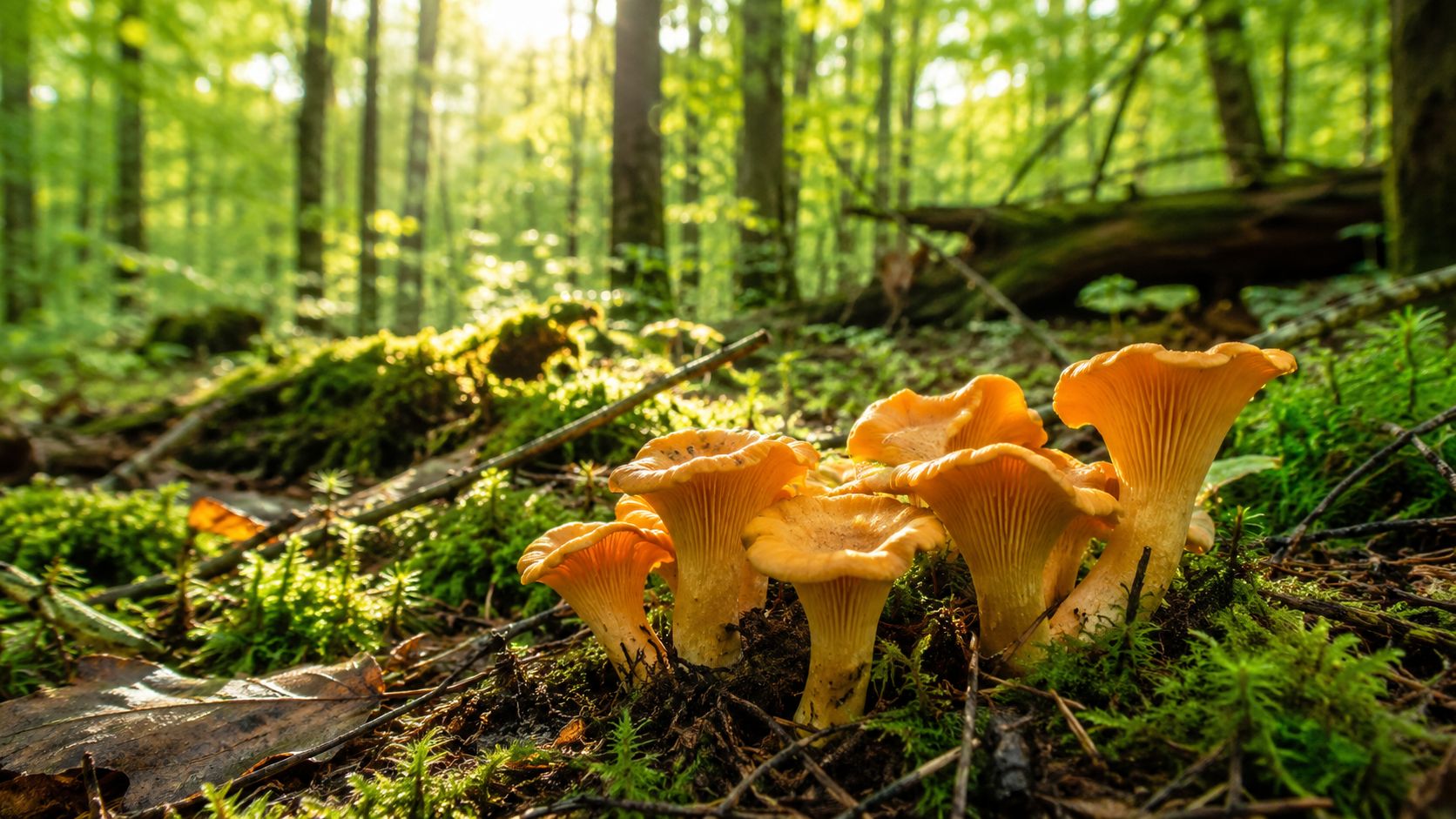
A good chanterelle day doesn't begin with the mushroom. It begins with the forest feeling right. The air is still heavy from recent rain. The ground is damp but not flooded. Light filters through hardwood canopy and catches on leaf litter, moss, and old roots. Then you spot a curved yellow edge that looks almost too bright to be natural.
That first find changes your pace. You stop stomping through the woods and start scanning in arcs. One mushroom often leads to another. Not always in a neat cluster, and not always where a generic field guide says to look, but often enough that experienced Michigan foragers start to trust certain patches and certain weather patterns.
Why people chase them every summer
Chanterelles are prized because they feel like a complete package. They're striking to look at, satisfying to hunt, and easy to appreciate at the table. Even a simple sauté lets their texture and aroma carry the dish. They don't need much. Butter, heat, salt, and restraint usually do more than heavy seasoning.
Michigan adds another layer to the appeal. The woods here give you genuine variety, not one uniform chanterelle experience. The state has multiple edible chanterelles with different looks, and that's part of why local knowledge matters. The person who learns one “golden mushroom” by color alone usually stays a beginner.
Chanterelles reward careful observation. That's what makes them so addictive to hunt and so important to identify correctly.
The Michigan way to approach them
A newcomer often wants a shortcut. The usual question is, “What color should I look for?” That's the wrong starting point. Color helps, but it doesn't confirm anything by itself. In Michigan woods, the better habit is to read the whole scene:
- Look at the forest first. Hardwood cover, moisture, and shaded ground matter.
- Look at how the mushroom grows. Ground and wood are not the same clue.
- Look underneath before you ever harvest. The underside decides whether you keep looking or keep walking.
That's the difference between collecting mushrooms and foraging.
Your Foraging Window When and Where to Look
You get a July rain, the next two days turn sticky and warm, and the woods stop feeling dusty. That is when a Michigan chanterelle plan starts to make sense. Go too early, too dry, or in the wrong kind of woods, and you can walk for hours finding nothing worth kneeling for.
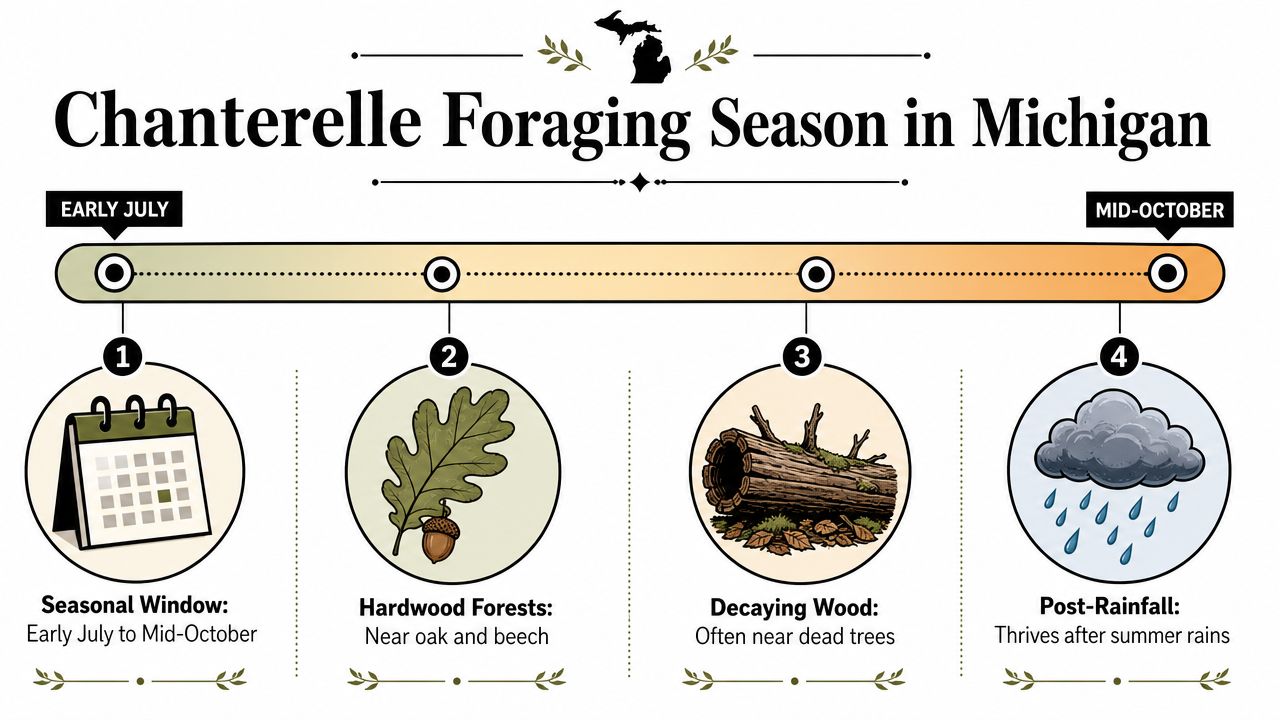
In Michigan, chanterelles usually show up from late June through early September, according to Midwest Mycology's Michigan chanterelle species guidance. That matters because our season is broad enough to reward repeat visits, but short enough that timing still separates a good year from a frustrating one. The same resource also points out that Michigan has more than one edible chanterelle type, including golden or yellow chanterelles and cinnabar or red chanterelles, so the right habitat can produce different-looking finds across the season.
What triggers a good flush
Heat by itself is not enough. A week of hot, dry weather usually hardens the ground and slows everything down.
The better pattern is warm rain followed by humid days, especially in shaded hardwood or mixed woods that hold moisture without staying swampy. In Michigan, I treat recent rainfall as the first filter and forest conditions as the second. If both line up, I slow down and search carefully. If they do not, I save the gas and wait.
Use this decision process before you commit to a spot:
- Check recent rain. A decent summer soaking improves your odds more than a bright, hot forecast.
- Check what followed it. Warm, humid weather after the rain helps a patch push mushrooms.
- Check the ground. Leaf litter should feel damp underneath, not powder-dry on top and bone-dry below.
- Check the shade. Chanterelle ground usually stays cooler than the open woods.
- Revisit proven spots. Productive patches often fruit again when conditions repeat.
Field rule: If the forest floor feels dry two inches down, keep expectations low. If the air is heavy, the ground is holding moisture, and the canopy is doing its job, start looking slowly.
Where to spend your time
Michigan advice gets vague fast on this point, so keep it specific. Start in hardwood or mixed forests, especially where shade stays consistent and the ground drains well enough to avoid standing water. Low areas near creeks, seeps, and moist slopes can be productive, but only if they are damp instead of waterlogged. Too wet is its own problem. Mushrooms rot, bugs move in fast, and the patch can be a mess by the time you arrive.
Oak-heavy woods are worth checking. Beech-maple forest can also hold chanterelles. Mixed stands often give newer foragers the best odds because they stay humid longer after summer rain. A useful way to narrow your search is to review wild mushrooms in Michigan by habitat and season before a trip, then match those habitat notes to public land or private property you can legally access.
One more trade-off matters. Deep shade preserves moisture, but it also makes mushrooms harder to spot under leaf litter. Bright open woods are easier to scan, but they dry out faster. The sweet spot is filtered summer shade with enough light to let you read the ground.
Time-wasting habits to cut
A few mistakes keep showing up with new chanterelle hunters in Michigan:
- Going out on schedule instead of by conditions. Saturday morning is not magic if the woods have been dry all week.
- Covering too much ground too fast. Chanterelles hide in folds of leaf litter and at the edge of your vision.
- Treating every forest the same. Pine plantation, flooded bottomland, and mature hardwoods do not offer equal odds.
- Abandoning a patch after one poor visit. Good habitat often pays off on the second or third check after weather shifts.
The foragers who fill a basket consistently are usually reading the season better, not stumbling into better luck.
How to Positively Identify Chanterelles
If you remember only one anatomical feature, make it this one. True chanterelles have false gills. That's the single most useful clue, and it matters more than cap color, size, or how badly you want the mushroom to be edible.
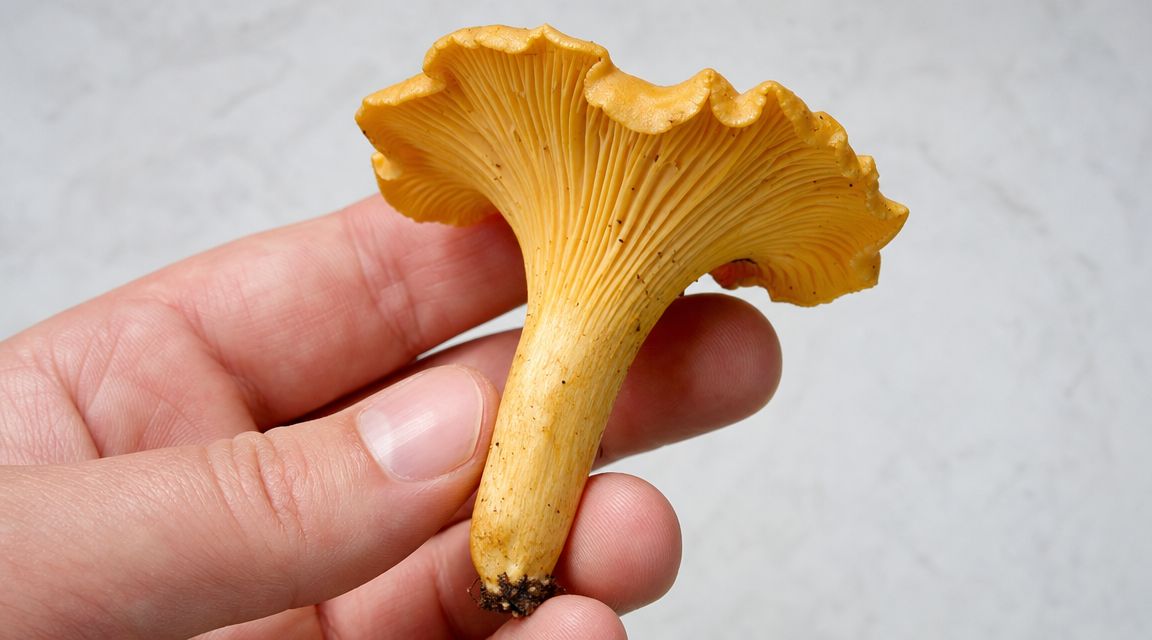
According to Little Furrow's mushroom foraging guide, the key technical discriminator is false-gill morphology. True chanterelles have forked, vein-like ridges that fuse irregularly, not the thin, knife-like true gills found on look-alikes. They also often have a faint apricot aroma and grow from the ground, not directly on wood.
Start underneath, not on top
The cap can fool you. The underside usually tells the truth.
When you turn over a real chanterelle, the ridges look blunt, shallow, and a bit melted into the flesh. They run down the stem in a flowing way. They don't look like sharp pages in a book. If the underside looks neat, thin, and blade-like, stop there and reassess.
Use this field checklist:
- Underside ridges should look vein-like, forked, and somewhat irregular.
- Stem and cap transition should feel continuous, not sharply separated.
- Growth point should be from the ground rather than directly from wood.
- Smell may be faintly fruity, often compared to apricot.
Build a full identification profile
No single clue should carry all the weight. That's where beginners get into trouble. A mushroom can have the right color and still be wrong. A mushroom can have a vaguely correct shape and still be wrong.
What works better is stacking features until the ID becomes coherent. You want the underside, aroma, habitat, and growth pattern to agree with each other. If one clue sharply contradicts the others, don't force the match.
A visual walkthrough can help you lock in those details before you go into the woods:
A simple confidence test
Ask yourself these questions before anything goes in your bag:
| Check | What you want to see |
|---|---|
| Underside | Blunt, forked ridges rather than sharp gills |
| Smell | Mild fruity scent, often apricot-like |
| Substrate | Growing from soil, not directly from wood |
| Overall feel | Cohesive, solid mushroom, not flimsy or papery |
If you have to argue yourself into the ID, leave it behind.
That rule saves more mistakes than any fancy terminology ever will.
Navigating Dangerous Look-Alikes in Michigan
Most bad chanterelle decisions happen because someone notices the color, gets excited, and stops inspecting. That's exactly backward. Orange or yellow mushrooms deserve more scrutiny, not less.
For Michigan foragers, the useful approach is a decision framework. Wild Edible's chanterelle guide emphasizes inspecting false gills and apricot-like aroma in true chanterelles, while noting that poisonous look-alikes such as Jack-o'-Lanterns have true gills and often grow in dense clusters on wood. That single contrast can save you a miserable mistake.
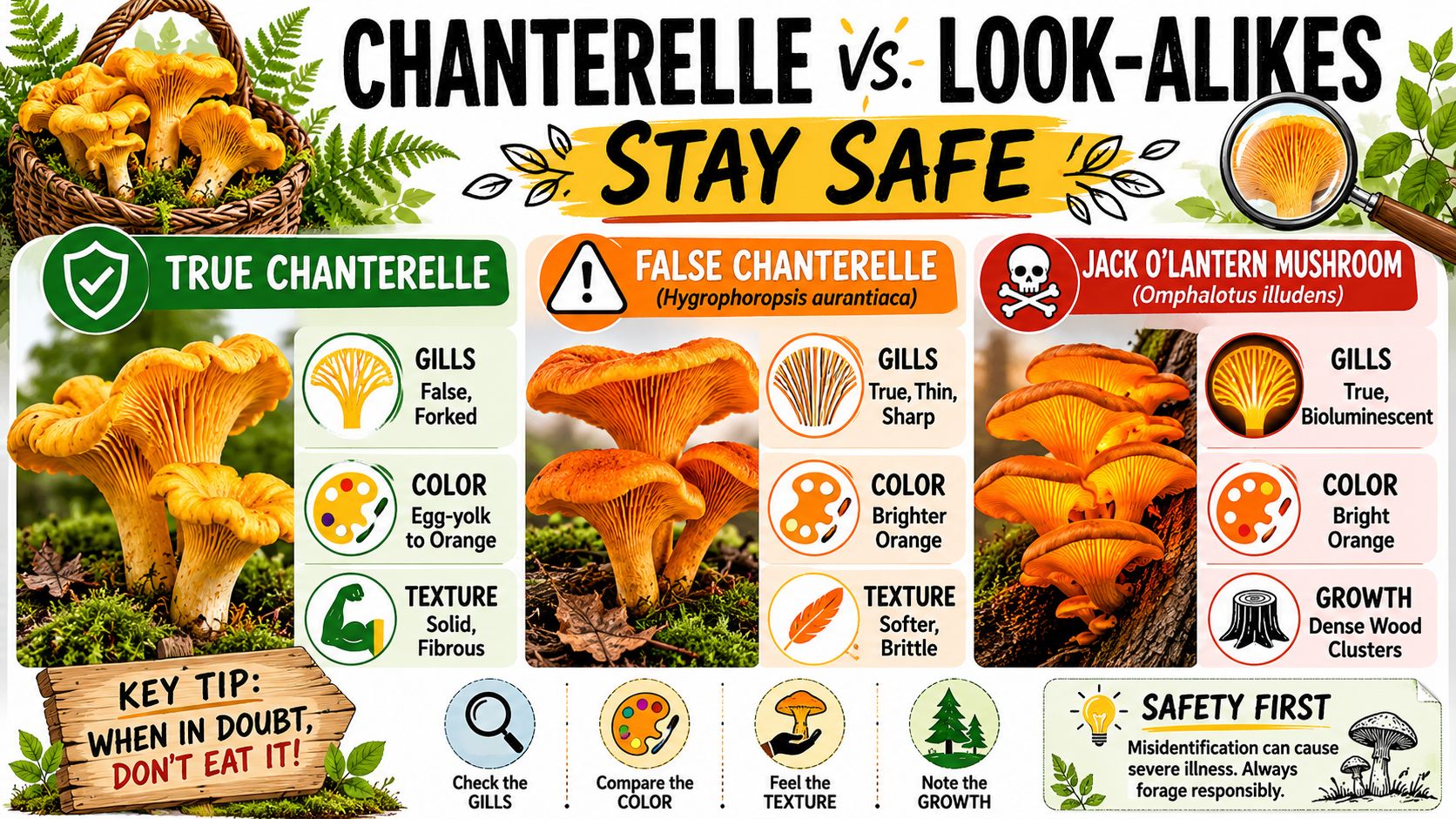
What to inspect first
Don't begin with cap color. Begin with these, in order:
Underside structure
If you see sharp, distinct gills, stop. Real chanterelles should show ridges, not blades.What it's growing from
A mushroom attached to wood should trigger immediate caution. Chanterelles grow from the ground.Growth pattern
Dense, tight bunches are a warning sign, especially around wood. Chanterelles may appear near one another, but the overall look is usually less like a packed bouquet.Aroma and texture
Fruity scent helps support an ID. It doesn't rescue a mushroom that already failed the gill test.
Side-by-side field comparison
| Feature | True chanterelle | Jack-o'-Lantern | False chanterelle |
|---|---|---|---|
| Underside | False gills, forked ridges | True gills | True gills |
| Substrate | Ground | Often wood | Needs close scrutiny, especially if features don't align |
| Growth habit | More scattered or loosely grouped | Often dense clusters | Can mislead by color alone |
| Safety approach | Confirm multiple traits | Avoid if gills are true and wood is involved | Discard if uncertain |
A deeper review of regional hazards is worth reading before you collect anything orange or yellow. Metro Detroit and Ann Arbor foragers can use this guide to poisonous mushrooms in Michigan as a supplemental safety reference.
The trade-off beginners need to accept
A lot of newcomers want certainty without restraint. They want to hear that chanterelles are easy, beginner-friendly, and obvious once you've seen one. Sometimes they are. Sometimes muddy conditions, age, insect damage, or poor light make them less clear than expected.
That's why good foragers throw away opportunities. They leave mushrooms in the woods. They pass on finds that are probably right but not completely convincing.
When the clue set is mixed, the safe decision is not to “double-check later.” The safe decision is to not eat that mushroom.
A final filter before harvest
Use this rule set in the field:
- If it has true gills, reject it.
- If it's growing directly on wood, reject it.
- If the mushroom is so dirty or damaged that you can't inspect the underside cleanly, reject it.
- If your confidence depends on color alone, reject it.
That sounds strict because it should be strict. Chanterelles are a prize. They are never worth gambling on.
Ethical and Legal Harvesting Practices
You finally hit a good Michigan chanterelle patch after a warm rain. The forest floor is dotted with clean, firm mushrooms, and the temptation is to fill the basket fast before someone else finds them. That impulse ruins patches, leads to sloppy decisions, and gets people into trouble with landowners.
A disciplined harvest works better. Take the mushrooms you can identify with full confidence, leave the small or beat-up ones, and keep the site looking like you were never there. Chanterelles are tied to living trees and repeat spots can produce for years, but only if foragers treat them gently.
What responsible harvesting looks like
Good harvesting is selective and calm.
- Pick firm, healthy mushrooms. Waterlogged, buggy, or collapsing chanterelles are not worth carrying home.
- Leave the tiny ones. In a good stretch of Michigan weather, small buttons can become worthwhile mushrooms in a few days.
- Protect the patch. Don't rake through leaf litter, dig unnecessarily, or stomp around the fruiting area.
- Use a breathable container. A basket or mesh bag keeps mushrooms drier and in better shape than plastic.
- Clean lightly in the field. Trim off the dirtiest base and shake out loose debris so you are not hauling extra mud home.
That last point matters more than beginners expect. Cleaner harvests store better, and a basket full of sound mushrooms is easier to sort and cook. If you want a quick overview of why chanterelles are so prized at the table, this guide to chanterelle mushroom flavor and benefits gives useful culinary context.
Cut or pull
Foragers argue about this constantly. In my experience, the method matters less than the care behind it.
A careful cut keeps the harvest neat. A careful lift can work too if the mushroom comes free without tearing up the surrounding ground. What causes damage is twisting, ripping, and churning up the area because you are in a hurry.
Use a small knife if it helps you stay precise. If you pull, do it gently and brush the spot back into place. The standard is simple. Leave the patch intact.
Know where you are standing
Michigan foraging law changes with the property, not with your intentions. Private land requires permission. State parks, recreation areas, game areas, county lands, and local preserves may all have different rules about collecting mushrooms or other natural materials.
Check before you go, not after you park. A productive oak slope is useless if harvesting is prohibited there.
Treat land access the same way you treat identification. If you have not confirmed it, you do not know it.
That mindset keeps you legal, protects access for other foragers, and builds the habits that separate a careful mushroom hunter from a reckless one.
From Forest to Kitchen Storing and Cooking Your Haul
A beautiful chanterelle can turn into a soggy mess before you get home if you handle it badly. The mushroom doesn't stop being delicate because you found it.
Cleaning without ruining them
Start dry whenever possible. A soft brush, a small knife, or even a gentle wipe does more good than a long rinse. Chanterelles can hold grit in folds and creases, especially after rain, so inspect each one instead of dumping the whole haul into water and hoping for the best.
A practical sequence works well:
- Sort first. Separate clean, firm mushrooms from muddy or damaged ones.
- Trim the dirty base. Don't drag forest grit across the rest of the mushroom.
- Brush debris away. Use water only when you need it, then dry them promptly.
Storing them the right way
Once cleaned, keep them cool and breathable. Paper bags usually work better than plastic because they reduce trapped moisture. If you seal damp chanterelles in plastic, they soften fast and lose the texture that made them worth bringing home.
For a quick orientation on how edible mushroom qualities are discussed more broadly, Metro Mush's chanterelle content can serve as an additional reading option alongside standard culinary references.
How to cook them so they still taste like chanterelles
The biggest kitchen mistake is burying them. Heavy sauces, too much garlic, or overly sweet ingredients can flatten what makes chanterelles special.
Keep it simple:
- Sauté in butter or oil first. Let moisture cook off before crowding the pan with other ingredients.
- Add salt near the end. That helps you control texture.
- Pair them with eggs, cream, toast, or pasta. These support the mushroom instead of fighting it.
- Cook thoroughly. Wild mushrooms belong in the pan, not eaten raw.
A well-cooked chanterelle dish should still taste like the woods in summer, not like whatever sauce happened to be closest to the stove.
Local Resources for Michigan Mushroom Foragers
The fastest way to improve as a forager is to stop learning alone. Field guides help. Photos help. But local knowledge is what teaches you how Michigan woods behave from one summer to the next.
Where to keep learning
Start with local and regional mycology groups, herbarium resources, and identification communities that focus on real specimens instead of social media guesses. The best learning usually happens when you can compare mushrooms in person, ask why an ID is correct, and hear what made an experienced forager hesitate.
Useful categories of resources include:
- Michigan mycology clubs and mushroom societies for walks, talks, and specimen review
- University herbarium collections for regional species context
- Farmers markets and seasonal vendors if you want to see quality chanterelles before finding your own
- Identification apps and forums as study tools, not final authority
What to buy if you don't find any
Some seasons are thin. Some weekends are dry. Sometimes you walk a lot and come home with nothing but mosquito bites. That's normal.
If you still want chanterelles, check local farmers markets and specialty food vendors during the summer window. Seeing fresh market specimens can improve your eye for shape, texture, and condition. Just don't confuse “I've seen them before” with field certainty.
The right way to use online tools
Apps can be helpful for narrowing possibilities, organizing photos, and learning terminology. They are not a permission slip to eat a mushroom. Use them as one voice in a larger process that includes underside inspection, habitat context, and conservative judgment.
A strong Michigan foraging practice usually looks like this:
- Field observation first
- Books and regional references second
- Community confirmation when possible
- Consumption only when the identification is fully solid
That order keeps enthusiasm working for you instead of against you.
If you're exploring mushroom culture more broadly in Southeast Michigan, Metro Mush is one local option to browse. The site includes product information, store details, and educational content, including chanterelle-related articles, for adult readers in the Detroit and Ann Arbor area.