
Most advice about Blue Meanies starts in the wrong place. It treats the name like it refers to one mushroom, one potency profile, and one kind of experience. That's the mistake.
If you only remember one thing, remember this: Blue Meanie Cubensis is not the same mushroom as the true Blue Meanie. People mix those names up all the time, and that confusion matters because it changes what someone expects to buy, how strong they think it will be, and how carefully they should approach it.
For local readers around Southeast Michigan, that distinction isn't just trivia. It's part of using psychedelic mushrooms responsibly. If you're new, cautious, or trying to make a smart choice, it helps to start with a solid foundation like this beginner's guide to magic mushrooms.
Welcome to the World of Blue Meanies
Blue Meanie Cubensis has a strong reputation among people who like mushrooms with lively visuals, upbeat energy, and a more animated feel than some of the gentler classic strains. But before you focus on effects, there's a naming problem to clear up.
A lot of shoppers hear “Blue Meanie” and assume every product with that name points to the same species. It doesn't. In real-world buying situations, that assumption can leave someone thinking they're getting one thing when they're receiving something different. That's where confusion turns into poor decisions.
Why the name matters
With most strain names, the stakes are fairly low. You might notice a difference in feel, body load, or visual character, but you're still usually comparing one cubensis variety to another. Blue Meanie is different because the same nickname gets used for two separate mushrooms.
That means the question isn't just, “What does Blue Meanie Cubensis feel like?” It's also, “Which Blue Meanie are we even talking about?”
Practical rule: If a label says Blue Meanie, always ask whether it means a Psilocybe cubensis strain or Panaeolus cyanescens.
What people usually want to know
Most readers asking about Blue Meanie Cubensis are trying to answer a handful of practical questions:
- Identity: Is this a cubensis strain or the original Blue Meanie?
- Appearance: What should it look like fresh or dried?
- Effects: Is it more social, visual, or introspective?
- Potency: How cautious should a first-timer be?
- Use: What's a sensible way to approach it?
Blue Meanie Cubensis can be a rewarding strain for the right person. It just needs to be understood on its own terms, not lumped together with a different species that happens to share the same nickname.
The Blue Meanie Name Confusion Explained
This is the part most strain guides rush through. They mention the confusion, then move on. That's not enough.
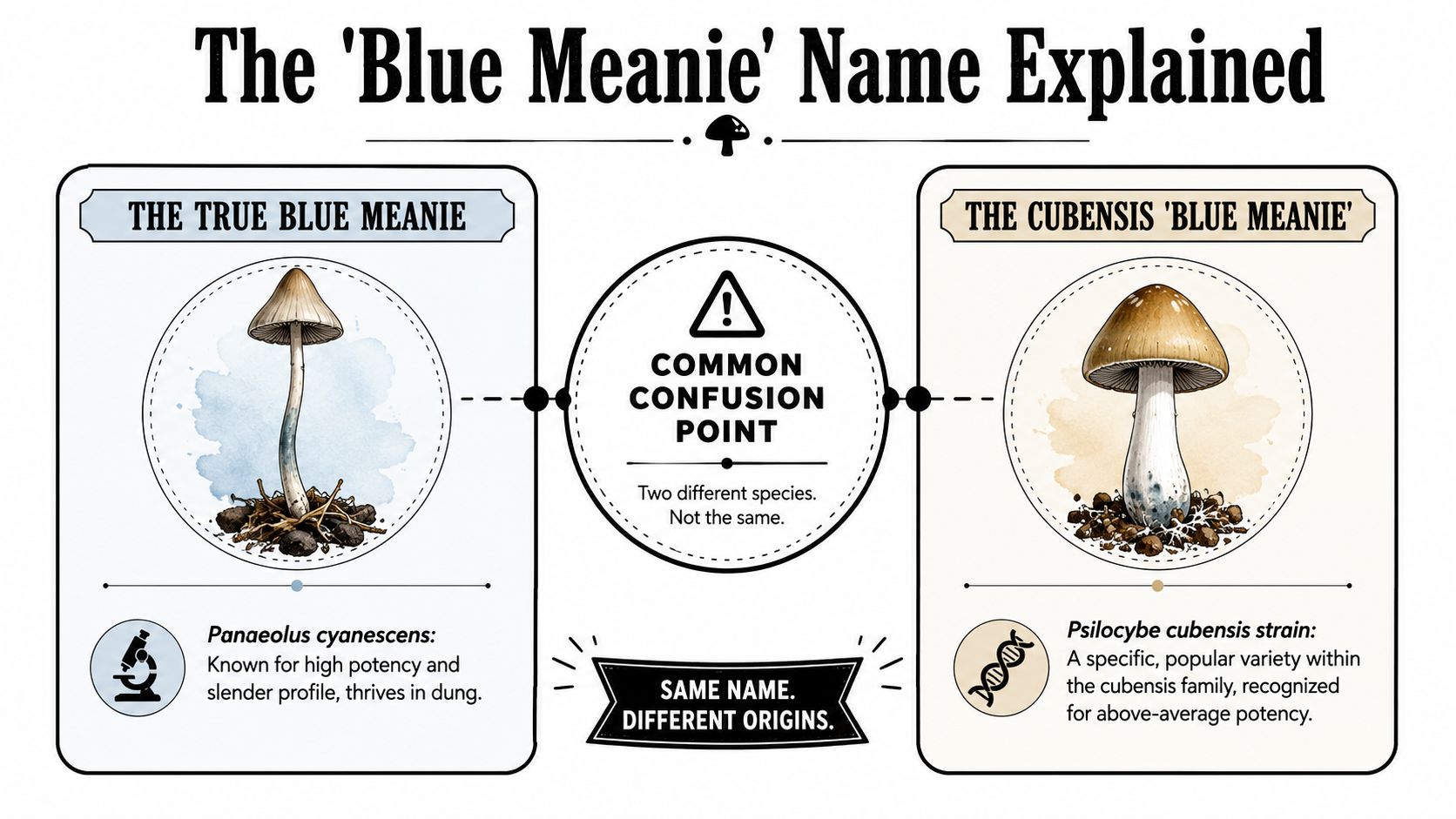
Blue Meanie Cubensis refers to a strain within Psilocybe cubensis. The true Blue Meanie refers to Panaeolus cyanescens. Those are different species, not close synonyms, not interchangeable labels, and not two versions of the same mushroom.
The original Blue Meanie
The name “true Blue Meanie” belongs to Panaeolus cyanescens. That species has a long-standing reputation for being far more intense than standard cubensis mushrooms. It's slender, it's distinct in growth habit, and it's not just a stronger “type” of cubensis. It belongs to a different genus.
Public strain content often blurs that line. A careful breakdown from this guide on Blue Meanie Cubensis versus Panaeolus cyanescens notes that the confusion remains poorly addressed, and that “Blue Meanie Cubensis” is likely a vendor misnomer dating to the 1980s, referring to a standard Golden Cap strain with no relation to the potent, dung-loving Panaeolus cyanescens species.
That point matters because many buyers assume the shared nickname guarantees shared potency. It doesn't.
Where Blue Meanie Cubensis fits
Blue Meanie Cubensis sits inside the familiar Psilocybe cubensis family. If you've browsed cubensis varieties before, that's the lane you should place it in. It's a strain name, not a separate species. You can get broader context from this overview of Psilocybe cubensis strains.
Here's a plain-language explanation:
| Term | What it actually refers to | What shoppers often assume |
|---|---|---|
| Blue Meanie Cubensis | A Psilocybe cubensis strain | The original Blue Meanie |
| True Blue Meanie | Panaeolus cyanescens | Just another cubensis nickname |
That mistaken shortcut is one of the most common causes of bad expectations.
Why potency confusion can become a safety issue
A lot of consumer content repeats the claim that Panaeolus cyanescens is 2 to 3 times stronger than Psilocybe cubensis, but much of that content doesn't explain where the claim comes from or how variable mushroom potency can be. The strongest precise figure available in the provided data comes from 2010 German customs seizure research summarized here, which reported dried Panaeolus cyanescens containing up to 3.00±0.24 mg psilocin per 100 mg, described there as the most potent psychedelic mushroom documented in published studies. That same verified note also says potency varied widely in earlier findings, which is exactly why fixed assumptions can mislead people.
If someone expects a normal cubensis experience but receives the true Blue Meanie, they may be stepping into a much stronger experience than planned.
The reverse can happen too. Someone may seek the original Blue Meanie and end up with a standard cubensis strain sold under the Blue Meanie name. That can leave them disappointed, confused, and unaware that the label itself caused the mismatch.
Identifying the Blue Meanie Cubensis Strain
Once you know you're dealing with the cubensis strain, the next question is simple: what does it look like?
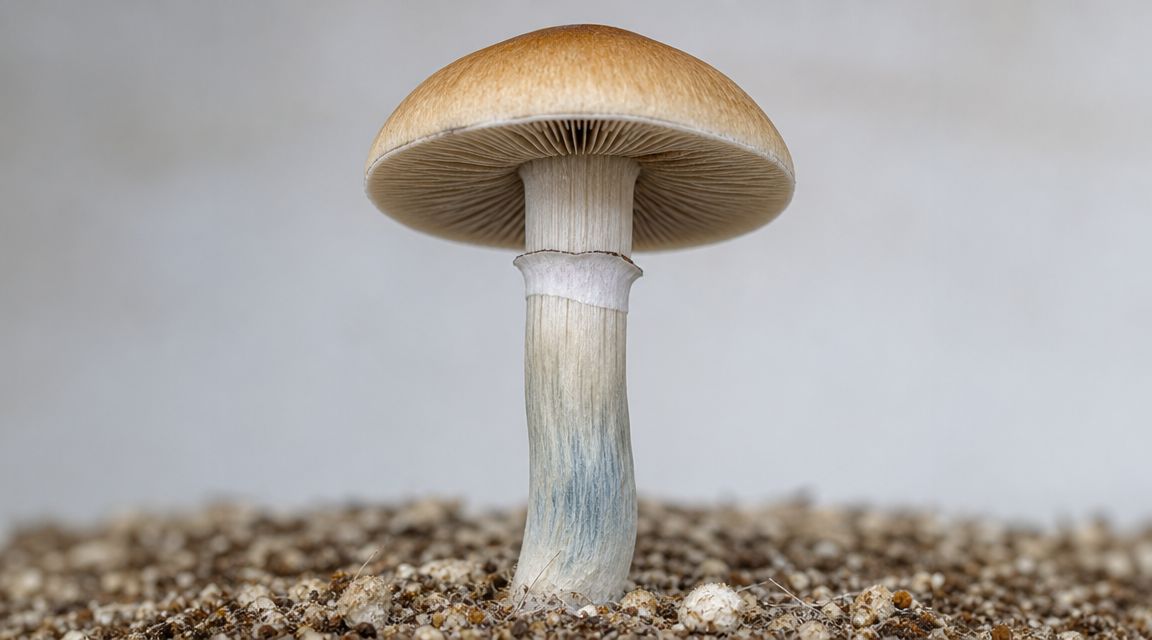
Blue Meanie Cubensis generally looks like what experienced shoppers expect from a classic cubensis mushroom. The cap tends to fall in the golden to caramel-brown range, often lightening as it opens. The stem is usually pale, and the overall structure looks sturdier than the thinner, more delicate profile people associate with the true Blue Meanie species.
What to look for when fresh
Fresh Blue Meanie Cubensis often shows a few common traits:
- Cap color: Usually golden-brown, tan, or caramel-toned.
- Stem color: Pale to off-white.
- Bruising: Blue staining where the mushroom has been handled or compressed.
- Overall form: A familiar cubensis silhouette rather than a very thin, wiry one.
That last point helps. If someone shows you a mushroom and says it's Blue Meanie, but it doesn't resemble a standard cubensis build, you should pause and ask more questions.
The bruising question
Many people hear “Blue Meanie” and assume the mushroom should look vividly blue all over. That's not how it works.
The “blue” usually appears as bruising, not as the natural base color of the mushroom. When the tissue gets pressed, bent, or damaged, blue staining can appear. Shoppers often treat that as a quick quality clue, though bruising alone doesn't tell you everything about strength, freshness, or overall handling.
Blue bruising is a helpful sign, but it isn't a potency meter.
Here's a quick visual primer before looking at dried product:
What dried Blue Meanie Cubensis usually looks like
Blue Meanie Cubensis is commonly encountered in dried form. Drying changes the look a lot. Caps shrink, stems wrinkle, and the color range becomes more muted. Instead of a fresh golden cap and creamy stem, you'll often see tan, brown, beige, and scattered blue-gray bruised areas.
When assessing dried mushrooms, focus on these practical cues:
- Intact structure: Pieces shouldn't look pulverized unless sold as ground material.
- Clean appearance: You don't want obvious debris or strange discoloration unrelated to normal bruising.
- Typical cubensis shape: Even dried, the mushroom should still read as cubensis in cap and stem form.
- Reasonable consistency: A batch with wildly mixed appearances may justify more questions.
The key is not to chase a mythical look. Blue Meanie Cubensis isn't defined by dramatic color alone. It's identified by a mix of cubensis structure, expected coloration, and normal blue bruising.
Potency Potentials and Subjective Effects
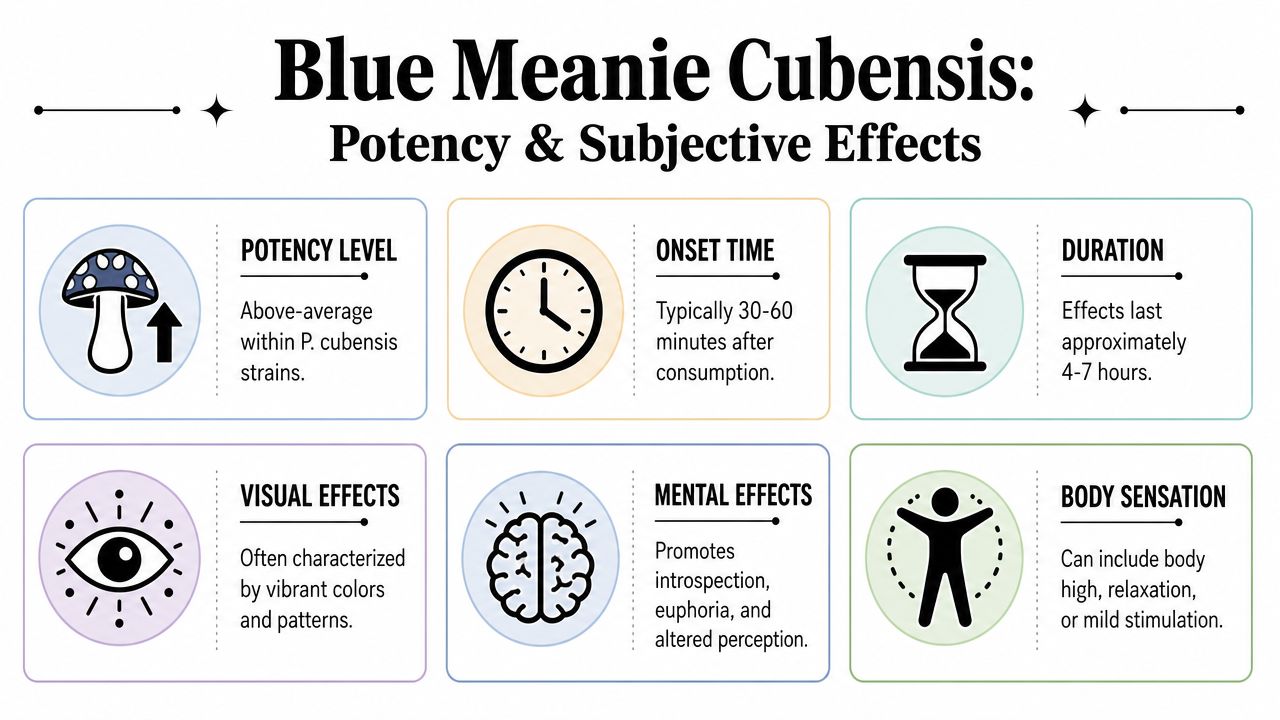
Blue Meanie Cubensis is often discussed as an above-average cubensis strain. That doesn't mean every batch lands the same way, and it doesn't mean the name alone guarantees a specific intensity. Mushrooms vary, individual sensitivity varies, and context matters just as much as the strain label.
Still, people do report a recognizable style to Blue Meanie Cubensis. Compared with softer, more mellow cubensis experiences, this one is often described as brighter, more visually active, and a little more energetic in tone.
How the experience often feels
At lighter amounts, Blue Meanie Cubensis can feel playful. Colors may look richer. Music can feel more textured. Social settings may become warmer, funnier, and more emotionally open.
At more committed amounts, the experience often shifts inward. Visual distortion can become more pronounced, thoughts can gain emotional weight, and familiar surroundings may feel charged with meaning. Some people like that transition. Others find it catches them off guard if they expected only a light, giggly mood lift.
Common effect patterns
A simple way to think about the Blue Meanie Cubensis profile is to break it into layers:
- Visual character: Surfaces may seem to soften, ripple, or “breathe,” and color contrast can feel more vivid.
- Emotional tone: Euphoria, amusement, and a sense of novelty are commonly associated with this strain style.
- Mental direction: Lower amounts may support conversation and appreciation. Higher amounts can push toward self-reflection and altered perception.
- Body feel: Some people notice relaxation, while others describe mild stimulation and sensory alertness.
Why people get mixed reports
Two people can take mushrooms with the same label and tell completely different stories. One says it was warm, social, and easy. Another says it became deep, visual, and overwhelming. Both reports can be honest.
That's because the felt experience depends on several variables:
| Factor | How it can change the trip |
|---|---|
| Mindset | Anxiety, excitement, or emotional baggage can shape the tone |
| Setting | Quiet home, nature, or a crowded social scene all steer attention differently |
| Product form | Whole dried mushrooms, chocolate, and drinks can feel different in pacing |
| Personal sensitivity | Some people react strongly to amounts others call moderate |
A useful expectation is this: Blue Meanie Cubensis often leans more vivid and lively than the gentlest cubensis strains, but it still behaves like a cubensis mushroom, not like a separate species with a fixed superpower.
That's the safest mental model. Respect it, start low when trying a new batch, and let the actual experience teach you rather than trusting a dramatic strain description.
A Responsible Dosing and Harm Reduction Guide
Good dosing starts before the mushroom does. If your head is chaotic, the room is stressful, or the people around you don't make you feel safe, even a modest amount can feel rough. That's why set and setting always come first.
If you want a deeper primer on safer practice, this harm reduction guide is worth reading. The short version is simple: choose a comfortable environment, clear your schedule, stay hydrated, and don't mix spontaneity with uncertainty.
Start with conditions, not grams
Before taking Blue Meanie Cubensis, ask yourself:
- Where are you going to be? A familiar, calm space is easier than a chaotic one.
- Who will be with you? Trusted company can help. The wrong company can amplify tension.
- Why are you taking it? Curiosity, recreation, introspection, and celebration all create different expectations.
- What's your backup plan? Have a way to rest, lower stimulation, or step away if the experience becomes too intense.
That preparation does more for safety than chasing a perfect strain ranking.
A practical dose ladder
People often want exact promises from dosage charts. No chart can do that. What it can do is help you think in tiers.
| Dose tier | General use case | What many people expect |
|---|---|---|
| Microdose | Very subtle exploration | Mild perceptual or mood shift, often below full trip level |
| Beginner or light | First cautious session | Gentle change in mood, sensory enhancement, manageable visuals |
| Standard | Intentional trip | Clear psychedelic effects, stronger visuals, emotional depth |
| Experienced | High-intensity session | Deep alteration, more vulnerability, greater need for planning |
If you're trying Blue Meanie Cubensis for the first time, the safest move is to begin lower than your ego wants. People get into trouble when they dose for the story they want instead of the experience they're ready for.
Dried mushrooms versus edibles
Edibles can help some people approach psilocybin with more consistency because they divide the material into easier portions. That can feel more approachable than eyeballing dried stems and caps. Products like OuterSpore Milk Chocolate Bars and Mush Love Chocolate Bars appeal to people who want simpler portioning. Rocket Fuel shroom drinks and Moon Bars can also feel more approachable for adults who don't enjoy chewing dried mushrooms.
Still, the safety rule doesn't change. Start with a small portion, wait patiently, and avoid stacking more just because the first phase feels mild.
Low and slow beats confident and careless.
A few extra practical habits help:
- Eat lightly beforehand: Many people prefer not to go in on a heavy meal.
- Put away your keys: Don't plan to drive anywhere once you've started.
- Silence the avoidable noise: Too many texts, errands, or obligations can sour the tone.
- Keep a calm anchor nearby: Water, a blanket, familiar music, and a quiet room can go a long way.
Responsible use isn't about fear. It's about giving yourself the best chance at a steady, meaningful experience.
Blue Meanie Cubensis vs Other Popular Strains
Choosing among cubensis strains is less about finding the “best” one and more about finding the one that fits your goal. Blue Meanie Cubensis usually attracts people who want something more vivid than a gentle entry-level experience, but not as notoriously heavy as the strongest reputation strains.
Here's a simple comparison against two names most shoppers recognize.
Strain comparison
| Attribute | Blue Meanie Cubensis | Golden Teacher | Penis Envy |
|---|---|---|---|
| Potency | Above-average within cubensis | Gentler, approachable | Commonly regarded as more intense |
| Visual intensity | Often lively and noticeable | Usually moderate and steady | Often strong and immersive |
| Body feel | Can feel upbeat or relaxed depending on amount | Often even, balanced, and manageable | Can feel heavier and more demanding |
| Typical experience | Animated, colorful, social to introspective | Grounded, beginner-friendly, reflective | Deep, serious, inward, high-intensity |
| Best fit | Users wanting a balanced visual trip | Newer users or low-pressure sessions | Experienced users seeking depth |
How to choose between them
Golden Teacher is the safer pick when someone wants familiarity, gentleness, and a classic first experience. It's the strain many people choose when they don't want surprises.
Penis Envy tends to attract experienced users who are deliberately seeking stronger, weightier experiences. It has the kind of reputation that calls for extra caution and a clearer plan.
Blue Meanie Cubensis sits nicely in the middle for many people. It often appeals to users who want a more expressive cubensis trip, especially one with stronger visual flavor and a little more sparkle than a beginner strain.
That middle-ground role is why it stays popular. It can feel more exciting than Golden Teacher without automatically demanding the same level of respect people usually reserve for Penis Envy.
Finding Quality Mushrooms in Detroit and Ann Arbor
For adults in Detroit and Ann Arbor, one practical reality matters: local interest has grown, but the market still isn't something to approach casually. Decriminalized environments can lower enforcement priority, yet product quality, consistency, and consumer education still vary widely.
That means buyers have to do some of the safety work themselves. Ask what species or strain you're getting. Ask how products are portioned. Ask whether a chocolate bar, drink, or dried mushroom product is better suited to your experience level.
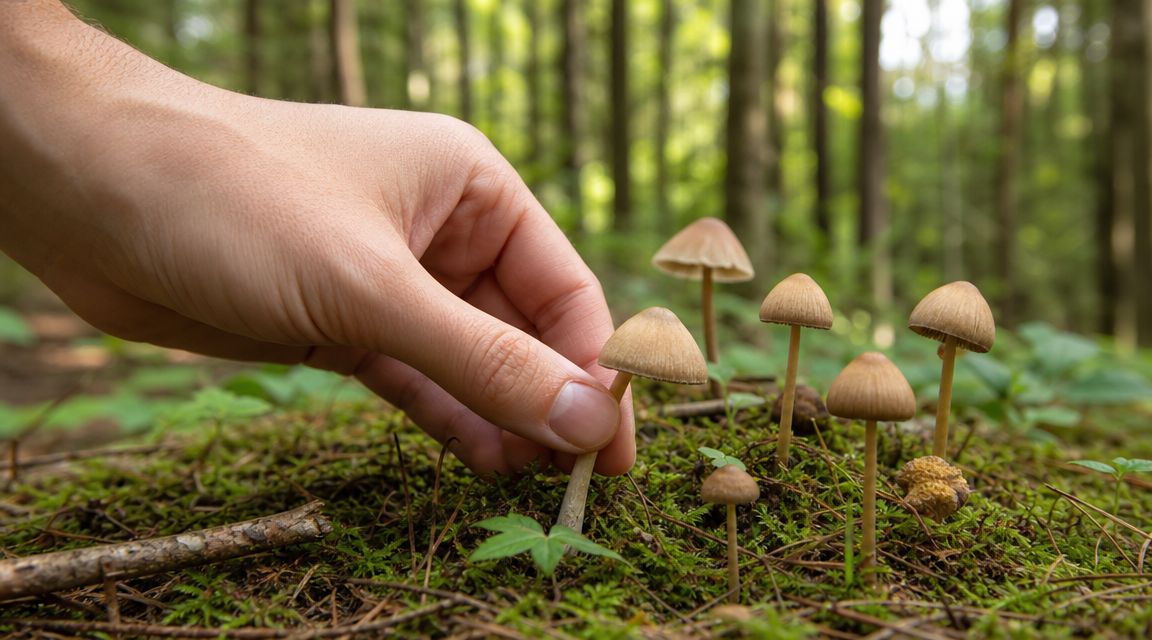
Local shoppers also tend to value convenience and clarity. In Southeast Michigan, some adults prefer text-based ordering, curated menus, and straightforward specials over guesswork. If you're comparing options, practical details matter, including delivery minimums, product selection, and whether the menu includes approachable formats like chocolates and drinks alongside dried strains.
For readers who want direct contact, the Detroit Metro number is 734-691-6122 and the Ann Arbor Metro number is 734-280-2868. Some shoppers also look for perks like a $75 minimum order for delivery, Mix & Match Saturdays, 10% off for veterans and first responders, and a 20% discount through Discord membership when deciding where to order.
If you want a reliable local source with a curated menu of dried mushrooms, chocolates, and shroom drinks, check out Metro Mush. You can browse products, see current specials, and place an order by text for the Detroit and Ann Arbor metro areas.