
A Detroit shopper picking up cremini for dinner and an Ann Arbor resident asking about psilocybin may sound like they're talking about two different worlds. During National Mushroom Month, they're part of the same larger story: Americans paying closer attention to fungi.
What Is National Mushroom Month Really About
National Mushroom Month is more than a quirky food calendar entry. In the United States, it has long been treated as a national awareness campaign tied to nutrition, cooking, and public education.
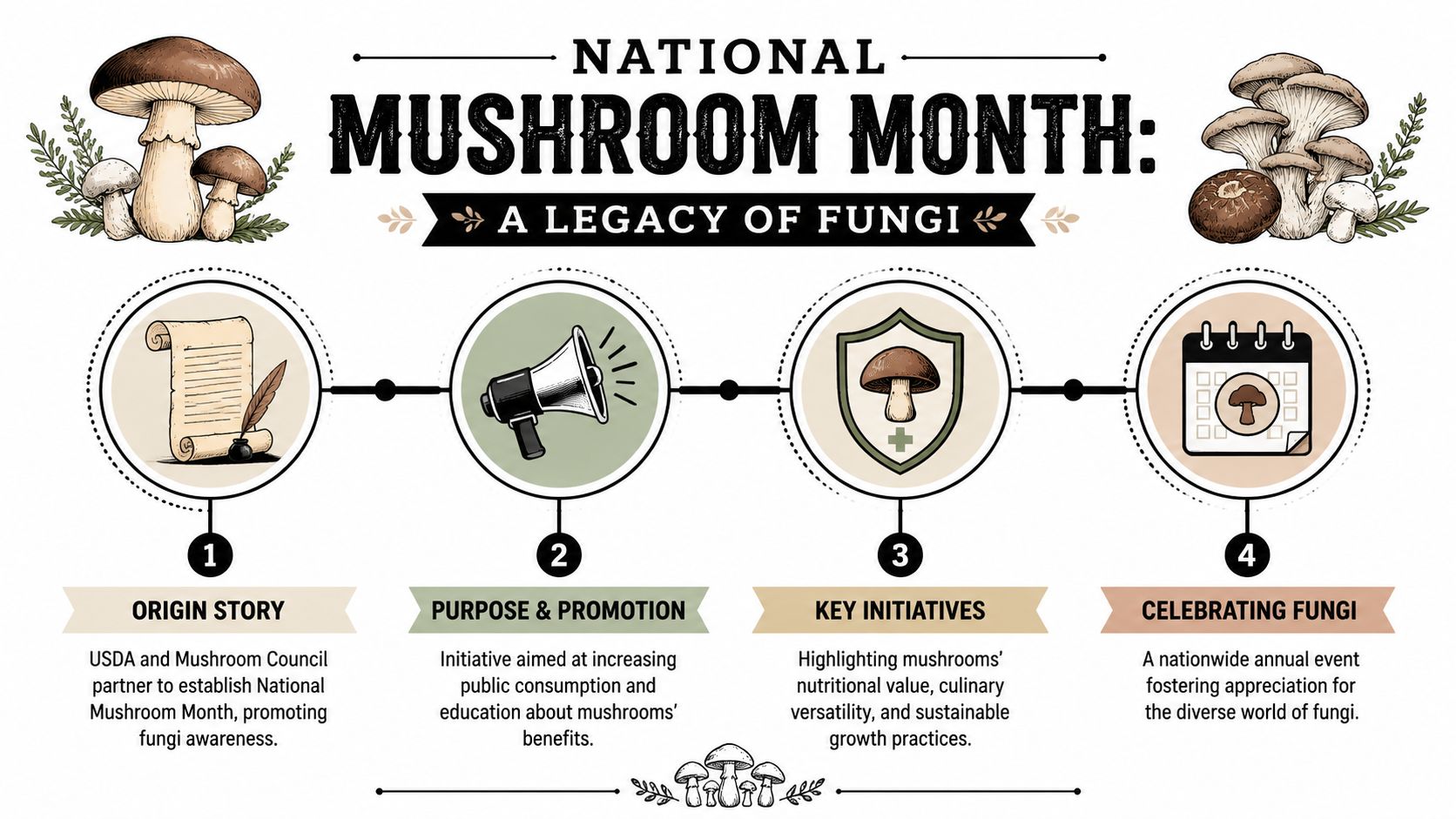
The clearest mainstream version comes from the USDA, which identifies September as National Mushroom Month and frames it as a month-long chance to highlight mushrooms' nutritional value, including that they're a source of nutrients such as vitamin D, as noted on the USDA's National Mushroom Month materials. The Mushroom Council has also used the observance as a structured campaign with weekly regional spotlights, recipes, fungi facts, and dietitian-approved nutrition content.
That matters because it tells you what this observance really is. It isn't just social media chatter. It's a recurring public-facing campaign used by agriculture and industry groups to shape how people shop, cook, and think about mushrooms.
Why the date confuses people
If you've searched this topic recently, you may have noticed a mismatch. Many pages still describe National Mushroom Month as a September observance. That's historically correct. But there's also a newer wrinkle.
A June campaign for 2026 appears in Mushroom Council messaging, and the move is described as tied to practical retail logic, including better alignment with planned meals, grilling occasions, and larger grocery baskets, based on the Mushroom Council's 2026 campaign post on Instagram. In plain English, June makes mushrooms easier to market as part of summer cooking rather than as a niche healthy ingredient in the fall.
Readers often get tripped up here because both things can be true at once. The older public understanding is September. The underreported shift for 2026 points to June.
Practical rule: If you're checking local events, store promotions, or brand campaigns, verify the year first. National mushroom month may be described differently depending on whether the source is discussing the traditional observance or the planned 2026 timing change.
Why this observance has national significance
Mushrooms sit at a useful intersection of food culture, nutrition, farming, and now broader wellness conversations. They're familiar enough for grocery shoppers, but distinct enough to support a dedicated campaign.
That's why National Mushroom Month works so well as a national event. It gives institutions a reason to teach basic fungi facts, gives retailers a reason to merchandise mushrooms more aggressively, and gives consumers a reason to try something new that still feels approachable.
In Detroit and Ann Arbor, that broad appeal matters even more. Here, “mushrooms” can mean dinner ingredients, foraging interest, wellness curiosity, or questions about psilocybin policy. A good guide has to account for all of that, starting with the simple truth that National Mushroom Month began as a food and education campaign, even if local interest now reaches well beyond the produce aisle.
The Power of Fungi From Superfoods to Psychedelics
A lot of confusion around mushrooms starts with one simple mistake. People treat every mushroom as if it belongs in the same conversation.
It does not.
A cremini in a pasta sauce, a lion's mane capsule, and a psilocybin mushroom all come from the fungi kingdom, but they serve different purposes and carry different expectations. That distinction matters in a National Mushroom Month article, especially in Southeast Michigan, where interest often stretches from farmers market cooking to questions about decriminalized psilocybin.
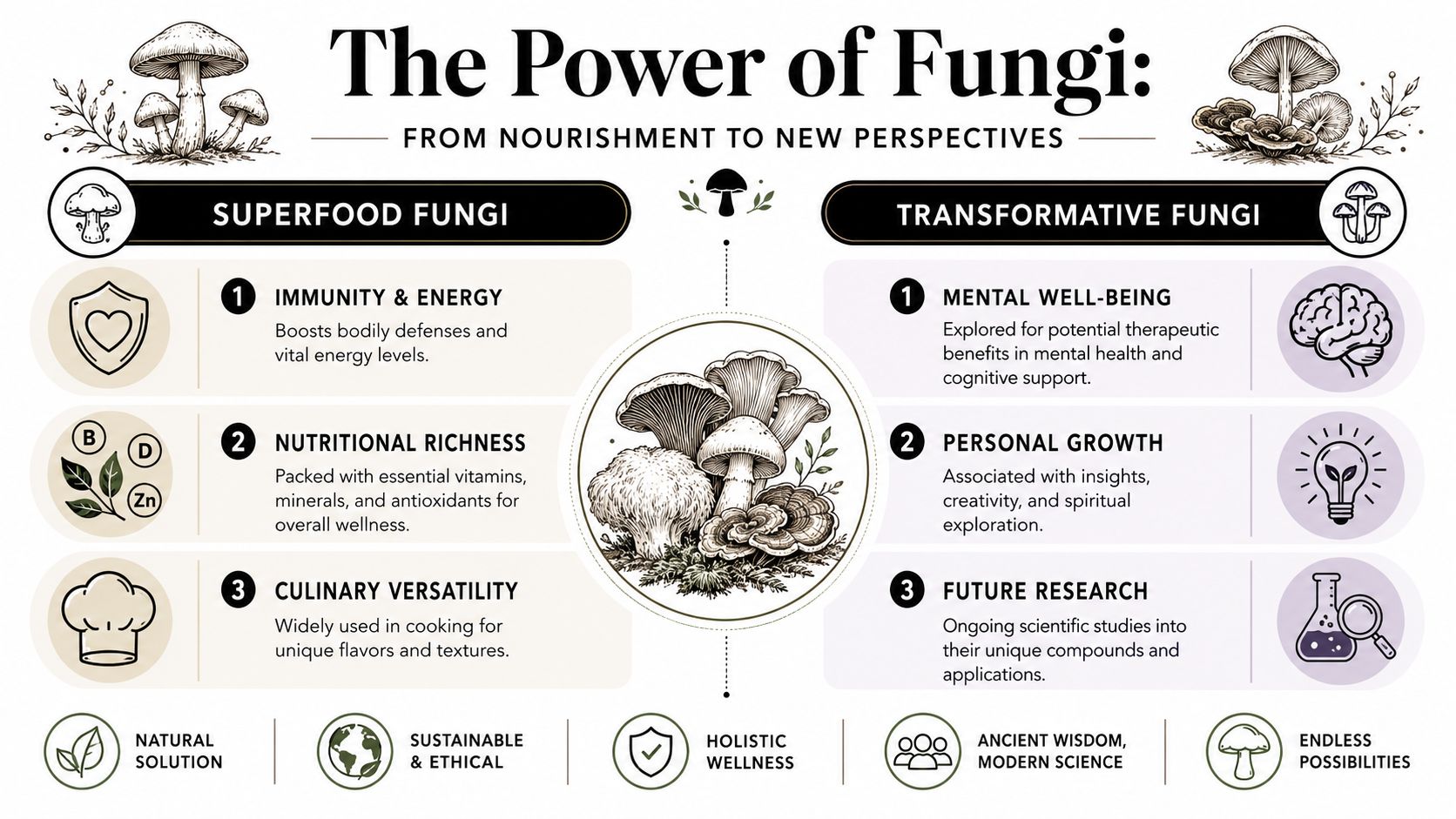
The biology helps explain why mushrooms stand apart from ordinary produce. According to Best Food Facts on mushroom science, fungi have cell walls made of chitin rather than cellulose, and they contain more ergothioneine per gram than vegetables. In plain terms, mushrooms are built differently and bring a different nutritional profile to the plate. That is one reason the USDA-backed mushroom campaign has long presented them as more than a basic side dish.
Why fungi get called functional foods
“Functional food” can sound like marketing language, so it helps to translate it into everyday terms. The phrase usually means a food is valued for more than calories or flavor alone. Mushrooms fit that description because people use them for taste, texture, and nutrient density all at once.
That explains why National Mushroom Month has such broad reach. The official campaign started in the food world, but mushrooms naturally spill into wellness, supplementation, and public curiosity about other fungi species. For readers who want a plain-language overview that connects those dots, this guide to mushroom benefits is a useful next read.
Where edible mushrooms and psilocybin part ways
The easiest way to avoid mix-ups is to sort mushrooms by use, not by the fact that they are all fungi.
| Category | Typical use | Main question people ask |
|---|---|---|
| Culinary mushrooms | Food and cooking | How do I clean, store, and cook them? |
| Wellness-focused fungi products | General interest in mushroom compounds | What are people hoping to get from them? |
| Psilocybin mushrooms | Consciousness-altering use | What are the legal and safety concerns? |
That table may look basic, but it clears up a common problem. People often hear “mushrooms are healthy” and accidentally carry that idea into a completely different category. Nutrition guidance for shiitake or oyster mushrooms is not the same as safety guidance for psilocybin use.
This is also where the Detroit and Ann Arbor angle matters. National Mushroom Month is still rooted in a mainstream food and agriculture campaign, now with the added wrinkle of the little-known 2026 move from September to June. But in these cities, local readers also bring questions about altered states, city policy, and responsible behavior. A good guide has to hold both truths at once. Mushrooms are a nationally promoted food category, and some mushroom conversations in Michigan now reach far beyond the kitchen.
Navigating Psilocybin in Detroit and Ann Arbor
In Detroit and Ann Arbor, interest in mushrooms doesn't stop at cooking. People also want to know what the local rules mean for psilocybin. That's where careful language matters.
Decriminalized isn't the same as legal. In practical terms, local decriminalization usually means certain enforcement priorities have been lowered at the city level. It does not mean state law disappeared. It does not mean every situation is protected. It does not mean buying from unknown people is suddenly risk-free.
What lowest priority means in everyday life
People often hear phrases like “lowest law enforcement priority” and assume that means open permission. That's too broad.
A better way to read it is this:
- City policy may reduce enforcement emphasis. That can affect how local authorities approach personal entheogenic use.
- State and federal law still matter. Local policy does not erase broader legal frameworks.
- Context still matters. Public behavior, driving, disorderly conduct, sales activity, and unsafe storage can create problems even where attitudes are more permissive.
If you want a local primer focused on this topic, the overview of magic mushrooms in Michigan is a useful starting point for understanding the regional context.
What safe celebration looks like
National Mushroom Month can stir curiosity, especially among adults who already follow cannabis culture or natural wellness products. Curiosity is normal. Rushing is where people get into trouble.
A safer mindset in Detroit and Ann Arbor looks like this:
- Know what you have. Don't consume unidentified wild mushrooms. Foraging mistakes can be serious.
- Avoid unvetted sources. If you can't verify what a product is, don't rely on guesses.
- Don't drive impaired. Even if local attitudes are changing, impaired driving remains an obvious legal and safety risk.
- Keep your setting controlled. Adults who choose to explore psychoactive experiences should think carefully about environment, company, and responsibilities.
Local reality: A city can decriminalize around the edges while leaving residents to navigate real uncertainty on the ground. That's why clear information matters more than hype.
This short video gives added context for the local conversation around mushrooms and access in Michigan.
Where Detroit and Ann Arbor differ from public assumptions
Many residents from surrounding areas, including Illinois, Ohio, and Indiana, assume Ann Arbor and Detroit operate like fully legal psychedelic markets. They don't. These cities are better understood as places where local attitudes have shifted and enforcement priorities have changed, while legal ambiguity still remains.
That means the smartest way to celebrate is simple. Stay informed. Stay private. Stay cautious about product quality. And don't confuse changing culture with blanket permission.
Creative Ways to Celebrate With Mushrooms This Year
The nicest thing about National Mushroom Month is that you don't have to celebrate it one way. Some people mark it with dinner. Others use it as a reason to learn about fungi. Some adults, especially in Southeast Michigan, treat it as a time for thoughtful exploration around consciousness.
Start with the culinary side
One easy celebration is to build a meal around mushrooms on purpose instead of treating them like a garnish. A weeknight stir-fry, a grilled mushroom skewer at a backyard cookout, or a simple mushroom toast can turn the observance from abstract to real.
In Detroit and Ann Arbor, farmers markets and neighborhood grocers make this easy. Look for a variety you don't usually buy, then cook it in the simplest possible way first. A hot pan, a little fat, salt, and patience often teaches more than an elaborate recipe.
A few grounded ideas work well:
- Choose one mushroom as the star. Let texture and flavor stand out instead of hiding it in a mixed dish.
- Cook for contrast. Pair mushrooms with something crisp, acidic, or smoky so you understand what they bring to the plate.
- Use the month as a learning prompt. Try identifying culinary categories you've ignored before, even if you only add one new variety to your routine.
Try a fungi-centered day outdoors
Not every celebration needs to happen at the stove. In Southeast Michigan, a mushroom-themed day can also mean visiting a market, taking a guided nature walk, or reading more about fungi identification without consuming anything wild.
This is also the safest place to remind people that enthusiasm and foraging skill are not the same thing. Admiring mushrooms in parks, woods, and trails is great. Eating wild mushrooms without expert identification is not.
If you're celebrating through foraging, the safest first step is observation. Learn shapes, habitats, and seasonal patterns before you even think about consumption.
For adults exploring consciousness
Some readers are interested in National Mushroom Month because it opens a larger door. They're not looking for a sauté pan. They're thinking about setting, intention, and how a mushroom experience fits into their life.
That path calls for more restraint, not less. A full psychedelic experience and a low-dose social experiment are very different choices. So are solo use and use around friends. If you're experienced, you already know preparation matters. If you're new, the safest move is to avoid romantic ideas and think practically about comfort, timing, and support.
A few examples of responsible celebration for adults:
- A quiet reflective evening with no obligations the next day.
- A low-key social setting where everyone involved understands the plan and expectations.
- A non-consuming celebration where you learn, cook, journal, or discuss fungi without taking anything psychoactive.
National Mushroom Month works best when it widens attention, not when it pressures anyone into doing more than they're ready for. In Detroit and Ann Arbor, that means giving equal respect to the person trying a new shiitake recipe and the adult carefully thinking through whether psilocybin belongs in their life at all.
Your Guide to Metro Mush Products and Promotions
For adults in Detroit and Ann Arbor who are specifically looking for psilocybin products, convenience often matters as much as selection. Product type, ordering process, service area, and promotions all shape whether the experience feels manageable or confusing.
Metro Mush is built around that local convenience model. The menu includes dried mushroom strains such as Penis Envy and Enigma, along with edibles and drink options including OuterSpore Milk Chocolate Bars, Mush Love Chocolate Bars, Rocket Fuel shroom drinks, and Moon Bars. For people who don't want to deal with preparation or measuring dried material, that kind of range makes a difference.
Matching products to the way people actually celebrate
Not everyone wants the same thing from National Mushroom Month. Some adults prefer familiar formats that feel easy to share or easy to portion. Others are looking for premium dried strains because they already know what they like.
That's why format matters:
- Chocolate bars often appeal to cautious first-timers and adults who want a more familiar edible format.
- Shroom drinks can feel more social and event-friendly for people marking the occasion with friends.
- Dried strains tend to draw experienced users who care about variety and a more traditional mushroom format.
For shoppers who like to combine formats, Metro Mush also runs Mix & Match Saturdays, where customers can combine any three chocolate bars or drinks for $100, with savings of up to $40, according to the publisher information provided for this article. If you want the details behind that offer, the Mix & Match Saturdays page lays it out.
Ordering details that matter locally
A lot of confusion in this category comes from not knowing the basic logistics. Metro Mush keeps that part fairly straightforward.
Here are the practical details:
- Detroit Metro orders go by text to 734-691-6122
- Ann Arbor Metro orders go by text to 734-280-2868
- Minimum order is $75
- Veterans, fire, and police receive 10% off
- Discord community members can access 20% off and updates on new drops and promotions
Those details are useful because they let adults decide quickly whether the service fits how they want to shop.
Why this ties back to National Mushroom Month
The national observance began as a public campaign around mushroom nutrition and awareness. As noted earlier from the USDA, it has traditionally been observed in September and treated as a month-long educational opportunity centered on mushrooms' value as food. In Southeast Michigan, that broader mushroom attention also creates local interest in legal nuance, product access, and responsible adult use.
This is the core connection. National Mushroom Month starts as a mainstream fungi celebration, but in Detroit and Ann Arbor it can also become a practical moment for adults to compare options, ask better questions, and choose formats that suit their comfort level instead of following trends blindly.
Embrace the Mushroom This Month and Beyond
A month on the calendar can do something useful. It can turn a passing glance into a habit. That may be the best reason National Mushroom Month matters in Southeast Michigan, especially now that the observance is shifting from its long-standing September timing to June in 2026. The date change gives people a fresh reason to pay attention, and our region is well positioned to do more with that attention than merely post recipes or shop a sale.
Detroit and Ann Arbor can treat this month as a local learning season. Restaurants can feature more fungi on menus. Gardeners and foragers can join workshops. Artists, growers, policy watchers, and curious adults can talk about fungi as one topic with several branches, much like a tree with separate limbs growing from the same trunk. One branch leads to food. Another leads to soil health and ecology. Another leads to changing public attitudes about psilocybin and adult access.
That broader view matters because the future of mushrooms here will be shaped by community behavior, not hype. If people ask better questions, support careful education, and choose responsible businesses, the local conversation gets smarter. If they do not, confusion fills the gap.
A useful way to mark the month is to do one concrete thing that lasts past it. Attend a class. Cook one unfamiliar mushroom well enough that you want to make it again. Visit a farmers market and ask a grower how they handle seasonality and storage. If you are interested in the psilocybin side of the mushroom world, stay grounded in local rules, adult judgment, and product transparency rather than novelty.
That is how a national observance becomes a regional culture. It stops being just a themed month and starts acting like a public invitation to learn, participate, and raise the quality of the conversation in Detroit and Ann Arbor all year.
If you're an adult in Southeast Michigan looking for a trusted local option for psilocybin products, Metro Mush offers a straightforward way to browse strains, edibles, and drinks, check current deals, and place an order by text for Detroit or Ann Arbor delivery.