

You're probably here because sleep has turned into a project. You get in bed on time, put the phone down, maybe try tea or a meditation app, and then your brain starts running laps. Or you fall asleep fine, then wake up at 3 a.m. and stay there.
That's usually when people start searching for the best mushrooms for sleep and find a mess of vague advice. One article says reishi is calming. Another says lion's mane helps the brain. Then someone mentions psilocybin microdosing, and now it's hard to tell what belongs in a bedtime routine versus what belongs in a broader mental health conversation.
At Metro Mush, we talk to people in Detroit and Ann Arbor who are trying to sort out exactly that. Some want a legal functional mushroom they can take at night. Others are curious about whether decriminalized psilocybin has any place in their sleep strategy. Those are different tools, and treating them like the same thing creates confusion.
Tired of Counting Sheep Try Counting Mushrooms
Sleep problems don't all look the same. One person can't power down. Another wakes up repeatedly. Someone else sleeps a full night on paper but still feels fried in the morning. That's why blanket advice rarely helps.
A big gap in online sleep content is simple: many articles mention reishi as calming and lion's mane as helpful for sleep quality, but they don't separate falling asleep from staying asleep, which leaves shoppers without a clear match for their actual problem, as noted by Erbology's overview of sleep mushrooms. That missing distinction matters.
Here's the simplest way to understand it:
| Mushroom Sleep Aid Comparison | |||
|---|---|---|---|
| Mushroom | Primary Goal | Best For | Mechanism |
| Reishi | Direct wind-down support | Trouble falling asleep, stress-heavy evenings | Often described as calming and nervous-system supporting |
| Lion's Mane | Restorative support | Poor sleep quality, brain fog, stress spillover | Brain-focused support that may influence sleep-related chemistry |
| Psilocybin | Root-cause exploration, not sedation | Racing thoughts, mood patterns, anxiety around sleep | Indirect path through mindset and emotional processing |
That table doesn't tell you everything, but it does clear up the biggest misconception. Functional mushrooms and psilocybin are not interchangeable sleep aids.
Two categories people mix up
Functional mushrooms are the legal wellness products often referred to when discussing mushrooms for sleep. Reishi and lion's mane fit here.
Psilocybin mushrooms are different. They aren't bedtime sedatives. In Detroit and Ann Arbor, some adults talk about low-dose or microdose use as a way to reduce daytime anxiety, rumination, or depressive patterns that later interfere with sleep.
Local guide note: If you're looking for a mushroom that feels like part of a nighttime routine, start by learning the difference between functional sleep support and psychedelic use in Metro Mush's guide on whether mushrooms help you sleep.
What most people actually need
Most readers aren't asking “Which mushroom is healthiest?” They're asking one of these:
- “What helps me fall asleep?” That usually points toward reishi.
- “What helps me feel more restored?” Lion's mane enters the conversation here.
- “What if my sleep issue starts with anxiety, overthinking, or mood?” That's where psilocybin gets discussed, carefully and with local legal context.
That's the roadmap to keep in mind as you read. Match the mushroom to the sleep pattern, not the hype.
Reishi Mushroom The Traditional Sleep Aid
If you only remember one name from this guide, make it reishi. In both the evidence base provided here and the current consumer market, reishi is the mushroom most consistently linked to sleep support.
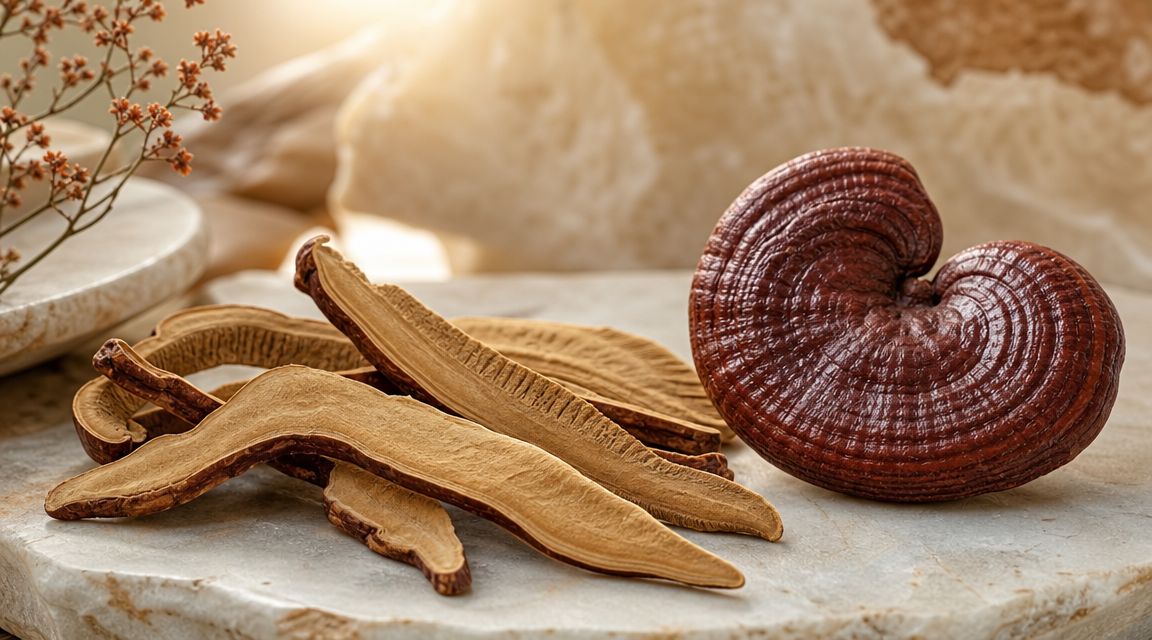
People often call it a bedtime mushroom because the intended effect is straightforward. Not a buzz. Not a dramatic knock-you-out effect. More of a steady nudge toward calm.
Why reishi sits at the center of sleep blends
Reishi has a long history of traditional use in East Asia, and modern sleep products still treat it as the anchor ingredient. That's one reason you see it again and again in capsules, powders, and nighttime drinks.
The clearest quantitative support in the provided sources comes from animal work. In a 2024 review, mice given reishi spores for 14 days saw sleep latency drop from 6.8 to 4.2 minutes and sleep duration increase from 88.3 to 152.5 minutes, showing a measurable sedative and sleep-support effect in animal models, according to the peer-reviewed review on Ganoderma lucidum sleep-aiding effects.
That doesn't mean humans should expect the same numbers. It does tell us why reishi keeps getting positioned as the most direct sleep-focused mushroom.
What it may be doing in the body
A separate source in your provided dataset describes reishi as the most evidence-backed mushroom for sleep support among the listed options. It links reishi's sleep effects to triterpenoids, compounds that may help down-regulate the nervous system through GABA-pathway modulation.
In plain language, that's why people usually describe reishi as calming rather than stimulating. It's the mushroom people reach for when evenings feel “wired but tired.”
- If your problem is sleep onset, reishi makes the most sense.
- If stress is the main trigger, reishi also makes practical sense.
- If you want a nightly ritual, reishi fits tea, tincture, powder, and capsule formats well.
A good reishi routine feels less like sedation and more like reduced internal friction.
This quick video gives a useful visual introduction before you shop formats or compare blends.
What reishi feels like in practice
Reishi usually isn't the mushroom people take for a noticeable mental shift. It's better understood as a wind-down aid. Think less chatter, less edge, easier transition into bed.
That's also why reishi shows up in products mixed with melatonin, GABA, or L-theanine. The problem is that these blends can blur the answer to a simple question: is the reishi helping, or are the added ingredients doing most of the work?
For shoppers in Southeast Michigan, that's worth keeping in mind. If you want to understand your response clearly, single-ingredient reishi or a very simple blend is easier to evaluate than a crowded label.
Lions Mane for Restorative Brain Health and Sleep
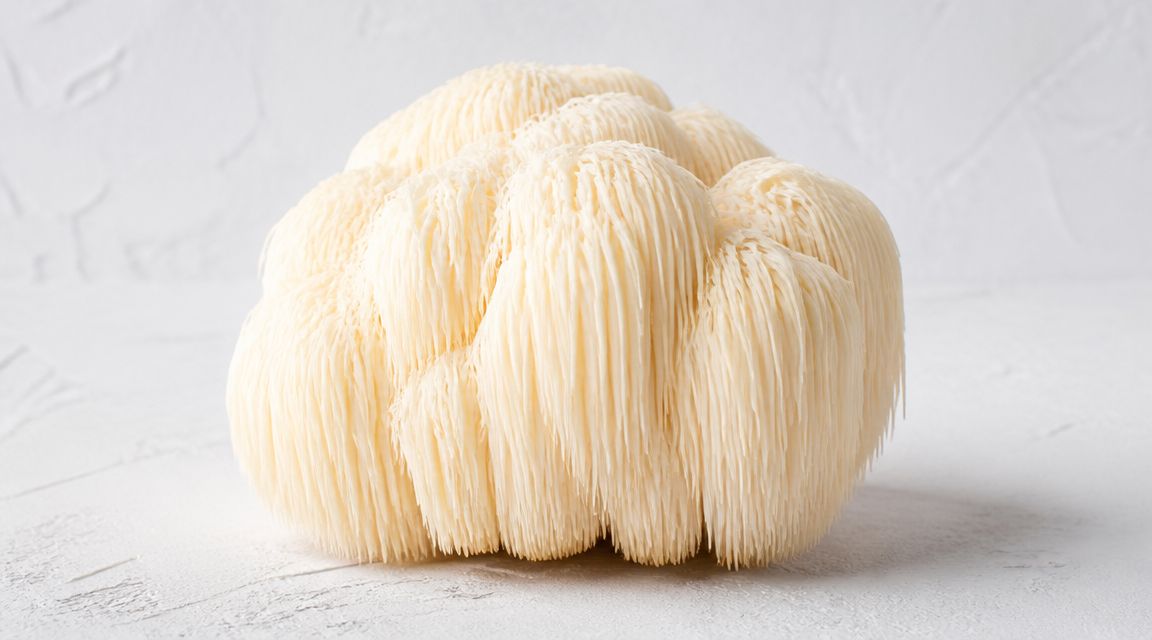
Lion's mane confuses people because it doesn't look like a sleep mushroom at first glance. It is widely known as a mushroom for focus, cognition, or daytime clarity.
That reputation is fair. But sleep and brain chemistry overlap more than many people realize, and that's where lion's mane enters the conversation.
Why a focus mushroom can still matter at night
Lion's mane is usually better framed as an indirect sleep ally than a sedative. If reishi is about turning the volume down before bed, lion's mane is more about supporting the kind of brain environment that can lead to better rest over time.
One of the provided sources summarizes animal findings showing that lion's mane may increase NREM sleep and raise serotonin levels, changes that could support deeper sleep and less nighttime wakefulness, according to FreshCap's consumer-health review of mushrooms for sleep.
That's useful, but the wording matters. “May” is doing real work there. This isn't the same kind of direct sleep framing you see with reishi.
Who lion's mane tends to fit
Lion's mane often makes sense for people who say things like:
- “I'm exhausted but my brain never feels restored.”
- “Stress is affecting my focus during the day and my sleep at night.”
- “I don't need a stronger sedative. I need better overall recovery.”
That's why brands often pair lion's mane with reishi. Reishi handles the evening calm. Lion's mane supports the brain-focused side of the equation.
A practical way to think about it
Use lion's mane when your sleep issue feels tied to mental fatigue, stress spillover, or poor-quality rest, not when you merely need help getting drowsy.
Practical rule: Reishi is usually the nighttime lead. Lion's mane is often the supporting actor.
That distinction helps avoid a common mistake. Some people take lion's mane at bedtime expecting an instant sleepy effect and then conclude mushrooms “don't work for sleep.” The better expectation is different. Lion's mane may help support deeper, more restorative sleep patterns, but it isn't usually the mushroom people rely on for immediate sedation.
Where it fits in a broader routine
Lion's mane also reflects how the mushroom market has changed. Sleep products aren't just old-school teas anymore. They now show up as standardized powders, capsules, beverage mixes, and more engineered stacks.
For some adults, lion's mane works best earlier in the day or later in the afternoon, while reishi stays reserved for evening. That split can make more sense than putting every mushroom into one bedtime dose.
If you're choosing between the two, the easiest rule is this: pick reishi for direct sleep support, and consider lion's mane when sleep quality seems tied to brain strain, mood, or recovery.
Psilocybin A Different Path to Restful Nights
Psilocybin belongs in this conversation, but only if we keep the role clear. It is not the same kind of tool as reishi. It isn't a standard bedtime mushroom, and it shouldn't be treated like a natural sleeping pill.
For some adults, especially in communities like Detroit and Ann Arbor where entheogenic plant policy has shifted locally, psilocybin comes up because poor sleep often rides alongside anxiety, low mood, obsessive thinking, or emotional tension. In that context, people aren't usually trying to sedate themselves. They're trying to change the mental pattern that keeps sleep unstable.
Why some people connect microdosing and sleep
The logic is indirect. A low, sub-perceptual dose during the day may help some people feel less stuck in repetitive thought loops. If evenings feel calmer because the whole day felt more balanced, sleep may improve as a downstream effect.
That's a very different use case from reishi.
Here's the practical split:
- Use functional mushrooms for direct sleep support.
- Consider psilocybin only as a broader mental wellness tool, not as a bedtime sedative.
- Never assume “natural” means low-risk. Psychedelic effects, sensitivity, and emotional response vary widely.
What to watch for with timing
If someone is experimenting with psilocybin in a decriminalized local environment, bedtime use is usually not the goal. A perceptible dose close to bed can be activating, introspective, or emotionally intense. That may be meaningful in other settings, but it's not a straightforward recipe for sleep.
A microdose conversation is more nuanced. Even then, it's wise to separate daytime experimentation from the expectation of a direct nighttime effect.
If your main goal tonight is to fall asleep faster, psilocybin is usually the wrong first tool.
Strain and product considerations
Experienced users sometimes ask whether stronger strains will work better for sleep. That's usually backwards thinking. More potency doesn't equal more rest. A potent strain can create a stronger mental response, which may be the opposite of what someone with fragile sleep wants.
That matters in local menus that include dried mushrooms and edibles. Chocolate bars, drinks, and dried fruiting bodies all create different pacing and predictability for different users. Product form affects the experience. So does dose. So does the setting you're in when you take it.
For sleep-adjacent use, the safest frame is this: if psilocybin plays a role at all, it's because you're addressing racing thoughts, emotional burden, or mood patterns that undermine sleep across time. It is not a substitute for a well-chosen bedtime support routine.
Choosing Your Mushroom A Head-to-Head Comparison
The easiest way to choose the best mushrooms for sleep is to stop asking which one is “best” in general and ask which one matches your actual problem.
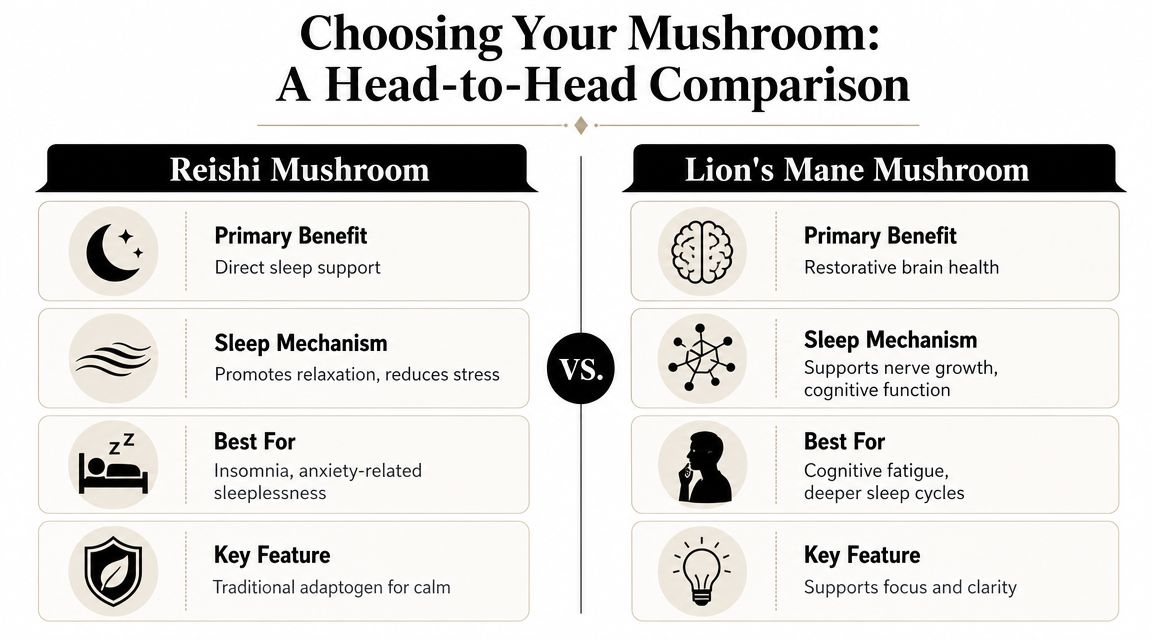
Mushroom Sleep Aid Comparison
| Mushroom | Primary Goal | Best For | Mechanism |
|---|---|---|---|
| Reishi | Falling asleep and winding down | Stress-heavy nights, trouble settling | Most evidence-backed option in the provided sources, linked to triterpenoids and GABA-pathway modulation |
| Lion's Mane | Supporting restorative sleep quality | Brain fog, mental fatigue, indirect sleep support | May influence sleep-related brain chemistry and NREM sleep |
| Psilocybin | Addressing root mental patterns, not direct sedation | Anxiety, rumination, mood-linked sleep disruption | Indirect path through mindset and emotional processing |
If your issue is falling asleep
Reishi is the most straightforward match. In the provided sources, it's described as the most evidence-backed mushroom for sleep support, with animal studies reporting increased total sleep time and non-REM sleep, and with a proposed mechanism involving triterpenoids that may down-regulate the nervous system through GABA-pathway modulation, as described in Eversio Wellness's detailed guide to adaptogenic mushrooms for sleep.
That doesn't mean everyone should expect the same experience. It does mean reishi has the clearest identity in this category.
If your issue is staying asleep or feeling restored
The evidence gets fuzzier across mainstream consumer content. Many articles don't cleanly separate sleep onset from sleep maintenance, so shoppers often have to make an educated choice rather than follow a precise map.
Lion's mane tends to fit better when the complaint is “my sleep doesn't feel deep enough” or “I'm mentally drained and my sleep quality seems off.” It's not usually the first recommendation for acute nighttime calm.
If your issue is racing thoughts
This is the lane where some adults explore psilocybin. Not because it directly causes sleep, but because poor sleep often grows out of daytime anxiety, looping thoughts, and unresolved emotional stress.
That approach requires more caution than functional mushrooms. It also requires honesty. If someone wants a reliable bedtime aid, psilocybin is usually less predictable. If someone wants to work on the mental pattern that keeps wrecking nights, it may be part of a separate conversation.
Quick decision guide
- Choose reishi if your biggest problem is relaxing enough to fall asleep.
- Choose lion's mane if your main goal is better recovery and more restorative sleep quality.
- Treat psilocybin as a separate category if your sleep issue is tightly tied to mood, anxiety, or recurring thought loops.
The best mushrooms for sleep aren't “best” in the abstract. They're best when the mushroom matches the pattern.
What many local shoppers in Detroit and Ann Arbor actually do
A practical rhythm looks like this:
- Reishi at night for calm.
- Lion's mane earlier in the day for brain support.
- Psilocybin kept out of the nightly sleep stack and considered only in a broader, intentional routine.
That separation reduces confusion. It also makes it easier to notice what's helping and what isn't.
Your Practical Guide to Dosing Timing and Products
Most sleep supplement mistakes happen because people take the right mushroom in the wrong way. Timing matters. Product type matters. Simplicity matters even more.
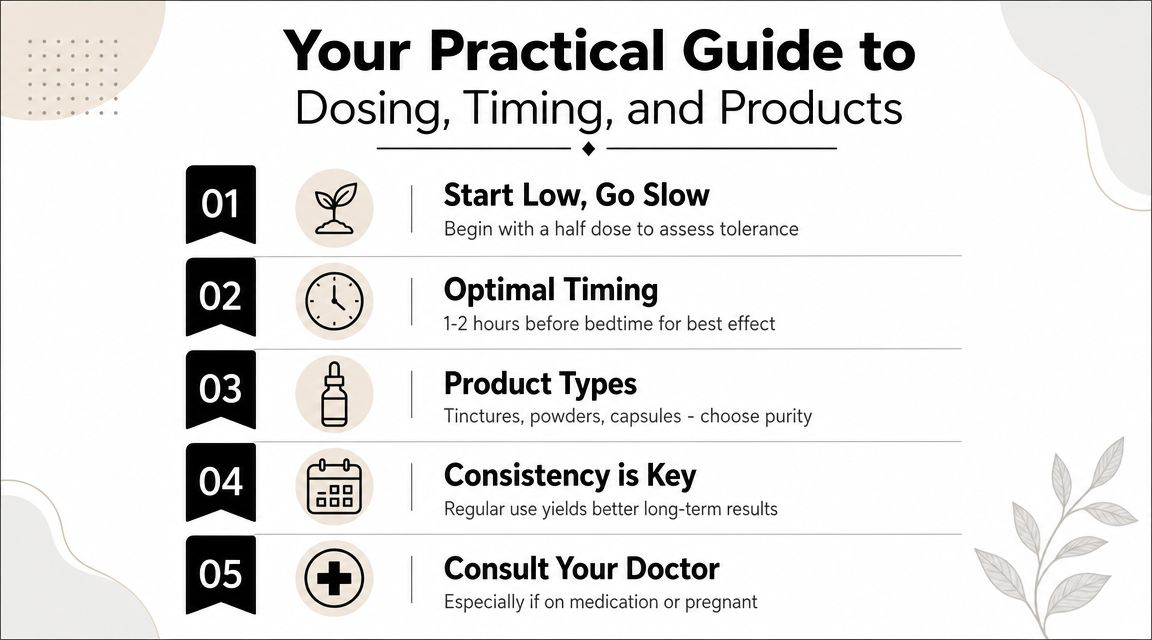
Start simple and isolate variables
If you're trying reishi for sleep, the cleanest method is to start with a single-ingredient product instead of a blend packed with melatonin, GABA, magnesium, and herbs. That way you can tell whether reishi is helping.
Lion's mane is usually easier to assess when taken separately from your bedtime product. Many people prefer it earlier in the day rather than right before bed.
Timing that makes practical sense
Here's a plain-language framework:
- Reishi in the evening. Many people place it in the wind-down window before bed because the goal is calm, not stimulation.
- Lion's mane earlier. It's usually better suited to daytime or late afternoon use if your aim is brain support that may later improve sleep quality.
- Psilocybin separate from bedtime. If an adult is using it in a local decriminalized context, it makes more sense to treat it as a daytime or planned-session decision, not an impulsive sleep aid.
Choose the product form that matches your habits
Not every format fits every person.
Tea or hot drink
Good for people who already have a nighttime ritual. The act of slowing down matters as much as the ingredient for some users. If that appeals to you, this mushroom tea recipe from Metro Mush shows one approachable way to build a routine.
Capsules
Better for people who want consistency and don't want to taste the mushroom.
Powders or tinctures
Useful if you want flexible control over how you build a routine.
Edibles and beverages
In the broader mushroom category, these can be more approachable for adults who dislike capsules. For psilocybin specifically, Metro Mush carries products such as OuterSpore Milk Chocolate Bars, Mush Love Chocolate Bars, and Rocket Fuel shroom drinks, which matter more for controlled psychedelic use than for a standard bedtime stack.
Keep it measurable: Change one variable at a time. New mushroom, same bedtime. Same mushroom, different product form. Don't change everything at once.
The easiest beginner mistake to avoid
Don't mix a sleepy mushroom, a strong melatonin blend, cannabis, and a late-night psilocybin experiment, then try to judge what worked. That's not a useful test. It's a pileup.
A cleaner routine gives you better answers and usually a safer experience.
Safety and Local Guidelines in Ann Arbor and Detroit
The most overlooked part of the sleep mushroom conversation is safety. That's especially true with products that combine several calming ingredients into one label.
One of the provided sources notes that many products stack reishi with melatonin, L-theanine, and GABA, but rarely explain whether the mushroom itself is doing the work or warn clearly about interactions with sedatives, anticoagulants, or immunosuppressants, creating a real consumer safety gap, according to Host Defense's relaxation-focused mushroom collection page.
Safety first with functional mushrooms
If you're using a sleep blend, read the full label and ask basic questions:
- What are the active ingredients besides the mushroom? A blend may feel strong because of melatonin or GABA, not because of reishi.
- Are you taking prescription sedatives or other calming substances? Layering multiple downshifting agents can make the experience less predictable.
- Do you use blood thinners, immune-focused medications, or other daily prescriptions? That's the point where a clinician should weigh in.
Functional mushrooms may sound gentle, but “gentle” doesn't mean interaction-free.
Local context for psilocybin in Detroit and Ann Arbor
Detroit and Ann Arbor are important places in this conversation because both cities are known for local decriminalization efforts around entheogenic plants and fungi. That local context changes enforcement priorities, but it does not turn psilocybin into a conventional retail sleep supplement.
That distinction matters. Decriminalized is not the same as fully legalized, medically standardized, or risk-free. Adults still need to think about setting, mental state, product certainty, and the difference between community norms and formal statewide approval.
If you want a clearer local overview, Metro Mush's Michigan mushroom guide gives useful background on the state and city context.
A practical rule for cautious users
Use the lowest-risk tool that fits the problem.
If your issue is simple bedtime tension, start with legal functional mushrooms. If your issue is complex anxiety, depression, or trauma-related sleep disruption, don't skip medical or therapeutic support just because a mushroom sounds more natural.
Decriminalization lowers legal pressure in some local settings. It doesn't remove the need for judgment.
The safest path is the boring one. Read labels. Keep your routine simple. Avoid stacking blindly. Don't treat psilocybin like a sleep gummy. And if medications are in the picture, get professional guidance before experimenting.
If you're in Southeast Michigan and want a clearer starting point, Metro Mush offers local mushroom education along with a menu of psilocybin products for adult consumers in the Detroit and Ann Arbor areas. Browse the site, compare formats carefully, and choose a route that matches your actual sleep pattern rather than chasing a one-size-fits-all fix.