


You're in Detroit or Ann Arbor, scrolling a menu, and the strain names start to blur together. Penis Envy looks intense. Enigma sounds like a commitment. Then you see Cambodian and wonder if it's the middle ground: strong enough to matter, not so heavy that it hijacks the whole day.
That's usually the right instinct.
The cambodian mushroom strain has built a reputation as a practical choice for adults who want a more upbeat, engaged experience instead of something that feels overly dense or sedating. It's one of the strains people often gravitate toward when they want to be intentional about setting, conversation, music, journaling, creative work, or a nature-focused afternoon without jumping straight to the most intimidating option on the menu.
In Southeast Michigan, that matters. A lot of buyers aren't looking for abstract strain lore. They want to know what a mushroom is likely to feel like, how consistent it tends to be, how cautiously to dose it, and whether it makes sense for a first real psychedelic experience. That's where Cambodian stands out. It has a long history in cubensis circles, a recognizable growth profile, and a user reputation that's easier to translate into practical decisions than many flashier names.
Introduction to the Cambodian Strain
A common local scenario goes like this. Someone in Ferndale, Ypsilanti, Corktown, or Kerrytown has tried cannabis plenty of times, maybe even experimented with a low-dose chocolate or drink, and now wants to move into dried mushrooms with a little more confidence. They don't want the strongest thing available. They want something understandable.
Cambodian is often that strain.
Among cubensis varieties, Cambodian has a reputation for being energetic, approachable, and reliable in character. People usually don't choose it because it sounds exotic. They choose it because they want an experience that leans active rather than heavy. If your ideal session involves a clean room, a playlist ready to go, your phone on silent, and a notebook nearby, Cambodian makes sense.
It also helps that this strain sits in a familiar cubensis lane instead of a novelty lane. That means the learning curve is lower. If you've been browsing a broader Psilocybe cubensis strain guide, Cambodian is one of the names that tends to reward a straightforward approach: modest dose, good setting, and realistic expectations.
Why Detroit area buyers keep circling back to it
The local buyer isn't just asking, “Is it good?” They're asking better questions.
- Will it feel social or isolating? Cambodian generally has a reputation for feeling more active and mentally bright than strains known for deep heaviness.
- Is it a reasonable starting point? For many adults, yes, especially if they start low and respect variability.
- Will it fit a shorter session? It can. That matters when you're planning around work the next day, roommates, weather, or simple logistics.
Practical rule: If you want movement, music, color, and curiosity more than couch-lock introspection, Cambodian is usually worth a close look.
That doesn't mean it's mild in every case. It means the strain has a personality people can work with.
A Strain with a Story The Origins of Cambodian Cubensis
Cambodian isn't one of those strain names invented to sound marketable. It has a documented history tied to place, climate, and field collection.
The strain traces its documented origins to the early 1980s near Angkor Wat, and Angkor Wat is identified as the world's largest religious complex in the verified source on the strain's background. It was later popularized by mycologist John “Mushroom John” W. Allen during expeditions, and it spread globally after 1998 as political stability opened the region more fully to access and exchange, according to this Cambodian strain history.
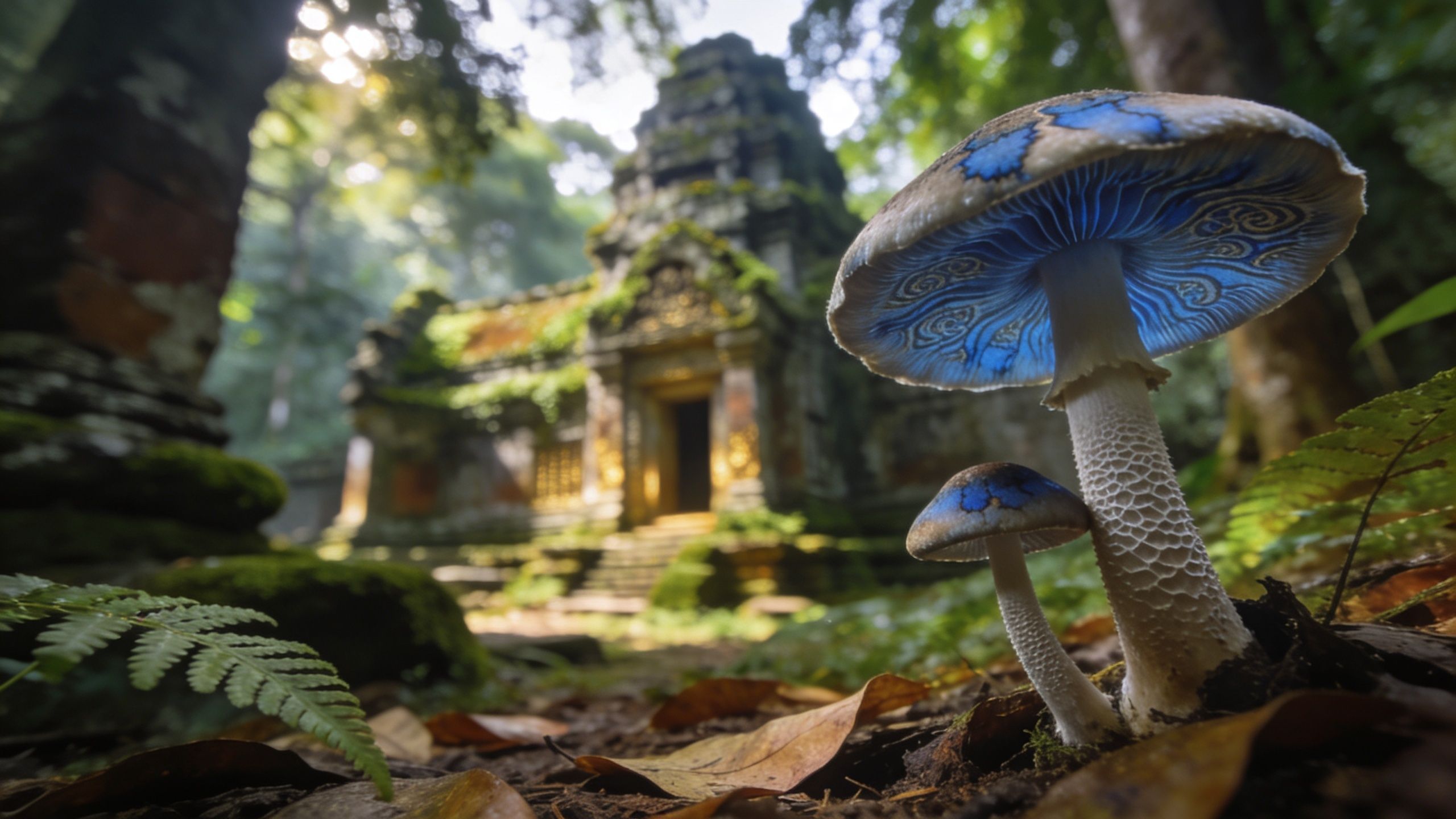
That origin matters more than people think. A lot of cubensis names get tossed around with little context, but Cambodian has a lineage that growers and microscopy communities have referenced for years. It isn't just “another brown mushroom.” It comes from a strain story anchored to a real location and a real collecting history.
What its origin tells you
Cambodia's tropical conditions shaped how people think about this strain. The verified source ties the lineage to temperatures of 25 to 35°C and humidity of 80 to 90%, which helps explain why growers have long associated Cambodian with fast, eager growth in suitable conditions.
For the buyer, that historical detail isn't trivia. It helps explain why this strain developed a reputation for vigor and why it shows up so often in conversations about dependable cubensis genetics.
More than mystique
Some strains get marketed on mythology. Cambodian doesn't need much help there because the setting is already memorable. Angkor Wat carries its own gravity. But the more useful takeaway isn't the temple backdrop. It's that this is a time-tested Southeast Asian cubensis line with a long paper trail in mycology culture.
Strains with real lineage tend to create clearer expectations. That doesn't guarantee the same experience every time, but it usually gives buyers a more stable starting point than novelty branding does.
If you're choosing between a familiar historical strain and a name that sounds cool but tells you nothing, Cambodian gives you more to work with.
Identifying Cambodian Mushrooms Appearance and Potency
When people ask what Cambodian mushrooms look like, they usually want to know two things. First, what should I expect to see in the bag? Second, does appearance tell me anything useful about strength?
The answer to the second question is only partly. Appearance can help you judge whether a sample looks healthy and typical for the strain, but it won't tell you exact potency. That said, Cambodian does have a fairly recognizable profile.
What the strain usually looks like
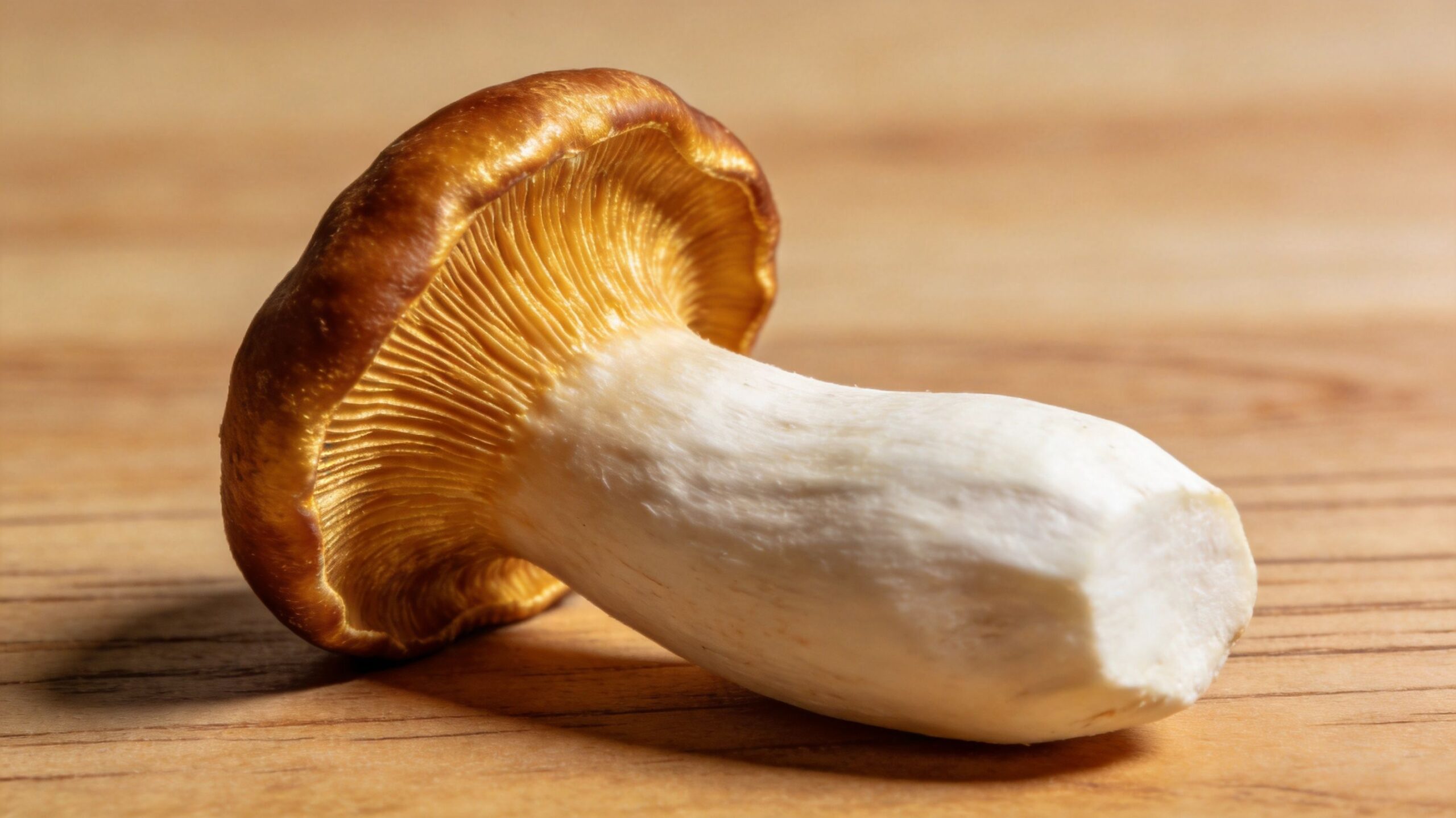
According to aggregated lab and strain data from the Cambodian spores library, Cambodian cubensis is described with caps expanding from 16 to 80 mm and stems 50 to 150 mm tall. In practical terms, that means you'll often see fruits that can range from smaller, tighter young mushrooms to more open caps with a classic cubensis shape.
A dried Cambodian sample often presents with:
- Brown to caramel-toned caps, sometimes lighter as they dry
- Tan to pale stems
- A conventional cubensis silhouette, not the exaggerated dense look associated with some more mutated or boutique varieties
- Blue bruising in handled areas, which many buyers notice, though bruising alone shouldn't be treated as a potency test
What potency numbers actually mean
The verified data puts Cambodian in the medium-high potency range, with psilocybin at 1.2 to 2.3% and psilocin at 0.2 to 0.6% by dry weight in aggregated lab analyses from the cited source. That's useful because it places the strain in a serious but not extreme category.
Here's the practical translation:
| Trait | What it means for a buyer |
|---|---|
| Medium-high potency | You should treat it with respect, even if you've used other cubensis before |
| Not usually discussed as an outlier strain | It's often easier to dose conservatively than with strains known for extreme variability in user expectations |
| Reliable market presence | It's common enough that growers and buyers have built a shared understanding of its character |
It's also noted in that same source that Cambodian represents 15 to 20% of commercial spore sales in the US market, which tells you this isn't a fringe strain. It has staying power.
A short visual refresher can help if you're newer to cubensis identification:
Why growth traits matter to the end user
The same verified source notes that Cambodian mycelium colonizes substrate 30 to 50% faster than Golden Teacher. Buyers sometimes ignore grow traits because they sound like insider baseball, but they affect what lands in your hands.
Faster, more dependable colonization often translates into a strain that suppliers are more willing to keep in rotation. It can also support more consistent visual quality because the strain is widely worked and understood. That doesn't replace careful sourcing, but it does help explain why Cambodian remains a staple instead of a novelty drop.
The Cambodian Journey Subjective Effects and Duration
Cambodian is often described in one word first: energetic.
That doesn't mean jittery in every setting. It means the experience often pushes attention outward and forward. People tend to report a journey that pairs well with movement, sensory appreciation, music, laughter, conversation, and creative thought. If some strains feel like they pull you down into the floorboards of your own mind, Cambodian more often feels like it opens windows.

The arc of the experience
The verified data describes effects lasting 4 to 6 hours and notes an energetic profile suitable for doses in the low-to-moderate range discussed in strain libraries. In real-world terms, that makes Cambodian a strain you should schedule for, not squeeze in casually between obligations.
A typical arc often looks like this:
- Onset: mood lift, sharpened sensory interest, a little bodily alertness
- Peak: stronger pattern recognition, brighter visuals, emotional openness, more fluid thinking
- Late phase: less intensity, more reflection, a desire to settle into music, quiet conversation, food, or rest
What works well with Cambodian
This is a strain that tends to reward a good plan.
A strong setup for Cambodian often includes:
- A clean environment
- A small trusted group or a solo setting with no interruptions
- Hydration and simple food ready beforehand
- A loose intention, such as creativity, reset, emotional processing, or time outdoors in a safe place
What usually doesn't work is casual chaos. If your space is noisy, your evening is packed, or you're trying to hide the experience from roommates, family, or social obligations, Cambodian can feel more pushy than pleasant. The strain's active feel can amplify disorganization.
The best Cambodian sessions usually have enough room to breathe. Rushed sessions tend to feel rougher than the same dose taken in a settled environment.
How it compares in feel
Without turning every strain into a stereotype, Cambodian generally sits away from the “heavy and engulfing” side of the menu. That's why some buyers choose it over famously intense varieties when they want a full psychedelic experience that still feels navigable.
That doesn't mean everyone gets creativity, joy, and smooth visuals on demand. Set, setting, mental state, sleep, and food all still matter. But if you're looking for a cubensis profile that many adults describe as brighter and more outwardly alive, Cambodian earns its reputation.
Finding Your Dose A Guide for Cambodian Mushrooms
Dosing is where most good decisions happen. It's also where most preventable bad experiences start.
Because Cambodian is widely described as medium-high potency, the safest move is simple: start lower than your ego wants to. You can always take more another day. You can't un-take a dose that came on stronger than expected.
Cambodian Mushroom Dosing Guide
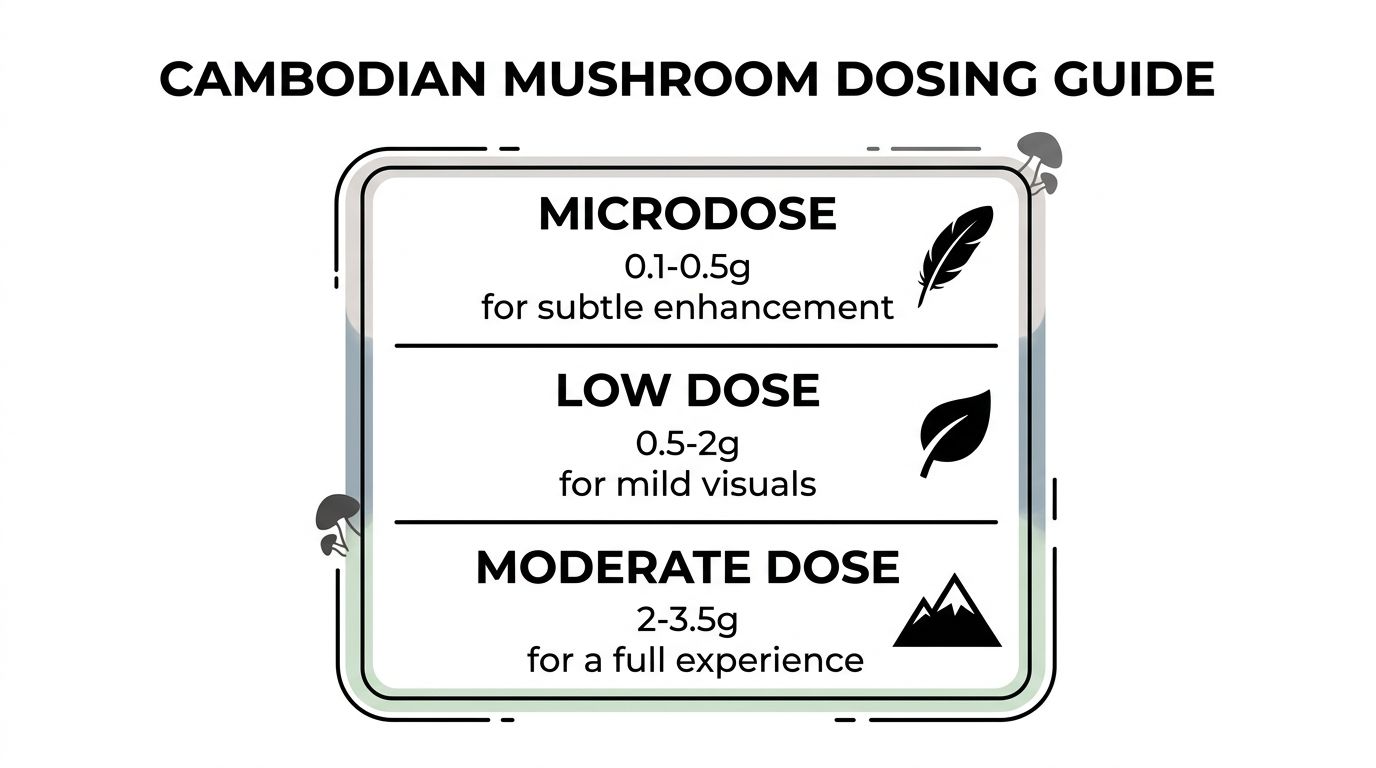
Use this as a harm-reduction framework, not a promise. Body size, food intake, recent substance use, tolerance, sensitivity, and batch variation can all shift the experience.
Microdose
Think subtle. 0.1 to 0.5g is commonly treated as a range for very light, often sub-perceptual or lightly perceptual use. The goal here isn't a trip. It's a gentle nudge in mood, focus, or sensory appreciation.Low Dose
0.5 to 2g is where many adults begin to notice clear changes. Mild visuals can emerge. Music can feel richer. Emotions may loosen. For a cautious first-timer, this range often makes more sense than jumping to a full experience.Moderate Dose
2 to 3.5g is where Cambodian can become a fully immersive psychedelic session. This is the range associated in the verified data with a fuller effect profile. If you're going here, protect the setting and clear your schedule.
How to choose the right starting point
A simple way to decide:
| Your situation | Better starting move |
|---|---|
| First time with dried mushrooms | Stay in the lower end of the low-dose range |
| Experienced with edibles but not many whole mushrooms | Treat Cambodian like a new product and still start cautiously |
| Looking for creativity, not intensity | Microdose or low dose |
| Looking for a full inward or visual session | Moderate dose, but only with proper conditions |
What not to do
A few mistakes show up over and over:
- Don't redose too quickly. People get impatient during onset and stack more than they needed.
- Don't assume all batches hit the same. Even within the same strain, variation exists.
- Don't copy a friend's dose blindly. Sensitivity differs a lot.
- Don't mix casually just because the plan sounds fun. Complexity raises the chance of a confusing experience.
Dose advice: If you're unsure whether to take the higher amount, you probably shouldn't.
For most adults trying the cambodian mushroom strain for the first time, a conservative low dose is the smartest read of the room.
Notes on Cultivating the Cambodian Strain
Cambodian's popularity isn't only about effects. It's also about how the strain behaves for growers.
According to documented cultivation notes on Cambodian cubensis, the strain shows aggressive rhizomorphic mycelium and can fully colonize brown rice flour cakes in under 2 weeks, while Golden Teacher may take 3 to 4 weeks. That's a major reason Cambodian has kept a strong reputation in cultivation circles.
Why growers respect it
Rhizomorphic mycelium looks rope-like rather than fluffy. In practice, growers often value that because it signals assertive growth through substrate. Faster colonization can reduce the window where contaminants gain a foothold. The verified source also notes lower contamination rates in this context.
For the consumer, that matters in three practical ways:
- Availability tends to be better because suppliers are more willing to work with strains that behave predictably.
- Quality control gets easier when growers know how a strain usually performs.
- Consistency improves at the menu level even if no one can promise identical potency across every batch.
Why this matters if you buy, not grow
Even if you never plan to touch a grow bag, understanding cultivation tells you why certain strains become staples while others appear sporadically.
Cambodian has the kind of production profile that supports regular supply. If you've been curious about the cultivation side, a look at magic mushroom grow bags helps explain the broader setup growers use, even though strain behavior still makes a huge difference inside the same basic system.
The trade-off is that easy growth doesn't automatically mean precisely measured strength. A strain can be vigorous and still vary in final expression. That's why experienced buyers don't confuse cultivation reliability with dosing certainty.
Safety Harm Reduction and Legality in Southeast Michigan
A lot of safety advice around mushrooms is too vague to be useful. “Be careful” doesn't help much when you're trying to decide whether to eat a full gram, whether your apartment is a good setting, or whether the product in front of you is labeled with meaningful information.
The stronger position is this: harm reduction starts before ingestion. It starts with sourcing, questions, restraint, and an honest read of your environment.
The testing gap you should take seriously
The verified data on Cambodian points to a real problem. While the strain is commonly described as medium to high potency, the public information gap on standardized testing for Cambodian strains remains significant. There's no public data addressing batch-to-batch variation, and that matters.
In cannabis, buyers have gotten used to labels that at least attempt potency disclosure. Psilocybin products often don't offer that same clarity. So the safe move is conservative dosing and skeptical thinking.
Ask practical questions:
- What form is this in, dried fruit or edible?
- Is the supplier consistent about strain naming?
- Does the product look well handled and properly stored?
- Are you treating this batch like new, even if you've had Cambodian before?
If a product category lacks standardized public testing, your margin of safety has to come from behavior. Smaller first doses, patient timing, and better sourcing do more for safety than confidence does.
Local legal nuance matters
Detroit and Ann Arbor residents already know the legal situation around psilocybin isn't as simple as “legal” or “illegal.” Decriminalization conversations and local policy shifts have changed enforcement priorities in some places, but that is not the same thing as a conventional retail framework with clean statewide rules, universal testing, and standardized labeling.
If you need a broader local overview, read a grounded summary of magic mushrooms in Michigan before you assume your city's climate means zero legal risk.
The practical safety checklist
Use the boring checklist. It works.
- Clear your schedule: don't dose before social obligations or driving.
- Control the room: familiar space, minimal interruptions, low noise.
- Choose one substance: avoid making a chemistry experiment out of the night.
- Tell one trusted person: especially if it's your first meaningful dose.
- Start low: this matters more than strain mythology.
The cambodian mushroom strain can be rewarding. It still deserves caution.
Buying and Storing Cambodian Mushrooms from Metro Mush
For Southeast Michigan buyers, the practical question isn't whether Cambodian has a good reputation. It's whether the product you're getting has been handled by people who understand the strain well enough to keep it consistent.
That's especially relevant because Cambodian comes from a tropical lineage, yet many products available to local consumers come through Midwest-grown operations. As noted in this discussion of how Cambodian expresses outside tropical conditions, its fast growth remains a stable trait, but substrate choice and precise humidity control outside the native 22 to 27°C range can influence final potency and phenotype. That means local handling and cultivation standards matter.
What to ask before you buy
Keep the conversation simple and practical.
- Ask what format you're getting. Dried whole mushrooms, chocolate bars, and drinks all create different dosing realities.
- Ask how the product is stored. Heat, moisture, and sloppy packaging can degrade quality.
- Ask how they describe the strain. If the answer sounds like vague hype, that's not helpful. You want grounded guidance.
- Ask for beginner-friendly direction. A responsible seller should steer cautious buyers toward a conservative start.
For local ordering logistics, the Detroit line is 734-691-6122 and the Ann Arbor line is 734-280-2868. Metro Mush also operates with a $75 minimum order, and the publisher information notes a 20% Discord discount for community members.
How to store Cambodian properly at home
Storage is simple, but people still get it wrong.
Use:
- An airtight container
- A cool, dark place
- Low humidity
- Minimal handling
Don't leave mushrooms in a hot car, on a sunny shelf, or in a bathroom cabinet where moisture spikes constantly. If you're portioning doses, do it once, cleanly, then reseal the rest.
If your goal is consistency, storage is part of dosing. A mushroom that sat in poor conditions is harder to read than one that stayed dry, dark, and protected.
Metro Mush serves adult customers across Southeast Michigan with a curated menu of dried mushrooms, chocolates, and drinks, plus straightforward ordering by text for Detroit at 734-691-6122 and Ann Arbor at 734-280-2868. If you're deciding whether Cambodian fits your goals, browse the current selection, check current specials, and order directly through Metro Mush.