


If you walk into a dispensary and ask for blue lotus strain, are you getting one clearly defined cultivar, or a name that covers more than one genetic story?
That’s the gap most strain guides skip. They describe the flavor, list the potency, and move on. But with Blue Lotus, the first smart question isn’t just “What does it feel like?” It’s “Which Blue Lotus is this?”
For shoppers around Detroit and Ann Arbor, that matters. The name shows up with strong visual appeal, a premium reputation, and a body-heavy experience that many seasoned cannabis consumers enjoy. But the market also carries real confusion around lineage, breeder attribution, and what you should expect from the jar in front of you. A careful buyer should know how to sort that out before the first hit.
What Is the Blue Lotus Cannabis Strain
Blue Lotus is best understood as a premium cannabis name with a split identity. In dispensaries, it is usually presented as an indica-dominant hybrid known for heavy resin, dessert-leaning aroma, and a reputation for significant relaxation. But unlike strains with one widely agreed-upon backstory, Blue Lotus often arrives with conflicting lineage depending on the breeder, the market, or the menu in front of you.
That confusion is real, and it is one of the first things a careful buyer in Detroit or Ann Arbor should know.
Why shoppers get conflicting answers
Some listings describe Blue Lotus as Snow Lotus × Blueberry. Others describe it as Blue Gelato #41 × XXX OG. AllBud’s Blue Lotus listing also reflects that disagreement and notes varying breeder associations, including names like Bodhi Seeds and Maven Genetics.
For a shopper, the practical takeaway is simple. “Blue Lotus” is not always a perfect genetic fingerprint. It works more like a label that may point to a certain flavor and effect lane, while the exact family tree can shift from one producer to another.
That is why the jar matters more than the name alone.
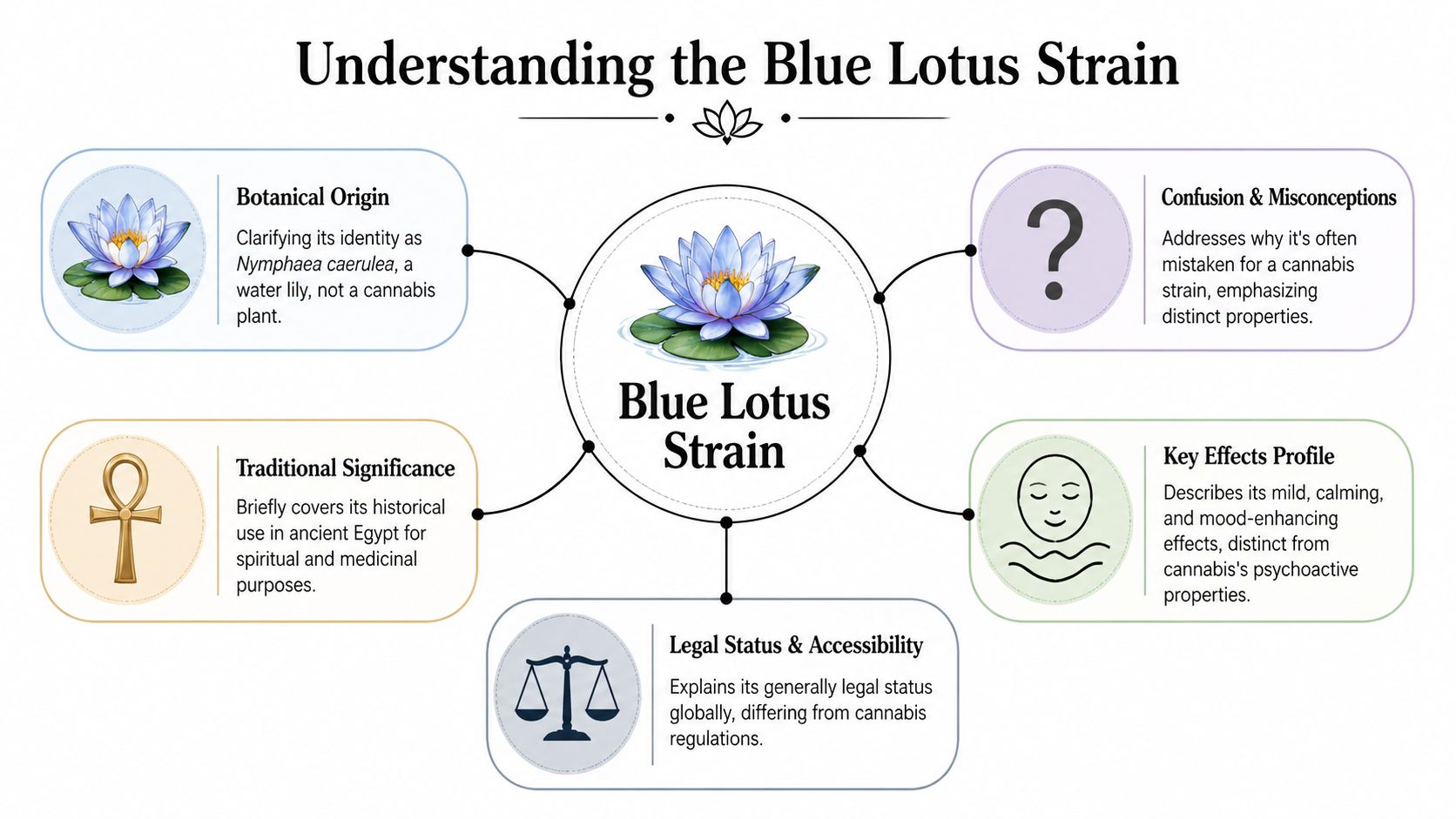
There is another point that trips people up. Some shoppers know “blue lotus” as a botanical product that has nothing to do with cannabis. In a dispensary, confirm that you are looking at the cannabis cultivar, not a similarly named herb or infused product line.
A good budtender should be able to answer a direct question like: “What lineage is this batch sold under, and who grew or bred it?” If the answer stays fuzzy, treat that as a sign to slow down.
What tends to stay consistent
Even with the lineage dispute, Blue Lotus usually follows a recognizable pattern. Shops and reviewers often describe it as visually striking flower with dense structure, visible frost, and cool-toned coloration that gives it a top-shelf look before you even check the aroma.
That visual identity is key because Blue Lotus often gets purchased first with the eyes.
The scent profile is another clue. Blueberry is the note people usually look for first, followed by sweeter vanilla or pastry-like tones and a nuttier finish. If you enjoy rich evening flower, Blue Lotus often sits in the same family of appeal as other dessert-forward indicas. For a useful comparison point, see this Chocolate Mint strain overview, which shows how another dessert-style profile can signal a very different experience once you get past the aroma.
A few traits explain why Blue Lotus keeps showing up on premium shelves:
- Potency reputation: It is usually marketed toward experienced consumers who want a stronger, fuller-bodied session.
- Resin production: Sticky, trichome-heavy flower tends to attract both flower fans and concentrate shoppers.
- Flavor recognition: The blueberry-dessert profile gives the strain name staying power.
- Shelf appeal: Dense buds and colorful contrast make it easy for stores to position as a standout option.
How to shop for Blue Lotus without getting burned by the label
The safest way to approach Blue Lotus is to shop by evidence, not just branding. A strain name is like a wine label. It can point you in the right direction, but it does not tell you everything about what is in the bottle.
Use this quick check:
| What to check | What it tells you |
|---|---|
| Strain name on the menu | Confirms what the store is calling the cultivar |
| Breeder, grower, or house lineage | Explains why one Blue Lotus may differ from another |
| Bud structure and color | Helps you spot the dense, resin-heavy look shoppers expect |
| Aroma from the jar | Blueberry, vanilla, and sweet pastry notes usually mean you are in the right lane |
| Store explanation | Tells you whether the staff actually know the batch they are selling |
For Detroit and Ann Arbor shoppers, this matters more than it might in a smaller market. Different retailers may carry very different versions under the same name, especially when buying from multiple growers. The best shops will tell you where the flower came from, how they classify the lineage, and what kind of experience customers usually report.
Blue Lotus can absolutely earn its premium reputation. Just make sure the store can explain why their Blue Lotus is the one you want.
A Journey for the Senses Effects and Terpene Profile
What should Blue Lotus feel like if the genetics seem to change depending on who grew it?
That confusion is real, and it matters here. In Metro Detroit and Ann Arbor, one Blue Lotus batch may lean more dessert-sweet and sedating, while another shows a little more lift up front. The common thread is not a perfectly agreed-upon family tree. It is the experience in the jar. Blue Lotus is usually treated by shoppers and budtenders as a comfort-forward strain with a sweet berry pastry profile and a calm, body-centered finish.

What the experience often feels like
Blue Lotus often opens with a soft mental ease rather than a dramatic rush. A good comparison is dimming bright overhead lights and switching to a warmer lamp. Your thoughts usually do not disappear. They just stop pushing so hard.
For many shoppers, that first phase feels pleasant, social enough for a quiet conversation, and easy to settle into. Then the body effects become more obvious. Shoulders drop. Legs feel heavier. The couch starts to win the argument.
A simple way to understand the arc is to treat it like a three-part session:
- Early stage: lighter mood, less mental clutter, easy sensory enjoyment
- Middle stage: stronger body relaxation, slower pacing, more interest in staying put
- Later stage: heavier calm, lower motivation for tasks, better fit for music, movies, snacks, or sleep
This is usually evening flower.
That does not mean every version is a knockout strain. Because Blue Lotus labeling is inconsistent, one grower’s cut can feel more balanced than another. Still, if a Detroit or Ann Arbor retailer describes their batch as something you would use before errands, I would ask a few more questions about the grower, terpene profile, and customer feedback.
Why the flavor gets so much attention
Blue Lotus gets remembered for flavor more than many strains in its lane. A lot of flower gets called berry. Far fewer jars smell like blueberry baked into something rich and sweet. Blue Lotus often lands closer to blueberry pastry, vanilla cream, and a faint nutty finish than plain fruit.
That matters in practice. Aroma is one of the quickest ways to tell whether a batch is living up to the name or just borrowing it. If the jar gives off a flat, generic sweetness with no pastry depth, many experienced shoppers will treat that as a sign that this particular Blue Lotus may not deliver the experience they came for.
The sensory breakdown usually looks like this:
| Sensory cue | What many shoppers look for |
|---|---|
| Jar aroma | Sweet blueberry first |
| Broken nug | Richer pastry or muffin-like sweetness |
| Inhale | Soft fruit, creamy sweetness |
| Exhale | Vanilla, light nuttiness, earthy finish |
Some Blue Lotus S1 descriptions in the cannabis community also mention linalool, pinene, and myrcene. You do not need to memorize terpene charts to use that information well. The practical takeaway is simple. If the flower smells layered, sweet, and slightly creamy, you are probably in the right lane. If it smells dull, grassy, or one-note, the label may be doing more work than the flower.
A quick visual and spoken walkthrough can help if you like learning by format:
Matching the strain to the moment
Blue Lotus usually fits best when your goal is to settle in, not stay sharp and highly productive. It works well for low-pressure settings where flavor and comfort both matter.
Good fits often include:
- Evening use: after work, when you are done making decisions
- Comfort-focused sessions: movies, playlists, stretching, or a calm night in
- Flavor-first smoking: when aroma and taste are part of why you bought the jar
Less suitable moments are easy to spot. Busy public settings, socially demanding plans, and anything that requires quick reactions are usually not where Blue Lotus shines.
The dessert-like aroma can make it sound gentler than it is. Respect that gap. Premium flower can smell like blueberry pastry and still carry enough weight to turn a casual session into an early bedtime.
Finding Your Ideal Experience Preparation and Dosing
How do you get the pleasant side of Blue Lotus without sliding into the version that feels heavier than expected? Start by treating it like a rich dessert, not a light snack. The aroma can read soft and sweet, but the experience often has more weight than the nose suggests.
This matters even more with Blue Lotus because the name does not always point to one perfectly consistent cut. As noted earlier, genetics around Blue Lotus can get muddy depending on the breeder or menu description. That makes your first session less about trusting the label and more about choosing a controllable method, using a small amount, and paying attention to how your specific batch behaves.
Choosing the right consumption method
If your goal is a clear read on the strain, flower is usually the best starting point. It gives you the easiest feedback loop. One inhale, a pause, then a decision.
Here is how the main options usually play out:
- Flower in a pipe or joint: Best for testing the strain itself. You can keep the dose small and notice the flavor, body feel, and mental shift in stages.
- Dry herb vaporizer: Good for shoppers who care about tasting the sweeter, creamier side of the profile. It can also feel easier to meter because each draw is usually more deliberate.
- Concentrates like hash, rosin, or resin: Better for people who already know how they respond to potent material. If a resin-heavy flower gets concentrated, the margin for error shrinks fast.
A lot of experienced customers get tripped up here. They assume a strain they enjoy as flower will translate neatly into rosin. Sometimes it does. Sometimes it turns a calm evening strain into a much stronger, faster ride than they wanted.
Start low and space it out
You do not need a complicated routine. You need patience.
Use this as a simple starting framework:
| Consumption Method | Beginner Dose | Experienced Dose |
|---|---|---|
| Flower | 1 small inhalation, then wait | 2 to 4 inhalations, spaced out |
| Dry herb vaporizer | 1 light draw, then wait | Several draws over a session |
| Concentrate | A very small amount | A modest amount based on known tolerance |
That table is conservative on purpose. Blue Lotus tends to reward restraint. The best first session usually ends with, "I could have had a little more," not, "I wish I could rewind that."
Wait long enough to assess the first wave before adding more. For practical tips on staying comfortable if you get too high, Metro Mush has a useful guide on how to avoid bad trips.
Prep matters more than people think
Preparation changes the session. It is the difference between tasting and assessing a premium pour, versus chugging it and hoping for the best.
A simple setup helps:
Eat beforehand
A full feast is not required. A light meal or snack helps if strong flower sometimes makes you feel floaty or a little unsteady.Keep water within reach
Dry mouth is common, and having water nearby saves you from getting up repeatedly once the body effects start settling in.Test one format at a time
If you are learning this strain, do not mix flower, vape, and concentrate in one session. Too many variables make it hard to tell what worked for you.Choose the setting before you dose
Queue the movie, set out what you need, and settle in first. Blue Lotus is easier to enjoy when you are not making extra decisions mid-session.
What experienced shoppers do differently
The best consumers are not the ones with the highest tolerance. They are the ones who pace themselves well.
Blue Lotus can feel smooth on the inhale, which sometimes tricks people into stacking hits too quickly. That is especially true if they bought it in the Detroit or Ann Arbor area from a shop where the menu description focused more on flavor notes than on how firmly it can settle into the body. A good budtender will tell you both. If they only sell you the blueberry-dessert part of the story, ask more questions.
For this strain, confidence matters less than observation. Start small, give it time, and let the batch in front of you show its character. That approach works better than trying to force Blue Lotus into the experience you had with a different jar carrying the same name.
Navigating Your Use Safely
Strong flower is enjoyable when you work with it. It turns unpleasant when you try to overpower it.
Blue Lotus is commonly described as staying in the 23% to 24% THC range and as a high-potency cultivar that requires experienced consumer application, with 70% indica dominance and notable body effects, according to SeedsHereNow’s Blue Lotus strain review. That’s why safety isn’t an afterthought here. It’s part of getting the experience you wanted in the first place.
What can go wrong if you overdo it
Most difficult cannabis sessions aren’t dangerous in the dramatic way people fear. They’re uncomfortable, disorienting, and longer than you wanted them to be.
With a strain like Blue Lotus, common problems can include:
- Anxiety: often triggered by taking too much too quickly
- Paranoia: more likely in stressful or overstimulating settings
- Dizziness or heaviness: especially if you stand up fast or mix substances
- Mental fog: which can be frustrating if you expected a lighter ride
These effects usually hit harder when the person is tired, dehydrated, mixing with alcohol, or trying to “keep up” with someone else’s tolerance.
How to lower the chances of a rough session
A good session usually comes from good setup, not luck.
- Control the environment: Home is usually better than a chaotic public setting for your first try.
- Stay hydrated: Water won’t undo overconsumption, but it helps you stay physically comfortable.
- Don’t mix casually: Alcohol can muddy the feel of the high and make it harder to judge what’s happening.
- Give medications real respect: If you take prescription medication or have a health concern, it’s smart to check with a healthcare professional before combining substances.
If you start feeling overwhelmed, stop consuming, sit down somewhere quiet, sip water, and remind yourself that the feeling will pass.
Why responsible use is the premium move
Some people still hear “responsible dosing” and think “beginner advice.” It isn’t. It’s advanced behavior.
Seasoned consumers know that the best session is intentional. They match dose to setting, avoid pointless mixing, and plan around the strain’s body load. If you want a broader harm-reduction mindset that applies across altered-state experiences, this guide on how to avoid bad trips covers the same core principle from another angle.
You don’t prove anything by taking too much Blue Lotus. You just reduce the odds that you’ll enjoy what makes it special.
Sourcing Blue Lotus in Detroit and Ann Arbor
How do you buy Blue Lotus with confidence when two menus can use the same name and mean slightly different things?
That question matters more with Blue Lotus than with many strain labels. Around Detroit and Ann Arbor, the primary challenge is not finding a jar called Blue Lotus. It is confirming what that shop means by Blue Lotus, because lineage claims for this strain often conflict from one retailer or grower to another. If you treat the name like a shorthand instead of a guarantee, you will shop smarter.

A good budtender should be able to explain the batch in plain language. The label is the title on the book. You still want to know who wrote it, how fresh it is, and whether what is inside matches the cover.
What to ask before you buy
Start with the question many shoppers skip.
What genetics is this batch listed under?
Blue Lotus is one of those strain names that can get fuzzy in the market. A careful shop will tell you the breeder listing, the parentage they were given, or that there is some uncertainty around the lineage.Can I see the current lab results?
You are checking more than THC. You want recent testing tied to that product, not a vague promise that everything in the store is tested.How does this specific lot smell?
Ask for the aroma of the batch in front of you, not the generic website description. For Blue Lotus, you are usually looking for a sweet berry-dessert direction rather than a flat, candy-only smell.Are the flower, pre-roll, and extract made from the same harvest?
That answer helps you compare products more accurately. A pre-roll made from trim and a jar of top flower can wear the same strain name but deliver very different value.
How local shoppers can judge quality quickly
Detroit and Ann Arbor both have strong adult-use options, but the better stores separate themselves through clarity. They answer direct questions directly. They do not get defensive about gaps in strain history, and they do not hide behind flashy naming.
Use this quick screen:
| Check | What a strong shop does |
|---|---|
| Genetics | Explains the listed lineage, or admits where the record is unclear |
| Testing | Shows recent lab details for the actual product |
| Aroma description | Describes the current batch, not just the menu copy |
| Storage | Keeps flower smelling fresh, not dry or tired |
| Staff guidance | Asks what kind of experience you want before recommending a product |
One useful local habit is calling ahead. In busy Detroit shops and weekend-heavy Ann Arbor stores, inventory can turn over fast. A two-minute phone call can tell you whether Blue Lotus is in flower form, whether the batch is fresh, and whether the staff can answer lineage questions without fumbling.
A note for Southeast Michigan shoppers and visitors
If you are driving in from another part of Michigan or from a nearby state, plan your stops before you leave. Blue Lotus is the kind of strain where menu research pays off, especially if you care about terpene expression and not just name recognition.
A local directory like this guide to Ann Arbor dispensaries can help you compare store options before you head out. Once you are in the shop, look for the place that offers the clearest explanation of what is in the jar.
The best Blue Lotus purchase usually comes from a retailer that treats strain identity seriously. In this case, clarity is part of quality.
Common Questions from the Metro Mush Community
Is Blue Lotus similar to a mushroom microdose
Not really. Blue Lotus cannabis is still cannabis, so the experience centers on THC-driven euphoria, body relaxation, and sensory richness. A mushroom microdose is usually approached for a much subtler shift and doesn’t map neatly onto the same body-heavy evening feel.
Why would an experienced Ann Arbor cannabis user try Blue Lotus
Because it offers a combination that many seasoned users actively look for. The name carries premium visual appeal, strong resin presence, and a dessert-style aroma profile that stands out from more generic indica jars. If you like flavorful flower that leans relaxing without being bland, it’s worth trying from a well-documented source.
Is Blue Lotus better for day or night
It is generally preferred later in the day. Its appeal tends to show up best when you’re done with obligations and can let the experience slow down naturally.
What should I do if two dispensaries describe Blue Lotus differently
Assume they may be working from different lineage claims, breeder histories, or phenotype expressions. Ask each shop what genetics they’re using for that label, how they’d describe the aroma, and whether they can show current testing. If one answer sounds clear and the other sounds improvised, trust the clearer shop.
Is Blue Lotus all about potency
No. Potency is part of the story, but not the whole story. People also seek it out for the blueberry-forward flavor, sticky resin, and that “settle in” type of high that feels more intentional than loud.
How does Blue Lotus compare with infused or edible products
The biggest difference is control. With flower, you can take one inhalation and stop. With many infused products, the timeline is harder to adjust once you’ve committed. If you’re trying Blue Lotus for the first time, flower or a dry herb vaporizer usually gives you a more readable introduction than jumping straight to a stronger format.
What’s the smartest first purchase
A small amount of well-stored flower from a shop that can clearly explain the batch. That gives you the best chance to evaluate the aroma, the look, and the effects without overcommitting.
If you’re exploring plant-based experiences in Southeast Michigan and want a trusted local resource beyond cannabis, Metro Mush offers a curated menu for adult consumers in the Detroit and Ann Arbor area, including dried mushrooms, chocolates, and drinks with easy online browsing and local ordering.