


You get enoki home, set the package on the counter, and tell yourself you’ll deal with it later. That’s usually when the trouble starts. These mushrooms look tidy in their vacuum-sealed pack, but they’re already in a race against moisture, stale air, and the kind of bacterial growth that turns a great ingredient into something you shouldn’t eat.
Learning how to store enoki mushrooms isn’t really about finding one clever trick. It’s about managing three enemies on purpose. Keep excess moisture under control, give the mushrooms the right airflow, and keep them cold enough to protect both texture and safety. Treat storage as active preservation, and enoki stay crisp, clean-smelling, and ready for soup, stir-fry, or hot pot instead of collapsing into a slick bundle in the back of the fridge.
The Delicate Nature of Enoki Mushrooms
Enoki aren’t built like cremini or portobello. Their long thin stems and tiny caps give them that pleasant springy bite, but the same structure also makes them quick to trap condensation and quick to slump when storage goes wrong. A sealed retail pack can look neat while holding the exact damp environment that enoki hate.
That fragility matters more now because more people are buying them regularly. The global enoki market reached 150,000 tons in 2023, with consumption growing 15-20% annually in markets like the U.S. and Australia, according to ProMushroom’s enoki methods overview. That same source notes the popularity surge has come with stronger food safety attention after the 2020-2021 Listeria outbreak in Australia, which pushed guidance toward storage below 5°C and thorough cooking.
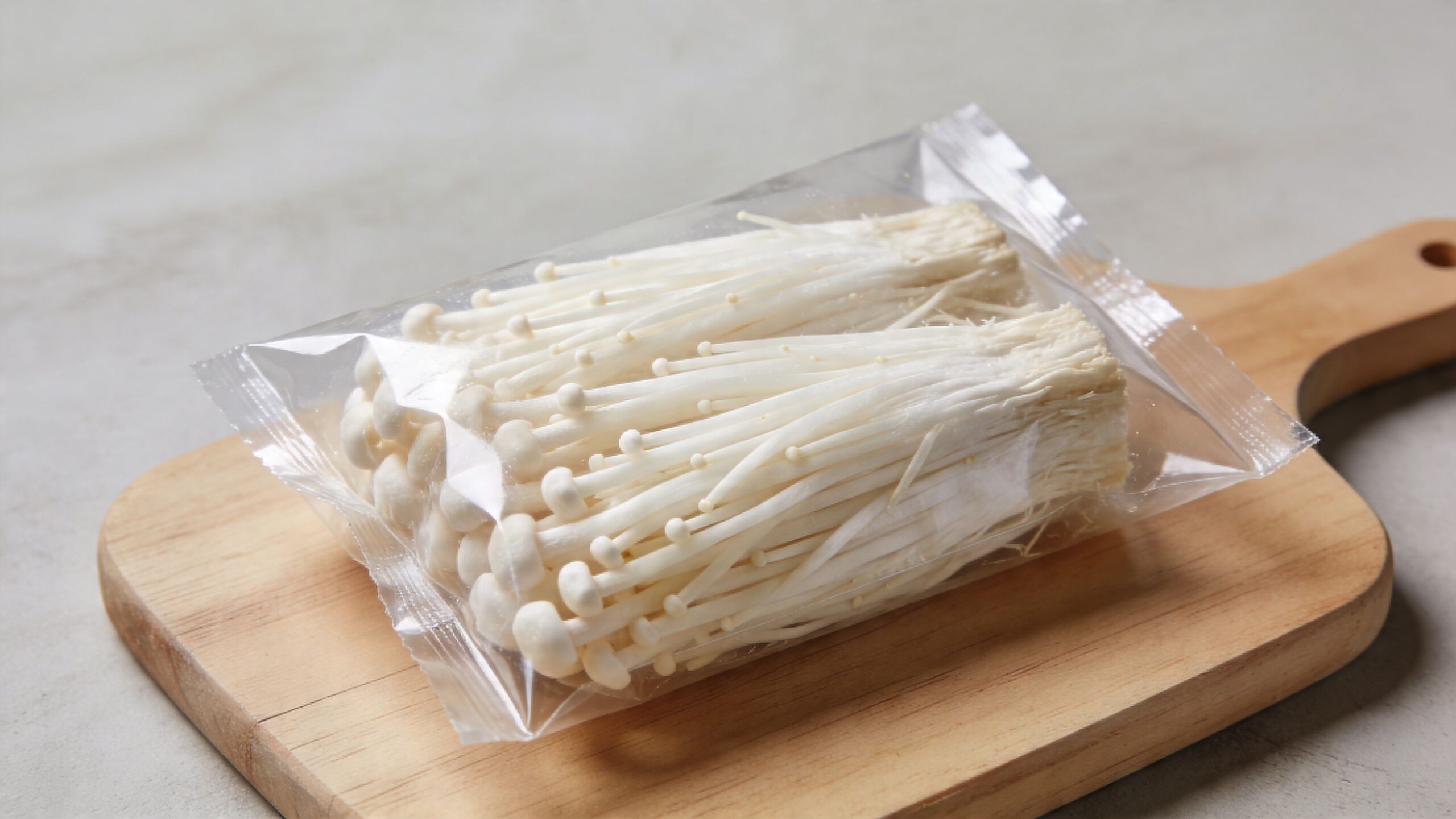
Enoki also don’t have much forgiveness once they leave the grower. By the time they reach your kitchen, part of their freshness window is already gone. That’s why they reward fast handling more than almost any other common cultivated mushroom.
If you buy mushrooms often, it helps to understand the wider rhythm of availability and freshness in produce shopping. A quick look at when mushroom season tends to matter most makes one thing clear. Even cultivated mushrooms benefit when you treat them like a perishable ingredient, not a shelf-stable grocery item.
Enoki are closer to bean sprouts than to a sturdy roasting mushroom in the way they respond to trapped moisture.
Why enoki spoil so fast
Three things work against them at once:
- Excess moisture: Condensation settles between the stems and creates a slick surface where spoilage takes off quickly.
- Improper airflow: A tight package holds damp air close to the cluster instead of letting moisture escape gradually.
- Bacterial risk: Enoki need colder handling than many people assume, especially because food safety guidance around this mushroom has tightened.
That’s why good storage isn’t passive. You’re not just putting mushrooms away. You’re managing a tiny environment.
Your First Steps After Unpacking Enoki
The first half hour matters. If the package sits wet on the counter or goes straight into the fridge untouched, you’ve already given the wrong side an advantage.
Start by opening the pack and checking the mushrooms closely. Look for visible condensation, slick stems, yellowing, or a sour smell. If they already feel damp, don’t ignore it and hope the refrigerator fixes things. Fridges preserve. They don’t undo damage.
Triage before storage
Use a simple routine:
- Open the original package right away. Retail packaging often holds too much moisture for home storage.
- Check the base and outer stems. If the root end looks especially wet or compressed, handle that first.
- Wipe away surface moisture. Use a dry paper towel or clean cloth and be gentle.
- Loosen the cluster slightly. Don’t shred it apart, but don’t keep it packed into one tight brick either.
This step is less about neatness and more about airflow. Enoki stored as one tight, damp mass tend to break down from the inside first. The center stays humid, and that’s where slime starts.
What to remove and what to leave alone
You don’t need to wash enoki before storing them. In fact, that’s one of the fastest ways to shorten their usable life. Water clings to the stems, then lingers in the bundle even after a quick shake or pat dry.
Do this instead:
- Keep them dry: Brush off obvious debris if needed, but save rinsing for just before cooking.
- Leave the root base intact for the moment: It helps hold the cluster together while you prep storage.
- Discard any obviously damaged outer strands: If a few stems are already mushy, remove them so they don’t spread moisture to the rest.
Practical rule: If enoki arrive home wet, dry them before they ever touch the refrigerator shelf.
A lot of people lose enoki because they treat the unopened package as a freshness shield. It isn’t. For short home storage, the original wrap often behaves more like a fogged-up raincoat. It keeps too much dampness in and not enough fresh air moving around the mushrooms.
The Best Refrigerator Storage Method
You get enoki home in good shape, slide the package into the fridge, and two days later the center feels slick while the outside still looks fine. That usually comes down to three problems working together. Too much moisture, too little airflow, and time spent in the wrong part of the refrigerator.
A good refrigerator setup treats storage like active prevention, not simple placement. Enoki keep best when the bundle can stay cool without trapping condensation around the stems. The goal is simple. Keep the mushrooms dry enough to resist slime, open enough to breathe, and protected enough that they do not shrivel.
Kikkoman’s enoki glossary and storage guidance supports the method many experienced cooks already use: wrap the mushrooms in absorbent paper, place them in a loosely closed bag, and store them on a middle shelf instead of in the crisper.
The storage setup that works
Use this method:
- Keep the bundle lightly wrapped. A dry paper towel works well. Newspaper also works if it is clean and uninked on the contact side. The wrap should absorb condensation, not squeeze the cluster tight.
- Place the wrapped enoki in a loose bag. Leave the bag slightly open or fold it over without sealing it hard. That small gap matters because trapped moisture is one of the fastest ways to ruin enoki.
- Store them on a middle shelf. That spot usually has steadier temperature and better air movement than the produce drawer.
- Change the wrap if it turns damp. Wet paper stops protecting the mushrooms and starts holding moisture against them.
- Use the mushrooms within the week if possible. Enoki are not a store-and-forget ingredient.
That setup works because each part handles a different problem. The paper towel pulls away surface dampness. The loose bag limits dehydration without creating a little greenhouse. Shelf storage gives the bundle more consistent airflow than a humid drawer packed with vegetables.
Why the crisper often disappoints
The crisper helps many vegetables because they like high humidity. Enoki are less forgiving.
In a crowded drawer, moisture hangs around longer and the cluster cannot vent well. The outside may still look usable while the inner stems soften first. I see this a lot with tightly packed enoki. The damage starts where you cannot see it until the bundle is already on its way to slime.
A middle shelf is usually the safer compromise. It is not as damp, and that is a good trade for a mushroom this thin and closely packed.
What helps and what hurts
Here is the short version of the trade-off:
| Storage Method | Expected Result | Common Outcome |
|---|---|---|
| Wrapped in dry paper, stored in a loose bag on a middle shelf | Best short-term refrigerator storage | Better moisture control and slower breakdown |
| Original sealed plastic package | Moisture stays trapped | Condensation builds and slime shows up faster |
| Airtight container with no absorbent layer | Very limited airflow | Stems soften and smell stale sooner |
| Washed before storage | Extra water clings to the cluster | Texture drops fast and spoilage risk rises |
| Crisper drawer with other produce | Humidity stays high | Center of the bundle breaks down earlier |
Temperature and handling still matter
Cold storage helps quality, but it also affects safety. Enoki should stay properly refrigerated and should not sit out on the counter any longer than needed for prep. If dinner is still hours away, put them back in the fridge.
Keep them away from drippy produce and raw meat packaging. A mushroom bundle wrapped in paper can absorb outside moisture fast, which defeats the whole setup.
If you end up with more enoki than you can use in time, drying is often a better plan than trying to stretch refrigerator life too far. This guide on how to dry mushrooms for longer storage is useful if you want a backup option.
Small habits that preserve freshness
A few habits make this method more reliable:
- Do not stack heavy containers on top of the bundle. Pressure bruises the stems and squeezes out moisture.
- Open the bag only when needed. Repeated handling warms the mushrooms and adds condensation.
- Rewrap after taking a portion. A fresh dry towel is better than putting the remainder back in a damp one.
- Check by smell and feel, not looks alone. Enoki can start turning slimy in the center before the outside clearly shows it.
If you want one rule to remember, use this one. Dry wrap, loose bag, cold shelf. That combination does the best job of handling the three enemies of fresh enoki: excess moisture, poor airflow, and early spoilage.
Long-Term Preservation Freezing and Drying Enoki
Sometimes dinner plans change. Sometimes a good sale gets the better of you. When you know you won’t use enoki soon, long-term preservation makes more sense than trying to stretch refrigerator storage beyond its comfort zone.
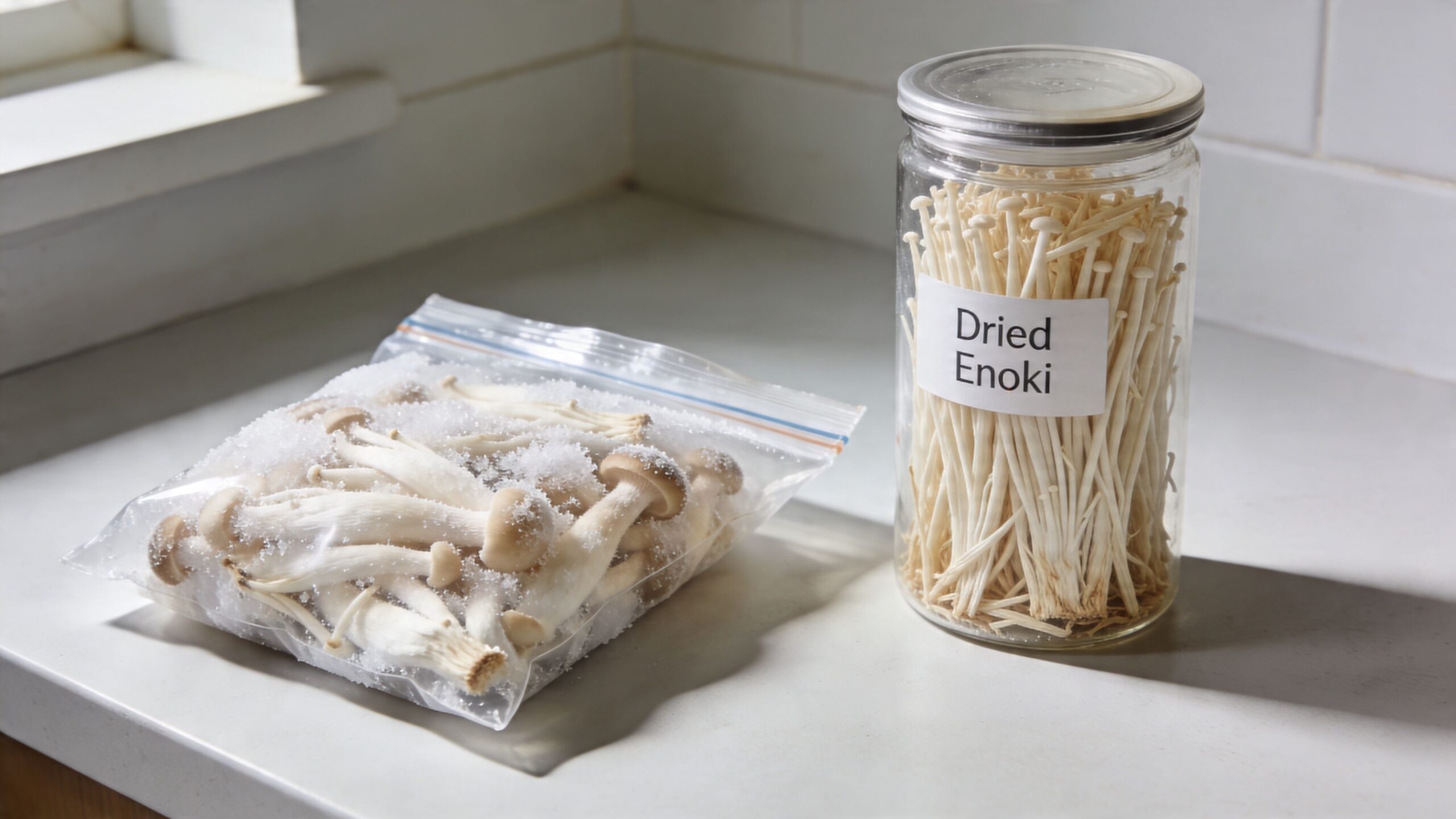
Freezing and drying solve different problems. Freezing is about convenience. Drying is about concentration. Neither preserves the exact fresh texture of enoki, but both can save a surplus from ending up in the trash.
Freezing for cooked dishes later
Frozen enoki are best for soups, broths, hot pot, and stir-fries where a slight texture change won’t matter much. I wouldn’t freeze them expecting that same fresh springy bite. That’s not the right goal.
Use this approach:
- Trim the base and separate the cluster into smaller portions.
- Blanch briefly in boiling water.
- Cool them quickly and dry them thoroughly.
- Pack in freezer-safe bags in meal-sized portions.
- Freeze flat so they don’t form one hard clump.
Blanching helps stabilize the mushrooms before freezing. Drying them well afterward matters just as much, because extra surface moisture turns into ice crystals and leaves the bundle mushier after thawing.
Drying for broth and pantry use
Drying takes enoki in a different direction. You lose the fresh snap, but you gain a compact pantry ingredient that rehydrates well in soup and adds depth to stock.
A dehydrator is the easiest route because it gives steady airflow and even drying. Oven drying can work if your oven runs low and you watch carefully. Air-drying is the least predictable option for enoki because they’re so thin and delicate. If the environment is humid, they can linger in an unsafe middle ground instead of drying cleanly.
If you want more mushroom-specific drying ideas, this guide to drying mushrooms is a useful companion read.
Here’s a practical visual walkthrough before you decide which path fits your kitchen best:
Choosing between the two
A simple rule helps:
| Method | Best for | Main trade-off |
|---|---|---|
| Freezing | Fast future meals, soups, stir-fries | Softer texture after thawing |
| Drying | Broths, noodle soups, pantry storage | Less of the fresh enoki bite |
If I had only one extra pack and knew I’d cook it soon, I’d freeze it. If I had a real surplus and wanted something useful later for soup season, I’d dry it.
Recognizing and Preventing Enoki Spoilage
You open the fridge for dinner, pull out the enoki, and the bundle looks a little tired. This is the moment that matters. With enoki, freshness drops fast once moisture builds, airflow stalls, and bacteria get a head start.
The signs that matter
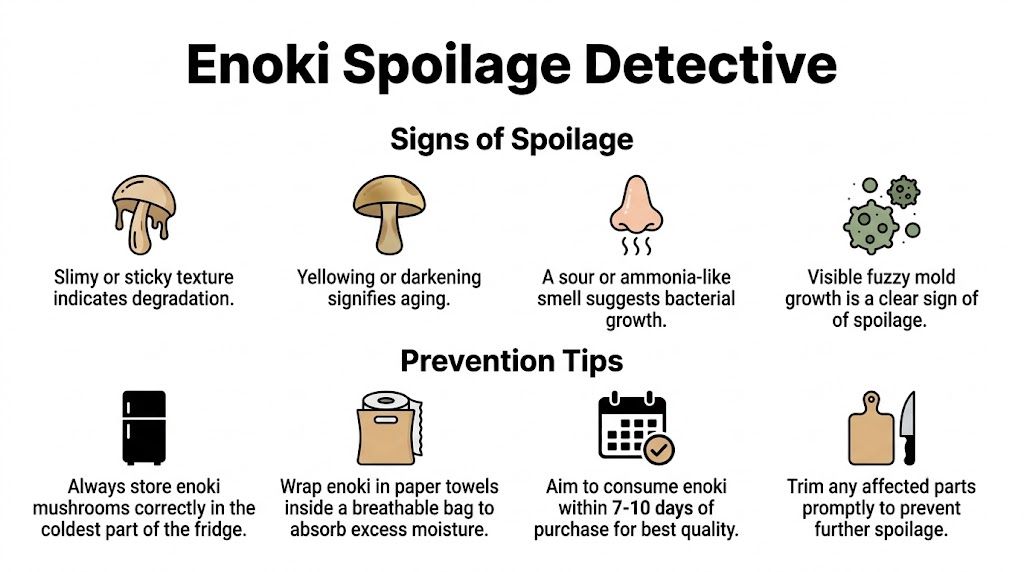
Enoki usually tell you what is going wrong if you check in the right order. Look, then touch, then smell.
Start with the stems and caps. Fresh enoki should be pale, fairly upright, and separate without clumping into a wet mass. A few dry or bruised strands at the edges are one thing. A slick bundle with yellowing, browning, or fuzzy mold is spoilage, not cosmetic damage.
Then touch them. Good enoki feel dry to lightly springy. If the cluster feels sticky, slimy, or leaves residue on your fingers, excess moisture has already moved from a quality problem into a safety warning.
Smell is the last check. Fresh enoki have a mild scent. Sour, fishy, fermented, or ammonia-like odors mean the pack should go in the bin.
Why enoki spoil so quickly
Enoki are thin, tightly packed, and easy to trap in their own dampness. That makes them more like a bundle of threads than a solid vegetable. Once condensation settles between the stems, airflow drops and the whole cluster softens from the inside out.
The three main enemies work together:
- Excess moisture coats the stems and speeds texture breakdown.
- Improper airflow keeps that moisture trapped instead of letting it evaporate.
- Bacterial growth becomes a bigger concern once the mushrooms stay wet and cold storage slips.
As noted earlier, keeping enoki properly chilled, cooking them thoroughly, and keeping them away from ready-to-eat foods are smart safety habits, not just freshness tips.
If enoki are slick, smelly, and discolored at the same time, discard them.
A practical salvage line
Home cooks often ask whether trimming will save a questionable pack. Sometimes it will. Sometimes it will not.
Trim and use them soon if the issue is limited to a dry base, a few crushed outer stems, or slight wilting without odor or slime. Discard the whole bundle if the moisture problem runs through the pack, the stems are sticking together, or the smell has turned. Enoki spoilage spreads through a dense cluster faster than it appears on the surface.
If you want a useful comparison point for judging mushroom texture and trimming habits, this guide on how to prepare chestnut mushrooms shows the same basic principle. Surface damage can be trimmed. Deep spoilage cannot.
Prevention habits that actually help
Prevention is active. You are managing moisture, airflow, and cross-contamination every time you check the pack.
- Replace damp wrapping right away. A paper towel that has gone wet stops protecting the mushrooms.
- Keep raw enoki separate from ready-to-eat foods. Do not let the package sit against salad greens, cut fruit, or leftovers.
- Cook enoki thoroughly. They are not a raw garnish in the fridge waiting for luck to improve.
- Check them daily if the pack is already opened. One extra day can be the difference between usable and waste.
- Buy for a specific meal or preservation plan. The easiest way to prevent spoilage is to avoid letting a fragile mushroom linger.
I treat enoki like fresh herbs with less forgiveness. Ignore them for a day or two after they start to turn, and the decline is usually obvious. Catch the problem early, and you can still use the good portion safely.
Creative Preservation Pickling and Infusing
Once you’ve handled the basics, enoki can move from “fragile produce” to “useful pantry ingredient.” This is less about chasing perfect fresh texture and more about giving extra mushrooms a second life with flavor built in.
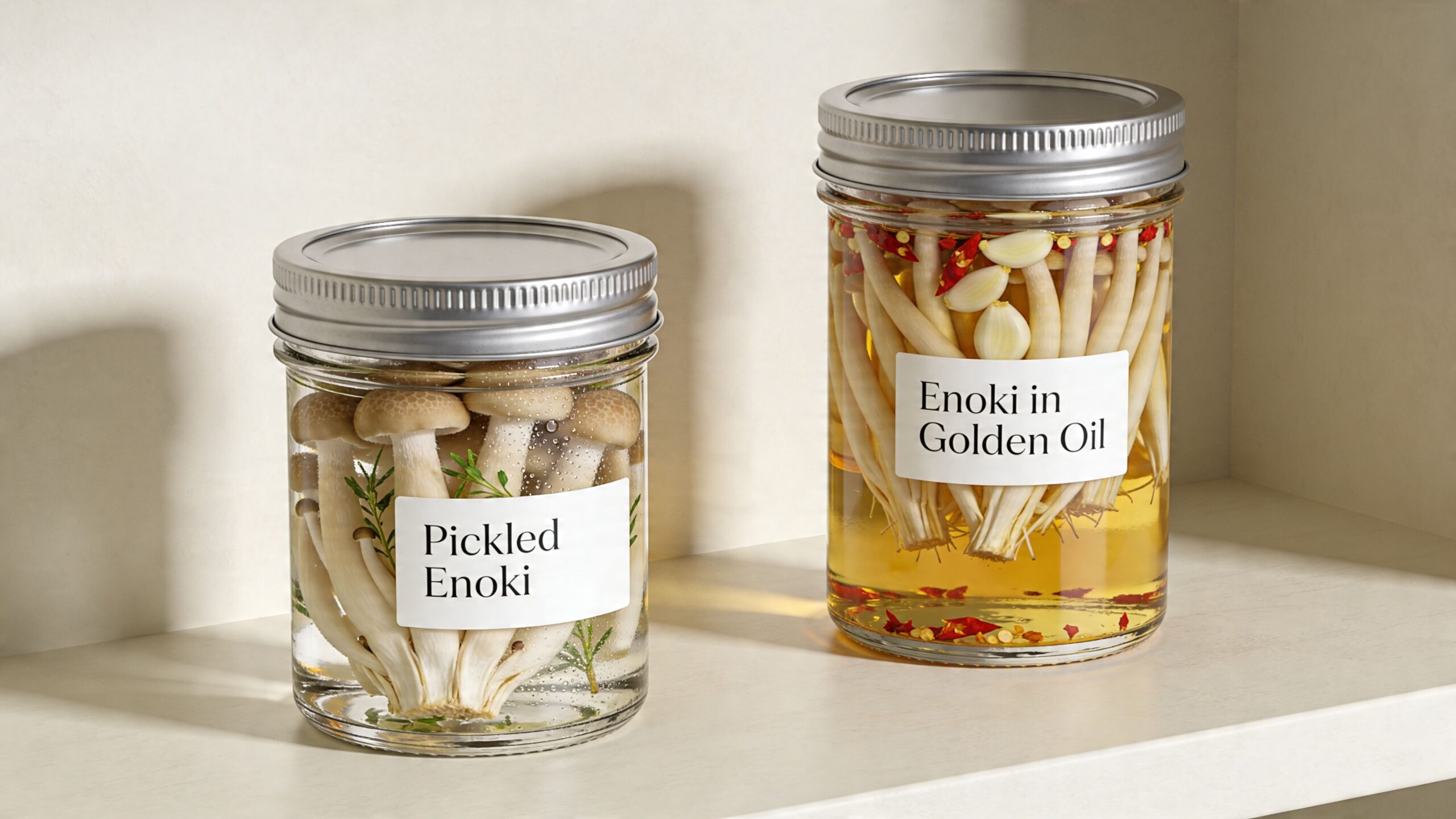
Quick-pickled enoki
Quick pickling works well when the mushrooms are still fresh but you know you won’t cook them in time. Trim the base, separate the cluster into small bundles, and cook them briefly before packing them into a clean jar with a hot vinegar brine seasoned the way you like. I like this route for noodle bowls, rice plates, and cold side dishes because the mushrooms keep their shape while taking on a bright tang.
The result isn’t “fresh enoki, but later.” It becomes a different ingredient. That’s the appeal.
Enoki-infused vinegar or oil
Infusing is a quieter preservation move. Cook the mushrooms first, then use them to flavor vinegar or oil for dressings and finishing. The flavor is subtle, not loud, but it adds a savory mushroom note that works especially well in warm salads and marinades.
If you enjoy preserving mushrooms in different ways, it can also be helpful to look at prep habits used for other varieties. This chestnut mushroom prep guide isn’t about enoki specifically, but it reinforces the same kitchen mindset: handle mushrooms gently, cook them with intention, and use preservation to create something worth reaching for later.
The best preservation method is the one you’ll actually use. A jar of pickled enoki that goes into lunches is better than a perfect freezer pack you forget for months.
Frequently Asked Questions About Storing Enoki
Should you wash enoki before storing them
No. Keep them dry and wash, if needed, right before cooking. Pre-washing leaves water between the stems, and that trapped moisture speeds softening and spoilage.
Is the original vacuum-sealed package good for storage
Usually not for home storage. It’s convenient for transport, but once you get home, that packaging can hold condensation too close to the mushrooms. Rewrapping them in absorbent paper and using a loose bag works better.
Why do enoki get slimy so quickly
Their shape works against them. The stems are thin, tightly packed, and quick to trap moisture. Once condensation settles into the bundle and airflow stays poor, the texture goes downhill fast.
Can you store enoki in the crisper drawer
You can, but it often isn’t the best place. Enoki usually do better on a refrigerator shelf with steadier airflow and less trapped humidity.
Can you cut off a bad part and keep the rest
Sometimes, but only if the problem is small and localized, such as a slightly bruised outer edge. If the bundle feels sticky, smells sour, or looks broadly discolored, discard it.
Should enoki be eaten raw
No. Cook them thoroughly. That’s the safest approach and the one that fits current food safety guidance around enoki handling.
What’s the simplest storage rule to remember
Dry wrap, loose bag, cold shelf. If you follow that, you’ll avoid most of the common mistakes people make with enoki.
If you’re interested in mushrooms beyond the kitchen, Metro Mush serves adult customers in the Detroit and Ann Arbor areas with a curated selection of mushroom products, including dried strains, chocolates, drinks, and local delivery options. You can browse the menu, check current deals, and learn more directly on their site.