
Popular guides treat extraction like a kitchen shortcut to a cleaner, stronger, more predictable experience. That advice skips the only question that matters. You still don't know how many milligrams are in the cup, the jar, or the candy.
You can't extract psilocybin from mushrooms at home and walk away with a known dose. Water, alcohol, and powdered fruiting bodies all leave the amount unknown. What you can do is see why the result moves, how store-bought products get mislabeled, and what to check before you trust anything.
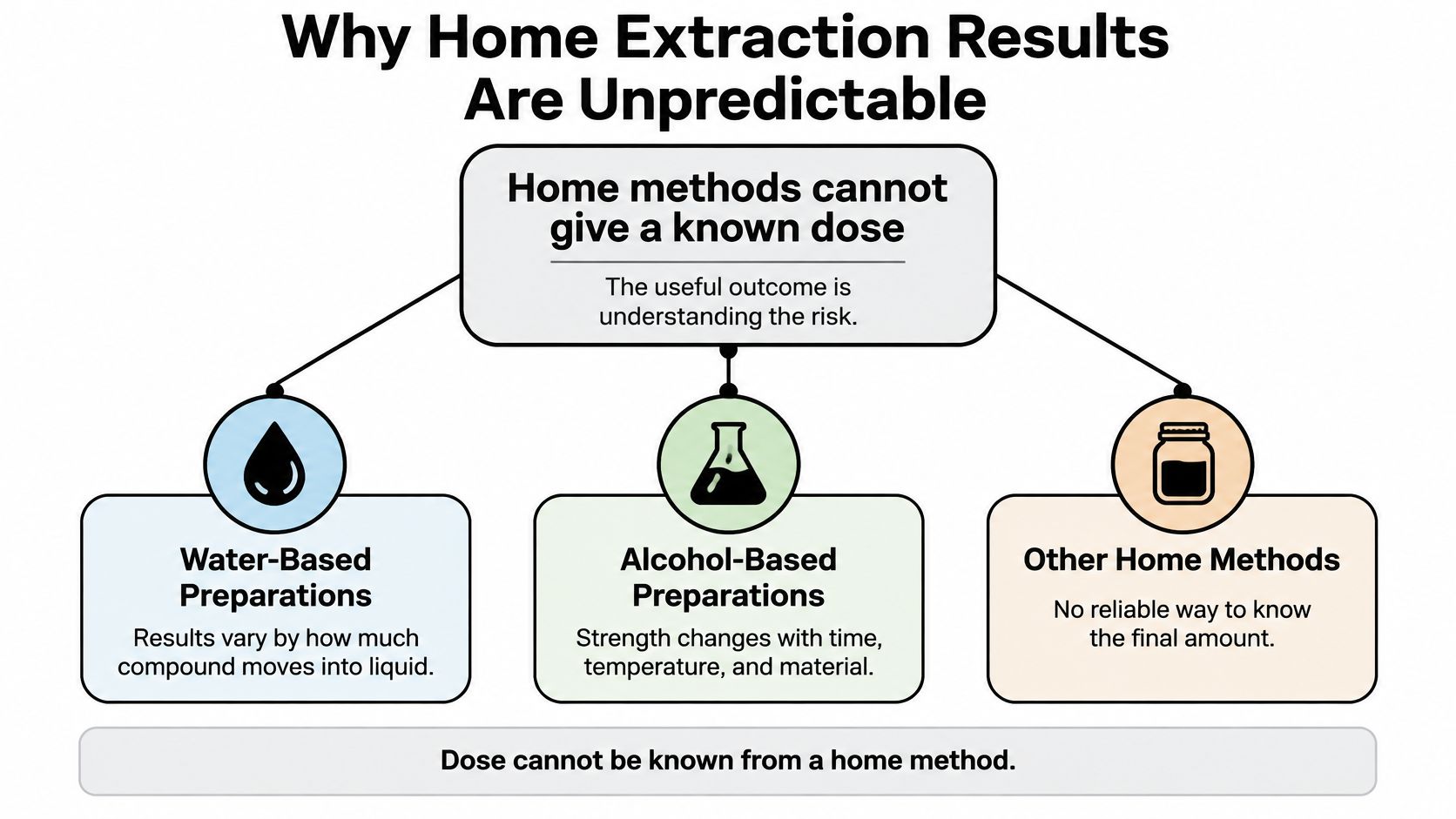
Why Home Extraction Results Are Unpredictable
A home method cannot give a known dose. The useful outcome is understanding the risk, not chasing a stronger liquid.
Swiss chemist Albert Hofmann isolated and identified psilocybin and psilocin from Psilocybe mushrooms in 1958, after about 100 grams of dried Psilocybe mexicana went for biochemical analysis. He also ingested 2.4 grams of that dried material while investigating the active compounds, as described in a review of psilocybin production routes. That work turned mushrooms into sources of defined chemicals that labs could isolate, synthesize, quantify, and study. Synthesis gave researchers a reproducible material. Home cooks don't have that option.
Modern work generally recognizes three production routes: chemical synthesis, biosynthetic production in engineered systems, and natural extraction from cultivated fruiting bodies. For natural material, recovered psilocybin depends on species, strain, tissue, drying, solvent, temperature, pH, and how many extraction cycles you run. The amount in the mushroom is not the amount in the extract.
Three families of methods
People usually mean one of three things when they talk about pulling actives out of mushrooms. None of them measures milligrams.
| Method family | Typical use | Main risk | Dose reliability at home |
|---|---|---|---|
| Water-based preparation | Brewed tea-style drinks | Heat can convert psilocybin into psilocin, which is less stable | Very low, unknown amount |
| Dry processing | Eating whole or powdered dried mushrooms | Uneven distribution across caps and stems | Low, varies bite to bite |
| Solvent-based extraction | Concentrates, lab analysis | Flammable or toxic solvents and concentrated contaminants | Very low without lab testing |
Water-based preparations move some compound into liquid and leave some behind. Heat can shift psilocybin toward psilocin, and psilocin breaks down more readily. Two identical-looking mugs can differ because one sat longer on the stove.
Dry processing looks simpler, and it still isn't even. Caps and stems don't carry the same chemistry, and a powder only averages the pieces you happened to grind. One spoon from the top of a jar isn't the same as one from the bottom if the blend wasn't uniform.
Solvent-based methods are where people expect precision. At home they mostly add new problems. Flammable or toxic solvents can remain in the product, and they can concentrate contaminants along with the alkaloids. A darker tincture is not a higher, known dose.
Why two equal weights aren't equal
Say two jars come from the same grow and both weigh the same on a kitchen scale. Jar A is stem-heavy. Jar B spent an afternoon in a warm car. Moisture and warmth can push psilocybin toward psilocin, and psilocin doesn't hold up the same way. Species, strain, the cultivation batch, and the individual fruiting body already differed before anyone dried anything.
Published work shows wide ranges in what labs recover, which is why no single percentage times a dry weight produces a trustworthy milligram figure. Multiplying a number you found online by the grams in the jar is false confidence.
Practical rule: Dry weight is not milligrams. Taste, color, and how strong it felt last time can't estimate potency.
Treat any homemade tea, powder, or concentrate as an unknown. A lab can quantify a representative sample. A kitchen can't.
Spotting Mislabeled Products Before You Buy
A strain name or printed milligram claim cannot establish what a chocolate bar contains. In an analysis of commercial products, researchers found samples whose contents did not match their labels, including products with undisclosed ingredients, according to a discussion of mushroom product testing and labels. Appearance, flavor, and advertised strength are not proof of identity or potency. “Extract” on a label can suggest purity without showing that anyone tested the batch.
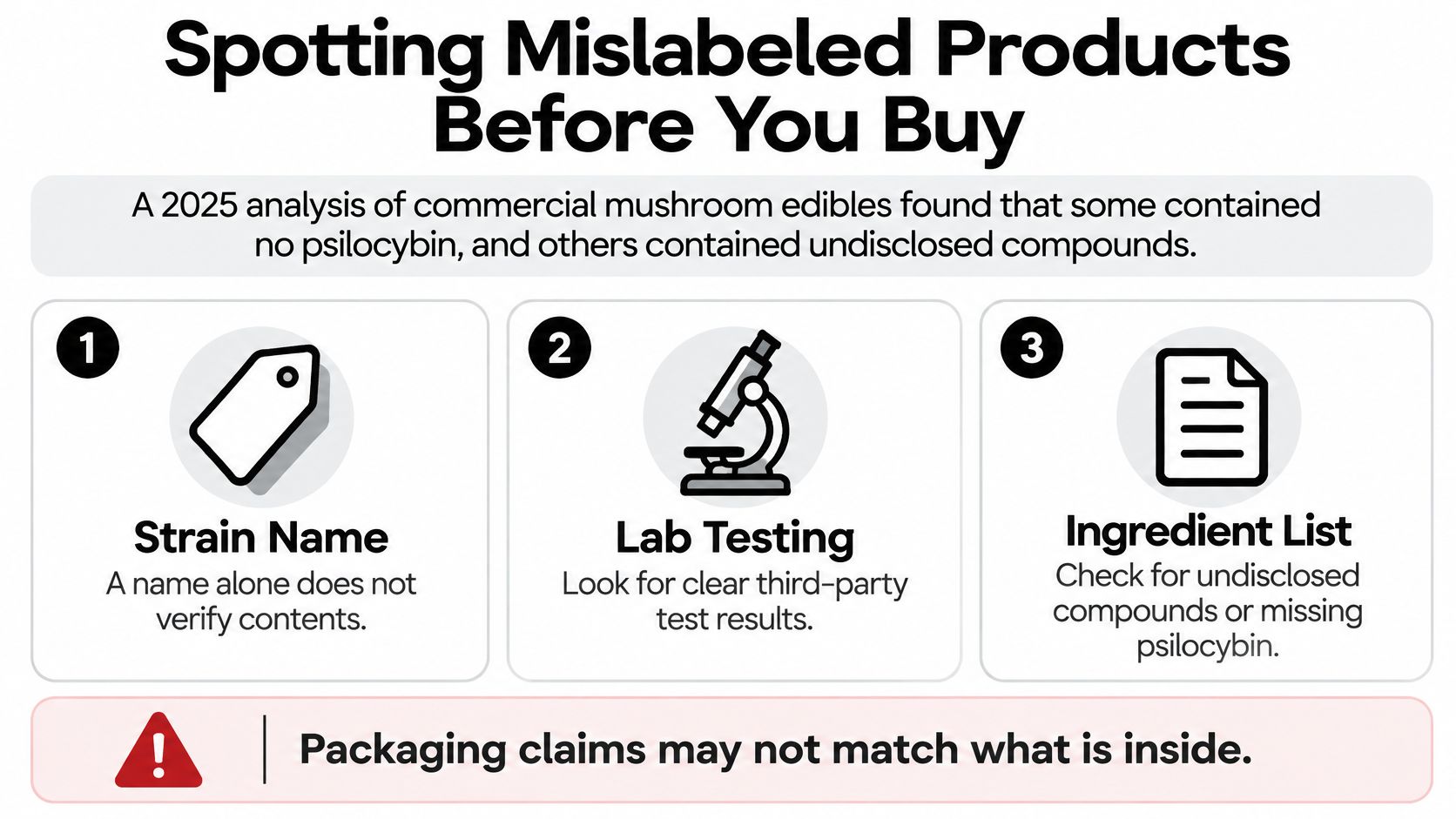
What a real certificate shows
A certificate of analysis is useful only if it identifies the product and batch you are considering.
| Label claim | What to verify | Why it matters |
|---|---|---|
| Milligram strength printed on pack | Lot-matched lab result for psilocybin and psilocin | Printed numbers can be unsupported or outdated |
| Strain name | Identity confirmed by chemical testing | Names don't confirm chemistry |
| Free of contaminants | Contaminant panel listed with results | Absence of a claim isn't evidence of testing |
| Natural mushroom product | Analysis for synthetic tryptamines and other undeclared compounds | Some products have contained undisclosed substances |
| Certificate included | Analysis date and matching lot number | A certificate from another batch proves nothing |
Check the analysis date, the compounds measured, and the lot number as a set. Psilocybin and psilocin should be reported separately. A single “total alkaloids” figure obscures which compound is present, while a report from a different lot says nothing about the package in front of you.
Look for contaminant testing, screening for undeclared active compounds, an expiration date, and storage instructions. A missing certificate is a warning sign. If the seller cannot provide a matching lab result, treat the contents as unknown. Compare the package with a checklist for spotting fake products, but remember that clear packaging alone cannot verify what is inside.
Liquid chromatography or gas chromatography paired with mass spectrometry can identify and measure compounds. Reagent kits and thin-layer tests are cheaper preliminary screens. They can miss substances and do not confirm an amount.
A short walk-through of why packaging and chemistry don't always match is here:
How to find a lab that can actually test
Look for an accredited laboratory that lists psilocybin and psilocin among its analytes. Before sending a sample, ask:
- Per lot: Are results reported for a specific lot, not only a brand name?
- Compounds: Which compounds are screened, including synthetic tryptamines?
- Method: Does the lab use chromatography with mass spectrometry, or a preliminary screen?
- Sample identity: Does the report identify the exact sample tested?
A report that cannot be tied to a specific lot is not evidence about the product you have. If no matching lab result is available, the contents remain unknown.
Legal Status Across Michigan and the US
Psilocybin is a Schedule I controlled substance under United States federal law. Possession, manufacture, and sale remain illegal federally even when a city tells its police to look the other way. Local rules change enforcement priority. They don't rewrite the Controlled Substances Act, and they don't make a home concentrate legal.
What decriminalization actually changes
Decriminalization and legalization get used as if they were the same word. They aren't.
Ann Arbor's city council voted to make enforcement against psilocybin the city's lowest policing priority. That is decriminalization, not a license to produce or sell. Detroit voters approved Proposal E, which decriminalized personal possession and certain therapeutic use inside city limits. Selling and distributing stayed off the table. Michigan state law still treats psilocybin as illegal, so a city policy doesn't bind state or federal officers.
Oregon's Measure 109 created a state-regulated psilocybin service program. Colorado's Proposition 122 set up regulated natural medicine programs and, for adults, narrowed criminal penalties around personal use. In both states, facilitated or commercial activity belongs inside the licensed system. Neither law is a green light to cook concentrates in a kitchen and hand them out.
| Jurisdiction | Personal possession | Extraction, manufacture, or sale |
|---|---|---|
| United States federal law | Illegal (Schedule I) | Illegal |
| Ann Arbor, Michigan | Lowest enforcement priority (decriminalized) | Still illegal to sell or distribute |
| Detroit, Michigan | Decriminalized for personal possession and certain therapeutic use | Still illegal to sell or distribute |
| Michigan state law | Illegal | Illegal |
| Oregon | Not authorized outside the licensed service model | Regulated only within licensed programs |
| Colorado | Narrowed penalties for adult personal use under the natural medicine law | Regulated only within licensed programs |
Lowest enforcement priority is not a safety net, and it isn't permission.
Decriminalizing personal possession rarely covers extraction, cultivation for sale, or distribution. Home concentrate production stays high-risk in every jurisdiction in that table. Solvent work can also trigger separate hazards and charges that have nothing to do with mushrooms.
Laws in this area move often. Before you act in 2026, read the current ordinance for your city and the statute for your state, and don't assume last year's headline still matches the code. The same habit helps with other regulated plant products. If you move hemp or similar goods, the rules for shipping hemp into Michigan show how state lines change what a carrier will accept. For how city policy and state law sit side by side here, see magic mushrooms in Michigan.
Confirm legal status before any use or preparation. A local vote doesn't erase federal exposure, and it doesn't make an unknown dose safer.
Harm Reduction If You Already Have Mushrooms
If you already have a product, or you're close to using one, the useful move is to shrink avoidable harm. This isn't a blessing and it isn't a lecture.
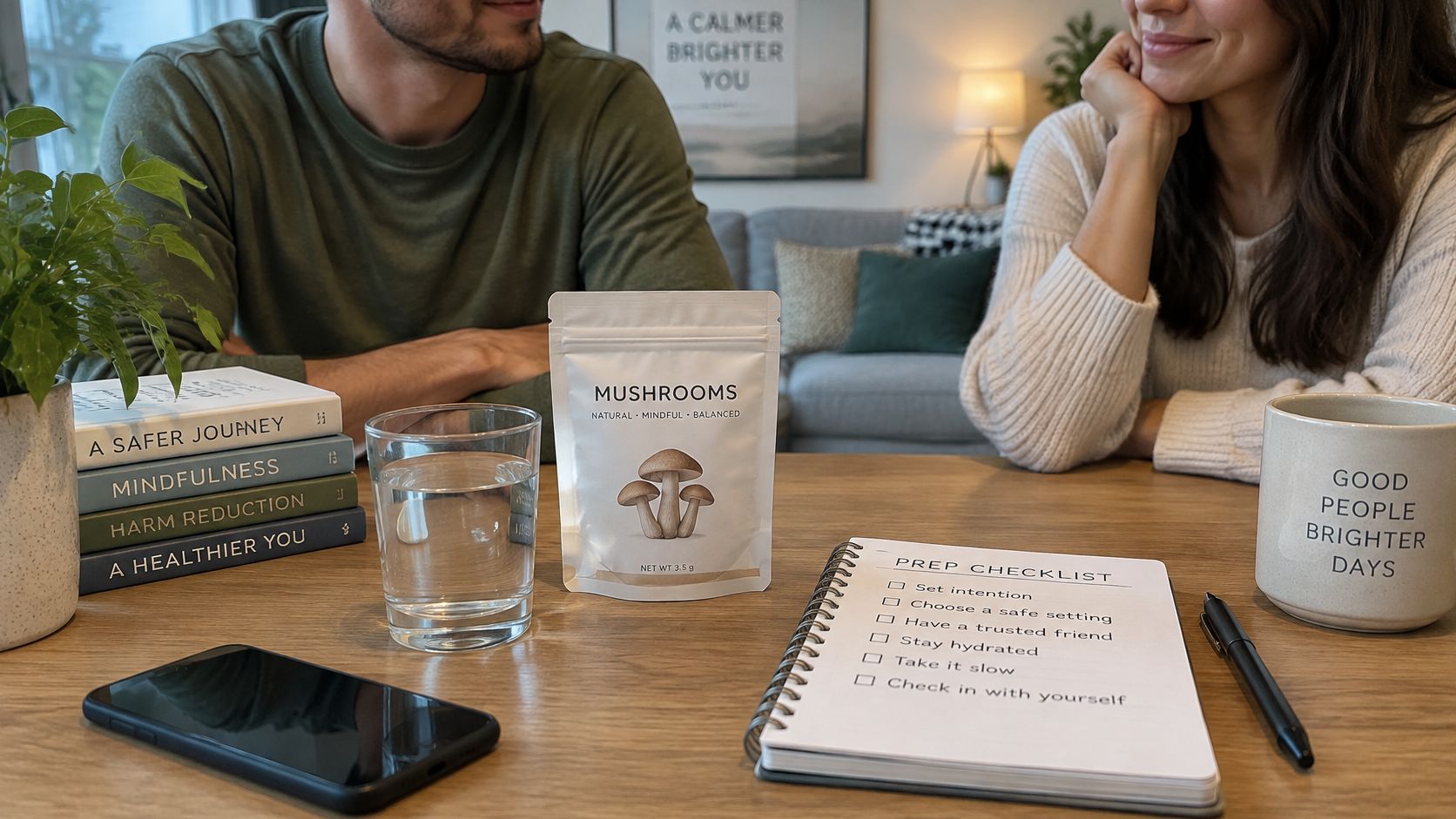
Don't use alone. Have a sober, trusted person present who knows what you took and when. If something goes wrong, that person can call for help while you're unable to explain yourself.
Don't run a solvent extraction at home. Solvents are flammable, they can leave toxic residue, and they can concentrate contaminants in ways you can't see. A stronger-looking liquid is a less predictable one, not a measured one.
Check medicines first. SSRIs, MAOIs, lithium, and other drugs can interact with psilocybin. Ask a clinician or pharmacist before any use, and tell them exactly what else you take, including supplements.
Stay off the road. Don't drive or operate machinery for the rest of the day. Judgment and reaction time can be off long after the obvious effects fade.
Don't stack substances. Alcohol, cannabis, and other drugs make the effects harder to predict and harder for someone else to interpret if you need help.
Use the smallest amount you can account for, then wait. Wait longer than you think you need before deciding that more is required. Redosing into an unknown product is how a mild plan becomes an overwhelming one.
Pick the room on purpose. A calm, familiar place and a clear plan for ending the experience reduce distress. Decide in advance when you'll stop, who you'll call, and what "this is too much" looks like.
More on this approach is in our note on what harm reduction means.
When to get help
Call for emergency help if someone has chest pain, severe agitation, overheating, fainting, trouble breathing, or thoughts of harming themselves. For poisoning questions in the United States, contact Poison Control at 1-800-222-1222. If there is any immediate danger, call emergency services rather than waiting to see whether it passes.
Decide Safely Before You Use Anything
Three questions settle this before any mushroom, tea, or edible is a reasonable choice.
Is this legal where you are, right now? Include possession, preparation, and purchase. A city that deprioritizes arrests hasn't legalized manufacture, and federal law still applies.
Can this exact product show a lot-matched lab result for psilocybin and psilocin? If it can't, the amount is unknown, and you can't predict the dose. A strain name and a number on the wrapper don't replace that result.
Do you have a mental health condition, a heart condition, or medicines that interact with psilocybin? If you do, talk with a clinician before any use. Bring the medicine list. Don't rely on a forum thread to clear an interaction.
Psilocybin is being studied for depression, anxiety, and addiction in clinical settings. Those trials use controlled dosing and supervision. That is a different situation from a home preparation or an unverified edible. You can't borrow the trial's safety conditions by using a similar-sounding product in your living room.
If the goal is mood or stress support, you don't have to start with a psychedelic.
Therapy, exercise, sleep changes, and ordinary medical treatment are available without an unknown dose and without a legal gamble. Plenty of people use those first and skip the mushroom entirely.
Your action is simple. Confirm the law, confirm the testing, and confirm your health situation before you prepare or consume anything from mushrooms. If any answer is no or "I'm not sure," don't proceed.
Metro Mush is a Detroit and Ann Arbor dispensary focused on clear product information for adults who want to know what they're considering. If you're comparing options and want labeling, sourcing, and harm-reduction context in one place, visit Metro Mush and read before you buy.