


You've probably already grown an easier mushroom and now want something with more personality, more difficulty, and a much narrower margin for error. That's where Psilocybe cyanescens, the Wavy Cap, changes the conversation. It's beautiful, aggressive once established, and highly rewarding, but it doesn't behave like a forgiving beginner species.
The main difference is simple. P. cyanescens is a wood-lover. If you approach it like a standard bulk grow on easy substrate, you'll waste time, materials, and likely lose the culture before it ever fruits. This species wants lignin-rich material, steady moisture, patience, and a real fruiting trigger. It responds well when the grower respects its ecology and badly when the grower tries to rush it.
A serious Psilocybe cyanescens grow usually goes one of two ways. You either build an outdoor patch and let seasonal conditions do much of the heavy lifting, or you attempt an indoor run that demands tighter environmental control. Both can work. Neither is casual.
An Introduction to Growing Wavy Caps
A grower who has only worked with fast indoor species usually hits the same wall with Wavy Caps. Spawn runs that looked healthy on grain slow down on the wrong wood. Moisture drifts for a few days and progress stalls. Fruiting never arrives because the culture never got the environmental cue it expects. Psilocybe cyanescens rewards careful setup, but it punishes assumptions.
That difference starts with ecology. P. cyanescens is a wood-loving species, and that single fact changes the entire cultivation plan. Hardwood chips, sawdust, fresh air, cool fruiting conditions, and steady surface moisture matter more here than they do with beginner mushrooms grown on richer, more forgiving substrates. A cultivator who respects that biology can get excellent results. A cultivator who treats it like a standard bulk grow usually ends up with contaminated spawn, weak colonization, or a patch that never fruits.
Why this species feels different
Wavy Caps demand a narrower, more deliberate workflow. They colonize lignin-rich material well, but they are slower to establish than many hobby growers expect, and they respond poorly to rushed transfers or sloppy substrate prep. Indoors, that means tighter control over humidity, fresh air, and temperature swings. Outdoors, it means building a patch that can hold moisture, breathe, and settle in over time instead of trying to force quick returns.
The practical choices change early:
- Wood selection affects colonization: Clean hardwood chips and suitable sawdust support stronger growth than random landscaping material.
- Water management decides momentum: Wood substrates dry unevenly, and recovery is slower once the bed or tub falls behind.
- Fruiting depends on conditions, not hope: Cool temperatures and the right seasonal or simulated cues matter.
- Time is part of the method: This species often performs better when the grower waits for the mycelium to consolidate fully.
Practical rule: Build the grow around the species' natural habitat, not around habits learned from easier mushrooms.
What makes it worth the effort
For serious hobbyists, the appeal is straightforward. P. cyanescens asks for real cultivation skill. Outdoor patches can become productive seasonal beds if the wood is right and the site holds moisture without turning stagnant. Indoor attempts are possible, but they require cleaner technique and better environmental control than the average beginner setup.
That is why supply decisions matter from the start. Clean culture, appropriate wood substrate, and reliable inoculation materials save time and reduce avoidable mistakes. If you are planning a careful run, start with psilocybe spore syringes selected for microscopy and cultivation planning and match the rest of the process to a wood-lover's needs.
The reward is not convenience. The reward is growing a species that teaches patience, substrate judgment, and environmental discipline better than almost any easy indoor mushroom can.
Wavy Caps 101 Legal and Safety First
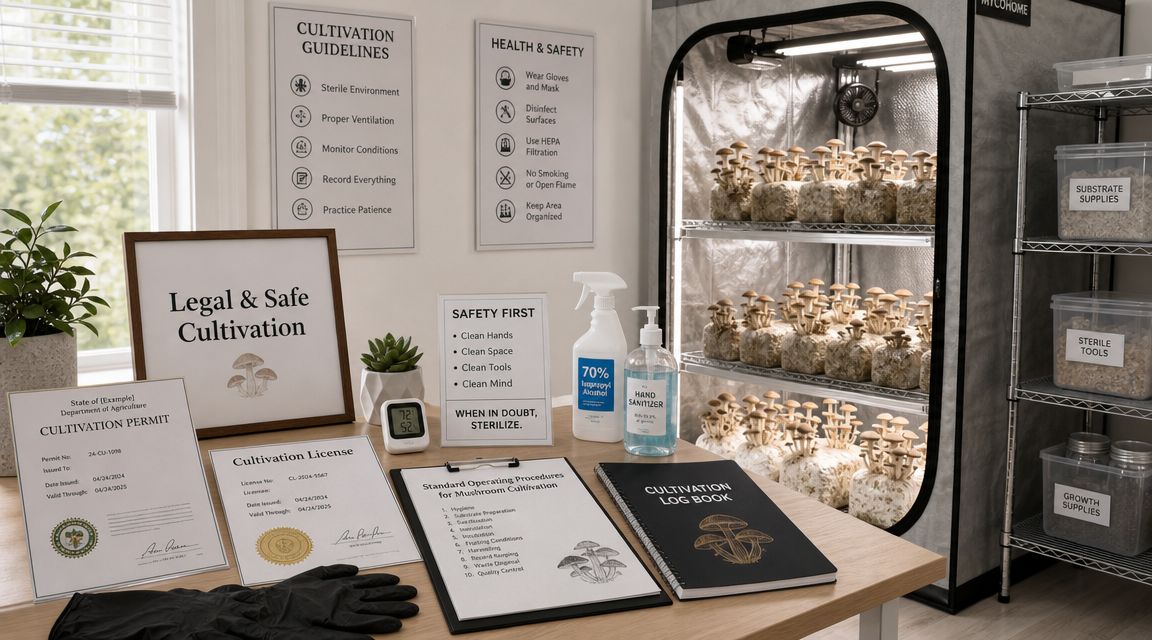
Before spores, grain, tubs, or wood chips, get clear on two issues: law and risk. This species deserves more caution than the average hobby grow because mistakes start early and can compound.
Know what species you're dealing with
P. cyanescens has a well-documented urban growth ecology tied to lignin-rich substrates, especially wood chips and mulched plant beds in urban areas. GBIF notes that it “grows today primarily on wood chips, especially in and along the perimeter of mulched plant beds in urban areas,” with a major North American concentration in the Pacific Northwest extending south to the San Francisco Bay Area, according to the GBIF species account for Psilocybe cyanescens.
That urban association leads many people to first notice it outdoors in cultivated beds, parks, or campuses. The problem is obvious. Seeing a mushroom in a mulch bed does not make it safe to identify casually. If foraging is what sparked your interest in cultivation, slow down and confirm every characteristic with absolute care before you ever assume a wild specimen is what you think it is.
Legal status comes first
Laws around psilocybin and psilocybin-producing species vary sharply by location. Federal law, state law, local enforcement priorities, and local decriminalization policies aren't the same thing. Some cities may deprioritize enforcement in limited ways, while other jurisdictions remain strict. That means there is no responsible shortcut here.
Use local statutes, current municipal guidance, and if needed qualified legal advice. Don't rely on forum summaries, old screenshots, or broad claims from strangers online. If you're shopping for microscopy materials such as Psilocybe spore syringes, do your due diligence before ordering anything.
Safety starts before cultivation
The first safety rule is positive identification. If a wild find inspired the project, never use appearance alone as your proof. Habitat clues help, but they don't replace microscopy, expert confirmation, or rigorous field identification.
The second safety rule is respect for potency and variability. Different wood-loving species have a reputation for hitting harder and less predictably than many casual users expect. The exact experience can vary with growing conditions, storage, and individual response. Anyone unfamiliar with Wavy Caps should approach them conservatively and never assume they map neatly onto prior experiences with another species.
A practical baseline:
- Start lower than your ego wants to
- Avoid mixing with other substances
- Use a safe setting with trusted people
- Keep obligations clear for the day and night
- Don't make wild-foraged material your first exposure
If there is uncertainty about legality, identity, or your own preparedness, stop there. Those are not minor details. They are the whole foundation.
Sourcing Your Cultivation Supplies
Supply mistakes cause more failed wood-lover projects than bad luck does. Most of them come from using the wrong substrate, underestimating moisture needs, or treating the setup like a generic mushroom kit.
The core materials that actually matter
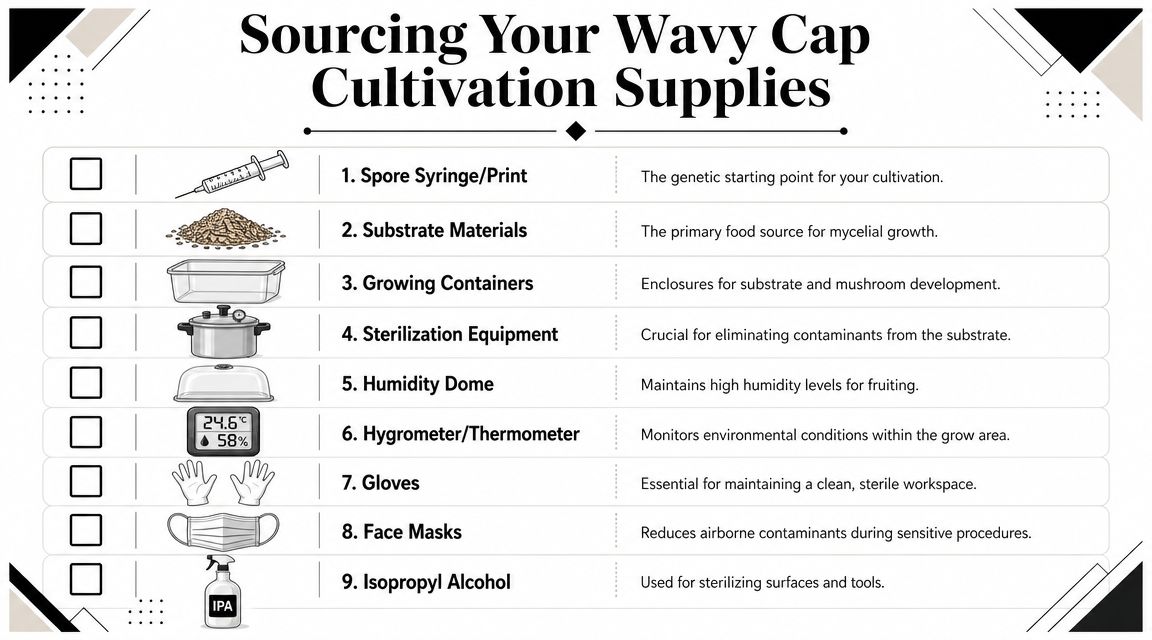
For a serious Psilocybe cyanescens grow, gather materials in three groups: culture, spawn, and final fruiting substrate.
Culture source
- Spore syringe or print: Your genetic starting point.
- A clean transfer plan: Agar or liquid work gives better control than blind inoculation.
Spawn preparation
- Grain jars or bags: These act as the expansion stage before wood.
- Pressure cooker: Non-negotiable for clean grain work.
- Mason jars, lids, filter patches, or suitable bags: Use tools built for sterile culture.
Wood-based expansion
- Hardwood chips or hardwood sawdust: This is the actual food source the species prefers.
- Tray, tub, or outdoor patch materials: Depending on your method.
- Spray bottle, gloves, mask, alcohol, thermometer, hygrometer: Small items that prevent preventable failure.
If you want a simpler entry point for managing substrate containment, some growers adapt workflows from magic mushroom grow bags, but with Wavy Caps the important distinction is still the substrate itself. The bag or tub won't rescue a poor wood choice.
What works and what doesn't
The best practical rule is to think in terms of clean hardwood products and avoid decorative landscaping material that was never meant for fungal culture.
| Material type | Usually a better choice | Usually a poor choice |
|---|---|---|
| Wood source | Clean hardwood chips or sawdust | Unknown mixed landscaping waste |
| Mulch type | Lignin-rich woody material | Bark-heavy mulch |
| Treatment status | Undyed, untreated material | Dyed or chemically treated mulch |
| Tree type | Mild hardwoods are generally preferred | Strongly resinous woods like pine or cedar |
Substrate and timing are tightly linked with this species. As noted in the Wikipedia entry on Psilocybe cyanescens, it doesn't typically grow on bark mulch, and fruiting is triggered by a temperature drop. The same source notes that in the San Francisco Bay Area it tends to fruit from late October through February when temperatures are about 50 to 65 °F (10 to 18 °C).
That's the practical lesson. Don't buy whatever “mulch” is cheapest and assume all chipped wood is equivalent.
Two supply lists depending on your route
For an outdoor patch
- Hardwood chips
- Colonized spawn
- Cardboard or coarse woody base material
- A shaded location with manageable moisture
- Water access
For an indoor tub
- Sterile grain
- Colonized wood-transition substrate
- Shallow tub or tray
- Humidity control tools
- Air exchange plan
- Temperature control
Outdoor work is usually more forgiving about fruiting cues. Indoor work is usually more forgiving about contamination control once your sterile process is solid. Pick based on your strengths, not on wishful thinking.
The Inoculation and Substrate Colonization Process
Most projects are won or lost during the first clean transfers, the first grain run, and the handoff from grain to wood, not during harvest or fruiting.
Start with clean spawn, not optimism
A lot of growers try to save time by injecting spores straight into a large final substrate and hoping the strongest organism wins. That's a beginner mistake. With a wood-lover, weak early technique tends to stay weak all the way through.
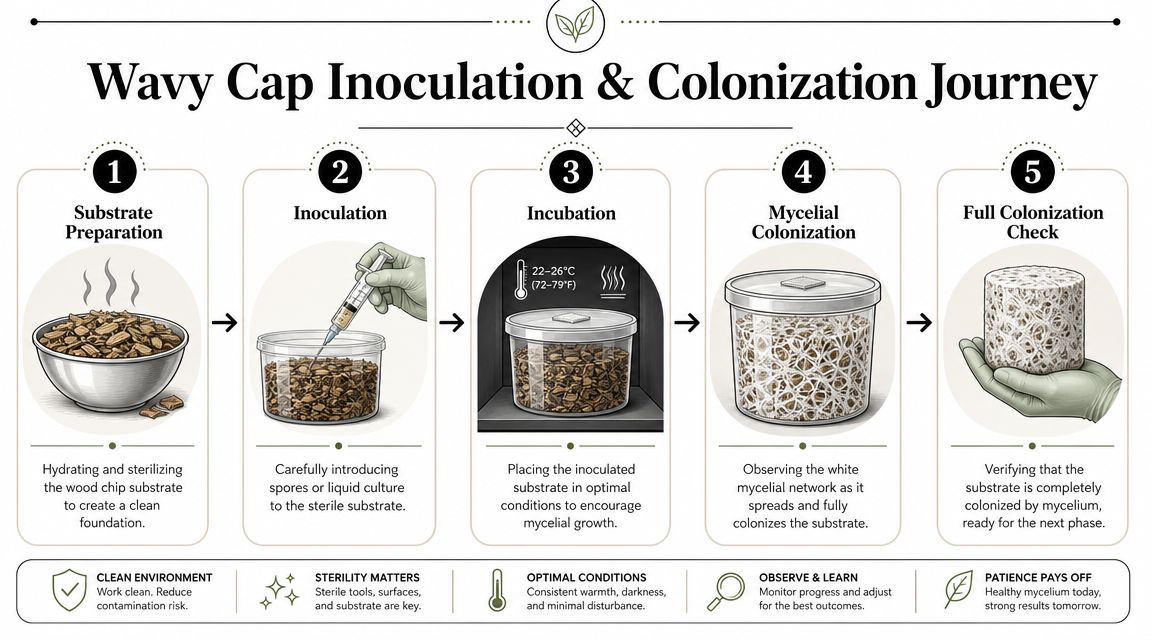
The cleanest progression is:
- Prepare and sterilize grain
- Inoculate under controlled conditions
- Wait for full healthy colonization
- Transfer to wood-based substrate
- Let the wood run fully before asking it to fruit
If you have access to mushroom liquid culture, it can improve consistency compared with direct spore work, but only if the culture itself is clean. Dirty inoculant just spreads failure faster.
What sterile technique actually means
Sterile technique isn't just wiping a table and wearing gloves. It means reducing competing life at every point where the culture is vulnerable.
A workable standard includes:
- Still air box or similarly controlled workspace
- Fresh gloves cleaned with alcohol
- Mask to reduce breath contamination
- Flamed or otherwise properly handled needle between uses
- Minimal talking and movement during inoculation
- No “just one quick peek” after sealing containers
Healthy colonization usually presents as organized white mycelial growth. Off colors, sour odors, greasy-looking wet spots, or sudden patches that look powdery or vividly colored should make you suspicious immediately.
Clean technique is cheaper than replacing contaminated grain, wood, time, and confidence.
Why this species tests patience
Published work confirms both the possibility and the challenge here. A reference-material study reported that six Psilocybe species, including P. cyanescens, were successfully cultivated indoors, and the same PMC source emphasizes that while standard mushroom colonization can take 2 to 4 weeks, wood-loving species like P. cyanescens often require longer substrate-run times, with success tied to keeping the growth medium moist through a much longer incubation window and maintaining excellent cleanliness, according to the PMC study on indoor cultivation and reference material development.
That matches practical experience. Grain may move at a reasonable pace if the culture is vigorous, but once transferred to wood, the project slows down. That slowdown isn't failure by itself.
A practical colonization workflow
Use this sequence if you want fewer surprises:
Prepare grain carefully. Hydrate it so kernels are hydrated but not dripping, load jars or bags, then sterilize fully. Wet, gummy grain invites bacteria.
Inoculate lightly. More liquid doesn't automatically mean faster success. Excess moisture can create bacterial problems.
Let grain finish completely. Don't transfer partially colonized spawn just because you're impatient. The strongest handoff happens when the grain is fully taken.
Move into wood in stages. Many growers do better with a smaller wood expansion before moving to the final tub or patch. The mycelium adapts more smoothly.
Hold moisture steady. The wood should stay moist, not flooded. Dry wood slows or stalls progress. Waterlogged wood chokes it.
What good judgment looks like here
If a container stalls, don't immediately add more water, shake aggressively, or expose it to fruiting conditions out of frustration. Diagnose first.
Ask:
- Is the substrate too dry?
- Is it too wet?
- Did contamination take hold?
- Did I transfer too early?
- Am I expecting cubensis-style speed from a wood-lover?
That last question is the one growers often avoid. It's also the one that saves the most projects.
Inducing Fruiting Conditions for Wavy Caps
A tray can look perfect for weeks, fully white and healthy, and still refuse to pin. Then the first cold stretch arrives outdoors, or an indoor setup finally gets the moisture and airflow balance right, and the culture responds. That is the part many growers underestimate with P. cyanescens. Colonization is only half the job. Fruiting asks for a believable seasonal shift.
Outdoor patch versus indoor tub
This species rewards growers who respect what it is. P. cyanescens is a wood-lover that expects cool air, steady surface moisture, and the kind of environmental signal that beginner species often tolerate without. Cubensis will forgive a lot. Wavy Caps usually will not.
Outdoor patches and indoor tubs can both work, but the trade-offs are different.
| Method | Main advantage | Main difficulty |
|---|---|---|
| Outdoor patch | Natural cooling, humidity swings, and seasonal timing | Weather exposure, pests, and less day-to-day control |
| Indoor tub | Controlled moisture, airflow, and cleanliness | Harder to provide convincing cold-season fruiting cues |
What usually triggers outdoor fruiting
Outdoor patches fruit best after the substrate is fully established and the weather turns cool and damp. A shaded bed of hardwood chips or similar woody material holds moisture better than an exposed patch that bakes during the day. Good patches are protected from direct afternoon sun, foot traffic, and drying wind.
Stable moisture matters more than constant soaking. A patch that dries between rains often stalls. A patch that stays waterlogged can sour, invite competitors, or produce weak surface growth without strong fruiting.
Useful targets for an outdoor patch include:
- Deep shade or filtered light
- Evenly damp wood at the surface and below it
- Cool seasonal temperatures
- Air movement without harsh drying exposure
- Enough protection that the bed stays intact
Mulch depth helps here. A thin layer dries fast. A deeper bed buffers moisture and temperature better, which is one reason outdoor patch culture often succeeds more readily than indoor fruiting for this species.
Why indoor tubs stall so often
Indoor growers usually run into one of four problems. The room stays too warm. The substrate surface cycles between wet and dry. Fresh air is restricted because the grower is trying to hold humidity. Or the culture gets moved into fruiting before the environmental cue is strong enough.
P. cyanescens does not want tropical conditions. It wants cool, humid air and a surface that stays lightly moist without pooling. That balance is harder than it sounds.
What to control indoors
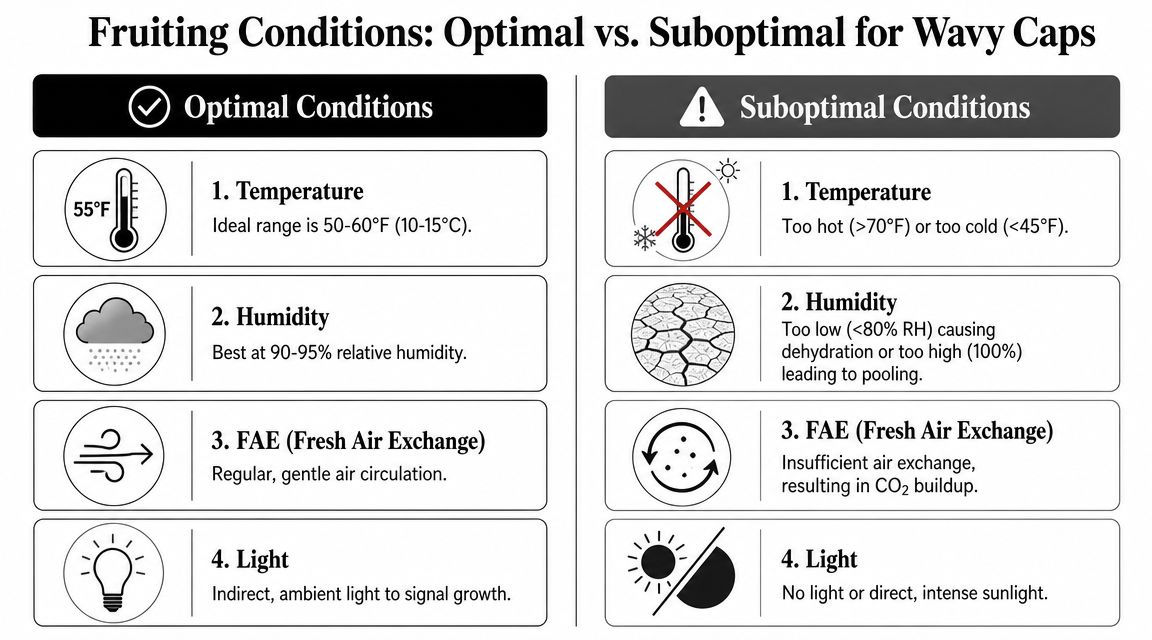
Indoor fruiting works best when temperature, humidity, light, and fresh air all point in the same direction. The goal is not maximum humidity or maximum airflow by themselves. The goal is a stable cold-season signal.
Use this checklist:
- Drop temperatures into a cool range and keep them there
- Maintain high humidity without beads of standing water
- Give regular fresh air exchange so the surface does not go stale
- Use indirect light on a normal daily cycle
- Watch the substrate surface, not just the hygrometer
Surface condition tells the truth. If the top layer looks dry and flat, pinning often slows. If it looks glossy, swampy, or matted from overmisting, growth can also stall. The best surface usually looks moist, alive, and slightly textured.
Once pins appear, avoid dramatic corrections. Do not flood the tub because growth seems slow. Do not suddenly increase airflow until everything dries out. Small adjustments preserve momentum. Big swings often cost a flush.
That is the practical difference with Wavy Caps. Fruiting is less about forcing mushrooms out of a colonized block and more about giving a wood-loving species conditions it recognizes.
Proper Harvesting and Post-Harvest Processing
A mature Wavy Cap patch can go from perfect to past-prime fast, especially in cool, wet weather. Harvest on time, handle the fruits cleanly, and leave the bed or tray intact. That matters more with P. cyanescens than with many beginner species because wood-based substrates recover more slowly if you gouge them up during picking.
When to pick
Pick fruitbodies once the caps have expanded and the mushrooms still feel dense and fresh. For this species, I watch for a developed cap with the margin starting to relax rather than staying tightly inrolled. Waiting for every fruit to reach the same stage usually creates more cleanup, more slug or mold damage outdoors, and more broken stems during harvest.
Use the least disruptive method the cluster allows. A gentle twist-and-lift works if the stem releases cleanly. If several stems are fused at the base or the substrate starts lifting with the mushroom, switch to a clean blade and cut at the base.
After each pass, pause and inspect the surface. Remove aborted fruits, soft tissue, and obvious debris. Leaving damaged material behind is one of the easiest ways to invite bacterial slime or mold into a patch that was otherwise healthy.
A few rules keep harvests cleaner:
- Harvest in small passes instead of stripping everything at once
- Handle clusters by the stem base, not the caps
- Keep wood chips, soil, and decayed tissue out of the harvest
- Avoid tearing holes into the colonized surface
- Set aside any questionable material rather than mixing it with sound fruits
Outdoor patches need one extra check. Look for insect damage, slug grazing, and dirty stem bases before the mushrooms go into the drying tray. Indoor fruits are usually cleaner, but they bruise easily if piled while still fresh.
Drying is where quality is preserved
Fresh P. cyanescens does not store well. Wood-loving species often fruit in cool conditions, but that does not buy much time after harvest. If the goal is storage, start drying soon after picking.
Dry them until they are fully brittle. Cracker dry is the standard because anything less leaves enough internal moisture for softening, off odors, or visible spoilage later. Thick stems can feel dry on the outside and still hold water in the center, so check the largest fruits, not just the smallest ones.
A dehydrator with steady airflow is the most predictable option. Air drying alone can work as a first step, but it rarely finishes the job in damp climates, which is exactly where many growers attempt this species. If a mushroom bends instead of snapping, keep drying.
Dry enough for storage means fully brittle, not leathery.
Storage that protects the harvest
Once dry, pack the mushrooms in an airtight container with a fresh desiccant pack. Store the container in a cool, dark, secure place and label it clearly so it cannot be mistaken for culinary material.
For serious hobbyists, post-harvest discipline is part of the grow, not a separate chore. P. cyanescens asks for more patience than easier species from inoculation through fruiting, and that same standard applies after harvest. Clean picking, complete drying, and careful storage protect both the material and the work that went into producing it.
Troubleshooting and Responsible Harm Reduction
A common Wavy Cap failure looks like this. The spawn runs well enough on the starter material, the bed gets built, then progress slows for weeks and nothing fruits when the weather turns. With P. cyanescens, that usually traces back to a specific mismatch between the species and the grow setup, not bad luck.
This is one of the main differences between wood-lovers and beginner species. Easier mushrooms forgive small errors in substrate choice, moisture, or fruiting cues. P. cyanescens usually does not. It wants suitable hardwood material, steady moisture without stagnation, and a seasonal signal strong enough to shift from colonizing wood to producing mushrooms.
Common cultivation problems
Contamination during inoculation or expansion often starts with weak spawn handling, dirty transfer work, or overly wet material. Healthy P. cyanescens mycelium is white and organized. If you see spreading green, gray, black, or bacterial-looking slime, or you get a sour or rotten smell, remove that container or patch material from the project immediately. Hoping it will recover usually costs you the clean material nearby.
Stalled wood colonization is one of the biggest frustration points with this species. In practice, the cause is usually one of four things: the wood is too dry, the wood is staying soggy and airless, the spawn was not vigorous enough to take the new substrate, or the material itself is a poor choice. Decorative bark products are a frequent problem because they can be old, resinous, contaminated, or wrong for the culture. Fresh hardwood chips and weathered hardwood debris tend to perform better than random landscaping mulch.
Indoor growers run into a different version of the same problem. They often try to force P. cyanescens to behave like a dung-loving mushroom. That leads to warm incubation, over-misting, and fruiting chambers that stay humid but stale. Colonization may continue slowly, but fruiting stalls because the culture never gets a convincing environmental shift.
Refusal to fruit usually comes down to conditions, not patience alone. This species responds to cool temperatures, fresh air, and a surface that stays lightly moist instead of wet. If a bed is fully colonized and still inactive, reconsider whether it has received autumn-like conditions. For outdoor patches, that may mean the site is too exposed, too dry, or built with chips that break down poorly. For indoor attempts, it often means the setup is fighting the biology of the species.
A practical checklist helps:
- Bad smell: treat it as contamination, isolate it, and stop handling clean projects before washing up and changing gloves.
- Dry surface and shrinking chips: water the bed or tray evenly and give the wood time to rehydrate. Do not flood it.
- Soggy substrate: increase airflow, reduce misting, and check whether the container or bed is draining properly.
- Strong colonization, no pins: reassess temperature, fresh air, and seasonal timing.
- Weak spread through mulch: replace questionable substrate with suitable hardwood material instead of trying more humidity as a cure-all.
Outdoor patches are often the better fit for serious hobbyists because they match the species more naturally and give the mycelium room to establish over time. The trade-off is slower feedback and less control. Indoor work gives tighter control, but the margin for error is smaller because you are trying to simulate a cold-weather wood habitat in an artificial space.
Harm reduction matters just as much
Potency can vary a lot from one fruit to another and from one flush or patch to the next. Homegrown and foraged material should never be treated as interchangeable, even when it came from the same general project.
A cautious approach includes:
- Use a much smaller amount than you would with a familiar species or batch
- Do not combine it with alcohol or other drugs
- Choose a stable, low-stimulation setting
- Have a sober, trusted person available if there is any uncertainty
- Label and store dried material so it cannot be confused with culinary mushrooms
Identification matters before any use decision. If there is uncertainty about species, contamination, drying quality, or storage history, do not proceed.
The same applies to state of mind. If someone is anxious, unstable, sleep-deprived, or under significant stress, that is a poor time to experiment.
If you're in Southeast Michigan and want a more convenient way to explore curated psilocybin products without taking on a full wood-lover cultivation project, Metro Mush offers adult consumers in the Detroit and Ann Arbor areas a range of dried mushrooms, chocolates, and drinks with straightforward ordering and local delivery options.