


You're probably here because you saw a cluster of blue-gray mushrooms at a market, in a grow kit, or on a menu and thought: are those oyster mushrooms, and what do I do with them?
That curiosity is well placed. Blue oyster mushrooms are one of the easiest gourmet mushrooms to enjoy without needing a chef's training or a full grow room. They cook fast, they look dramatic, and they're forgiving enough for beginners who want to try sautéing, roasting, or even growing mushrooms at home for the first time.
An Introduction to the Blue Oyster Mushroom
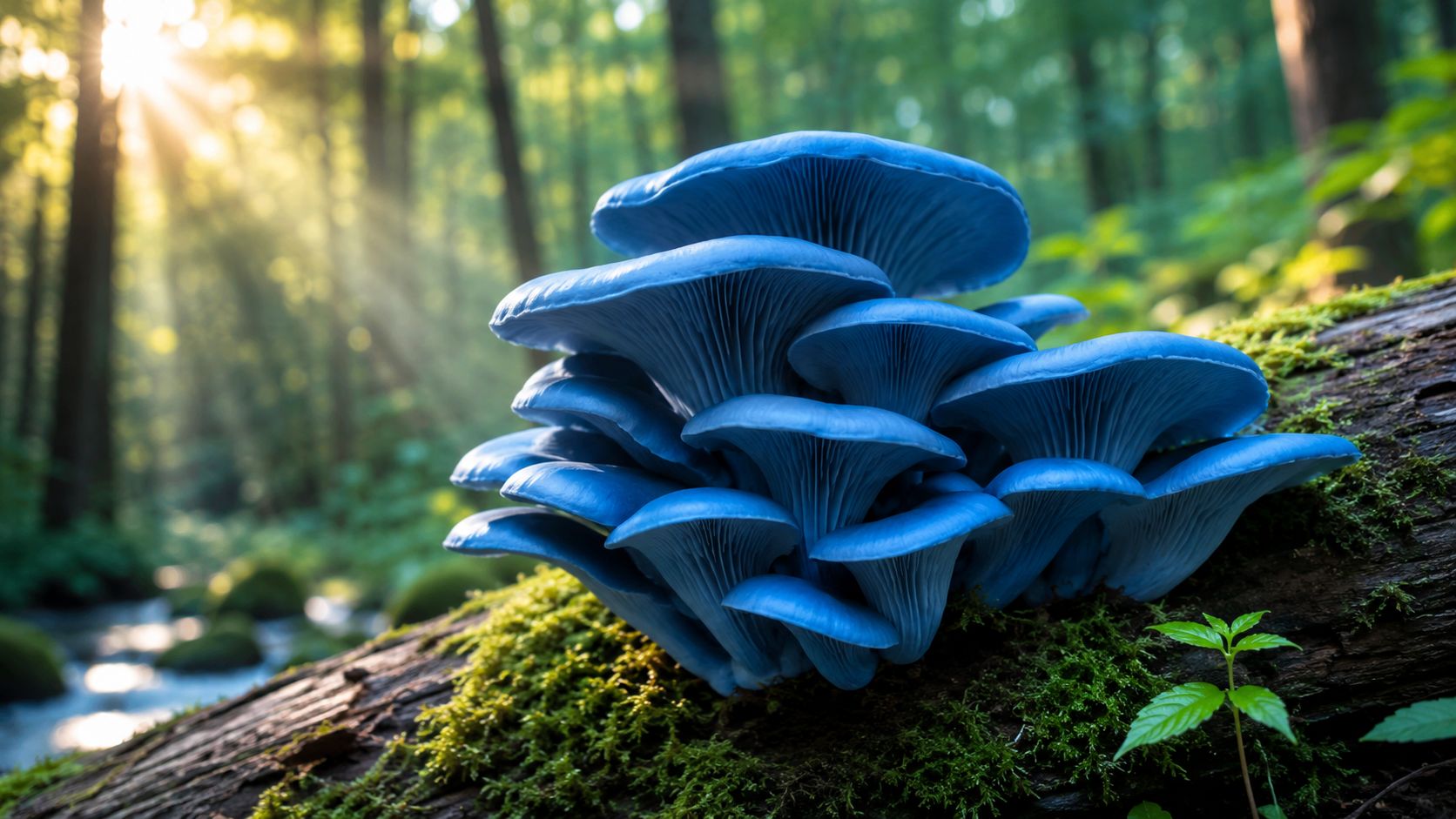
A fresh blue oyster mushroom cluster tends to stop people in their tracks. The caps can look steel-blue, slate, or blue-gray depending on age and lighting. They grow in layered shelves rather than in neat little button shapes, so they already feel different from the standard grocery-store mushroom.
That visual appeal isn't a niche curiosity. Oyster mushrooms are one of the most cultivated edible mushroom groups globally and are estimated to account for around 27% of total global mushroom production, according to a review on global oyster mushroom production and markets. The same source notes a projection that the oyster mushroom market could rise from USD 59.2 billion in 2024 to USD 124.3 billion by 2034.
Why beginners like them
Blue oyster mushrooms sit in a sweet spot between interesting and approachable. They feel gourmet, but they don't ask much from you in the kitchen. Tear them into strips, add heat, and they quickly become savory and tender with crisp edges if you give them enough space in the pan.
They're also a practical mushroom to learn on if you want to grow. Oyster species are known for fast growth and strong productivity under good conditions, which is one reason they show up so often in beginner grow kits and small indoor setups.
Practical rule: If you want one mushroom that teaches you how to shop, cook, and grow with confidence, blue oysters are a strong place to start.
What matters most
When people first buy blue oyster mushrooms, they usually have three questions:
- How do I identify them well: You want to know what makes a true blue oyster look and feel different from other mushrooms.
- How should I cook them: Texture changes fast with mushrooms, so technique matters more than complicated seasoning.
- How do I store them without waste: Regarding storage, many guides stay too vague, even though storage often decides whether your mushrooms end up delicious or slimy.
Blue oyster mushrooms reward attention, but they don't demand perfection. If you learn when they're fresh, how to cook off excess moisture, and how to store the extras, you'll get a lot out of one cluster.
What Are Blue Oyster Mushrooms Exactly
Blue oyster mushrooms are usually treated as a blue-gray form of the oyster mushroom complex, most commonly associated with Pleurotus ostreatus. For a beginner, the useful part isn't the taxonomy. It's knowing what to look for in real life.
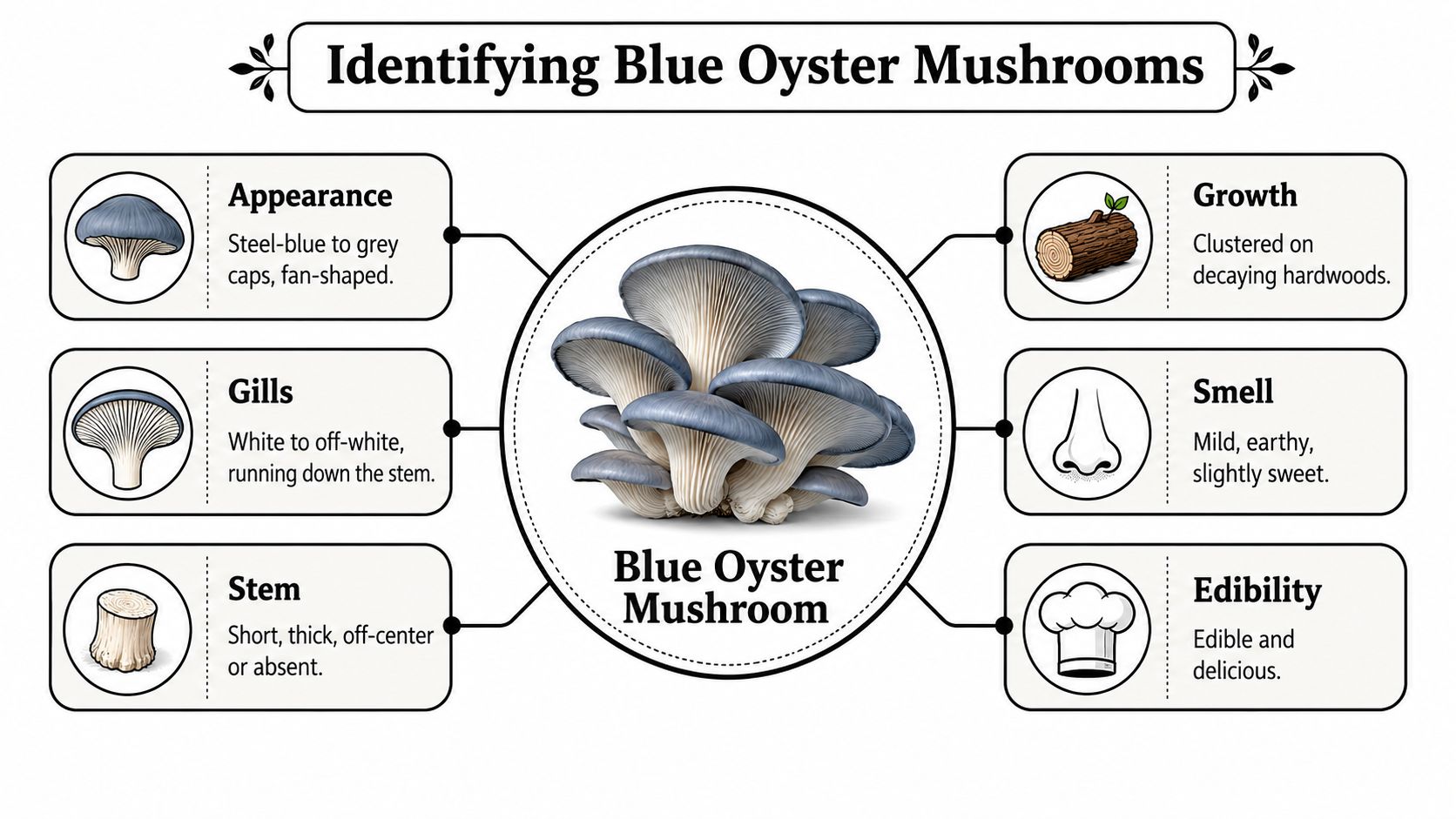
The first clue is the cap. Blue oysters usually have fan-shaped or shell-like caps that overlap in layers. Young mushrooms often show the strongest blue-gray color. As they mature, that color can soften toward gray.
The easiest visual cues
A good way to recognize a blue oyster mushroom is to check several traits together rather than relying on color alone.
- Cap shape: Think of a small oyster shell or a soft hand fan.
- Gills: The gills run down the stem instead of stopping neatly underneath the cap. This downward-running pattern is one of the easiest features to remember.
- Stem: The stem is often short, off-center, or barely noticeable.
- Growth pattern: They usually appear in clusters, with many caps growing from a shared base.
- Texture: Fresh clusters feel springy and firm, not wet or limp.
If you've only seen round white button mushrooms, blue oysters can look almost floral by comparison.
Why they seem to appear all at once
Blue oysters have a fast cycle, which helps explain why growers love them and why store-bought clusters can look so fresh and lively. A blue oyster mushroom can go from inoculation to harvest in about 4 to 6 weeks, and the harvest window usually appears 3 to 7 days after the fruit bodies begin forming, according to this cultivation-focused overview of blue oysters.
That short fruiting window matters because beginners often wonder why one day the cluster looks perfect and a few days later it seems much flatter. Blue oysters mature quickly. A cluster that looks tight and compact today may look broader and more delicate very soon.
Fresh blue oysters usually look youthful and tidy. Older ones often spread wider, soften in color, and become more fragile.
What confuses people most
People often assume the blue color means they're a separate category in the same way shiitake and lion's mane are separate categories. In practice, blue oyster mushroom is better understood as a recognizable oyster type within a broader oyster group.
That's why you'll often see them sold as oyster mushrooms, blue oysters, or Pleurotus ostreatus varieties depending on the seller. For cooking and buying, what matters most is appearance, freshness, and handling.
Culinary Uses and Simple Recipes
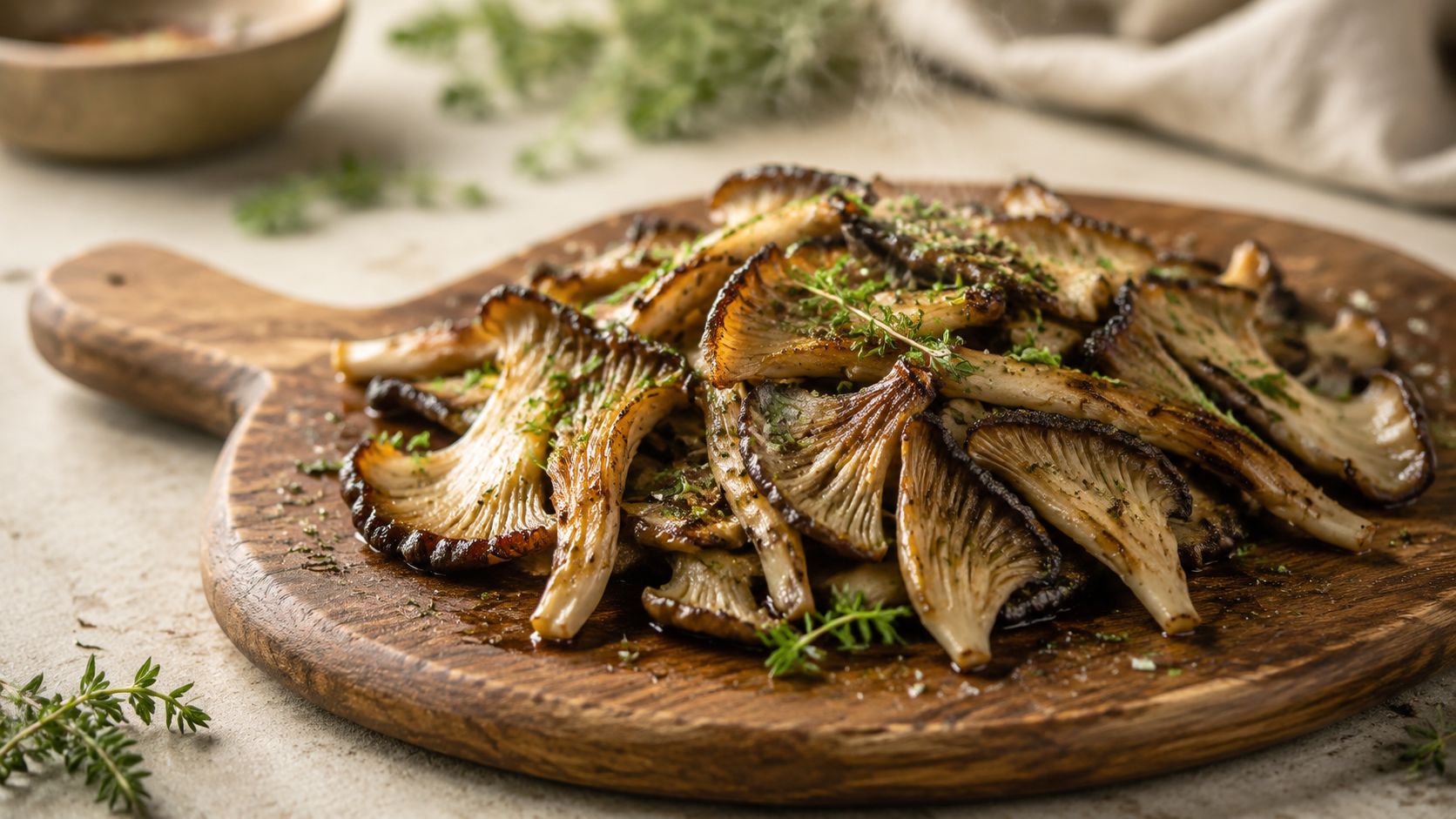
Blue oyster mushrooms are at their best when you let them brown. If you crowd them, they steam. If you give them room, they turn savory, slightly crisp at the edges, and pleasantly chewy in the center.
Their flavor is mild compared with some stronger wild mushrooms. That's useful. It means they pair well with garlic, herbs, butter, soy sauce, pepper, lemon, eggs, noodles, toast, and grains without taking over the dish.
What happens when you cook them
Don't expect them to stay blue in the pan. The color usually fades toward gray or brown as they cook. That's normal.
What you gain is better than the color. Heat firms the texture, drives off excess moisture, and concentrates flavor. A cluster that seems delicate when raw becomes rich and satisfying when cooked properly.
Many people tear the cluster by hand instead of slicing every cap. That works well because the uneven edges brown nicely and create more texture.
Three easy ways to cook them
Garlic herb skillet mushrooms
This is the simplest starting point. Heat a skillet, add fat, then add torn mushrooms in a single layer. Let them sit long enough to brown before stirring too much.
Finish with garlic near the end so it doesn't burn, then add herbs, salt, and a little acid if you like. Spoon them over toast, eggs, rice, or pasta. If you enjoy cooking other specialty mushrooms, this guide on how to prepare chestnut mushrooms offers a helpful point of comparison for handling texture and pan space.
Roasted sheet pan mushrooms
Roasting works well when you're cooking for more than one person. Toss the mushrooms lightly with oil and seasonings, spread them out well, and roast until the edges darken and curl.
This method gives you less hands-on work than a skillet. It's useful for grain bowls, warm salads, tacos, or quick side dishes.
Crispy mushroom bites
For a snack-like result, tear the mushrooms into smaller clusters, season them, and use an oven or air fryer. They won't mimic fried chicken exactly, but they do become crisp and satisfying in a way that surprises people.
The key is keeping pieces similar in size so they finish around the same time.
Kitchen note: If your mushrooms release a lot of water at first, don't panic. Keep cooking. Once that moisture evaporates, browning begins.
Here's a visual walkthrough if you want to see oyster mushrooms cooked step by step:
A few mistakes to avoid
- Washing too aggressively: Mushrooms absorb water easily. A quick wipe or light rinse followed by thorough drying works better than soaking.
- Overcrowding the pan: This is the fastest way to get soft, pale mushrooms.
- Adding delicate ingredients too early: Garlic, fresh herbs, and lemon are best near the end.
- Eating them raw just because they look fresh: Cooking oyster mushrooms enhances both their texture and flavor.
If you're unsure where to start, use the skillet method first. It teaches you the most with the least effort.
Nutritional Value and Health Notes
Blue oyster mushrooms are easy to fit into a balanced meal because they bring flavor and texture without feeling heavy. People often use them to add substance to vegetable-forward meals, or to stretch dishes like stir-fries, grain bowls, and pasta without relying entirely on meat.
They're also commonly valued as a source of fiber, plant-based protein, B vitamins, and minerals. Exact nutrient levels can vary with growing conditions, handling, and preparation, so it's better to think of them as a nutrient-dense whole food rather than as a precision supplement.
A simple nutrition snapshot
| Nutrient | Value |
|---|---|
| Serving basis | Approximate per 100g |
| Calories | Low |
| Protein | Contains plant-based protein |
| Fiber | Contains dietary fiber |
| B vitamins | Includes B vitamins such as niacin and riboflavin |
| Minerals | Provides essential minerals |
How to think about health claims
You'll often see broad claims around mushrooms and wellness. Some of those discussions are interesting, but they can get ahead of the evidence quickly. A sensible beginner approach is to focus on what's clear and useful now.
Blue oyster mushrooms are a wholesome edible mushroom with a solid place in regular cooking. They can help make meals more satisfying, especially when you want a savory ingredient that isn't overly rich.
A mushroom doesn't need to be a miracle food to be worth eating. Good flavor, useful texture, and everyday nutrition are enough reason.
The most practical takeaway
If you want to get more out of blue oyster mushrooms nutritionally, the simplest move is to cook them in a balanced meal. Pair them with foods that round things out, such as eggs, beans, greens, whole grains, or a protein you already enjoy.
That approach is more reliable than chasing dramatic claims. Think of blue oyster mushrooms as a strong supporting ingredient in a healthy pattern of eating.
Practical Tips for Growing at Home
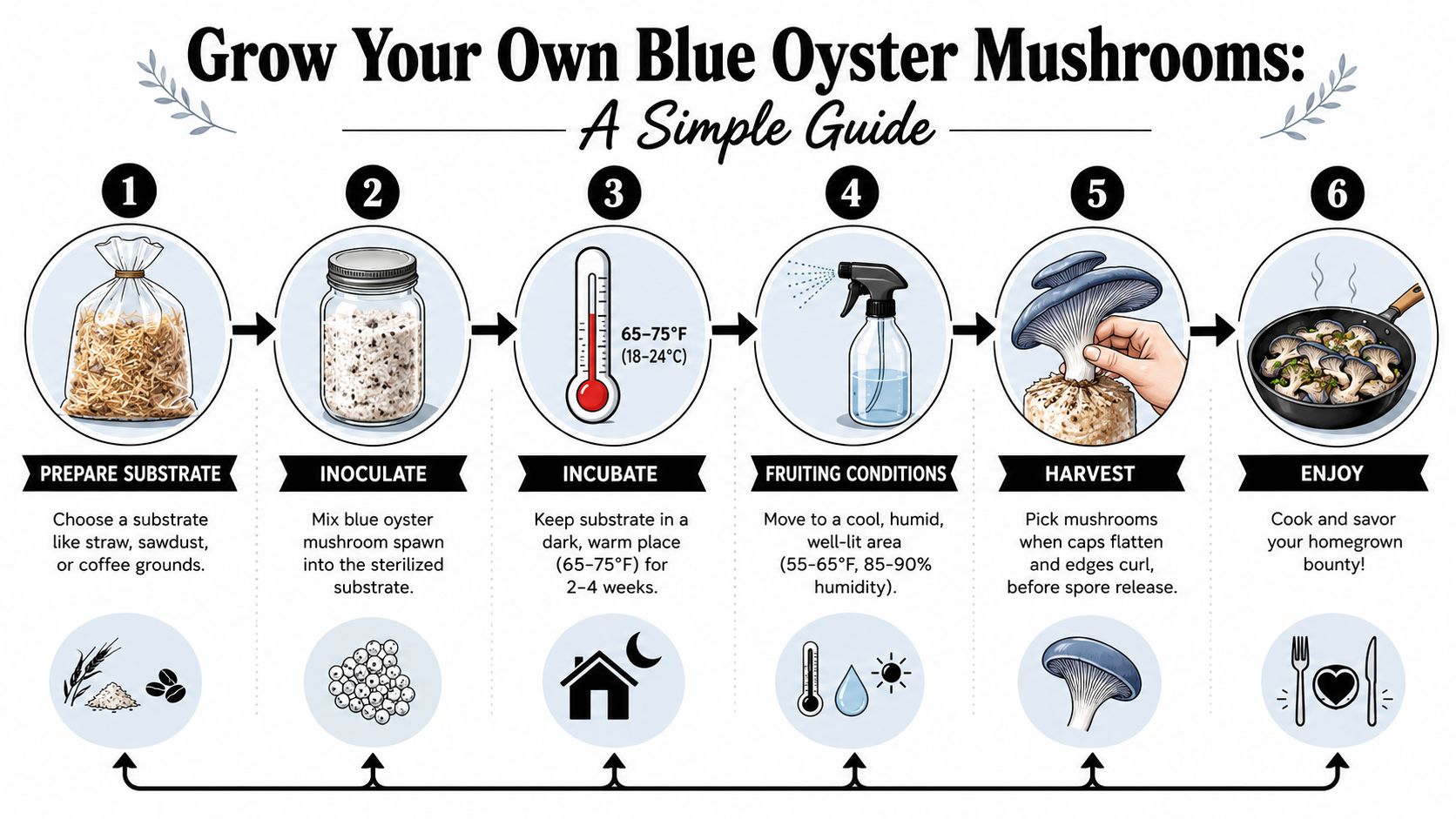
You cut open a blue oyster kit, mist it for a few days, and then suddenly a tight cluster starts pushing out. That quick feedback is one reason beginners enjoy this mushroom so much. Blue oysters respond fast enough that you can connect cause and effect. More fresh air changes the shape. Better moisture changes the surface. A delayed harvest changes the texture.
Blue oyster mushrooms are strong colonizers of plant-based material. A recent discussion of oyster mushroom production biology explains that oyster species break down lignocellulosic material efficiently, which helps explain why they grow well on substrates such as straw and sawdust.
Start with the easiest setup
A ready-to-fruit kit gives you the clearest learning experience. The hard part, colonizing the substrate cleanly, is already done. You get to focus on the skills that matter during fruiting: keeping humidity up, giving the mushrooms enough fresh air, and watching for the right harvest window.
After one or two successful kits, many growers move to bulk substrate such as straw or hardwood-based mixes. That step makes more sense once you can read what the mushrooms are telling you.
Why they are good teachers
Blue oysters show their environment on their bodies. They work a bit like a thermometer with shape instead of numbers. If conditions drift, the cluster often changes in ways a beginner can spot without special tools.
That makes troubleshooting less mysterious.
The three things to manage first
Humidity
Fruiting bodies need a moist surface to develop well. If the block or young pins dry out, growth can stall and caps may stay small or crack. Gentle misting around the fruiting area usually works better than soaking the cluster itself.
Fresh air
Fresh air is the factor beginners miss most often. Blue oysters produce better cap shape when carbon dioxide does not build up around them. In stale air, they often grow long stems with undersized caps.
A simple way to remember it is this: humidity helps them form, and fresh air helps them open.
Harvest timing
Harvest is not just about size. It also affects shelf life, which matters later when you store what you grew. Pick too early and you give up some yield. Pick too late and the caps flatten, edges dry out, and the mushrooms decline faster after harvest. If you want a visual reference, this guide on when to harvest blue oyster mushrooms shows the cap shape and edge curl to watch for.
Common problems and what they usually mean
- Long stems with tiny caps: Air exchange is usually too low.
- Fuzzy growth at the base: Carbon dioxide is often collecting around the cluster.
- Dry, cracked, or leathery mushrooms: Humidity is likely too low, or the surface is drying between mistings.
- Small or uneven first flush: Conditions may be fluctuating, or the block may need a little more time.
- Yellowing or tired-looking caps: The mushrooms may be aging past their best harvest stage.
One helpful habit is to check the grow twice a day for one minute each time. You are looking for surface moisture, cluster shape, and speed of change. Blue oysters can shift quickly, so small corrections made early usually work better than big corrections made late.
For local shoppers, some sellers also offer blue oyster mushrooms as food before you decide to grow your own. Metro Mush, for example, lists blue oyster products among its mushroom offerings. That can be useful if you want to cook a fresh cluster first, then compare a store-bought mushroom with one you harvest at home.
Buying Storing and Preserving Freshness
Many people lose the most value when they buy a beautiful cluster, leave it in plastic, and wonder why it softens so fast.
Blue oyster mushrooms are delicate after harvest. They breathe, they release moisture, and they can turn slimy if trapped in the wrong environment. That's why storage isn't a side note. It's a major part of using them well.
How to choose a fresh cluster
Look for mushrooms that feel lively rather than tired.
- Edges still curled: Younger caps with slightly turned-down edges are often a good sign.
- Firm texture: The cluster should feel springy, not soggy.
- Clean surface: A little natural variation is fine. Wet spots and heavy collapse are not.
- Moderate aroma: They should smell mild and earthy, not sour.
If you're comparing prices or package sizes before buying, a quick look at oyster mushroom pricing considerations can help you think in terms of value per meal rather than just sticker price.
Why a paper bag works
Available guidance on blue oysters often stays brief, but one point is clear. They keep for up to three days in a paper bag in the refrigerator, and they can be frozen for up to three months, according to North Spore's blue oyster growing and handling guide.
Paper helps because it manages moisture better than sealed plastic. Mushrooms need some breathing room. Plastic tends to trap condensation, and condensation is a fast path to softness and slime.
Comparing your storage options
Paper bag in the fridge
This is your best choice for short-term use. It helps preserve texture better than sealing the mushrooms in plastic, and it keeps them easy to grab for a quick meal.
Use this method if you plan to cook them soon and care most about fresh texture.
Freezing
Freezing is the waste-reduction option. It gives you much longer storage, but the texture changes. After thawing, frozen mushrooms are usually better in soups, sauces, sautés, or blended cooked dishes than in preparations where you want a pristine fresh bite.
Drying
Drying is often left out of beginner guides, but it's worth considering if you buy mushrooms in bulk or occasionally forget them in the fridge. Drying concentrates flavor and extends keeping quality, though the texture after rehydration won't match fresh mushrooms.
For many home cooks, the strategy is simple. Refrigerate what you'll use now, freeze what you won't reach in time, and dry extras only if you like pantry ingredients and don't mind a different texture later.
Buy with a plan. Cook the freshest cluster first, freeze the overflow, and don't wait for mushrooms to announce they're past their prime.
Foraging Cautions and Safety
Never eat a wild mushroom unless you have 100% positive identification. That rule matters more than any visual trick or internet checklist.
Blue oyster mushrooms are associated with decaying wood, especially hardwoods, and they often grow in layered clusters. That can tempt people to assume any shelf-like mushroom on a tree is fair game. It isn't.
Why look-alikes matter
Some mushrooms can resemble oyster types at a glance, especially when you're new and looking only at shape. A dangerous mistake often starts with confidence based on one feature, such as color or clustered growth.
A few practical cautions help:
- Check the tree type: Some look-alikes prefer different woods.
- Study the gills carefully: Don't assume all pale gilled shelf mushrooms are oysters.
- Notice the growth habit: True oysters often have a very characteristic layered cluster form, but that alone is not enough.
- Avoid old specimens: Age can blur the features you need for safe ID.
Don't use this article as a foraging license
A beginner should not use a cooking guide as permission to harvest wild mushrooms. If you want to forage, learn with a local expert, a trusted field guide, and repeated in-person confirmation.
Even experienced mushroom hunters reject specimens when something looks off. That's good practice, not wasted effort.
When in doubt, throw it out.
Wild mushroom identification is a separate skill from buying cultivated blue oyster mushrooms. Treat it that way. If your goal is to cook and enjoy them safely, buying from a grower, market, or trusted vendor is the smarter path.
If you're in Southeast Michigan and want a straightforward place to explore mushroom products, Metro Mush is one local option to browse. You can check current offerings, compare formats, and see whether blue oyster mushrooms or other mushroom-related products are available before you shop.