

So, how much should you actually be paying for oyster mushrooms? Let's talk numbers. When you're at the farmers' market or your local grocery store, you can generally expect to see prices in the $10 to $16 per pound range.
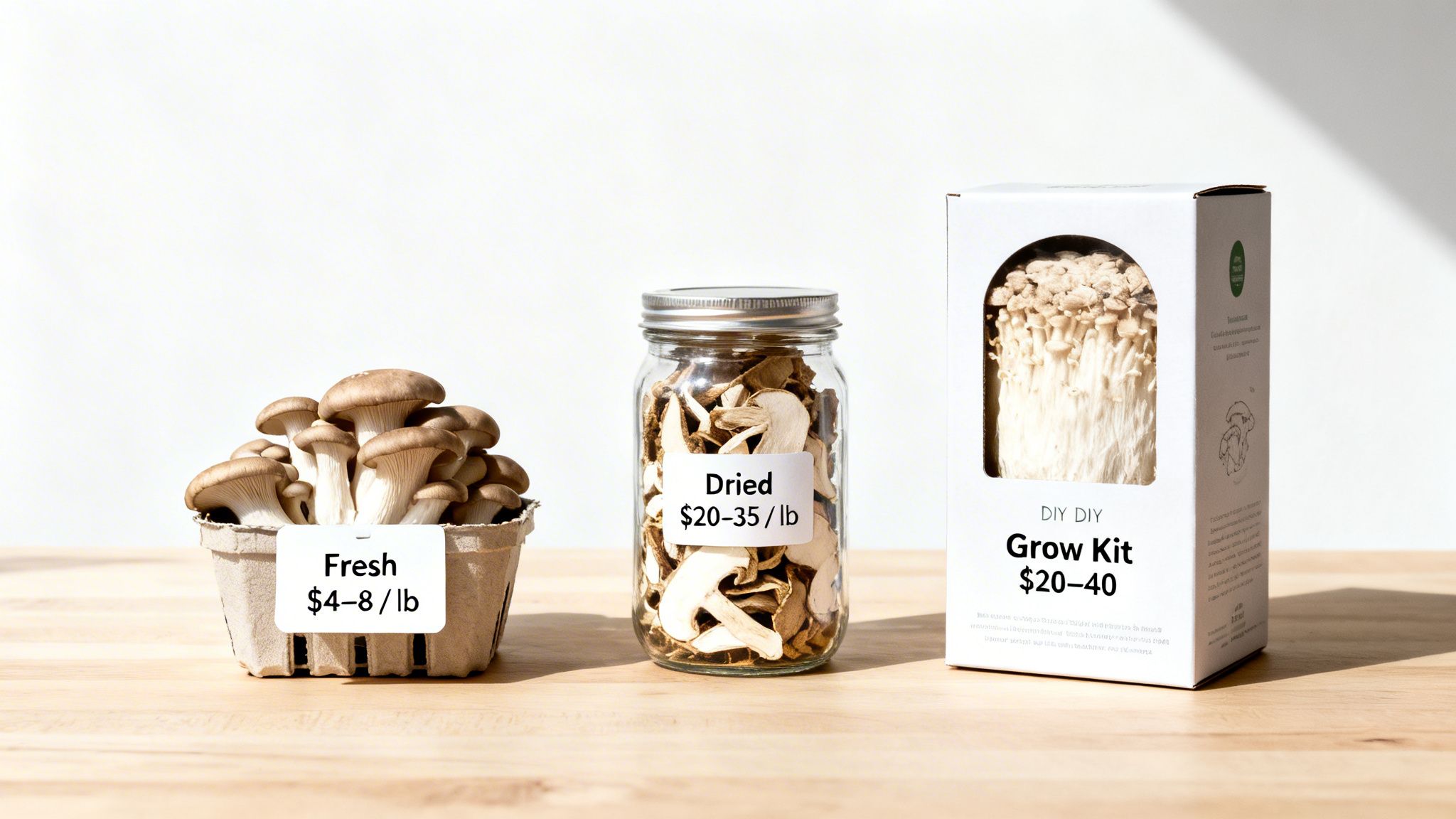
But that's just a ballpark figure. The final price tag on oyster mushrooms can swing quite a bit depending on what you're buying—fresh clusters, a bag of dried slices, or even a DIY grow kit.
A Quick Look at Oyster Mushroom Prices
Getting a handle on the typical cost of oyster mushrooms gives you a solid benchmark. It helps you know when you've found a great deal and when you might be overpaying. The biggest price jump you'll see is between retail and wholesale.
If you’re a home cook grabbing a small clamshell of fresh mushrooms, you're paying a retail premium. That price covers things like fancy packaging, shipping to the store, and the cost of any product that doesn't sell. On the other hand, a chef buying a ten-pound case directly from a farm gets a much lower wholesale price.
This chart shows you that difference in black and white.
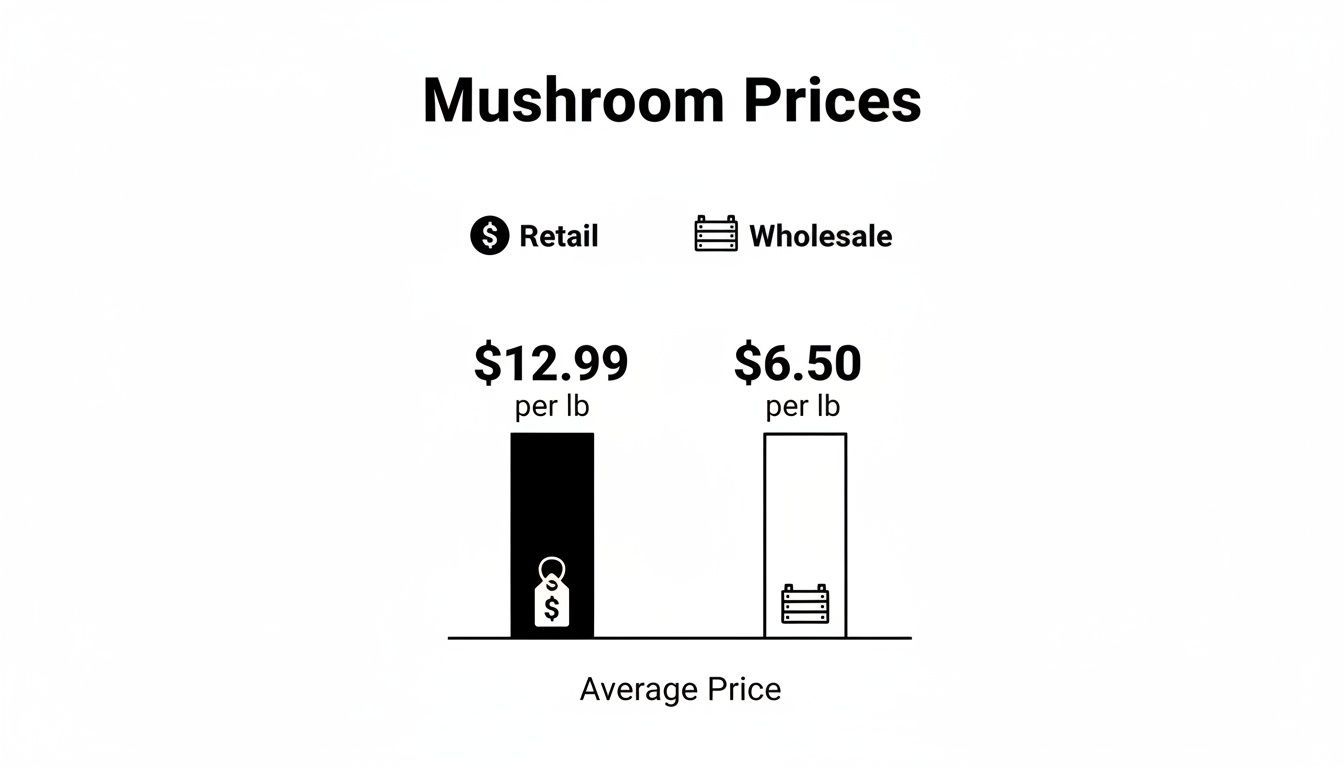
As you can see, buying wholesale can slash your cost by nearly half. This is standard practice for restaurants and food businesses. You’ll find a similar cost structure with other gourmet fungi, which you can see in our guide to maitake mushroom prices.
To help you get a clearer picture, here’s a quick breakdown of what you can expect to pay for oyster mushrooms in their most common forms.
Average Oyster Mushroom Prices by Type (2026)
This table shows the average price per pound for oyster mushrooms in different forms, helping you quickly compare costs.
| Mushroom Format | Average Retail Price (Per Pound) | Average Wholesale Price (Per Pound) |
|---|---|---|
| Fresh | $10 – $16 | $6 – $10 |
| Dried | $40 – $60 | $25 – $40 |
| DIY Grow Kit | $25 – $35 (per kit) | $15 – $25 (per kit, bulk) |
Dried mushrooms might look expensive at first glance, but don't let the sticker shock fool you. They are incredibly lightweight and concentrated. Just one ounce of dried mushrooms can rehydrate to almost a full pound, making them a surprisingly budget-friendly option for stocking your pantry.
Think of this table as your starting point. Now, let's dig into the factors that make these prices move up or down.
Why Oyster Mushrooms Are in High Demand
Ever wonder why oyster mushrooms seem to be popping up everywhere lately? You’ll find them on upscale restaurant menus, at your local farmers' market, and even stacked high in the grocery store. Their popularity isn’t just a passing food trend—it's tied to a huge shift in how we think about our food, health, and the planet. This growing demand is a major factor behind the oyster mushrooms prices you see today.
Think of it like the craft beer boom. A few years back, most people were fine with the usual big-name lagers. Now, foodies and casual shoppers alike seek out unique IPAs and stouts, valuing complex flavors and small-batch quality—and they're willing to pay a bit more for that experience. Oyster mushrooms have followed a very similar path, graduating from a niche ingredient to a mainstream favorite.
This surge is really a perfect storm of several consumer trends. Health-conscious eaters are on the hunt for nutrient-packed whole foods, while eco-aware buyers want sustainable options. Oyster mushrooms check both boxes, offering a delicious, low-impact protein source that tastes incredible.
The Plant-Based Revolution and Market Growth
One of the biggest forces pushing oyster mushrooms into the spotlight is the global shift toward plant-based eating. As more people cut back on meat, they're looking for savory, satisfying alternatives. Thanks to their uniquely meaty texture and rich umami flavor, oyster mushrooms have become a go-to substitute in all sorts of dishes.
This isn't just a small trend; it's a massive market phenomenon. The global oyster mushroom market was valued at a staggering $55.82 billion in 2025 and is projected to climb to $59.64 billion in 2026, growing at an impressive clip of 6.8%. To put that in perspective, the entire U.S. market was valued at just $120 million back in 2020. That’s some seriously fast growth. You can dive deeper into this expansion by checking out the full market report.
The rise of oyster mushrooms isn't just about finding a meat substitute. It’s about discovering an ingredient that is superior in its own right—celebrated for its unique texture, flavor, and impressive health benefits.
Their sheer versatility is another huge draw. Chefs and home cooks have realized that oyster mushrooms are true culinary chameleons. They can be:
- Seared until their edges get irresistibly crispy, almost like bacon.
- Shredded and slow-cooked for a plant-based take on pulled pork.
- Battered and fried to make a fantastic, vegan-friendly "calamari."
This adaptability makes them a powerhouse in any modern kitchen, where creativity and flexibility are everything.
A Favorite in Modern Kitchens
Chefs, especially, have fallen in love with oyster mushrooms because they can deliver a genuinely premium experience. They can be "smashed" on a griddle like a trendy burger to get those crispy, caramelized edges or seared whole to mimic the satisfying bite of a scallop. This ability to be the star of the show, rather than just a background player, elevates their status and, in turn, their price.
As people continue to look for exciting flavors and healthier ingredients, the demand for high-quality oyster mushrooms is only going to get stronger. This sustained interest cements their place as a valuable commodity, which directly impacts the oyster mushrooms prices you'll find. It’s a classic case of supply and demand, all fueled by a new generation of informed and adventurous eaters.
What Drives the Price of Oyster Mushrooms
Ever walked through a farmers' market and wondered why those gorgeous, vibrant Golden Oysters have a higher price tag than the classic Pearl Oysters right next to them? It’s not just a random number. The price you see is a reflection of that mushroom's unique journey from the farm to your basket.
Think of it like the difference between apple varieties. You can always find a standard, affordable Red Delicious. But a specialty Honeycrisp or a rare heirloom apple will cost more because of its distinct flavor, texture, and the extra care it takes to grow. The same logic applies to mushrooms, where oyster mushrooms prices shift based on some very specific factors.
Variety and Rarity
The biggest driver behind the price is, without a doubt, the specific type of oyster mushroom. Common varieties like Pearl and Blue Oysters are the workhorses of the mushroom world. They're robust, grow fast, and give growers a big harvest, which keeps them consistently affordable.
On the other hand, specialty varieties command a higher price for a few good reasons:
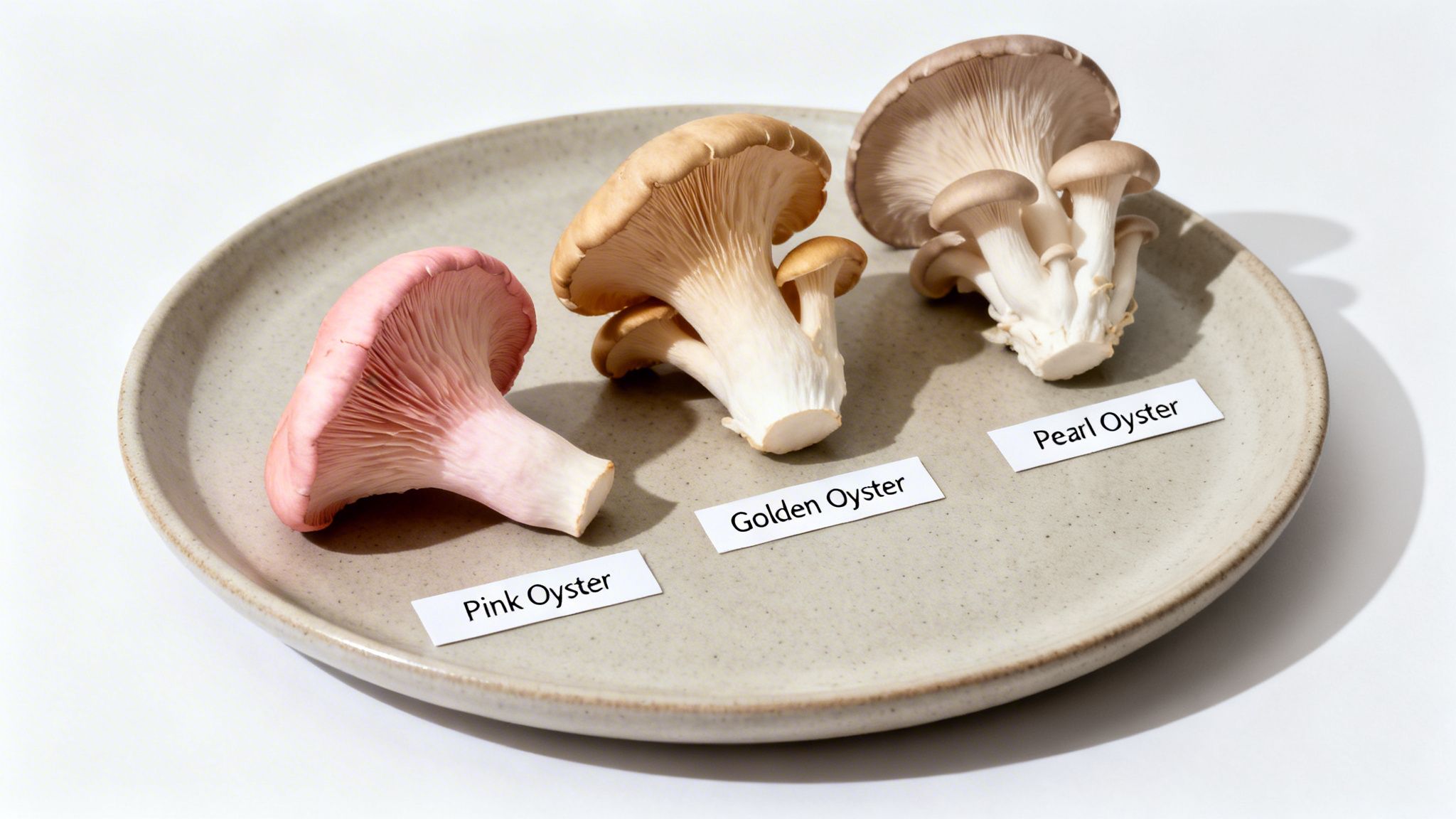
- Pink Oysters: Their stunning color and delicate, almost seafood-like flavor make them a treat. But they are incredibly fragile and have a notoriously short shelf life, sometimes spoiling in less than 48 hours. That risk is baked into the price.
- Golden Oysters: Loved for their bright yellow hue and complex, nutty taste, Golden Oysters are much more sensitive to their growing environment and tend to produce smaller harvests than their common cousins.
- King Oysters: With their thick, meaty stems, these are a favorite among chefs. They take a lot longer to mature and need more space to grow, which naturally drives up the cost per pound.
Ultimately, you're paying for rarity, a more complex flavor, and the bigger challenges involved in getting them to you.
The price difference between a common Pearl Oyster and a delicate Pink Oyster isn't just about color. It's a reflection of the mushroom's entire journey—from its specific growth needs and shorter shelf life to the care required to get it from the farm to your kitchen intact.
Cultivation Method and Seasonality
How and when a mushroom is grown is another huge piece of the pricing puzzle. The two main paths are farmed cultivation and wild foraging, and each has its own impact on the final cost.
Farmed mushrooms, grown year-round in controlled indoor facilities, offer a steady and reliable supply. But the overhead for these operations—climate control, specialized substrate, and labor—is significant and gets factored into the price.
Wild-foraged mushrooms are a different story entirely. They're completely at the mercy of Mother Nature. Their availability is tied to specific seasons, and a single bad harvest year can make prices skyrocket because they're suddenly so scarce.
Organic certification also adds another layer. Farmers who go organic must use certified organic substrates and follow strict cultivation rules, which are more expensive than conventional methods. This premium, often 10-20% higher, covers the cost of compliance and guarantees a product grown without synthetic chemicals. It's a key factor in the overall oyster mushrooms prices for certified organic options, giving you a choice based on what's most important to you.
Understanding Retail vs. Wholesale Pricing
When you're shopping for oyster mushrooms, you'll run into two totally different pricing worlds: retail and wholesale. It’s a lot like buying coffee. A single latte from your favorite cafe costs way more per ounce than a big bag of beans you buy straight from a roaster.
The same idea applies to oyster mushrooms prices. Getting a handle on this difference is the secret to getting the best value, whether you need a handful or a whole harvest.
Retail pricing is what you’ll find at the grocery store or a specialty food shop. You’re buying a small, pre-packaged amount, and the price per pound reflects that convenience. That markup isn't just for profit; it’s covering a whole chain of hidden costs.
The Real Cost of Retail Convenience
When you grab that half-pound clamshell of pearl oysters, you're paying for a lot more than just the mushrooms inside. The retail price has several expenses baked right in—costs a wholesale buyer doesn't have to think about.
- Packaging: That handy plastic container, the slick label, and the time it takes someone to pack it all adds to the final price.
- Transportation: Mushrooms are divas. They need to be handled carefully and kept cool as they travel from the farm, to a distributor, and finally to the store.
- Spoilage Risk: Let's be real—not every mushroom gets sold. Grocers have to account for the cost of products that go bad before someone can buy them.
- Store Overhead: The price also helps pay for the store’s rent, electricity, and the wages of the people working there.
All these little costs stack up, which is why retail prices are often 50-70% higher than what a restaurant pays.
The Wholesale Advantage
Wholesale pricing is built for people who buy in bulk, like restaurants, caterers, or food co-ops. By committing to a larger quantity—usually five pounds or more—they can buy directly from a farm or a major distributor. This cuts out a lot of the middlemen.
Buying wholesale is like getting a backstage pass to the food supply chain. You bypass the retail markup and get closer to the source, unlocking significant savings in exchange for purchasing a larger quantity.
Here’s a perfect example. You might pay $15 per pound for beautiful pink oysters at a gourmet market. A local chef, on the other hand, could be paying just $9 per pound for a ten-pound case sourced directly from a farm.
This direct relationship doesn’t just save money; it often means you're getting a much fresher product. If you're a serious mushroom lover or cooking for a big event, looking into local farm options is a total game-changer. You can learn more about how farms work with businesses by checking out info on wholesale mushroom supply.
How Cultivation Economics Affect Your Cost
Ever wonder why gourmet mushrooms cost what they do? To get the real story behind oyster mushroom prices, you need to peek behind the scenes at the farm. Growing mushrooms isn't like planting a vegetable garden—it's part science, part art, and a whole lot of careful, expensive work.
Think of a modern mushroom farm less like a field and more like a high-tech cleanroom. Unlike a tomato that just needs sun and water, oyster mushrooms are incredibly demanding. They grow on a special foundation called a substrate, which is usually a pasteurized blend of straw, sawdust, or other agricultural materials. This isn't just dirt; it's a gourmet meal for fungi, and making sure it's high-quality and free of contaminants is a major cost for any grower.
The High Cost of the Perfect Climate
Beyond the substrate, the real money is spent creating the perfect atmosphere. Oyster mushrooms are picky about their environment, and growers have to dial in three key conditions perfectly.
- Temperature: The grow rooms have to be kept in a very specific temperature range, often needing both heating and AC systems running around the clock.
- Humidity: High humidity is a must. This requires commercial-grade humidifiers and misters to keep the delicate mushrooms from drying out before they're ready.
- Air Exchange: Mushrooms breathe out C02, and too much of it will stunt their growth. To combat this, powerful fans and ventilation systems constantly pull in fresh, clean air.
Just managing these three factors takes a huge investment in technology and energy, which naturally gets baked into the final price. The whole process is also surprisingly hands-on, from prepping the substrate to harvesting at just the right moment. Knowing when to harvest Blue Oyster mushrooms is a skill in itself, showing just how precise the timing needs to be.
All this effort and investment is why the oyster mushroom cultivation market was valued at a whopping $3.03 billion in 2025 and is projected to climb to $4.12 billion by 2030. The demand for these carefully grown fungi is only going up, and you can see more about the growth in this sector on ResearchAndMarkets.com.
When you buy from a quality grower, you're not just paying for mushrooms. You're paying for the farmer's expertise, the cost of a sterile lab, precise climate control, and the skilled labor needed to produce a perfect, healthy harvest.
How to Find the Best Value on Oyster Mushrooms
Knowing the price of oyster mushrooms is just the first step. The real trick is learning how to get a fantastic deal without sacrificing quality. With a few insider strategies, you can make these gourmet fungi a regular part of your meals, not just a special treat.
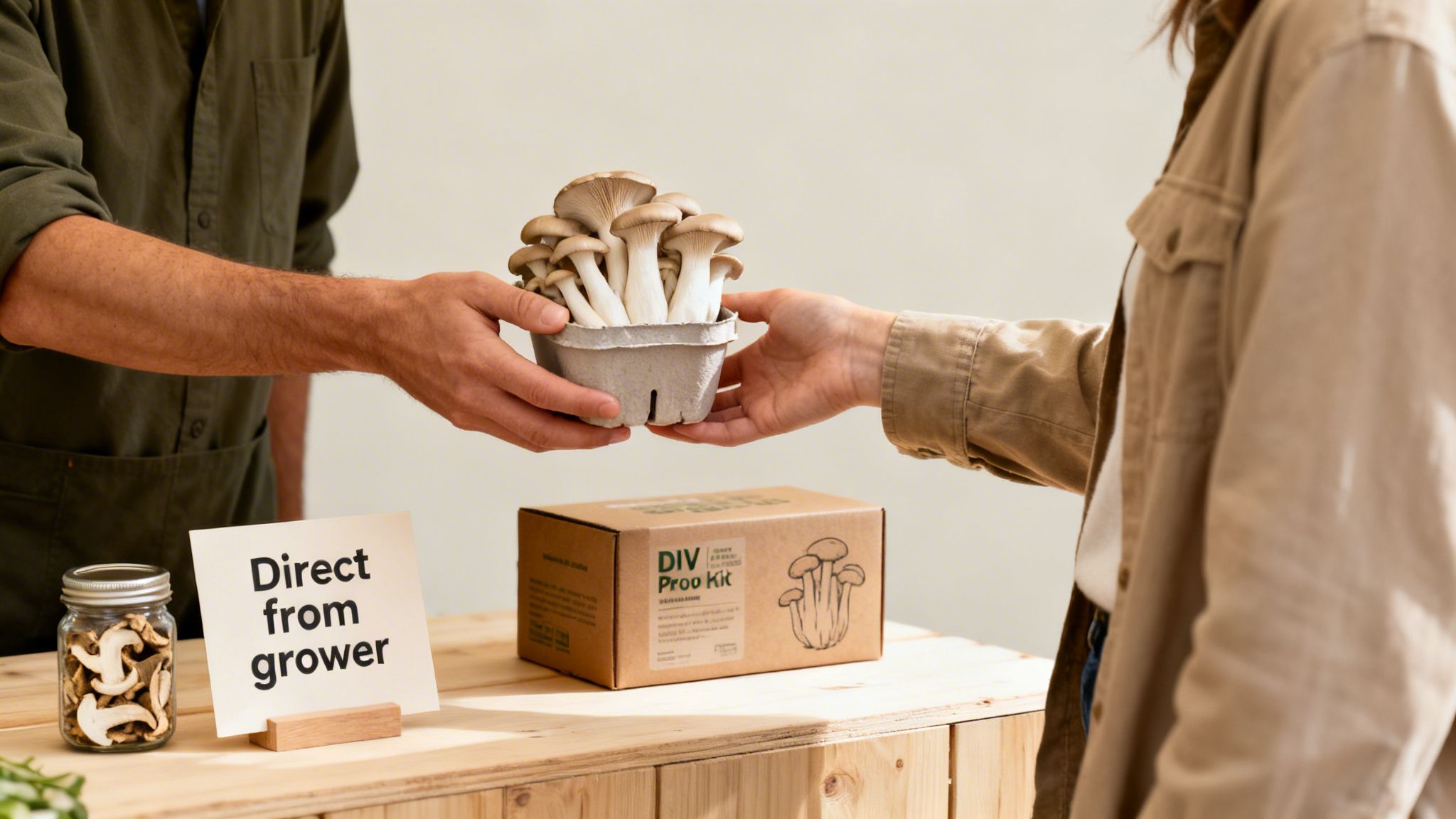
The single best way to find a great price is to buy directly from the grower. When you visit a local farmers' market, you cut out the middlemen. This almost always means you’re getting a fresher product for less money. Growers are usually passionate about their mushrooms and happy to share storage tips or even offer a better price if you buy in bulk.
Timing is also everything. Just like your favorite fruits and veggies, oyster mushrooms have peak seasons when they are most abundant. Buying during these periods often means lower prices because the supply is so high.
Smart Shopping Strategies
Thinking beyond the fresh produce aisle can unlock some serious savings. Don’t be afraid to embrace different mushroom formats, from dried to DIY.
Embrace Dried Mushrooms: The price per pound for dried mushrooms can look steep at first glance, but they are incredibly concentrated. A single ounce rehydrates to almost a full pound, making them a fantastic, waste-free option for your pantry.
Consider a DIY Grow Kit: For a fun, hands-on approach, try an oyster mushroom grow kit. For about $25 to $35, you can harvest several batches of fresh mushrooms right from your kitchen counter. It’s often the most economical way to enjoy them.
Thinking beyond the grocery store shelf is where you find the major savings. A single DIY grow kit, for instance, can easily yield several pounds of fresh mushrooms for what you'd pay for just one pound at a specialty shop.
Quick Tips for Better Value
Keep these simple pointers in mind the next time you’re shopping. They’ll help you stretch your budget and bring home the best quality mushrooms for your money.
Shop Late: Try heading to the farmers' market an hour or so before it closes. Vendors are often looking to sell off their remaining inventory and might give you a discount to avoid packing it all up.
Compare Prices: Don't just grab the first mushrooms you see. Take a minute to check prices at your local specialty grocer, the farmers' market, and even online. A little bit of homework can point you to the best deals in your area.
By using these tactics together, you can consistently get more for your money without ever compromising on that incredible flavor and texture.
Still Have Questions About Mushroom Prices?
As we wrap up, it's natural to have a few last-minute questions floating around. We’ve pulled together the most common ones we hear to give you direct, practical answers.
Think of this as the final piece of the puzzle, clearing up any lingering curiosities so you can feel totally confident the next time you buy oyster mushrooms.
Why Are Oyster Mushrooms So Much More Expensive Than Button Mushrooms?
Let's be honest, you've probably noticed the price gap. It really comes down to two things: delicacy and difficulty. Oyster mushrooms are fragile and have a much shorter shelf life than the tough, mass-produced button mushroom. They also demand very specific, climate-controlled environments to thrive.
Plus, their incredible flavor and satisfying, meaty texture put them in the "gourmet" camp. That status alone naturally bumps up their value and the price you see at the store.
The price difference isn’t just about a better taste. It’s a direct reflection of the extra care, risk, and specialized know-how needed to get a delicate product like oyster mushrooms from the farm to your kitchen.
Is It Cheaper to Buy Dried or Fresh Oyster Mushrooms?
This one surprises a lot of people. While dried mushrooms might look pricier per pound on the shelf, they are almost always the more budget-friendly option in the long run. The drying process intensely concentrates the mushroom, so a small amount rehydrates into a surprisingly large portion.
Even better, their incredibly long shelf life means you can buy in bulk without a second thought about spoilage. The ability to store them for months completely eliminates waste, saving you money over time.
Can I Really Get Good Deals at a Farmers Market?
Absolutely. In fact, farmers' markets are one of the best spots to score fresh, high-quality oyster mushrooms at a fair price. You're buying straight from the grower, which cuts out the middleman and all the retail markups that come with it.
You also get access to unique, beautiful varieties that you'll never find in a big grocery store. Here’s a pro-tip: try shopping near the end of the day. Some vendors are happy to give you a discount to clear out their stock before packing up.
How Much More Do Organic Oyster Mushrooms Cost?
You can expect to pay a bit more for certified organic oyster mushrooms, usually around 10-20% extra. This premium isn't just for a fancy label; it covers the real, higher costs tied to organic farming.
This includes everything from using certified organic substrates (the material they grow on) to completely avoiding synthetic pesticides and fertilizers. You're essentially paying a little more for the peace of mind that your mushrooms were grown under strict environmental and health standards.