

From the damp, loamy soils of the U.P. all the way down to the hardwood forests outside Detroit, Michigan is a remarkable place for anyone interested in wild mushrooms. It’s a genuine treasure trove, home to world-famous edibles like the morel, but also dangerous toxic species and even some native psilocybin varieties.
Think of this guide as your compass for exploring this fascinating—and sometimes complex—world with confidence.
Getting to Know Michigan's Fungal Landscape
When you step into a Michigan forest, you’re stepping into a living ecosystem where mushrooms play a vital role. Some are delicious, some are deadly, and learning to tell the difference is what foraging is all about. It’s a hobby that demands patience and a keen eye, but the reward is a direct connection to the natural cycles of the Great Lakes State.
The sheer variety of wild mushrooms here is staggering. It’s estimated that Michigan is home to around 2,500 species of larger fungi. To put that in perspective, one study from Michigan State University found what could be as many as 367 unique species in a single 11.2-hectare site. That’s an incredible density of life right under our feet.
To get started, it helps to understand the main categories of mushrooms you'll be looking for—and looking out for.
Quick Guide to Michigan's Foraging Landscape
Here’s a high-level summary of the key types of mushrooms you'll encounter in Michigan's wilderness.
| Mushroom Category | Key Examples | Primary Consideration |
|---|---|---|
| Gourmet Edibles | Morels, Chanterelles, Hen of the Woods | Proper identification is everything. Never eat what you can't 100% ID. |
| Toxic Species | Destroying Angel, False Morels, Jack O'Lanterns | Many have edible lookalikes. Knowing the poisonous ones is as crucial as knowing the safe ones. |
| Psilocybin Varieties | Panaeolus cinctulus, Gymnopilus spp. | Significant legal and safety risks. Identification is extremely difficult and not for beginners. |
This table is just the starting point. The real skill comes from learning the details that separate a great meal from a trip to the emergency room.
What We'll Cover in This Guide
We’ve structured this guide to build your knowledge from the ground up, just like a seasoned forager gains experience over many seasons.
Here’s a look at what’s ahead:
- The Edible All-Stars: We'll dive into the prized edibles like Morels and Chanterelles, showing you not just how to ID them, but when and where to start your search.
- The Dangerous Imposters: You'll learn to spot the red flags for toxic mushrooms, including deadly species like the Destroying Angel and common tricksters like the False Morel.
- Psychoactive Species: We’ll give you a responsible overview of Michigan’s native psilocybin mushrooms, focusing on the serious legal and safety risks of foraging for them.
- The Rules of the Hunt: Knowing the law is non-negotiable. We'll break down the rules for personal foraging on public lands and the ethics of a sustainable harvest.
Foraging is a partnership with the ecosystem, not just a grab-and-go activity. A successful forager knows that safety, respect for nature, and constant learning are just as important as a full basket.
This journey starts with learning to see the forest in a whole new way. Whether you're hoping to find your next meal or simply enjoy a more informed walk in the woods, the world of Michigan’s wild mushrooms is waiting. Let's get started.
Identifying Michigan's Prized Edible Mushrooms
The forests of Michigan offer up a different culinary adventure with every season, as new edible mushrooms pop up with the changing weather. The trick isn't just knowing what to look for, but when and where. Getting a handle on the state's most popular wild mushrooms is your ticket to a successful and delicious harvest.
Let's walk through the superstars of the Michigan foraging scene. We'll cover the legendary Morel, the gorgeous Chanterelle, and the hefty Chicken and Hen of the Woods. You'll get the practical details you need to confidently spot them in the wild.
The Spring Superstar: The Morel
When spring finally breaks through in Michigan, a certain kind of fever sweeps through the state. It's Morel season, a brief but amazing window that usually runs from late April to early June. These mushrooms are the undisputed kings of the spring hunt, loved for their rich, nutty, and earthy flavor.
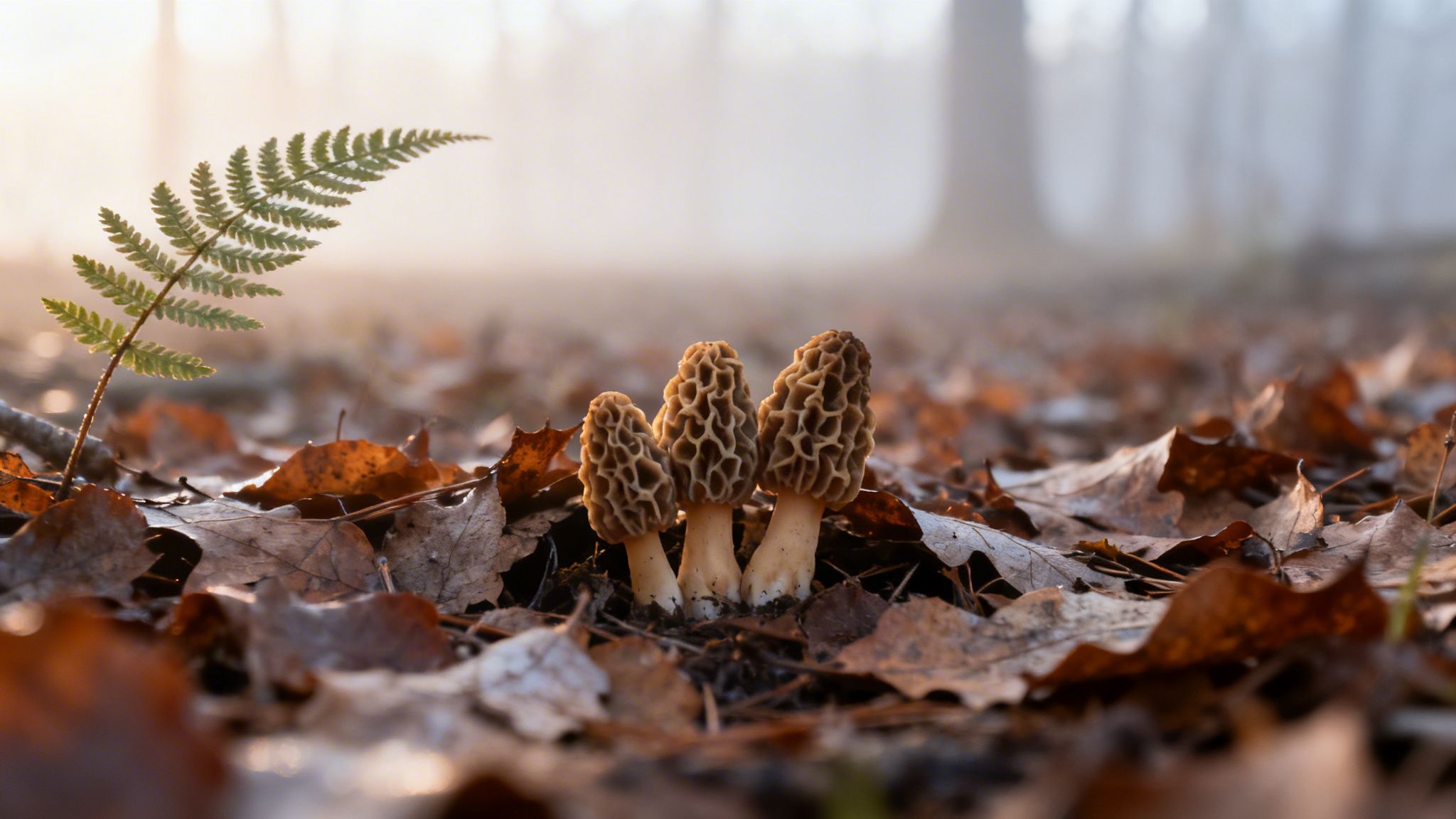
Morels are masters of disguise, blending right into the leafy forest floor. Their most recognizable trait is a conical cap that looks like a sea sponge or a piece of honeycomb, covered in deep pits and ridges. This cap is also totally hollow—a non-negotiable feature for a positive ID.
Crucial Identification Tip: Always slice a potential Morel in half from top to bottom. A true Morel will be completely hollow from the tip of the cap all the way down through the stem. If you see any cottony fluff or internal chambers, you've found a lookalike that could be toxic.
So, where do you find these little treasures? Morels are picky and have special relationships with certain trees. Focus your search around:
- Dying Elm Trees: Keep an eye out for elms that are starting to shed their bark but haven't totally rotted away yet.
- Old Apple Orchards: The ground around forgotten or mature apple trees is classic morel territory.
- Ash and Poplar Trees: These trees are also common hosts for different morel species.
- Disturbed Ground: Areas that have recently been burned, logged, or even flooded can explode with morels the following spring.
If you want to nail the timing of your hunt, we have a whole guide dedicated to it. You can learn more about when to start looking in our deep dive on the Morel season in Michigan.
Summer and Fall Delicacies
As the days get warmer, a new cast of characters emerges in the woods. From July through September, the forest floor can light up with the golden glow of Chanterelles. Look for these beauties in oak and beech forests, especially after a good, soaking rain. They have a faint, fruity smell—some say it’s like apricots—and a firm texture that's incredible when cooked.
A key feature to look for on Chanterelles is their "false gills." Instead of the sharp, separate gills you see on a grocery store mushroom, Chanterelles have wavy, blunt ridges that run seamlessly down the stem. This is a critical detail that separates them from the toxic Jack-O'-Lantern mushroom.
Later, as summer gives way to fall, a couple of the most substantial wild mushrooms in Michigan make their grand entrance.
Chicken of the Woods (Laetiporus sulphureus)
This fungus is impossible to miss. It grows in huge, overlapping shelves of shocking bright orange and yellow on dead or dying hardwood trees, especially oaks. It earns its name from its texture, which is uncannily similar to cooked chicken breast. The tender, younger growth on the outer edges is what you want; the mushroom gets tough and woody toward the base and as it gets older.
Hen of the Woods (Grifola frondosa)
Also known as Maitake, this mushroom shows up at the base of oak trees in the fall. It grows as a large, ruffled cluster of brownish-gray, spoon-like caps that really can look like a hen sitting on a nest. A single "Hen" can weigh several pounds, making for a massive haul. They have a rich, savory flavor and are known to pop up in the same spot year after year, so if you find one, be sure to mark your map
Navigating Toxic Mushrooms and Dangerous Lookalikes
When you're out foraging in Michigan's woods, what you leave on the forest floor is way more important than what you bring home in your basket. Finding that perfect patch of morels is an incredible thrill, but you have to balance that excitement with a serious respect for the risks. One wrong ID can lead to severe, sometimes fatal, consequences.
There's one rule every single forager lives by, and it's not just a catchy saying: when in absolute doubt, throw it out. It’s a life-saving habit. Plenty of toxic mushrooms are masters of disguise, evolving to look just like their edible cousins—a dangerous trap for anyone who isn't paying close attention. Learning to spot these imposters isn't just a good idea; it's a non-negotiable skill.
The Deceptive False Morel
One of the most common and dangerous mix-ups in Michigan happens right in the middle of morel season. True Morels are a prized find, but their lookalikes, the False Morels (Gyromitra species), pack a toxin that can make you seriously ill. To a beginner, they can look almost identical at a glance.
But the differences become crystal clear once you know what to look for. A true morel has that classic honeycomb cap with deep pits, and it’s completely hollow from the tip of the cap all the way down through the stem. Slice it in half, and it's an empty tube.
False morels, on the other hand, have a cap that looks more wavy and brain-like. The real giveaway is when you slice them open—they're either filled with a cottony fluff or divided into distinct chambers. Never hollow.
This simple guide can help you tell a true morel from its dangerous lookalike.
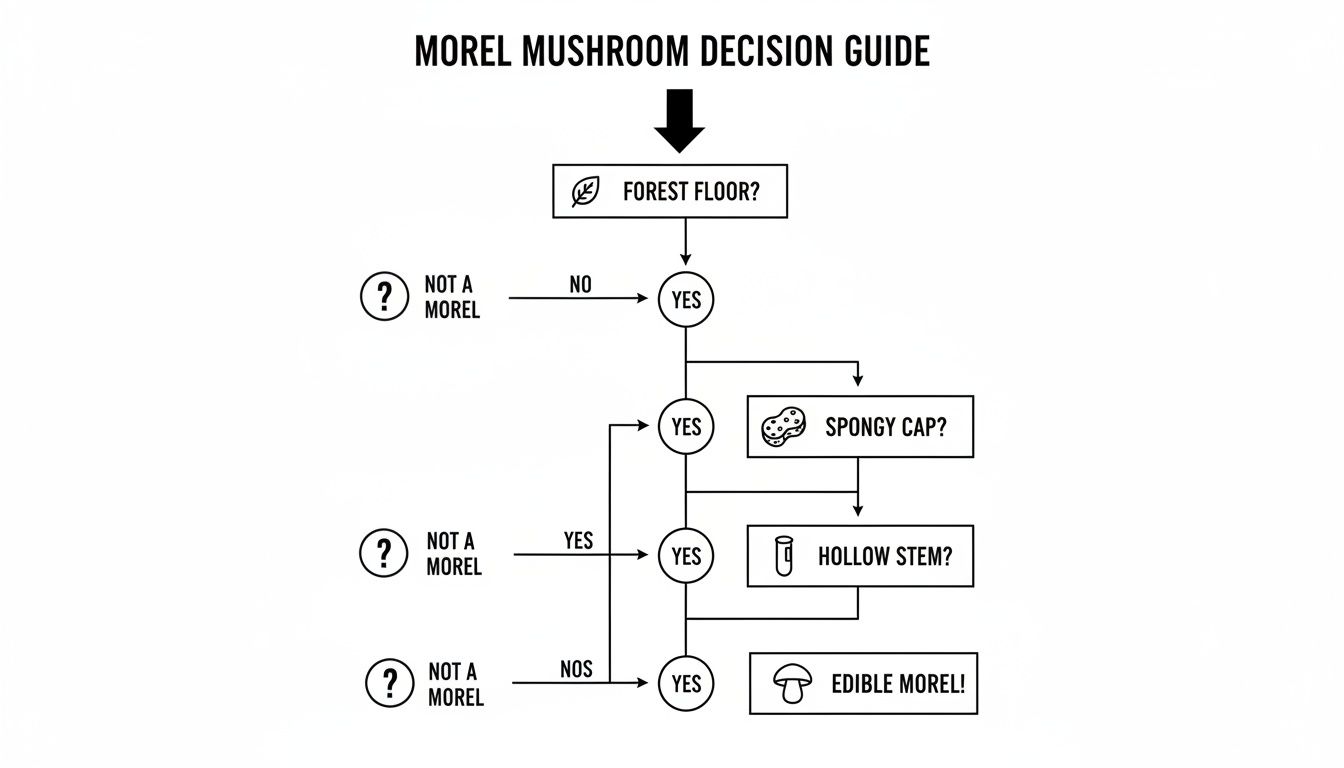
As you can see, cutting the mushroom open to check for that hollow stem and spongy cap is the most important step. It’s the only way to be absolutely sure.
Michigan's Other Dangerous Fungi
False morels aren't the only poisonous fungi hiding in Michigan's forests. You've got to know about a few other notorious species, especially the Destroying Angel and the Jack-O'-Lantern mushroom.
Destroying Angel (Amanita bisporigera): This pure white mushroom is elegant, but it's also one of the most deadly fungi in North America. It contains amatoxins, which go to work destroying your liver and kidney cells. The scariest part? Symptoms often don't show up for 6 to 24 hours, when the damage is already severe. Look for its white gills, a ring (or skirt) around the stem, and a tell-tale cup-like sac (the volva) at its base, which is often buried just beneath the soil.
Jack-O'-Lantern (Omphalotus illudens): These guys are often mistaken for delicious Chanterelles. They're bright orange and grow in big clusters on rotting wood. But unlike chanterelles, which have blunt, ridge-like "false gills," Jack-O'-Lanterns have sharp, true gills like a grocery store mushroom. They're also bioluminescent (they can glow faintly in the dark) and will give you a nasty case of gastrointestinal distress if you eat them.
Understanding mushroom poisoning isn't about being scared; it's about being smart. Each toxic species causes a specific type of reaction, or "poisoning syndrome." Some hit you with immediate stomach cramps, while others, like the Destroying Angel, have that terrifying delay before symptoms appear, which makes treatment much harder.
This kind of knowledge is what turns you from a simple "picker" into a true forager. It shifts your mindset from just "finding mushrooms" to understanding the entire fungal ecosystem, dangers and all.
Every mushroom you correctly identify—edible or not—sharpens your skills and makes you a safer, more responsible hunter. Never take shortcuts, and never, ever eat a wild mushroom you can't identify with 100% confidence.
Understanding Psilocybin Mushrooms in Michigan
While everyone talks about Michigan's amazing edible mushrooms, it's also true that our forests are home to native species containing psilocybin. These psychoactive fungi are a fascinating part of the local ecosystem, but they demand a huge amount of respect, a firm understanding of the law, and a serious awareness of the safety risks.
Trying to hunt for your own psychoactive mushrooms isn't a fun day out—it’s a high-stakes gamble. The biggest danger is misidentification. Many native psychoactive species, like the wood-loving Psilocybe caerulipes (often called the "blue-foot"), are just small, brown mushrooms that look almost identical to other non-psychoactive and, sometimes, deadly fungi.
The Challenge of Identification
Telling psychoactive mushrooms apart from their lookalikes is a job for experts, not casual foragers. Species like Panaeolus cinctulus can pop up right in suburban lawns, growing side-by-side with a dozen other "little brown mushrooms" that could be harmless or incredibly dangerous. Their key features are subtle and can change with the weather, making a confident ID almost impossible for the untrained eye.
The most terrifying risk of all is mixing them up with the Deadly Galerina (Galerina marginata). This mushroom isn't just toxic; it’s lethally poisonous.
- Shared Habitat: It grows on the exact same decaying wood that some psilocybin species prefer.
- Similar Appearance: To the average person, it's just another small, brownish mushroom.
- Fatal Consequences: Swallowing even a tiny piece can cause complete liver failure and death.
The hard truth is that when you're foraging for psychoactive mushrooms, one simple mistake can be your last. The visual overlap between a psychoactive species and the Deadly Galerina is a risk that just isn't worth taking.
This is where the line between wild harvesting and using lab-tested products becomes a matter of life and death. You have no idea what you're really getting with a wild mushroom—its potency, its exact species, or what it might be contaminated with. You're rolling the dice every single time.
The Safer, Smarter Alternative
For adults in Michigan who are curious about psilocybin, there’s a much more reliable and safe path that cuts out all the dangers of foraging. A trusted local dispensary like Metro Mush acts as a crucial bridge, offering products grown in clean, controlled environments. This process completely removes the guesswork and the risk.
When you choose a provider like Metro Mush, you get:
- Guaranteed Purity: Products are free from contaminants, pesticides, and—most importantly—deadly lookalikes.
- Precise Dosing: Wild mushrooms have wildly unpredictable potency. Cultivated products give you consistent, reliable effects. You know exactly what you're getting.
- Safety and Reliability: You’re getting a product designed for safety, not taking a blind chance on a random fungus you found in the woods.
The difference is night and day. Foraging for wild mushrooms in Michigan is a fantastic hobby if you stick to easy-to-identify edibles. But when it comes to psilocybin, the risks are just too high. Safe, tested, and precisely dosed alternatives are the modern solution that puts your well-being first, guaranteeing a predictable experience without the life-threatening dangers of a bad ID.
Foraging Laws and Ethics in the Great Lakes State
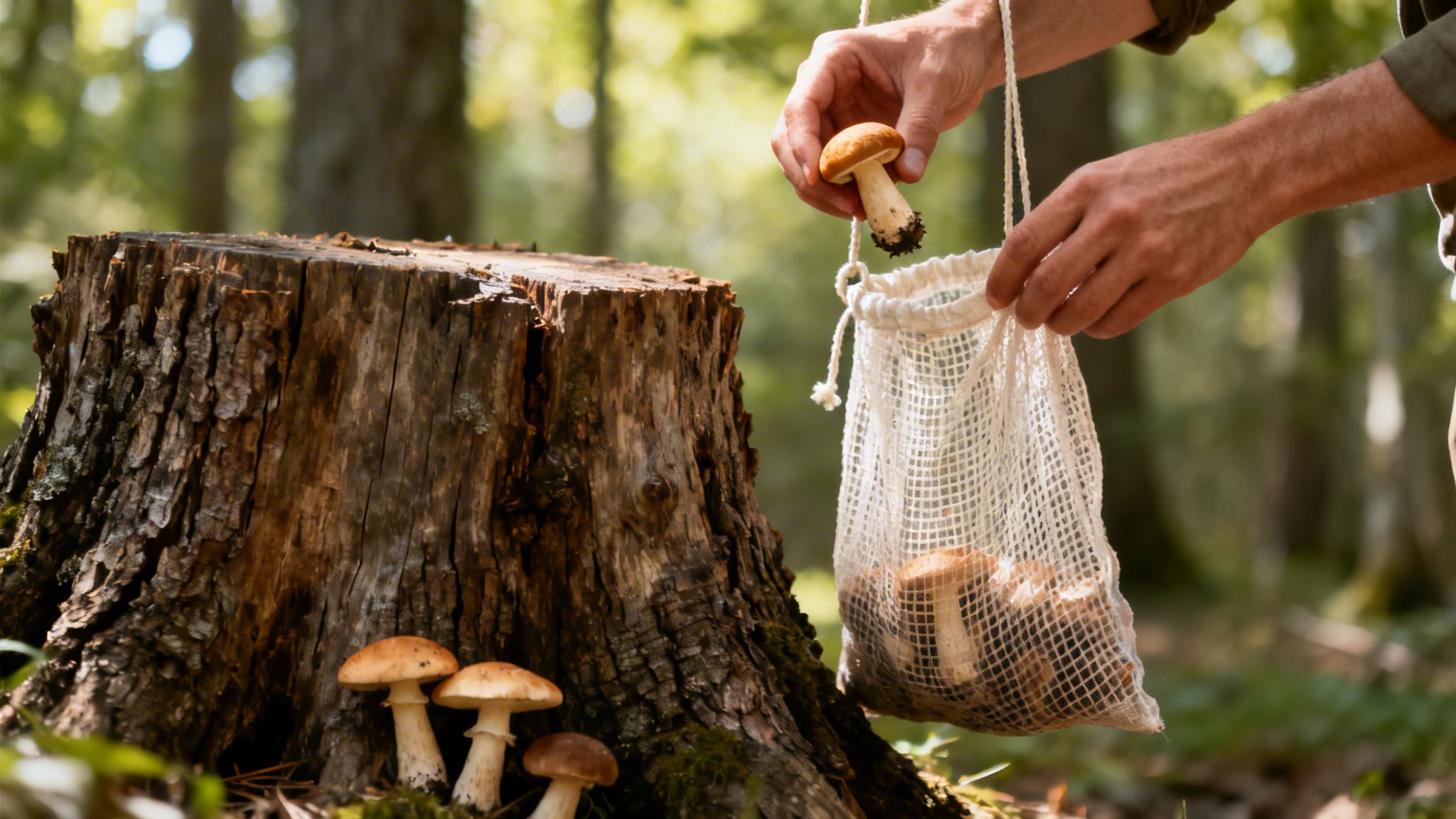
A successful day of foraging is about more than just a full basket. It’s about being a responsible and knowledgeable hunter of wild mushrooms Michigan. This means you need to know the written rules for public lands and embrace the unwritten ones that keep our forests healthy for everyone.
Before you even step into the woods, it’s crucial to know where you're allowed to harvest. Think of it this way: different public lands have different playbooks, and you need to know which one you’re using.
Understanding Michigan's Foraging Laws
Generally speaking, you can forage for personal use in Michigan's State Forests and State Game Areas without needing a special permit. But don't take that as a universal green light. Most State Parks and Recreation Areas actually prohibit taking any plants or fungi, so you absolutely must check the specific rules for the exact park you plan to visit.
Key Takeaway: The rules are for personal consumption only. You're typically allowed to gather a reasonable amount for your own kitchen, but selling those mushrooms is an entirely different game that is strictly regulated.
If you want to sell wild-foraged mushrooms in Michigan, you need to get certified. This isn't just bureaucratic red tape; it’s a critical measure to protect public health. The state has a robust certification program to ensure only qualified experts are selling fungi, which makes sense given the sheer diversity here. In partnership with the Michigan Department of Agriculture & Rural Development (MDARD), groups like MAMI and MIFMA offer workshops that certify foragers, allowing them to legally sell treasures like morels and chanterelles. You can learn more about how Michigan turns forests into revenue streams while sticking to the Food Code's safety rules.
This legal framework also bumps up against the complicated status of psychoactive species. For a full breakdown of the legal nuances and the very real risks involved, you should check out our guide on magic mushrooms in Michigan.
The Forager's Code of Ethics
Just as important as the law is the forager’s code of ethics. This is the unwritten conduct that ensures our forests stay vibrant for years to come. Responsible foraging is an act of stewardship—it’s about leaving the woods as healthy as, or even healthier than, you found them.
Here are the core principles every forager should live by:
- Use the Right Bag: Ditch plastic bags. They trap moisture and will turn your beautiful finds into a slimy mess. A mesh bag or a classic wicker basket is so much better. As you walk, spores drop from the bag to the forest floor, helping seed the next generation of mushrooms.
- Don't Be Greedy: Never, ever strip a patch clean. A good rule of thumb is to take no more than half of what you find in one spot. Leaving plenty behind ensures the fungal patch can recover and also provides a meal for local wildlife.
- Tread Lightly: Stick to existing trails whenever you can and watch your step. The delicate underground network of mycelium—the actual "body" of the fungus—is easily crushed by heavy boots. A gentle footprint ensures the organism can keep producing mushrooms for years.
- Cut, Don't Pull: When you find a mushroom you want, use a small knife to cut it at the base of the stem. Pulling it straight out of the ground can rip up and damage the delicate mycelium, harming the organism's ability to fruit again in the future.
When you follow these legal and ethical guidelines, you’re doing more than just gathering food. You become a partner in the forest's lifecycle, making sure the magic of the mushroom hunt is something we can all enjoy for generations.
A Safe and Legal Alternative to Wild Foraging
While hunting for gourmet edibles like Morels is a rewarding hobby, searching for psychoactive wild mushrooms in Michigan is a whole different ballgame. It's a world where a simple mistake can have serious consequences, from misidentifying a mushroom to navigating a tricky legal landscape.
For adults in the Detroit and Ann Arbor areas curious about psilocybin, there’s a much smarter and safer path. Metro Mush offers a reliable alternative that takes all the danger and guesswork out of the equation. It's the difference between taking a wild gamble in the woods and making a responsible, informed choice.
The Clear Benefits of Choosing Cultivated Products
Opting for a trusted local source like Metro Mush gives you a peace of mind that wild foraging just can't offer. Every single product is grown in a controlled, professional environment, which means you never have to worry about deadly lookalikes or unknown contaminants.
The advantages are pretty clear:
- Guaranteed Purity and Safety: Our products are cultivated in sterile conditions, so there's zero risk of accidentally picking something toxic like the Deadly Galerina.
- Precise and Consistent Dosing: The potency of wild mushrooms can be all over the place. Cultivated products deliver precise, consistent dosing, so you always know exactly what to expect.
- A Diverse Menu: You get to choose from a wide range of options, from specific mushroom strains to easy-to-dose edibles that make the experience simple and enjoyable.
This modern approach puts your well-being first, ensuring a predictable and positive experience without the life-threatening risks that come with foraging for psychoactive species.
Your Local Source in Detroit and Ann Arbor
Metro Mush is all about serving our local community with easy access to high-quality psilocybin products. Our menu is built to welcome everyone, whether you're just starting out or are a seasoned connoisseur.
For anyone new to psilocybin, options like our OuterSpore Milk Chocolate Bars offer a delicious and straightforward entry point. If you’re a more experienced user looking for something special, we carry sought-after strains like the potent and visually stunning Enigma mushrooms.
Choosing a dispensary isn’t just about the product; it's about trust, convenience, and community. Metro Mush provides a direct, local connection for adults seeking safe and reliable psilocybin options, backed by clear information and value.
Getting started is simple. Just browse the menu online and place your order by texting the dedicated number for either the Detroit or Ann Arbor metro area. We also believe in making access affordable. Our Mix & Match Saturdays let you combine any three chocolate bars or drinks for $100, saving you up to $40. We also proudly offer a 10% discount for fire, police, and veterans as a small thank-you for their service.
To see everything we have to offer and learn more, you can discover where to buy shrooms safely in your area.
Your Michigan Mushroom Foraging Questions Answered
Stepping into the world of Michigan mushroom foraging can feel a little overwhelming. There are a ton of questions that pop up, whether you're a total beginner or have a few seasons under your belt. Let's clear up some of the most common ones.
When Is the Best Time to Forage in Michigan?
Knowing when to look is half the battle. Michigan's mushroom seasons are pretty distinct, with different species showing up at different times.
- Spring (Late April to Early June): This is all about the legendary Morel. After the first good spring rains, when the soil warms up just right, they start to appear. It's a short, exciting window that gets foragers out in droves.
- Summer (July to September): As the weather turns hot and humid, it's time to hunt for golden Chanterelles, the vibrant orange Chicken of the Woods, and the more subtle Black Trumpet mushrooms.
- Fall (September to First Frost): Autumn brings the heavy hitters. This is prime season for monsters like Hen of the Woods (Maitake), Lion's Mane, and different kinds of Oyster mushrooms. Many of these will keep fruiting right up until the first hard frost.
Do I Need a Permit for Wild Mushrooms in Michigan?
For the most part, if you're just picking for yourself, you do not need a permit to forage in Michigan's State Forests or State Game Areas. But—and this is a big but—harvesting is usually off-limits in most State Parks and Recreation Areas.
The rules can always change, and some areas may have specific quantity limits. It's on you to check the regulations for the exact public land you plan to visit before you head out. Commercial harvesting is a completely different ballgame and requires a special state certification.
What Is the Biggest Danger When Foraging Psilocybin?
Without a doubt, the single greatest danger is misidentification. It’s a risk you just can’t afford to take.
Several deadly poisonous mushrooms, especially the "Deadly Galerina" (Galerina marginata), are near-perfect lookalikes for some psilocybin species. To make matters worse, they often grow in the very same places.
One simple mistake could be fatal. On top of the huge health risks, you’re also facing legal trouble for possession and harvesting. This is exactly why turning to a trusted, professional source for lab-tested products is the only way to completely remove both the health and legal dangers.
Are Invasive Mushrooms a Problem in Michigan?
Yes, they are becoming a real concern. The Golden Oyster mushroom (Pleurotus citrinopileatus), which is originally from Asia, is spreading like wildfire across the state.
Because it's not native, it competes with our local fungi for food and space, which can throw the delicate forest ecosystem out of balance. Researchers are keeping a close eye on its spread, especially since it seems to love our warming climate and could push out some of our native species. If you see them, you can help by reporting the sighting to the DNR and never trying to cultivate non-native mushrooms.
Ready to skip the risk and explore psilocybin safely? Metro Mush offers a curated selection of lab-tested, precisely dosed products for adults in the Detroit and Ann Arbor areas. Visit metromush.com to browse our menu and place your order today.