

The advice you'll read most often about magic mushrooms is that the name tells you what you're getting. Learn the strain names, the reasoning goes, and you can predict the experience. That advice collapses the moment you separate the three kinds of names people use interchangeably.
Penis Envy and Enigma aren't species. They're cultivars, cultivated variants of a single species, Psilocybe cubensis, kept alive by growers who clone and cross selected specimens. Psilocybe is a genus, a much larger container holding many species with different habits and different alkaloid profiles. And "magic mushrooms" is a retail category covering dried fungi, chocolate bars, gummies, and drinks, some of which contain no psilocybin at all.
This is a list of magic mushrooms built as a sorting exercise rather than a ranking. Eight species, each labeled by evidence level, so you can tell documented botany from grower reports from claims nobody has tested. Penis Envy and Enigma appear here only as cultivars inside the first entry, because that's exactly what they are.
Everything below is educational. It isn't guidance on use, dosing, or sourcing, and it doesn't override the law where you live. Treat every potency claim you meet, including the ones in this article, as provisional until a laboratory report backs it.
1. Psilocybe cubensis, the Benchmark Species
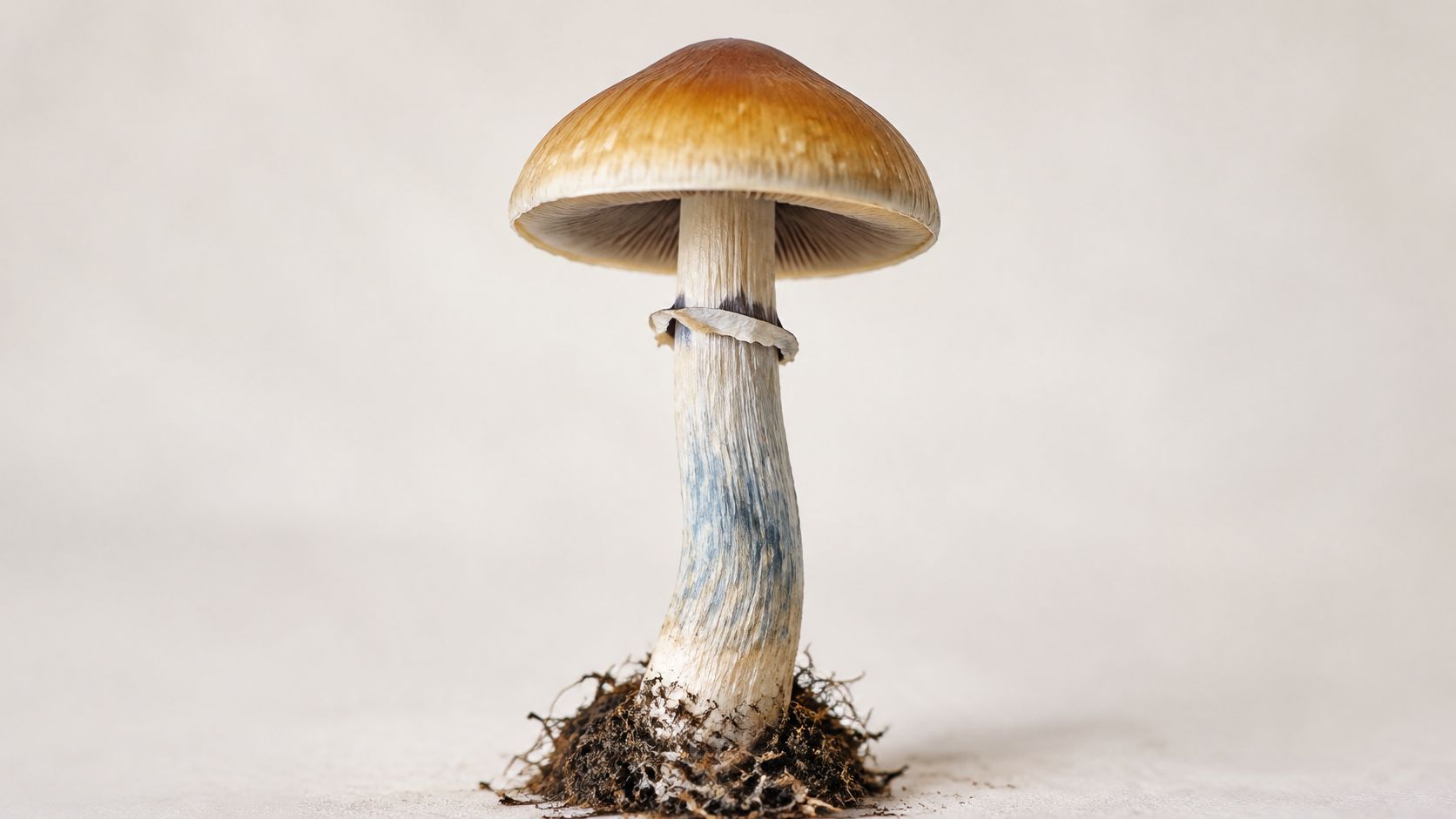
Psilocybe cubensis sits behind nearly every product sold as a magic mushroom, and it's the species most home growers cultivate. It was formally described from Cuba in 1906, and it grows wild across tropical and subtropical regions, typically on cattle dung. Most cultivar names on dispensary menus, Penis Envy and Enigma included, trace back to this one species.
What a Cultivar Name Can and Cannot Tell You
A cultivar is a grower's selection, not a botanical category. Potency shifts with substrate, temperature, harvest timing, and how much stem stays attached. Documented: a 2025 review of Psilocybe cubensis reported psilocybin concentrations from 0.208 to 5.344 mg/g across examined strains and psilocin from 0.651 to 3.509 mg/g, plus meaningful differences between individual mushrooms of the same strain (2025 Psilocybe cubensis review). Reported: Penis Envy and Enigma are cubensis cultivars with recognizably different growth habits. Unverified: any claim that a name guarantees a fixed effect.
- Potency needs a lab number. Ask for measured total psilocybin and psilocin per gram, the analytical method, and a batch identifier.
- Skip visual identification alone. Toxic look-alikes share habitat with dung-loving mushrooms.
- Take interactions seriously. MAOIs, lithium, and certain antidepressants change the risk profile, and that conversation belongs with a clinician.
Say two growers harvest the same cultivar on the same day. One fruits cooler with a longer colonization period. Without testing, neither can tell you which jar is stronger, and the label won't either.
2. Psilocybe azurescens, the Coastal Wood Species
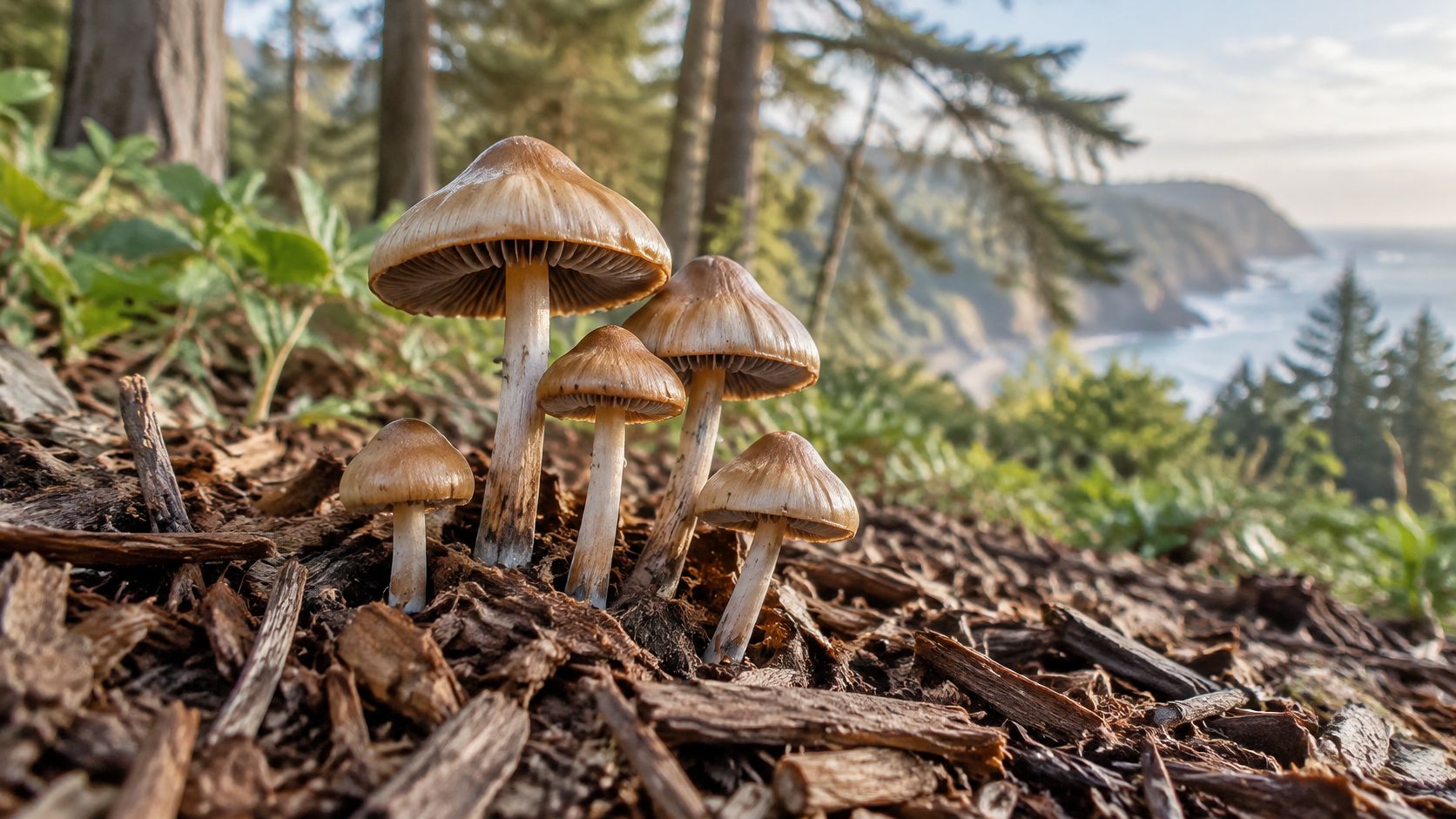
Psilocybe azurescens is a wood-rotting species from the coastal Pacific Northwest, formally described in 1996 by Paul Stamets and Jochen Gartz. Documented: it fruits on hardwood chips and decaying wood, bruises blue quickly when handled, and favors cool, wet coastal conditions. Reported: field observers and growers describe it as one of the most potent psilocybin-containing mushrooms. Unverified: the idea that a named patch or a single season delivers a predictable dose.
Why Potency Claims Need a Batch Number
Potency talk usually skips the pharmacology. Controlled research found roughly linear psilocin exposure across oral doses of 0.3, 0.45, and 0.6 mg/kg, with a mean elimination half-life around 3 hours, and body weight did not reliably predict clearance (psilocin pharmacokinetic study). That's an argument for testing a batch, not trusting a species name. The same work modeled a fixed 25 mg oral psilocybin dose as approximating exposure from 0.3 mg/kg, which is clinical pharmacology, not a conversion chart for dried mushroom weight.
Practical rule: if a seller can't name the batch, the harvest date, and the measured alkaloid content, you're buying a story about potency rather than a measurement of it.
Cultivation carries most of the practical interest here. Our walkthrough on growing Psilocybe azurescens covers the wood-chip substrate and the cool fruiting conditions this species responds to. A worked example: a grower keeps a hardwood-chip bed shaded through late summer, introduces spawn as temperatures drop, and gets a flush in autumn. The flush arrives, but the potency of that flush still needs a lab.
Wild specimens deserve more caution than cultivated ones. Leave them where collection is restricted, and skip the whole question if there's a personal or family history of psychosis or bipolar disorder.
3. Psilocybe cyanescens, the Wavy Cap
Psilocybe cyanescens is a wood-decomposing species first described from Europe and now recorded across Western Europe, the Pacific Northwest of North America, and parts of Hawaii. Documented: it fruits on buried woody debris, wood chips, and garden mulch, and it bruises blue strongly. Reported: it appears reliably in urban landscaping beds after autumn rain. Unverified: any claim that a wavy cap found in a public park is definitely this species.
Habitat footage often teaches more than a cap description, because the setting narrows the candidates before you look at a single gill.
The Look-Alike Problem in Wood Chips
The DEA psilocybin fact sheet warns that misidentifying a mushroom can cause accidental poisoning, and that high doses may produce panic, paranoia, anxiety, or psychotic-like episodes. Wood-chip beds concentrate that risk, because several toxic species share the same substrate and the same season.
Labeling adds a second layer. The same fact sheet describes recent reporting on inconsistent labeling in some mushroom-branded products, including products advertised as Amanita that reportedly contained undisclosed psilocybin or other substances. Regulation is moving in some places: Australia's standards for psilocybin products took effect in January 2025.
If cultivation interests you more than foraging, our Psilocybe cyanescens grow guide covers the mulch-and-wood approach and the fruiting triggers to watch for.
Here's the worked example that matters. A gardener finds wavy-capped mushrooms on fresh bark mulch in November and photographs them. Spore color separates some candidates, with Psilocybe dropping a dark purplish-brown print and Galerina a rusty one, but a print alone doesn't settle it. Microscopy or an experienced identifier does, and until then the correct label is "unidentified."
4. Psilocybe semilanceata, the Liberty Cap
Psilocybe semilanceata, commonly called the liberty cap, is a grassland species with a small, pointed, bell-shaped cap and a thin, flexible stem. It's native to Europe and widely distributed across the Northern Hemisphere, and it's among the wild psilocybin species most frequently recorded in UK and European mycological surveys and academic work on psilocybin distribution.
Reading a Liberty Cap Record Correctly
Grassland species are where casual identification goes wrong most often, because small brown mushrooms with pointed caps are everywhere. Documented: the cap shape, the pasture and lawn habitat, and the species' presence in European field records. Reported: that it returns to the same fields year after year once established. Unverified: any specific potency number tied to a country or region, since local figures vary by sample and by analytical method.
A field record tells you where a species grows. It says nothing about how strong a particular mushroom is.
Practical handling looks like this:
- Confirm before you handle. Use a regional key and an expert second opinion rather than a photo match.
- Wash your hands afterward. It limits unintended contact and keeps spores off your face and food.
- Check medications first. Serotonergic interactions are a clinical question, and a pharmacist or physician is the right person to answer it.
Picture a walker crossing a sheep pasture in October, spotting a scatter of pointed caps in the grass. The correct next step is documentation: photograph, note the habitat, and compare against a regional checklist. Nothing about that field record certifies what a mushroom contains.
5. Psilocybe baeocystis, the Understudied One
Psilocybe baeocystis is a small, wood-associated species recorded in the Pacific Northwest of North America and parts of Europe. It bruises blue when handled, fruits on wood chips, mulch, and decaying plant material, and it appears in some of the early North American mycological surveys of the genus.
Why Small Brown Mushrooms Resist Identification
Cap shape, stem thickness, and gill color overlap heavily among small brown species, so documented descriptions rely on combinations: spore print color, bruising reaction, habitat, and microscopic features. Reported: the species turns up in citizen science databases and regional survey work. Unverified: nearly everything circulating online about its relative potency, because samples are seldom tested.
- Work from a reputable field guide or an expert. A single photo, especially a phone photo in poor light, isn't enough.
- Avoid stacking substances. Combining psilocybin with alcohol or other intoxicants makes any reaction harder to read.
- Document properly if you're contributing to research. Record dose, timing, setting, and the identification method, because a record without method is folklore.
Consider a citizen scientist sampling a mulch bed in a Portland park after rain. She photographs the cluster, notes the wood substrate and the bluing on a bruised edge, then sends the images to a local mycological society for review. That submission has value. Treating the same cluster as dinner does not.
6. Psilocybe mexicana, the Species That Started the Science
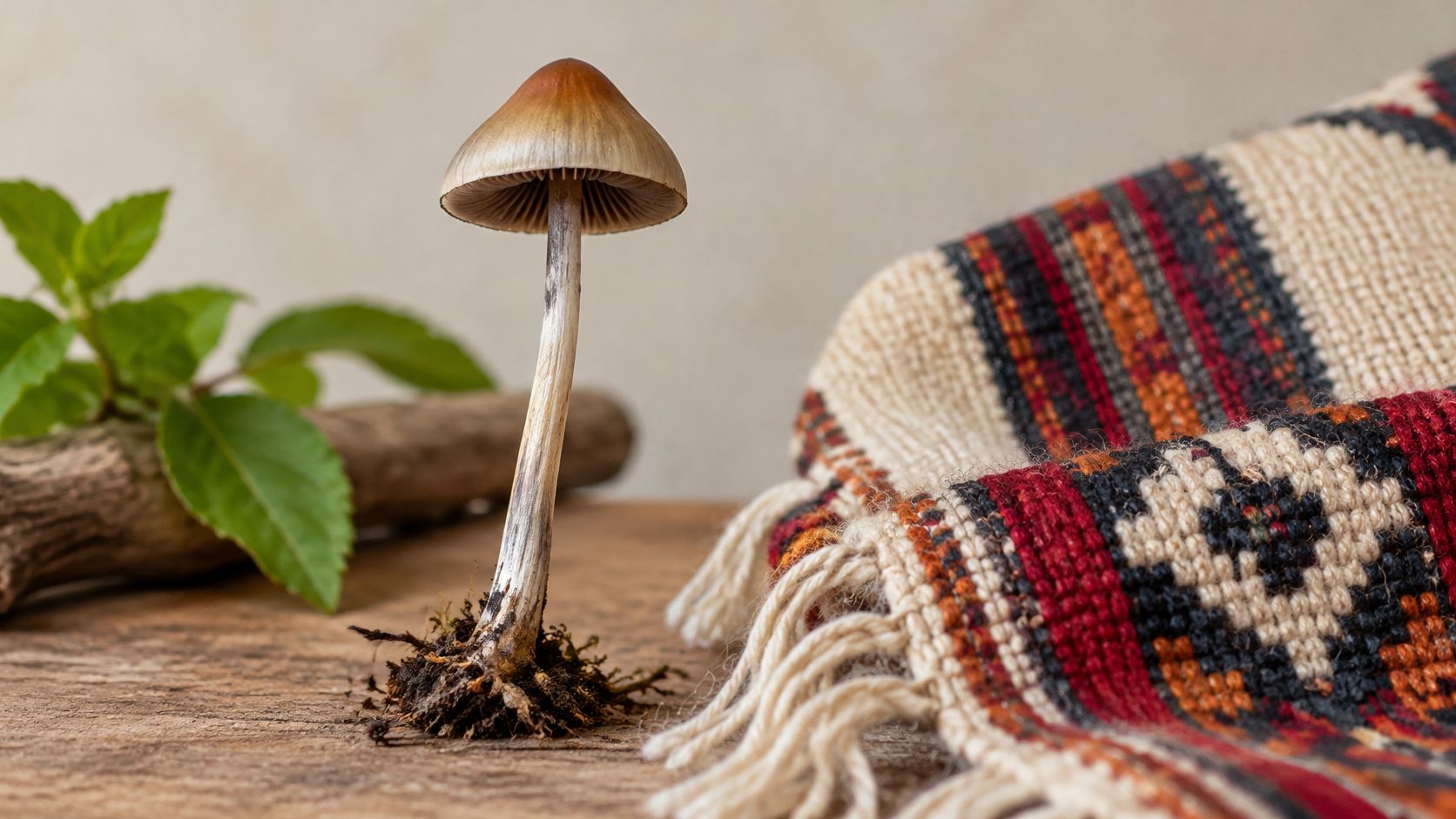
Psilocybe mexicana is native to Mexico and Central America and has a long recorded history of use in Indigenous ceremonial practice, particularly among the Mazatec. Western science took notice in the 1950s, when researchers including Roger Heim and Albert Hofmann identified its psilocybin content. The species became the doorway through which psilocybin entered laboratory study.
From Ceremony to Clinical Trial
That lineage runs straight into modern research. A milestone arrived in 2016, when Johns Hopkins researchers reported results from a controlled study of 51 adults with life-threatening cancer diagnoses, administering psilocybin under psychologically supported conditions and examining existential anxiety and depression rather than recreational use. The same year, researchers at New York University reported a similarly designed study of 29 participants, making 80 adults across the two landmark investigations (Johns Hopkins Hub report on the 2016 studies).
What those studies established is narrower than the headlines. Carefully supervised administration can be studied with modern medical methods, and the outcomes measured were mood, anxiety, quality of life, and psychological distress. They say nothing about an untested dried product or a homemade tea.
Respect belongs in this entry more than any other. The ceremonial context is a living tradition, not a marketing theme, and dressing a gummy in Mazatec imagery is appropriation with a price tag. Verify any claim that a commercial dried product is P. mexicana, because the dried material sold under cultivar names is overwhelmingly cubensis.
7. Psilocybe stuntzii, Stuntz's Psilocybe
Psilocybe stuntzii is named for the mycologist Daniel Stuntz and recorded in the Pacific Northwest and other temperate regions of North America. Documented: regional fungal surveys place it on wood chips and mulch in managed grounds. Reported: it fruits in mulched beds and park plantings after seasonal rain. Unverified: most of what circulates about its potency, because samples rarely reach a laboratory.
Where the Evidence Is Thinnest
This is the entry where honest labeling does the most work. A species can be well documented as an organism and almost undocumented as a product, and P. stuntzii sits squarely in that gap. Anything you read about its effects is best treated as a report, not a finding.
- Confirm identification with an expert resource. Managed gardens put this species next to ornamental plants, pets, and people.
- Flag MAOIs and serotonergic medications. The interaction risk is a medical question, and self-assessment isn't sufficient.
- Ask a clinician about anything you're taking. That includes over-the-counter supplements, not just prescriptions.
A gardener clearing a commercial bed finds a flush on fresh bark mulch in autumn. The useful response is to photograph it, note the substrate and date, and leave it in place. A garden finding is a botanical record. It isn't a product, and nothing about the setting makes it one.
8. Panaeolus cyanescens, the Dung-Loving Outlier
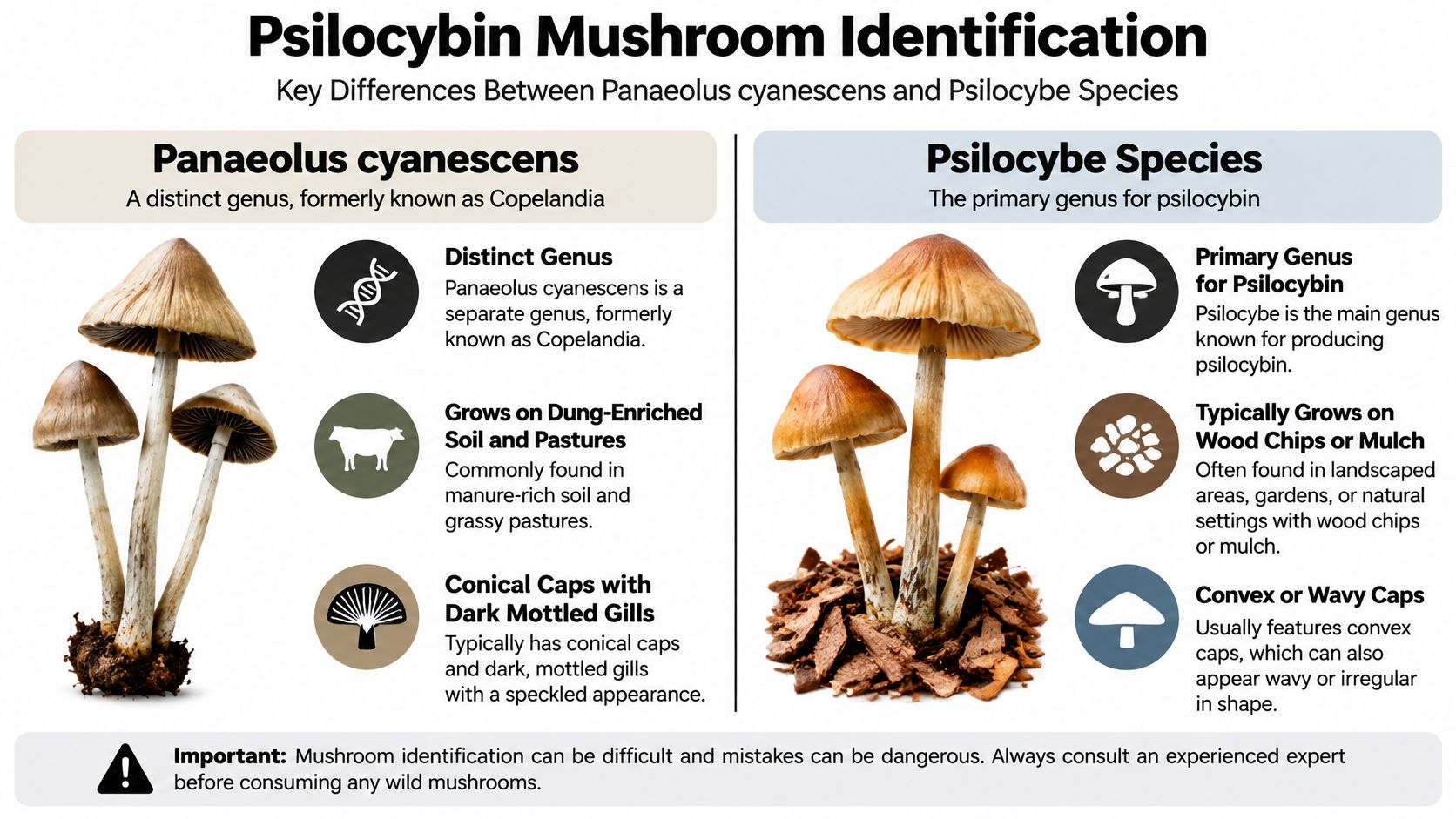
Panaeolus cyanescens, formerly placed in the genus Copelandia, is a dung-loving species from tropical and subtropical regions, including Hawaii. It bruises blue, fruits on manure-rich lawns and pastures, and sits outside the genus Psilocybe entirely. That distinction matters for anyone trying to identify it with a list of Psilocybe species in hand.
A Genus That Isn't Psilocybe
Taxonomy is the fastest-moving part of this topic. Names shift between genera as sequencing revises relationships, so documented identification depends on current sources rather than a field guide printed two decades ago. Reported: the species is associated with recreational use in tropical regions. Unverified: potency figures quoted without an analytical method.
The comparison below places the two genera side by side on the features that separate them.
- Start with a current taxonomic source. Check the accepted name before you check anything else.
- Avoid contaminated ground. Manure near roadsides and sprayed lawns concentrates everything you don't want.
- Treat packaging as a claim. A name printed on a wrapper isn't a verification of species or content.
How the eight species compare on habitat, growth medium, bruising, and legal notes
| Item | Typical Habitat | Growth Medium | Bluing When Bruised | US Legal Note |
|---|---|---|---|---|
| Psilocybe cubensis | Tropical and subtropical regions | Cattle dung or manure-based substrate | Yes | Psilocybin is federally Schedule I; state and local laws vary. |
| Psilocybe azurescens | Pacific Northwest coastal areas and dunes | Wood chips and mulch | Strong blue bruising | Restricted federally and in most states; verify local laws. |
| Psilocybe cyanescens | Western Europe, Pacific Northwest, and parts of Hawaii | Wood chips, mulch, and buried woody debris | Strong blue bruising | Restricted federally and in most jurisdictions; local rules vary. |
| Psilocybe semilanceata | Grasslands, pastures, and lawns | Grassland soil | Can bruise blue or dark | Federally restricted and controlled in most states. |
| Psilocybe baeocystis | Moist forests and disturbed wood sites | Wood chips, mulch, and decaying plant material | Yes | Restricted federally and in most jurisdictions; verify local laws. |
| Psilocybe mexicana | Tropical and subtropical highland grasslands | Grassland and pasture soil | Often bruises blue | Psilocybin is restricted under US federal law; verify local laws. |
| Psilocybe stuntzii | Landscaped areas and moist forest edges | Wood chips, mulch, and decaying woody debris | Bruising varies with conditions | Restricted federally and in most jurisdictions; verify local laws. |
| Panaeolus cyanescens | Tropical and subtropical lawns and pastures | Manure-rich soil | Common, sometimes less pronounced | Psilocybin is federally restricted; verify local laws. |
Checking Local Law Before You Explore Further
Three checks turn this list into something usable. Do them in order, and don't skip the second one.
- Verify the name against a current taxonomic authority. Index Fungorum and MycoBank are the standard references for accepted names and synonyms. A species name that was correct in 2005 may sit under a different genus today.
- Check the law where you are. Legal status differs substantially by country and by U.S. state, so a national headline tells you very little about your own situation.
- Treat reported potency as unverified. A species label is a category. A batch number with an analytical method is evidence.
The distance between a clinical result and a consumer product is wider than most discussions admit. In a 2020 Johns Hopkins study published in JAMA Psychiatry, researchers evaluated 24 adults with major depressive disorder and a documented symptom history of roughly two years for most participants, using two psilocybin doses with supportive psychotherapy. At the one-week follow-up, 67% had achieved more than a 50% reduction in symptoms; at four weeks, 71%; at four weeks, 54% were in remission (Johns Hopkins Medicine summary of the 2020 study). Those numbers describe a screened population under a defined protocol. They don't describe a chocolate bar.
If you're comparing dried products in Southeast Michigan, Metro Mush lists dried Penis Envy from $35.00 to $200.00 depending on variant and Enigma from $55.00 to $350.00, and its team has spent over 4 years growing and refining its strains. Knowing what a product is matters more than owning it.
Legal trouble is the other thing worth preparing for rather than reacting to. If possession has already become a family matter, this guide for families facing drug charges walks through how the process typically unfolds.
Metro Mush stocks dried strains including Penis Envy and Enigma alongside chocolate bars, shroom drinks, and microdose capsules, with prices listed on the menu before you decide anything. If you're in Detroit, Ann Arbor, or the surrounding Southeast Michigan area and want to see what's available locally, browse the current Metro Mush menu and place an order by text when you're ready.