


You've brought home a chocolate bar, and the kitchen cupboard feels warm. The fridge is tempting, but you've also seen what happens when a chilled bar comes out chalky and smelling faintly of leftovers. Knowing how to store chocolate bars means managing the temperature and protecting the wrapper, not just choosing the coldest shelf.
Storage Conditions and Methods at a Glance
Keep bars cool, dry and dark, at 12°C (54°F) or below where the room allows it, with an intact wrapper inside an airtight outer container. That target follows the tested conditions in the published storage guidance and sensory findings: 12°C held quality, while the next tested step up, 20°C (68°F), is where deterioration starts. Nothing between those points was measured, so treat 20°C as a hard ceiling rather than a comfort zone.
In a controlled comparison of seven chocolate products, researchers tested 6°C, 12°C, 20°C, and 30°C. The cooler conditions gave the highest sensory quality across most characteristics, while the hottest condition was unsuitable for every product, even for short-term storage.
Storage spots, conditions and limits for chocolate bars
| Storage spot | Temperature | Humidity | Best use | Main limit |
|---|---|---|---|---|
| Pantry or cupboard away from heat | Cool and steady, within the target above | Dry, without humidity spikes | Everyday storage | A cupboard beside an appliance may warm during use |
| Refrigerator, sealed airtight | Consistently chilled | Keep moisture outside the package | A hot home without a suitable cupboard | Condensation when opened too soon |
| Freezer, sealed airtight | Frozen, without repeated thawing | Dry inside the sealed package | Stock reserved for later use | Requires careful thawing; no shelf-life guarantee |
| Vacuum or oxygen-absorber pack in pantry | Cool, controlled conditions | Dry environment and moisture-resistant pack | Longer inventory holding | Only useful while the seal remains intact |
| Car, sunny window or oven shelf | Hot or rapidly changing | Humidity control won't solve the heat problem | Never a storage location | Heat exposure and bloom |
A 2021 study of dark and milk-filled bars found no significant deterioration at 6°C and 12°C over 26 weeks, whereas samples at 20°C began deteriorating after 10 weeks, particularly in melting behavior and off-flavors. Those results describe the tested products; they don't set a universal expiry date.
Practical rule: If the room spends much of the day at 20°C (68°F) or warmer, move the bar to a cooler spot or refrigerate it sealed. Keep chocolate away from sunlight and heaters.
A pantry earns its place by staying cool and steady. Judge the actual shelf, including what happens when someone cooks, runs an appliance, or opens the curtains.
How to Store a Bar Day to Day
The useful routine starts before the bar goes on the shelf. A damaged wrapper or damp container needs attention first; moving it somewhere cooler won't fix the packaging.
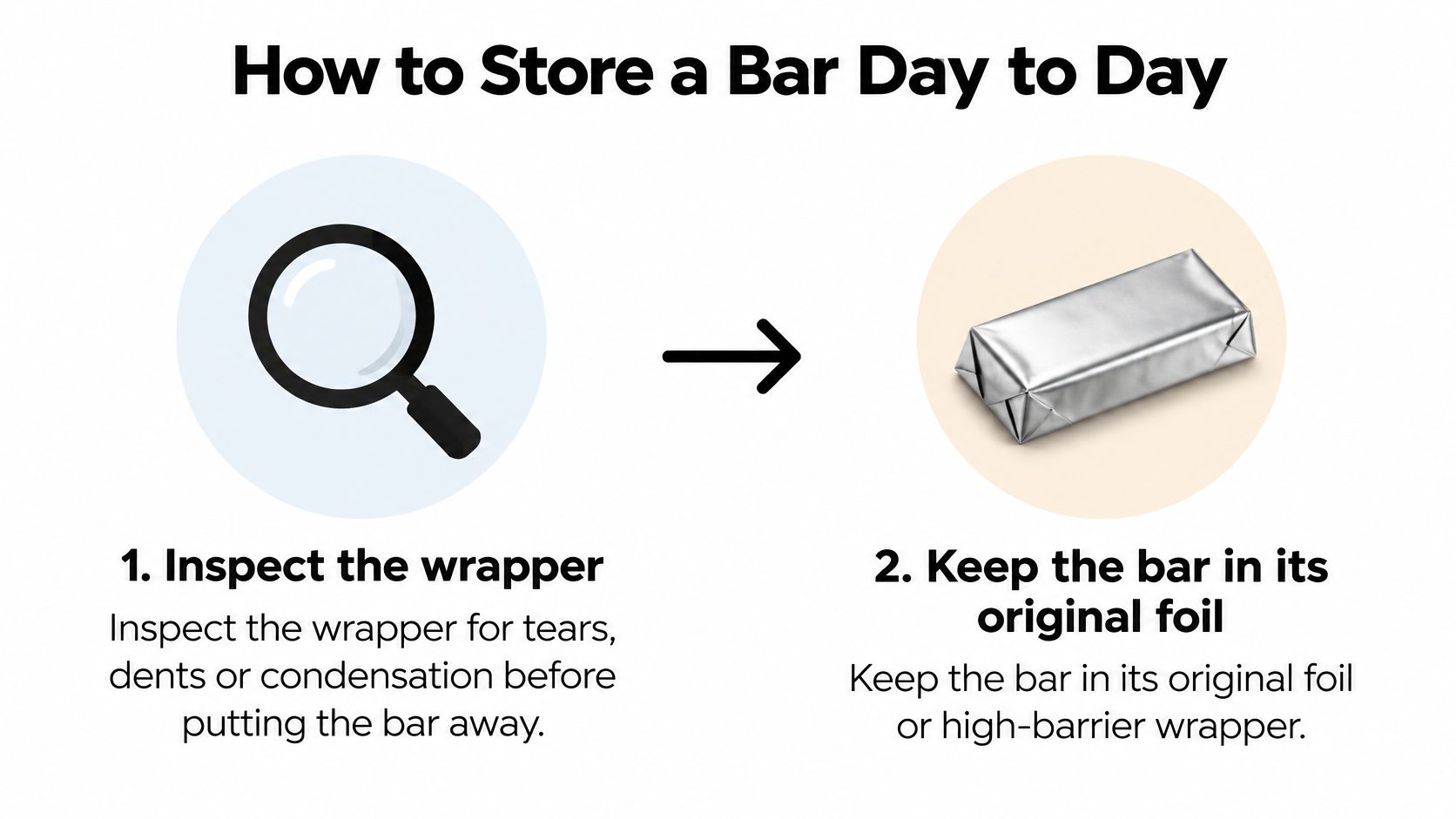
Inspect before storing. Check the wrapper for tears, crushed corners, loose seams, and condensation. If the outside is damp, dry it before adding another layer, and inspect any damage that might have exposed the chocolate.
Keep the original barrier. Leave the bar in its foil or high-barrier wrapper, then put it in a clean, dry, airtight tin or glass container. The outer container supplements the wrapper rather than replacing it.
Choose the shelf deliberately. Use a dark cupboard away from ovens, radiators, dishwashers, and windows. Check the shelf after the kitchen has been in use, not just when everything is switched off.
Separate strong smells. Don't store bars alongside coffee, spices, onions, soap, or scented household products. Keep those items elsewhere rather than asking a thin wrapper to do all the work.
Date and rotate. Write the purchase date on the outer container and keep the product's lot information and best-by label. Move older bars to the front so they don't disappear behind newer purchases.
Use the wrapper check and sealing sequence as your everyday starting point.
When the Refrigerator Is the Better Choice
Humidity readings don't tell the whole story. The sensory research cited above favored a controlled cool environment even though a warmer comparison condition had lower relative humidity. Don't assume a dry-feeling room compensates for heat.
When refrigeration is necessary, seal the bar in a moisture-resistant container before chilling it. Take out only what you intend to use, and let the unopened container warm gradually before opening. That keeps warm, humid room air away from the cold chocolate.
Don't unwrap a chilled bar to check whether it has warmed yet. Leave the barrier in place until the container and contents have reached room temperature.
Packaging That Blocks Bloom and Odor
Packaging options and what each one blocks
| Packaging | What it blocks | Weak point |
|---|---|---|
| Original foil or high-barrier wrapper | Light and moisture, depending on construction | Tears and loose folds weaken protection |
| Plain paper or wax paper only | Surface contact and scuffing | Not a dependable moisture or odor barrier alone |
| Thin zip bag | Some moisture exposure | Seal and material quality vary; use as a secondary layer |
| Rigid airtight tin or glass jar | Moisture and odors when properly sealed | Must be clean and dry inside |
| Vacuum bag or oxygen-absorber pack | Oxygen exposure; moisture protection depends on the bag | Needs an intact seal and a suitable packaging system |
Packaging tackles exposure, but it doesn't provide temperature control. An expensive vacuum bag on a hot shelf is still a hot storage environment.
Fat bloom develops when cocoa-butter crystals migrate and recrystallize. Sugar bloom develops when moisture dissolves surface sugar, which later recrystallizes. That distinction explains why both thermal stability and moisture protection matter.
The Bar's Condition Matters Too
A 2024 study published in Food Bioprocess Technology found that well-tempered chocolate resisted fat bloom for up to 9 months during accelerated testing at 26°C. That's evidence about tempering under specific test conditions, not permission to store every bar somewhere warm.
You can't inspect the manufacturing process at the shop counter. You can look for an undamaged wrapper and, when the chocolate is visible, an even surface without obvious melting or streaking. Gloss and a clean snap are useful quality clues, not safety certificates.
After taking a piece, fold the foil back snugly without tearing it. For stacked bars, use parchment as a practical divider to reduce scuffing, then choose a container that holds them without squeezing or excessive movement.
For ingredient context, the cocoa butter wafers page concerns the fat component relevant to chocolate's texture. It shouldn't replace the finished bar's storage instructions.
A wrapper can limit exposure. It can't undo heat damage or restore a poorly tempered bar.
Freezing and Vacuum Sealing for Long-Term Storage
Long-term packing is worth considering when you've bought more chocolate than you expect to use soon. Start with the manufacturer's instructions, especially for filled bars, rather than assuming every recipe tolerates freezing equally well.
The extra wrapping should protect the bar without hiding its identity or label.
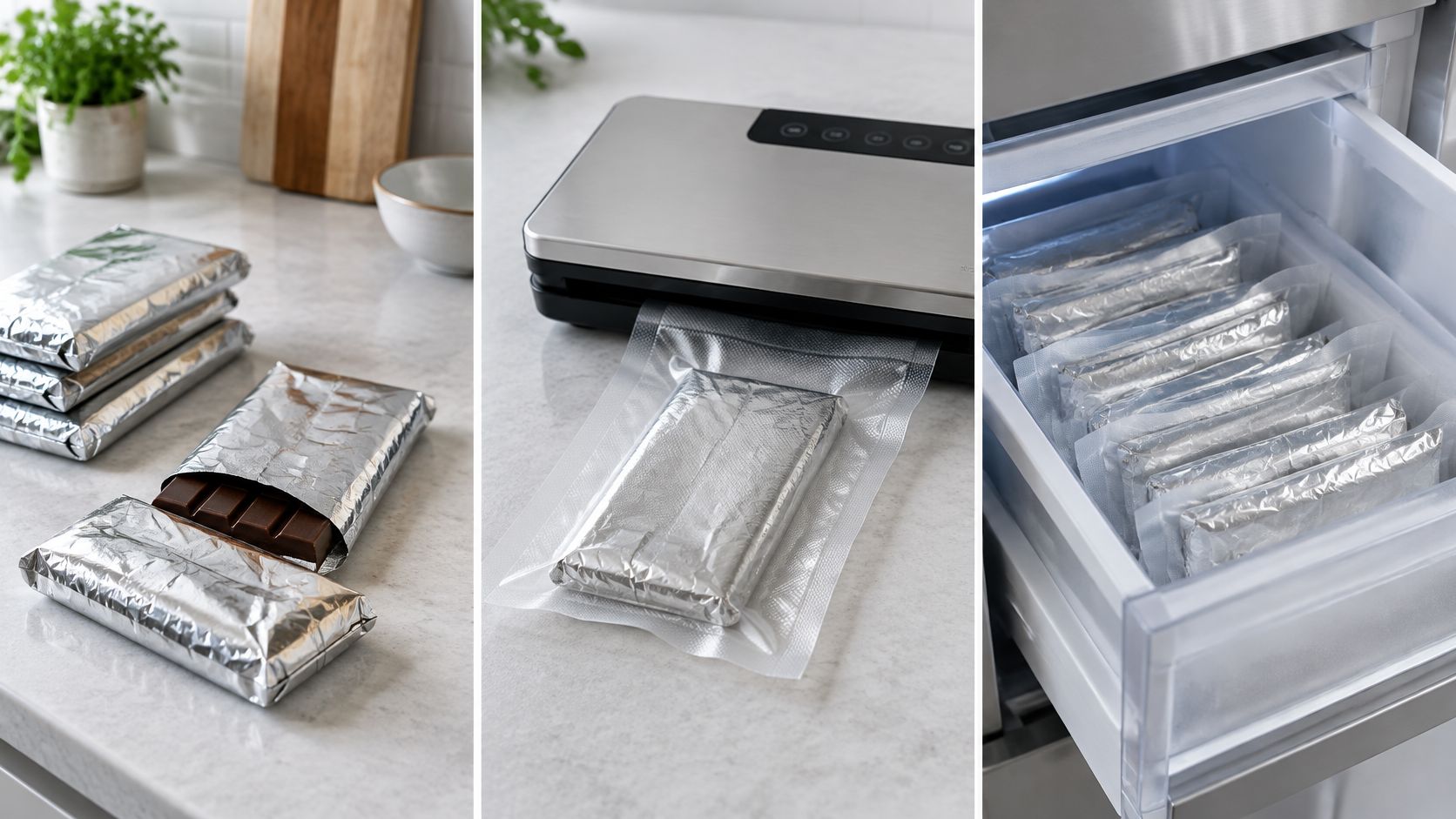
A Cautious Freezer Routine
The cited storage experiments don't establish a freezer temperature or frozen shelf life for every chocolate bar. Treat freezing as a packaging and thawing decision, not a proven way to add a fixed number of months.
- Retain the foil. Keep the original wrapper and product label together.
- Add a freezer-suitable outer bag or airtight container. Gently remove excess air without crushing the bar.
- Label the package. Record purchase and freezing dates, along with the contents.
- Freeze only if the product's instructions permit it. Protect the package from punctures and crushing.
- Thaw without opening. Move the sealed package through the refrigerator, then let it reach room temperature before unwrapping.
The freezer isn't the only option. A controlled cool shelf with appropriate packaging may be more practical when you need regular access to stock.
Vacuum Packing Without Crushing the Bar
Check the primary wrapper before sealing. Keep headspace low, protect the sealed bars in a rigid box, and record the storage conditions so you can investigate changes later.
Use an oxygen absorber only when it's food-safe and validated for that product and packaging system. It isn't a general-purpose substitute for moisture control.
A packaging study of dark chocolate with hazelnuts reported acceptable quality for about 8 months in commercial packaging at 20°C, about 11 months in PET-SiOx/LDPE, and at least 12 months with oxygen-absorber packaging under its test conditions. Those findings shouldn't be transferred directly to other fillings or home-packed bars.
For a visual companion to the packing process, use the video below.
Avoid repeatedly freezing and thawing the same stock. Bloom is usually a quality defect rather than proof of spoilage, but repeated temperature cycling gives you more opportunities to damage texture and introduce condensation.
Telling Fat Bloom From Spoilage
Bloom isn't proof of microbial spoilage. It also isn't proof that a bar is safe. Assess the package, storage history, appearance, and smell together instead of treating every white mark as harmless.
Use this check order:
- Smell first. Stop if the bar smells rancid, sour, musty, or otherwise unfamiliar.
- Inspect the surface. Look for the difference between flat discoloration and fuzzy, wet, or suspicious growth.
- Check a corner. A changed snap can indicate a texture problem, but it cannot establish food safety.
- Taste only if there's no concern. Never use a taste test to investigate suspected spoilage or an unidentified product.
Signs a chocolate bar has changed and what to do
| Sign | Likely cause | What to do |
|---|---|---|
| Dull gray or white streaks, snap still firm | Possible fat bloom | Assess storage history and other signs; expect altered texture |
| White, sugary or grainy patches, sometimes damp | Possible sugar bloom | Inspect for moisture damage; don't assume damp patches are harmless |
| Stale, cardboard or sour smell | Oxidation, absorbed odors, or another defect | Discard if rancid, sour, or otherwise suspect |
| Fuzzy spots or wet, mold-like patches | Possible microbial growth | Discard the whole bar |
| Sticky or leaking wrapper | Heat damage or water entering the pack | Inspect carefully; discard if compromised or uncertain |
| Glossy patches after melting and re-hardening | Possible heat cycling | Treat as a quality change, not a safety clearance |
A Familiar Heat-Damage Scenario
Consider a bar left on a car seat, then put straight into the refrigerator. Gray streaks after cooling would be consistent with heat-related bloom, but that sequence alone doesn't establish what else happened to the bar. Don't turn a plausible explanation into a guarantee.
For products containing additional ingredients, the mushroom storage guide is a separate reference, not evidence that a damaged chocolate bar is safe. Follow the finished product's label and discard anything whose identity or condition is uncertain.
Discard rather than diagnose: Mold-like growth, wet patches, or a rancid or sour smell are reasons to stop. Don't taste a bar you're unsure about.
Travel, Gifting and Warm Deliveries
You stop for an errand and leave a chocolate bar on the passenger seat. By the time you return, the wrapper feels soft. Putting it in the fridge afterward doesn't reverse the exposure.
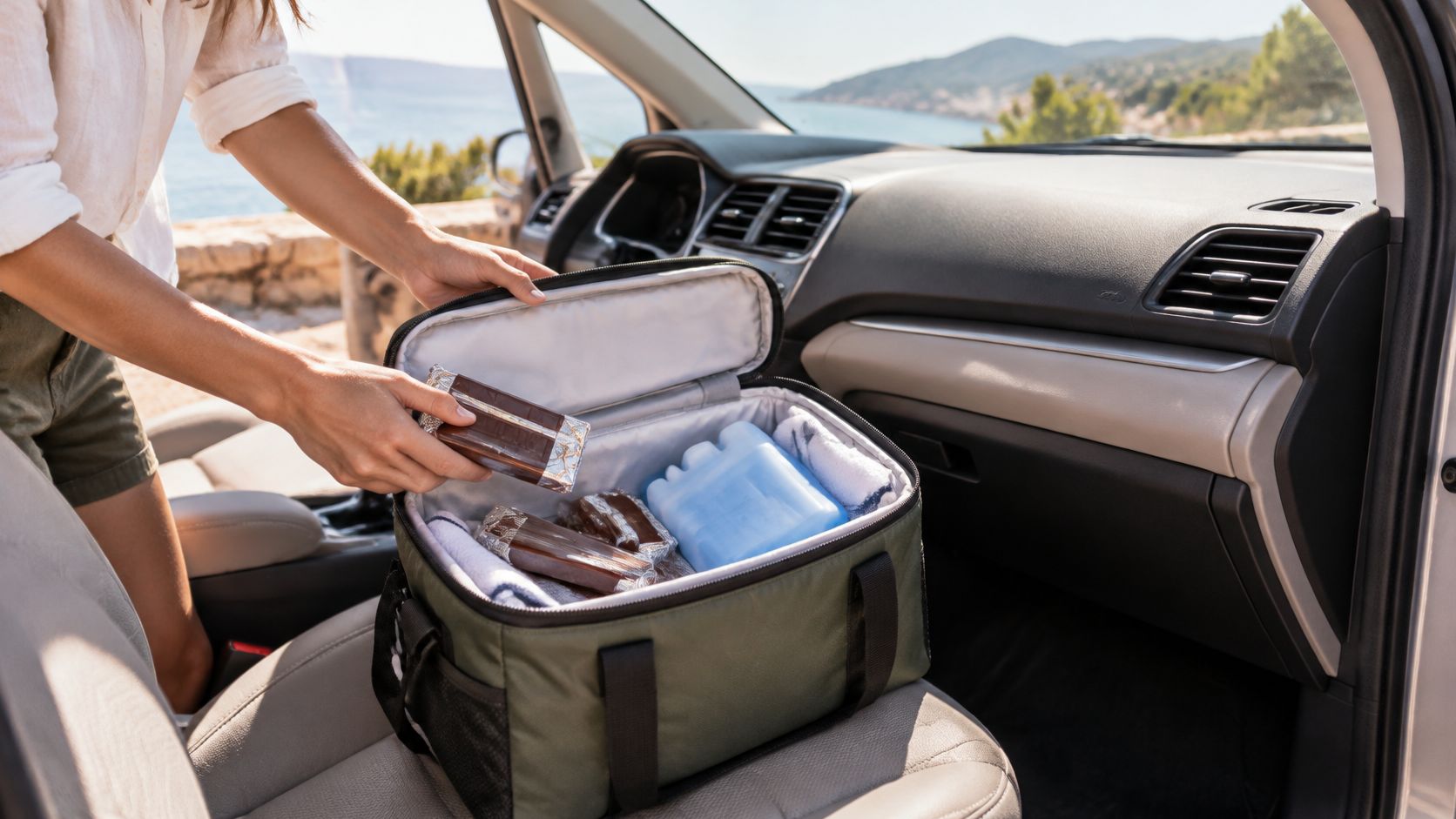
For a car trip, use an insulated bag and keep chocolate out of direct sun. If you add a cold pack, separate it from the bars with a dry barrier so the packaging doesn't sit against a wet surface.
Pack the chocolate before loading the car, rather than leaving it on the seat while you organize everything else.
Backpacks and Gift Boxes
In a backpack, place the wrapped bar in a rigid tin away from a warm laptop and a leaking water bottle. Don't pack it loose beside strongly scented snacks.
For a gift, keep the original wrapper and label inside the presentation box. Use dry packing materials, keep the gift cool until handover, and tell the recipient if it needs prompt storage. Decorative packaging shouldn't conceal essential product information.
When a Delivery Arrives Warm
Research on storage conditions and chocolate texture supports prioritizing temperature stability and avoiding abrupt exposure to humidity. Keep a warm delivery sealed and move it to a cool indoor location for gradual cooling rather than immediately unwrapping it or placing an exposed bar in the refrigerator.
- Do keep the barrier intact. Inspect the exterior while the contents cool.
- Do document damage. Photograph leaks, crushed packaging, or obvious melting before contacting the seller.
- Don't open just to check softness. That exposes the contents unnecessarily.
- Don't assume cooling restores quality. Inspect the bar after it has stabilized.
Legal and Safe Storage for Psilocybin Bars
Psilocybin bars require more than ordinary pantry organization. Don't assume local enforcement policy makes possession, sale, delivery, or interstate transport lawful. Check current federal, state, and local rules with an official authority or qualified lawyer before possessing or traveling with these products.
Keep storage safety separate from any question about legality. A cool cupboard may suit chocolate quality while still being an unsuitable place for a product that a child, visitor, or pet could access.
Keep Identity and Access Under Control
Store these bars in a locked container, separate from ordinary sweets. Retain the complete original packaging so the stated contents, serving information, and warnings remain available.
Don't transfer pieces into an unmarked snack bag or offer them as ordinary chocolate. If you can't establish what a bar contains, don't consume it or give it to someone else.
The magic mushroom chocolate bars page provides product-category context, but a listing cannot establish the identity, composition, or condition of an unmarked bar in your possession. Storage also cannot verify potency.
Use the temperature and packaging approach above only where it agrees with the product's own instructions. Don't improvise around a missing label.
- Keep the date visible. Record when you obtained the bar without covering the original information.
- Preserve the wrapper. Keep it with every remaining piece.
- Restrict access. Return the locked container to its designated place after handling.
- Discard uncertainty. Don't consume a bar whose identity or labeled contents are unclear.
Metro Mush offers chocolate-storage guidance alongside information about mushroom chocolate products. Visit Metro Mush for that guidance, then check your own bar's label, inspect its wrapper, and choose a secure storage location before putting it away.