


You're standing in the kitchen with bread on the board, mushrooms in the pan, and a decent chance the whole thing is about to slide into a soggy mess. That's usually how a mushroom bruschetta recipe goes wrong, not because the ingredients are bad, but because the bread wasn't crisp enough and the mushrooms were crowded into a wet pile. The fix is simple: toast the bread hard enough, cook the mushrooms in batches, and keep the two parts separate until the last minute.
Why Most Mushroom Bruschetta Falls Flat
The failure usually starts before the first bite. Bread that looks fine on the tray turns soft the second a juicy topping lands on it, and mushrooms that were supposed to brown end up steaming in their own liquid. The result tastes muddy, not savory, and the toast underneath gives up almost immediately.
The two mistakes that ruin it
The first mistake is under-toasted bread. Bruschetta's original form was just roasted bread with olive oil and garlic as documented here, so the toast is not a side character. It's the base, and it has to stay crisp long enough to carry the topping.
The second mistake is crowding the pan. When mushrooms are packed together, they release liquid faster than it can evaporate, and you end up with a wet skillet instead of browned edges. A good mushroom bruschetta recipe treats moisture loss as the whole game, because the topping should shrink, concentrate, and cling.
Practical rule: if the bread isn't crisp on its own and the mushrooms haven't clearly reduced, the assembly will fail no matter how good the seasoning is.
What success actually looks like
Success is boring in the best way. The bread comes out crisp and lightly golden, the mushrooms cook down until they're browned and noticeably smaller, and the topping sits on the toast instead of soaking through it. Modern recipes keep repeating that same split workflow, with the bread toasted separately and the mushroom mixture finished separately, because that's what gives you a clean bite as seen in this method-focused guide.
That's the target. Not “rustic.” Not “juicy.” Crisp bread, thick topping, immediate assembly.
Ingredients You Actually Need
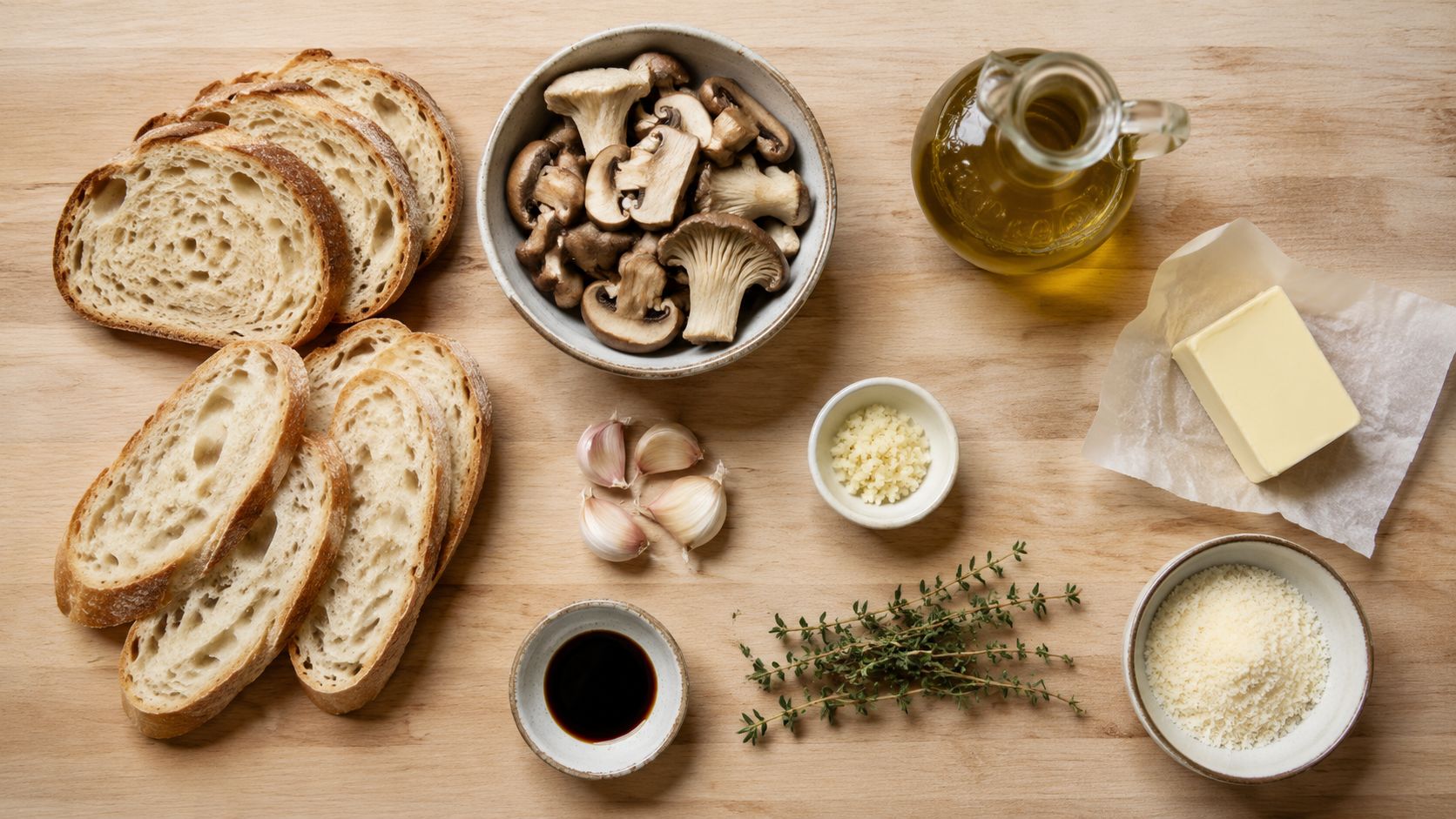
For 4 to 6 servings, shop like this:
- 1 loaf sturdy bread, sourdough or baguette work best
- 12 to 16 ounces mushrooms, ideally a mix of cremini and something more delicate like oyster
- 2 to 3 cloves garlic, minced separately
- 3 to 4 tablespoons olive oil
- 1 tablespoon butter, optional but useful for depth
- 1 to 2 tablespoons balsamic vinegar, sherry, or white wine
- 1 handful fresh herbs, parsley or thyme
- Salt and black pepper
- Optional cheese, Parmesan or goat cheese if you want a richer finish
Bread matters because bruschetta is a toast dish first. Recipes commonly slice bread into 1/4-inch to 1/2-inch pieces and toast them at 375°F to 400°F as noted in this recipe set. Thin slices crisp faster and give a cleaner bite, while thicker slices hold the topping better if you're serving a heartier appetizer.
For mushrooms, the best shopping move is a blend. Cremini gives you the dependable base flavor, and oyster mushrooms add a softer, almost silky texture. If you want a deeper finish, portobello works too, but it brings more moisture and needs more patience in the pan. Keep the garlic separate until the mushrooms brown, because garlic burns fast and turns the whole skillet bitter.
If you're cooking vegan or dairy-free, skip the butter and cheese and lean on olive oil plus a good acid finish. If you want a richer version, use both butter and a little cheese at the end, not at the start.
If you're choosing mushrooms by freshness and handling, this guide to preparing chestnut mushrooms is a useful reference point for what clean, dry prep should look like before they hit the pan.
Prep Work Before the Heat Goes On
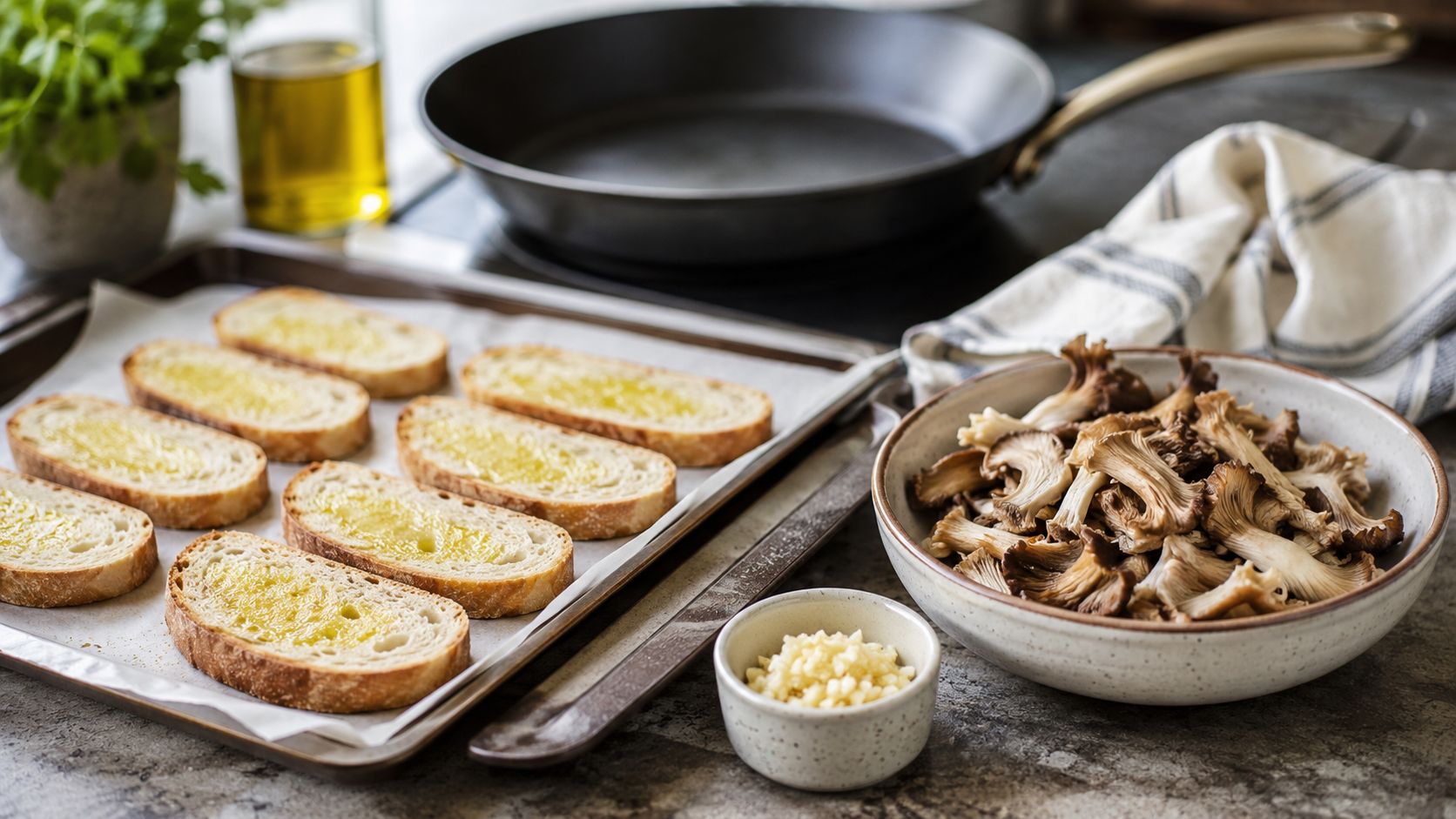
The texture is decided before the stove gets busy. Bread should be sliced evenly, mushrooms should be dry, and the garlic should be waiting off to the side so it doesn't burn while you're still messing with the pan.
Set up the bread first
- Slice the bread to a consistent 1/4-inch to 1/2-inch thickness. Uneven slices toast unevenly, and the thin ones usually lose the battle first.
- Brush lightly with olive oil on both sides if you want a firmer, more stable toast.
- Line a sheet pan so the bread doesn't stick and you can move fast once the oven is hot.
Handle the mushrooms like they're moisture traps
Tear larger mushrooms instead of slicing them if you want more surface area and faster browning. Smaller pieces brown more cleanly, and torn edges catch heat better than perfectly neat slices. Pat them dry if they look damp, because wet mushrooms steam instead of sear.
The oven and skillet should both be ready before you start cooking. Most modern versions of mushroom bruschetta use a 400°F oven for the toast and a wide pan for the topping, because that gives you enough heat to move quickly without racing the clock as reflected in the method here.
Dry mushrooms, hot pan, separate garlic. That's the whole prevention system.
Cooking the Bread and the Mushrooms
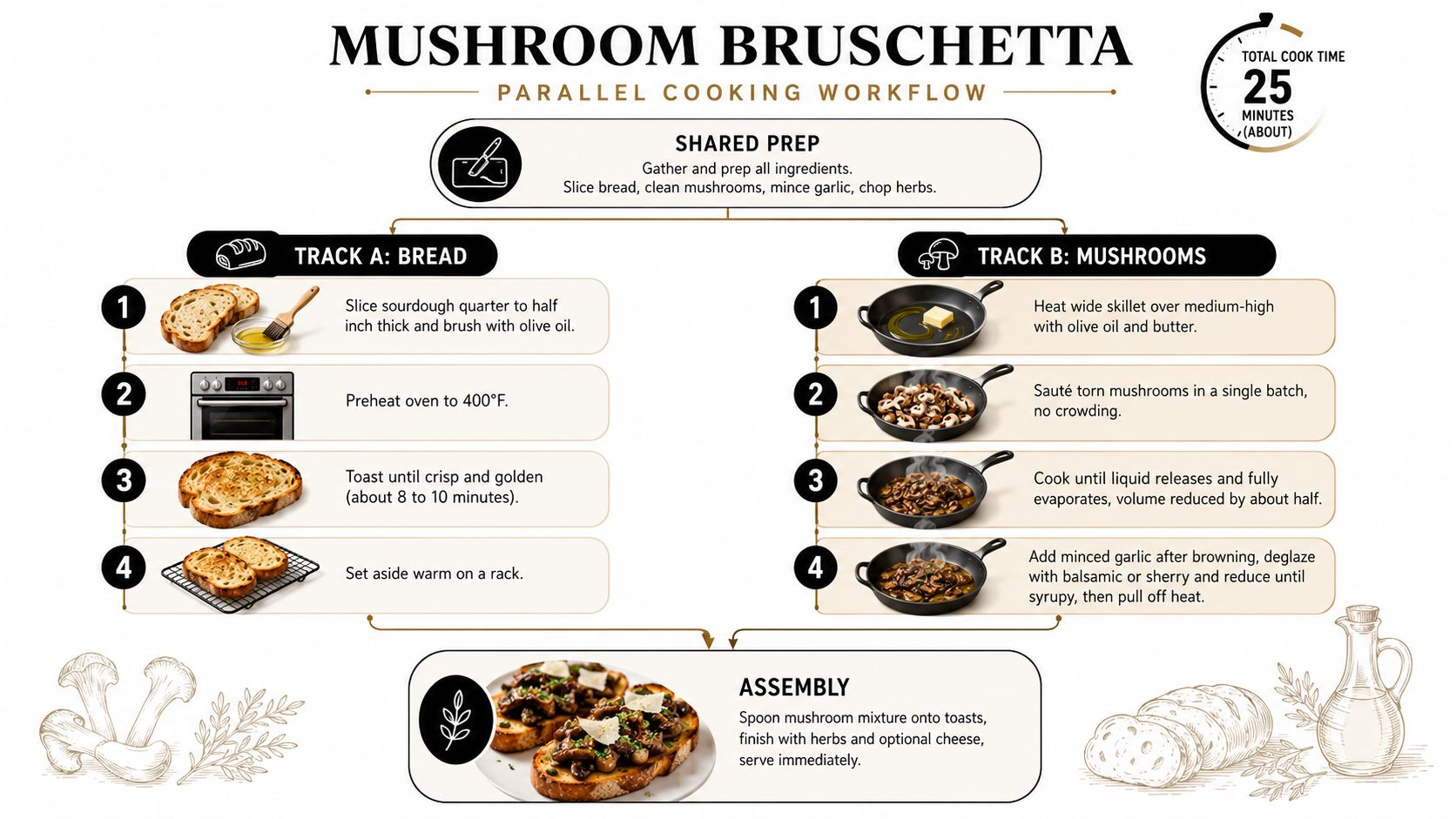
The cleanest way to cook this is to run two tracks at once. The bread goes into the oven, and the mushrooms go into a wide skillet, but they never share the same wet timing. That split is what keeps the toast crisp and the topping concentrated.
Track A, the bread
- Preheat the oven to 400°F.
- Arrange the bread on a lined sheet pan in a single layer.
- Toast until crisp and lightly golden, which usually falls somewhere in the 1 to 15 minute range depending on slice thickness and oven style per these benchmark methods.
- Pull it out and set it on a rack or dry board, not back on the hot pan.
Bread should feel firm, not just warm. If it still bends easily, it's not ready for a wet topping.
Track B, the mushrooms
Start with a wide skillet over medium-high heat. Add olive oil, and a little butter if you're using it, then cook the mushrooms in batches rather than piling them in all at once. Recipes consistently show that the cook time depends on batch size and moisture load, but the real checkpoint is visual, the mushrooms should brown and reduce to about half their original volume as described in this batch-cooking method.
Add garlic only after the mushrooms have browned. If garlic goes in early, it can burn before the mushrooms finish losing water. After that, add balsamic, sherry, wine, or brandy and let it reduce until it coats the spoon and stops looking thin. In some recipes, the mushroom mix is cooked until the liquid is nearly gone before the finishing acid goes in, which is exactly the right instinct for a topping that needs to sit on toast instead of run off it as shown in the brandied mushroom method.
What the timeline feels like
If you keep the pan hot and don't crowd it, the bread and mushroom tracks come together smoothly. The bread finishes first or right alongside the mushrooms, and then you assemble immediately. That last step matters, because even a well-toasted slice won't stay crisp forever once it meets the topping.
Choosing the Right Mushroom
The quickest way to ruin mushroom bruschetta is to treat every mushroom the same and hope the oven or skillet sorts it out. It does not. Different mushrooms give off different amounts of water, so the pan setup has to match the mushroom you picked.
Pick based on moisture, not just flavor
Cremini is the easiest default. It browns well, tastes earthy, and behaves predictably in a hot pan. Oyster mushrooms are softer and more delicate, so they cook fast and give you a lighter texture. Portobello brings a meatier feel, but it usually brings more moisture too, so it needs extra attention in the skillet a recipe using staged portobello and oyster cooking shows that difference clearly.
Shiitake and wild mixes can deepen the flavor, but they are not the best pick if you are in a hurry and want the least fuss. King trumpet is denser and can hold its shape well, which makes it useful when you want more bite. If you do not want to think too hard, use cremini alone or a cremini-oyster blend and keep the pan wide.
For a softer, more fragile mushroom, the blue oyster guide is worth a look before you start cooking. Blue oyster mushrooms can be a good choice when you want tenderness, but they still need enough space in the pan to shed moisture instead of steaming.
Why batch-sautéing wins
Batch cooking is practical, not fussy. A crowded skillet suppresses browning and leaves you with pale mushrooms sitting in their own liquid that failure pattern is called out directly in this technique guide. A wide pan gives steam somewhere to go, which means the mushrooms reduce properly and the final topping tastes concentrated instead of boiled.
The rule is simple, if the mushrooms are not browning, there are too many of them in the pan.
The checkpoint is visual. The mushrooms should brown and reduce to about half their original volume. If they still look wet and crowded, keep cooking in smaller batches until the pan can do its job.
Troubleshooting Texture and Seasoning
If the dish goes sideways, the clues show up fast. The toast softens too quickly, the mushrooms turn soupy, the garlic tastes sharp and bitter, or the whole thing tastes flat because the pan never got hot enough to brown anything.
Fix the bread and topping separately
Soggy bread usually means the toast never got crisp enough before assembly, or it sat around after toasting while the mushrooms finished cooking. Toast it again briefly if you need to, then put the topping on right away once the pan is done.
Watery mushrooms usually mean the skillet was crowded or the heat stayed too low. Move the mushrooms to a wider pan or cook them in smaller batches until the liquid cooks off and the edges start to color.
Burnt garlic is almost always a timing problem. If it starts to smell harsh, lower the heat, pull the pan off for a moment if needed, and add a splash of acid to settle it down.
Bland mushrooms usually happen when seasoning waits until the end and the mushrooms never had a chance to brown. Salt them once the surface moisture starts to leave, not after everything is already finished. Browning and seasoning need to happen while the pan is still hot enough to do both jobs.
Vegetarian, vegan, and dairy-free adjustments
This recipe is friendly to vegetarian cooking. For vegan or dairy-free versions, use olive oil only and finish with herbs plus balsamic or lemon instead of butter and cheese. The topping still works because the flavor comes from reduction and browning, not from dairy.
A small drizzle of cream or a spoonful of soft cheese can make the topping richer, but it also makes the mixture heavier. If you want a cleaner toast, skip the dairy and let the mushrooms carry the whole bite.
Holding, reheating, and serving
Keep the toast and topping separate until serving. Several bruschetta methods only allow a short room-temperature window, roughly 1 hour to 2 hours, before the bread loses its edge as noted in the serving guidance here. Reheat the mushrooms in a skillet, not the microwave, so they do not turn wet again.
Serve them with a dry white wine, a simple soup, or a larger antipasti board. The dish works best when the rest of the table stays simple and the bruschetta stays crisp.
For mushroom storage and freshness habits, this guide to storing enoki mushrooms is a helpful reminder that dry, cold handling matters long before cooking starts.
Variations, Storage, and Serving Ideas
The best version for a weeknight is still the same core formula, crisp bread, reduced mushrooms, and immediate assembly. From there, you can shift the finish without changing the structure.
For a vegan version, keep it all in olive oil and finish with herbs and acid. For dairy-free, that's already the move. If you want a softer, richer topping, add a little butter or a small amount of cheese at the end, not during the browning stage, so the mushrooms still keep their texture.
Leftovers are best stored in separate containers. Bread belongs in a dry place, and the mushroom topping can be reheated in a skillet until it tightens back up. If the mushrooms seem a little loose after reheating, cook them down briefly rather than trying to blot them dry.
If you want to vary the finish legally and appropriately, a low-dose edible pairing belongs off to the side, not cooked into the food. Keep that separate from the appetizer itself so the bruschetta stays food first, not a vehicle for surprise dosing.
For mushroom storage and freshness habits, this guide to storing enoki mushrooms is a helpful reminder that dry, cold handling matters long before cooking starts.
Quick timing check: bread toasted until crisp, mushrooms reduced until they've lost most of their moisture, acid added at the end, assembly done right before serving. Single rule: if the mushrooms are still wet, the bruschetta is not ready.
If you're making this tonight, shop for sturdy bread, dry mushrooms, and fresh garlic, then cook the topping in batches and serve the toast immediately. For more mushroom product details and local options, visit Metro Mush.