
So, when exactly is mushroom season? The honest answer is… it depends. The right time to look for mushrooms changes completely depending on what you’re after. Wild culinary mushrooms have their peak moments in the spring and fall, but cultivated psilocybin varieties are a different story—they’re available all year.
Understanding Michigan's Mushroom Seasons
Asking "when is mushroom season?" is a lot like asking "when is fishing season?" There’s no single answer because different species pop up at different times. The real season is dictated by the specific mushroom you want, its preferred habitat, and what the weather has been doing lately.
It’s really a tale of two different worlds. You have the fleeting, weather-dependent hunt for wild mushrooms, and then you have the steady, controlled supply of cultivated ones.
This guide will break down both for you. We’ll cover the exciting, but short, window for foraging prized wild edibles—like the morels that pop up in Southeast Michigan’s forests. We’ll also explain why cultivated psilocybin strains, like Penis Envy and Enigma, are always available from delivery services such as Metro Mush, no matter what month it is.
Wild Hunts vs. Cultivated Harvests
Getting a handle on this difference is the first step for any mushroom enthusiast. Wild foraging is an adventure that runs on nature's clock. Cultivation, on the other hand, is all about creating the perfect environment whenever you want.
- Wild Seasons: These are the brief, intense periods when specific mushrooms fruit naturally in the wild. Foragers have to be detectives, watching for clues like recent rainfall and temperature shifts. The thrill is definitely in the hunt, but finding anything is never a sure thing.
- Cultivated Seasons: This is a year-round operation. Growers can perfectly mimic a mushroom’s ideal fruiting conditions indoors, which means a consistent supply of products with reliable quality and potency.
This timeline really shows the contrast between the limited wild seasons and the constant availability of cultivated mushrooms.
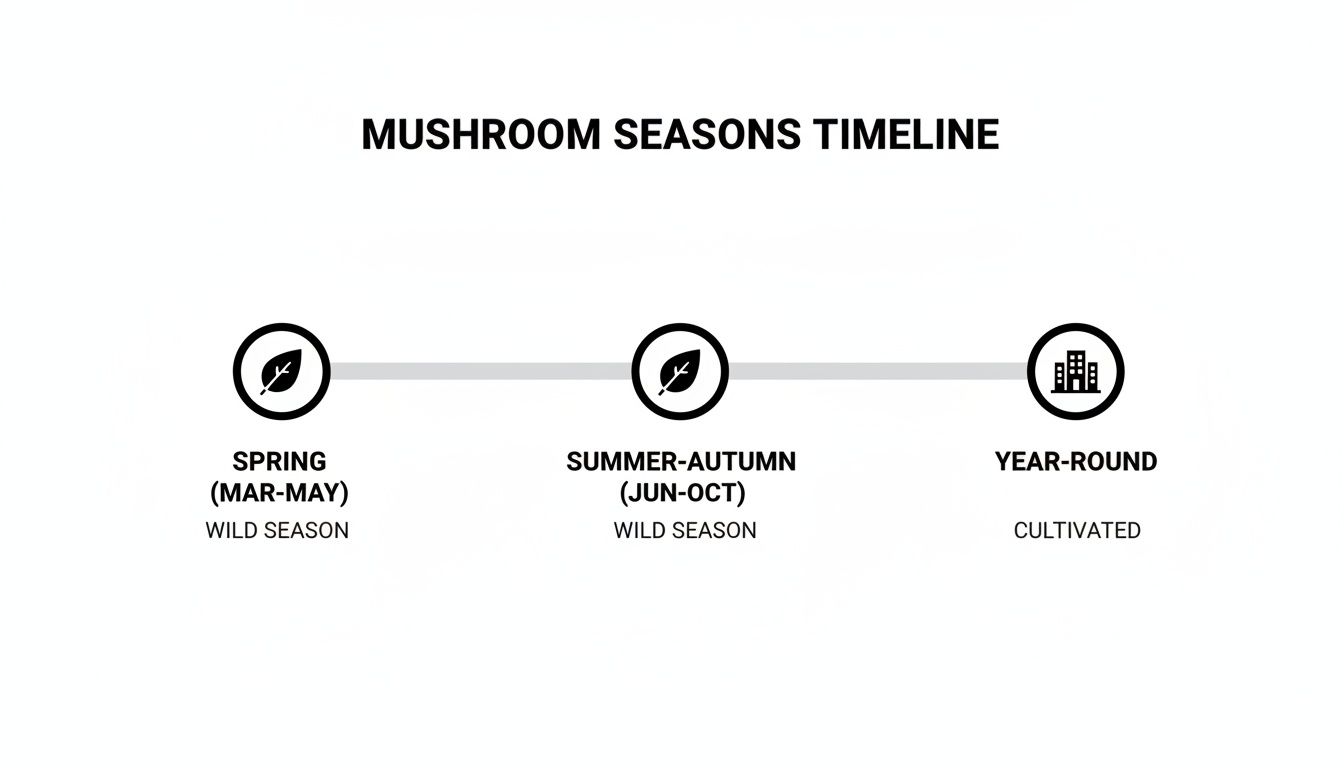
As you can see, wild foraging is packed into just a few specific months. Cultivated mushrooms, however, offer reliable access any time of year. This dual-season reality is what lets mushroom lovers enjoy the best of both worlds.
To make it even clearer, here’s a quick breakdown of what to expect from each category.
Quick Guide to Mushroom Seasons by Type
This table gives you a high-level look at the peak seasons for different kinds of mushrooms. Think of it as your quick-reference cheat sheet.
| Mushroom Category | General Peak Season | Key Factors |
|---|---|---|
| Wild Culinary (e.g., Morels) | Spring & Fall | Triggered by specific rainfall, soil temperature, and humidity. Highly regional and weather-dependent. |
| Wood-Rotting (e.g., Turkey Tail) | Late Summer to Fall | Appears after significant rain on logs and stumps. Can often be found into early winter. |
| Cultivated Psilocybin | Year-Round | Grown indoors in controlled environments. Availability is consistent and not tied to weather. |
Ultimately, this table shows why your approach needs to change based on what you're looking for. A spring foraging trip is a totally different game than ordering from a dispensary in January.
The National and Local Picture
Across the U.S., the wild mushroom season really gets going from late April to early May, usually right after the first big spring rains. This timing is spot-on for Michigan foragers around Detroit and Ann Arbor, who start hitting their local spots to look for morels.
But while the wild supply comes and goes, the demand for cultivated products stays strong. For local enthusiasts, this means you can plan your foraging trips for the spring, then turn to a trusted delivery service like Metro Mush for psilocybin products when nature isn’t providing. If you want to dive deeper into foraging schedules, you can explore more data on mushroom hunting seasons from other experts.
A Forager's Calendar for Southeast Michigan
While it's good to know the basics of wild versus cultivated mushrooms, the real magic happens when you understand the rhythm of the seasons right in your own backyard. If you're near Detroit or Ann Arbor, knowing exactly when is mushroom season is what separates a long walk in the woods from a successful haul.
The best way to think about Southeast Michigan's foraging calendar is like a three-act play. It starts with the absolute frenzy of spring, shifts into the patient hunts of summer, and ends with a search for massive forest treasures in the fall. Each act has its own star players and is triggered by specific cues from Mother Nature.
The Spring Morel Rush (April to May)
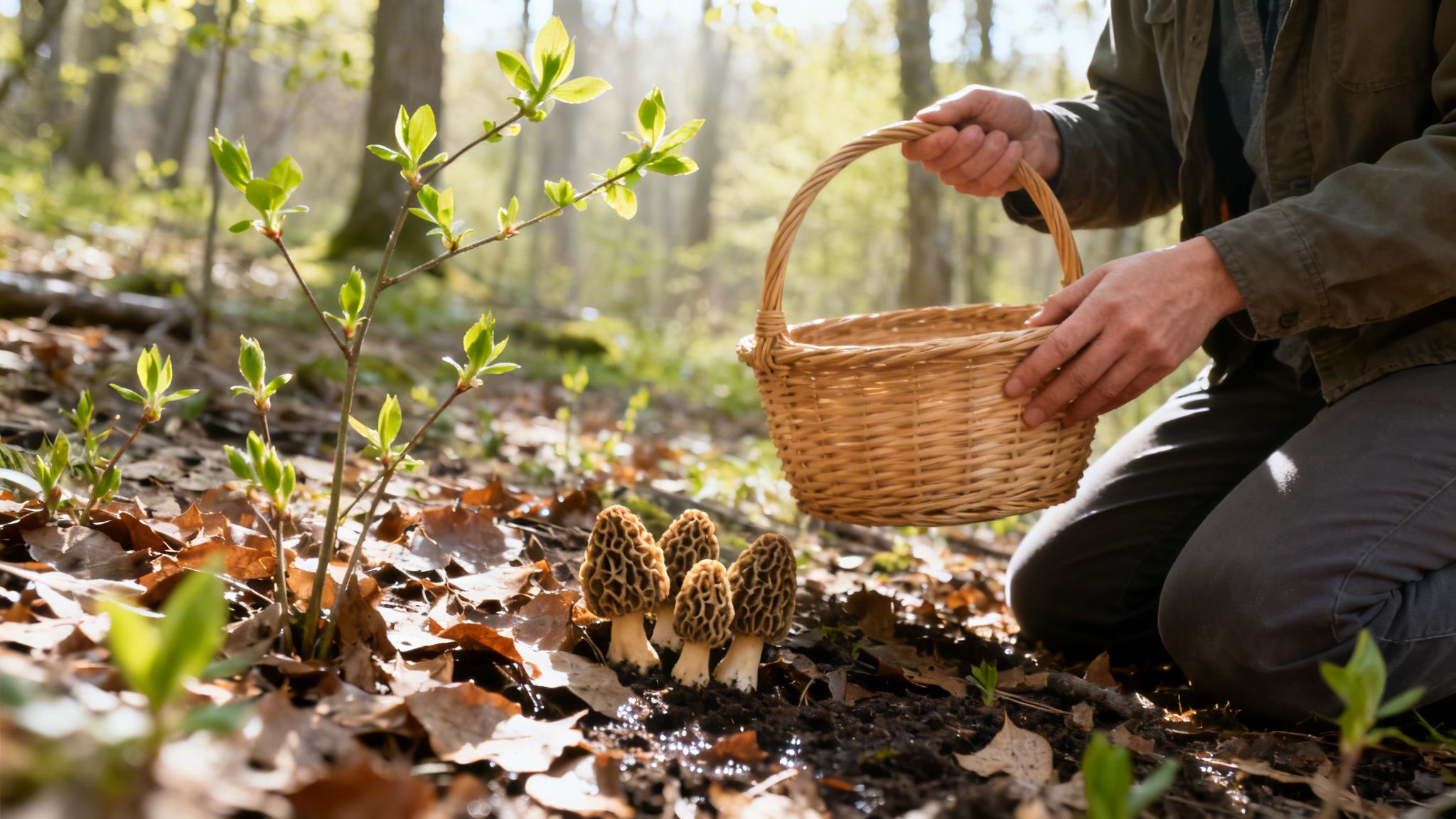
The season kicks off with a bang. As soon as the ground finally thaws, the local foraging community starts buzzing with one word: morels. These elusive, honeycomb-like fungi are the first major prize of the year, and the hunt for them is serious business.
The secret to finding morels is all about timing the soil temperature. You want to head out when the ground is consistently above 50°F and after the first solid spring rains have given the earth a good soak.
You can't just wander aimlessly, though. Experienced hunters know that morels love hanging out with specific trees, which dramatically narrows down the search.
- Ash and Elm Trees: Focus on the areas around dying elms and mature ash trees.
- Old Apple Orchards: The soil in these forgotten orchards is often perfect for morels.
- Disturbed Ground: Burn sites from the previous year are legendary hotspots for a reason.
This morel madness is intense but also incredibly short. To get fully prepped, check out our deep dive into morel season in Michigan.
Summer's Golden Treasures (June to August)
Once the summer heat settles in, the forest floor starts offering up new delicacies. This season is less of a frantic rush and more about patient, rewarding searches after a good thunderstorm. The stars of the summer show are the stunningly beautiful chanterelles and different kinds of boletes.
Chanterelles are famous for their vibrant, golden-yellow hue, but they are masters of camouflage among the fallen leaves. You'll typically find them in birch and beech woods about a week or two after heavy summer rains. Unlike morels, they can pop up in the same spot year after year, so finding a good patch is a gift that keeps on giving.
Fall's Forest Giants (September to November)
As autumn arrives, the mushroom season enters its grand finale. The cooler temperatures and steady moisture trigger some of the largest and most impressive fungi, like Hen of the Woods (also known as maitake).
These huge, ruffled clusters grow at the base of mature oak trees and can sometimes weigh over 20 pounds. Finding one of these is the perfect way to cap off the wild foraging calendar for the year.
What Makes a Mushroom Appear
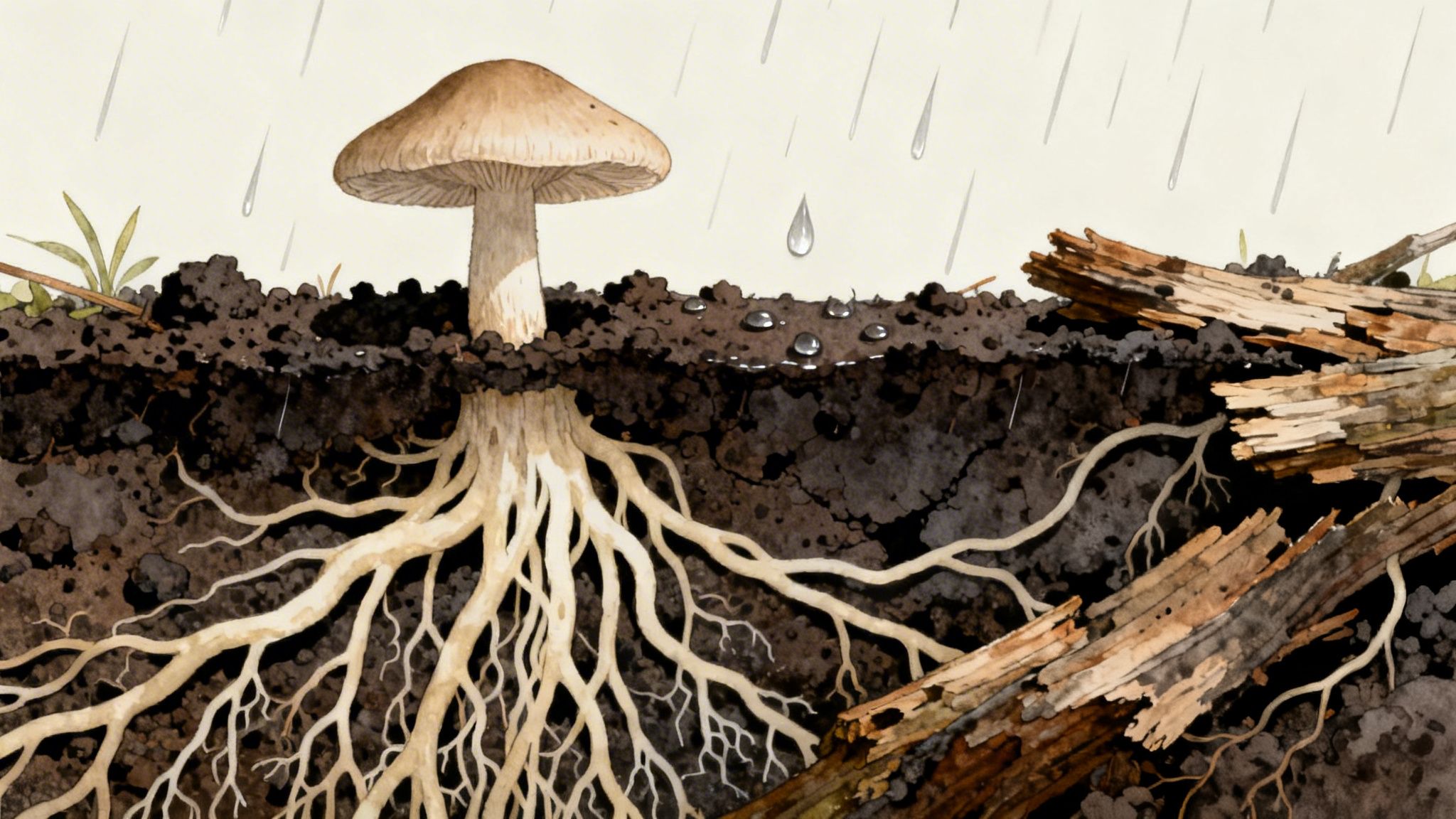
Ever notice how mushrooms seem to pop up from nowhere after a good, soaking rain? It’s not magic, but it’s just as fascinating. To really get a handle on "when is mushroom season," you have to understand what a mushroom actually is on a deeper level.
Let's use an analogy. The mushroom you see above ground is just the apple on a much, much larger tree. That "tree" is the mycelium—a massive, web-like network of fungal roots that spends its life hidden away in the soil or inside decaying wood. This mycelial network can hang out for months, even years, just quietly spreading and gathering nutrients.
This underground organism is the real main event. The mushroom itself is just the fruiting body, a short-lived reproductive part. Its only job is to pop up, produce spores, and help create the next generation of fungi. The mycelium is patient, waiting for the perfect cocktail of environmental cues before it spends the energy to “fruit.”
The Right Environmental Cocktail
So, what are those cues? The mycelium is incredibly tuned in to its surroundings and needs a specific set of triggers to kick off the fruiting process. Think of it as a secret code that tells the network it's the perfect time to reproduce.
The three most important triggers are:
- A Sudden Temperature Shock: A noticeable drop in temperature, especially right after a warm period, is a huge signal that the seasons are shifting and it’s go-time.
- A Spike in Humidity: This is the big one. A heavy rain that completely saturates the ground gives the fungus the massive amount of water it needs to quickly form a mushroom.
- Changes in Light and Air: Shifting daylight hours and more fresh air also contribute, telling the mycelium that it has broken through the surface and can successfully release its spores into the wind.
This delicate dance of natural cues is precisely what makes wild mushroom flushes so special and often unpredictable. The forest floor becomes a stage, waiting for the right environmental script to begin the performance.
Understanding this process really highlights the difference between hunting for wild mushrooms and indoor cultivation. Foragers are completely at the mercy of Mother Nature's timing. Cultivators, on the other hand, become the weather-makers. They meticulously control these exact variables—temperature, humidity, and air exchange—to force consistent, year-round harvests, creating a season that never has to end.
The Year-Round Season of Cultivated Mushrooms
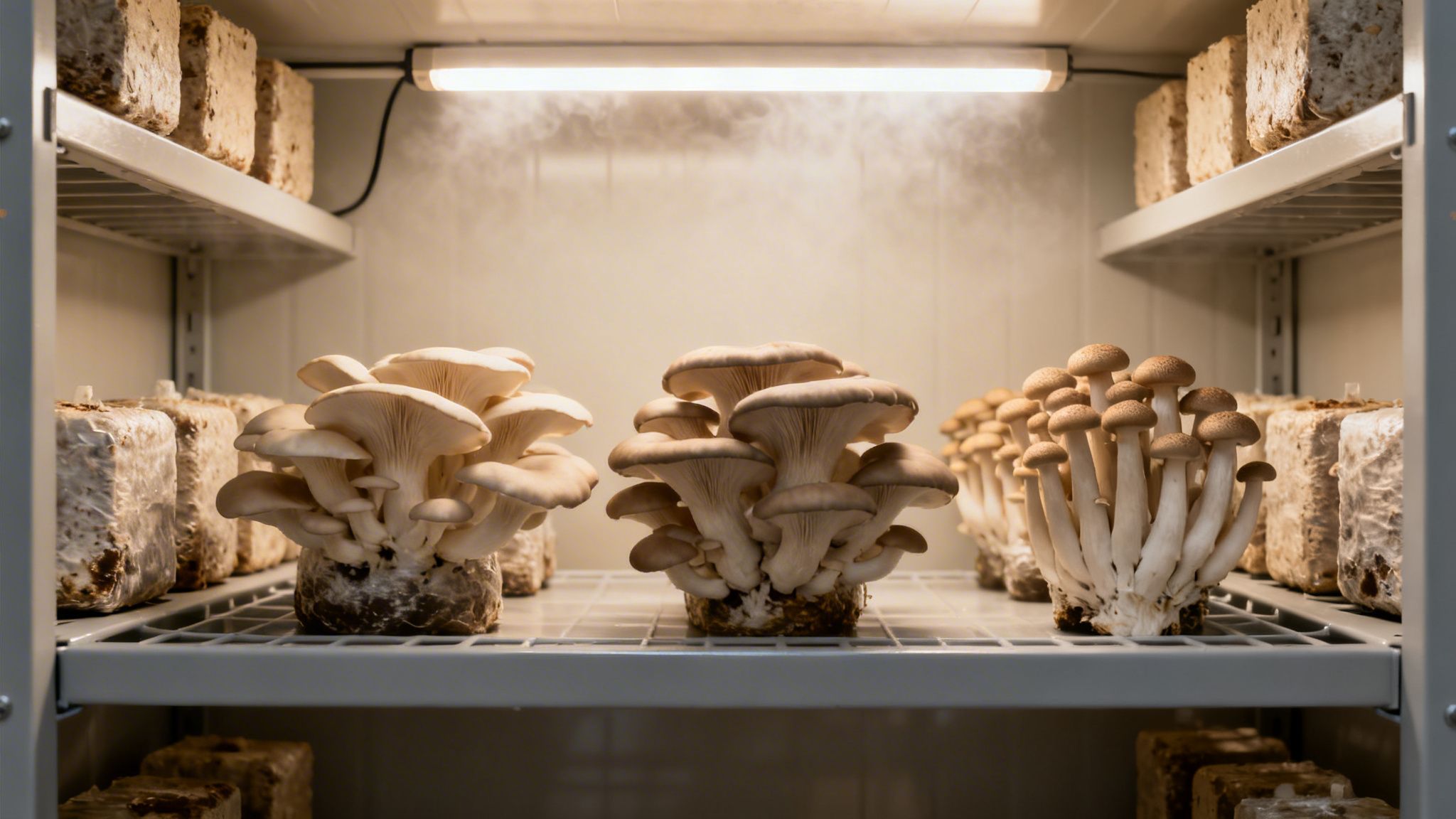
While the thrill of foraging in the wild is all about chasing unpredictable weather and short-lived seasons, the world of cultivated mushrooms plays by a completely different set of rules. For these varieties, the whole idea of "mushroom season" goes out the window.
Whether we’re talking about gourmet edibles or potent psilocybin strains like Penis Envy and Enigma, the season is always now.
This is all possible because expert growers essentially become the weather. Inside specialized grow facilities, they aren’t waiting around for a spring rain or an autumn chill. Instead, they dial in the perfect environmental triggers that a mushroom’s mycelium needs to start fruiting, creating a predictable harvest on demand.
Mastering the Indoor Environment
Cultivators have complete control over every little detail, giving them the power to create perfect conditions whenever they want. This precision is what separates a guaranteed harvest from a lucky find out in the woods.
They carefully manage key factors like:
- Humidity: Growers keep humidity levels high—often above 90%—to simulate the damp, dewy conditions that kickstart fruiting after a heavy rain.
- Temperature: They can trigger the specific temperature drops that signal to the mycelium that it’s time to produce mushrooms.
- Fresh Air Exchange (FAE): By controlling CO2 levels and pumping in fresh air, they mimic the natural airflow a mushroom would get outdoors, which is crucial for healthy growth.
This total control takes all of nature’s guesswork out of the equation. It's the foundation of the global mushroom market, valued at over $65 billion in 2024, with China alone producing over 70% of the world's supply. While wild mushroom availability can cause U.S. sales to fluctuate, this steady, cultivated output provides a rock-solid base for the industry. You can see more of these impressive growth statistics on Market.us.
For you, this scientific precision translates directly into reliability. It’s why Metro Mush can offer a consistent menu of high-quality products, from potent dried strains to approachable low-dose edibles, any day of the year.
This reliability is a game-changer for everyone. If you’re just starting out, you can explore psilocybin with safe, accurately dosed chocolates, knowing the effects will be consistent. For more experienced users, it means your favorite strains like Penis Envy are always available when you want them, without having to worry if it's the “right” time of year.
It bridges the gap between the wild hunt and modern wellness, turning a massive global industry into dependable, local access for our Southeast Michigan community. If you're curious about the specifics of harvesting cultivated mushrooms, you can check out our guide on when to harvest blue oyster mushrooms.
How to Navigate Mushroom Seasons Safely
Diving into the world of mushrooms—whether you're in the woods or ordering from a delivery service—demands a serious commitment to safety. When you’re foraging, the stakes couldn't be higher. The line between a delicious meal and a trip to the emergency room can be razor-thin.
There’s one rule that every mushroom hunter lives by, and it’s non-negotiable: "When in doubt, throw it out."
Mistaking one mushroom for another is a real and dangerous possibility. For instance, the prized morel mushroom has a nasty look-alike, the false morel, which is toxic if you eat it raw. If you're just starting out, the only safe way to learn is by going out with a seasoned expert. Trusting an app or a book by itself is a gamble you don't want to take.
Understanding the Legal Landscape
Just like foraging has its own set of rules, so does accessing psilocybin. Here in Southeast Michigan, the legal side of things can be tricky to wrap your head around. While cities like Ann Arbor and Detroit have decriminalized personal use and possession, that’s not the same thing as making them fully legal.
Decriminalization simply means that local police make personal use their lowest priority. It does not create a legal way to buy or sell psilocybin. This leaves the whole situation in a legal gray area, which makes finding a source you can trust absolutely essential.
This is exactly why a professional delivery service is more than just a convenience. It’s a vital part of making sure you have a safe and positive experience.
- Foraging Risks: You could easily misidentify a poisonous mushroom, which can have devastating health consequences.
- Black Market Risks: Unvetted dealers give you zero guarantees on what you’re actually getting—no clue about purity, quality, or dosage.
- Trusted Services: A professional dispensary like Metro Mush offers lab-tested products with consistent potency, taking all the guesswork and risk out of the equation.
If you’re exploring psilocybin, especially for the first time, going with a reliable service is the most responsible choice you can make. While you're learning about local species, you might find it interesting to see how many overlap with the mushrooms of Illinois, since our climates are so similar. Sourcing from a trusted provider helps you avoid both the dangers of the forest and the unpredictability of the black market, putting your well-being first.
Making the Most of Every Season
So what does all this talk about “mushroom season” actually mean for you? It’s about understanding how the natural world’s rhythm connects to the products you rely on for your wellness.
It explains why your social media feed blows up with morel photos every May, but also why a trusted delivery service like Metro Mush can keep your favorite products in stock all year long. You get the best of both worlds: you can plan an exciting spring foraging adventure just for the experience, while also having a reliable supply for your wellness routine.
Knowing this stuff makes you a smarter, more prepared consumer. You can plan ahead and make sure you’ve always got a steady supply of what works for you, no matter what’s popping up in the woods.
Plan Your Wellness Journey
Think about your mushroom supply like you would a well-stocked pantry. You wouldn't wait until you're completely out of a staple ingredient to head to the store, and the same idea applies here. Planning your purchases not only helps you stay consistent but also lets you take advantage of great deals.
Here’s how you can put it into practice:
- Align with Your Needs: Are you microdosing for daily focus, or are you using psilocybin for deeper therapeutic work? Your goals will determine which products you need and how often you’ll need to restock.
- Watch for Promotions: Keep an eye out for deals like our Mix & Match Saturdays, where you can grab any three chocolate bars or drinks for $100. It's the perfect opportunity to stock up on your favorites and save some money.
- Ensure Consistency: When you plan ahead, you never have to worry about running out of the products that support your mental health. This creates a stable, dependable routine you can count on.
Ultimately, understanding the different mushroom seasons puts you in control. You get to enjoy the magic of a wild flush and the peace of mind that comes with knowing a safe, high-quality product is always just a text away.
This blend of natural wonder and modern convenience is what makes being a mushroom enthusiast in our community so great. You can appreciate the fleeting beauty of a wild mushroom while still having year-round access to lab-tested, thoughtfully made products for your wellness journey.
Common Questions About Michigan Mushroom Seasons
When you're diving into the world of mushrooms, timing is everything. Whether you're hunting for wild morels or just wondering about our psilocybin stock, a lot of questions come up. We hear them all the time, so let's clear a few things up.
What Is the Best Month to Forage in Michigan?
For anyone just getting their boots dirty, the sweet spot is late April to early May. This is prime morel season, and these guys are the perfect introduction to the world of foraging. The weather’s usually cooperating, and there's a real buzz in the community, which means plenty of chances to learn.
Just remember, a dry spring can throw a wrench in things by delaying the season or shrinking the harvest. Always check the recent rainfall before you head out into the woods.
Does Bad Weather Affect Dispensary Mushroom Supplies?
Nope. And honestly, this is one of the biggest reasons to work with a trusted service like Metro Mush. Our psilocybin mushrooms and edibles come from expert cultivators working in perfectly controlled indoor environments.
This scientific approach lets us sidestep nature’s mood swings entirely. We can promise a consistent, year-round supply of top-quality products, no matter what’s happening with Michigan’s weather. Droughts, floods, surprise blizzards—none of it affects your access.
Should I Forage or Buy if I Am New to Psilocybin?
If you're just starting your journey with psilocybin, we strongly recommend buying from a trusted provider. It’s a matter of safety and getting a consistent, predictable experience. Foraging for psychoactive mushrooms is incredibly risky; a simple misidentification could land you in the hospital with a poisonous look-alike.
A reliable source like ours provides products that are:
- Lab-tested to guarantee purity and potency.
- Clearly dosed, so you’re in complete control of your experience.
- Consistently available, offering a safe and predictable journey every time.
Starting with low-dose edibles from a vetted provider is the most responsible way to explore psilocybin. It completely removes the guesswork and danger that comes with wild foraging.
Ready to explore a consistent, safe, and curated selection of mushroom products year-round? Metro Mush offers a premium menu of lab-tested psilocybin mushrooms and edibles delivered right to your door in Southeast Michigan. Check out our offerings and place your order today at https://metromush.com.