

In our fast-paced world, stress has become a constant companion for many. It impacts our sleep, mood, and overall health, leaving us searching for sustainable ways to find balance. While the sources of stress are complex, the solutions don't have to be. This guide explores 10 powerful and evidence-informed natural remedies for stress relief, moving beyond generic advice to offer actionable strategies you can implement today.
We'll delve into ancient practices backed by modern science, from the immediate calm of controlled breathing to the long-term resilience built by adaptogenic herbs. This roundup is designed to be your practical toolkit for navigating life's pressures.
You will learn specific techniques, safety considerations, and how to integrate these practices into your daily life. This list provides a structured path toward managing stress, featuring everything from mindfulness and physical movement to the therapeutic benefits of herbal teas and journaling.
For those in the Detroit and Ann Arbor areas exploring all facets of natural wellness, we will also mention local resources like Metro Mush. Whether you're a seasoned wellness advocate or just beginning your search for calm, this article provides clear, accessible methods to help you regain control and improve your well-being. Let's explore the powerful, natural options available to you.
1. Meditation and Mindfulness Practices
Meditation is a practice of focused attention that trains your mind to achieve a state of deep rest and mental clarity. By concentrating on your breath, a sensation, or a specific thought, you guide your awareness away from the constant stream of stressful thoughts. This process helps regulate the autonomic nervous system, shifting it from the fight-or-flight response to a calmer, rest-and-digest state. The result is a measurable reduction in cortisol, the body’s primary stress hormone.
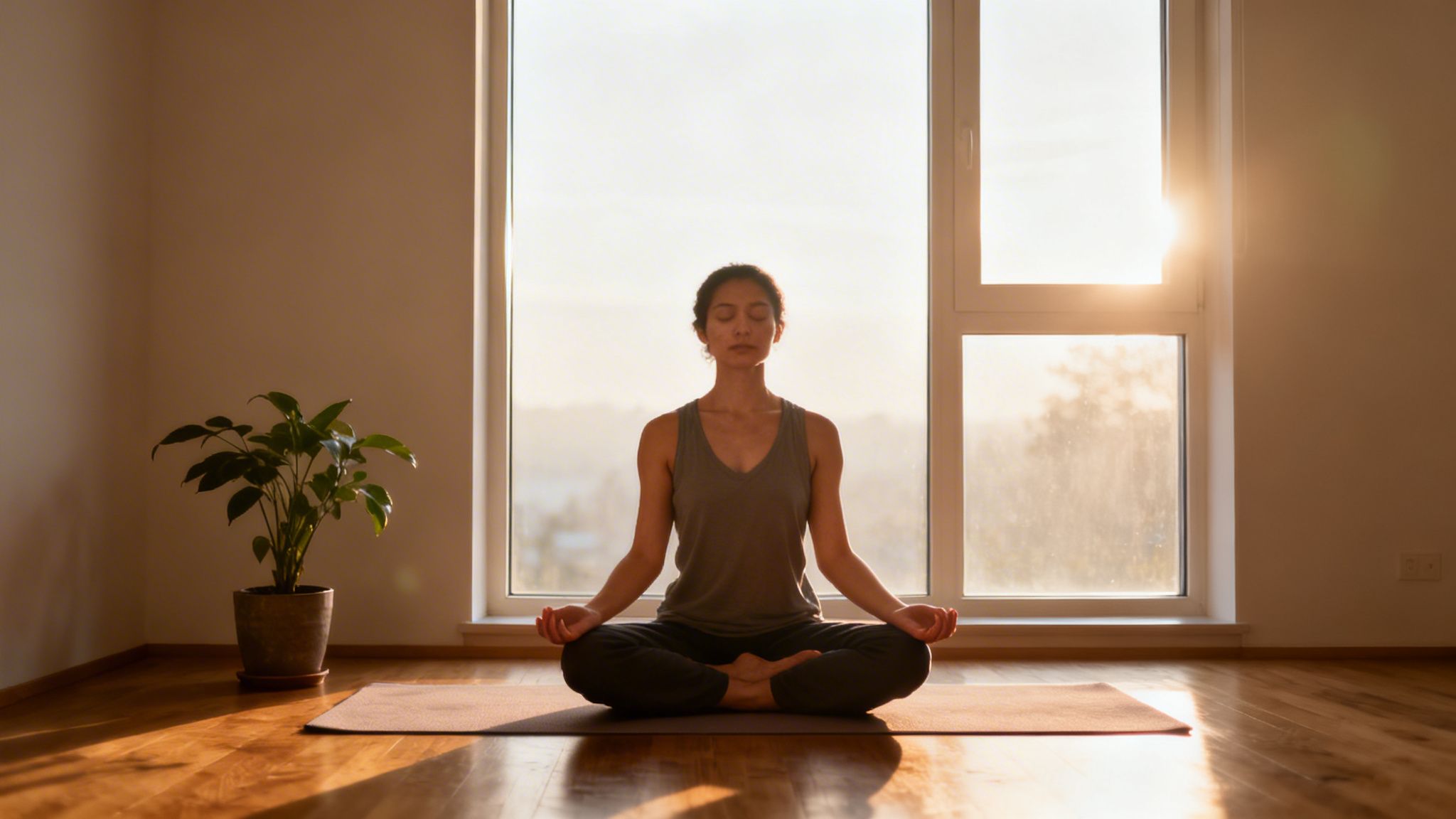
Mindfulness, a key component of many meditation styles, is the simple act of being fully present and aware of where you are and what you’re doing. This concept is the foundation of Mindfulness-Based Stress Reduction (MBSR), a program with significant scientific backing for its effectiveness in managing anxiety, pain, and stress. The principles of mindfulness are also central to psychedelic integration, as they help individuals process insights gained during intentional experiences. Developing this skill can provide a stable mental framework, which is also beneficial for those exploring intentional psychedelic use. If you are considering this path, you can find a complete beginner's walkthrough in our guide to microdosing magic mushrooms.
How to Get Started
Bringing mindfulness into your daily life doesn't require a major time commitment. Consistency is more important than duration, especially when you are building the habit.
- Start Small: Begin with just five minutes of guided or unguided meditation each day. Free apps like Insight Timer or Oak offer thousands of sessions to help you start.
- Create a Routine: Practice at the same time every day, such as right after waking up or before bed, to make it an automatic part of your schedule.
- Focus on Your Breath: If your mind wanders, gently guide your attention back to the sensation of your breath entering and leaving your body. This is a core technique for anchoring yourself in the present moment.
2. Adaptogenic Herbs (Ashwagandha, Rhodiola, Reishi)
Adaptogenic herbs are a unique class of plants that help your body manage and adapt to physical, chemical, and biological stressors. These natural remedies for stress relief work by modulating the hypothalamic-pituitary-adrenal (HPA) axis, which is the body's central stress response system. By balancing cortisol levels and supporting nervous system function, adaptogens can improve resilience, reduce fatigue, and promote a sense of calm without causing drowsiness.
These powerful plants have been staples in traditional medicine systems like Ayurveda for centuries. Today, they are gaining recognition in modern wellness circles, used by everyone from high-performing executives in Silicon Valley to athletes seeking better recovery. Popular adaptogens include Ashwagandha for calming anxiety, Rhodiola for fighting fatigue, and Reishi, a medicinal mushroom known for its immune-supporting and sleep-promoting qualities. If you are interested in how fungi can support rest, you can explore our guide on mushrooms and sleep. This demonstrates how natural compounds can offer multifaceted benefits for both stress and overall well-being.
How to Get Started
Integrating adaptogens into your routine requires patience and consistency, as their effects build over time. Unlike stimulants or sedatives, they work subtly to restore balance.
- Choose Standardized Extracts: Opt for products from reputable brands like Gaia Herbs that list a standardized extract percentage. This ensures you receive a consistent and effective dose with each serving.
- Start Low and Go Slow: Begin with the lowest recommended dose on the product label and gradually increase it as needed. This allows your body to adjust.
- Be Patient: Give an adaptogen at least 6-8 weeks of consistent use before evaluating its effectiveness. Their regulating effects are cumulative and develop over time.
- Store Properly: Keep your herbs in a cool, dark place away from direct sunlight and moisture to preserve their potency.
3. Deep Breathing Techniques (Box Breathing, 4-7-8 Method)
Deep breathing techniques are conscious, controlled breathing exercises that directly influence your body's physiological state. By intentionally slowing your breathing, you activate the parasympathetic nervous system, which is responsible for the "rest-and-digest" response. This action counteracts the fight-or-flight state triggered by stress, immediately lowering your heart rate, blood pressure, and feelings of anxiety. As one of the fastest-acting natural remedies for stress relief, it's a powerful tool used by everyone from U.S. Navy SEALs to emergency room doctors calming anxious patients.
Two of the most effective and widely practiced protocols are Box Breathing and the 4-7-8 Method. Box Breathing, popularized by military and first responders, builds focus and composure under pressure. The 4-7-8 Method, developed by Dr. Andrew Weil, is specifically designed to promote relaxation and is often recommended by sleep specialists for insomnia. These techniques require no equipment and can be done anywhere, offering an immediate and accessible way to manage acute stress.
How to Get Started
Integrating controlled breathing into your routine is simple. The key is to practice when you are calm so the technique becomes second nature during moments of high stress.
- Practice Box Breathing: Find a quiet space. Inhale through your nose for a count of four, hold your breath for a count of four, exhale completely through your mouth for four, and hold the exhale for four. Repeat this cycle at least five times.
- Use the 4-7-8 Method for Sleep: Before bed, sit or lie down comfortably. Inhale quietly through your nose for four seconds, hold your breath for seven seconds, and then exhale audibly through your mouth for eight seconds. Repeat this for three to four cycles to prepare your body for sleep.
- Build Muscle Memory: Practice one of these techniques for just a few minutes each day. The more you do it, the more effective it will be when you need to deploy it in a stressful situation.
4. Physical Exercise and Movement (Yoga, Walking, Dance)
Regular physical activity is one of the most effective natural remedies for stress relief. When you exercise, your body releases endorphins, which are neurochemicals that act as natural painkillers and mood elevators. Movement also helps to metabolize excess cortisol and adrenaline, the hormones that build up in your system during a fight-or-flight response. This physical process effectively “burns off” the nervous energy and tension that stress creates, leading to a calmer state of mind and body.
The benefits extend beyond immediate chemical changes. Activities like yoga, popularized by instructors such as Adriene Mishler, combine physical postures with the breathwork and mindfulness techniques discussed earlier for compounded stress reduction. Even moderate-intensity exercises, such as a brisk walk or dancing in your living room, can immediately improve your mood and contribute to long-term anxiety reduction. The rise of connected fitness platforms like Peloton and Apple Fitness+ has made it easier than ever to access structured workouts from home, removing common barriers to starting a routine.
How to Get Started
Integrating exercise into your life doesn't mean you have to spend hours at the gym. The key is finding activities you genuinely enjoy, which makes it feel less like a chore and more like a sustainable part of your lifestyle.
- Schedule It In: Treat your workouts like important appointments. Block off 20-30 minutes, three to four times a week, in your calendar to build consistency.
- Find Your Fun: Choose an activity that you look forward to. This could be dancing, hiking, cycling, or joining a local sports league. If you enjoy it, you're more likely to stick with it.
- Embrace Community: Group classes, whether at a local yoga studio or through a digital platform, offer accountability and a sense of community, which can be a powerful motivator.
- Combine Disciplines: For well-rounded benefits, mix cardiovascular exercise (like walking or running) with strength training and flexibility work (like yoga or stretching).
5. Herbal Teas (Chamomile, Passionflower, Valerian Root, Lemon Balm)
Herbal teas are infusions made from plants containing bioactive compounds that naturally calm the nervous system. These botanical remedies have been used for centuries in Traditional Chinese Medicine and Ayurveda as effective natural remedies for stress relief. Unlike caffeinated teas, calming herbal varieties like chamomile, passionflower, and lemon balm help soothe the body and mind without stimulation. The simple, mindful ritual of brewing and sipping a warm cup also provides psychological benefits, making it an excellent practice for an evening wind-down routine.
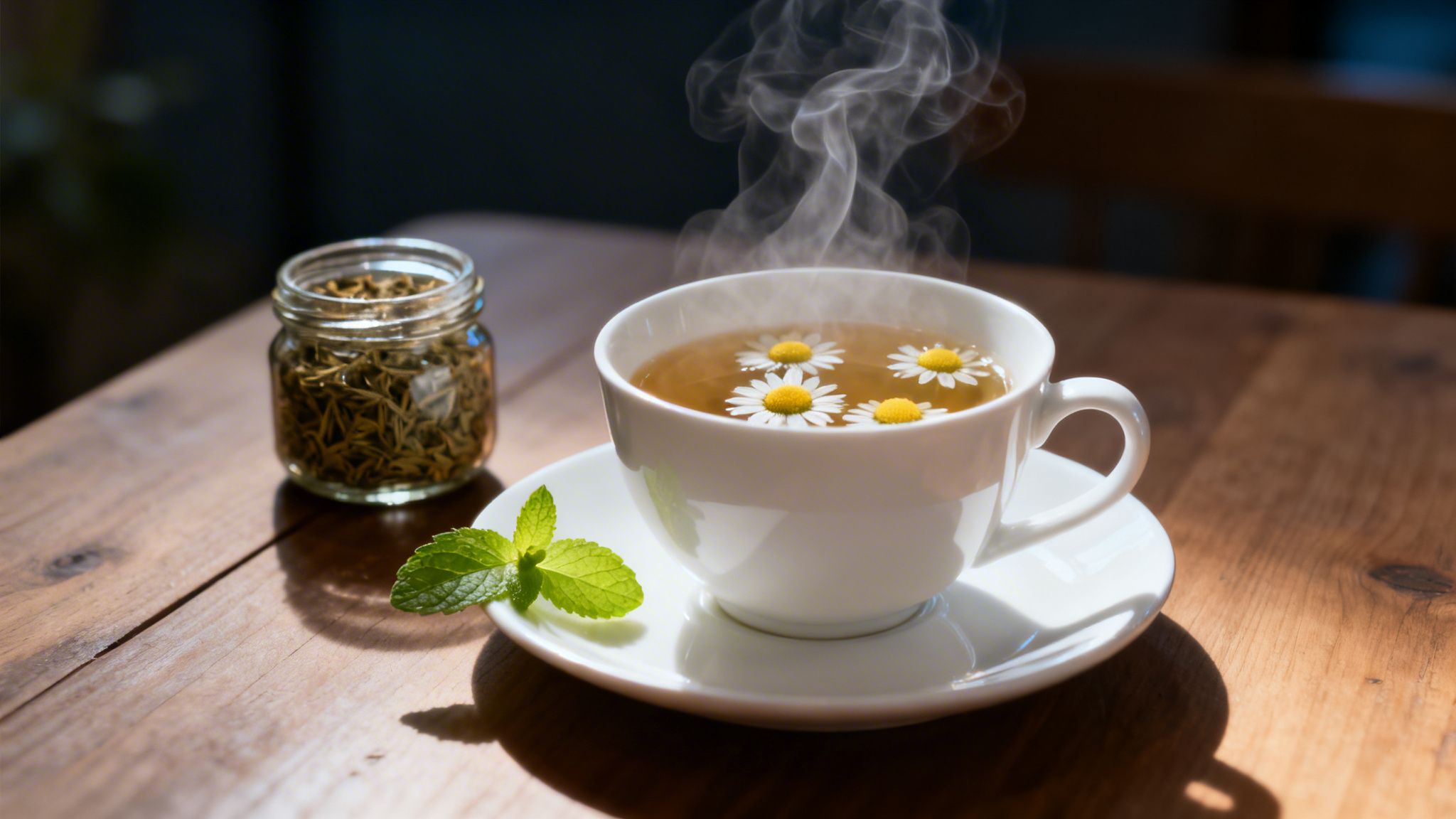
Different herbs offer specific benefits. Chamomile contains an antioxidant called apigenin, which binds to certain brain receptors to decrease anxiety and initiate sleep. Passionflower is recognized for improving sleep quality by increasing levels of gamma-aminobutyric acid (GABA), a neurotransmitter that lowers brain activity. Valerian root is commonly used to address insomnia, while lemon balm is known for its ability to reduce stress and improve mood. For those looking to combine the calming properties of botanicals with other wellness practices, our Magic Mushroom Tea with Chamomile offers a unique blend designed for profound relaxation.
How to Get Started
Making herbal tea a part of your stress management toolkit is simple and rewarding. Focusing on quality and consistency will help you get the most out of each cup.
- Brew Correctly: Use hot, but not boiling, water to avoid damaging the delicate compounds in the herbs. Steep for 5 to 10 minutes, covered, to trap the beneficial volatile oils.
- Time It Right: For sleep benefits, drink your tea about 30 to 60 minutes before you plan to go to bed. This gives the compounds time to take effect.
- Create Your Own Blends: Combine herbs to target multiple needs. A mix of chamomile for calm, passionflower for sleep, and a touch of lemon balm for mood can create a powerful and personalized relaxation formula.
- Choose Loose Leaf: Opt for loose-leaf teas over pre-packaged bags when possible. They generally offer superior quality, potency, and flavor. Store them in an airtight container away from light to preserve freshness.
6. Journaling and Expressive Writing
Expressive writing is the practice of translating thoughts and emotions into written words, serving as a powerful tool for stress management. This process actively engages the prefrontal cortex, the part of your brain responsible for reasoning and emotional regulation, while simultaneously calming the amygdala, the brain’s fear and stress center. Research pioneered by Dr. James Pennebaker shows that just 15-20 minutes of journaling can significantly reduce symptoms of stress, anxiety, and depression by helping you organize and process complex feelings.
The act of writing provides a private outlet to confront stressors without judgment, making it an excellent natural remedy for stress relief. This technique is championed in best-selling books like Julia Cameron's The Artist's Way and is widely recommended by therapists. For those who have had impactful experiences, such as through intentional psychedelic use, journaling is an invaluable integration tool. It provides a structured way to document insights, make sense of the experience, and carry lessons forward into daily life. This can help solidify the positive changes and mental clarity gained from such sessions.
How to Get Started
Integrating expressive writing into your routine is simple and requires no special equipment-just a pen and paper or a digital document. The goal is honesty, not perfection.
- Set a Timer: Commit to writing for 15-20 minutes without stopping. Don't worry about grammar, spelling, or how it sounds; just let your thoughts flow freely.
- Use Prompts: If you're unsure where to begin, start with a prompt like, "Today, I feel stressed about…" or "What's taking up the most space in my mind right now?"
- Try "Morning Pages": A technique from The Artist's Way, this involves writing three pages of stream-of-consciousness thoughts immediately after waking up to clear your mind for the day.
- Incorporate Gratitude: End each session by listing three specific things you are grateful for. This simple practice helps shift your focus toward positivity and can reduce feelings of stress.
- Review Your Entries: Periodically look back at what you’ve written. This can help you identify recurring stress triggers and emotional patterns, offering deeper self-awareness.
7. Nature Exposure and Forest Bathing (Shinrin-yoku)
Spending dedicated time in natural environments is a powerful, science-backed method for reducing stress. The practice of Shinrin-yoku, or "forest bathing," originated in Japan and involves immersing yourself in a forest atmosphere to absorb its therapeutic benefits. Research shows that nature exposure reduces cortisol levels, lowers blood pressure, and activates the parasympathetic nervous system, guiding your body from a state of high alert into one of calm and restoration.

The concept is simple: by engaging all your senses with the natural world, you interrupt the cycle of rumination and mental fatigue. This isn't about hiking or exercise; it’s about slow, mindful observation. The effectiveness of this practice is gaining recognition globally, with doctors in some areas issuing "park prescriptions" and Scandinavian countries integrating nature-based wellness into their lifestyles. Even a short, 20-minute session has been shown to produce a significant drop in stress hormones, making it one of the most accessible natural remedies for stress relief available.
How to Get Started
You don’t need a remote wilderness to practice forest bathing. Consistency and intentionality are what matter most.
- Commit to 20 Minutes: Studies suggest the most significant drop in cortisol occurs within 20 to 30 minutes. Make this your minimum goal.
- Engage Your Senses: Leave your phone on silent. Pay close attention to the sound of leaves rustling, the scent of damp earth, the feeling of a breeze, and the sight of sunlight filtering through the canopy.
- Walk Without a Goal: The point is not to get somewhere, but simply to be somewhere. Meander slowly and pause often.
- Local Detroit & Ann Arbor Spots: Excellent local options include the serene trails of Belle Isle and Matthaei Botanical Gardens in the Detroit area, or the peaceful Barton Nature Preserve near Ann Arbor.
8. Sound Therapy and Binaural Beats
Sound therapy uses specific frequencies and auditory patterns to influence your mental state, providing a powerful and passive way to find calm. This approach is grounded in the concept of brainwave entrainment, where your brain’s electrical activity synchronizes with an external rhythmic stimulus, like sound. A key tool in sound therapy is the use of binaural beats, which occur when you listen to two slightly different frequencies in each ear, causing your brain to perceive a third, rhythmic pulse that corresponds to the difference between the two tones.
This perceived beat can gently guide your brain into different states. For example, listening to frequencies that create an alpha wave pattern (8-12 Hz) encourages a state of relaxed awareness, ideal for unwinding after a long day. Theta waves (4-8 Hz) can deepen meditation, while delta waves (0.5-4 Hz) are associated with deep, restorative sleep. This makes sound therapy one of the most accessible natural remedies for stress relief, as it requires nothing more than a pair of headphones and a quiet space to be effective.
How to Get Started
Integrating sound therapy into your routine is straightforward, with many apps and platforms dedicated to the practice. Consistency and the right environment are key to getting the most out of it.
- Use Quality Headphones: For binaural beats to work correctly, you need stereo headphones that can deliver a different frequency to each ear.
- Choose the Right Frequency: Select a track based on your goal. Use alpha waves for general relaxation, theta waves for creative focus or deep meditation, and delta waves to help you fall asleep. Apps like Brain.fm and the sound library in Insight Timer make this easy.
- Create a Soothing Atmosphere: Combine your listening session with other relaxing activities. Play a nature sounds track, such as rain or ocean waves, while journaling or meditating to compound the calming effects.
9. Aromatherapy and Essential Oils
Aromatherapy is the practice of using essential oils for therapeutic benefit, and it's one of the most immediate natural remedies for stress relief. When you inhale the aromatic compounds from these plant extracts, the scent molecules travel through your olfactory nerves directly to the limbic system, the brain's emotional center. This direct pathway can promptly influence mood and physiological functions, making it a powerful tool for reducing anxiety and promoting a sense of calm.
The use of essential oils like lavender, chamomile, bergamot, and frankincense has become a standard practice in the spa and wellness industry for their stress-reducing properties. This is because specific oils contain chemical constituents, such as linalool in lavender, which have been studied for their ability to calm the nervous system. The growing popularity of home diffusers and the therapeutic use of aromatherapy in clinical settings underscore its effectiveness as a legitimate, science-backed approach to managing daily stress.
How to Get Started
Integrating aromatherapy into your routine is simple and can be adapted to fit any part of your day. The key is using high-quality oils and finding the application method that works best for you.
- Choose Quality Oils: Invest in 100% pure, therapeutic-grade essential oils from reputable sources to ensure you get the full benefits without synthetic additives.
- Use a Diffuser: Add a few drops of oil to an ultrasonic diffuser and run it for 20-30 minutes at a time. This is perfect for setting a calm mood in your home or office.
- Inhale Directly: For a quick moment of relief, open a bottle of essential oil and take a few deep breaths, inhaling the scent directly.
- Apply Topically (With Care): Always dilute essential oils with a carrier oil like jojoba, almond, or coconut oil before applying them to your skin. A common ratio is 2-3 drops of essential oil per teaspoon of carrier oil. Apply to pulse points like wrists and temples.
- Enhance Your Routine: Add a few drops of lavender or chamomile oil to a warm bath or apply a calming blend to the soles of your feet before bed to improve sleep.
10. Social Connection and Community Engagement
As social creatures, humans are wired for connection. Meaningful relationships are not just a source of happiness; they are a biological necessity for managing stress. When you connect with others, your brain releases oxytocin, often called the "love hormone," which actively lowers cortisol levels and calms the cardiovascular system. This hormonal response creates a powerful buffer against the physiological effects of stress, making social connection one of the most effective natural remedies for stress relief.
The importance of this is highlighted by landmark research like the Harvard Study of Adult Development, which found that strong relationships are the biggest predictor of long-term health and well-being. Isolation, in contrast, can amplify stress and its negative health consequences. Building a supportive community, whether in person or online, provides a sense of belonging and emotional resilience. This is a core reason we established the Metro Mush Discord community, offering a space for like-minded individuals to connect, share experiences, and support one another’s wellness journeys. Joining can provide both a valuable social outlet and a 20% discount on your orders.
How to Get Started
Fostering connection doesn’t need to be a grand gesture. Small, consistent efforts to engage with others can make a significant difference in your mental state and ability to handle stress.
- Find Your Tribe: Join groups that align with your interests. This could be a book club, a local running group, a yoga class, or an online community focused on a shared hobby.
- Schedule Social Time: Treat your social life with the same importance as any other appointment. Block out time each week to connect with a friend, family member, or community group.
- Embrace Community Support: If you're exploring wellness practices like mindfulness or microdosing, connecting with others on a similar path is invaluable. You can join the Metro Mush Discord to engage with our community, ask questions, and share insights.
- Volunteer: Dedicating time to a cause you believe in is a powerful way to meet new people and build a sense of purpose, which is a key component of a low-stress life.
Top 10 Natural Stress-Relief Remedies Comparison
| Practice | 🔄 Implementation Complexity | ⚡ Resource Requirements | ⭐ Expected Effectiveness | 📊 Expected Outcomes | 💡 Ideal Use Cases |
|---|---|---|---|---|---|
| Meditation and Mindfulness Practices | Low–Moderate (habit-building) 🔄 | Minimal — none to app-based ⚡ | ⭐⭐⭐⭐ — strong evidence for anxiety/stress | Reduced cortisol, improved sleep, emotional regulation 📊 | Daily routine, preparation/integration for intense experiences 💡 |
| Adaptogenic Herbs (Ashwagandha, Rhodiola, Reishi) | Low (consistent dosing, check interactions) 🔄 | Low–Moderate — supplements, quality sourcing ⚡ | ⭐⭐⭐ — clinically supported over weeks | Improved stress resilience, better sleep, HPA balance 📊 | Long-term stress management, adjunct to lifestyle changes 💡 |
| Deep Breathing Techniques (Box, 4-7-8) | Very low — simple protocols 🔄 | None — environment only ⚡ | ⭐⭐⭐⭐ — immediate physiological effects | Rapid calm in 2–5 min, improved HRV, reduced anxiety symptoms 📊 | Acute stress moments, sleep onset, performance prep 💡 |
| Physical Exercise and Movement (Yoga, Walking, Dance) | Moderate — scheduling and progression 🔄 | Low–Moderate — time, optional equipment ⚡ | ⭐⭐⭐⭐ — strong long-term benefits | Endorphin release, better sleep, reduced chronic anxiety 📊 | Sustainable stress reduction, social classes, mood elevation 💡 |
| Herbal Teas (Chamomile, Passionflower, Valerian) | Very low — simple brewing 🔄 | Low — tea, kettle, optional loose leaf ⚡ | ⭐⭐ — mild, supportive effects | Gentle relaxation, sleep support, soothing ritual 📊 | Evening wind-down, ritualized relaxation, mild insomnia 💡 |
| Journaling and Expressive Writing | Low–Moderate — habit and privacy need 🔄 | Minimal — pen/paper or app ⚡ | ⭐⭐⭐ — effective for emotional processing | Increased insight, clarified emotions, reduced anxiety over time 📊 | Integration after events, pattern tracking, therapy adjunct 💡 |
| Nature Exposure and Forest Bathing (Shinrin-yoku) | Low — access dependent 🔄 | Minimal — travel/time to natural spaces ⚡ | ⭐⭐⭐⭐ — measurable physiological benefits | Lower cortisol, mood improvement, immune support 📊 | Short restorative breaks, weekly routine, outdoor retreats 💡 |
| Sound Therapy and Binaural Beats | Low — passive use, headphone recommended 🔄 | Low — apps, quality headphones ⚡ | ⭐⭐–⭐⭐⭐ — individual variability | Relaxation, enhanced meditation/sleep, ambient focus aid 📊 | Meditation background, focus sessions, sleep enhancement 💡 |
| Aromatherapy and Essential Oils | Low — simple application methods 🔄 | Low–Moderate — oils, diffuser, quality sourcing ⚡ | ⭐⭐–⭐⭐⭐ — immediate but subtle effects | Rapid mood lift, calming inhalation benefits, ritual support 📊 | Short-term calming, meditation enhancement, bedtime routine 💡 |
| Social Connection and Community Engagement | Moderate — coordination and emotional work 🔄 | Low — time and social energy ⚡ | ⭐⭐⭐⭐ — powerful long-term buffer against stress | Increased resilience, reduced loneliness, sustained wellbeing 📊 | Long-term mental health, accountability, group support systems 💡 |
Crafting Your Personal Stress-Relief Toolkit
Navigating the pressures of modern life requires more than a single solution; it demands a personalized and adaptable collection of strategies. The journey through the natural remedies for stress relief in this guide has equipped you with a diverse set of tools, each with a unique purpose and application. From the immediate, grounding power of a deep breathing exercise to the long-term, systemic support offered by adaptogenic herbs like Ashwagandha and Reishi, these practices form the foundation of a resilient mindset. The goal is not to master every single one overnight, but to thoughtfully construct a personal toolkit that works for you.
Think of it as building a custom support system. Some days, the quiet introspection of journaling will be what you need to untangle complex thoughts. On other days, the sheer physical release of a brisk walk through a park or a high-energy dance session will be the most effective remedy. The key is to recognize that you have options, empowering you to respond to stress with intention rather than reacting to it from a place of overwhelm. By having a menu of choices, you can select the right tool for the right moment.
Putting Knowledge into Action: Your First Steps
The most powerful insights are those we apply. To begin, choose just one or two practices from this article that genuinely spark your interest. Don't select what you think you should do; pick what you want to try.
- For Immediate Calm: Try integrating the 4-7-8 breathing technique into your daily routine. Set a reminder to practice it for just two minutes during your lunch break or before a potentially stressful meeting.
- For Mindful Movement: If you're in the Detroit or Ann Arbor area, commit to one weekly "forest bathing" session. It doesn't need to be a grand expedition. A mindful, phone-free walk in a local green space like Nichols Arboretum or the trails around Kensington Metropark can profoundly shift your mental state.
- For Restful Nights: Experiment with an evening tea ritual. Brew a cup of chamomile or lemon balm tea about an hour before bed, creating a simple, calming transition into sleep.
The true value of these natural remedies for stress relief is realized through consistent, small actions. You are not just managing stress; you are actively cultivating a baseline of calm and clarity.
Key Takeaway: Resilience isn't about being immune to stress. It's about recovering from it more efficiently. Your personalized toolkit of natural remedies, from breathwork to social connection, is what builds that recovery capacity.
The Power of Integration and Community
As you experiment, notice how these practices can complement one another. For example, your mindfulness meditation might become easier after a session of yoga. The benefits of adaptogens may feel more pronounced when you are also prioritizing quality sleep. This synergy is where deep, lasting change happens. You begin to create a lifestyle that naturally buffers you against the chronic effects of stress.
Furthermore, remember the profound impact of social connection. Sharing your experiences, challenges, and successes with a trusted community reinforces your efforts and provides invaluable emotional support. Whether it's connecting with friends, joining a local wellness group, or engaging with like-minded individuals online, community amplifies the positive effects of your personal practices. Stress can be isolating, but building a support network is a powerful antidote. By integrating these strategies and leaning on community, you move beyond merely coping and start proactively designing a life defined by greater balance, presence, and well-being.
For those in Southeast Michigan exploring a full spectrum of natural wellness options, Metro Mush offers thoughtfully curated products that align with a mindful, balanced lifestyle. Discover our selection of low-dose functional mushroom chocolates and drinks designed to support calm and clarity, and join our Discord community to connect with others on a similar path. Visit Metro Mush to see how our products can complement your personal stress-relief toolkit.