

Looking for a straight answer? The maitake mushroom price usually lands somewhere between $12 to $25 per pound for fresh clusters and $30 to $60 per pound for dried pieces. If you're looking at supplements like capsules or tinctures, the price varies a lot but expect to pay between $20 and $50 for a bottle.
Your Quick Guide To Maitake Mushroom Prices
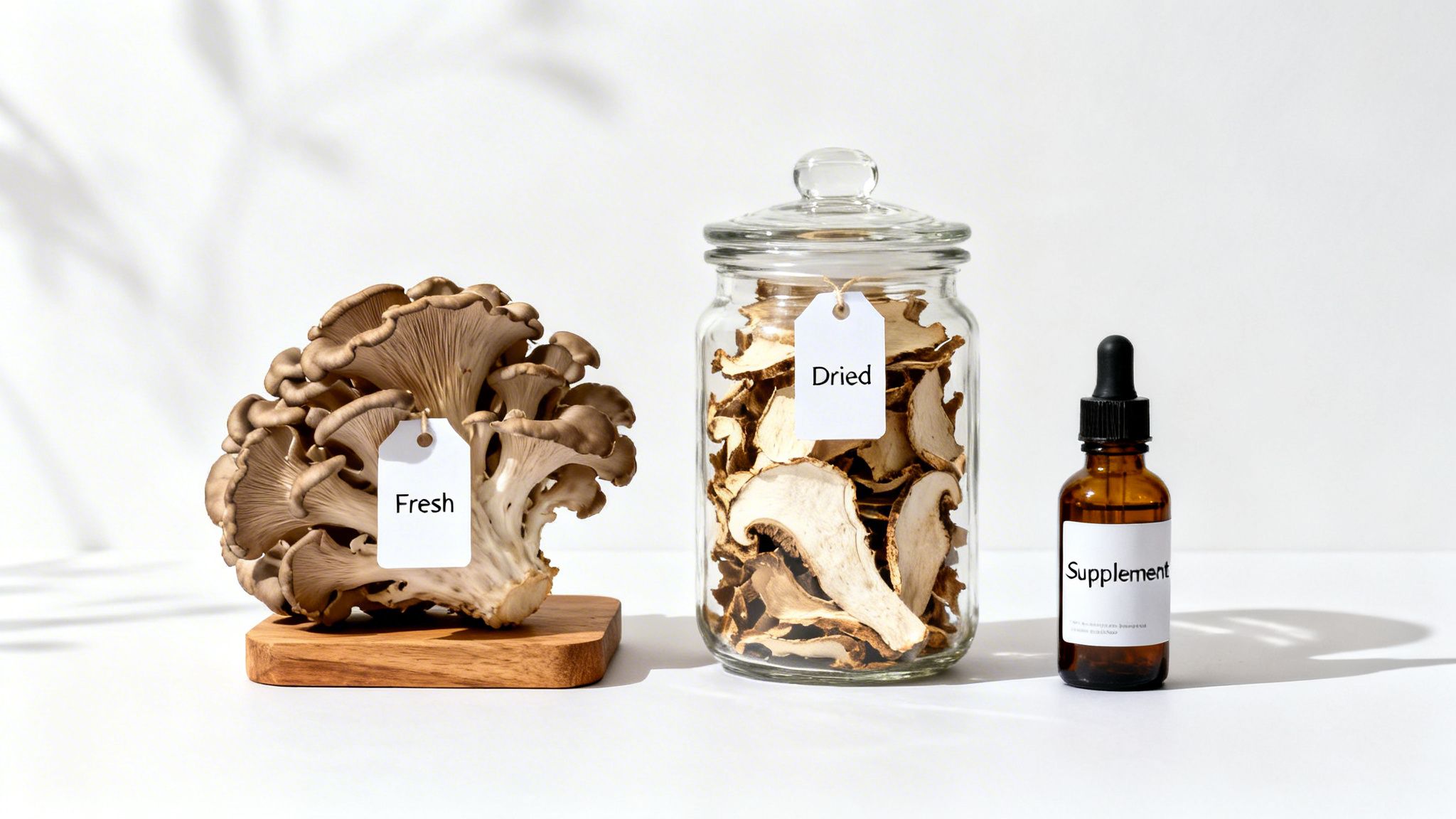
Before we get into all the little details that can shift the cost, it’s good to know the basics. The price you'll see for maitake—also called Hen of the Woods—really comes down to what form you’re buying it in. Fresh, dried, and powdered supplements all sit in different price brackets for good reasons, like water content, processing, and how long they last on a shelf.
Fresh maitake is your go-to for culinary adventures. It’s got a fantastic earthy flavor and a tender bite, but it’s also the most perishable. That short shelf life is a big reason why its price and availability can be all over the place.
On the other hand, dried maitake has a higher price tag per pound, but don't let that fool you. A little bit goes a very long way. The drying process removes all the water, which super-concentrates its flavor. As a rule of thumb, just 4 ounces of dried maitake can give you the equivalent of roughly a pound of fresh mushrooms once you rehydrate them.
Key Insight: Don’t let the per-pound cost of dried maitake scare you off. Because it's so concentrated and lasts forever in the pantry, it often ends up being a better value in the long run, especially if you only use it now and then.
Finally, you have maitake supplements. Their prices are based on things like the extraction method, how pure they are, and the brand’s reputation. People love these for the convenience and for getting a consistent, measured dose of beneficial compounds like beta-glucans without any fuss.
To help you get a real-world feel for the numbers, here’s a quick summary of what you should expect to pay for each form.
Typical Maitake Mushroom Price Ranges (2026)
This table gives you a snapshot of estimated market prices for maitake in its most common forms. Think of it as a cheat sheet for your next shopping trip.
| Mushroom Form | Price per Pound (lb) | Price per Ounce (oz) | Common Use Case |
|---|---|---|---|
| Fresh | $12 – $25 | $0.75 – $1.60 | Gourmet cooking, sautés, roasts |
| Dried | $30 – $60 | $1.90 – $3.75 | Soups, broths, long-term storage |
| Supplements | Varies Greatly | Varies Greatly | Daily wellness, immune support |
These numbers give you a solid baseline, but keep in mind that where you buy, the time of year, and quality can all nudge the final price up or down.
What Drives The Cost Of Maitake Mushrooms?
The price tag on maitake mushrooms can feel like a moving target. One day they seem like an affordable luxury, and the next, a premium indulgence. This isn’t random—it’s driven by a handful of factors that all come together to set the final price you see at the store.
Think of it like buying good coffee. A generic, mass-produced blend will always be cheaper than single-origin, shade-grown beans from a specific high-altitude farm. Maitake mushrooms are a lot like that. Their origin, form, and quality create a wide spectrum of value, and knowing what to look for is the key to becoming a smarter shopper.
Wild Foraged Vs Cultivated Maitake
One of the single biggest price drivers is whether your maitake was picked from the wild or grown on a farm.
- Wild-Foraged Maitake: These are the real prizes, a true find for mushroom hunters. Found at the base of oak trees in native forests, wild maitake is seasonal and totally unpredictable. That scarcity, plus the hard work of foraging by hand, means it commands a much higher price.
- Cultivated Maitake: Grown in controlled indoor environments, cultivated maitake gives us a consistent, year-round supply. This reliability makes it far more affordable and easy to find, though some connoisseurs might argue it doesn't have the same deep, woodsy flavor as its wild cousin.
The romance of wild-foraged food is hard to beat, but cultivation is what has made gourmet mushrooms accessible to everyone. While wild maitake is a fantastic treat, the cultivated varieties offer excellent quality for everyday cooking without the premium cost. For anyone curious about growing their own, a great place to start is learning about the growing mediums. You can explore our guide on mushroom liquid culture to learn more about starting your own supply.
Quality, Season, And Location
Beyond its origin, a few other things play a huge role in what you’ll pay. Quality is a big one. Mushrooms that are certified organic, for example, usually cost more because of the strict standards they have to meet. A fresh, firm cluster with feathery fronds will always be worth more than one that's bruised or wilted.
Seasonality also makes a big difference for fresh maitake. These mushrooms naturally pop up in the fall, so buying them "in-season" usually means better availability and lower prices. If you're buying them outside that window, you’re likely paying for maitake that was shipped from far away or grown in specialized farms, which adds to the expense.
Finally, where you live matters. A lot. Historical data shows huge price differences across the U.S., all based on local supply and demand. For instance, maitake from California has sold for $22.49 per kg in Los Angeles, while repacked maitake in Dallas once shot up to $48.50 per kg when it was scarce. These swings, from as low as $17 to nearly $50 per kg over the years, show just how much origin and transportation can change what you pay. You can discover more insights on these historical maitake mushroom price fluctuations to see how market dynamics work.
Price Showdown: Fresh Vs. Dried Vs. Supplement Forms
When you’re looking at maitake mushrooms, comparing the price between fresh, dried, and supplement forms isn't just about the number on the tag. You're actually weighing different kinds of value for totally different purposes—whether that's a gourmet dinner tonight or a consistent wellness routine for the long haul.
At first glance, fresh maitake often looks like the most affordable choice. Its price per pound is usually the lowest, making it a fantastic centerpiece for an impressive roast or a savory sauté. The catch? You're paying for a lot of water weight that cooks off, and its short shelf life means you need to use it fast.
The Economics Of Dried Maitake
This is where the real value starts to show. Dried maitake might seem expensive when you see the price per ounce, but don't let that fool you. The secret is in the concentration. The drying process removes all the water, which does two amazing things: it concentrates that deep, umami flavor and preserves the mushroom for ages.
Because they’re so concentrated, a little goes a long way. A good rule of thumb is that 4 ounces of dried maitake can easily replace a full pound of fresh mushrooms once you rehydrate them. This makes dried maitake an incredibly smart buy for your pantry, ready to add a flavor bomb to soups, stocks, and sauces whenever inspiration strikes.
The Bottom Line: While the upfront cost of dried maitake is higher, its concentrated power and long shelf life often make it the more economical option over time, especially if you don't use it every day.
The Value Of Maitake Supplements
Maitake supplements—like capsules, powders, and tinctures—are in a whole different league. Here, you're not paying for texture or culinary flair. You’re investing in a consistent, measurable dose of maitake’s beneficial compounds, and the price reflects that.
The cost for supplements is driven by a unique set of factors:
- Extraction Method: Dual-extraction processes, which use both hot water and alcohol, are more complex but pull out a wider range of active compounds, which raises the price.
- Potency: The concentration of key ingredients like beta-glucans is a major factor. Higher potency means more effect, and that comes at a premium.
- Brand Reputation & Testing: Reputable brands that invest in third-party lab testing to verify purity and potency will naturally have a higher price point. It's the cost of quality assurance.
This chart helps visualize how these different factors—from where the mushroom is from to how it's processed—all play a role in the final price.
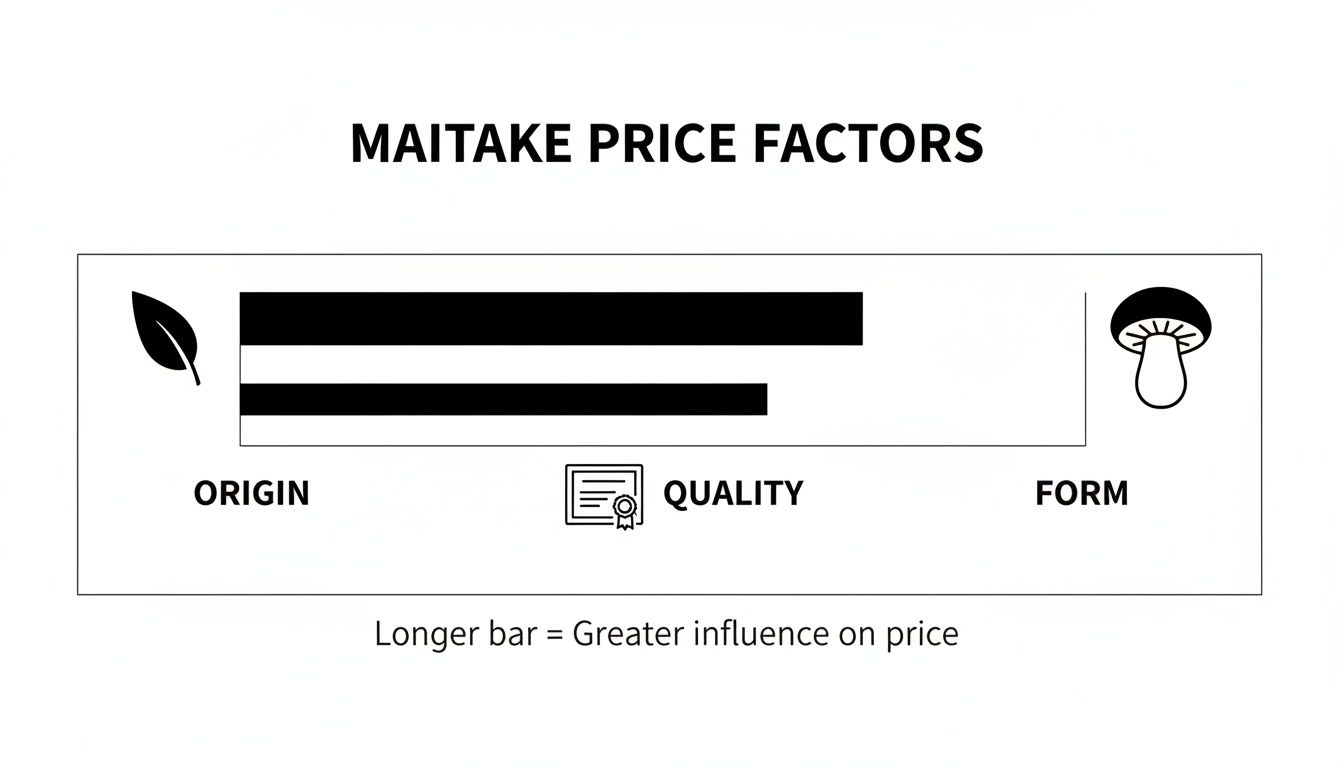
As you can see, origin, quality, and form each contribute to the final cost you pay. To make the choice clearer, let’s put them side-by-side.
Maitake Form Cost And Value Comparison
This table breaks down the typical costs, best uses, and overall value for each form of maitake to help you figure out which one is right for you.
| Maitake Form | Typical Price | Best For | Value Proposition |
|---|---|---|---|
| Fresh | Low per pound | Immediate culinary use | Best texture and flavor for cooking, but highly perishable. |
| Dried | High per pound | Long-term storage, broths, soups | Highly concentrated flavor; cost-effective over time. |
| Supplements | Varies by bottle | Daily wellness boost | Convenient, consistent dosing of specific health compounds. |
Ultimately, your choice comes down to a simple question: are you cooking a memorable meal, or are you investing in your daily health? Answering that will point you straight to the best value for your needs.
How Global Demand Is Shaping Future Maitake Prices
It’s one thing to know what maitake mushrooms cost today, but what about tomorrow? The price you see on the tag is being influenced by something much bigger: a massive global spike in demand. People all over the world are waking up to maitake’s incredible health benefits, and it’s changing the entire market.
Maitake is no longer just an interesting ingredient for a fancy dinner. It's quickly becoming a go-to for daily wellness. As more people hear about its immune-boosting power, you’re starting to see it everywhere, from supplement capsules to health-focused foods. That sudden surge in popularity is putting a real squeeze on the global supply.
This isn't just some far-off trend, either. When demand in huge markets like North America and Asia goes up, it pulls maitake from growers worldwide. That means less is available for everyone else, and you guessed it—prices start to creep up, even at your local market.
The Mushroom Market Boom
The world's appetite for maitake isn't just growing, it's exploding. This boom is all thanks to health-conscious consumers looking for natural ways to feel their best. Right now, the Asia-Pacific region is leading the charge, with countries like China and Japan being both the biggest producers and consumers.
Key Takeaway: The worldwide maitake mushroom market is set for some serious growth. Forecasts predict it will jump from $5.4 billion in 2024 to $13.1 billion by 2032. That’s a compound annual growth rate (CAGR) of 11.72%, showing just how fast this mushroom is becoming a hot commodity. You can dig into the numbers yourself by exploring the global maitake mushroom market data.
While different reports might have slightly different numbers, they all agree on one thing: the market is heading straight up. Here in North America, the organic wellness movement is just as strong, with more and more people making maitake a part of their regular health routine.
What This Means For Your Wallet
All this global attention means maitake has graduated from being a special seasonal find at the farmer's market. It’s now a star ingredient in everything from powerful extracts to fancy meal kits. This growing demand, especially for top-shelf cultivated and wild-foraged maitake, is going to keep prices firm.
As more people discover the power of functional mushrooms, the fight for good-quality supply will only get more intense. For you, this means getting smart about how you buy. Snagging them when they're in season, buying dried maitake in bulk, and just generally keeping an eye on market trends will be your best bet for keeping this amazing mushroom in your life without breaking the bank.
Where To Find Maitake And How To Get The Best Value
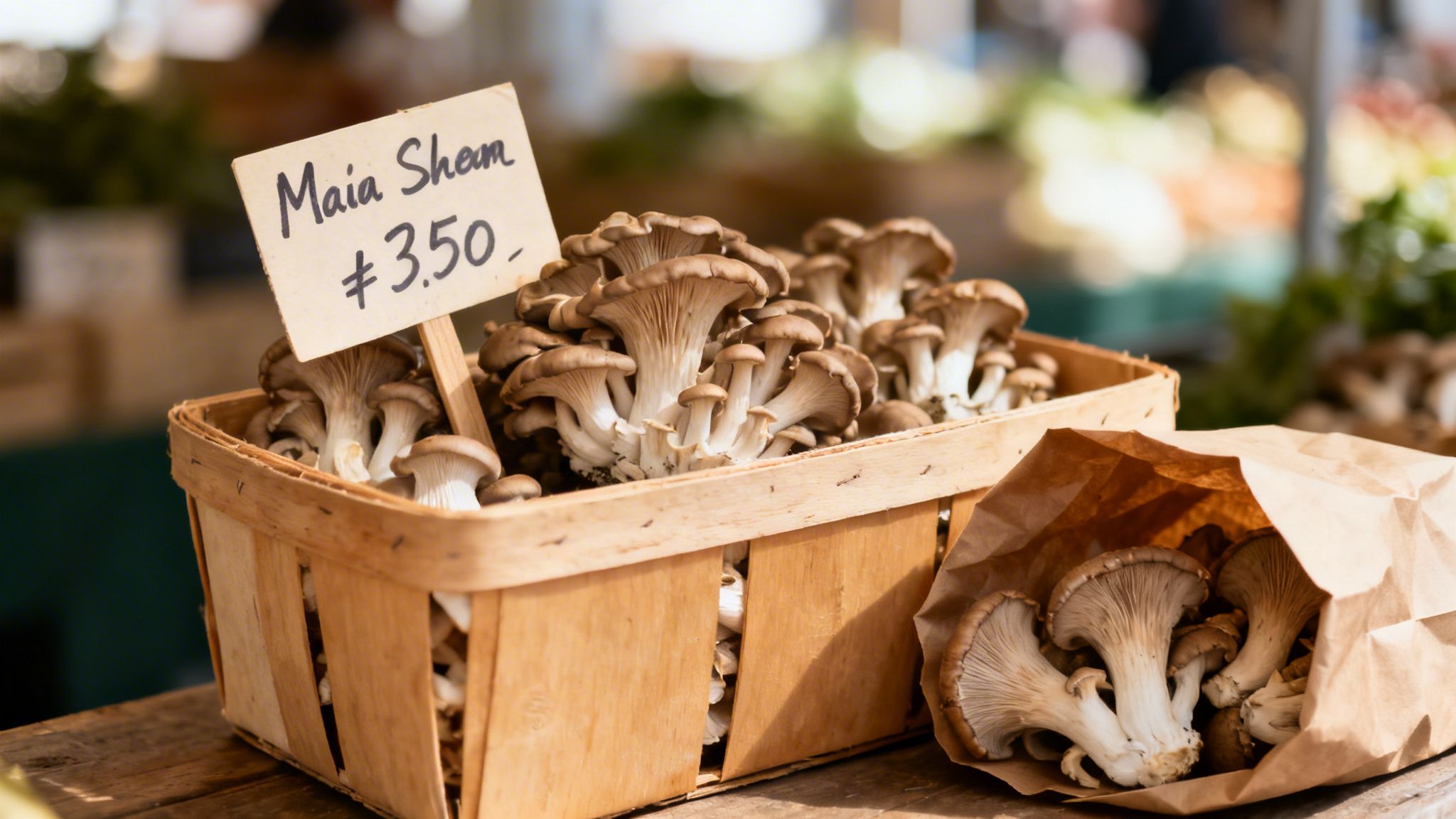
Okay, so you know what you should expect to pay for maitake. But knowing the maitake mushroom price is only half the battle. The real trick is tracking down high-quality mushrooms without breaking the bank, and where you shop is everything.
Your game plan should change based on what you need. Think of it like buying your favorite seasonal fruit. For the absolute freshest, most vibrant stuff, you go straight to the source. But if you're stocking up or just need convenience, other options are better. Let's get into where to look and how to get the most for your money.
Local And Specialty Markets
If you're after the freshest possible maitake, your local farmers' market should be your first stop. You can't beat the ability to chat directly with the growers, ask how they cultivate their mushrooms, and pick out the perfect cluster with your own hands. You're looking for clusters that feel firm and surprisingly heavy, with clean, delicate fronds.
Specialty food shops and Asian markets are also goldmines for fresh maitake. They often have top-notch cultivated mushrooms, and because their customers know what to look for, the product moves fast. That high turnover means you're almost always getting something fresh.
- Farmers' Markets: Your best bet for peak-season quality and a chance to support local farmers. The price might be a bit higher, but it often reflects superior freshness.
- Specialty Grocers: A reliable spot for consistently good cultivated maitake, and you can often find organic choices here.
- Asian Markets: An excellent resource for both fresh and dried maitake, sometimes at better prices because they sell in such high volume.
Pro Tip: When it comes to getting the best price on fresh maitake, timing is key. You'll find better availability and lower costs during the peak autumn harvest. Learning more about when mushroom season is in your area can help you time your shopping trips perfectly.
Online Retailers And Bulk Suppliers
The internet has completely changed the game for mushroom enthusiasts. Online stores offer everything from fresh maitake shipped overnight to a massive selection of dried products and potent supplements. This is where the real deals are, especially if you're buying dried.
One of the smartest money-saving moves is to buy dried maitake in bulk online. Because they last for ages in the pantry, buying a larger bag—like one pound—can seriously slash the cost per ounce. Just make sure to check reviews and go with a supplier known for their quality.
Foraging Your Own Maitake
For the truly adventurous and self-reliant, nothing beats foraging for wild maitake. It's the ultimate way to get them for free. These "Hen of the Woods" clusters are often found in the fall at the base of oak trees, and stumbling upon one is an incredible experience. But this route comes with a very serious warning.
Never, ever eat a wild mushroom unless you are 100% certain of its identity. A simple mistake can lead to severe poisoning or worse. If you're just starting out, find an experienced forager to go with or connect with a local mycological society. When it comes to wild mushrooms, the golden rule is simple: when in doubt, throw it out.
Common Questions About Maitake Mushroom Prices
To wrap this up, let's answer a few of the most common questions people have when they’re trying to buy maitake. Think of this as your final checklist to make sure you’re spending your money wisely.
We’ll cover everything from the wild vs. cultivated debate to why some supplements seem so expensive.
Is Wild Maitake Really Better Than Cultivated?
This is a classic debate, and the truth is, it’s not a simple yes or no. It really depends on what you’re looking for.
Wild maitake is famous for its incredibly deep, complex, and earthy flavor. Many mushroom lovers will tell you it’s a far superior taste, and there's a certain magic to it that comes from the effort of foraging. That scarcity and effort are what drive up the price.
On the other hand, cultivated maitake is available all year, offers amazing consistency, and is much friendlier on the wallet. The quality has gotten so good that for most recipes, it delivers fantastic flavor and texture. For most people, cultivated maitake offers the best balance of quality and cost.
Why Are Some Maitake Supplements So Expensive?
When you see a high price tag on a maitake supplement, you’re not just paying for dried mushroom powder. That cost comes from the science and quality control needed to create a pure, potent product.
- Extraction Method: Top-tier supplements almost always use a dual-extraction method, using both hot water and alcohol. This is a more involved and expensive process, but it’s the only way to pull out all the beneficial compounds—both the water-soluble beta-glucans and the alcohol-soluble triterpenes.
- Potency & Purity: You’ll often see pricier supplements guaranteeing a specific percentage of active compounds, like beta-glucans. They also pay for third-party lab testing to prove their products are clean and free from heavy metals or other contaminants. This adds to the cost but gives you peace of mind.
- Source: Supplements made from the fruiting body (the actual mushroom) are widely seen as higher quality and are more expensive than those made from mycelium grown on grain, which can be less potent and full of filler.
In short, a higher price usually means you're getting a safer, more effective product. You're paying for the process that turns a simple mushroom into a powerful wellness tool.
How Should I Store Fresh Maitake To Preserve Its Value?
Proper storage is key, especially if you’ve spent good money on fresh maitake. You want to keep it firm and flavorful for as long as possible.
The absolute best way is to place the mushrooms in a paper bag in the main section of your fridge. Plastic bags are a no-go; they trap moisture and will turn your mushrooms slimy. The paper bag lets them breathe. Also, hold off on washing them until right before you cook, since water will make them spoil faster. Stored this way, your fresh maitake should easily last for up to a week.
Ready to explore the world of curated mushroom products? Metro Mush offers a premium selection for enthusiasts in Detroit and Ann Arbor, from potent strains to delicious edibles. Discover our latest drops and deals by visiting us at https://metromush.com.