
When people ask if mushrooms can help with sleep, the answer is a definite yes, but it’s not as simple as you might think. The real key is understanding which mushroom you’re talking about. Some, like the functional mushroom Reishi, are all about calming the body for a good night's rest. Others, like psilocybin, work on a much deeper level to reshape the brain’s patterns that contribute to restlessness.
The Real Answer to Using Mushrooms for Sleep
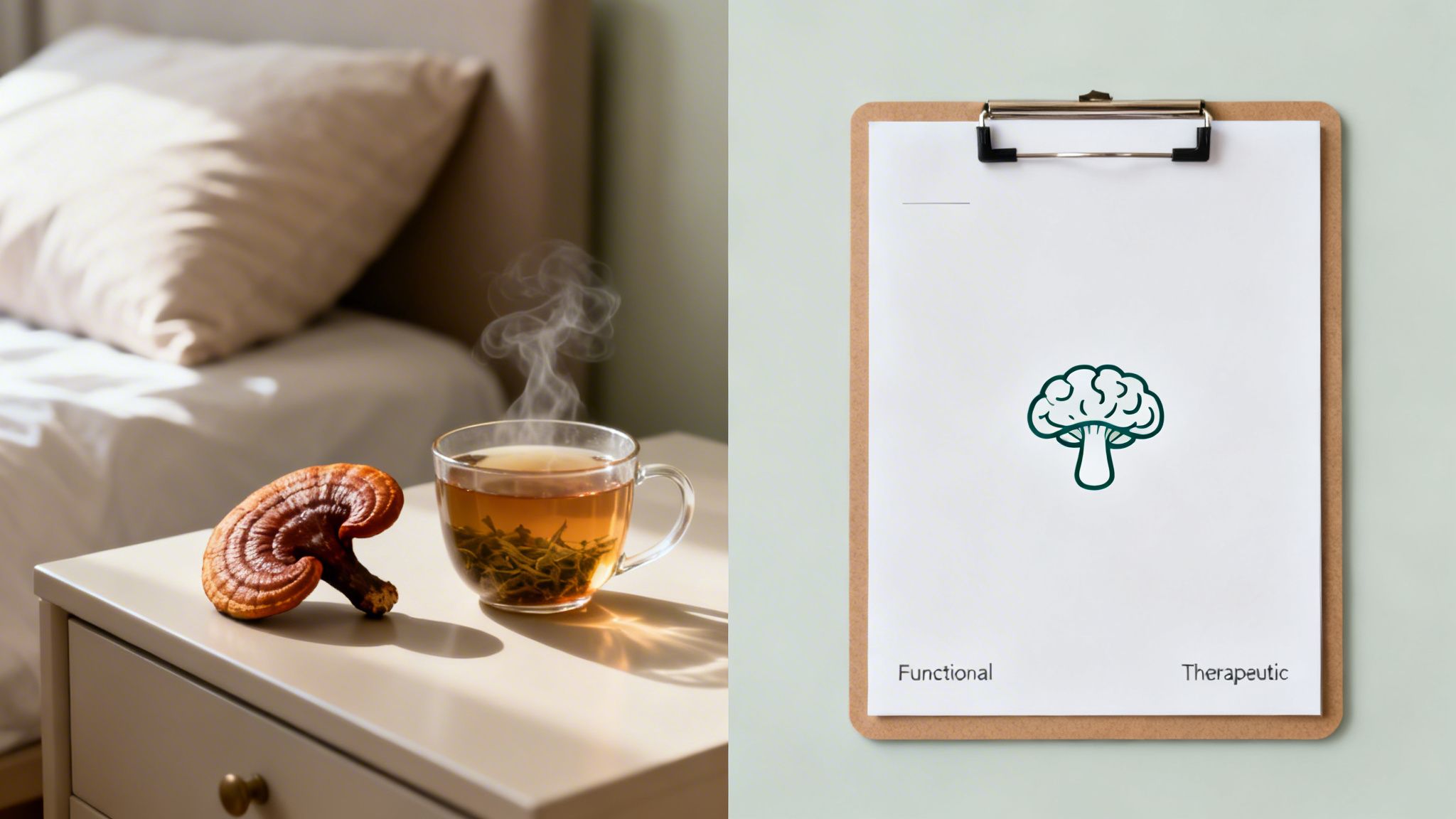
Asking "Do mushrooms help you sleep?" is a bit like asking if a vehicle can help you travel. Well, sure it can—but are you thinking of a bicycle for a quick trip around the neighborhood, or an airplane for a journey across the country? Both get you somewhere, but their purpose, how they work, and the entire experience are worlds apart.
When it comes to mushrooms and sleep, we’re looking at two very different categories:
- Functional Mushrooms: These are the non-psychoactive varieties like Reishi. Think of them as natural, gentle allies that help your body wind down and prepare for sleep on a nightly basis.
- Psilocybin Mushrooms: These are the psychoactive "magic" mushrooms. They aren’t a typical sleep aid you’d take before bed. Instead, they can help improve sleep in the long run by getting to the root causes of poor rest, like anxiety or depression.
Grasping this core difference is the first and most important step. One offers immediate support for your body’s sleep cycle, while the other offers a potential reset for your brain's deeper patterns.
Comparing The Two Worlds Of Sleep Mushrooms
The distinction here is crucial because these mushrooms work on completely different levels. Functional mushrooms operate on a physiological level, helping to dial down stress hormones and soothe your nervous system. For instance, compounds in Reishi have been shown to lower cortisol—your body's main stress hormone—making it much easier to relax and drift off. They fit right into a nightly routine, much like taking a vitamin.
On the other hand, psilocybin works on a neurological and psychological level. It interacts with your brain's serotonin system, which can trigger profound shifts in mood and perception. A therapeutic dose might actually interrupt sleep on the night you take it due to vivid dreams and increased brain activity. The real magic happens in the following days and weeks. By potentially "rewiring" the parts of your brain that get stuck in loops of worry and rumination, it can lead to lasting improvements in your overall sleep quality.
Key Takeaway: Functional mushrooms are for managing sleep nightly. Psilocybin mushrooms are for addressing the underlying issues that prevent good sleep long-term.
To make this crystal clear, let's lay out a quick comparison. This table breaks down how each mushroom type influences sleep, what they're doing in your body, and when you might consider one over the other.
Functional vs Psilocybin Mushrooms: How They Affect Sleep
This table gives you a side-by-side look at how these two types of mushrooms serve very different roles in the quest for better rest.
| Mushroom Type | Primary Mechanism | Reported Sleep Effects | Best Use Case |
|---|---|---|---|
| Functional (e.g., Reishi) | Reduces stress via adaptogens, calms the nervous system, and supports the body's natural sleep-wake cycle. | Falling asleep faster, achieving deeper and more restful sleep, and feeling less anxious at bedtime. | For nightly support to unwind and improve sleep quality, especially if stress is a key factor. |
| Psilocybin (Magic Mushrooms) | Interacts with serotonin receptors, potentially rewiring neural pathways related to anxiety, depression, and rumination. | Can cause vivid dreams or disrupt sleep on the night of use, but may lead to significant long-term improvements in sleep quality. | For addressing the psychological root causes of chronic insomnia, such as depression or anxiety, through intentional, infrequent use. |
Ultimately, choosing between them depends entirely on your goals. Are you looking for a gentle, nightly nudge toward sleep, or are you hoping to tackle the deeper psychological hurdles that keep you awake? Understanding this helps you make a more informed choice for your wellness journey.
How Functional Mushrooms Calm Your Stress for Better Sleep
If you've ever laid awake with your mind racing, you know exactly how stress can sabotage a good night's rest. Think of your body having a stress response that’s supposed to dial down at night. But for many of us, that dial gets stuck on high, leaving you feeling tense and wide awake.
This is where functional mushrooms like Reishi and Lion's Mane come into play. They don't work like a heavy sedative that knocks you out. Instead, they act more like a skilled technician, helping your body recalibrate its own stress response system.
These mushrooms are known as adaptogens, a class of plants and fungi that help your body adapt to and manage stress more effectively. Their main job is to help balance cortisol, your body's primary stress hormone. While you need a little cortisol to wake you up in the morning, high levels at night are a classic recipe for tossing and turning. By helping smooth out those disruptive nighttime spikes, these mushrooms help your nervous system find the calm it needs to let sleep happen naturally.
The Gut-Brain Axis and Sleep Hormones
One of the most incredible ways these mushrooms work is through the gut-brain axis. This is basically a two-way communication highway between your digestive system and your brain. It's becoming clearer than ever that what happens in your gut has a direct line to your mood, stress, and even your ability to sleep.
Functional mushrooms are packed with compounds that nourish this connection. For instance, the unique triterpenes and polysaccharides in Reishi mushrooms are known to support a healthy gut microbiome. When your gut is happy, it helps your brain produce the neurotransmitters it needs to function well.
A huge one here is serotonin. A lot of people know it as the "happy chemical," but it’s also the direct precursor to melatonin—the hormone that tells your body when it's time to sleep. By supporting your gut, functional mushrooms help ensure your brain has the right building blocks to create these essential sleep-regulating chemicals.
The Bottom Line: Instead of forcing you to sleep, functional mushrooms help create the ideal conditions for rest by calming your stress response and supporting the natural production of sleep hormones.
What the Research Shows About Reishi and Sleep
This isn't just ancient wisdom; modern science is starting to confirm what traditional practices have known for ages. A 2022 study with 60 people suffering from chronic insomnia, for example, showed just how effective Reishi can be.
After taking it consistently, participants found that the time it took them to fall asleep (sleep latency) dropped significantly. If you want to get into the details, you can explore the full study findings to see how Reishi's compounds actually influence sleep-regulating genes.
These studies point to some very real, tangible benefits:
- Falling Asleep Faster: By lowering evening cortisol and quieting a busy mind, they help you spend less time staring at the ceiling.
- Staying Asleep Longer: By supporting the production of serotonin and melatonin, they contribute to a more stable, uninterrupted night of rest.
- Improving Sleep Quality: Many people report waking up feeling genuinely refreshed, which is a tell-tale sign of deeper, more restorative sleep.
Think of it like tending a garden. You can’t force a flower to bloom, but you can give it everything it needs to thrive—good soil, the right amount of water, and plenty of sun. In the same way, functional mushrooms don't make you sleep. They just help create the perfect internal environment for your body to do what it already knows how to do: rest, repair, and rejuvenate.
How Psilocybin Reshapes Your Brain for Long-Term Rest
While functional mushrooms offer a gentle, nightly nudge toward relaxation, psilocybin plays a completely different game. Think of it less like a sleeping pill and more like a hard reset for your brain's entire operating system. It’s not about just helping you sleep better tonight; it’s about changing the deep-seated patterns that were causing poor sleep in the first place.
This all starts with how psilocybin talks to your brain’s serotonin system. It specifically binds to serotonin 2A (5-HT2A) receptors, which are packed into the parts of your brain that handle mood, how you see the world, and self-reflection. When these receptors get activated, they can trigger a state of hyper-connectivity, letting different brain regions chat in ways they normally wouldn't.
This neurological fireworks display is the key to quieting down what scientists call the Default Mode Network (DMN). The DMN is your brain's "idle" setting—it’s what’s humming in the background when you’re replaying the past, stressing about the future, or just stuck on a loop. For so many people battling insomnia, an overactive DMN is the very engine driving their sleepless nights.
Taming the Default Mode Network
Imagine your mind is a well-worn path in a forest. Every day, you walk the same route, deepening the groove. This is your DMN at work, reinforcing familiar thought patterns—like anxiety or self-criticism—that can make it impossible to shut down for sleep.
Psilocybin is like a fresh snowfall blanketing the entire forest floor. All of a sudden, that old, rutted-out path is gone. You’re free to forge new ones. By temporarily taking the DMN offline, psilocybin gives your brain a chance to break free from those rigid, negative cycles. This disruption opens up a window of opportunity to build healthier neural pathways.
This is exactly why a therapeutic dose can sometimes mess with your sleep on the night you take it, often leading to vivid dreams or a feeling of mental activity. Your brain is busy doing major renovation work. The real payoff isn't seen that night, but in the weeks and months that follow.
By quieting the part of your brain responsible for repetitive worry, psilocybin creates mental space for genuine rest. It’s not just treating a symptom; it’s addressing one of the core drivers of chronic sleeplessness.
Addressing the Root Causes of Poor Sleep
A lot of sleep problems aren't really about sleep at all. They're symptoms of something deeper, like anxiety, depression, or PTSD. These conditions often trap the nervous system in a state of high alert, making true, restorative rest feel completely out of reach.
Psilocybin’s power to improve sleep is tied directly to its ability to help with these underlying issues. Research points to its ability to create new neural connections, which can help people process difficult emotions and see their lives from a new perspective. For someone whose insomnia is fueled by constant anxiety, this can be life-changing. The experience can bring about a lasting reduction in symptoms, which in turn allows the body’s natural sleep-wake cycle to get back on track.
The long-term effects on sleep can be profound:
- Reduced Sleep Latency: You fall asleep faster because your mind is no longer hijacked by racing thoughts.
- Fewer Nighttime Awakenings: You stay asleep more consistently because your nervous system isn't on high alert for stress.
- Improved Overall Sleep Quality: You wake up feeling genuinely restored and refreshed.
By tackling the psychological roots of restlessness, psilocybin offers a path toward real, sustained improvement. For those curious about the varieties often used for these purposes, our guide to the Psilocybe cubensis strain has more detailed information. This isn't about finding a quick fix for one bad night, but about fostering a fundamental shift in your mental landscape that allows for better rest long-term.
Choosing Your Approach: Microdosing vs. Macrodosing for Sleep
When it comes to using psilocybin to help with sleep, the single most important factor is your dose. How much you take completely reshapes the experience and its impact on your rest. This creates two very different paths: the subtle, ongoing practice of microdosing and the profound, occasional deep-dive of macrodosing.
Deciding which one is right for you really comes down to what you’re trying to solve.
Think of microdosing as a gentle background support system. It’s a lot like adding a high-quality supplement to your wellness routine. You’re not trying to feel any psychedelic effects. The idea is to slowly and consistently dial down the static of daily anxiety and lift your overall mood, making your mind a calmer place to be when your head hits the pillow.
On the other hand, a macrodose is an intense, deliberate therapeutic event. This isn't something you do regularly. It’s more like a deep reset for your brain, designed to help you confront the bigger issues that might be wrecking your sleep—things like deep-seated anxiety, trauma, or depression.
The Gentle Path of Microdosing
Microdosing involves taking a dose so small you barely notice it—typically about one-tenth of what you'd take for a full trip. You shouldn’t feel high or have any changes in perception. Instead, the benefits build up quietly over weeks and months. People often report feeling more focused, emotionally stable, and creative.
So how does that help with sleep? The benefits are indirect but powerful.
- Less Anxiety: One of the most common reports from microdosers is a drop in general anxiety, which is huge for quieting those racing thoughts that keep you up at night.
- Better Mood: By giving your mood a subtle lift, microdosing can help you escape the loop of negative thinking that often leads to tossing and turning.
- More Presence: Users often say they feel more grounded and in the moment, making it easier to unplug from daily stressors before bed.
This path is really for someone looking for gentle, long-term support for their mental well-being, which naturally helps foster better sleep. If you want to get into the nuts and bolts of this practice, check out our comprehensive guide on how to microdose with magic mushrooms.
This decision tree gives you a clear visual for choosing your path, whether you need a bit of daily calm or a more fundamental long-term shift.
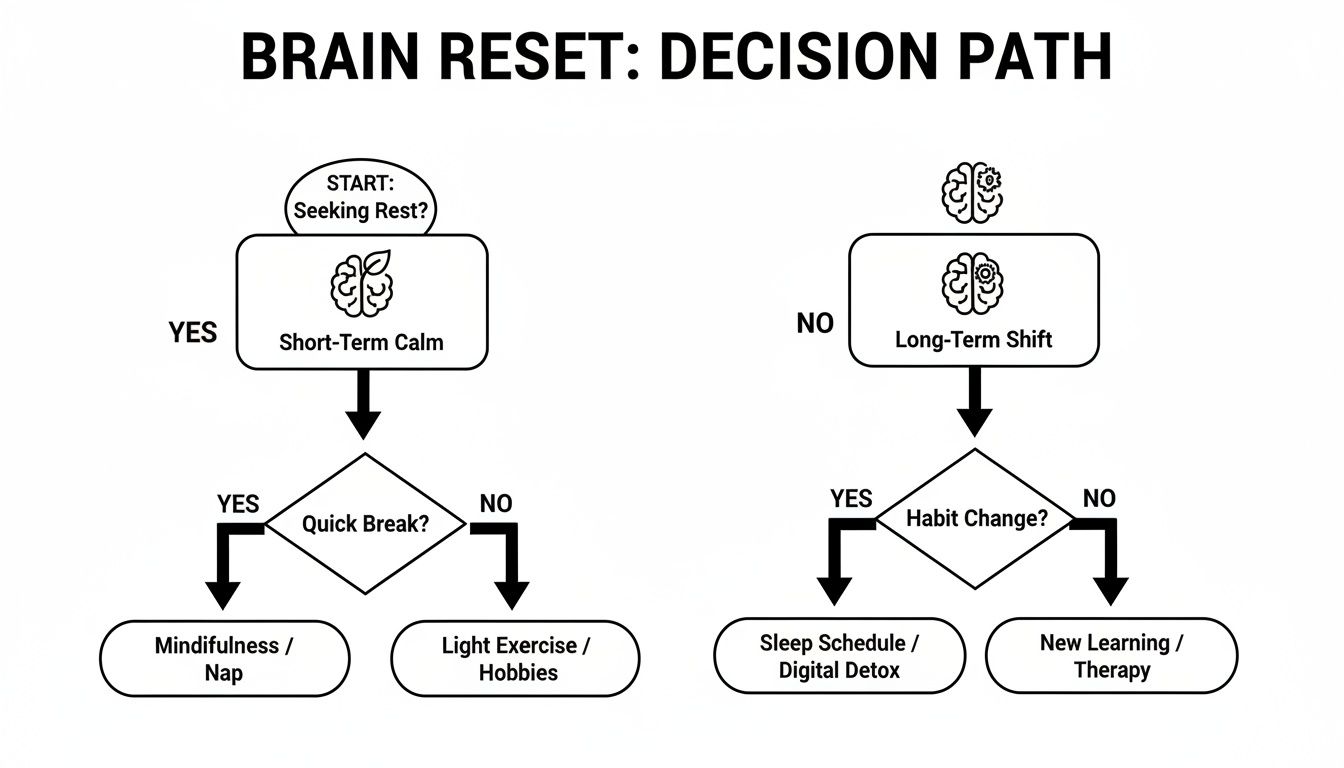
As the infographic shows, you can use microdosing for daily stability or a macrodose for a complete brain reset.
The Deep Dive of Macrodosing
A macrodose, or what’s often called a therapeutic dose, is a whole different ballgame. It’s a significant psychedelic experience that requires careful planning, intention, and ideally, some form of support. The goal here isn’t daily upkeep—it’s a powerful reset to help you process deep emotional or psychological patterns.
Now, on the night you take a macrodose, your sleep will likely be disrupted. Think vivid dreams and a very active mind. The real magic happens in the days and weeks that follow. Research is finally starting to catch up and show just how effective this can be for sleep.
A 2024 study on psilocybin-assisted therapy found significant improvements in sleep quality that lasted for up to four weeks after the dose. Participants' sleep disturbance scores dropped in a big way.
The effect was especially noticeable in people who started with moderate-to-severe sleep problems. This is positioning magic mushrooms as a powerful tool not just for a trip, but for finding peaceful nights long after the experience is over. You can read the full research about these psilocybin findings and see the data for yourself.
To make the differences even clearer, here's a quick comparison of the two approaches and what you can expect for your sleep.
Psilocybin Dosing Strategies and Sleep Outcomes
| Dosing Strategy | Typical Purpose | Immediate Sleep Effect (Night of Use) | Long-Term Sleep Potential |
|---|---|---|---|
| Microdosing | Daily mood support, anxiety reduction, enhanced focus | Generally neutral or slightly improved sleep latency | Gradual improvement in sleep quality by reducing underlying anxiety and stress |
| Macrodosing | Deep therapeutic insight, processing trauma or depression | Often disruptive; vivid dreams and potential restlessness | Significant, lasting improvements in sleep patterns in the following weeks |
Ultimately, choosing between these two paths comes down to your personal goals. Are you looking for a subtle daily lift to ease your mind into rest? Or are you ready for a profound experience aimed at getting to the root of what’s keeping you awake?
Safe and Practical Steps for Using Mushrooms for Sleep
Thinking about using mushrooms to improve your sleep is a journey that needs to be handled with care, especially if you’re curious about psilocybin. Whether you're trying the gentle, calming effects of functional mushrooms or the deep mental reset a psilocybin experience can offer, your safety has to come first.
There’s a simple rule everyone should follow: start low and go slow. This isn't just a catchy phrase; it's the single most important piece of advice for a safe and positive experience. Your body is unique, so what works for someone else might not be the right dose for you. Starting small lets you see how you react without feeling overwhelmed, helping you find your own sweet spot.
The Importance of Timing and Intention
Timing is everything. You can't just take any mushroom at any time and expect the same results. The right schedule depends entirely on which type of mushroom you’re using, so planning ahead is key.
- Functional Mushrooms (like Reishi): These are best used as part of a regular evening routine. Think of it like a nightly cup of chamomile tea. Taking a Reishi supplement about 30–60 minutes before bed helps your body naturally wind down for the night.
- Psilocybin Experiences (Macrodose): This is not a casual weeknight thing. A therapeutic dose requires real planning. Set aside a weekend or a day off where you have zero other obligations. You’ll need a full day for the experience itself and at least one day after to rest and think things over.
A psilocybin session is a powerful tool, and it deserves respect. That means creating a safe, comfortable space and going into it with a clear, intentional mindset.
Set, Setting, and Critical Safety Checks
If you're using psilocybin, understanding the concepts of set and setting is absolutely non-negotiable for a good outcome.
"Set" is your mindset—your thoughts, mood, and what you expect to happen. "Setting" is your physical environment. You need a calm, familiar, and private space where you feel completely safe. A chaotic or unfamiliar place can easily trigger anxiety.
Before you even think about it, there are a few safety checks you absolutely must do. Psilocybin can interact with certain medications, especially antidepressants like SSRIs, so it's critical to do your research and understand the potential risks.
Making informed choices is what it's all about. For our community here in the Detroit and Ann Arbor areas, that means finding a source you can trust. At Metro Mush, our focus is on providing lab-tested products that are clearly labeled, so you know exactly what you’re getting. Responsible guidance is a huge part of our commitment to you.
A great way to start is with something familiar and easy to dose. If you're curious about a gentle introduction, check out our guide on how to make a relaxing shroom tea recipe.
In the end, using mushrooms for sleep is about building a responsible partnership with these fungi. By starting low, respecting the timing, focusing on your set and setting, and choosing a trusted source, you can safely explore what they might have to offer your rest and well-being.
Got questions about how mushrooms and sleep actually mix? You're not alone. For our community here in Detroit and Ann Arbor, we hear a lot of the same questions popping up.
Let's cut through the noise and get you some straight answers. We'll tackle the big concerns, from what a first-timer can expect to the safety of combining different products. The goal is to give you the clarity you need to make smart, responsible choices for your own wellness journey.
How Long Does It Take for Reishi to Work for Sleep?
This is probably the most common question we get, and the answer really gets to the heart of how functional mushrooms work. Reishi isn't like a sleeping pill that's going to knock you out in an hour. Instead, it partners with your body over time, setting the stage for better sleep down the road.
Some people, especially those who are really in tune with their bodies, might notice a subtle feeling of calm the very first night. But for most of us, the real magic happens with consistency.
You can generally expect to notice a real difference in your sleep quality after one to two weeks of daily use. This is because Reishi is working in the background to help balance your stress hormones (like cortisol) and soothe your nervous system—a process that just doesn't happen overnight.
Think of it like starting a new workout routine. You wouldn't hit the gym once and expect to see a huge transformation. The results build up with consistent effort, and it's the exact same principle here.
Is It Safe to Mix Functional Mushrooms with Other Sleep Aids?
This is a really important question, and the short answer is: proceed with caution. Functional mushrooms like Reishi are generally considered very safe and have a low risk of interacting with other things. Still, it’s always smart to be careful when you’re combining anything that affects your nervous system.
If you’re thinking about taking functional mushrooms alongside over-the-counter sleep aids (like melatonin or ZzzQuil) or even prescription sleep meds, the key is to start with a very low dose of the mushroom and pay close attention to how you feel. Since both are designed to encourage relaxation, their combined effect could be much stronger than you're used to.
Honestly, your best and safest move is to chat with a healthcare provider who gets both supplements and medications. They can give you advice tailored specifically to you and your health.
What Should a Beginner Expect on Their First Night?
Your first night is going to look completely different depending on what kind of mushroom you're using. The expectations for a functional mushroom versus psilocybin are worlds apart, so let's break it down.
- First Night with Reishi: Don’t expect a sudden wave of drowsiness to wash over you. The effect is much more gentle. You might feel a pleasant sense of calm or relaxation about an hour after taking it. For many, the biggest change is just a quieter mind, making it easier to drift off naturally without all that mental chatter.
- First Night with Psilocybin (Macrodose): Don’t expect to sleep. At all. A therapeutic or recreational dose of psilocybin is an active, often profound psychological experience. It usually brings on vivid internal imagery, mental stimulation, and can make proper sleep difficult, if not impossible, for that one night. The sleep benefits people talk about are a long-term result, not an immediate effect.
Knowing this difference is key to setting the right expectations and planning your experience properly.
Are Mushrooms for Sleep Legal in Michigan?
The legal status of mushrooms in Michigan really depends on what's in them. For everyone in Detroit and Ann Arbor, it's crucial to know the difference.
- Functional Mushrooms (Reishi, Lion's Mane, etc.): These are 100% legal. They don't contain any psychoactive compounds and are sold all over the country as dietary supplements. You can buy and use them without any legal worries.
- Psilocybin Mushrooms: This is where things get a bit more complex. While psilocybin is still a Schedule I drug at the federal level, cities like Ann Arbor (in 2020) and Detroit (in 2021) have decriminalized it.
Decriminalization means that personal possession and use have become the lowest priority for local law enforcement. It does not mean it’s legal to sell them in a dispensary-style market. However, services like Metro Mush operate within this local framework to provide safe access for adults.
Can Functional Mushroom Blends Really Lower Stress for Better Sleep?
Yes, they absolutely can, and the science backing this up is getting stronger all the time. The main way functional mushrooms help your sleep is by going after the root cause: stress. As adaptogens, they help your body "adapt" to and better manage both mental and physical stress.
A fascinating 2024 study showed this in action. Young adults with poor sleep took an organic mushroom extract blend twice a day. The results were pretty incredible: by Day 25, their levels of the stress hormone cortisol had dropped significantly. Their own reports on sleep quality also shot up compared to the placebo group. It's a clear line connecting less stress to better rest. You can read more about these findings on how mushrooms affect mood and sleep.
This kind of research shows that functional mushrooms aren't just putting a band-aid on sleep problems—they’re helping your body fix an underlying issue.
Ready to explore how mushrooms can fit into your wellness routine? Metro Mush offers a thoughtfully curated selection of products for our Detroit and Ann Arbor communities. From high-quality dried strains to approachable edibles, we're here to help you on your journey. Check out our menu and place your order today at https://metromush.com.