


You're probably here because Lion's Mane has started showing up everywhere at once. It's in coffee blends, capsules at the health food store, powders on wellness shelves, and social posts that promise clearer thinking without the edge of stimulants. If you live around Detroit or Ann Arbor, you've also got one extra layer of confusion to sort out. Some people hear “mushroom” and immediately think psychedelic.
That's exactly why buying Lion's Mane can feel oddly harder than it should. The product itself is simple enough, but the labels, forms, and mushroom terminology can make a cautious buyer stop and second-guess. If you want a practical answer to “how do I buy Lion's Mane mushroom safely and intelligently,” you need clear distinctions, not hype.
Why You're Seeing Lion's Mane Everywhere
A lot of people first run into Lion's Mane in ordinary places. Maybe it was a café menu offering mushroom coffee. Maybe it was a capsule bottle next to magnesium and ashwagandha. Maybe a friend in Ann Arbor mentioned taking it during a heavy work week, or you saw it at a market table next to other specialty mushrooms.
That spread isn't your imagination. The category is growing fast. The Technavio Lion's Mane market analysis projects that the global Lion's Mane mushroom extract market will increase by USD 181.1 million between 2024 and 2029, with a 23.4% CAGR during that period. That kind of growth usually means two things at once. More people are interested, and more products rush in to meet that interest.
Why people are paying attention
Lion's Mane sits in the functional mushroom category. That means people buy it less like a grocery item and more like a wellness product with a specific purpose. The main appeal is cognitive support. Shoppers usually aren't looking for a buzz. They're looking for something that fits into a normal routine and may support focus, memory, and mental clarity over time.
In Southeast Michigan, that interest makes sense. People want options that feel practical. A graduate student wants something easy before a long library day. A parent wants support that doesn't feel intense. A professional wants a supplement that can live beside coffee, not replace common sense.
Buy Lion's Mane the same way you'd buy any wellness product you plan to use daily. Start with what it is, what it isn't, and whether the label tells you enough to trust it.
Why this guide matters now
Fast growth creates a crowded shelf. Some products are well-made. Some are mostly marketing. Some blur the line between culinary mushrooms, wellness supplements, and psychedelic associations in a way that confuses buyers who are just trying to make a safe purchase.
That's a common sticking point. Not at “should I try Lion's Mane?” but at “which one am I supposed to buy?”
Here's how to approach this practically:
- Popularity doesn't equal quality. More options means more weak products too.
- Mushroom terms can hide big differences. “Extract” sounds strong, but the label still matters.
- Detroit and Ann Arbor shoppers often want reassurance first. They want to know it's legal, non-hallucinogenic, and worth the money before they commit.
What Is Lion's Mane and What Does It Do
Lion's Mane is a mushroom called Hericium erinaceus. It doesn't look like the flat brown mushrooms typically used in cooking. It grows in a shaggy, white cluster that really does resemble a lion's mane. In wellness use, people usually take it as a powder, capsule, liquid extract, or less commonly as fresh mushroom.

Why it gets called brain support
The short version is that Lion's Mane contains two compounds people care about most: hericenones and erinacines. According to Healthline's review of Lion's Mane research, those compounds stimulate the synthesis of nerve growth factor, or NGF, which is important for nerve cell growth and function. The same review notes that in human trials, older adults with mild cognitive impairment who took Lion's Mane daily showed measurable cognitive improvements compared with placebo groups.
If that sounds technical, think of it this way. Most supplements are discussed in broad terms like “supports wellness.” Lion's Mane gets attention because its active compounds are linked to a specific pathway that relates to nerve health.
What that means in real life
People usually don't buy Lion's Mane because they expect a dramatic feeling on day one. They buy it because they want support for everyday mental work. That can include:
- Focus during routine tasks like reading, writing, or long screen-heavy days
- Less mental fog when stress, poor sleep, or overwork leaves thinking sluggish
- Memory support as part of a broader wellness routine
- General cognitive maintenance for people who want a non-stimulating option
That doesn't make it magic. It makes it a supplement people use with a steady expectation, not as a quick fix.
What it is not
Buyers often drift into confusion. Lion's Mane isn't a sedative, and it isn't a recreational mushroom. It doesn't belong in the same mental category as products people seek for altered perception. Its reputation comes from cognitive and nerve-support discussion, not from hallucinations or intoxication.
That distinction matters because the shelf language can get fuzzy. A label may say “mushroom extract” without helping you understand the actual use case. For Lion's Mane, the useful question is simple: does this product seem designed for ongoing cognitive support, or is it leaning on mushroom mystique?
Simple test: If the product description can't explain what Lion's Mane is supposed to do in plain language, keep looking.
Lion's Mane vs Magic Mushrooms A Critical Safety Note
This is the question cautious buyers in Detroit and Ann Arbor often ask first, and they should. Lion's Mane is not a magic mushroom. It is non-hallucinogenic, and the active compounds people talk about with Lion's Mane are erinacines and hericenones, not psilocybin.
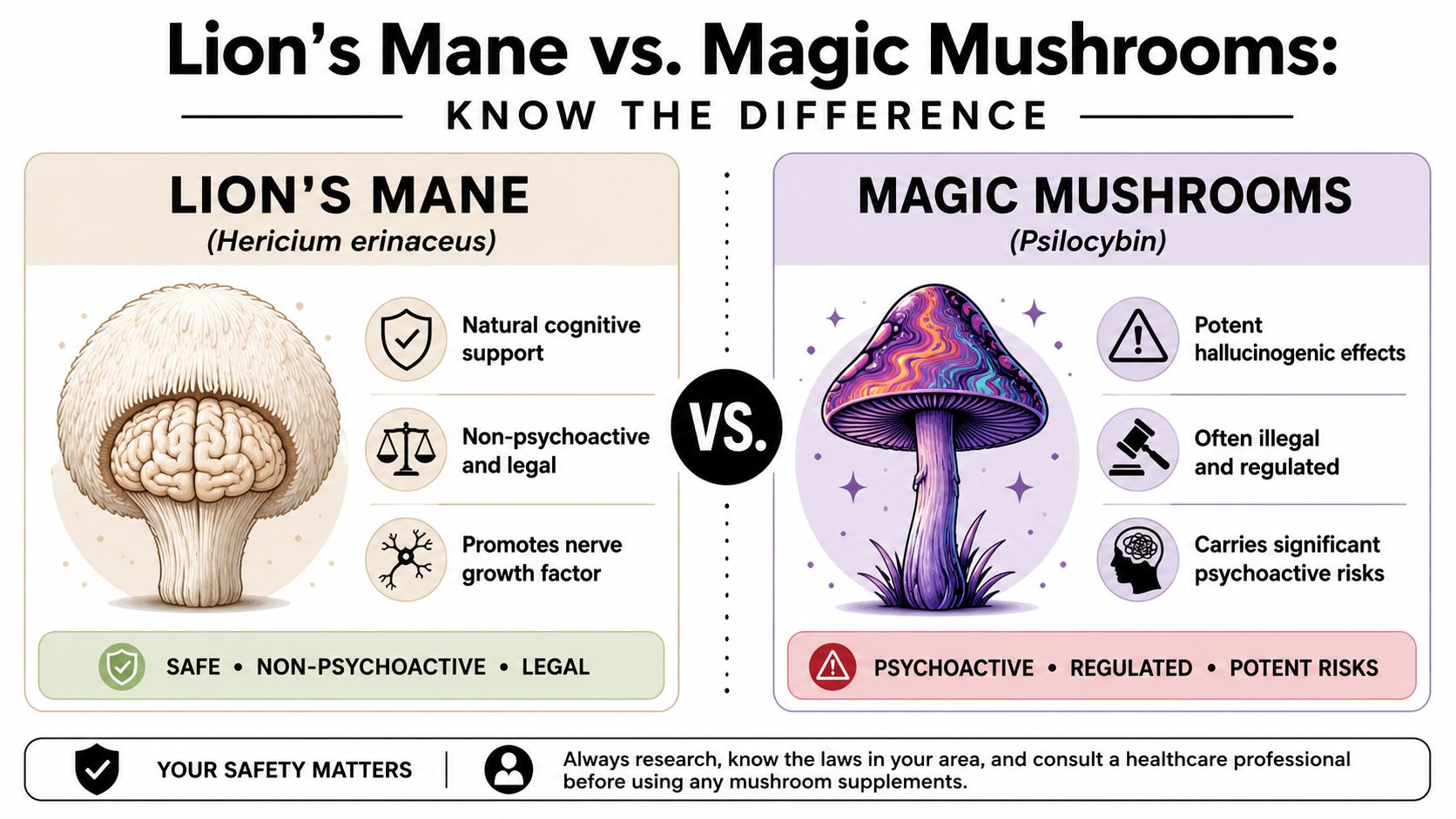
The confusion is common enough that it shows up in search behavior. As noted in WebMD's explanation of Lion's Mane mushroom benefits, Lion's Mane contains no psilocybin and is legally safe and non-hallucinogenic, and search trends showed a 45% increase in queries like “buy lion's mane for hallucinations” over the last 12 months due to misinformation.
Why people mix them up
Part of the confusion comes from the word “mushroom” doing too much work. To a new buyer, mushroom products can look like one big category. Add trendy packaging, vague online listings, and social media shortcuts, and people start assuming all mushroom-based products do roughly the same thing.
They don't.
Here's a plain comparison:
| Product type | Main compounds discussed | Expected effect |
|---|---|---|
| Lion's Mane | Hericenones and erinacines | Cognitive support, non-psychoactive |
| Psilocybin mushrooms | Psilocybin | Hallucinogenic, psychoactive |
The practical safety rule
If you want to buy Lion's Mane mushroom for wellness, the product should clearly identify it as Hericium erinaceus or Lion's Mane. The description should talk about cognitive support, focus, or nerve-related wellness. It should not promise visuals, trips, euphoria, or altered states.
That matters even more when you're shopping in mixed mushroom spaces, browsing marketplaces, or talking with sellers who assume everyone already knows the difference.
Ask the boring question. “Is this Lion's Mane, and is it non-psychoactive?” A legitimate wellness seller should answer that directly.
What local buyers should watch for
Detroit and Ann Arbor shoppers often cross paths with both wellness mushroom culture and psychedelic mushroom discussion. That overlap can create unnecessary hesitation. The safest move is to separate the categories in your own mind before you buy:
- Lion's Mane belongs in the wellness lane
- Psilocybin mushrooms belong in the psychedelic lane
- The names, effects, and legal considerations are not interchangeable
If you're cautious, that's a strength. You don't need to know mushroom culture. You just need to verify the product in front of you matches the reason you're buying it.
Choosing Your Ideal Lion's Mane Product Form
Once you know you're buying the right mushroom, the next question is simpler. Which form fits your actual routine? Common options include powders, capsules, and liquid extracts. Fresh Lion's Mane also exists, but it's a different kind of purchase because you're buying food first and supplement second.

Powders for flexible daily use
Powder is the form many people start with because it's easy to add to something they already do. You can stir it into coffee, tea, oatmeal, or a smoothie. If you like adjusting your serving and don't mind a mild mushroom taste, powder is practical.
It also works well for buyers who want one jar on the counter instead of another pill bottle in the cabinet.
Capsules for convenience
Capsules are the easiest form to keep consistent. You don't need a scoop, a blender, or a recipe. If you're trying to build a habit before work, after breakfast, or alongside other supplements, capsules remove friction.
That matters more than people realize. The best form isn't the one that looks impressive online. It's the one you'll remember to take.
Liquid extracts and tinctures
Liquids appeal to buyers who want a concentrated format and don't mind using a dropper. Some people also prefer the feel of a liquid product because it seems more direct and less like a standard supplement routine.
If you're curious about how mushroom liquids compare with other extract-style products, this guide to mushroom tinctures and their benefits gives a useful broader overview.
A product form is only “best” if it matches your habits. A capsule you take daily beats a powder you forget in the pantry.
Fresh mushroom versus supplement
Fresh Lion's Mane is appealing for shoppers who enjoy cooking and want the whole-food version. It can be sautéed and used like a specialty mushroom in meals. The challenge is consistency. Fresh mushrooms are perishable, seasonal depending on where you shop, and less convenient for a repeatable daily routine.
A supplement form usually makes more sense if your goal is a steady wellness practice. Fresh makes more sense if you're curious about the mushroom itself and like buying from local growers or markets.
A quick decision guide
- Choose powder if you already make coffee, smoothies, or breakfast bowls at home
- Choose capsules if you want the lowest-effort routine
- Choose liquid if you prefer dropper-based supplements
- Choose fresh Lion's Mane if you enjoy cooking and want a food-first option
The right answer isn't universal. It depends on whether you value convenience, flexibility, taste, or kitchen use most.
How to Spot a High-Quality Supplement
A common scenario for buyers is wasted money. A Lion's Mane label can look polished, use all the right buzzwords, and still give you a weak product. The biggest issue to understand is the difference between the fruiting body and mycelium on grain.
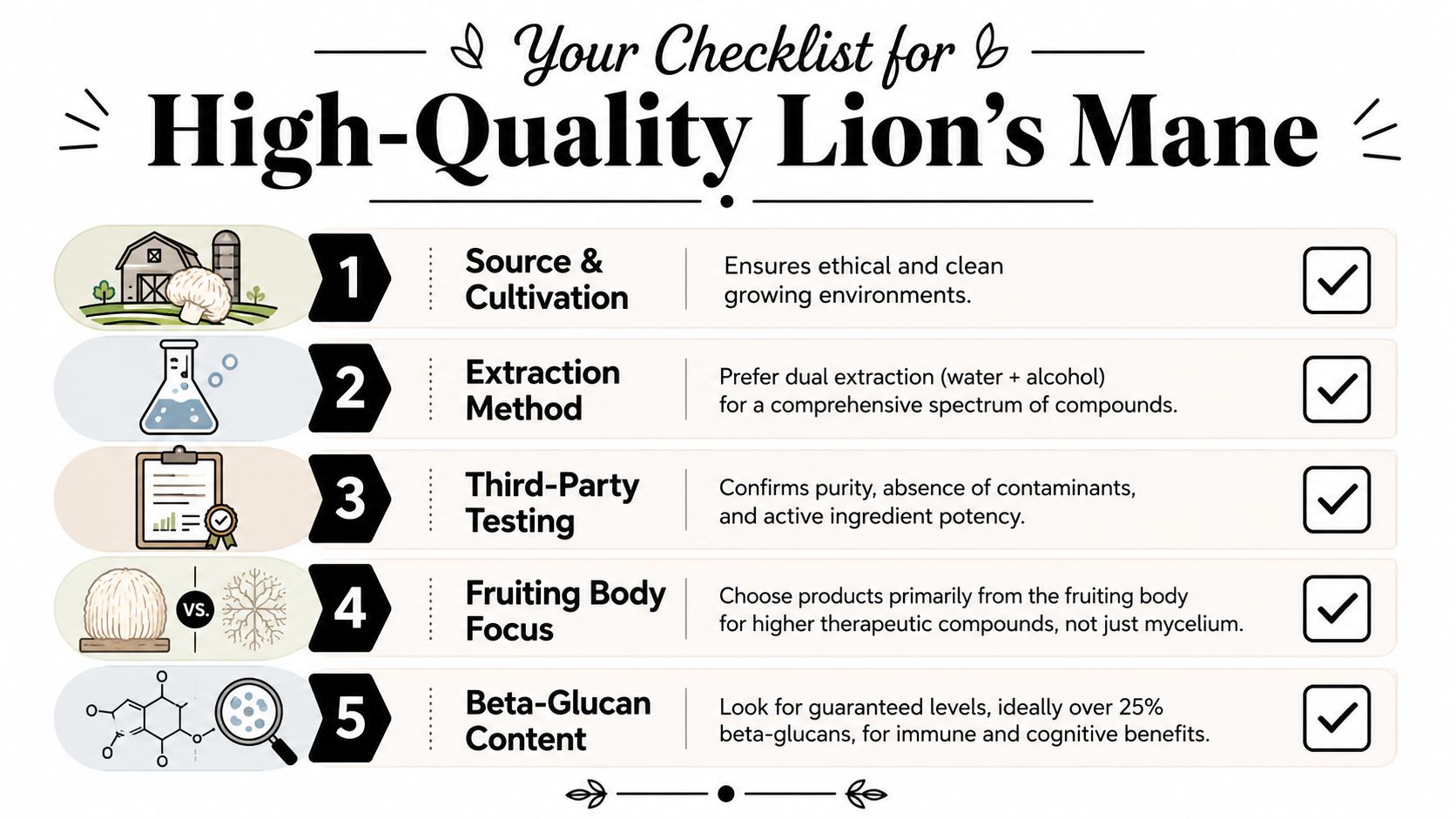
According to Real Mushrooms' guide to choosing a Lion's Mane supplement, many supplements are mycelium on grain and may contain 40% to 60% starch, while lacking the high concentrations of hericenones and erinacines buyers want for neuroregeneration. Their advice is straightforward: verify “fruiting body only” on the label.
Fruiting body and mycelium in plain English
The fruiting body is the visible mushroom you'd recognize. That's what many careful buyers want in a Lion's Mane supplement.
Mycelium is the root-like network of the fungus. Mycelium itself is a real part of the organism, but many cheap products are sold as mycelium grown on grain. That means the final powder can contain a lot of filler material from the growth medium. To a shopper, that can mean you're paying mushroom-supplement prices for a product diluted with starch.
What to read on the label
When you pick up a bottle or scan an online listing, look for these signals:
- Fruiting body only means the product is centered on the mushroom part buyers usually seek
- Clear extraction language is better than vague phrases like “advanced mushroom matrix”
- Third-party testing shows the brand is willing to verify purity and contents
- Specific active compound discussion is better than mystical claims about “accessing your mind's hidden depths”
A helpful side topic for budget-conscious shoppers is understanding how price relates to form and quality. This overview of the price of Lion's Mane mushrooms can help you calibrate what you're seeing on the shelf.
Here's a useful video breakdown before you compare brands:
A fast in-store checklist
If you only have a minute, use this:
- Read the ingredient line. Look for Lion's Mane clearly identified.
- Scan for “fruiting body only”. If it isn't there, pause.
- Check whether the brand explains its extraction method.
- Look for testing or certification language that sounds concrete rather than decorative.
- Skip products that lean on fantasy language more than product specifics.
Buyer warning: “Extract” is not enough by itself. A weak product can still call itself an extract.
Dosing Storage and Local Shopping Tips
A common initial query for those purchasing Lion's Mane is: How much should I take? For cognitive benefits, the recommended daily range for extract supplements is 500 to 1500 mg, and benefits typically become noticeable only after 4 to 6 weeks of consistent daily use, according to Real Mushrooms' Lion's Mane dosage guide.
That timeline matters. If you buy Lion's Mane mushroom expecting a same-day jolt, you'll probably think it “doesn't work” and quit too early. This is a consistency product, not a dramatic-feeling product.
A practical routine that people can keep
A simple approach works best. Take it at the same time each day. Pair it with breakfast, coffee, lunch, or another habit you already do without thinking.
That does two things. It helps you stay consistent, and it makes it easier to notice whether Lion's Mane fits your routine well over several weeks.
How to store it
Storage doesn't need to be complicated. Keep capsules, powders, and liquid products in a cool, dark, dry place and close the container properly after use. Heat, light, and moisture are the main things to avoid.
If you're buying fresh mushrooms, treat them more like produce and use them sooner. For broader mushroom storage basics, this guide on the best way to store shrooms safely and effectively gives a practical overview.
Where Detroit and Ann Arbor shoppers can look
If you want fresh Lion's Mane, start with places that already handle specialty produce well. Think local farmers' markets, natural grocers, co-ops, and mushroom-focused farm vendors. These spots often let you ask direct questions about how the mushroom was grown and how fresh it is.
For supplements, health food stores and vitamin shops are the easiest starting point because you can inspect the label in person. The downside is that shelf presence can make weak products look credible. Don't let packaging make the decision for you.
A good local buying habit is to ask three plain questions:
- Is this Lion's Mane only, or part of a blend?
- Is it fruiting body, mycelium, or both?
- Is there any testing information on the label or box?
Those questions cut through a lot of fluff fast.
Your Lion's Mane Questions Answered
How long does Lion's Mane take to work
Don't judge it after a few days. The most useful expectation is steady use over several weeks. If you want a product you feel immediately, Lion's Mane usually isn't that kind of supplement.
Will Lion's Mane make me hallucinate
No. As covered earlier, Lion's Mane is non-psychoactive and does not contain psilocybin. If a product is being sold as Lion's Mane for cognitive support, it should not be described in psychedelic terms.
Should I buy fresh mushroom or a supplement
Buy fresh if you enjoy cooking and want to experiment with the mushroom as food. Buy a supplement if your goal is a repeatable wellness habit with less work.
What's the biggest label mistake people make
They see “mushroom extract” and stop reading. The more important question is whether the product tells you clearly what part of the mushroom it uses and how it was prepared.
Can I take Lion's Mane with other vitamins
Many adults do combine it with a broader wellness routine, but medication and supplement interactions are personal. If you take prescription medications, have a health condition, or want medical guidance, check with a qualified clinician before adding it.
What if I'm still unsure what to buy
Start boring. Pick one clear product, in one form you'll use, with a label you understand. Fancy blends and dramatic branding can wait.
If you're in Southeast Michigan and want a local mushroom resource with a strong community presence, browse Metro Mush. They serve Detroit and Ann Arbor adults with a clear menu, local ordering options, and regular updates for people exploring mushroom products more intentionally.