


Tired of opening a full closet and still feeling stuck because the pieces don't seem to talk to each other? That's the gap behind most mix and match outfit ideas content, it shows inspiration, but it doesn't help you choose a digital stylist that fits how you get dressed. The best app for one person is a rigid capsule builder, while another person needs a visual mood board, and someone else wants outfit math, weather planning, or AI help that feels fast instead of fussy.
The market for these tools is still relatively niche at USD 150 million in 2024, with a projection of USD 450 million by 2033 and a 13.5% CAGR from 2026 to 2033, which tells you there's real room for better wardrobe-planning tools as digital styling grows Verified Market Reports. At the same time, broader fashion-style app commentary points to a much larger adjacent space, including USD 4.15 billion in 2024 and USD 8.5 billion by 2032, showing that people are already leaning on styling and wardrobe apps for everyday decisions Best Colorful Socks. The question is no longer whether these apps matter. It's which kind of style brain you want in your pocket.
1. Cladwell
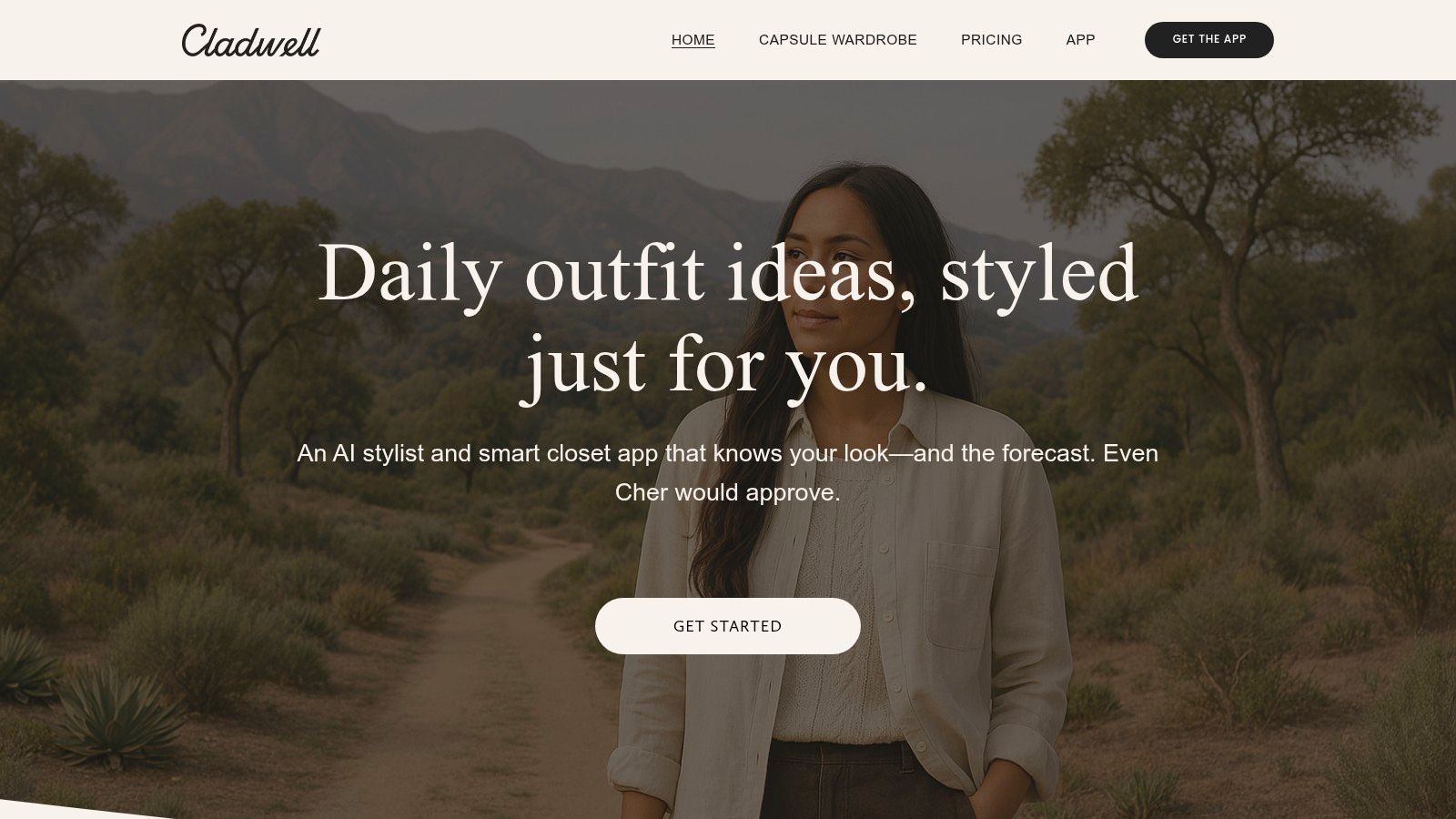
Cladwell works best for people who want structure without starting from scratch. Its capsule-first approach turns your wardrobe into smaller, more usable sets, so you can stop staring at every single item and start building combinations that make sense for work, travel, or a season. That matters because the strongest mix and match outfit ideas are often the ones that come from a system, not from random inspiration.
Why it suits practical dressers
The app's 35+ editable capsule templates make it easier to begin than a blank closet screen, and its 15k+ item database helps you add pieces without photographing everything first. That's a real advantage if you're trying to organize a wardrobe fast, especially when you want to test combinations before you buy more. Daily outfit suggestions are weather-based, which keeps the ideas grounded in what you'll wear.
Practical rule: If your wardrobe feels chaotic, start with one small capsule, not your entire closet. A focused set of pieces gives you clearer combinations and less decision fatigue.
Cladwell also includes background removal, URL import, and screenshot import, so item entry feels less like data entry and more like cleanup. If you like the idea of a closet that behaves like a well-edited wardrobe, this is one of the most approachable places to begin. Metro Mush has a useful style resource tied to this same mindset in its Mix and Match Mama tag, which pairs nicely with Cladwell's capsule logic.
Who should choose it
- Choose Cladwell if: you want a guided start and prefer a wardrobe that's organized by purpose.
- Skip it if: you want complete creative freedom and don't like capsule-style boundaries.
- Best use case: daily outfit planning, travel packing, and seasonal wardrobe resets.
The downside is that the structured system can feel tight if your style is more fluid. Still, for anyone who wants a cleaner, calmer way to build mix and match outfit ideas, Cladwell makes the process feel deliberate instead of overwhelming.
2. Whering
Whering is the app for people who like choice. It's free to start, lets you import clothes from photos or brand images, and gives you tools for unlimited outfits and lookbooks. That makes it a strong fit for users who want to play with style ideas first and worry about systems later.
Whering also leans into the social side of dressing. Its moodboards, community features, and style analytics give you more than a closet log, they give you a place to compare looks, test combinations, and refine your taste over time. If your wardrobe decisions are driven by visuals, this app can feel more natural than a spreadsheet-like closet tracker.
Why it stands out for visual planners
The value here is flexibility. You can build outfits, save lookbooks, and use outfit planning tools for everyday life or travel without feeling locked into one organizing philosophy. That makes Whering especially useful for people who want mix and match outfit ideas that come from experimentation, not from a preset capsule formula.
Community features matter more than people think. When users can see how others combine similar pieces, they stop treating outfit-building like a private guessing game.
There's also a practical side to the app's outfit planning. Packing lists help when you're heading out of town, and style analytics can show patterns in what you wear. That helps bridge the gap between inspiration and repeatable use, which is the difference between a fun app and a wardrobe tool you keep opening.
A few users report repetitive AI picks, so it's not always the sharpest assistant on the first try. Even so, Whering is a strong choice if you want a modern, visual space to build looks without overcommitting to rigid structure.
3. Stylebook
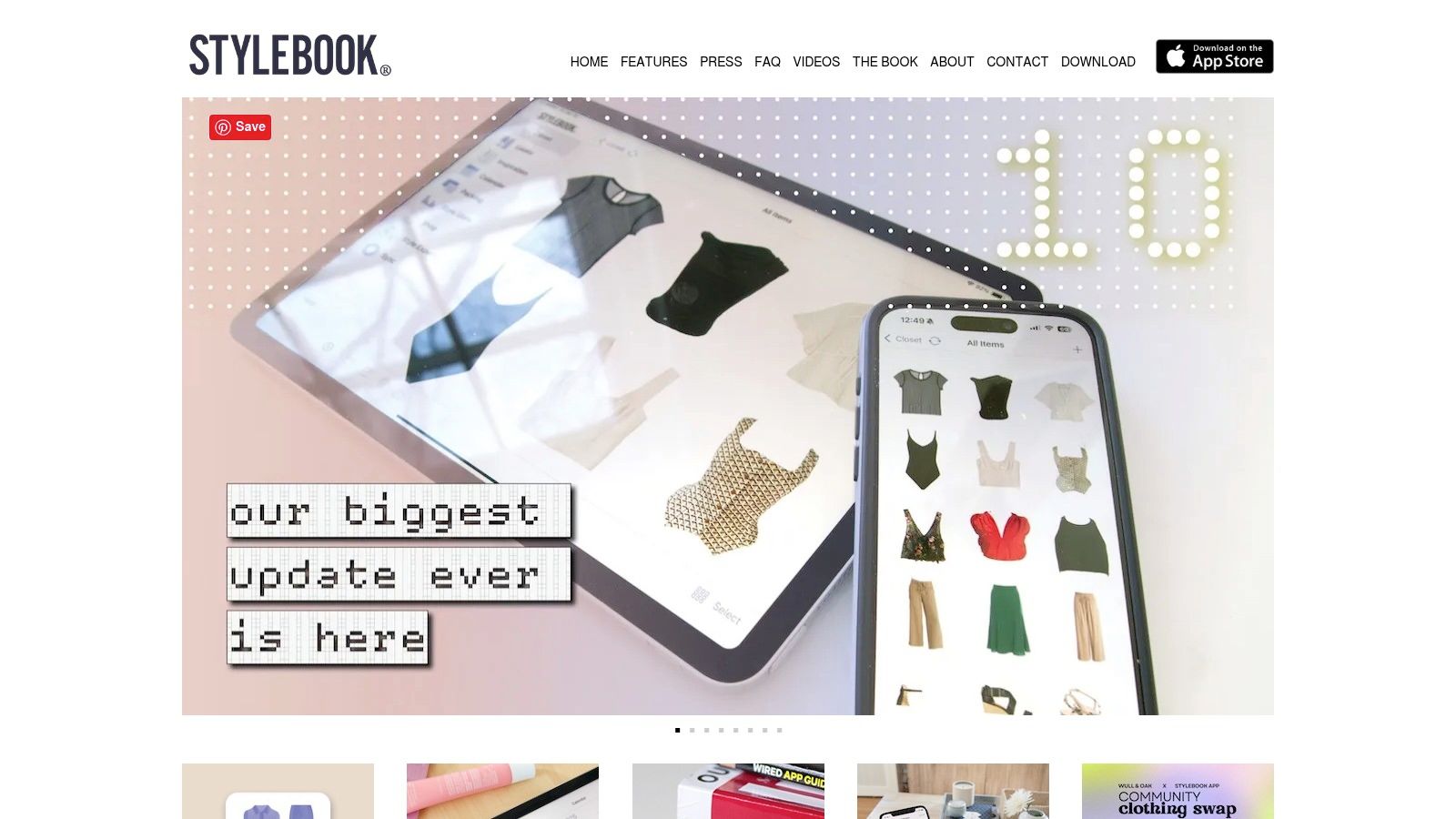
Stylebook feels like the veteran in the room, because it is built for people who want a wardrobe app that goes beyond storing pictures of clothes. This iOS-only tool focuses on order, repeat wear, and better wardrobe decisions over time. If you want to track what you wore, what you packed, and what you paid for a piece across many uses, Stylebook makes that habit easier to keep.
Built for wardrobe discipline
The standout feature is Outfit Shuffle, which creates fresh combinations from the items you already own. That helps when you do not need a brand-new style identity, you just need better use of the clothes already in your closet. The app also supports a calendar, packing lists, worn history, and cost-per-wear statistics, so it works well for intentional shoppers who want their outfits and their spending to stay connected.
That cost-per-wear view gives Stylebook a practical edge. It pushes you to think about repeatability and wardrobe efficiency, which fits the larger goal of buying less and using more. If you want your closet to work harder, Stylebook keeps the focus on real use, not just saved images. It also fits well with a more playful wardrobe-planning mindset, like the one behind mix-and-match magnetic animals, where the fun comes from seeing how different pieces can combine in new ways.
The best outfit app is often the one that shows you what you already wear well, then helps you repeat it on purpose.
Stylebook's import options are also useful. You can add items with AI background removal or clip from retailer sites, which reduces the friction of building a digital closet. The tradeoff is the learning curve, especially if you want to use many of the app's advanced tools. People who enjoy control, stats, and a more complete wardrobe record usually will not mind that extra setup.
Best fit for
- Choose Stylebook if: you like structure, stats, and clear wardrobe history.
- Choose it if: you are on iPhone and want a mature, stable tool.
- Skip it if: you need a simple, lightweight app with minimal setup.
For anyone serious about building repeatable mix and match outfit ideas, Stylebook is one of the most practical tools available.
4. Acloset
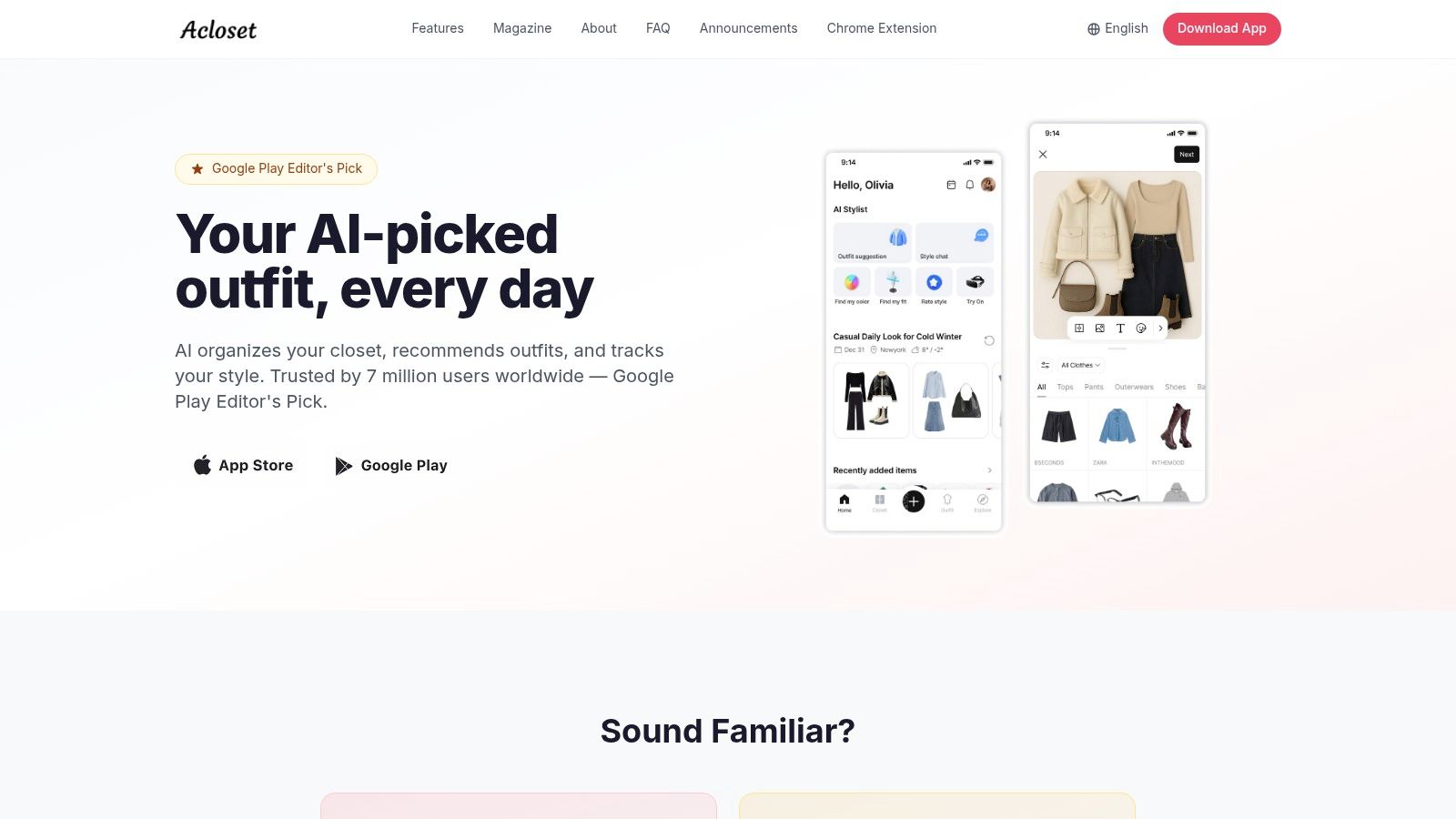
Acloset is for people who want the app to do more of the thinking. It organizes your wardrobe, uses AI to suggest outfits, and adjusts recommendations based on your items, weather, and occasion. If your style process starts with “What should I wear today?” rather than “How do I organize my closet?”, Acloset matches that need well.
Strong for quick outfit decisions
The app's automated background removal and item tagging make digitizing a closet faster than manual sorting. Its Style Chat adds a more interactive layer, so you can refine suggestions instead of accepting the same generic outfit ideas every day. That matters for users who want outfit help that feels responsive, not static.
Acloset also includes color analysis, fit analysis, and style evaluation flows. Those tools are useful if you're trying to move beyond pure inspiration and into more personalized dressing. For example, one person may want suggestions that match their color preferences, while another may care more about how a garment fits across different outfits. Acloset tries to support both.
If you're trying to create mix and match outfit ideas that are more specific to your actual closet, this app can save time. It's especially helpful for people who don't want to spend a lot of effort manually arranging items and combinations. The experience feels more automated than editorial, which is exactly why some users prefer it.
The downside is familiar to AI-heavy apps, some daily color combinations may feel off, and bigger wardrobes may push you toward paid tiers. Even so, Acloset is a strong pick if you want a smart assistant that focuses on speed, suggestion quality, and wardrobe organization in one place.
5. ShopLook
ShopLook is the app for the visual mood-boarder. Instead of making you fully digitize a closet before you start, it lets you drag and drop pieces onto a collage-style canvas and quickly storyboard outfits. That makes it a better fit for people who think in images first and systems second.
Why it works for style brainstorming
ShopLook's biggest strength is speed. You can assemble looks without building a complete wardrobe database, and that lowers the barrier for users who just want to test ideas. Its large inspiration library and shoppable image support make it easy to experiment with pieces that already live in your browser or shopping lists.
That makes ShopLook especially useful when you're trying to answer a very practical question, what happens if I swap one item in an outfit? Because the canvas is so visual, it's easier to compare shapes, colors, and layers side by side. If your personal style process is closer to collage-making than closet management, this app feels natural.
Visual planners often need fewer rules and more room to arrange. ShopLook gives them that space without forcing a full wardrobe audit first.
The community feed adds another layer of inspiration, and the Pro tier provides more advanced design tools for people who want to go deeper. The tradeoff is that ShopLook is better for ideation than for complete closet tracking, so it's not the strongest choice if your main goal is inventory management.
Metro Mush's Mix and Match Mama resource fits this same visual, playful approach to combining pieces, which is why ShopLook feels so intuitive for creative outfit planning. If you enjoy making looks before you own them, this is one of the easiest places to start.
6. GetWardrobe
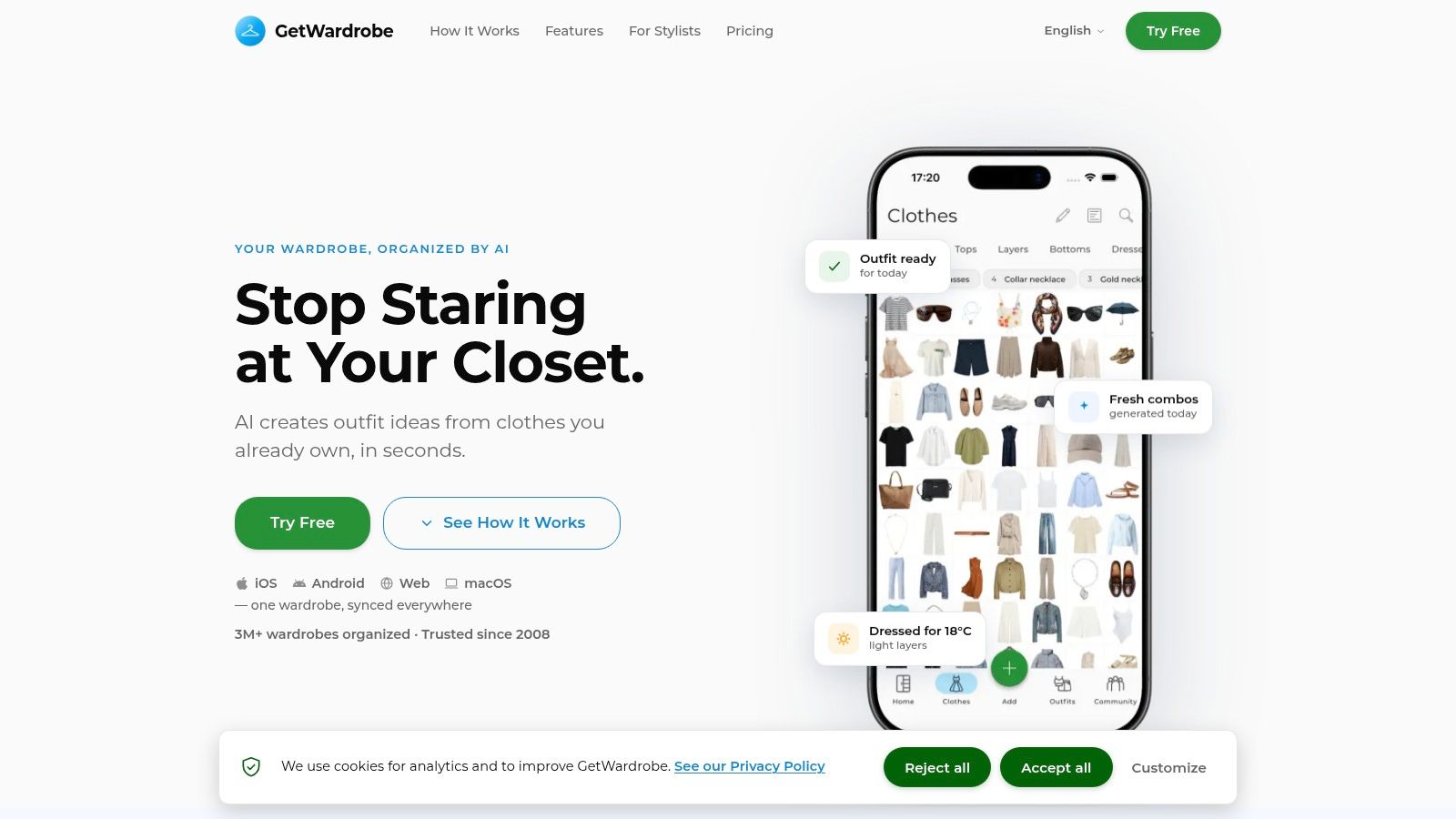
GetWardrobe is a cross-device wardrobe app that works across iOS, Android, Mac, and Web, which makes it a strong pick for people who don't want their styling system trapped on one screen. It combines outfit planning, weather awareness, packing tools, stats, and AI outfit building in one platform. That breadth makes it useful for everyday life, travel, and closet organization all at once.
A good fit for multi-device users
The cloud sync is the headline feature here. If you like to sort clothes on a laptop, check outfits on your phone, and plan travel from a tablet, GetWardrobe makes that transition much easier. That convenience matters more than people realize, because wardrobe apps tend to fail when they feel locked to one workflow.
Its AI Outfit Generator and AI Studio give you a way to explore combinations beyond manual planning. The app also includes capsule building, calendar tools, advanced filters, and packing lists, so it doesn't stop at inspiration. It tries to support the full cycle of outfit planning, from organizing the closet to choosing what goes in the suitcase.
For anyone building mix and match outfit ideas across work, travel, and everyday routines, that combination is powerful. It lets you think in outfits and in wardrobes at the same time. The free tier gives you a simple way to start, while paid AI credits and Premium options provide access to more advanced features such as virtual try-on.
Good reasons to consider it
- Cross-device syncing: helpful if you move between phone, laptop, and tablet.
- Planning depth: calendar, weather, stats, packing, and AI in one place.
- Scalable setup: start small, then expand if the app fits your routine.
The only real downside is complexity. The interface can feel busy because it does so much, and that may not suit minimalist users. Still, if you want a single wardrobe hub with serious planning tools, GetWardrobe is one of the most versatile choices.
7. Indyx
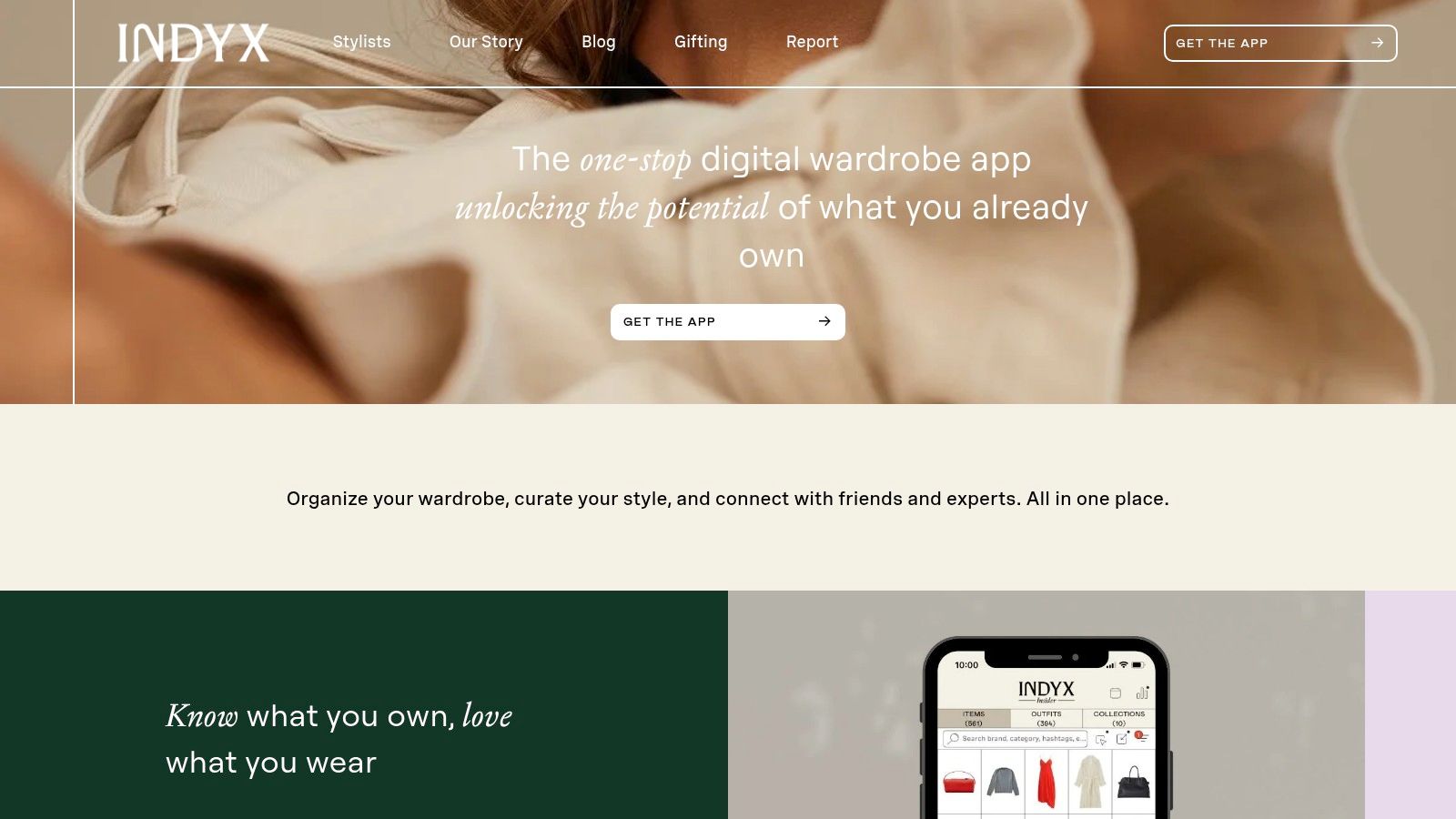
Indyx is the app for users who want their wardrobe to look polished as well as organized. It focuses on clean item images, outfit boards, collections for capsules or packing, and style collaboration. The result feels more editorial than utilitarian, which appeals to people who want their closet to look as good on-screen as it does in real life.
Better for styled presentation
Indyx's Enhance tools and auto-tagging help clothing photos look cleaner and more consistent. That matters because better images lead to better outfit decisions. When every item is easier to see, it's easier to compare pieces and spot combinations you may have missed before.
The app also offers outfit boards, calendar planning, and collections that support capsules and packing. That puts it in the same practical category as the most organized wardrobe apps, but with a stronger visual finish. If you care about how your wardrobe feels when you scroll through it, Indyx has real appeal.
There's also a community layer, including “style me” interactions and optional pro styling services. That gives users a way to get feedback from other people instead of relying only on their own judgment. For many shoppers, that feedback loop is what turns a nice digital closet into a useful styling tool.
Indyx is especially strong when you want mix and match outfit ideas that feel refined and realistic. It helps bridge the gap between polished visuals and outfits you'd really wear, which is the sweet spot for a lot of style-conscious users. The main tradeoff is that the mobile-first experience can feel limited at times, and some users report interface quirks. Even so, if presentation matters to you, Indyx stands out.
Mix & Match Outfit Apps: 7-Way Comparison
| Product | 🔄 Implementation complexity | ⚡ Resource requirements | ⭐ Expected outcomes | 💡 Ideal use cases | 📊 Key advantages |
|---|---|---|---|---|---|
| Cladwell | Low, template/capsule driven setup | Low, large item DB reduces photographing; optional uploads | ⭐⭐⭐⭐ Practical, weather-aware daily outfits & packing | Build/maintain capsules for travel, work, seasons | Ready-made capsules, strong weather integration, fast item entry |
| Whering | Low, straightforward import & outfit builder | Moderate, photo/brand imports; free tier available | ⭐⭐⭐ AI-assisted mix‑and‑match with lookbooks | Free starter for outfit-building, community inspiration | Unlimited outfits, moodboards, active community |
| Stylebook | High, deep, feature-rich with learning curve | Moderate, time to catalog; iOS‑only platform | ⭐⭐⭐⭐ Comprehensive organization, stats, Outfit Shuffle | Intentional wardrobe management, cost‑per‑wear tracking, travel planning | Mature feature set, calendar, packing, detailed analytics |
| Acloset | Medium, AI workflows and tagging steps | Moderate, photo uploads; paid tiers for large wardrobes | ⭐⭐⭐ Quick AI suggestions; adjustable recommendation settings | Users wanting fast AI outfit ideas and iterative refinement | Automated tagging, color & fit analysis, interactive Style Chat |
| ShopLook | Low, drag‑and‑drop collage interface | Low, no full-closet digitization required; web/mobile | ⭐⭐⭐ Fast visual ideation and moodboards (not a tracker) | Visual planners, storyboards, shoppable collages | Massive inspiration library, easy sharing, rapid visual creation |
| GetWardrobe | Medium, broad feature set with many options | Moderate, cross‑device sync; AI credits for premium features | ⭐⭐⭐⭐ Comprehensive cross‑device planning with AI tools | Cross‑platform users who want calendar+weather+virtual try‑on | True cross‑platform sync, AI Outfit Generator, generous free tier |
| Indyx | Medium, mobile‑first editorial workflow | Moderate, photo enhancement tools; community/pro services | ⭐⭐⭐ Polished, editorial outfit boards and analytics | Style‑forward users seeking polished visuals and pro feedback | Auto‑enhance photos, wear stats, community & pro styling services |
Find Your Perfect Digital Stylist
The right outfit app depends on how you think. If you like a system, Cladwell and Stylebook give you structure. If you want visual freedom, ShopLook and Indyx make styling feel creative. If you want AI help and day-to-day practicality, Acloset, Whering, and GetWardrobe bring more automation into the process.
That choice matters because the best mix and match outfit ideas are the ones you'll use. A rigid capsule app can help one person simplify mornings, while another person needs a mood-board app that turns scattered inspiration into outfits they can see at a glance. The goal isn't to collect more outfit ideas, it's to build a wardrobe system that makes your existing clothes easier to wear, repeat, and enjoy.
The broader market signals support that shift. The niche category of outfit planning is still growing from a relatively small base, while adjacent styling and wardrobe-management tools are pulling in wider demand Verified Market Reports Best Colorful Socks. That means users are looking for more than inspiration. They want tools that help them plan, compare, and repeat good outfits without overbuying.
Start with the app that matches your style brain, then give it a week of real outfits, not just saved ideas. You'll learn quickly whether you need more structure, more visuals, or more AI support, and that's the fastest way to turn your closet into something that works for you every day.
If you want style inspiration that goes beyond wardrobe apps, visit Metro Mush for a curated shopping experience built around convenient access, clear options, and local delivery. Metro Mush helps adult customers in the Detroit and Ann Arbor areas find thoughtfully crafted products with easy ordering and regular value-driven specials.