

Figuring out the price of lion's mane can feel a bit tricky at first, but it’s actually pretty straightforward once you know what to look for. You can expect to pay anywhere from $20-$30 per pound for fresh lion's mane to as little as $1-$2 per ounce for bulk dried powder. For potent extracts, a month's supply usually runs between $25-$45, which often makes it the best value for anyone seeking consistent health benefits.
Your Quick Guide to Lion's Mane Mushroom Prices
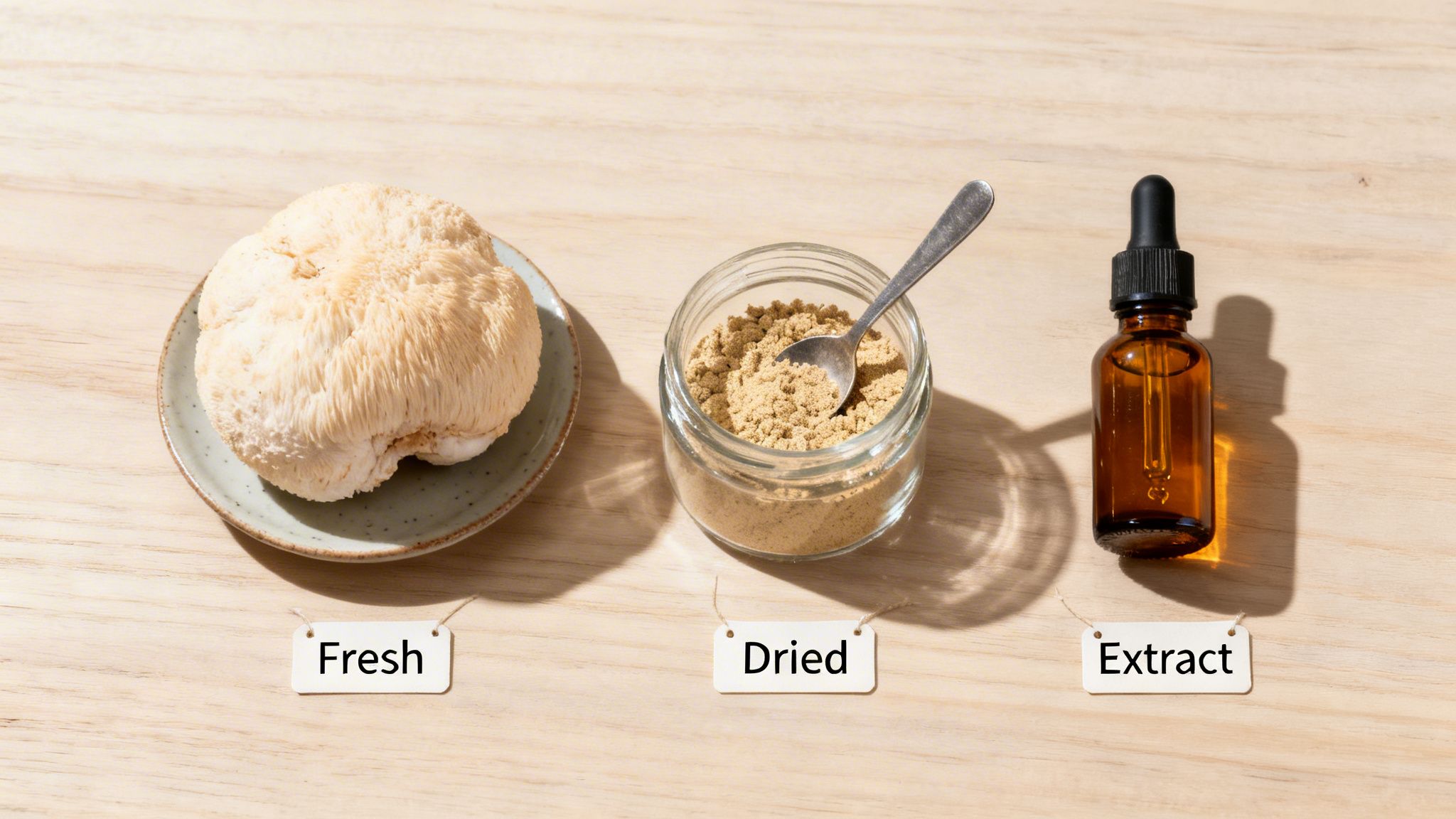
Thinking about the price of lion's mane is a lot like thinking about coffee. You have different forms, each with its own purpose and price tag, and the "best" one really depends on what you're trying to achieve.
Fresh lion's mane is the gourmet choice. It's like that perfect, hand-pulled espresso shot from your favorite local cafe—intensely flavorful, a real treat, but you need to enjoy it right away. Its price reflects how delicate it is and its short shelf life.
Then you have dried lion's mane powder, which is more like the versatile bag of ground coffee you keep in your pantry. It’s more affordable, lasts a lot longer, and you can toss it into smoothies, teas, or soups. It's incredibly convenient for daily wellness, even if it doesn't have the concentrated power of an extract.
Finally, lion’s mane extract is the espresso shot itself—all the good stuff concentrated into a small, powerful dose. The bottle might seem more expensive at first glance, but because it’s so concentrated, it’s often the most cost-effective option if you’re looking for consistent, daily cognitive support.
Comparing the Costs
To give you a better sense of the market in 2026, we've put together a simple breakdown of what you can expect to pay for each form of lion's mane.
You'll notice the price per unit changes quite a bit between forms. This is common with specialty mushrooms, and you'll see a similar pricing structure for other popular fungi, as our guide to oyster mushroom prices explains.
Here's a quick look at the average costs.
Average Cost of Lion's Mane Mushrooms by Form
| Form | Typical Price Range (USA) | Best For |
|---|---|---|
| Fresh | $20 – $30 per pound | Gourmet cooking and experiencing its unique, lobster-like texture. |
| Dried Powder | $2 – $5 per ounce | Adding to smoothies, teas, and recipes for general wellness. |
| Extract (Tincture/Capsule) | $25 – $45 per 30-day supply | Consistent, high-potency dosing for targeted cognitive benefits. |
Ultimately, this table shows the trade-off you’re making between culinary enjoyment, general wellness, and targeted supplementation. What you hope to get out of lion's mane will point you to the form that offers the best value for your needs. It's not just about the sticker price, but what you get in return.
Why Lion's Mane Prices Vary So Much
Ever wonder why you can grab fresh lion's mane for $25 a pound at a farmers market, but then see a small supplement bottle for the exact same price? It’s not just clever marketing. The cost of lion's mane comes down to a few key things: it's tricky to grow, everyone wants it, and turning it into a powder or extract is a complicated process.
Unlike your standard mushrooms that pop up with little fuss, lion's mane is a diva. It needs everything to be just right—the temperature, humidity, light, and even the air it breathes. Growers have to keep a close watch on these conditions, which means specialized gear and a hefty energy bill.
This isn't a "set it and forget it" kind of fungus. One wrong move and an entire crop can be lost. That risk and effort gets passed on, and it’s a big reason why lion's mane costs more than your everyday portobello.
The Scarcity and Demand Equation
It also boils down to simple economics. Lion's mane isn't just a tasty mushroom for dinner anymore; it's blown up in the wellness world for its brain-boosting potential. With so many people trying to get their hands on it, the limited supply just can't keep up, and prices naturally climb.
You see this most with fresh mushrooms. In the U.S., you'll typically find fresh lion's mane for $20 to $30 per pound, and if it's organic, expect to pay on the higher end. While you might find it cheaper in mushroom-growing hubs like Pennsylvania, here in metro Detroit and Ann Arbor, the demand from health-conscious locals keeps prices firm. There just isn't enough to go around. You can get a deeper look at these market dynamics with insights on lion's mane sales trends from Mushroom Media Online.
Think of it like this: buying fresh lion's mane is like buying artisanal cheese or farm-to-table produce. You're paying a premium for freshness, quality, and the specialized care it took to get it to you.
When you see button mushrooms selling for less than $3 a pound, that 10x price difference really puts the specialized appeal of lion's mane into perspective.
From Farm to Capsule: The Added Costs
But the story doesn't end at the farm. Turning a fresh, fluffy lion's mane mushroom into a powder or a potent extract adds a whole new set of costs. This is how we get those shelf-stable products and concentrate all the good stuff, but it's a science.
Here’s what goes into it:
Dehydration: Fresh mushrooms are mostly water—about 90%. To get a dry powder, you have to remove all that moisture with big, energy-hungry dehydrators. It takes about 10 pounds of fresh mushrooms to make just one pound of dried powder.
Extraction: To get those powerful compounds like hericenones and erinacines into a tincture or capsule, you have to extract them. This involves technical processes like hot water or dual extraction with alcohol, and it requires serious lab equipment and know-how.
Testing and Certification: Any brand worth its salt invests in third-party lab testing. This verifies that the product is pure, potent, and free of any junk you don't want. Getting those official organic certifications also adds up.
All of these steps are why a small bottle of high-quality extract can cost as much as a full pound of fresh mushrooms. You're not just paying for the mushroom; you're paying for the science, safety, and concentration packed into every single dose.
When you're trying to figure out the price of lion's mane mushrooms, it's easy to get stuck on one big question: fresh, dried, or extract? Which one gives you the best bang for your buck?
The truth is, there's no single right answer. The best value really comes down to what you’re trying to achieve—whether you're planning a knockout gourmet meal, looking for a daily wellness boost, or need targeted support for your focus and clarity.
Fresh vs Dried vs Extracts Which Form Offers the Best Value
Think of it like this: fresh lion's mane is the fine dining experience. It has this incredible, almost seafood-like texture that’s a total adventure for your taste buds. But, like any gourmet ingredient, it’s pricey, perishable, and best saved for a special occasion. It's not exactly practical for daily use.
Dried mushrooms, on the other hand, are your reliable pantry staple. They're much more affordable, last forever, and you can toss them into soups, teas, or smoothies. The catch? Your body has a tough time breaking down chitin, the hard stuff in mushroom cell walls, which can limit how much of the good stuff you actually absorb.
Then you have extracts. These are the potent, concentrated shots. They’re all about convenience and delivering a consistent, reliable dose every single time.
The Cost-Per-Dose Breakdown
At first glance, a bottle of extract might seem more expensive than a pound of fresh mushrooms. But the value conversation completely changes when you start thinking about the cost per dose.
If your goal is consistent health benefits, extracts almost always come out on top.
To get a therapeutic effect from dried mushrooms, you need to consume a pretty hefty amount, often several grams a day. With a quality extract, you get a powerful, bioavailable dose in a small dropperful or a single capsule. That means one bottle of extract can deliver more active compounds than you'd get from the same amount of money spent on dried powder.
For anyone serious about the health benefits, extracts deliver the most reliable and cost-effective dose over time. The concentration and bioavailability mean you’re getting more of what you paid for in every single serving.
This chart breaks down the biggest factors that play into the price of any mushroom you buy.

As you can see, things like how hard it is to grow, how many people want it, and where you live are the main things driving the cost.
Making the Right Choice for You
So, which one should you choose? It really boils down to your goals and your budget.
- For the Foodie: If you’re trying to wow your dinner guests or just want to treat yourself to a unique culinary experience, splurging on fresh lion's mane is absolutely worth it.
- For General Wellness: Looking for an easy way to get more mushrooms into your diet? Dried powder is a flexible and budget-friendly choice.
- For Targeted Health Benefits: If you need consistent cognitive support and want the most value on a per-dose basis, extracts are the clear winner.
Getting a handle on the pricing and benefits of different mushrooms is a great way to explore this amazing world. For another example, you can check out our guide on maitake mushroom prices to see how these same ideas apply to another powerhouse fungus. No matter which you pick, you're making a great choice.
The Booming Market for Lion's Mane Supplements
While fresh lion's mane is a fantastic addition to any meal, the real buzz is happening in the supplement world. The market for lion's mane extracts is exploding, and it's all thanks to a major cultural shift toward natural cognitive enhancers, or nootropics. People are looking for safe and effective ways to sharpen their minds, and lion's mane is front and center.
This isn't just a small trend. The global lion's mane mushroom extract market was valued at $112.547 million back in 2021 and is on track to hit a whopping $179 million by the end of 2025. That growth is driven by a staggering 12.3% compound annual growth rate (CAGR), a clear signal that demand is through the roof. You can dive deeper into these lion's mane market projections to see just how fast this space is moving.
The Nootropic Connection
So, what’s fueling this incredible growth? It all comes back to the brain. Wellness enthusiasts today are all about "stacking"—combining different supplements to get synergistic effects. Lion's mane is a total star in this world, often praised for its potential to support nerve growth factor (NGF) and promote neurogenesis.
This is a huge reason why people are actively seeking it out. They’re not just buying a mushroom; they’re investing in a tool for better cognitive well-being. This focus on mental clarity is also a massive driver in North America, which is projected to grab 39% of the global market by 2025, reaching a value of $69.81 million.
This focus on brain health creates a really interesting crossover. For a modern service like Metro Mush, serving both functional and psychedelic mushroom users in the Detroit–Ann Arbor area, this trend hits close to home. The same person curious about the neurogenic potential of a psilocybin strain is often the same person looking for lion's mane to add to their daily routine.
This convergence shows a sophisticated consumer base that is well-researched and intentional about their wellness. They are not just following fads; they are building personalized regimens designed to optimize both mind and mood.
A New Era of Wellness
This overlap between different types of mushrooms points to a bigger movement. People are searching for holistic solutions and are open to trying a whole range of natural products to support their health. It's exactly why a local delivery service might offer both functional extracts and psilocybin products like Penis Envy mushrooms.
The well-informed audience in cities like Detroit and Ann Arbor gets the subtle but important differences between fungi. They see the power in using lion's mane for daily cognitive support while exploring other mushrooms for deeper, more profound experiences. This smart approach is changing the entire wellness game, making specialized, high-quality products more accessible than ever.
To really get why lion's mane costs what it does at your local store, you have to look beyond Michigan. The price tag on that fresh mushroom or bottle of capsules isn't just up to the farmer or the supplement brand; it’s tied to a huge global trade network where prices can be wildly different from one country to the next.
Think of it like coffee. The price you pay for your morning cup is shaped by where the beans were grown, how they were roasted, and the journey they took to get to your local cafe. For lion's mane, the biggest players on the world stage are China, the largest producer, and South Korea, where it's a prized culinary mushroom.
A Tale of Two Markets
The wholesale price difference between these countries is jaw-dropping. In many parts of China, lion's mane is treated like a massive agricultural crop. This is where a lot of the global supply for dried powders and basic extracts comes from, which helps keep the raw material costs down.
But just look at this gap: In China's Shantou market, wholesale prices have been seen as low as $0.88 per kg. At the same time, in Gwangju, South Korea, the price for their domestic mushrooms hit $14.68 per kg. That's a difference of more than 16 times.
This massive price gap shows you what each market values. China's low price reflects its role as a mass producer for the global processing industry. South Korea's high price shows a strong local demand for beautiful, fresh mushrooms meant for the dinner plate. You can dive into more of this fascinating global price data on Tridge.com.
That farm-level cost is just the first step. A supplement company can get raw mushroom powder from China for cheap, but that’s far from the whole story.
The Journey from Farm to Your Cabinet
Once that raw lion's mane material is headed for the U.S., a lot of other costs get tacked on before it ever reaches you in Detroit or Ann Arbor.
- Shipping and Tariffs: It costs a good chunk of money to move big, bulky containers of mushrooms across the ocean.
- Processing and Extraction: Turning raw mushroom fluff into a high-quality extract that your body can actually use is a precise, scientific, and expensive process.
- Testing and Quality Control: This is a big one. Good brands spend serious cash on third-party lab tests to prove their product is pure, potent, and free from contaminants.
- Marketing and Distribution: Finally, all the costs of packaging, branding, and getting the product into stores (or shipped to your door) add up.
So when you see that low wholesale price from another country, remember it's just a starting point. By the time a high-quality, lab-verified, and effective product lands on your shelf, its price reflects a long and costly journey.
Finding Lion's Mane in Detroit and Ann Arbor
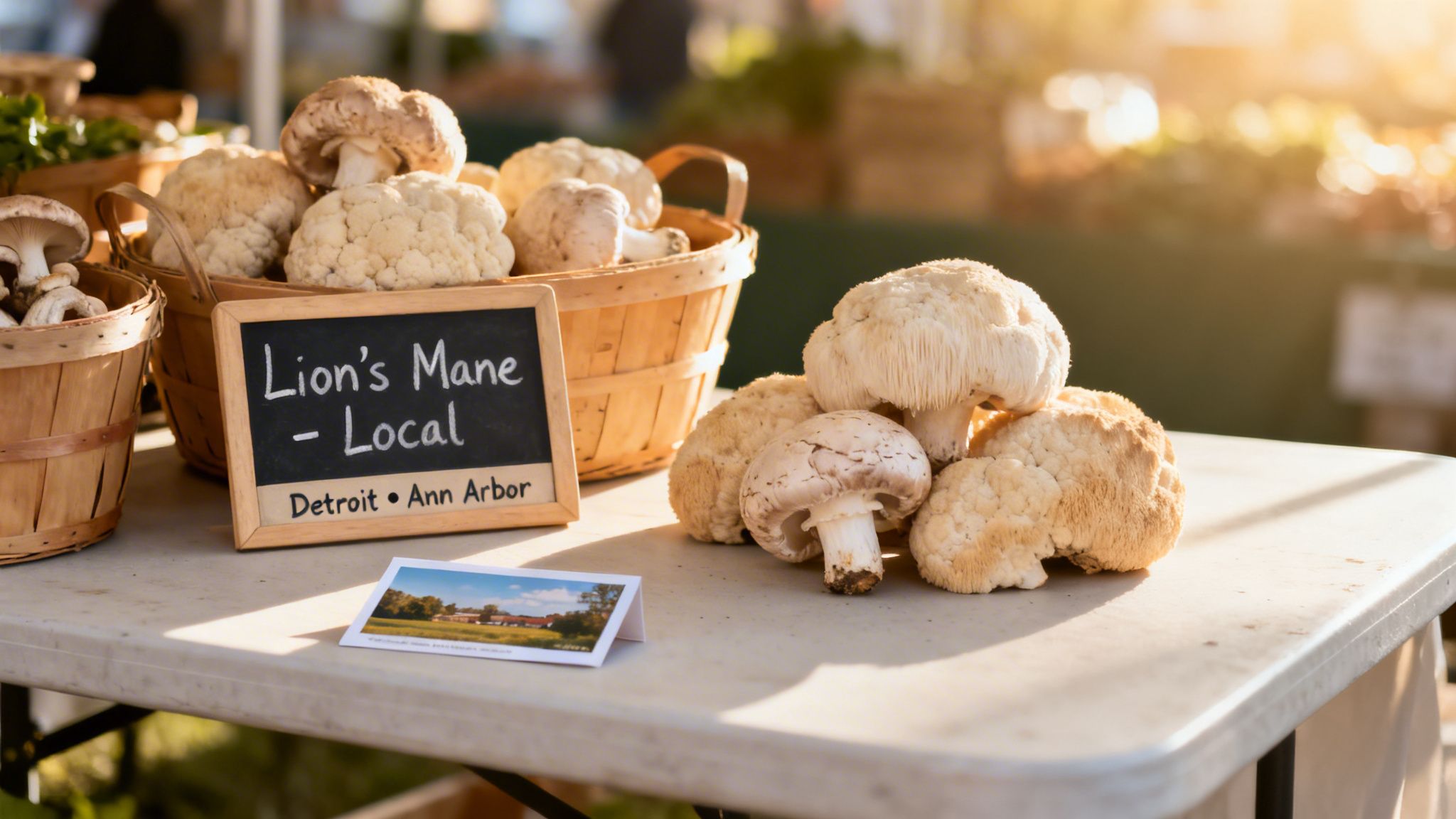
If you’re in Southeast Michigan, you're in luck. Getting your hands on quality lion's mane is simpler than you might think, whether you're strolling through the Ann Arbor Farmers Market or need something delivered right to your door.
You can sometimes find fresh lion's mane at local markets and upscale grocers. These spots are great for culinary adventures, but finding a consistent supply can be a roll of the dice. Availability is often seasonal and unpredictable, which is where specialized local services really shine.
Convenient Local Access
For anyone who values a steady supply and top-tier products, local delivery is the way to go. These services are built for the Detroit and Ann Arbor metro areas, offering a hand-picked selection of functional and even psychedelic wellness products brought straight to you.
Metro Mush, for instance, makes the whole process easy. You can check out the menu online and just text in your order. This direct-to-you model cuts out the middleman, which means the products are fresher and the costs stay down. You can find more details about mushroom availability near you to see how local delivery could fit into your routine.
Maximizing Your Value
Local services are also the best place to find unique deals you won't see in a regular store, making them a smart choice for anyone looking to get the most for their money.
These kinds of value-focused promotions are all about building a strong community and making wellness more accessible. They’re a way to reward loyal customers and people who are active in the local scene.
For example, keep an eye out for deals that directly lower your costs:
- Minimum Order Deals: Many services have a baseline like a $75 minimum order, which is perfect for stocking up on your favorites.
- Mix & Match Bundles: Promotions like "Mix & Match Saturdays," where you can get three items for $100, can save you a good chunk of change—sometimes up to $40.
- Community Discounts: It's common to find ongoing thank-yous, like a 10% discount for veterans and first responders, to make wellness more affordable for those who serve the community.
When you start looking into lion's mane, it’s natural to have questions about price and what you're actually getting for your money. Let's break down some common questions to help you shop smart and feel good about your choices.
A big one we hear a lot is whether a higher price tag actually means better quality. While it's not a perfect rule, a higher price of lion's mane mushrooms often points to a better product. Think about it—things like top-notch cultivation, proper extraction methods, and third-party lab testing all cost money.
Cheaper options might be tempting, but they could be cutting corners on those key steps. That can lead to a product with less potency or, worse, unwanted contaminants. It’s a bit like buying parts for your car; spending a little more on a trusted brand usually gets you better performance and peace of mind.
Finding the Best Value for Your Goals
So, what's the most budget-friendly way to get the health benefits you're after? If you look at it from a cost-per-dose angle, high-quality extracts usually come out on top.
A big bag of dried powder might look cheaper on the shelf, but you often need to use a lot more of it to get a dose that actually does something. A good, concentrated extract gives you more of the beneficial compounds in a much smaller serving, which can make it the smarter buy for long-term, consistent use.
And what about organic? When it comes to mushrooms, "organic" is a pretty big deal. Fungi are like little sponges—they soak up everything from their environment, including pesticides and heavy metals if they're present.
Choosing an organic product is your best bet for ensuring you’re getting a clean mushroom, free from chemicals you don’t want. It’s a solid investment in purity, especially if you plan on making lion’s mane a regular part of your wellness routine.
At the end of the day, understanding these details helps you see past the price tag. You can pick a product that fits your budget and your health goals, making every dollar a smart investment in your well-being.
Ready to explore curated mushroom products in your area? Check out the full menu from Metro Mush and place your order today at https://metromush.com.